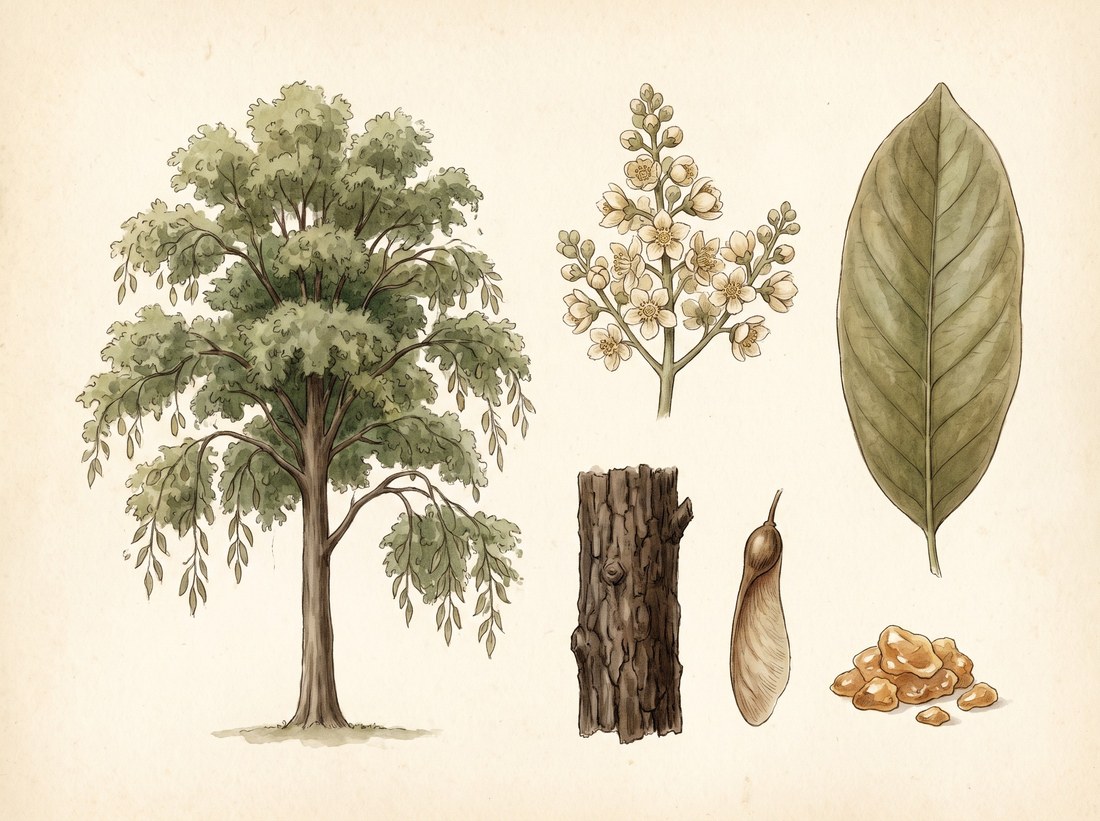
Ayurvedic Herbalism
Sal tree
Shorea robusta
Also known as sal, shala, sal dammar (the resin), Indian dammar, Shala, Sarja, Ashvakarna.
Shorea robusta, the sal, is a great deciduous timber tree that forms the dominant forests of the sub-Himalayan tract, the Gangetic plain, central India and the Eastern Ghats, sacred in Buddhist and Hindu tradition and the source of one of India's most important timbers. From wounds in the bark exudes a pale aromatic oleoresin, Rala or Sarjarasa, which Ayurveda uses as its foremost wound resin, melted into ointments, oils and fumigants, and takes internally in small amounts as an astringent for diarrhea and discharge. The bark and leaves are secondary drugs of the same astringent, cooling character.

Ask Herbert about Sal tree. Herbert is the master herbalist inside Bountiful Herbs: he answers from this plate and eleven hundred others, with dosing, pairing and cautions. Your first ten questions are free.
Ask HerbertActions
Indications what the tradition reached for it in
- Infected and slow healing wounds (resin ointment)
- Burns and scalds (topical)
- Cracked heels and fissures (resin salve)
- Anal fissure and bleeding hemorrhoids (topical and internal)
- Chronic diarrhea and dysentery
- Eczema and weeping skin lesions
- Otitis externa and chronic ear discharge (resin oil, traditional)
- Leukorrhea and vaginal discharge
- Bleeding gums (bark decoction gargle)
- Sickroom and wound fumigation (traditional)
- Obesity with kapha (bark decoction, traditional adjunct)
Specific indications
A dirty, painful wound or ulcer with slough and discharge that needs cleaning, sealing and protection, dressed with the melted resin ointment
Deep cracked heels and fissures that bleed in dry cold weather, healed with a resin and ghee salve
Chronic loose stools with mucus and low grade bleeding in a hot, damp constitution
Weeping eczema between the fingers or behind the ears that cries out for a drying astringent
Safety
The record lists 6 contraindications; open the plate in the library to read them in full.
In practice
The Ayurvedic surgeon's use of Sarjarasa is the one that survives most strongly. Melted with ghee, sesame oil or beeswax, the resin makes the classical malahara for wounds, ulcers, burns, cracked heels, fissures and hemorrhoids: it cleans the base, seals the surface against air and flies, eases pain and hastens granulation, and it is the Rala in Gandhaka malahara and several wound oils.
In Ayurveda
Rasa: kashaya (astringent), madhura (sweet). Virya: sheeta (cooling). Vipaka: katu (pungent). Guna: ruksha (dry), laghu (light). Dosha: pacifies kapha and pitta; may aggravate vata in excess. Karma: vranaropana (heals wounds); vranashodhana (cleans wounds); vedanasthapana (relieves pain); grahi (binds, antidiarrheal); stambhana (arrests discharge); raktastambhana (hemostatic); kushthaghna (treats skin disease); shothahara (reduces swelling); dahaprashamana (relieves burning); jvarahara (reduces fever); medohara (reduces fat); dhupana (fumigant, disinfects). Classical indications: vrana (wounds and ulcers); dagdha (burns); kushtha (skin disease); atisara (diarrhea); pravahika (dysentery); raktapitta (bleeding disorders); prameha (urinary disorders); karnaroga and badhirya (ear disease and deafness, resin in oil); shotha (swelling); arsha (hemorrhoids); yonisrava (vaginal discharge); medoroga (obesity). The oleoresin that exudes from the trunk, Rala or Sarjarasa, is the chief drug: melted into ointments and medicated oils for wounds, burns, fissures and ear disease, burned as a fumigant to disinfect wounds and sickrooms, and taken internally in small doses for diarrhea and discharge. The bark is given as kwatha and churna, the young leaves are applied as a poultice, and the seed fat is a food and salve base. Classical formulations: Sarjarasa malahara (resin ointment), Sarjarasadi taila, Gandhaka malahara (Rala component), Jatyadi taila (some versions), Pinda taila, Rala dhupa (fumigation), Shala twak kwatha, Shatadhauta ghrita with Rala (regional). Described in: Charaka Samhita, Sushruta Samhita, Ashtanga Hridaya, Bhavaprakasha Nighantu, Dhanvantari Nighantu, Raja Nighantu, Kaiyadeva Nighantu, Ayurvedic Pharmacopoeia of India.
Dosing as the sources wrote it
| Preparation | As written | Metric |
|---|---|---|
| Churna (resin) | 1-3 g powdered resin once or twice daily with honey or buttermilk | 1000-3000 mg |
| Kwatha (bark) | 50-100 mL bark decoction twice daily | 50-100 mL |
| Churna (bark) | 3-6 g powdered bark twice daily | 3000-6000 mg |
| Malahara, topical | 2-5 g resin ointment applied to the wound once or twice daily | 2000-5000 mg |
| Dhupana | 3-5 g resin burned for fumigation once daily | 3000-5000 mg |
Doses are reproduced from the sources for practitioners and are not a recommendation for any person.
From the sources
Overview. Shorea robusta, the sal, is a great deciduous timber tree that forms the dominant forests of the sub-Himalayan tract, the Gangetic plain, central India and the Eastern Ghats, sacred in Buddhist and Hindu tradition and the source of one of India's most important timbers. From wounds in the bark exudes a pale aromatic oleoresin, Rala or Sarjarasa, which Ayurveda uses as its foremost wound resin, melted into ointments, oils and fumigants, and takes internally in small amounts as an astringent for diarrhea and discharge. The bark and leaves are secondary drugs of the same astringent, cooling character.
Clinical Notes. The Ayurvedic surgeon's use of Sarjarasa is the one that survives most strongly. Melted with ghee, sesame oil or beeswax, the resin makes the classical malahara for wounds, ulcers, burns, cracked heels, fissures and hemorrhoids: it cleans the base, seals the surface against air and flies, eases pain and hastens granulation, and it is the Rala in Gandhaka malahara and several wound oils.
Ayurvedic Profile. Rasa: kashaya (astringent), madhura (sweet). Virya: sheeta (cooling). Vipaka: katu (pungent). Guna: ruksha (dry), laghu (light). Dosha: pacifies kapha and pitta; may aggravate vata in excess. Karma: vranaropana (heals wounds); vranashodhana (cleans wounds); vedanasthapana (relieves pain); grahi (binds, antidiarrheal); stambhana (arrests discharge); raktastambhana (hemostatic); kushthaghna (treats skin disease); shothahara (reduces swelling); dahaprashamana (relieves burning); jvarahara (reduces fever); medohara (reduces fat); dhupana (fumigant, disinfects).
In formulas
Sal tree stands in 8 documented formulas in the library, among them Ayaskṛti, Karpūrādyarka, Elādi Ghṛta, Pariṇatakerikṣirādi Taila, Piṇḍa Taila, Paṅca Guṇa Taila.
Often paired with
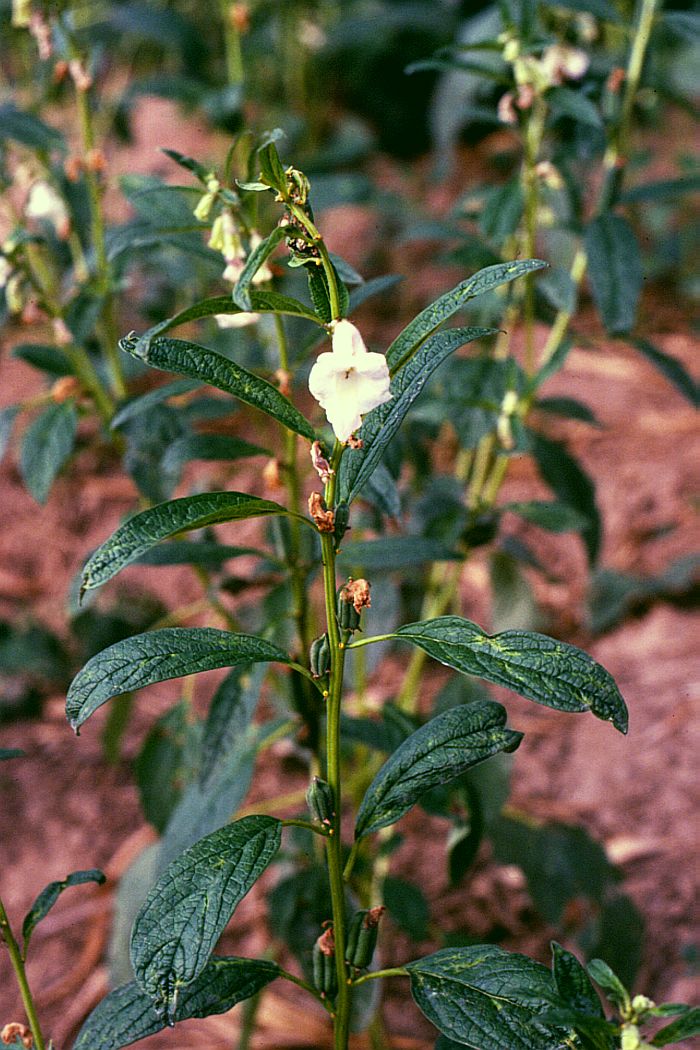 sesameSesamum indicum
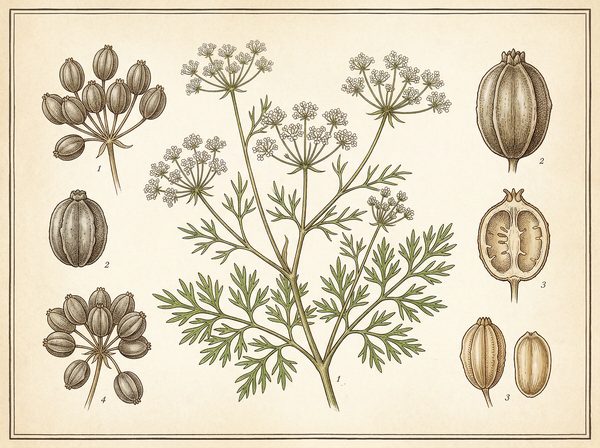 ajwainTrachyspermum ammi
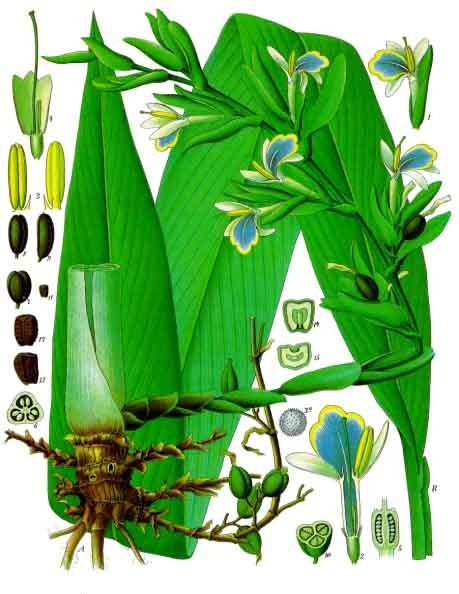 cardamomElettaria cardamomum
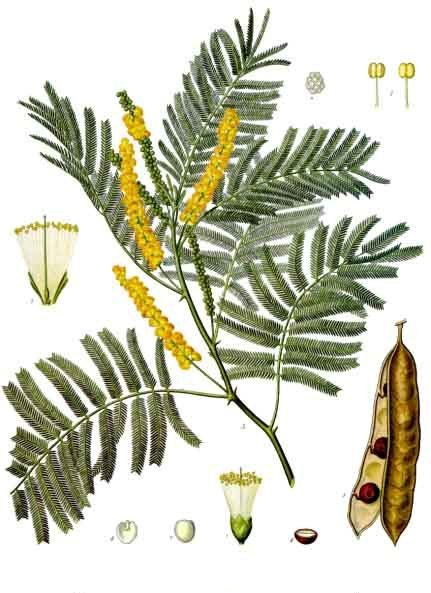 cutch treeAcacia catechu
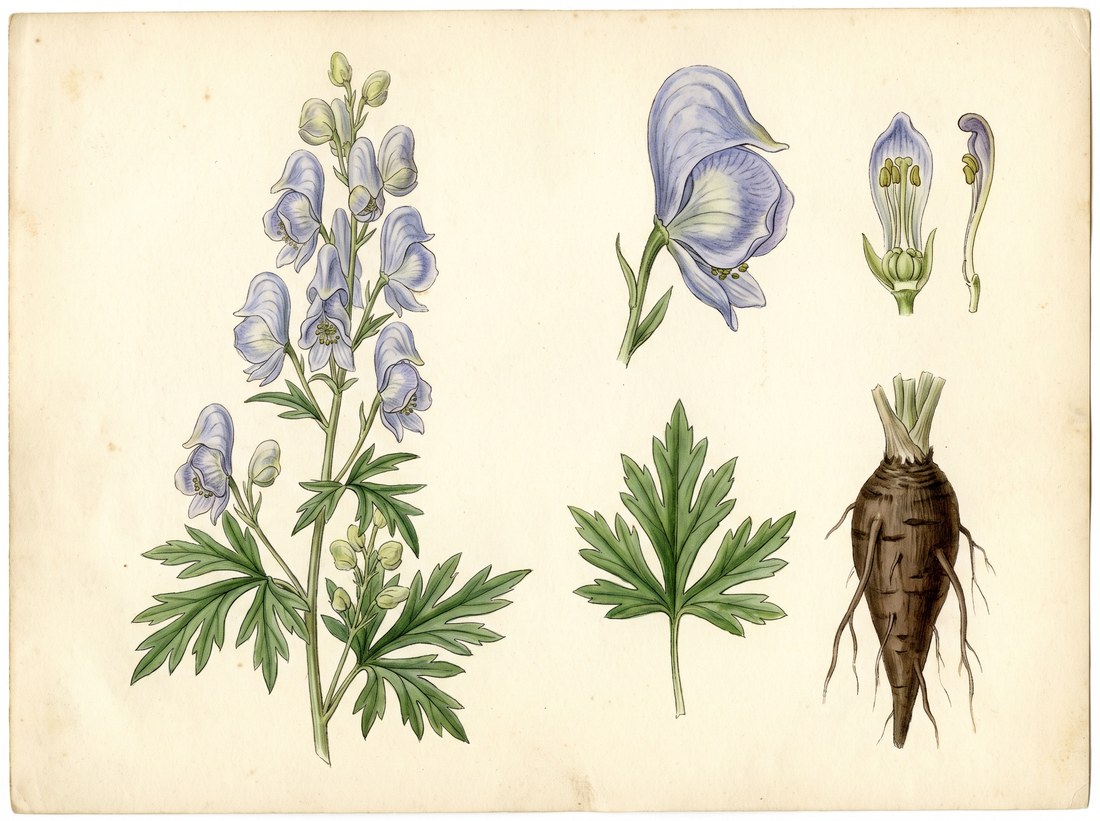 Indian ateesAconitum heterophyllum
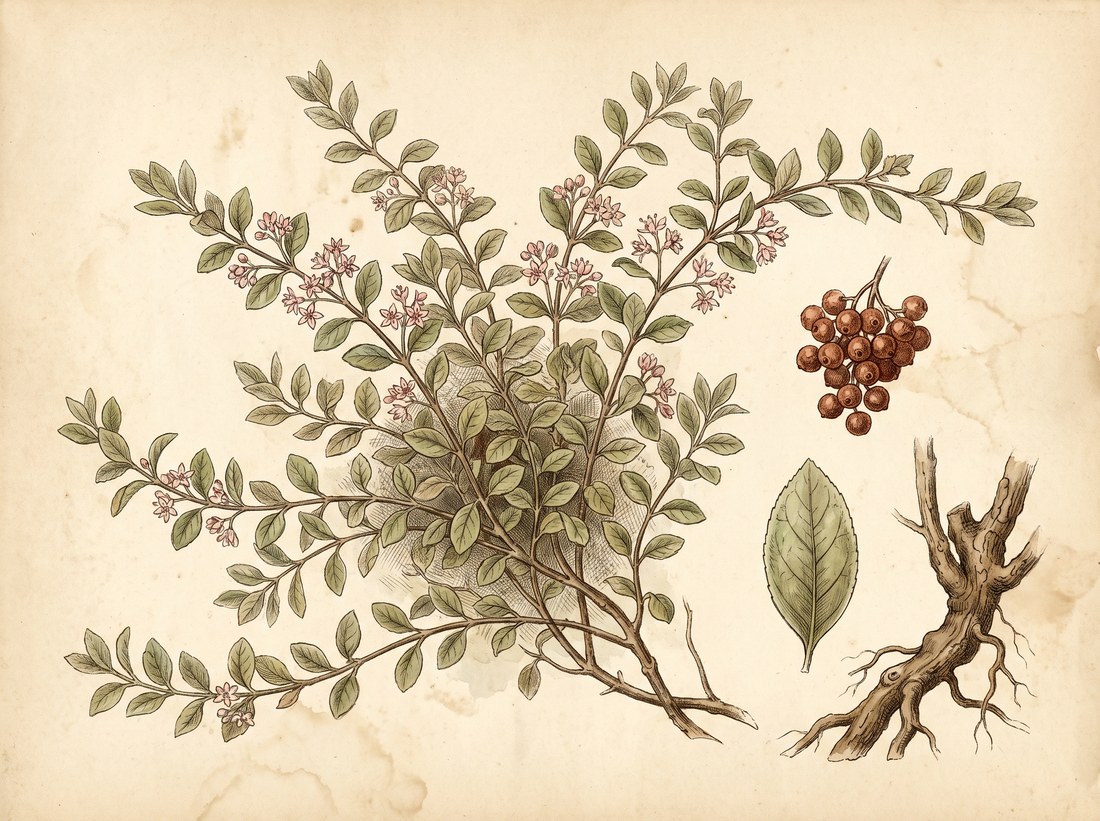 false black pepperEmbelia ribes
Nearby on the shelf
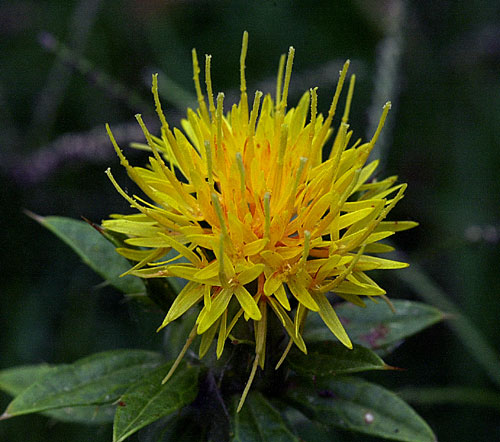 SafflowerCarthamus tinctorius
 SaffronCrocus sativus
 SageSalvia officinalis
 SagoSago
 SalepOrchis mascula
 Sand-spurreySpergularia
 SandalwoodSantalum album
 Sangre de DragoCroton lechleri
The whole plate is in the library. The compass, Compare, the Sky of eleven hundred plants and the formulary open with an email address and a password, free, with the formula builder and its safety engine. Herbert without limit, his formulating, clients, the handouts and the labels are the paid room.
Open the library, free