Ayurvedic Herbalism
Sacred fig
Ficus religiosa
Also known as peepal, bodhi tree, pipal tree, Ashvattha, Pippala, Bodhidruma.
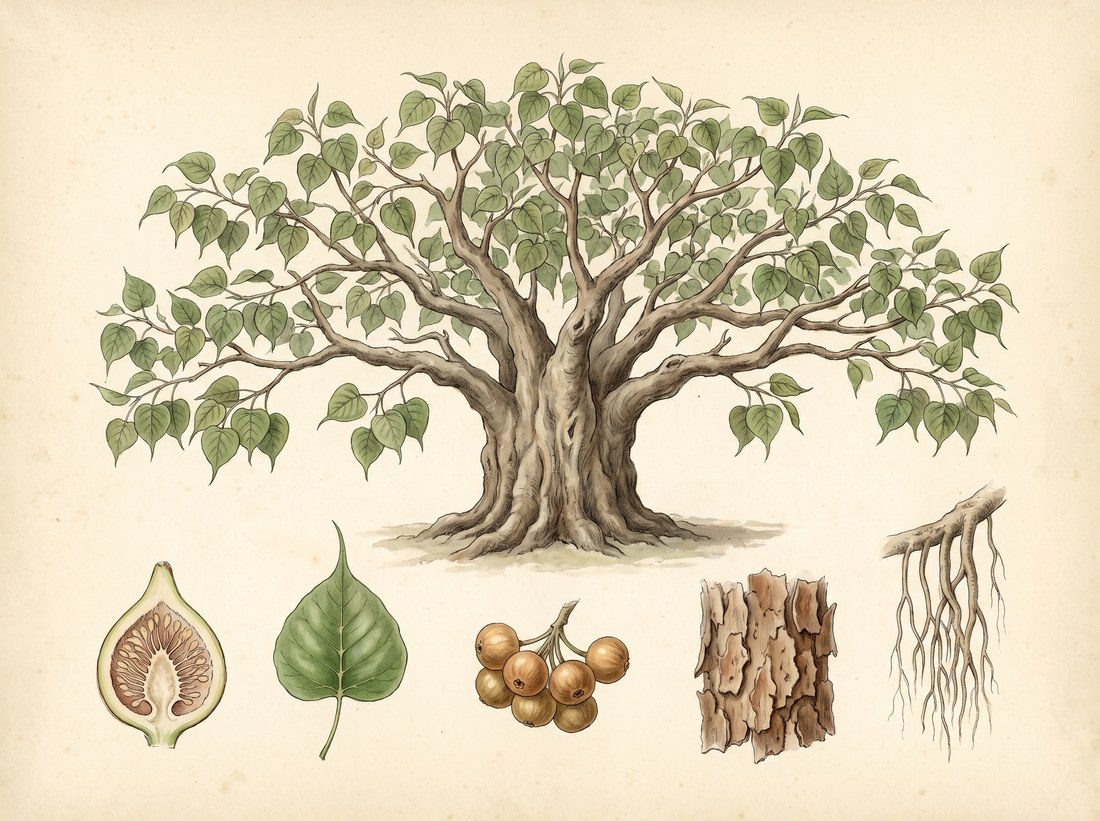
Ficus religiosa is the sacred fig or peepal, a large, long-lived tree of the mulberry family with heart-shaped leaves that end in a long drip tip. It is native to the Indian subcontinent and grows in every village, temple courtyard and roadside from the plains to the Himalayan foothills. In Ayurveda the tree is Ashvattha, and its bark is the cooling, astringent member of the Panchavalkala, the five fig barks used to stop bleeding, dry discharges and heal wounds. The bark, leaves, fruit, latex and aerial roots are all used, with the bark taking the lead.

Ask Herbert about Sacred fig. Herbert is the master herbalist inside Bountiful Herbs: he answers from this plate and eleven hundred others, with dosing, pairing and cautions. Your first ten questions are free.
Ask HerbertActions
Indications what the tradition reached for it in
- Bleeding gums and mouth ulcers (gargle)
- Leukorrhea and cervical erosion (douche and wash)
- Chronic diarrhea and dysentery
- Slow-healing wounds and ulcers (wash and paste)
- Burning urination and mild glycosuria
- Passive bleeding: epistaxis, menorrhagia, hematuria
- Cracked heels and warts (latex)
- Boils and skin inflammation (leaf paste)
- Secondary infertility with discharge (fruit, traditional)
- Excess sweating and pitta heat states
Specific indications
A hot, flushed pitta patient with bleeding gums, mouth sores and a tendency to nosebleeds who needs a cooling astringent rather than a warming one
Chronic watery or bloody diarrhea with burning and thirst where the gut lining needs toning without adding heat
Persistent leukorrhea or a non-healing cervical erosion that responds to Panchavalkala sitz baths and douches
A wound or ulcer that weeps, stays red and refuses to close, needing a drying, cleansing wash before it can granulate
Safety
The record lists 5 contraindications; open the plate in the library to read them in full.
In practice
Reach for Ashvattha when a pitta or kapha picture shows leakage: bleeding, weeping, discharge or loose stool with heat behind it. The bark decoction is the workhorse. It is given internally for raktapitta and diarrhea with rice water or honey as the anupana, and used externally as a gargle for mouth ulcers and bleeding gums, as a sitz bath and douche for leukorrhea and cervical erosion, and as a wash for wounds.
In Ayurveda
Rasa: kashaya (astringent), madhura (sweet). Virya: sheeta (cooling). Vipaka: katu (pungent). Guna: guru (heavy), ruksha (dry). Dosha: pacifies kapha and pitta; may aggravate vata in excess because of its dry, astringent nature. Karma: stambhana (checks discharge and bleeding); raktastambhana (hemostatic); vranaropana (heals wounds and ulcers); dahaprashamana (relieves burning); yonidoshahara (corrects vaginal and uterine disorders); mutrasangrahaniya (reduces excessive urination); kaphapittahara (reduces kapha and pitta); varnya (improves complexion); vrishya (supports fertility, fruit). Classical indications: raktapitta (bleeding disorders); prameha (urinary disorders including diabetes); vrana (wounds and ulcers); yonidosha (vaginal discharge and uterine disorders); atisara (diarrhea); daha (burning sensation); visarpa (spreading skin inflammation); mukhapaka (mouth ulcers); vandhyatva (infertility, fruit); raktatisara (bloody diarrhea). The stem bark is the principal drug, taken as churna or kwatha and used as a wash and paste for wounds and discharges. The tender leaves and dried fruit are used as churna, the latex is applied to cracked skin and warts, and the bark is one of the five barks of the Panchavalkala group used for douches, gargles and washes. Classical formulations: Panchavalkala kwatha, Nyagrodhadi churna, Nyagrodhadi kwatha, Ashvattha twak churna, Ashvattha phala churna. Described in: Charaka Samhita, Sushruta Samhita, Ashtanga Hridaya, Bhavaprakasha Nighantu, Dhanvantari Nighantu, Raja Nighantu, Kaiyadeva Nighantu, Ayurvedic Pharmacopoeia of India.
Dosing as the sources wrote it
| Preparation | As written | Metric |
|---|---|---|
| Churna (bark) | 3-6 g powdered bark twice daily with honey or rice water | 3000-6000 mg |
| Kwatha (bark) | 50-100 mL decoction twice daily | 50-100 mL |
| Churna (fruit) | 3-6 g powdered dried fruit daily with milk | 3000-6000 mg |
| Kwatha, topical | 100-200 mL strong decoction as gargle, wash or douche once or twice daily | 100-200 mL |
| Kalka, topical | 5-10 g leaf or bark paste applied locally | 5000-10000 mg |
Doses are reproduced from the sources for practitioners and are not a recommendation for any person.
From the sources
Overview. Ficus religiosa is the sacred fig or peepal, a large, long-lived tree of the mulberry family with heart-shaped leaves that end in a long drip tip. It is native to the Indian subcontinent and grows in every village, temple courtyard and roadside from the plains to the Himalayan foothills. In Ayurveda the tree is Ashvattha, and its bark is the cooling, astringent member of the Panchavalkala, the five fig barks used to stop bleeding, dry discharges and heal wounds. The bark, leaves, fruit, latex and aerial roots are all used, with the bark taking the lead.
Clinical Notes. Reach for Ashvattha when a pitta or kapha picture shows leakage: bleeding, weeping, discharge or loose stool with heat behind it. The bark decoction is the workhorse. It is given internally for raktapitta and diarrhea with rice water or honey as the anupana, and used externally as a gargle for mouth ulcers and bleeding gums, as a sitz bath and douche for leukorrhea and cervical erosion, and as a wash for wounds.
Ayurvedic Profile. Rasa: kashaya (astringent), madhura (sweet). Virya: sheeta (cooling). Vipaka: katu (pungent). Guna: guru (heavy), ruksha (dry). Dosha: pacifies kapha and pitta; may aggravate vata in excess because of its dry, astringent nature.
In formulas
Sacred fig stands in 9 documented formulas in the library, among them Sārivādyāsava, Maha Yogarāja Guggulu, Vidāryādi Ghṛta, Nārāyaṇa Taila, Marma Guṭikā, Abhraka Bhasma.
Often paired with
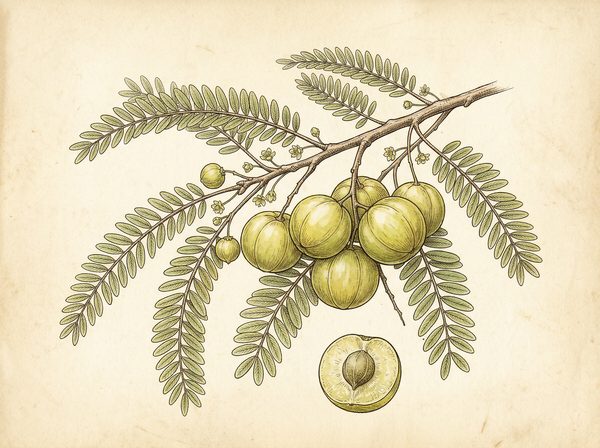 Indian gooseberryPhyllanthus emblica
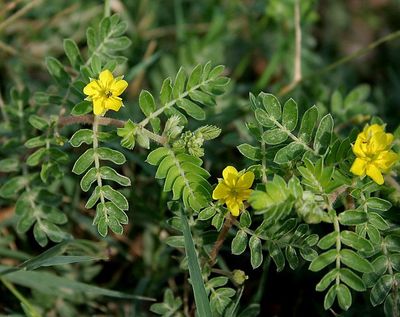 puncture vineTribulus terrestris
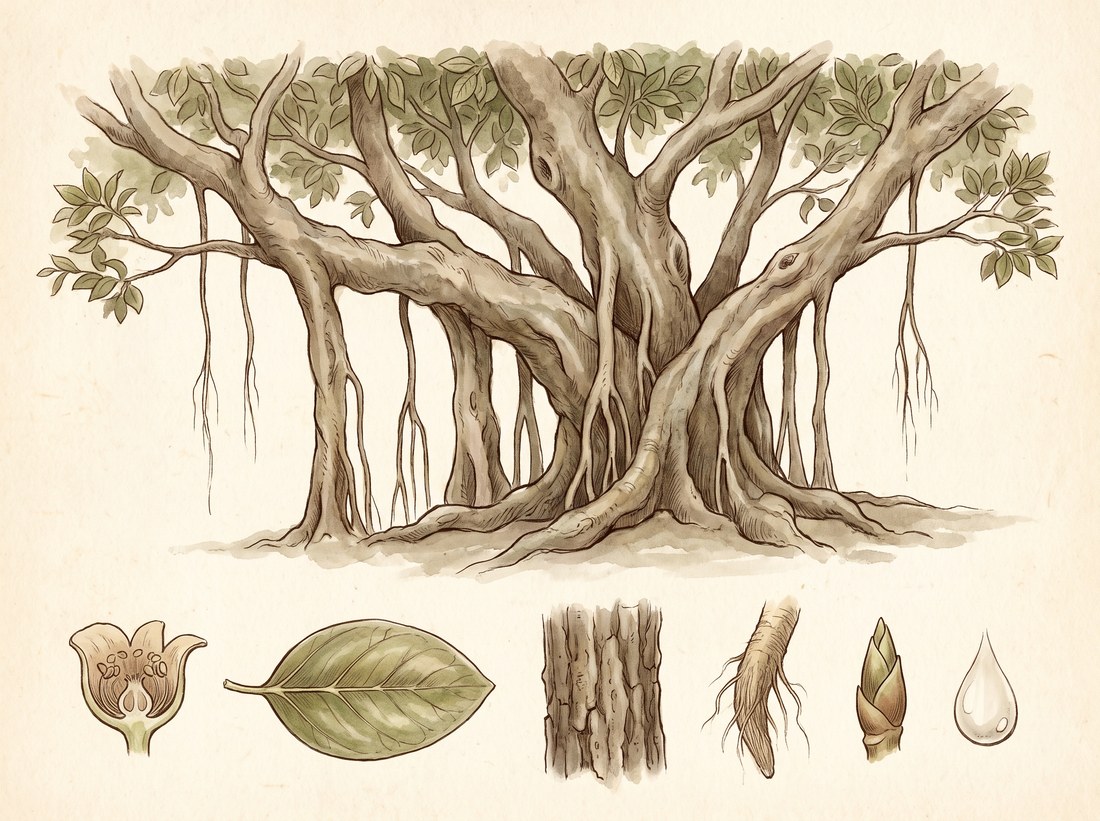 banyanFicus benghalensis
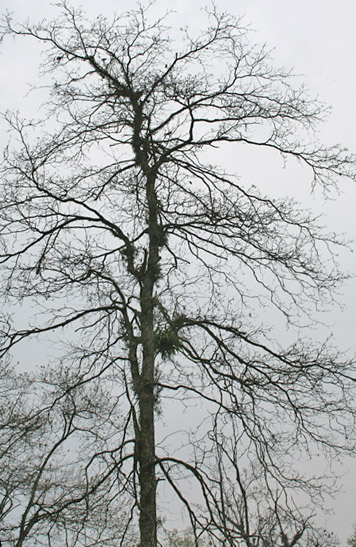 chebulic myrobalanTerminalia chebula
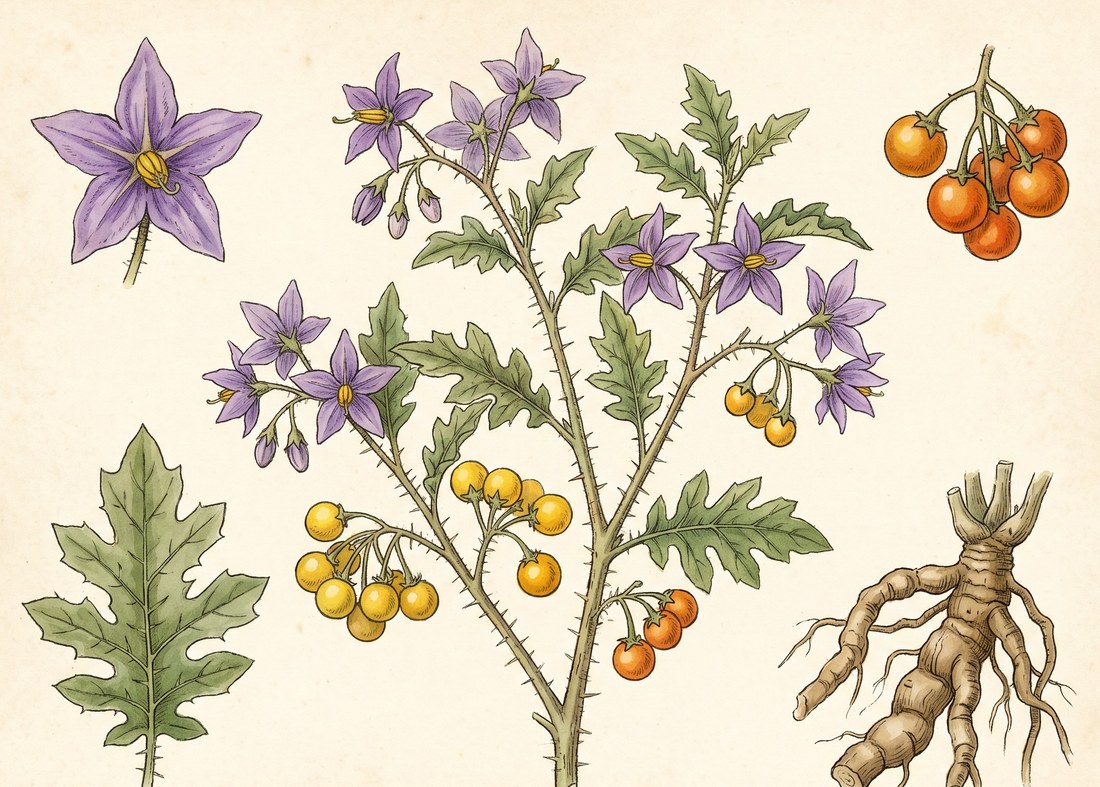 Indian nightshadeSolanum indicum
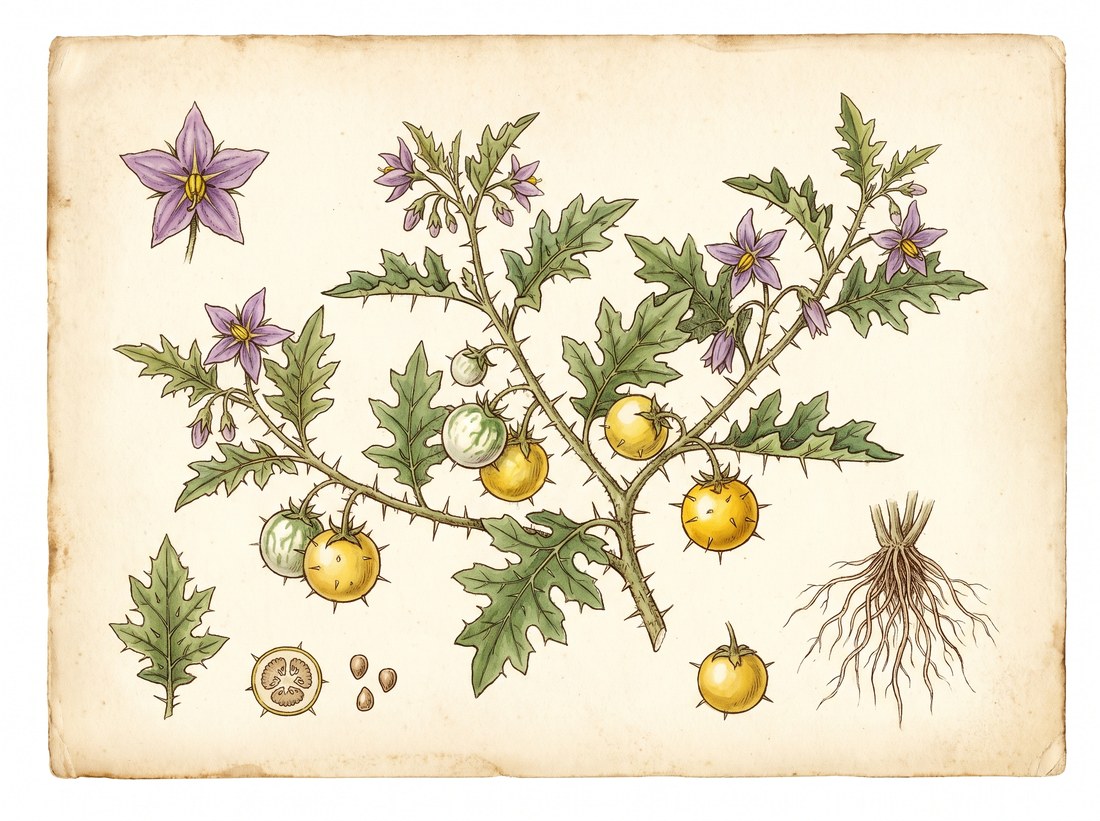 yellow-berried nightshadeSolanum xanthocarpum
Nearby on the shelf
 Royal fernOsmunda regalis
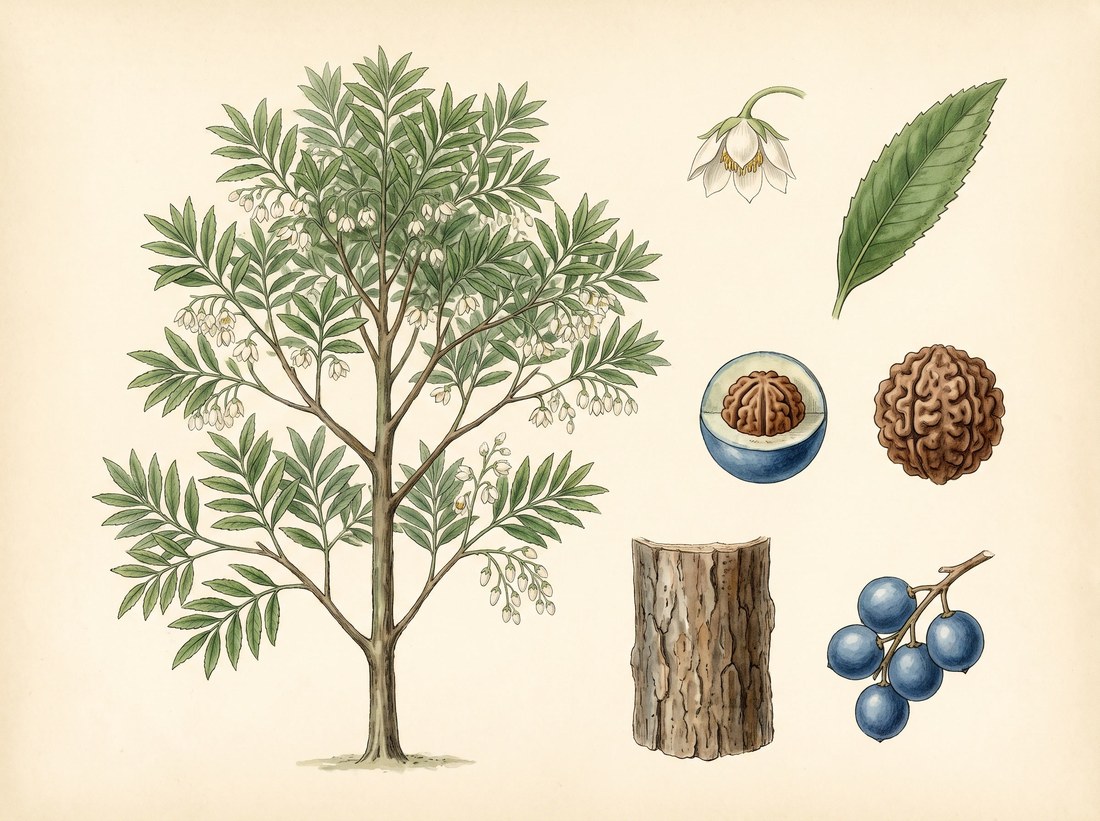 RudrakshaElaeocarpus ganitrus
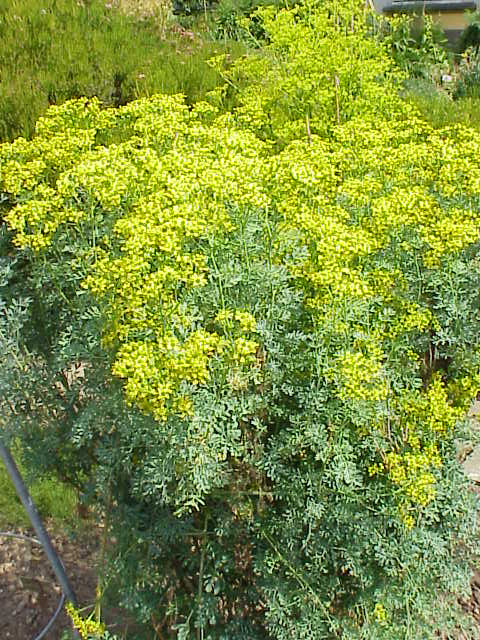 RueRuta graveolens
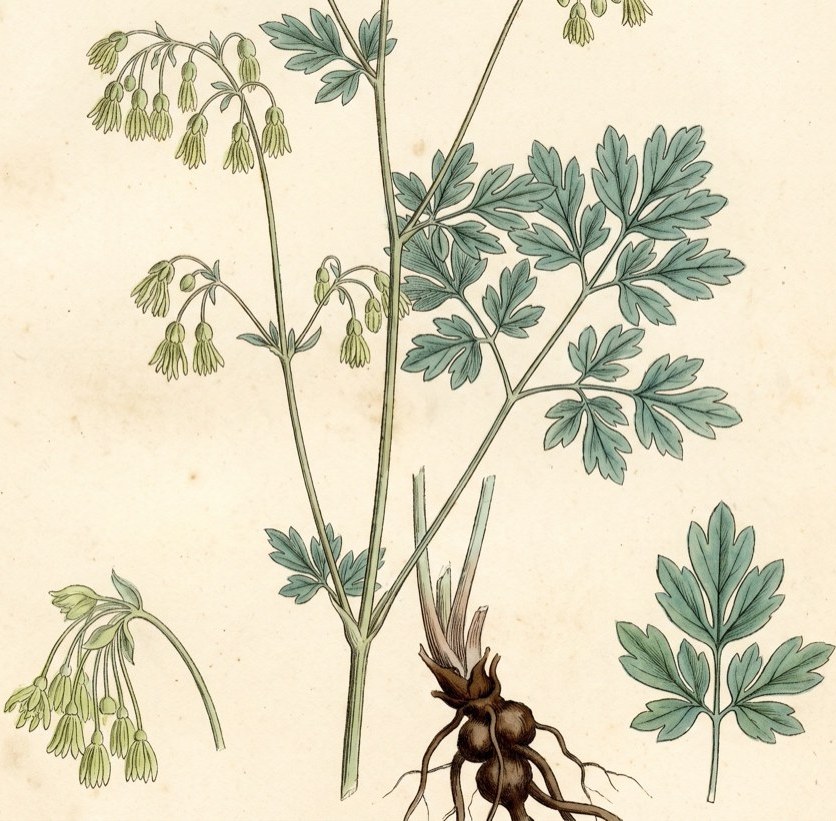 Rue AnemoneThalictrum
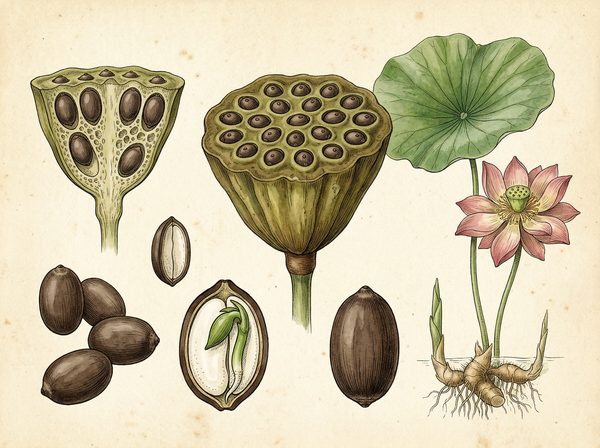 Sacred lotusNelumbo nucifera
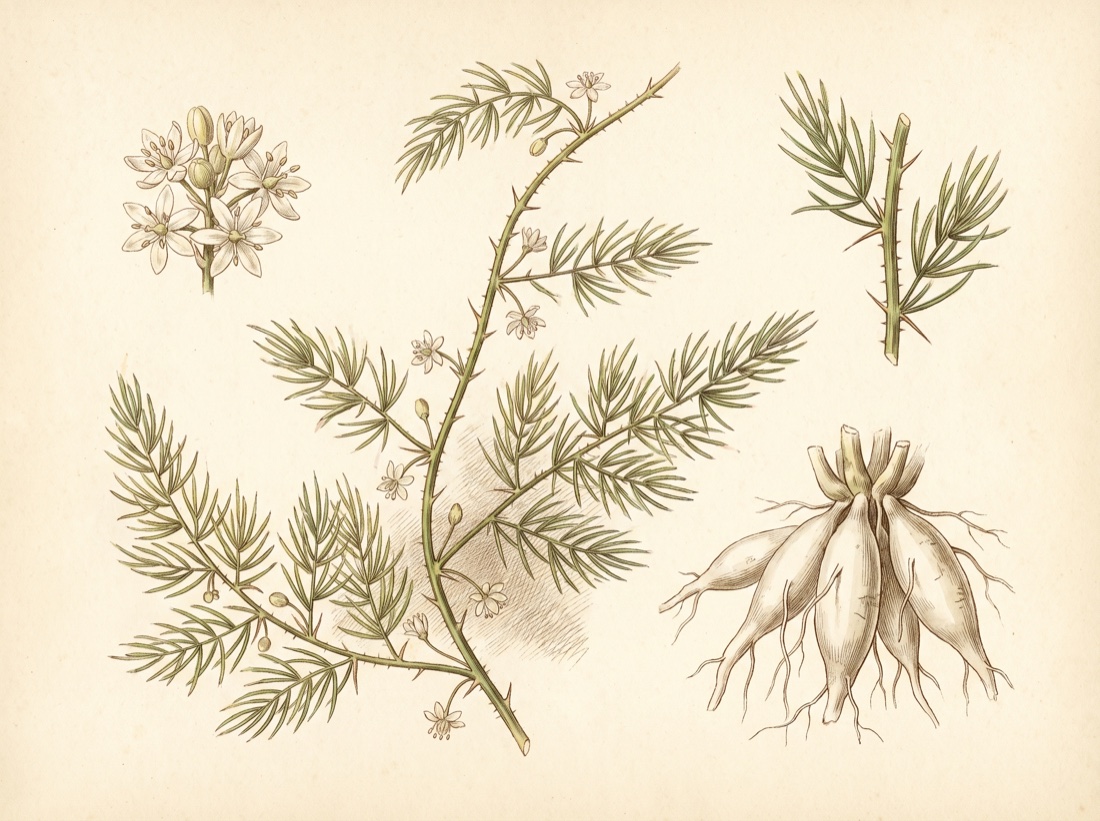 Safed musliAsparagus adscendens
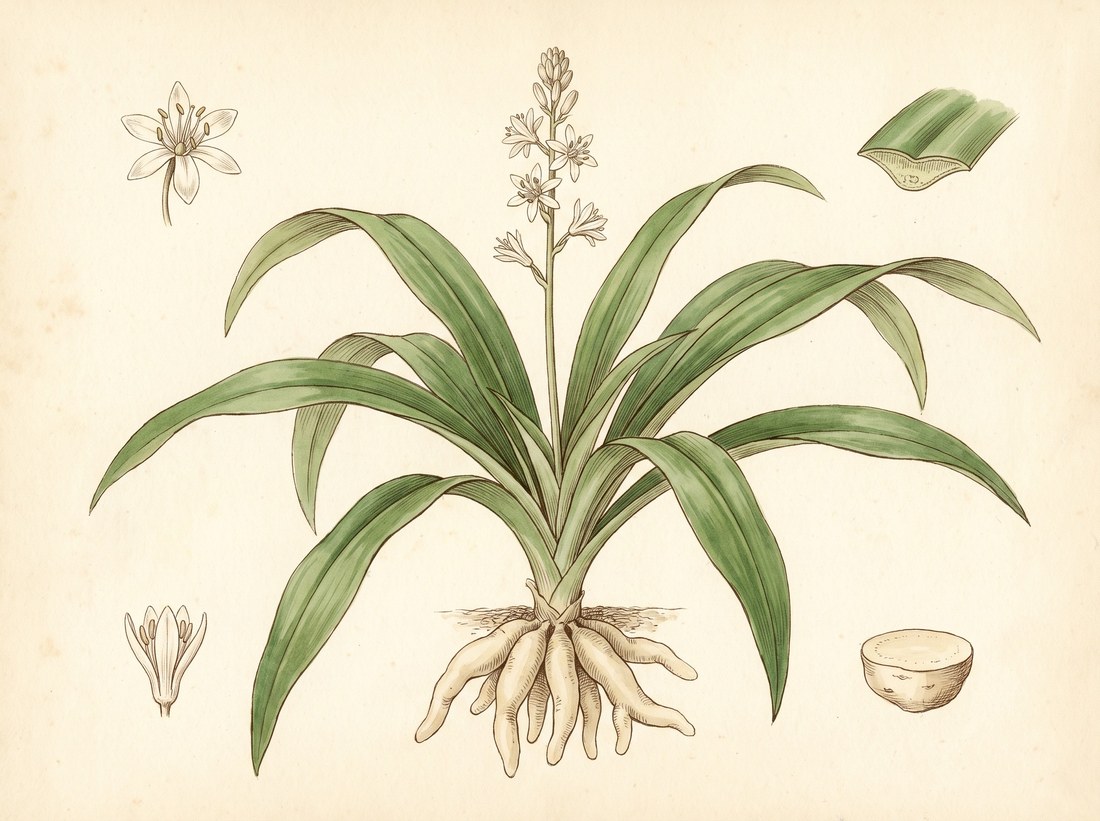 Safed musliChlorophytum borivilianum
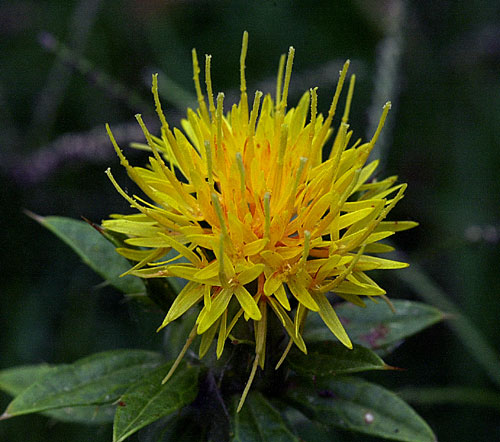 SafflowerCarthamus tinctorius
The whole plate is in the library. The compass, Compare, the Sky of eleven hundred plants and the formulary open with an email address and a password, free, with the formula builder and its safety engine. Herbert without limit, his formulating, clients, the handouts and the labels are the paid room.
Open the library, free