Ayurvedic Herbalism
Banyan
Ficus benghalensis
Also known as Indian banyan, Bengal fig, banyan fig, Vata, Nyagrodha, Bahupada.
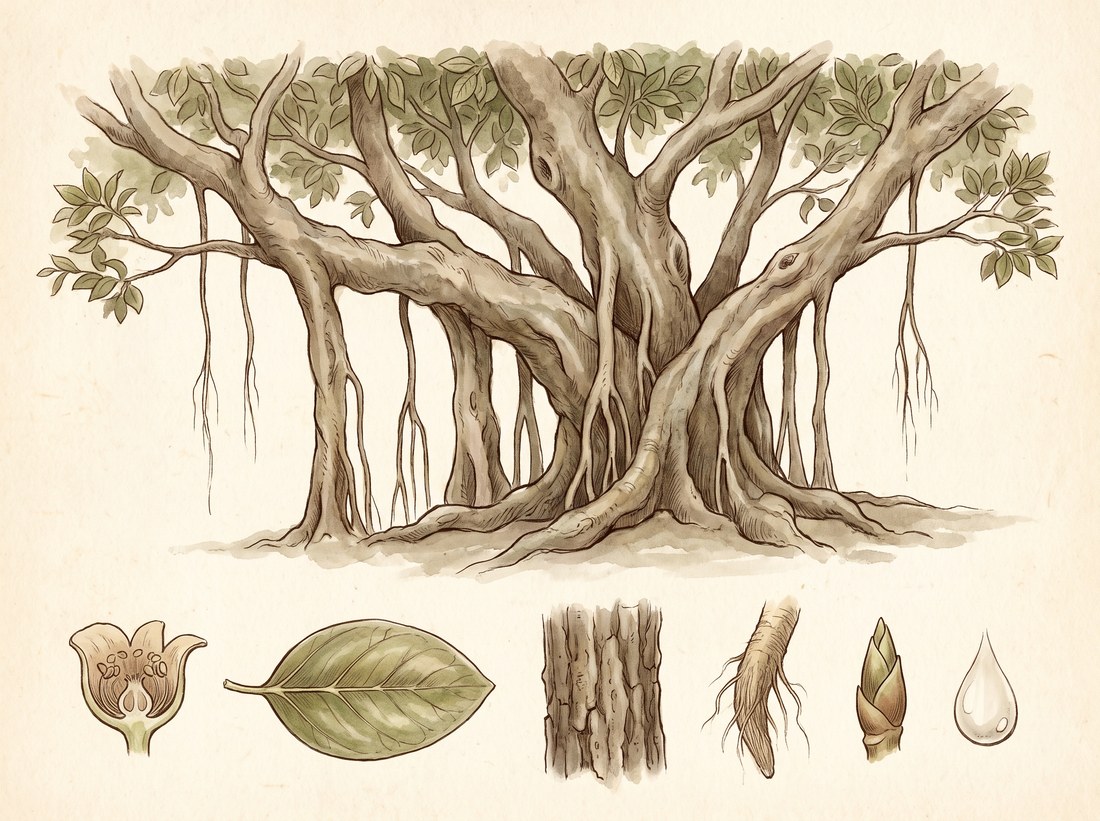
Ficus benghalensis is the banyan, the vast spreading fig of the Indian plains whose aerial roots descend from the branches to become new trunks, so that a single tree can shade a village; it is India's national tree and grows wild and planted from the Himalayan foothills to the southern coasts. In Ayurveda it is Vata or Nyagrodha, the first of the Panchavalkala, the five astringent barks, and its bark, tender leaf buds, aerial roots and latex are used for bleeding, discharge, diarrhea, diabetes, wounds and, in a special tradition, to establish and protect pregnancy. Its qualities are cold, heavy and astringent, and it is the great steadier of the tissues.

Ask Herbert about Banyan. Herbert is the master herbalist inside Bountiful Herbs: he answers from this plate and eleven hundred others, with dosing, pairing and cautions. Your first ten questions are free.
Ask HerbertActions
Indications what the tradition reached for it in
- Heavy menstrual bleeding and intermenstrual spotting
- Leukorrhea and recurrent vaginal discharge
- Bleeding hemorrhoids
- Chronic diarrhea and dysentery
- Type 2 diabetes with frequent urination (adjunct)
- Mouth ulcers, bleeding gums and loose teeth (gargle, twig)
- Weeping wounds, ulcers and burns (bark wash)
- Skin inflammation with discharge (Panchavalkala wash)
- Female subfertility and recurrent early miscarriage (vata shunga, traditional adjunct)
- Low semen quality with heat (traditional)
- Cracked heels and anal fissure (latex, topical)
Specific indications
A pitta-kapha woman with heavy periods and a persistent whitish discharge, a burning sensation and fatigue, treated with the bark decoction inside and Panchavalkala as a sitz bath outside
The couple with unexplained early pregnancy losses, for whom the Ayurvedic physician gives ground vata shunga in milk in the days around ovulation and through the first trimester as garbhasthapana
Bleeding, spongy gums and mouth ulcers in a hot constitution, treated with the bark gargle and the aerial root chewed as a toothbrush
A diabetic with frequent urination, hot loose stools and slow-healing skin, in whom the astringent cooling bark helps all three
Safety
The record lists 9 contraindications; open the plate in the library to read them in full.
In practice
The Ayurvedic practitioner reaches for Nyagrodha when something is leaking that should be held: blood, discharge, urine, semen, or the fluid of a weeping wound. The bark decoction with honey is given for raktapitta, pradara and atisara, and with Lodhra and Ashoka for heavy hot bleeding; the Panchavalkala decoction, with Udumbara, Ashvattha, Plaksha and Parisha, is the standard wash, gargle and sitz bath for wounds, ulcers, vaginal discharge, piles and skin inflammation, and Panchavalkala ghrita is applied to burns and ulcers.
In Ayurveda
Rasa: kashaya (astringent). Virya: sheeta (cooling). Vipaka: katu (pungent). Guna: guru (heavy), ruksha (dry). Dosha: pacifies kapha and pitta; aggravates vata in excess through its drying astringency. Prabhava: garbhasthapana (establishes and protects pregnancy) is the special virtue the tradition assigns to the tender leaf buds taken in milk. Karma: stambhana (astringent, arrests discharge); raktastambhana (checks bleeding); grahi (absorbent, binds the bowel); vranaropana (heals wounds); mutrasangrahaniya (reduces excessive urination); varnya (improves complexion); shukrala (increases semen); garbhasthapana (supports conception and pregnancy); dahaprashamana (relieves burning); yonidoshahara (corrects disorders of the female tract); dantya (benefits the teeth); shothahara (reduces swelling). Classical indications: raktapitta (bleeding disorders); pradara (excessive menstrual and vaginal discharge); atisara (diarrhea); prameha (urinary disorders including diabetes); yoni roga (disorders of the female genital tract); vandhyatva (infertility); garbhasrava (threatened or habitual miscarriage); vrana (wounds and ulcers); visarpa (spreading skin inflammation); daha (burning sensation); mukhapaka (mouth ulcers); dantaroga (dental disease); shukra dosha (defects of semen). The stem bark is decocted alone or as one of the Panchavalkala, the five astringent barks, for washes, gargles, sitz baths and internal use; the tender leaf buds (vata shunga) are ground and taken in milk for conception and to steady pregnancy; the aerial roots are chewed as a toothbrush and powdered for discharge; the latex is applied to cracked heels, piles and wounds; and the ripe fruit is a minor cooling food. Classical formulations: Panchavalkala kwatha, Panchavalkala ghrita, Nyagrodhadi churna, Nyagrodhadi kwatha, Vata shunga kshirapaka, Nyagrodha twak kwatha. Described in: Charaka Samhita, Sushruta Samhita, Ashtanga Hridaya, Bhavaprakasha Nighantu, Dhanvantari Nighantu, Raja Nighantu, Kaiyadeva Nighantu, Ayurvedic Pharmacopoeia of India.
Dosing as the sources wrote it
| Preparation | As written | Metric |
|---|---|---|
| Kwatha | 50-100 mL decoction of bark twice daily | 50-100 mL |
| Churna | 3-6 g powdered bark or aerial root twice daily with honey or water | 3000-6000 mg |
| Vata shunga kshirapaka | 3-6 g ground tender leaf buds simmered in 200 mL milk, taken once daily | 3000-6000 mg |
| Panchavalkala wash | 100-200 mL cooled decoction as a wash, gargle or sitz bath once or twice daily | 100-200 mL |
| Latex, topical | 2-5 drops fresh latex applied to cracked heels or piles once daily | 0.04-0.1 mL |
Doses are reproduced from the sources for practitioners and are not a recommendation for any person.
From the sources
Overview. Ficus benghalensis is the banyan, the vast spreading fig of the Indian plains whose aerial roots descend from the branches to become new trunks, so that a single tree can shade a village; it is India's national tree and grows wild and planted from the Himalayan foothills to the southern coasts. In Ayurveda it is Vata or Nyagrodha, the first of the Panchavalkala, the five astringent barks, and its bark, tender leaf buds, aerial roots and latex are used for bleeding, discharge, diarrhea, diabetes, wounds and, in a special tradition, to establish and protect pregnancy. Its qualities are cold, heavy and astringent, and it is the great steadier of the tissues.
Clinical Notes. The Ayurvedic practitioner reaches for Nyagrodha when something is leaking that should be held: blood, discharge, urine, semen, or the fluid of a weeping wound. The bark decoction with honey is given for raktapitta, pradara and atisara, and with Lodhra and Ashoka for heavy hot bleeding; the Panchavalkala decoction, with Udumbara, Ashvattha, Plaksha and Parisha, is the standard wash, gargle and sitz bath for wounds, ulcers, vaginal discharge, piles and skin inflammation, and Panchavalkala ghrita is applied to burns and ulcers.
Ayurvedic Profile. Rasa: kashaya (astringent). Virya: sheeta (cooling). Vipaka: katu (pungent). Guna: guru (heavy), ruksha (dry). Dosha: pacifies kapha and pitta; aggravates vata in excess through its drying astringency.
In formulas
Banyan stands in 12 documented formulas in the library, among them Uśīrāsava, Candanāsava, Sārivādyāsava, Arimedādi Taila, Kuṅkumādi Taila, Nārāyaṇa Taila.
Often paired with
 lodh treeSymplocos racemosa
 red sandalwoodPterocarpus santalinus
 sandalwoodSantalum album
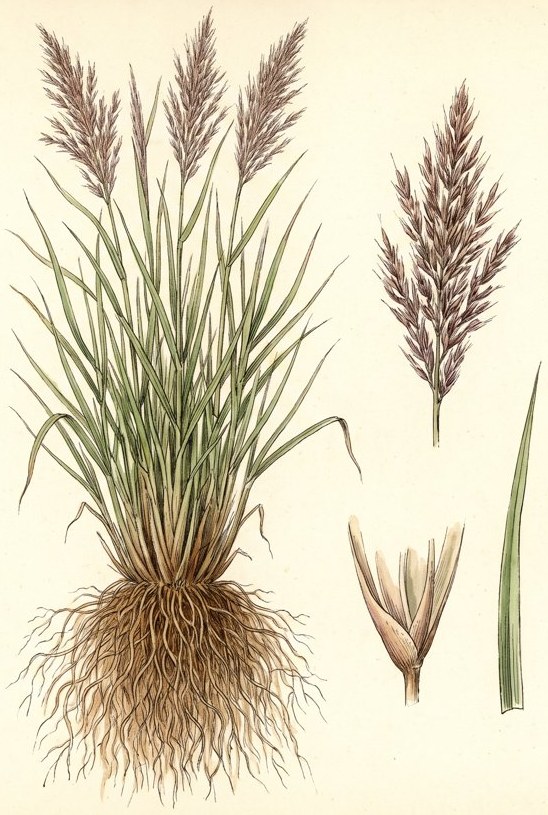 vetiverChrysopogon zizanioides
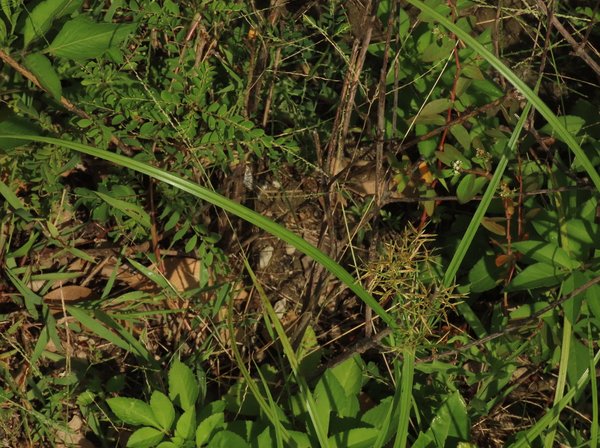 nut grassCyperus rotundus
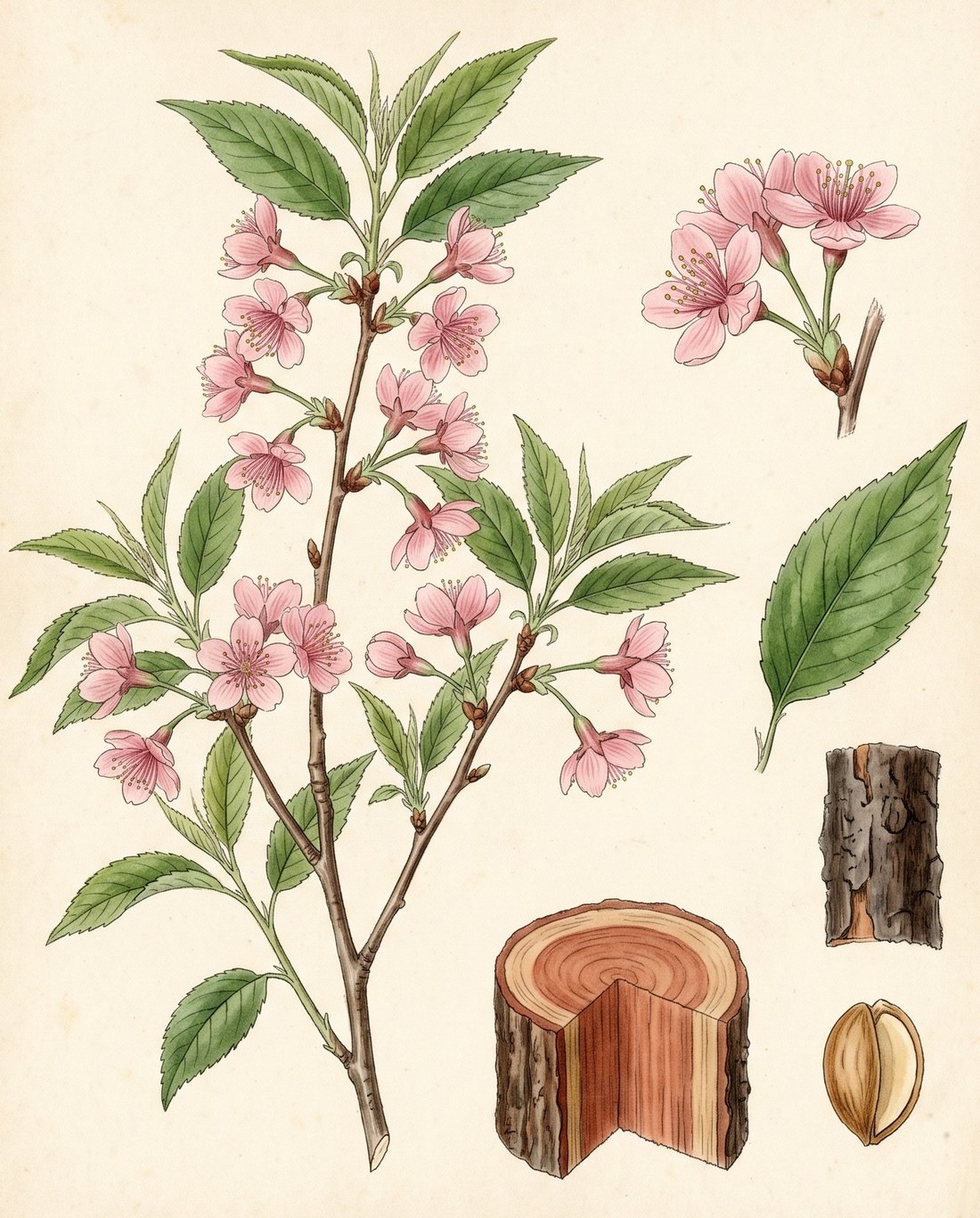 Himalayan wild cherryPrunus cerasoides
Nearby on the shelf
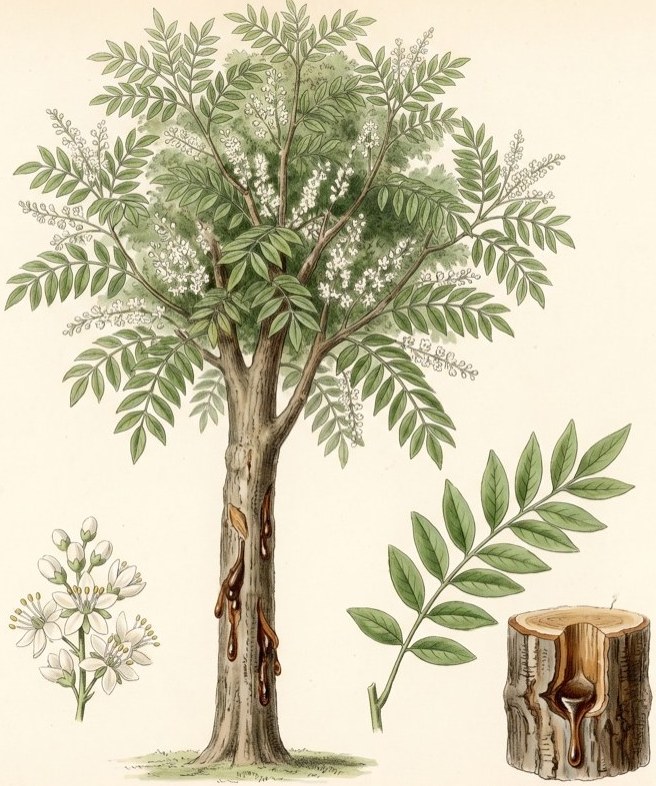 Balsam of PeruBalsamum Peruvianum
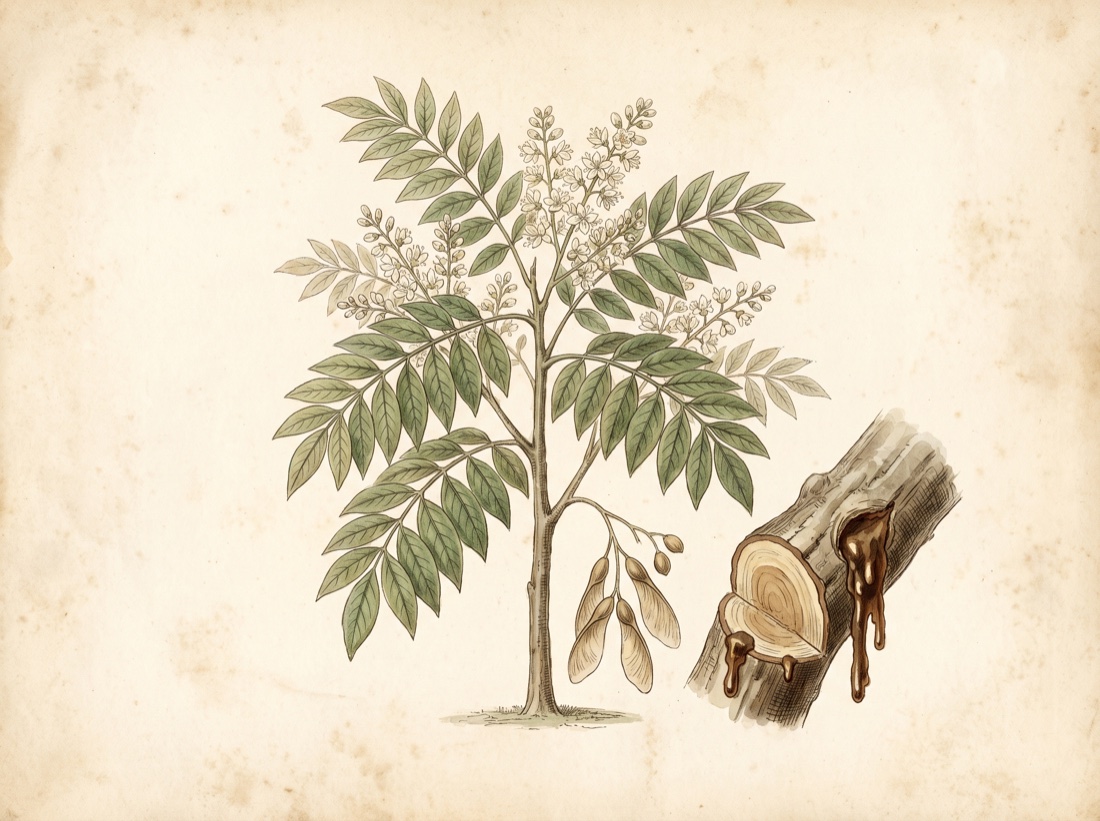 Balsam of ToluBalsamum Tolutanum
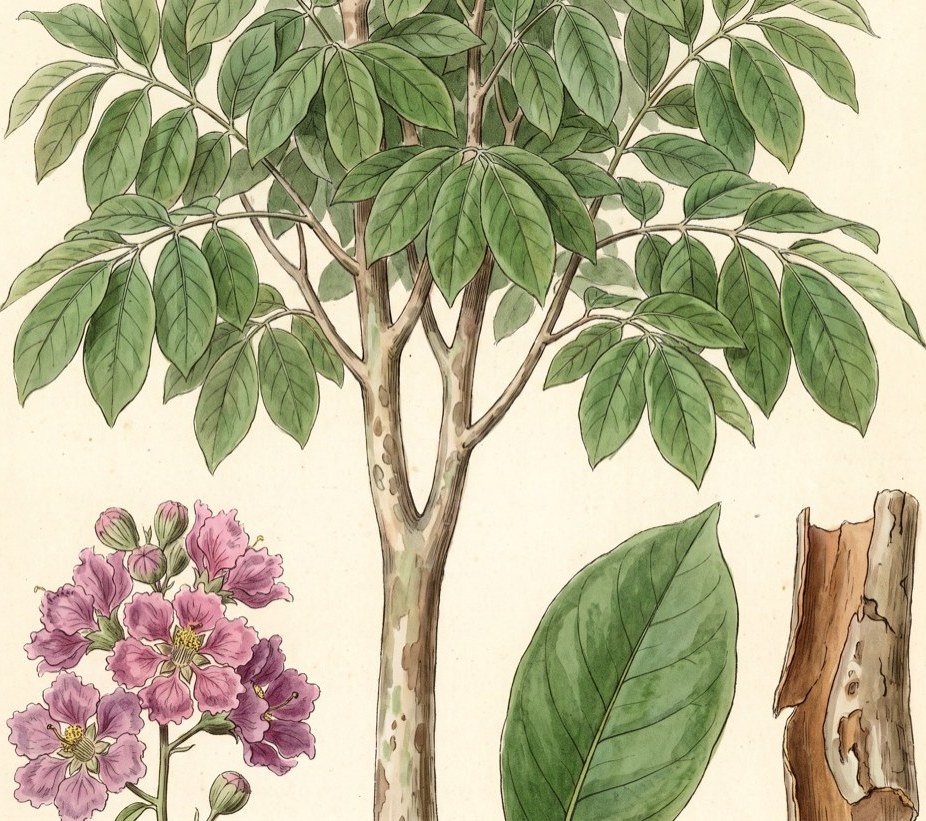 BanabaLagerstroemia speciosa
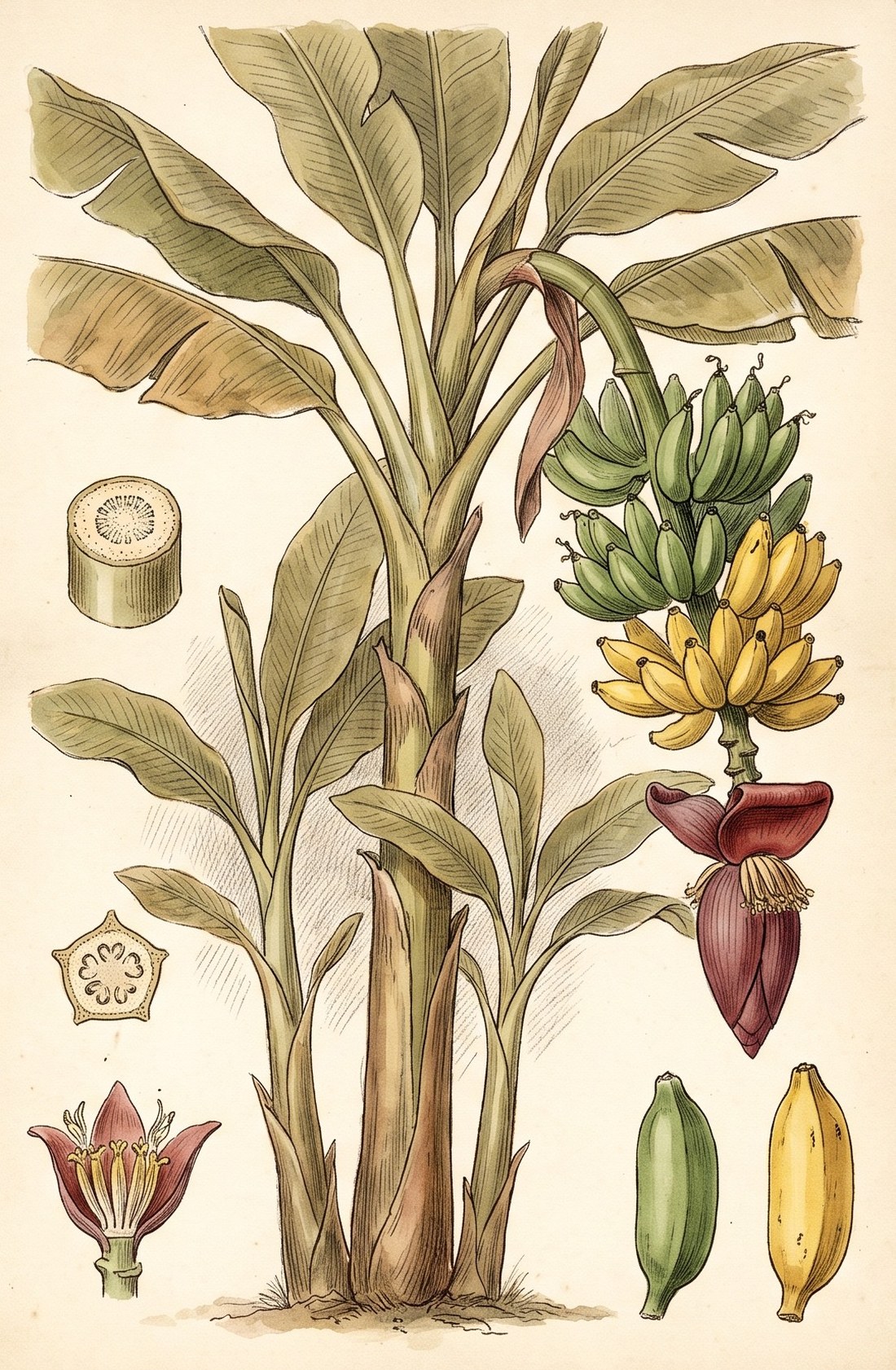 BananaMusa paradisiaca
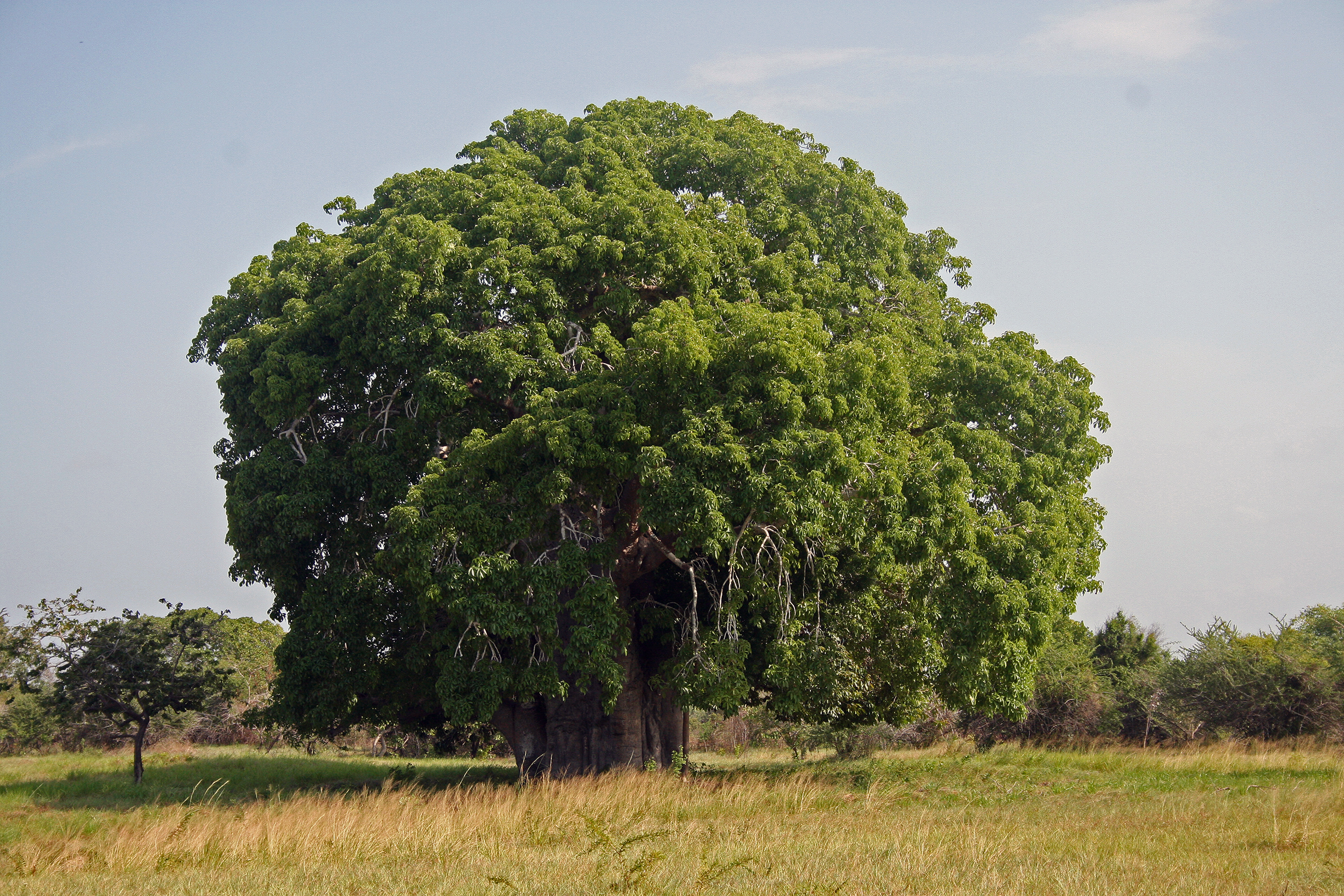 BaobabAdansonia
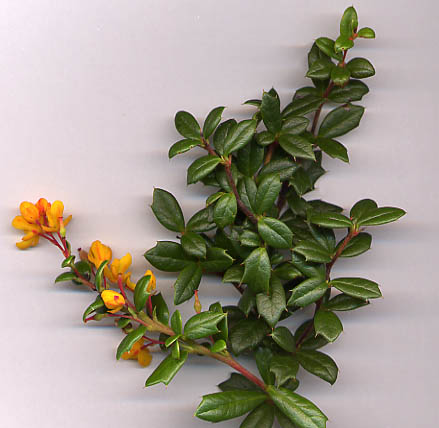 BarberryBerberis vulgaris
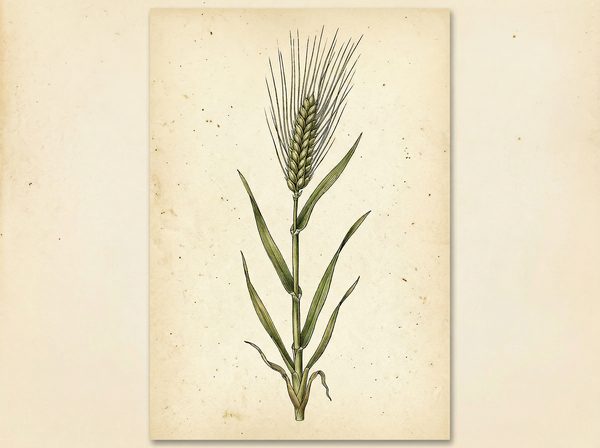 BarleyHordeum vulgare
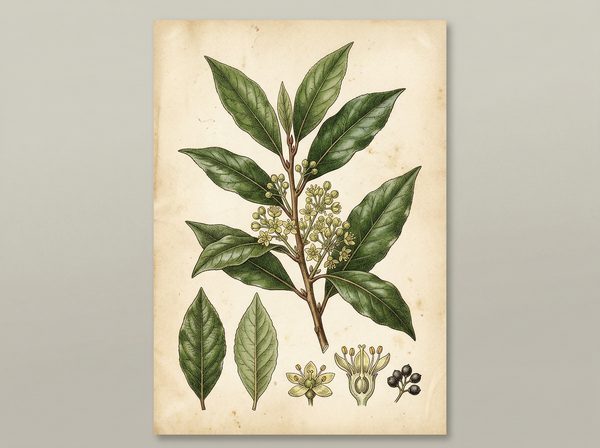 Bay LaurelLaurus nobilis
The whole plate is in the library. The compass, Compare, the Sky of eleven hundred plants and the formulary open with an email address and a password, free, with the formula builder and its safety engine. Herbert without limit, his formulating, clients, the handouts and the labels are the paid room.
Open the library, free