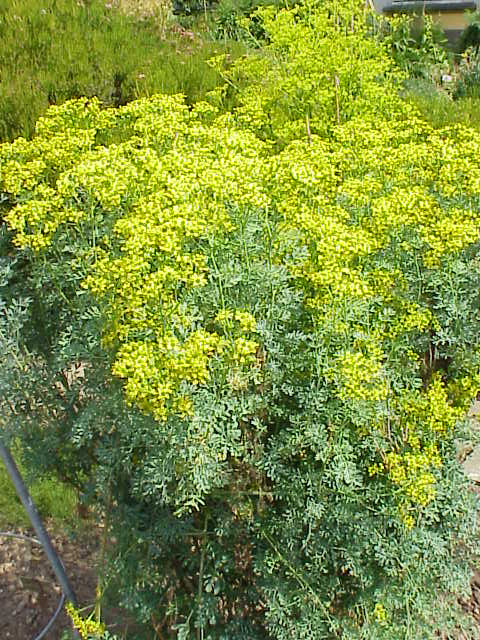
Western Herbalism
Rue
Ruta graveolens
Also known as Garden Rue.
Traditional abortifacient used externally for anti-inflammatory effects highly phototoxic - avoid sunlight exposure after skin contact low internal doses only due to toxicity

Ask Herbert about Rue. Herbert is the master herbalist inside Bountiful Herbs: he answers from this plate and eleven hundred others, with dosing, pairing and cautions. Your first ten questions are free.
Ask HerbertActions
Indications what the tradition reached for it in
- Sprain
- Bruises
- Colic
- Flatulence
- Nervous hysteria
- Infantile eczema
- Rheumatism
- Arthritis
- Inflammation
- Pain
- Abdominal cramps
- Toothache
- Headache
- Menstrual cramps
- Dermatitis
- Colds
- Amenorrhea
- Irregular menstruation
- Spasms
- Fever
- Parasitic infections
- Indigestion
- Cramps
- Fungal infections
- Menstrual irregularity
- Muscle spasms
- Nervous tension
- Stress
- Dysmenorrhea
- Digestive complaints
Safety
Low dose botanical. Used in drop doses in the classical practice; not a plant to dose freely.
Pregnancy: Pregnancy Caution
Breastfeeding: lactation
The record lists 5 contraindications; open the plate in the library to read them in full.
Dosing as the sources wrote it
| Preparation | As written | Metric |
|---|---|---|
| Dried herb tea | Dried herb tea 3-9g/day | 3000-9000 mg |
| Tincture | Tincture 5-15mL/day | 5-15 mL |
| Dose, 1 to 10 grains. | 64.8-648 mg | |
| Oleum Rutae, Oil of Rue | Dose, 1 to 6 drops. | 0.03-0.18 mL |
| Tinctura Rutae, Tincture of Rue (fresh herb, 8 ounces; Alcohol, 16 fluidounces) | Dose, 1 to 10 drops. | 0.02-0.2 mL |
| It deserves study; and from 1 to 10 drops of the strong tincture (fresh herb, ℥viii to alcohol, 98 per cent, Oj) may be given, well diluted with water, at a single dose. | 0.05-0.5 mL |
Doses are reproduced from the sources for practitioners and are not a recommendation for any person.
From the sources
Clinical Notes. Traditional abortifacient used externally for anti-inflammatory effects highly phototoxic - avoid sunlight exposure after skin contact low internal doses only due to toxicity
Action and Therapy. Rue is a gastro-intestinal irritant and a poison to the nervous system, capable, in large doses, of causing death. It is emmenagogue and anthelmintic. Acting strongly upon the uterus, it may be given in amenorrhea due to atony, but the dose must be small lest an inflammatory action be induced. It is a good vermifuge, though its disagreeable taste is a decided obstacle to its use. It has been suggested as a remedy for irritability of the urinary tract when due to atony, and in nervous disorders of a spasmodic type. On account of its ecbolic qualities it should not be administered during pregnancy.
Action, Medical Uses, and Dosage. Oil of rue is stimulant, antispasmodic, and emmenagogue. It has decidedly active properties. Locally it is irritant, and internally, even in small doses, it has produced severe gastro-intestinal and nervous disturbances. Oil of rue, in the dose of from 1 to 5 drops, 3 times a day, has been used with advantage in hysteria, convulsions, pertussis, amenorrhoea, and dysmenorrhoea. It is sometimes criminally used for the purpose of producing abortion, in which it is highly dangerous, having been followed by fatal consequences.
Preparation and Description. The fresh leaves and tops of Ruta graveolens, Linné, an herbaceous plant indigenous to the Mediterranean countries, yield, when distilled with water, about 0.06 per cent of volatile oil (Gildemeister and Hoffmann, loc.
Drawn from Scudder's Specific Medication and Specific Medicines; King's American Dispensatory, 18th edition (Felter and Lloyd); Felter's Eclectic Materia Medica, Pharmacology and Therapeutics, and the Bountiful Herbs editorial.
Nearby on the shelf
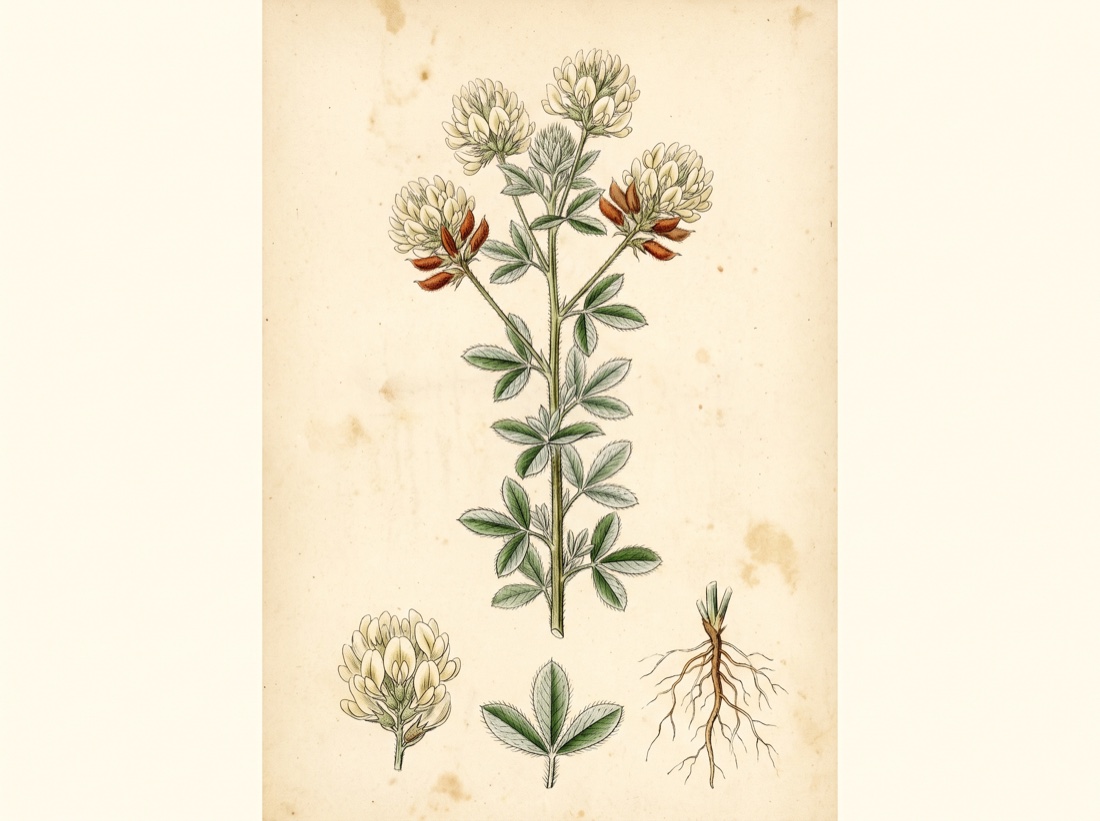 Round-headed bush cloverLespedeza capitata
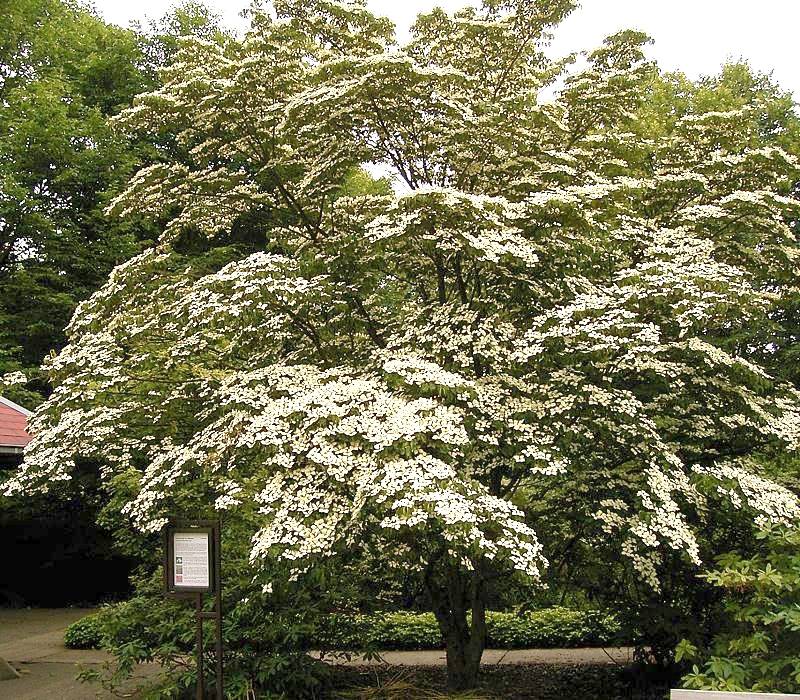 Round-leaved cornelCornus circinata
 Royal fernOsmunda regalis
 RudrakshaElaeocarpus ganitrus
 Rue AnemoneThalictrum
 Sacred figFicus religiosa
 Sacred lotusNelumbo nucifera
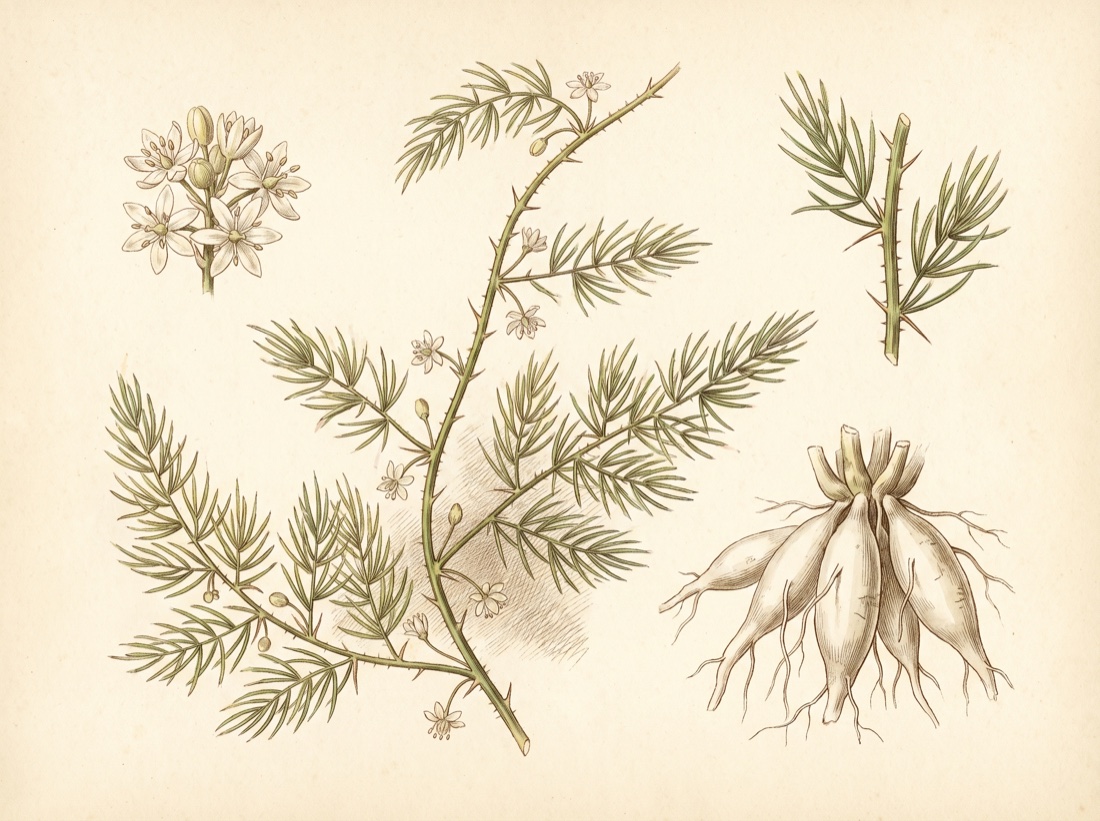 Safed musliAsparagus adscendens
The whole plate is in the library. The compass, Compare, the Sky of eleven hundred plants and the formulary open with an email address and a password, free, with the formula builder and its safety engine. Herbert without limit, his formulating, clients, the handouts and the labels are the paid room.
Open the library, free