Western Herbalism
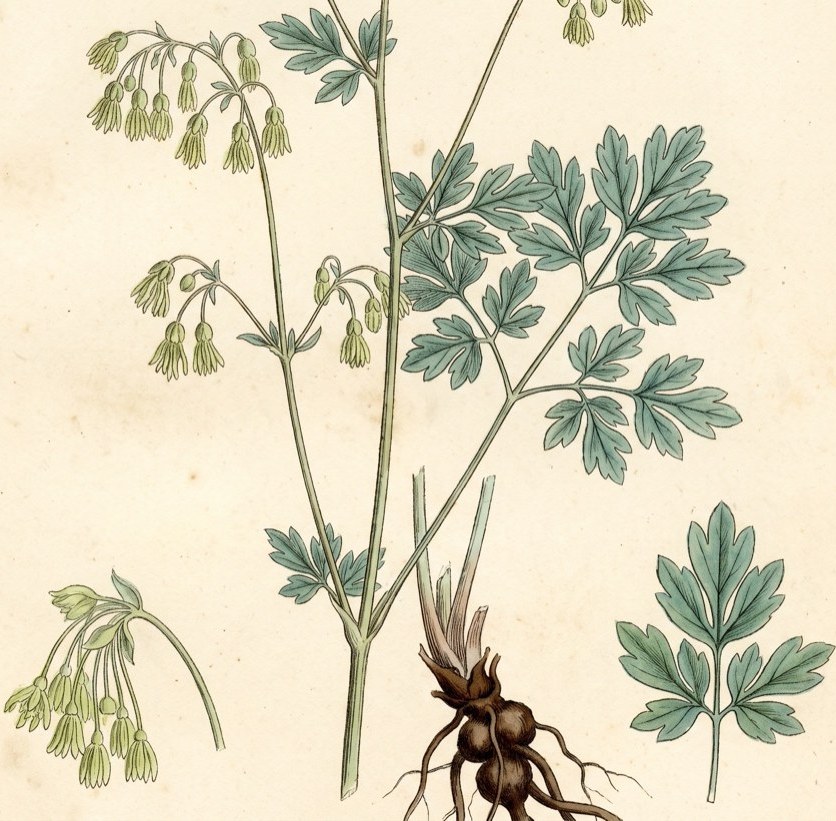
Rue Anemone
Thalictrum thalictroides
Also known as Anemone rue.
But little is known concerning the therapeutical properties of this plant. Dr. S. E. Barber, of Connsville, Mo., informs us that he has found it to be a valuable remedy in external and internal hemorrhoids, not accompanied with hemorrhage. The method of using it is to simply eat 3 or 4 of the small root-tubers, 3 times a day. We used some of the tubers, which he sent to us, in two cases of blind piles, and with apparent success. If further and more extensive trial of these tubers should confirm these conclusions as to their efficacy, it is probable that a fluid preparation could be made from them, possessing the same properties, and in a more convenient form (J. King).

Ask Herbert about Rue Anemone. Herbert is the master herbalist inside Bountiful Herbs: he answers from this plate and eleven hundred others, with dosing, pairing and cautions. Your first ten questions are free.
Ask HerbertSafety
Pregnancy: Limited data. No published safety rating was found for rue anemone in pregnancy. No toxicity has been reported for this species, though it belongs to the buttercup family, many of whose members are toxic.
Breastfeeding: Limited data. No published safety rating was found for rue anemone while breastfeeding, and no source assessed its use in nursing mothers.
Dosing as the sources wrote it
| Preparation | As written |
|---|---|
| Action, Medical Uses, and Dosage: But little is known concerning the therapeutical properties of this plant. Dr. S. E. Barber, of Connsville, Mo., informs us that he has found it to be a valuable remedy in external and internal hemorrhoids, not accompanied with hemorrhage. The method of using it is to simply eat 3 or 4 of the small root-tubers, 3 times a day. We used some of the tubers, which he sent to us, in two cases of blind piles, and with apparent success. If further and more extensive trial of these tubers should confirm these conclusions as to their efficacy, it is probable that a fluid preparation could be made from them, possessing the same properties, and in a more convenient form (J. King). |
Doses are reproduced from the sources for practitioners and are not a recommendation for any person.
From the sources
Action, Medical Uses, and Dosage. But little is known concerning the therapeutical properties of this plant. Dr. S. E. Barber, of Connsville, Mo., informs us that he has found it to be a valuable remedy in external and internal hemorrhoids, not accompanied with hemorrhage. The method of using it is to simply eat 3 or 4 of the small root-tubers, 3 times a day. We used some of the tubers, which he sent to us, in two cases of blind piles, and with apparent success. If further and more extensive trial of these tubers should confirm these conclusions as to their efficacy, it is probable that a fluid preparation could be made from them, possessing the same properties, and in a more convenient form (J. King).
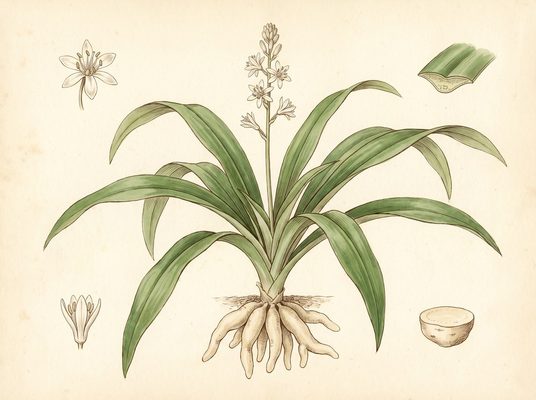
Botanical Source and History. This is a little plant about 6 or 8 inches high, common in open woods throughout the middle and eastern United States. The root consists of a cluster of oblong tubers, bearing a few radical biternate leaves, and a flowering stem.
The herb of Thalictrum anemonoides, Michaux (Anemone thalictroides, Linné). Nat. Ord: Ranunculaceae. COMMON NAMES: Rue anemone, Anemone rue. ILLUSTRATION: Botanical Magazine, 866.
Drawn from King's American Dispensatory, 18th edition (Felter and Lloyd), and the Bountiful Herbs editorial.
Nearby on the shelf
 Round-leaved cornelCornus circinata
 Royal fernOsmunda regalis
 RudrakshaElaeocarpus ganitrus
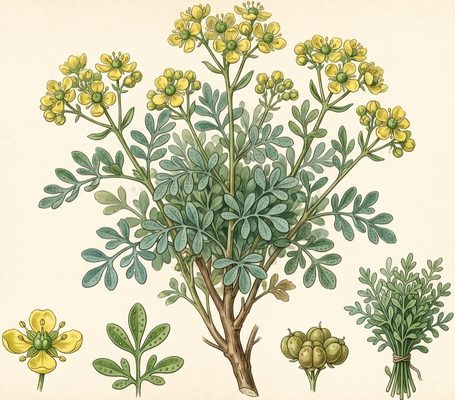 RueRuta graveolens
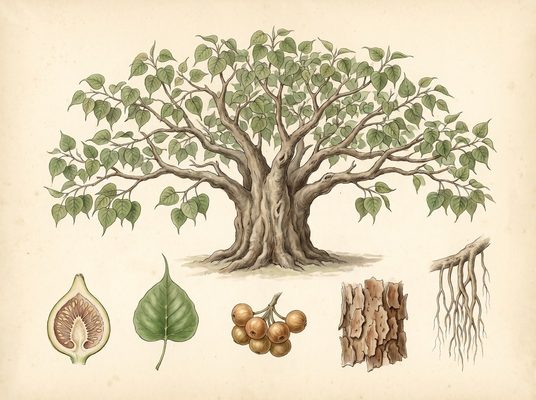 Sacred figFicus religiosa
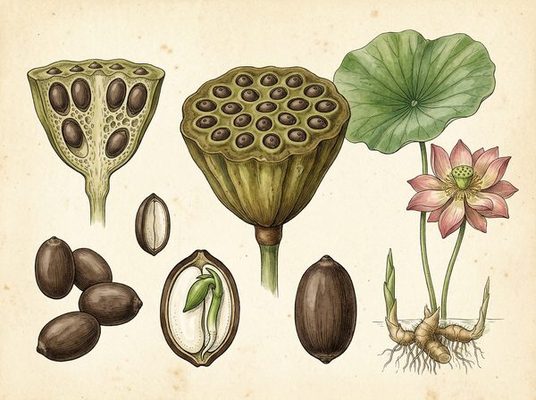 Sacred lotusNelumbo nucifera
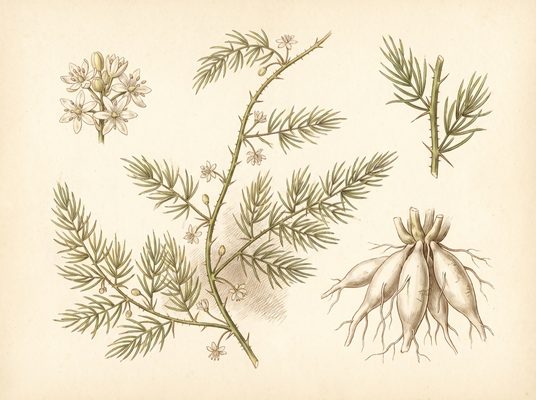 Safed musliAsparagus adscendens
 Safed musliChlorophytum borivilianum
The whole plate is in the library. The compass, Compare, the Sky of eleven hundred plants and the formulary open with an email address and a password, free, with the formula builder and its safety engine. Herbert in full, his formulating, clients, the handouts and the labels are the paid room.
Open the library, free