Ayurvedic Herbalism
Safed musli
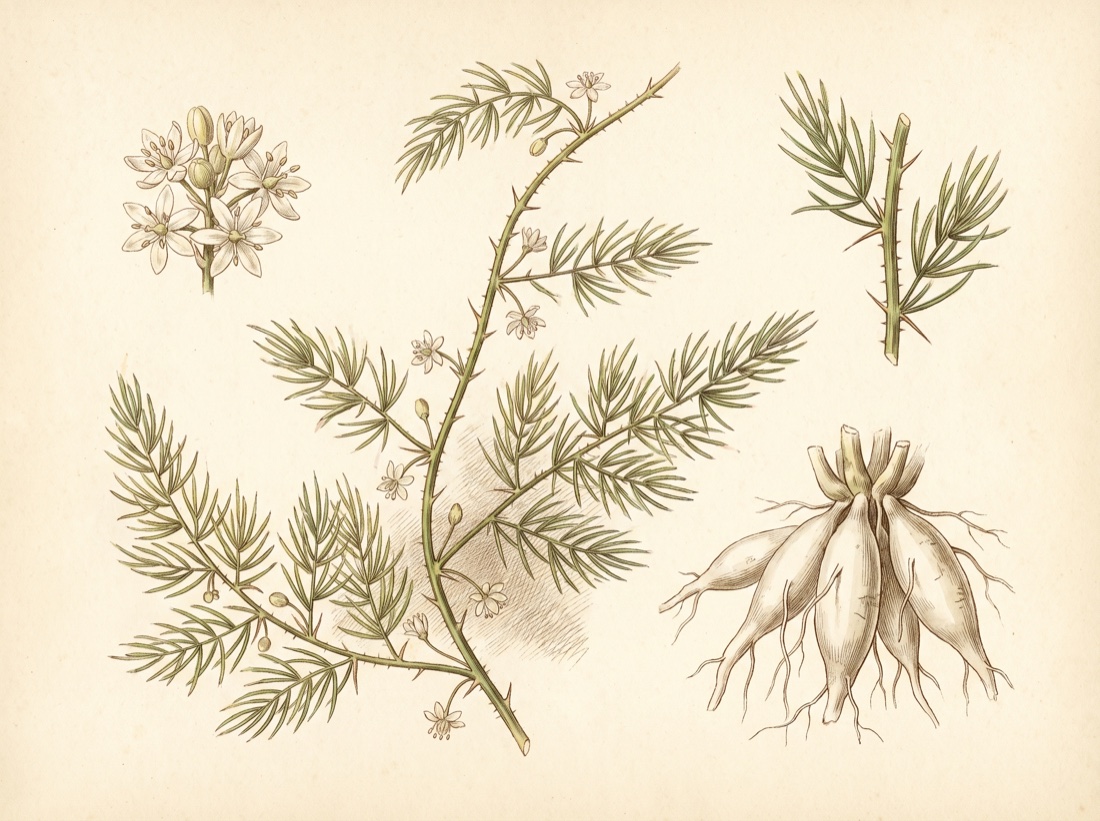
Asparagus adscendens
Also known as white musli, shweta musali, Himalayan asparagus.
Asparagus adscendens is a spiny, climbing asparagus of the Himalayan foothills and the dry hills of northern India and Pakistan, whose clustered white tuberous roots are one of the plants sold as safed musli, the white musli of Ayurvedic tonics. It is used in the same spirit as shatavari (Asparagus racemosus) as a sweet, cooling, building rasayana and as a vajikarana or reproductive tonic, and it also has a long folk reputation for chronic diarrhea and for increasing breast milk.

Ask Herbert about Safed musli. Herbert is the master herbalist inside Bountiful Herbs: he answers from this plate and eleven hundred others, with dosing, pairing and cautions. Your first ten questions are free.
Ask HerbertActions
Indications what the tradition reached for it in
- Sexual debility and low libido
- Oligospermia and poor semen quality
- Premature ejaculation and spermatorrhea (traditional)
- Leucorrhea
- Chronic diarrhea and dysentery
- General debility and convalescence
- Insufficient lactation
- Type 2 diabetes (adjunct)
- Stress-related fatigue and low mood
- Dry cough and chronic bronchial irritation
- Age-related weakness and poor memory
Specific indications
A thin, depleted, anxious man with low libido, low stamina and dryness who needs building rather than stimulating
A nursing mother with scanty milk, poor appetite and post-partum exhaustion of a vata type
Safety
The record lists 5 contraindications; open the plate in the library to read them in full.
In practice
Think of white musli as shatavari's drier-country cousin, a little more warming in effect and more strongly directed at male reproductive vitality. Its classical form is the root powder stirred into warm milk with a pinch of cardamom, taken morning and evening for weeks.
In Ayurveda
Rasa: madhura (sweet), tikta (bitter). Virya: sheeta (cooling). Vipaka: madhura (sweet). Dosha: pacifies vata and pitta; increases kapha in excess.
Dosing as the sources wrote it
| Preparation | As written | Metric |
|---|---|---|
| Churna (root powder) | 3-6 g twice daily in warm milk | 3000-6000 mg |
| Decoction | 5-10 g dried root daily | 5000-10000 mg |
| Standardized extract capsule | 250-500 mg twice daily | 250-500 mg |
Doses are reproduced from the sources for practitioners and are not a recommendation for any person.
From the sources
Overview. Asparagus adscendens is a spiny, climbing asparagus of the Himalayan foothills and the dry hills of northern India and Pakistan, whose clustered white tuberous roots are one of the plants sold as safed musli, the white musli of Ayurvedic tonics. It is used in the same spirit as shatavari (Asparagus racemosus) as a sweet, cooling, building rasayana and as a vajikarana or reproductive tonic, and it also has a long folk reputation for chronic diarrhea and for increasing breast milk.
Clinical Notes. Think of white musli as shatavari's drier-country cousin, a little more warming in effect and more strongly directed at male reproductive vitality. Its classical form is the root powder stirred into warm milk with a pinch of cardamom, taken morning and evening for weeks.
Nearby on the shelf
 RueRuta graveolens
 Rue AnemoneThalictrum
 Sacred figFicus religiosa
 Sacred lotusNelumbo nucifera
 Safed musliChlorophytum borivilianum
 SafflowerCarthamus tinctorius
 SaffronCrocus sativus
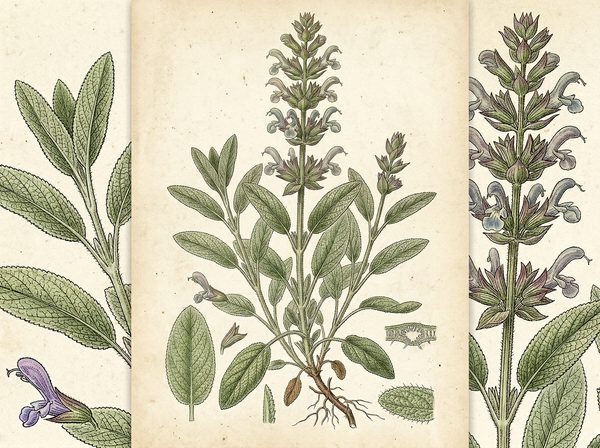 SageSalvia officinalis
The whole plate is in the library. The compass, Compare, the Sky of eleven hundred plants and the formulary open with an email address and a password, free, with the formula builder and its safety engine. Herbert without limit, his formulating, clients, the handouts and the labels are the paid room.
Open the library, free