Chinese and Ayurvedic herbalism
Sacred lotus
Nelumbo nucifera
Also known as Indian lotus, lotus, bean of India, Kamala, Padma, Aravinda.
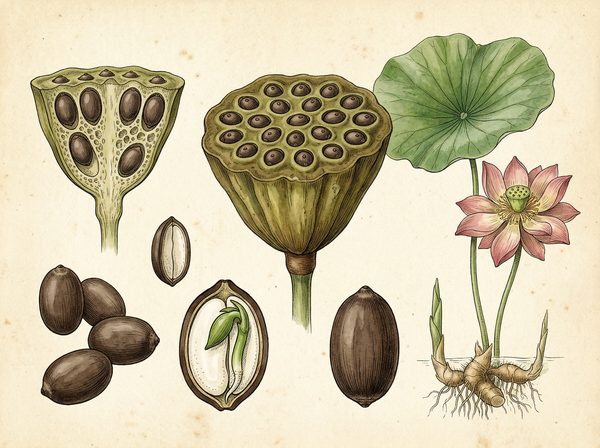
Nelumbo nucifera is the sacred lotus, a large aquatic perennial with round leaves that stand above the water and fragrant pink or white flowers, growing in ponds and slow rivers throughout India from Kashmir to Kerala and across Asia to Australia. It is the national flower of India and central to its religious imagery. Ayurveda uses almost every part: the stamens as a cooling hemostatic, the seeds as a nourishing astringent tonic for heart and mind, the rhizome as food and demulcent, and the flowers and leaves for fever, thirst and bleeding. It is a plant of pitta, cooling the blood and steadying the heart, and it stands in several classical formulas for bleeding and women's disorders.

Ask Herbert about Sacred lotus. Herbert is the master herbalist inside Bountiful Herbs: he answers from this plate and eleven hundred others, with dosing, pairing and cautions. Your first ten questions are free.
Ask HerbertActions
Indications what the tradition reached for it in
- Menorrhagia and postpartum bleeding
- Bleeding from the nose, gums or rectum of heat type
- Chronic diarrhea and dysentery
- Leukorrhea and spermatorrhea
- Palpitations with anxiety and insomnia
- Fever with thirst and burning
- Poor appetite and weakness in children (Aravindasava)
- Dyslipidemia and weight management (leaf, adjunct)
- Hot flushes and irritability of pitta type
- Skin eruptions with heat and redness
- Threatened miscarriage with bleeding (traditional, with medical care)
- Leprosy
- Leucoderma
- Smallpox
- Hyperdipsia
- Hemoptysis
- Hyperlipidemia
- Metrorrhagia
- Summer heat syndrome
- Hepatopathy
- Nervous disorders
- Arrhythmia
- Spermatorrhea
- Palpitations
- Leukorrhea
- Abdominal cramps
- Pectoralgia
- Hematemesis
- Hypertension
- Cough
Specific indications
A hot, flushed woman with heavy bright red periods, a rapid pulse and restlessness, for the stamen powder with honey
A child who is thin, irritable, feverish at night and not eating, for Aravindasava in small doses
Chronic loose stools with a burning anus in a pitta patient who is also anxious and sleeps badly, for the seed
Palpitations and a racing mind on hot nights, for the seed embryo or a cooling flower infusion
Safety
Pregnancy: Pregnancy Caution
Breastfeeding: Lactation (source flag notSafeInLactation)
The record lists 6 contraindications; open the plate in the library to read them in full.
In practice
The Ayurvedic physician reaches for Kamala when heat and bleeding travel together. Padmakesara, the stamen powder, is given with honey or sugar for menorrhagia, bleeding piles, nosebleeds and raktapitta, and it stands in Pushyanuga churna for leukorrhea and heavy periods.
In Ayurveda
Rasa: madhura (sweet), kashaya (astringent), tikta (bitter). Virya: sheeta (cooling). Vipaka: madhura (sweet). Guna: laghu (light), snigdha (unctuous), picchila (slimy). Dosha: pacifies pitta and kapha, and vata by its sweetness; the stamens are especially pitta reducing. Karma: dahaprashamana (relieves burning); raktastambhana (arrests bleeding); raktaprasadana (clears and cools the blood); hridya (supports the heart); varnya (improves complexion); garbhasthapana (stabilizes pregnancy); stambhana (checks discharges); trishnanigrahana (relieves thirst); medhya (supports intellect, the seed); vrishya (aphrodisiac, the seed and rhizome); mutrala (diuretic, the leaf and rhizome). Classical indications: raktapitta (bleeding disorders); atisara (diarrhea); pravahika (dysentery); daha (burning sensation); trishna (excess thirst); jvara (fever); hridroga (heart disease); shvetapradara (leukorrhea); raktapradara (menorrhagia); murcha (fainting); kushtha (skin diseases); garbhasrava (threatened miscarriage). The stamens (Padmakesara) are the classical hemostatic and cooling drug, given as churna with honey or in compound powders. The seeds are eaten and given as a nourishing, astringent tonic; the rhizome is a food and cooling demulcent; the flowers make a cooling infusion and the leaves a diuretic decoction. Aravindasava is the fermented preparation of the flower for children. Classical formulations: Aravindasava, Pushyanuga churna, Chandanadi churna, Ushirasava, Padmakesara churna, Kamala pushpa kwatha, Padmabija kshirapaka. Described in: Charaka Samhita, Sushruta Samhita, Ashtanga Hridaya, Bhavaprakasha Nighantu, Dhanvantari Nighantu, Raja Nighantu, Kaiyadeva Nighantu, Ayurvedic Pharmacopoeia of India.
Dosing as the sources wrote it
| Preparation | As written | Metric |
|---|---|---|
| Padmakesara churna | 3-6 g powdered stamens daily in divided doses with honey | 3000-6000 mg |
| Padmabija | 3-6 g powdered seed daily with milk or sugar | 3000-6000 mg |
| Kwatha | 50-100 mL flower or leaf decoction twice daily | 50-100 mL |
| Asava | 10-20 mL Aravindasava twice daily after food, 5-10 mL for children | 10-20 mL |
| Rhizome | 20-50 g cooked rhizome as food daily | 20000-50000 mg |
| Decoction | Decoction 6-15g seeds | 6000-15000 mg |
Doses are reproduced from the sources for practitioners and are not a recommendation for any person.
From the sources
Overview. Nelumbo nucifera is the sacred lotus, a large aquatic perennial with round leaves that stand above the water and fragrant pink or white flowers, growing in ponds and slow rivers throughout India from Kashmir to Kerala and across Asia to Australia. It is the national flower of India and central to its religious imagery. Ayurveda uses almost every part: the stamens as a cooling hemostatic, the seeds as a nourishing astringent tonic for heart and mind, the rhizome as food and demulcent, and the flowers and leaves for fever, thirst and bleeding. It is a plant of pitta, cooling the blood and steadying the heart, and it stands in several classical formulas for bleeding and women's disorders.
Clinical Notes. Used in TCM (Lian Zi seeds neutral sweet sour astringent tonify spleen kidney heart He Ye leaf bitter neutral clear heat Lian Zi Xin plumule bitter cooling clear heart fire) and Ayurveda preclinical support for actions limited human clinical trials all parts traditionally used
Clinical Notes. The Ayurvedic physician reaches for Kamala when heat and bleeding travel together. Padmakesara, the stamen powder, is given with honey or sugar for menorrhagia, bleeding piles, nosebleeds and raktapitta, and it stands in Pushyanuga churna for leukorrhea and heavy periods.
primary-actions. Lotus acts primarily as: Astringent, Demulcent, Hemostatic, Anti-inflammatory, Antioxidant, Diuretic, Cardiotonic. Secondary actions include Hypoglycemic, Hepatoprotective, Nervine, Antiviral, Immunomodulator.
In formulas
Sacred lotus stands in 98 documented formulas in the library, among them Aravindāsava, Uśīrāsava, Jīrakādi Modaka, Saubhāgyaśuṇṭhī, Bṛhat Phala Ghṛta, Vastyāmayāntaka Ghṛta.
Often paired with
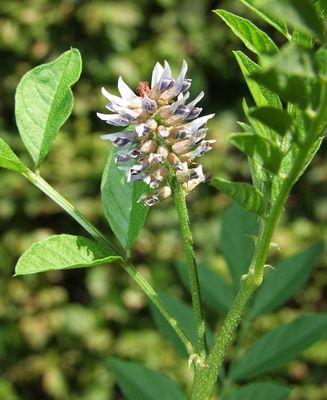 Licorice rootGlycyrrhiza glabra
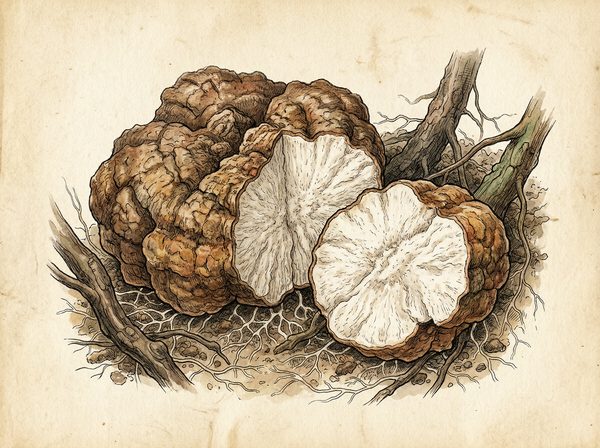 PoriaWolfiporia extensa
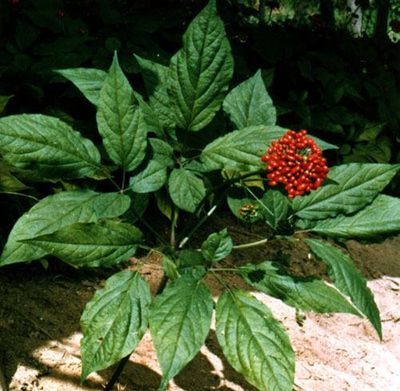 GinsengPanax ginseng
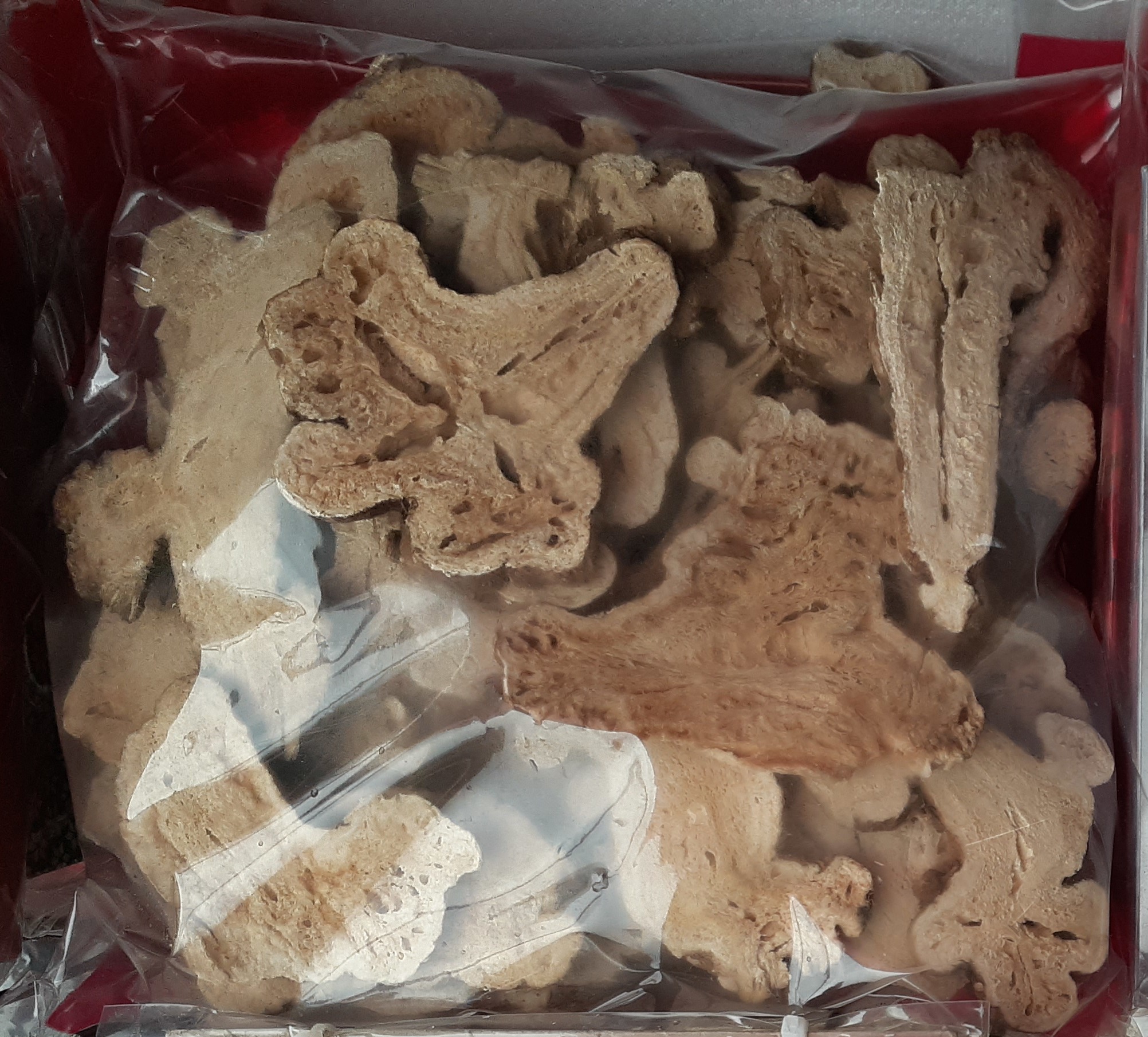 Bai ZhuAtractylodes macrocephala
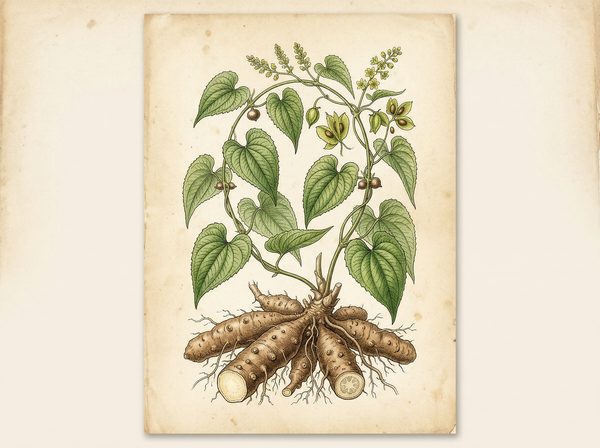 Chinese YamDioscorea opposita
 KamalaMallotus philippinensis
Nearby on the shelf
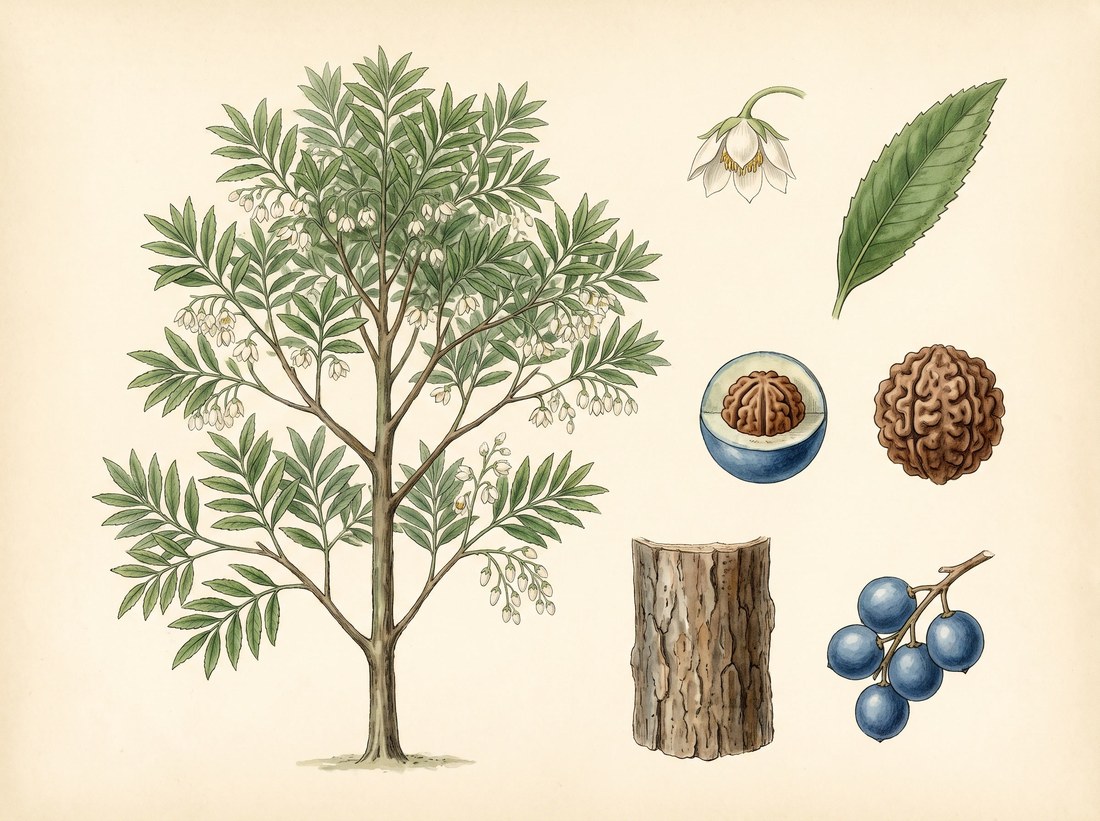 RudrakshaElaeocarpus ganitrus
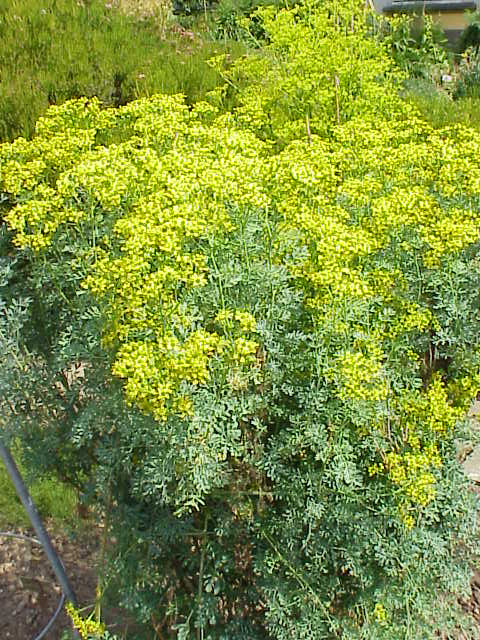 RueRuta graveolens
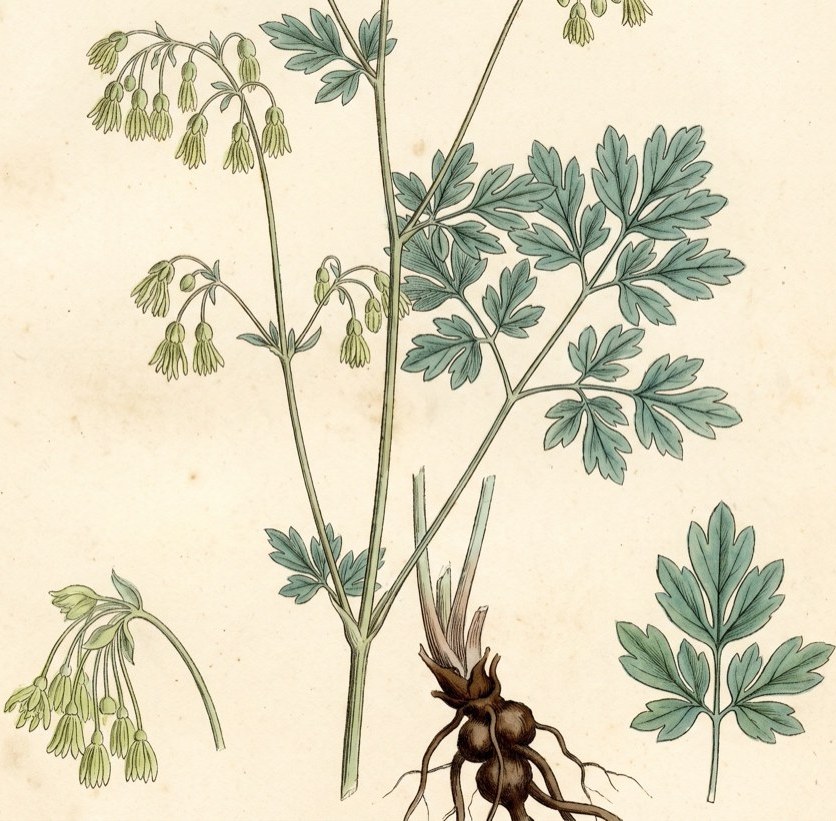 Rue AnemoneThalictrum
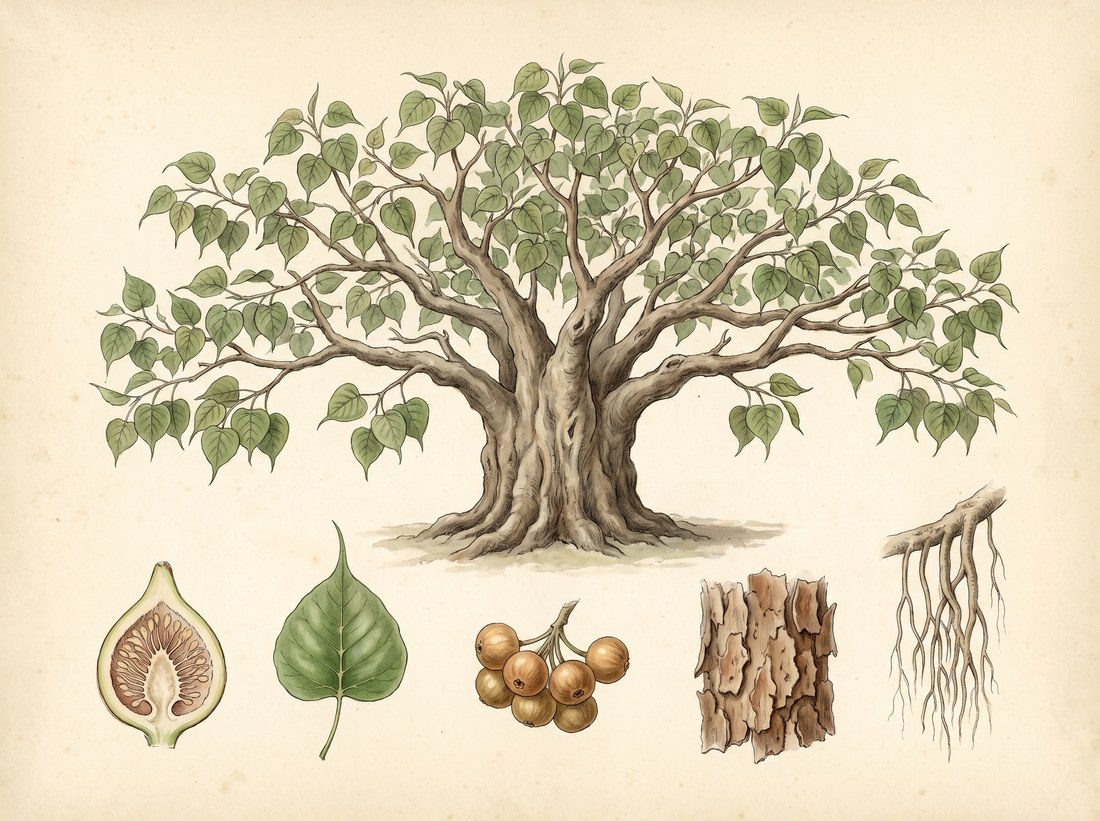 Sacred figFicus religiosa
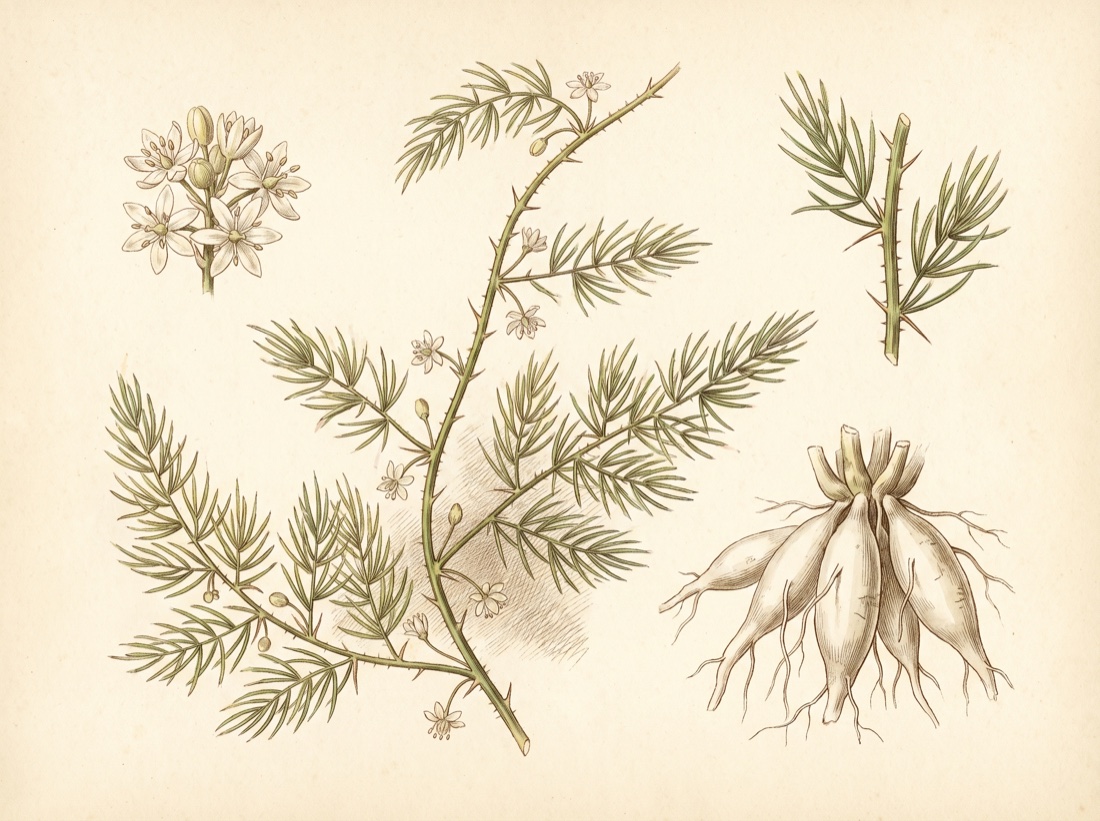 Safed musliAsparagus adscendens
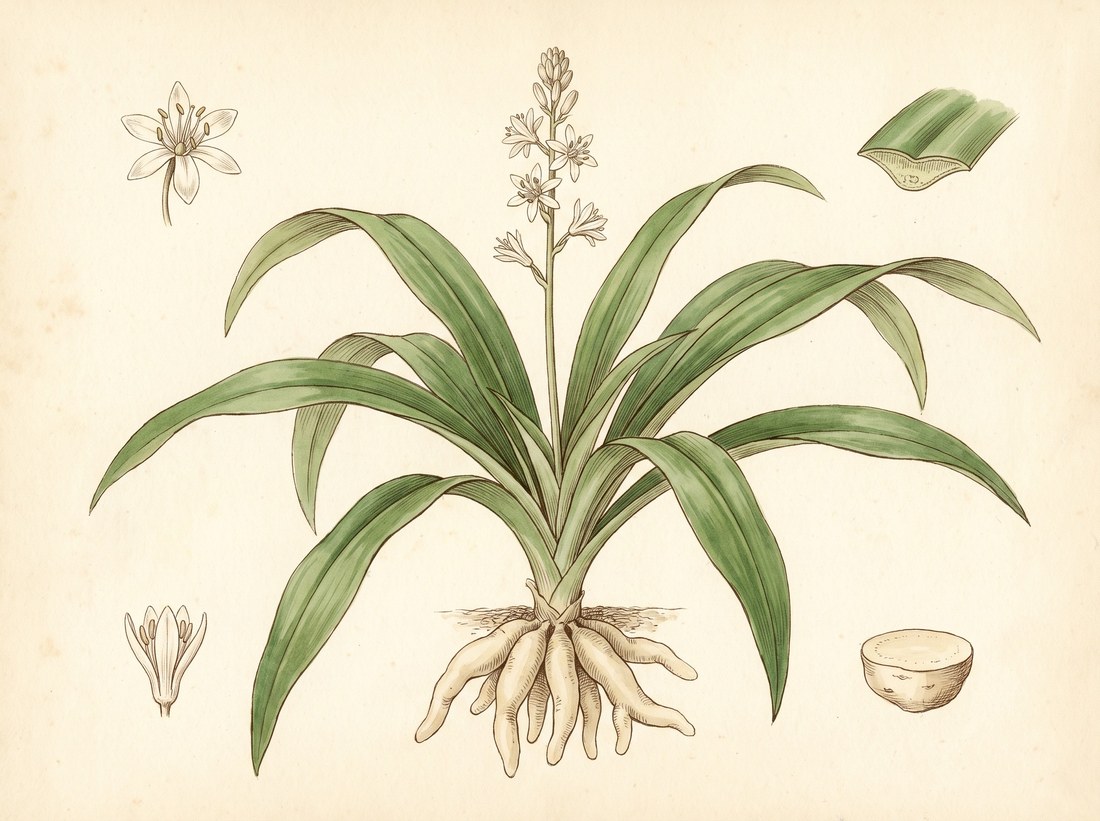 Safed musliChlorophytum borivilianum
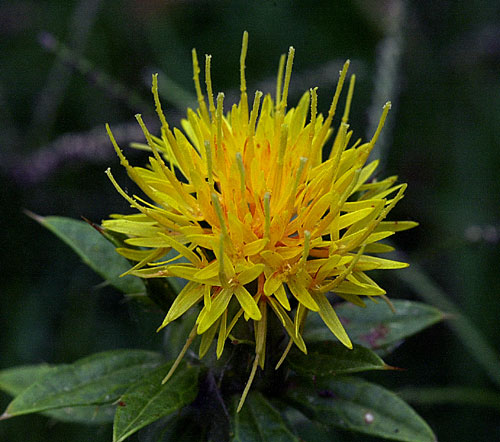 SafflowerCarthamus tinctorius
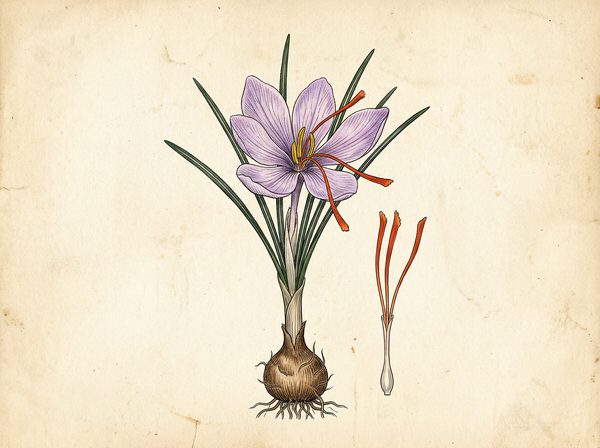 SaffronCrocus sativus
The whole plate is in the library. The compass, Compare, the Sky of eleven hundred plants and the formulary open with an email address and a password, free, with the formula builder and its safety engine. Herbert without limit, his formulating, clients, the handouts and the labels are the paid room.
Open the library, free