Ayurvedic Herbalism
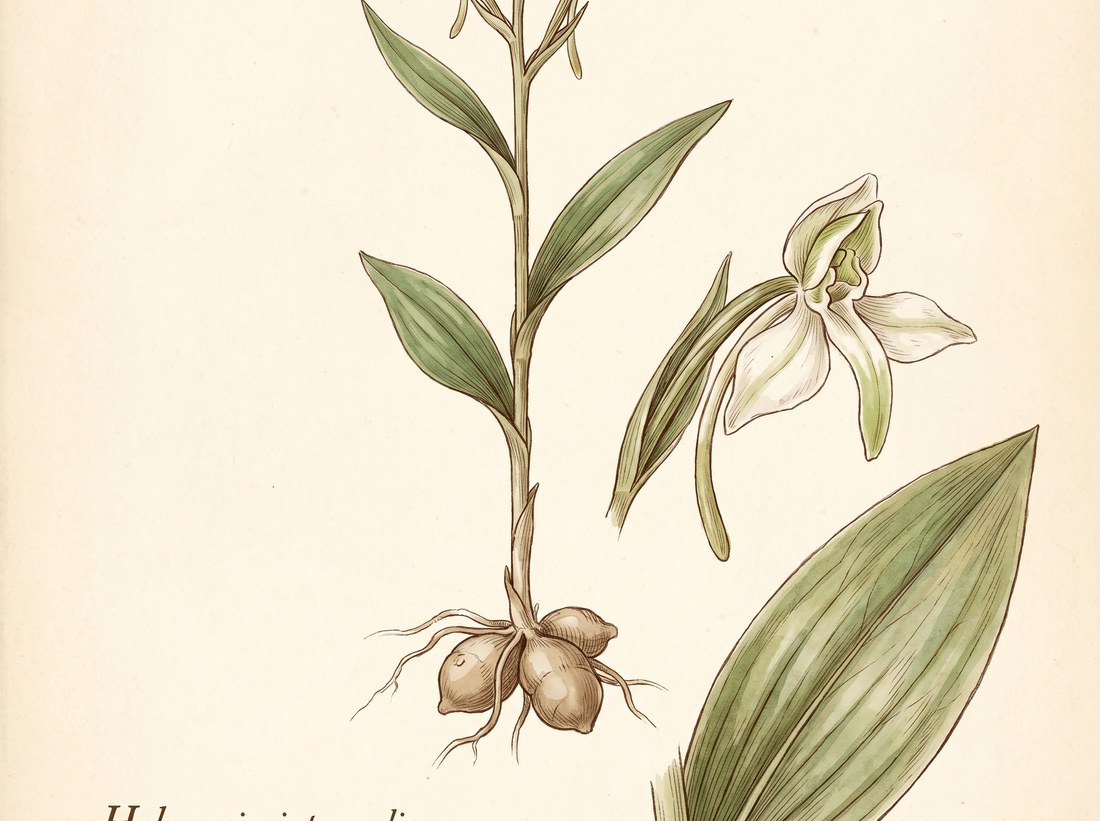
Riddhi orchid
Habenaria intermedia
Also known as intermediate habenaria, Himalayan bog orchid, Riddhi, Siddhi, Lakshmi.
Habenaria intermedia is a small terrestrial orchid of the western and central Himalaya, growing on grassy slopes and open forest edges between about 1,500 and 3,000 meters in Kashmir, Himachal Pradesh, Uttarakhand and Nepal, where its paired underground tubers are dug in autumn. Ayurveda treats it as Riddhi, one of the eight sweet, cooling tubers of the Ashtavarga that give Chyawanprash and the classical medicated oils their nourishing depth. It is a jivaniya and brimhana drug, a builder of tissue and reserve, rather than a remedy for any single disease.

Ask Herbert about Riddhi orchid. Herbert is the master herbalist inside Bountiful Herbs: he answers from this plate and eleven hundred others, with dosing, pairing and cautions. Your first ten questions are free.
Ask HerbertActions
Indications what the tradition reached for it in
- Debility and weight loss after prolonged illness
- Chronic dry cough with wasting
- Convalescence from fever and infection
- Low fertility with depleted tissues
- Poor lactation in a thin, exhausted mother
- Frailty in the elderly
- Bleeding tendency with heat and dryness
- Burnout with dryness, insomnia and anxiety
- Recurrent infections with low reserves
- Growth failure and poor appetite in children (in formulations)
Specific indications
A thin, dry, restless vata-pitta patient who has lost weight through illness or overwork and needs tissue rebuilt rather than stimulated
The convalescent whose cough lingers dry and unproductive and whose skin, hair and stools are all dry
A depleted new mother, pale and anxious, with scant milk and no appetite for heavy food
The aging patient who wants a sweet, cooling rejuvenative because heating tonics like Ashwagandha make them hot and sleepless
Safety
The record lists 5 contraindications; open the plate in the library to read them in full.
In practice
Riddhi is reached for when the picture is depletion with heat and dryness: kshaya, convalescence, low fertility, poor milk, the wasting cough. Its sweet, cold, heavy qualities pacify vata and pitta together, which sets it apart from the warmer builders like Ashwagandha and Bala.
In Ayurveda
Rasa: madhura (sweet). Virya: sheeta (cooling). Vipaka: madhura (sweet). Guna: guru (heavy), snigdha (unctuous). Dosha: pacifies vata and pitta; increases kapha in excess. Karma: jivaniya (life promoting); brimhana (nourishing, builds tissue); balya (strengthening); rasayana (rejuvenative); vrishya (aphrodisiac); shukrala (increases semen); stanyajanana (promotes breast milk); vatapittahara (pacifies vata and pitta); raktapittahara (checks bleeding disorders); kshayahara (counters wasting). Classical indications: kshaya (wasting and consumption); daurbalya (weakness); raktapitta (bleeding disorders); kasa (cough); shvasa (dyspnea); jvara (fever, in convalescence); shukrakshaya (depletion of reproductive tissue); stanyakshaya (poor lactation); vatavyadhi (vata disorders); prameha (urinary disorders, as part of formulations). The dried tuber is the drug, powdered for churna with milk, cooked into ghrita and taila, and added to avaleha and rasayana preparations. It is one of the Ashtavarga, the eight nourishing Himalayan tubers used together in Chyawanprash and the great medicated oils. Classical formulations: Chyawanprash, Ashtavarga churna, Jivaniya ghrita, Mahanarayana taila, Bala taila, Amritaprasha ghrita, Brahma rasayana. Described in: Charaka Samhita, Sushruta Samhita, Ashtanga Hridaya, Bhavaprakasha Nighantu, Dhanvantari Nighantu, Raja Nighantu, Kaiyadeva Nighantu.
Dosing as the sources wrote it
| Preparation | As written | Metric |
|---|---|---|
| Churna | 3-6 g powdered tuber once or twice daily with warm milk | 3000-6000 mg |
| Kwatha | 50-100 mL decoction twice daily | 50-100 mL |
| Ghrita | 5-10 g medicated ghee daily with warm milk | 5000-10000 mg |
| Avaleha (as part of Chyawanprash) | 10-20 g daily in the morning with warm milk | 10000-20000 mg |
Doses are reproduced from the sources for practitioners and are not a recommendation for any person.
From the sources
Overview. Habenaria intermedia is a small terrestrial orchid of the western and central Himalaya, growing on grassy slopes and open forest edges between about 1,500 and 3,000 meters in Kashmir, Himachal Pradesh, Uttarakhand and Nepal, where its paired underground tubers are dug in autumn. Ayurveda treats it as Riddhi, one of the eight sweet, cooling tubers of the Ashtavarga that give Chyawanprash and the classical medicated oils their nourishing depth. It is a jivaniya and brimhana drug, a builder of tissue and reserve, rather than a remedy for any single disease.
Clinical Notes. Riddhi is reached for when the picture is depletion with heat and dryness: kshaya, convalescence, low fertility, poor milk, the wasting cough. Its sweet, cold, heavy qualities pacify vata and pitta together, which sets it apart from the warmer builders like Ashwagandha and Bala.
Ayurvedic Profile. Rasa: madhura (sweet). Virya: sheeta (cooling). Vipaka: madhura (sweet). Guna: guru (heavy), snigdha (unctuous). Dosha: pacifies vata and pitta; increases kapha in excess. Karma: jivaniya (life promoting); brimhana (nourishing, builds tissue); balya (strengthening); rasayana (rejuvenative); vrishya (aphrodisiac); shukrala (increases semen); stanyajanana (promotes breast milk); vatapittahara (pacifies vata and pitta); raktapittahara (checks bleeding disorders); kshayahara (counters wasting).
Conservation. Habenaria intermedia is a threatened Himalayan orchid, heavily collected from the wild for the Ashtavarga trade and now scarce in Uttarakhand and Himachal Pradesh; substitutes are widely used and cultivated material should be preferred.
In formulas
Riddhi orchid stands in 11 documented formulas in the library, among them Daśamūlāriṣṭa, Cyavanaprāśa, Śatāvarī Guḍa, Śivā Guṭikā, Aśoka Ghṛta, Chāgalādya Ghṛta.
Often paired with
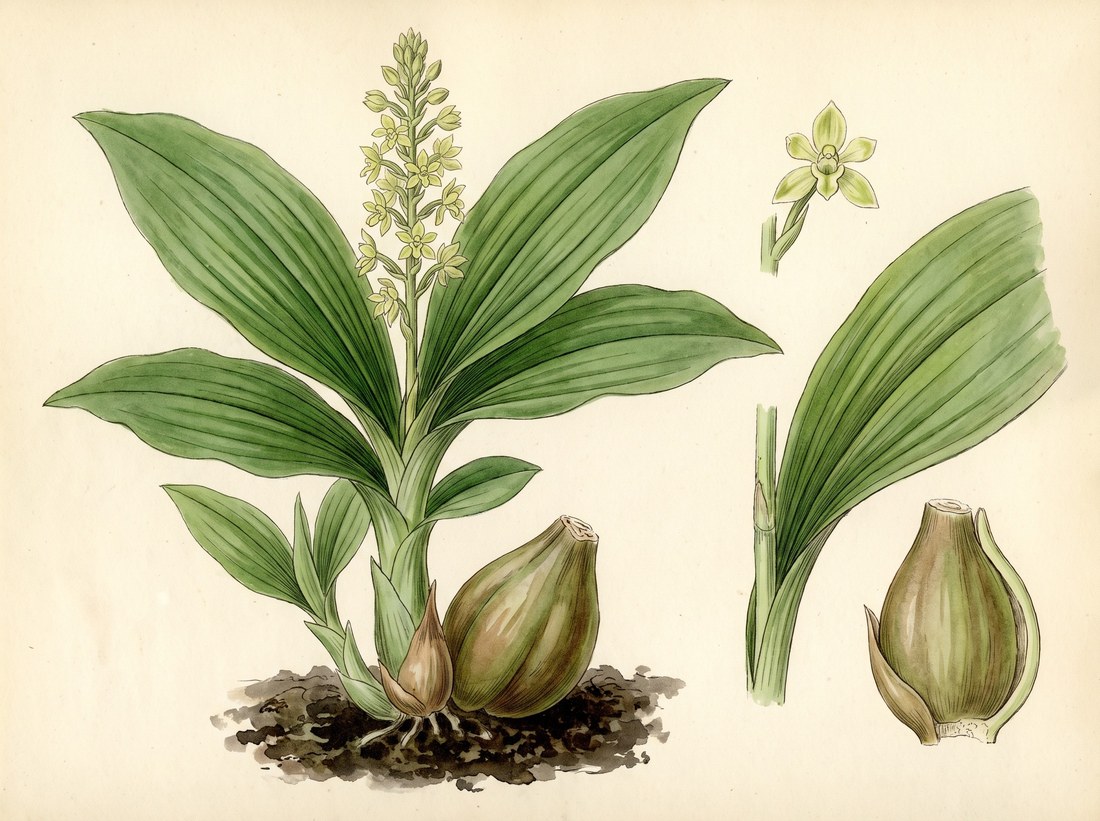 jeevakMalaxis acuminata
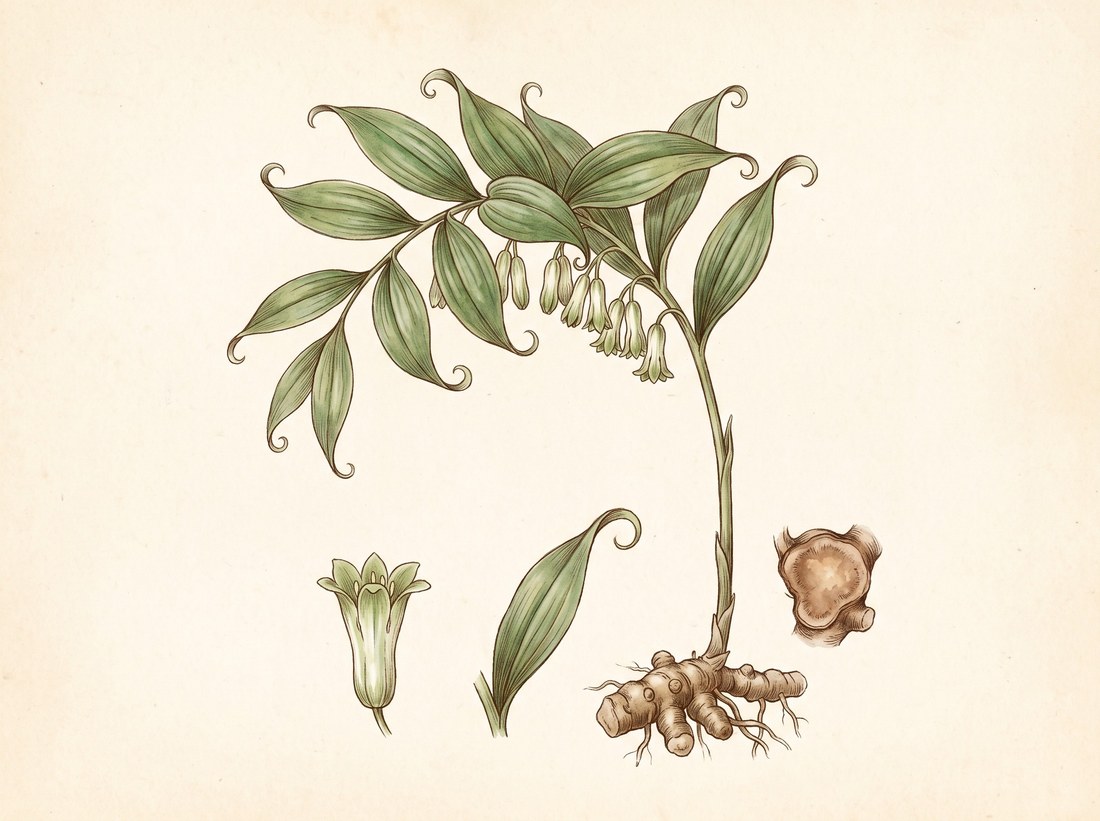 medaPolygonatum cirrhifolium
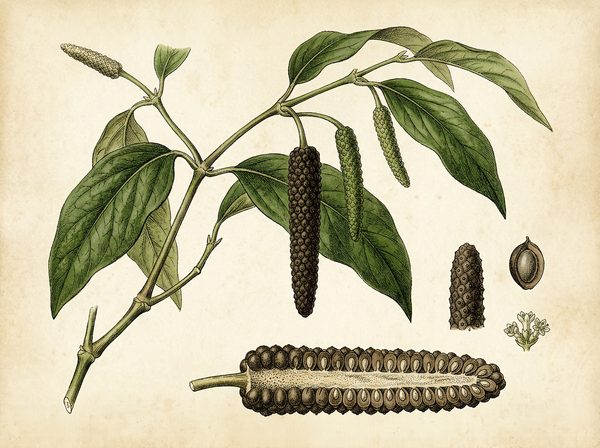 long pepperPiper longum
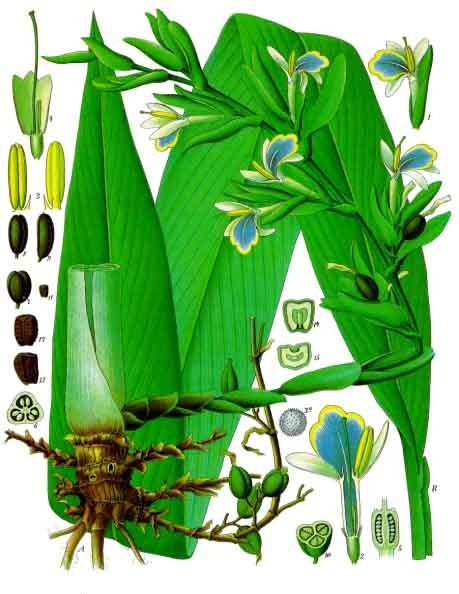 cardamomElettaria cardamomum
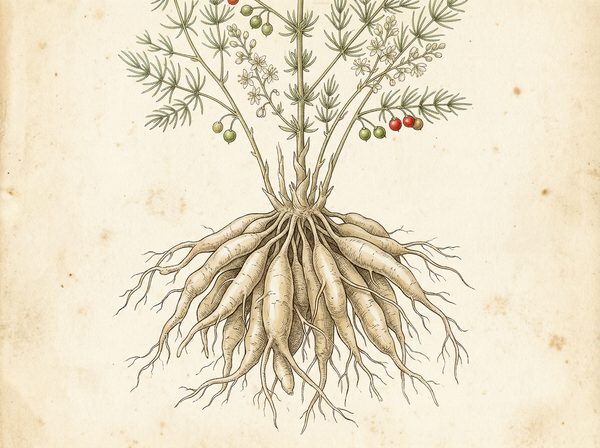 shatavariAsparagus racemosus
 nut grassCyperus rotundus
Nearby on the shelf
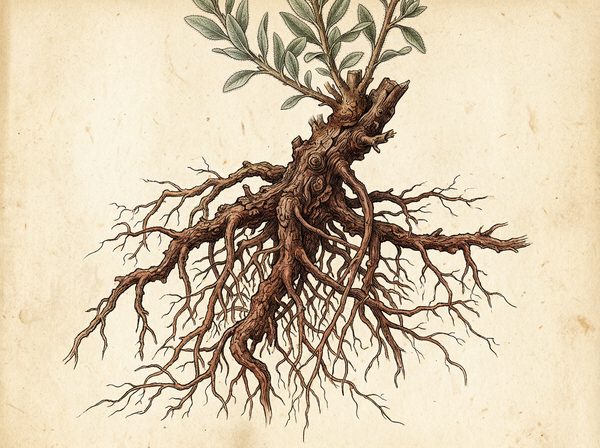 RhatanyKrameria triandra
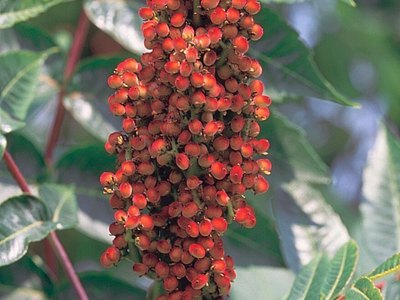 Rhus GlabraRhus Glabra
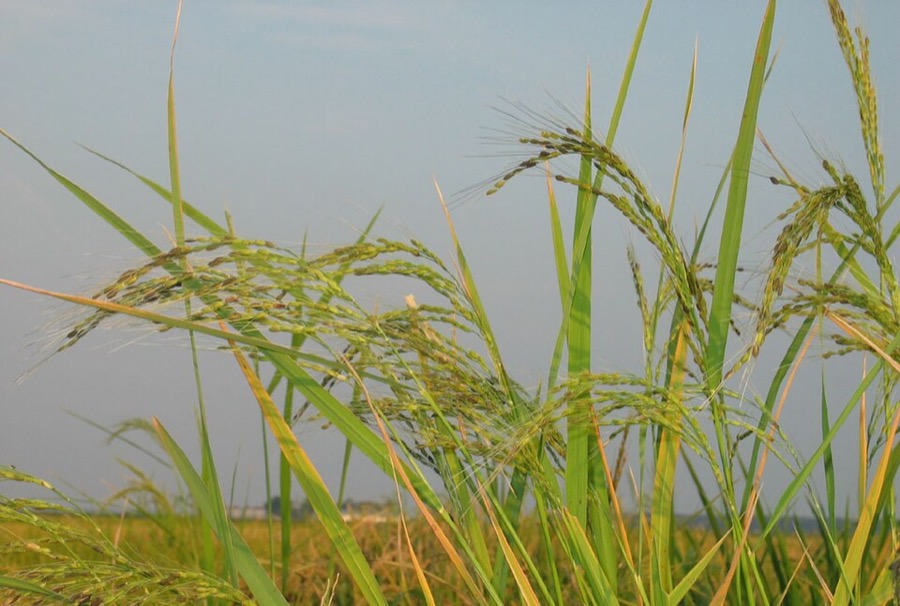 RiceOryza
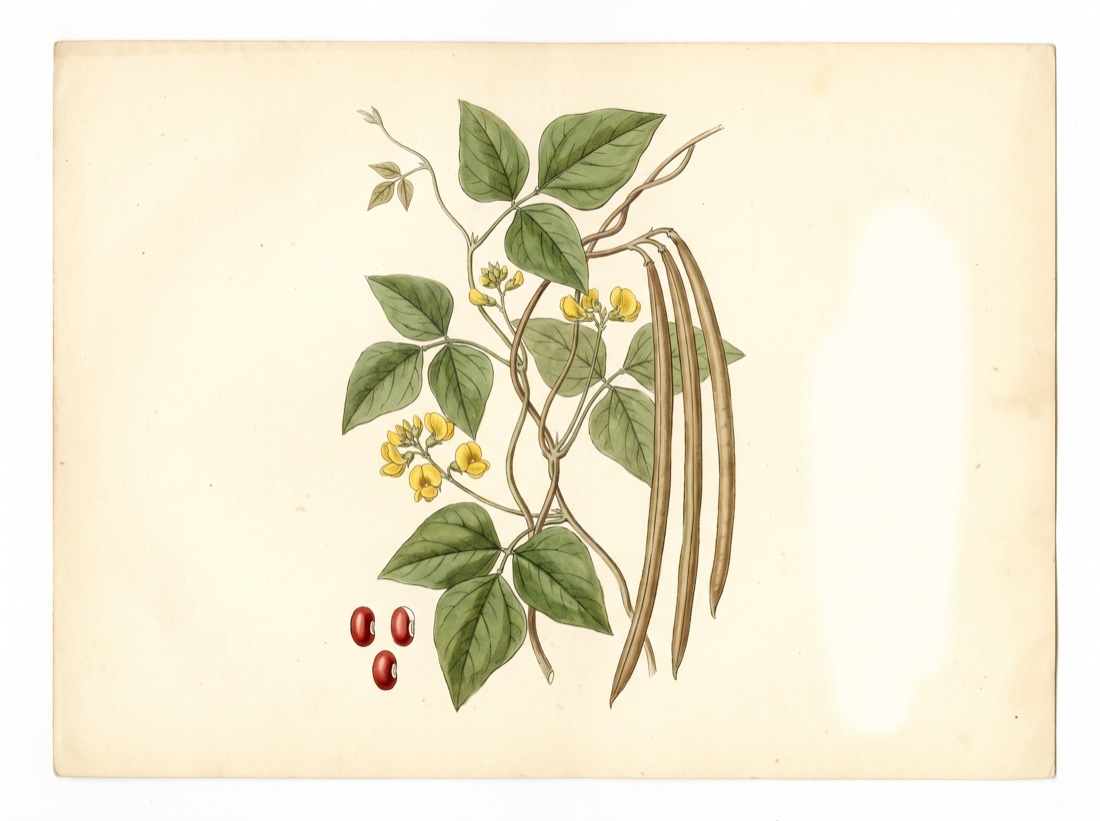 Rice beanVigna umbellata
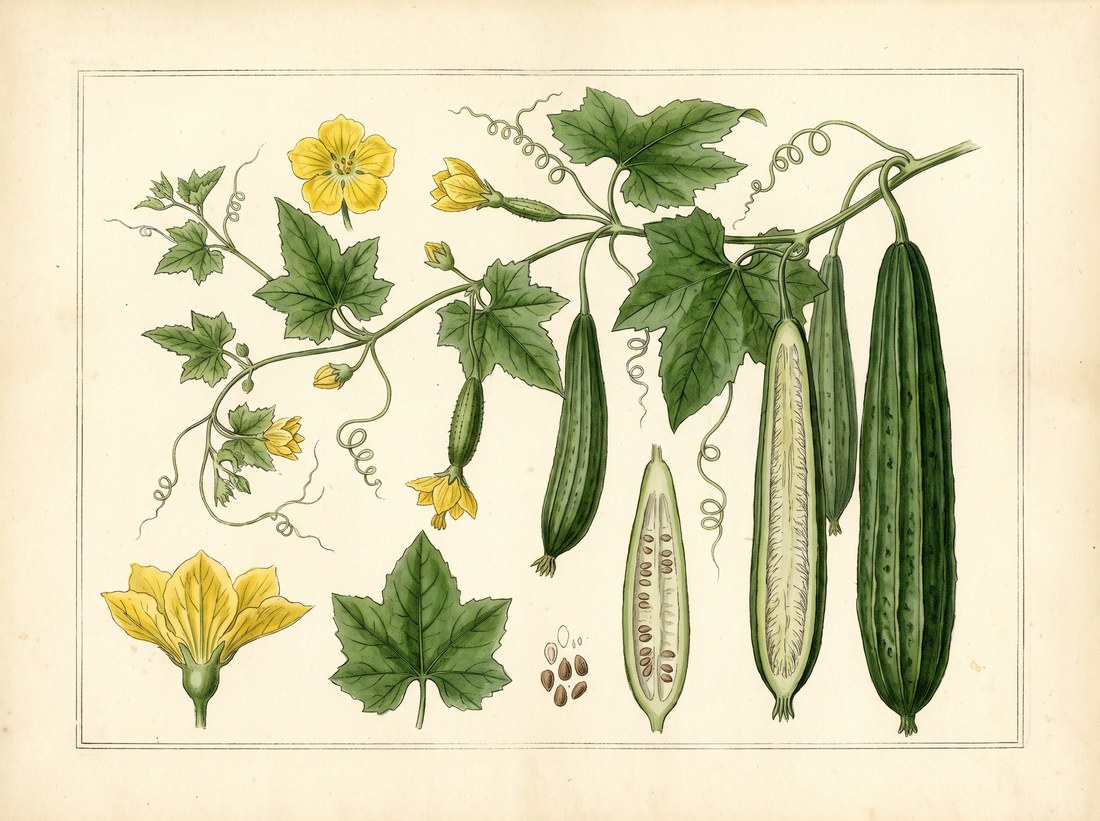 Ridge gourdLuffa acutangula
 Rock polypodyPolypodium vulgare
 RooibosAspalathus linearis
 Rosary peaAbrus precatorius
The whole plate is in the library. The compass, Compare, the Sky of eleven hundred plants and the formulary open with an email address and a password, free, with the formula builder and its safety engine. Herbert without limit, his formulating, clients, the handouts and the labels are the paid room.
Open the library, free