Western Herbalism
Rice
Oryza
Also known as White rice, Brown rice, Paddy.
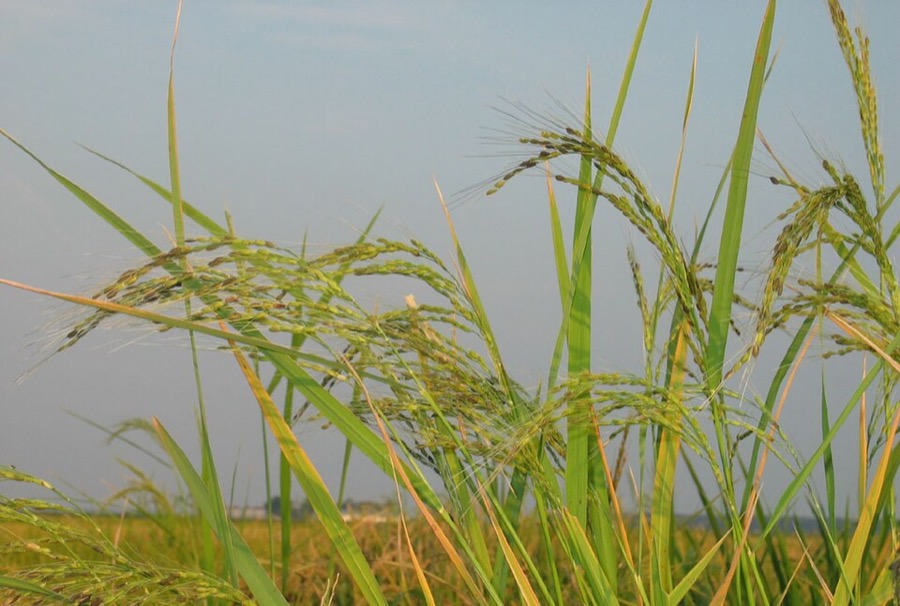
Rice is the starchy grain of Oryza sativa, a cereal grass cultivated across flooded paddies throughout Asia and now much of the warm and temperate world. Long used as a staple food, its plain decoction (rice water) and simply cooked congee have a long folk and eclectic history as a gentle demulcent and antidiarrheal, especially for infants, the convalescent, and anyone whose digestion needs an undemanding, easily assimilated food. In eclectic practice it was valued as a bland vehicle for fluids and mild nutrition when the gut needed rest rather than stimulation.

Ask Herbert about Rice. Herbert is the master herbalist inside Bountiful Herbs: he answers from this plate and eleven hundred others, with dosing, pairing and cautions. Your first ten questions are free.
Ask HerbertActions
Indications what the tradition reached for it in
- Acute watery diarrhea
- Gastroenteritis with fluid loss
- Convalescence after illness or surgery
- Infant or pediatric loose stools
- Dyspepsia with a sensitive stomach
- General debility needing easily digested nutrition
- Dehydration requiring oral rehydration
- Mild skin irritation or rash (topical rice water wash)
- Weaning food for infants
- Malnutrition support in convalescent diets
Specific indications
Watery, non-bloody diarrhea in infants and children, given as a simple rice water decoction to settle the gut and replace fluids
Post-illness convalescence where the digestion is weak and a plain rice congee or gruel is the best-tolerated food
Safety
The record lists 1 contraindication; open the plate in the library to read them in full.
In practice
Rice water, the cloudy liquid left from boiling rice, or a thin rice congee, is a first-line home remedy for uncomplicated watery diarrhea, particularly in children. It is easy to prepare, well tolerated even by an irritated gut, and provides some fluid, electrolytes, and readily digestible starch while the bowel settles.
Dosing as the sources wrote it
| Preparation | As written | Metric |
|---|---|---|
| Rice water (decoction) | prepared by boiling 30-60 g rice in 1 liter water until soft, strain and give the liquid freely, especially to children with diarrhea | 30000-60000 mg |
| Rice congee/gruel | cooked soft with 6-8 parts water to 1 part rice, taken as a bland convalescent food several times daily |
Doses are reproduced from the sources for practitioners and are not a recommendation for any person.
From the sources
Overview. Rice is the starchy grain of Oryza sativa, a cereal grass cultivated across flooded paddies throughout Asia and now much of the warm and temperate world. Long used as a staple food, its plain decoction (rice water) and simply cooked congee have a long folk and eclectic history as a gentle demulcent and antidiarrheal, especially for infants, the convalescent, and anyone whose digestion needs an undemanding, easily assimilated food. In eclectic practice it was valued as a bland vehicle for fluids and mild nutrition when the gut needed rest rather than stimulation.
Clinical Notes. Rice water, the cloudy liquid left from boiling rice, or a thin rice congee, is a first-line home remedy for uncomplicated watery diarrhea, particularly in children. It is easy to prepare, well tolerated even by an irritated gut, and provides some fluid, electrolytes, and readily digestible starch while the bowel settles.
Drawn from King's American Dispensatory, 18th edition (Felter and Lloyd), and the Bountiful Herbs editorial.
In formulas
Rice stands in 4 documented formulas in the library, among them hua bàn tàng, sàng dàn xiè bái tàng, qing shu yì gì tāng.
Often paired with
 Licorice rootGlycyrrhiza glabra
 Zhi MuAnemarrhena asphodeloides
 FigwortScrophularia nodosa
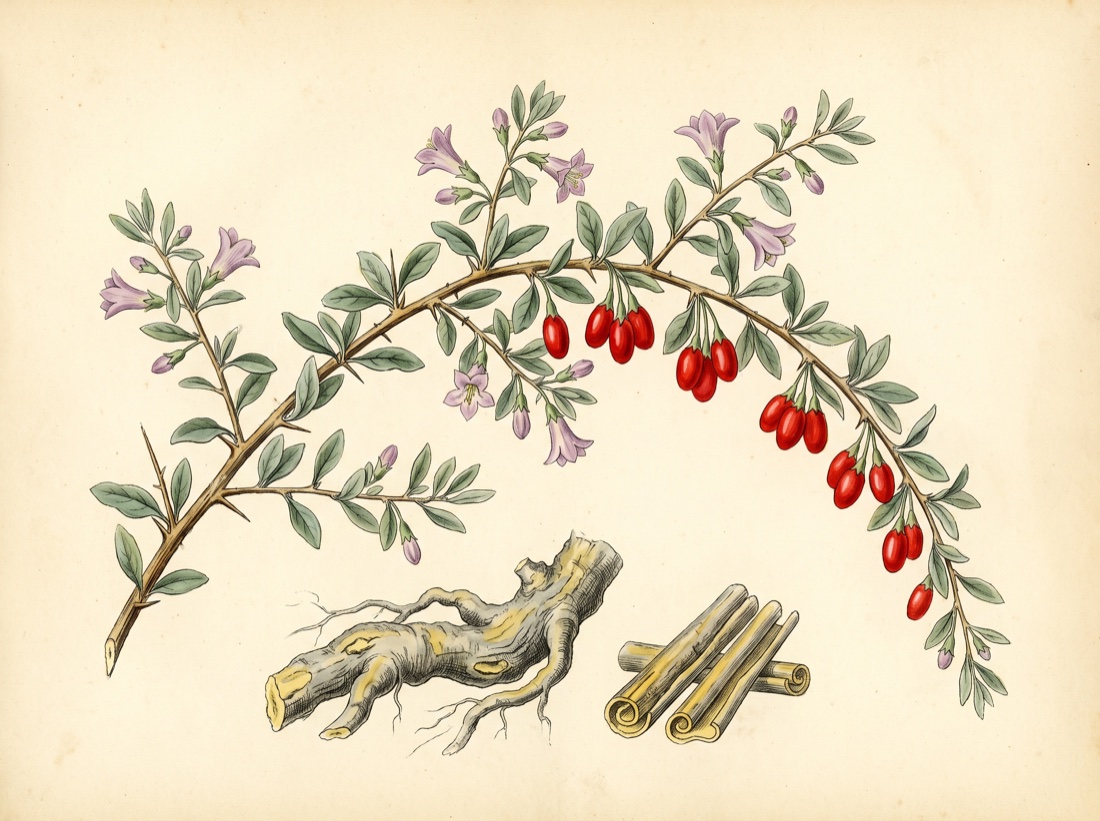 Chinese boxthornLycium chinense
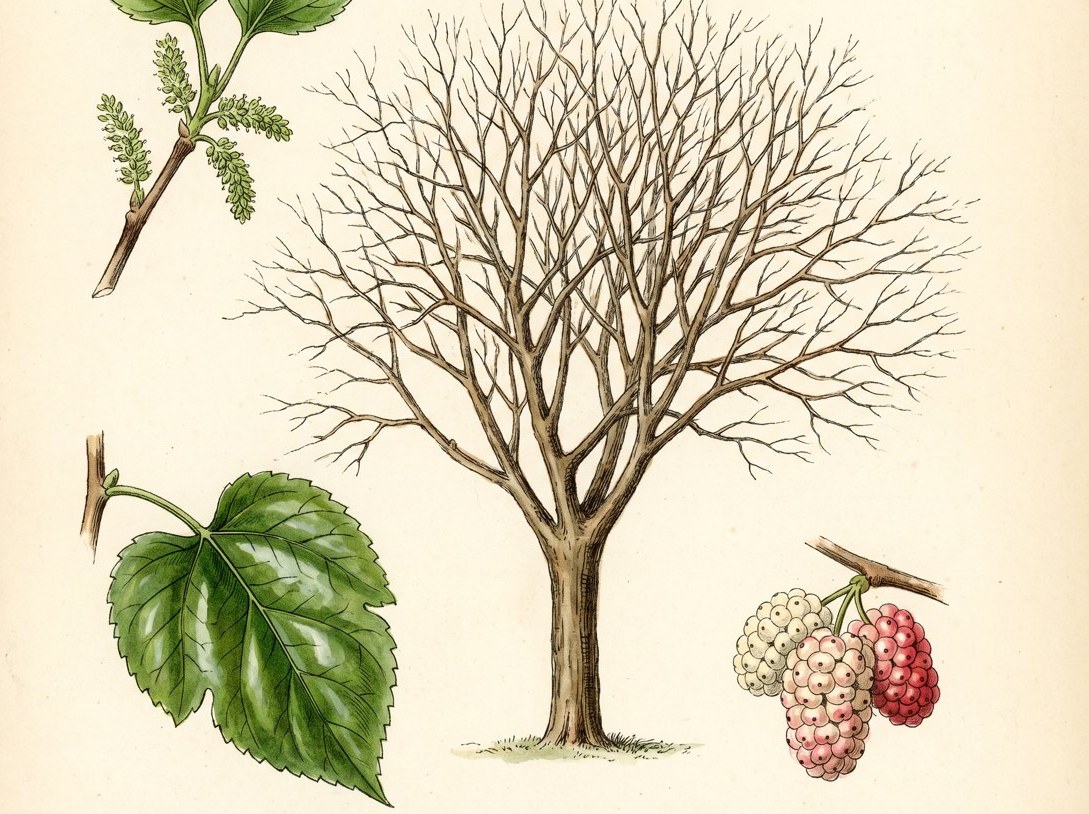 Mulberry LeafMorus alba
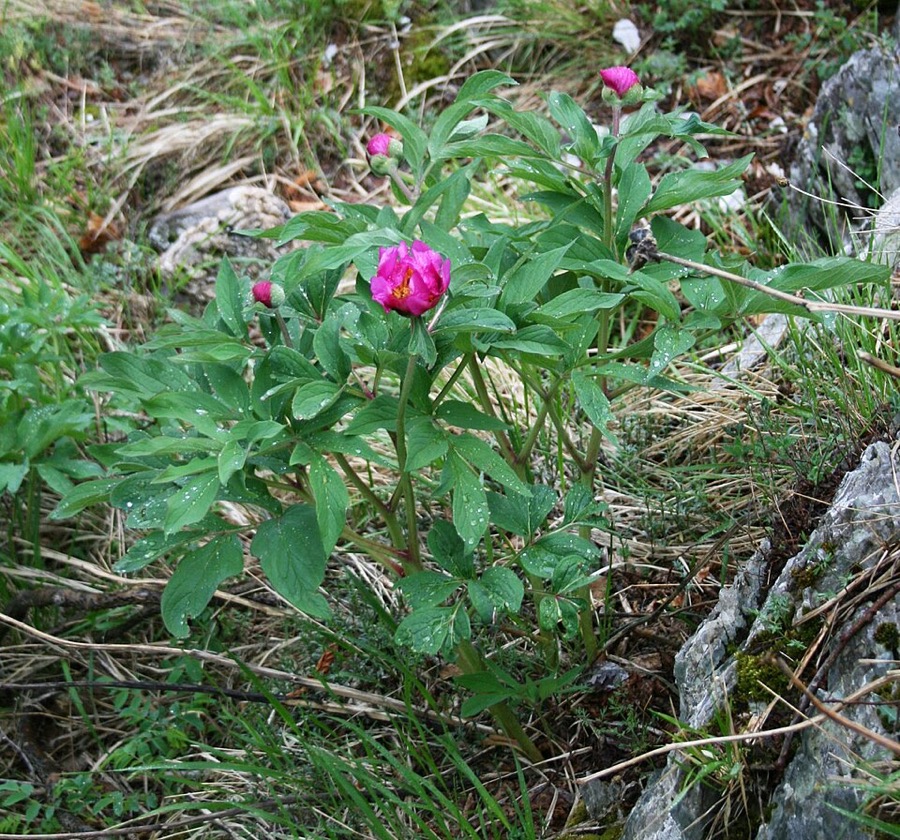 PeonyPeonia officinalis
Nearby on the shelf
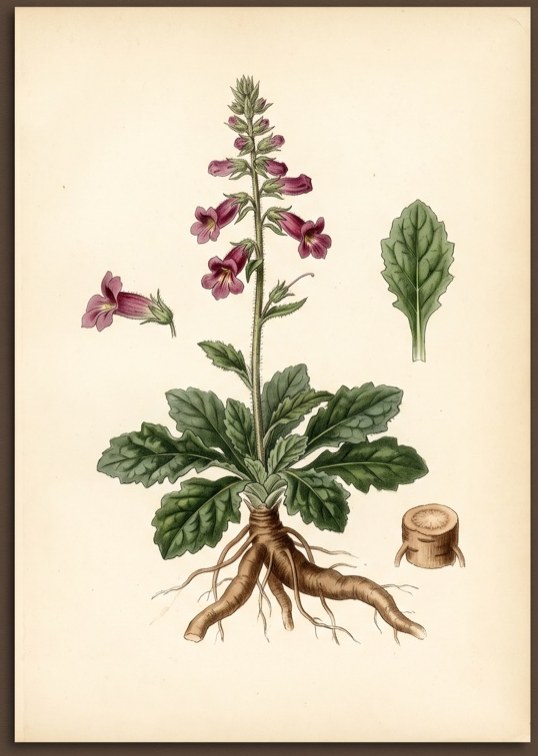 RehmanniaRehmannia glutinosa
 ReishiGanoderma lucidum
 RhatanyKrameria triandra
 Rhus GlabraRhus Glabra
 Rice beanVigna umbellata
 Riddhi orchidHabenaria intermedia
 Ridge gourdLuffa acutangula
 Rock polypodyPolypodium vulgare
The whole plate is in the library. The compass, Compare, the Sky of eleven hundred plants and the formulary open with an email address and a password, free, with the formula builder and its safety engine. Herbert without limit, his formulating, clients, the handouts and the labels are the paid room.
Open the library, free