Ayurvedic Herbalism
Jeevak
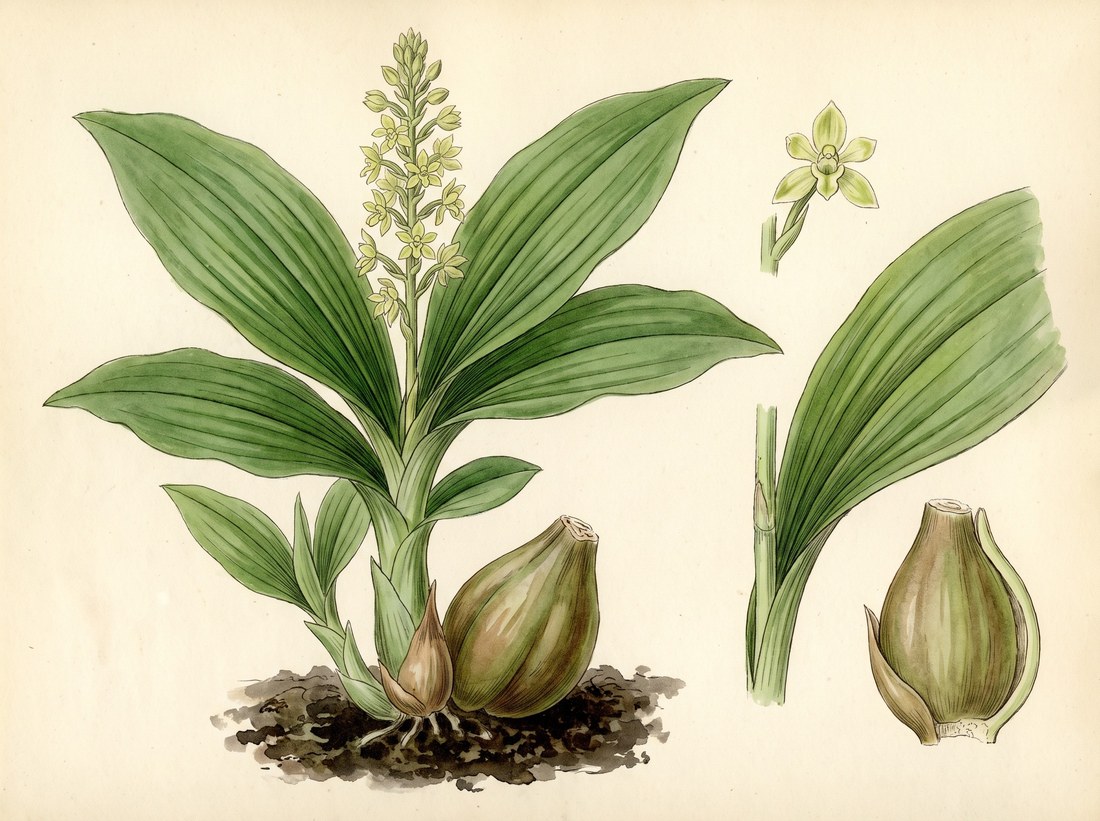
Malaxis acuminata
Also known as jivaka orchid, Himalayan adder's mouth orchid, Jivaka, Kurchashirshaka, Chirajivi.
Malaxis acuminata is a small terrestrial orchid with a fleshy pseudobulb, two or three broad pleated leaves and a spike of tiny yellow green flowers, growing in shaded, humus-rich forest floor in the Himalaya from Himachal and Uttarakhand through Nepal and Sikkim to the northeastern hills and the Western Ghats at 1,200 to 2,000 meters. Plants of the World Online now places it in Crepidium as Crepidium acuminatum. It is the Jivaka of the Ashtavarga, the eight life giving herbs of the classical rasayana formulas, and a member of the Jivaniya group of the Charaka Samhita, a sweet, cooling, nourishing tonic for wasting, weakness, fever and sexual debility. It is rare, protected and heavily substituted in trade.

Ask Herbert about Jeevak. Herbert is the master herbalist inside Bountiful Herbs: he answers from this plate and eleven hundred others, with dosing, pairing and cautions. Your first ten questions are free.
Ask HerbertActions
Indications what the tradition reached for it in
- Convalescence after prolonged illness with weight loss
- Chronic debility and low vitality in the elderly
- Wasting diseases including tuberculosis (adjunct)
- Male infertility with low semen quality (traditional)
- Low libido with exhaustion
- Recurrent fevers with depletion
- Bleeding tendency with heat and weakness
- Dryness, burning and thirst in pitta-vata constitutions
- Failure to thrive in children (in Chyawanprash and ghritas)
- Skin aging and sun damage (topical extracts, preclinical)
- Postpartum depletion (in compound ghritas)
Specific indications
A thin, dry, burned-out patient recovering from a long fever or chronic infection who needs to be rebuilt gently without heat
The exhausted, subfertile man with low semen volume and a hot, dry constitution for whom Ashwagandha is too warming
An elderly person losing weight and strength, with a dry mouth, poor sleep and a tendency to nosebleeds or bruising
Any rasayana or vajikarana formula that calls for the Ashtavarga to nourish deep tissue
Safety
The record lists 6 contraindications; open the plate in the library to read them in full.
In practice
The Ayurvedic physician meets Jivaka almost only inside compound formulas. With its partner Rishabhaka and the other six Ashtavarga herbs, Kakoli, Kshirakakoli, Meda, Mahameda, Riddhi and Vriddhi, it forms the deep nourishing core of Chyawanprash and of the great ghritas and oils for wasting, debility, fever and sexual weakness.
In Ayurveda
Rasa: madhura (sweet), tikta (bitter, mild). Virya: sheeta (cooling). Vipaka: madhura (sweet). Guna: guru (heavy), snigdha (unctuous), picchila (slimy). Dosha: pacifies vata and pitta; increases kapha in excess. Karma: jivaniya (life promoting, vitalizing); brimhana (nourishing, builds tissue); balya (strengthening); vrishya (aphrodisiac); rasayana (rejuvenative); shukrala (increases semen); raktapittashamana (calms bleeding disorders); jvaraghna (relieves fever); dahaprashamana (relieves burning); kshayahara (counters wasting). Classical indications: kshaya (wasting and consumption); rajayakshma (tuberculosis and chronic wasting); daurbalya (weakness); raktapitta (bleeding disorders); jvara (fever); daha (burning sensation); shukrakshaya (depleted semen); klaibya (impotence); vatarakta (gouty and inflammatory vata-blood disorders); karshya (emaciation). The dried pseudobulb is used as churna with milk or ghee, in the Jivaniya and Ashtavarga groups decocted in milk or cooked into ghrita and taila, and as one of the eight herbs of the Ashtavarga in Chyawanprash and the great rasayana and vajikarana preparations. It is almost never used alone. Classical formulations: Chyawanprash, Ashtavarga churna, Ashtavarga ghrita, Jivaniya ghrita, Mahanarayana taila, Brihat Chhagaladi ghrita, Vidaryadi kwatha. Described in: Charaka Samhita, Sushruta Samhita, Ashtanga Hridaya, Bhavaprakasha Nighantu, Dhanvantari Nighantu, Raja Nighantu, Kaiyadeva Nighantu, Ayurvedic Pharmacopoeia of India.
Dosing as the sources wrote it
| Preparation | As written | Metric |
|---|---|---|
| Churna | 3-6 g powdered pseudobulb daily with warm milk | 3000-6000 mg |
| Kshirapaka | 50-100 mL milk decoction of Ashtavarga or Jivaniya herbs daily | 50-100 mL |
| Ghrita | 5-10 g Jivaniya or Ashtavarga ghrita daily | 5000-10000 mg |
| Avaleha | 10-20 g Chyawanprash daily with warm milk | 10000-20000 mg |
Doses are reproduced from the sources for practitioners and are not a recommendation for any person.
From the sources
Overview. Malaxis acuminata is a small terrestrial orchid with a fleshy pseudobulb, two or three broad pleated leaves and a spike of tiny yellow green flowers, growing in shaded, humus-rich forest floor in the Himalaya from Himachal and Uttarakhand through Nepal and Sikkim to the northeastern hills and the Western Ghats at 1,200 to 2,000 meters. Plants of the World Online now places it in Crepidium as Crepidium acuminatum. It is the Jivaka of the Ashtavarga, the eight life giving herbs of the classical rasayana formulas, and a member of the Jivaniya group of the Charaka Samhita, a sweet, cooling, nourishing tonic for wasting, weakness, fever and sexual debility. It is rare, protected and heavily substituted in trade.
Clinical Notes. The Ayurvedic physician meets Jivaka almost only inside compound formulas. With its partner Rishabhaka and the other six Ashtavarga herbs, Kakoli, Kshirakakoli, Meda, Mahameda, Riddhi and Vriddhi, it forms the deep nourishing core of Chyawanprash and of the great ghritas and oils for wasting, debility, fever and sexual weakness.
Ayurvedic Profile. Rasa: madhura (sweet), tikta (bitter, mild). Virya: sheeta (cooling). Vipaka: madhura (sweet). Guna: guru (heavy), snigdha (unctuous), picchila (slimy). Dosha: pacifies vata and pitta; increases kapha in excess.
Conservation. Malaxis acuminata is a threatened Himalayan orchid, heavily over-collected for the Ashtavarga trade and now rare in the wild; wild harvest should be avoided and substitutes or cultivated material used.
In formulas
Jeevak stands in 17 documented formulas in the library, among them Daśamūlāriṣṭa, Cyavanaprāśa, Brāhma Rasāyana, Śivā Guṭikā, Sūranāvaleha, Aśoka Ghṛta.
Often paired with
 medaPolygonatum cirrhifolium
 cardamomElettaria cardamomum
 nut grassCyperus rotundus
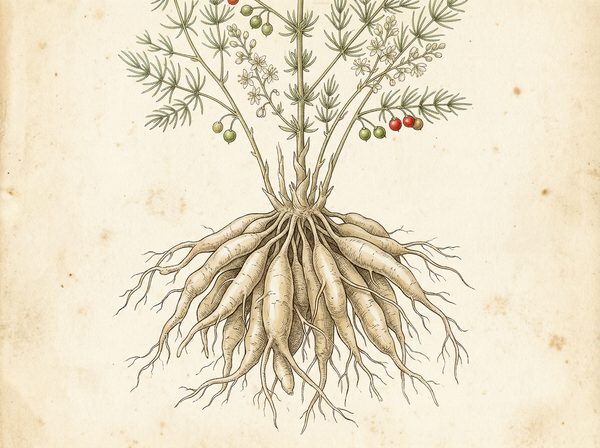 shatavariAsparagus racemosus
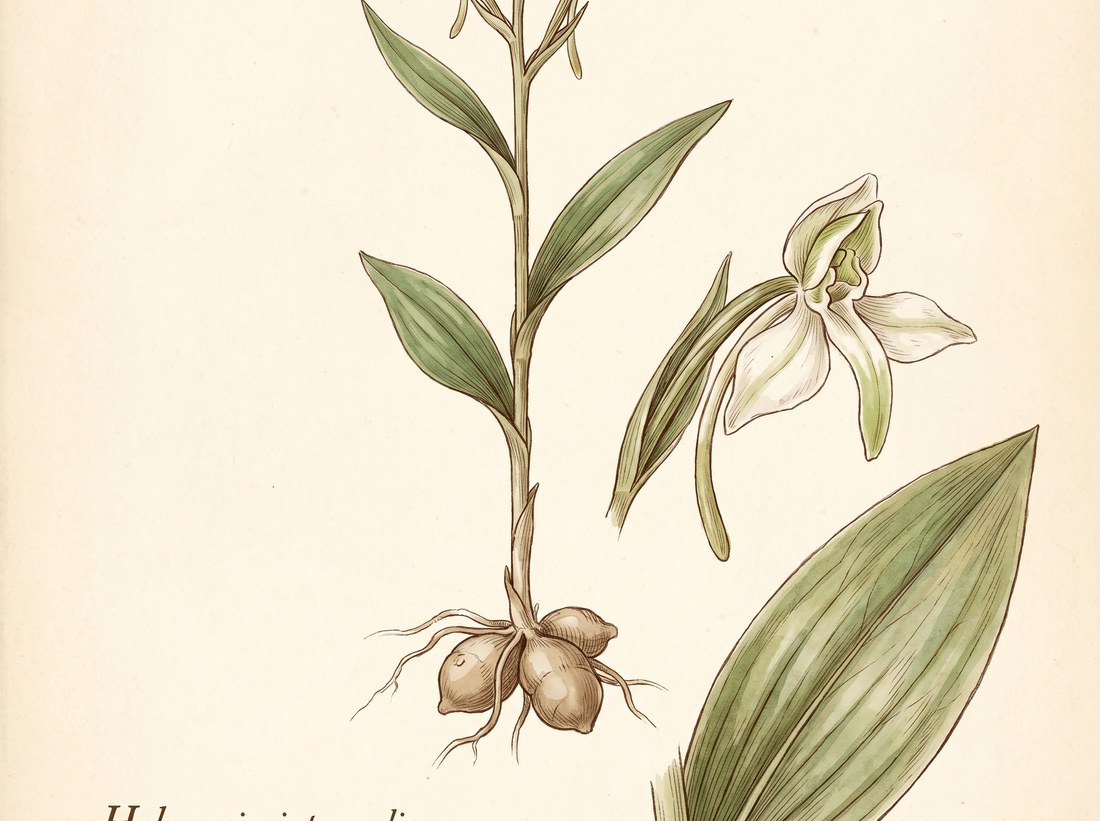 riddhi orchidHabenaria intermedia
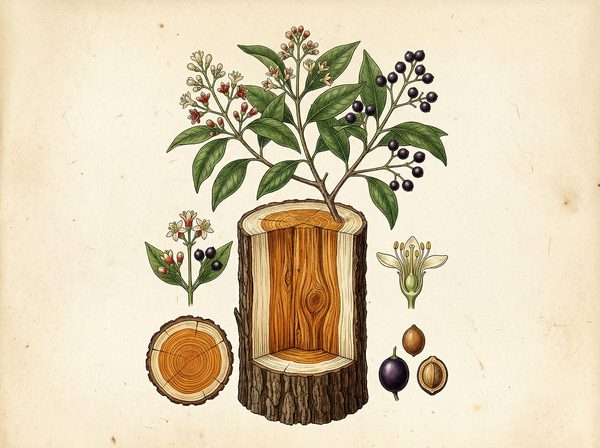 sandalwoodSantalum album
Nearby on the shelf
 JasmineJasminum officinale
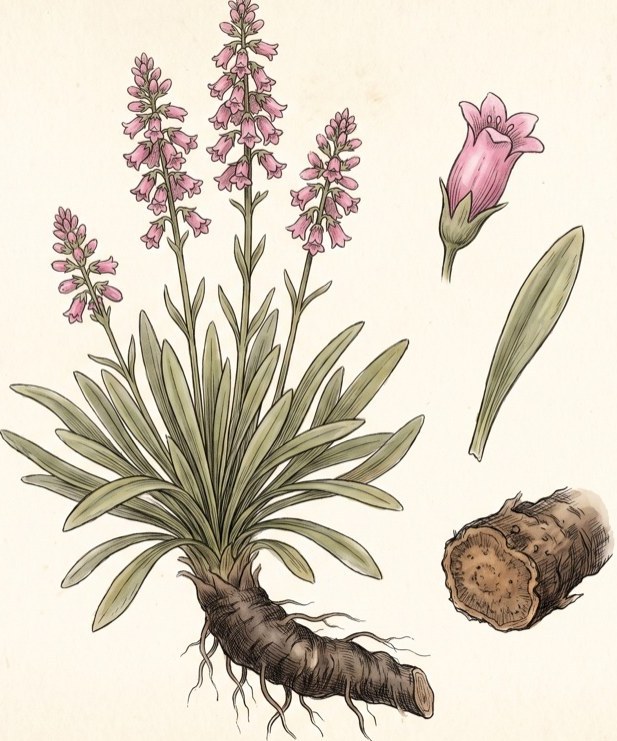 JatamansiNardostachys jatamansi
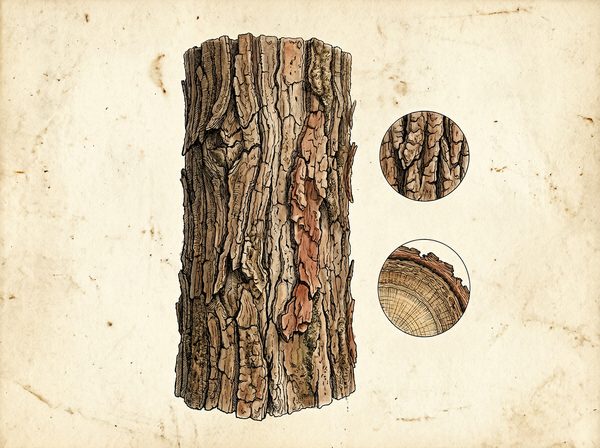 JatobaHymenaea courbaril
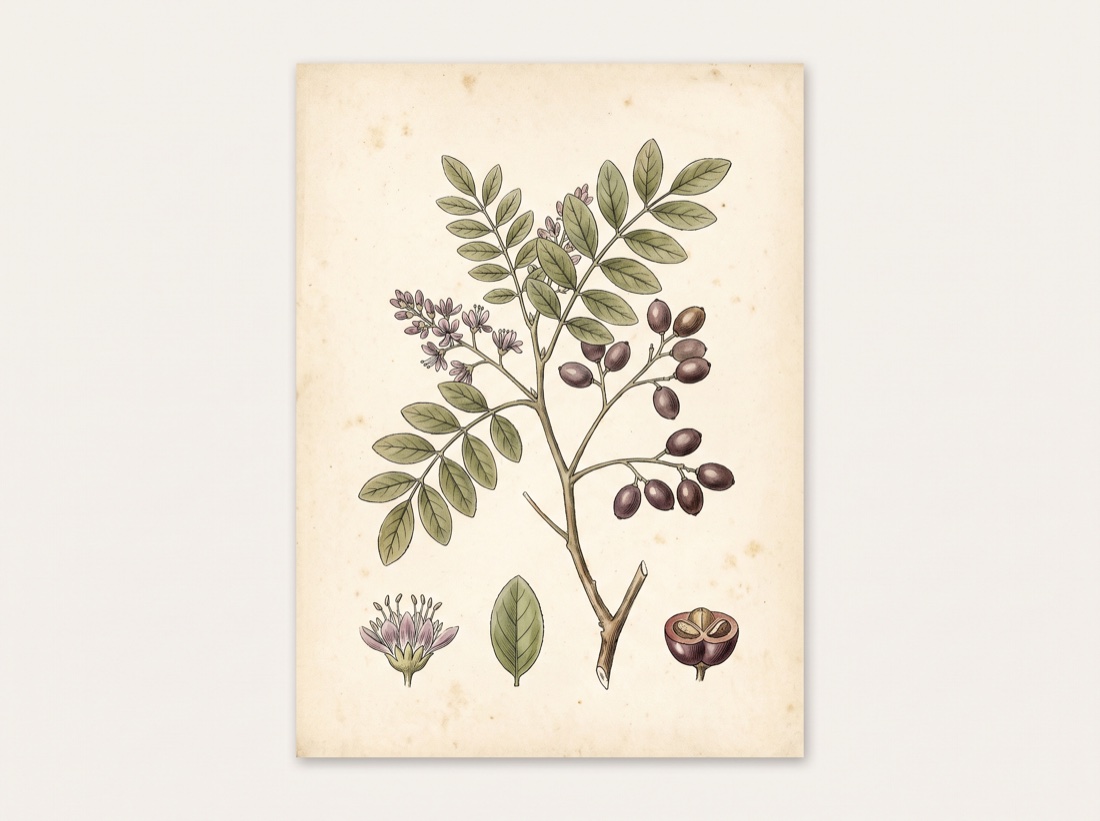 Java bruceaBrucea javanica
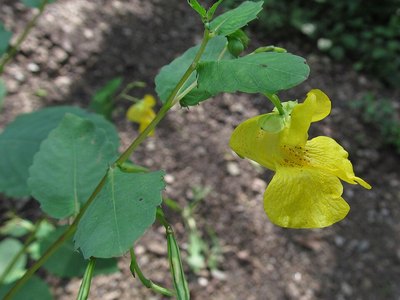 JewelweedImpatiens pallida
 Ji Xue TengSpatholobus suberectus
 JiaogulanGynostemma pentaphyllum
 Jimson weedDatura stramonium
The whole plate is in the library. The compass, Compare, the Sky of eleven hundred plants and the formulary open with an email address and a password, free, with the formula builder and its safety engine. Herbert without limit, his formulating, clients, the handouts and the labels are the paid room.
Open the library, free