Ayurvedic Herbalism
Kakoli
Roscoea procera
Also known as Himalayan ginger lily, alpine ginger, roscoea, Kakoli, Kshirakakoli (the related white-rooted form), Vayastha.
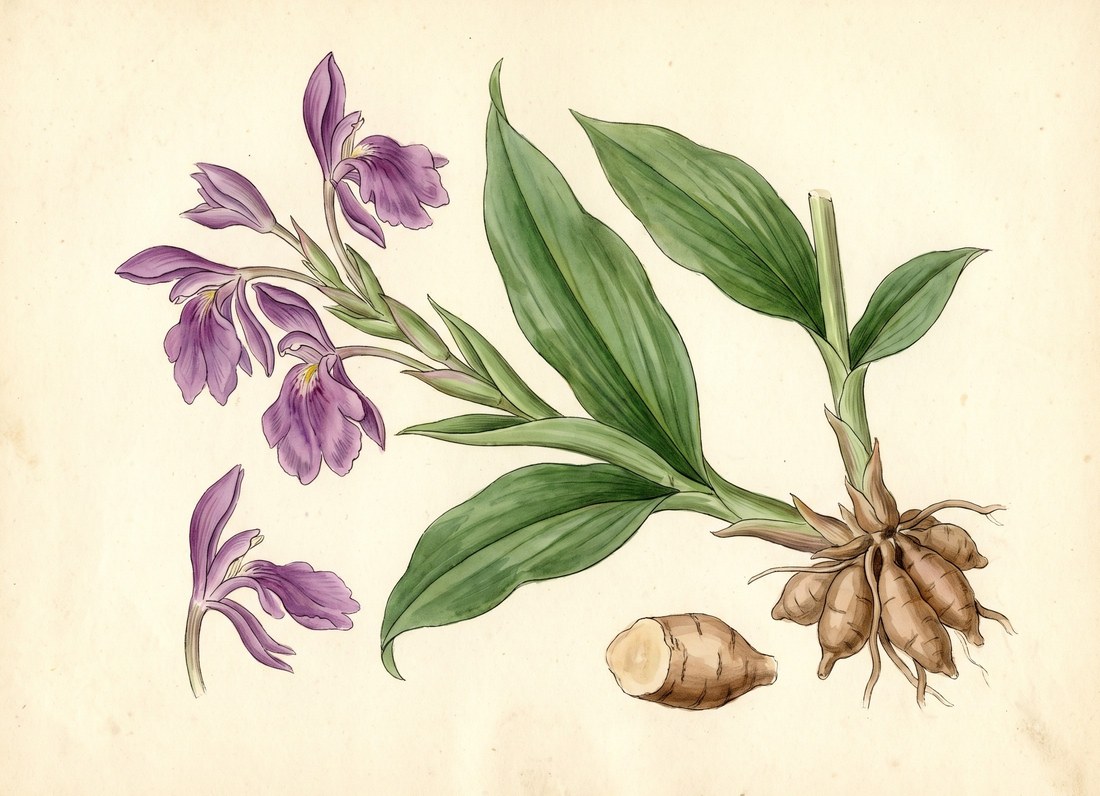
Roscoea procera, now included in Roscoea purpurea, is a small alpine ginger with orchid-like purple flowers and a cluster of fleshy tuberous roots, growing on moist slopes and forest margins between about 1500 and 3000 meters in the Himalaya from Himachal and Uttarakhand through Nepal to Sikkim and Bhutan. It is Kakoli, one of the eight Ashtavarga tubers and one of the Jivaniya, the life promoting group of Ayurveda, prized as a sweet, cooling, nourishing root for wasting, weakness, fever and infertility and as a component of Chyawanprash. The true plant is rare and expensive, and the classical texts themselves permit Ashwagandha and Shatavari as substitutes, which is what most Chyawanprash actually contains.

Ask Herbert about Kakoli. Herbert is the master herbalist inside Bountiful Herbs: he answers from this plate and eleven hundred others, with dosing, pairing and cautions. Your first ten questions are free.
Ask HerbertActions
Indications what the tradition reached for it in
- Debility, emaciation and convalescence
- Chronic low grade fever with weight loss (traditional)
- Dry cough and wasting lung disease as a nourishing adjunct
- Low seminal volume and sexual debility in a dry, hot patient
- Insufficient lactation in a depleted mother
- Bleeding disorders with heat and depletion (traditional)
- Burning sensations and thirst in a pitta constitution
- Gouty inflammation with dryness (traditional)
- Geriatric frailty as part of rasayana therapy
- Recovery after prolonged illness with poor tissue building
Specific indications
A thin, dry, overheated patient who has lost weight through illness and needs a cooling, sweet, building tuber rather than a warming tonic
The classical Jivaniya picture of wasting with chronic fever, dry cough and poor appetite, given in milk and ghee
A depleted new mother whose milk is scanty and who feels hot, thirsty and weak
The elderly patient on Chyawanprash or a rasayana ghee whose formula is expected to contain the Ashtavarga tubers
Safety
The record lists 6 contraindications; open the plate in the library to read them in full.
In practice
Kakoli is a tonic of the classical rasayana and jivaniya tradition rather than a herb of everyday dispensing. The Ayurvedic physician meets it in the great nourishing ghees and in Chyawanprash, where the eight Ashtavarga tubers together lend a sweet, cooling, tissue-building quality that balances the heating spices and the sour Amalaki.
In Ayurveda
Rasa: madhura (sweet), tikta (bitter, slight). Virya: sheeta (cooling). Vipaka: madhura (sweet). Guna: guru (heavy), snigdha (unctuous). Dosha: pacifies vata and pitta; may increase kapha in excess. Karma: jivaniya (life promoting, vitalizing); brimhana (nourishing, builds tissue); rasayana (rejuvenative); balya (strengthening); shukrala (increases semen); vrishya (aphrodisiac); stanyajanana (promotes breast milk); pittahara (pacifies pitta); vatahara (pacifies vata); raktapittahara (checks bleeding); jvaraghna (relieves fever); shvasahara (relieves dyspnea). Classical indications: kshaya (wasting and debility); rajayakshma (consumption, tuberculosis); daurbalya (weakness); shukrakshaya (deficiency of semen); stanyakshaya (deficient breast milk); raktapitta (bleeding disorders); jvara (fever, especially chronic); shvasa and kasa (dyspnea and cough); daha (burning sensation); vatarakta (gout); shosha (emaciation). The dried tuberous root is used, powdered and taken with milk and ghee, cooked into medicated ghee and milk decoctions, and above all as one of the eight Ashtavarga tubers that enrich Chyawanprash and the great nourishing ghees; because true Kakoli is scarce, Ashwagandha and Shatavari are the classically sanctioned substitutes. Classical formulations: Chyawanprash, Ashtavarga churna, Jivaniya gana kwatha and ghrita, Mahamayura ghrita, Brihat Ashwagandha ghrita, Amritaprasha ghrita, Vasanta kusumakara (as a plant component), Kakolyadi gana preparations. Described in: Charaka Samhita, Sushruta Samhita, Ashtanga Hridaya, Bhavaprakasha Nighantu, Dhanvantari Nighantu, Raja Nighantu, Kaiyadeva Nighantu.
Dosing as the sources wrote it
| Preparation | As written | Metric |
|---|---|---|
| Churna | 3-6 g powdered tuber once or twice daily with warm milk and ghee | 3000-6000 mg |
| Kshirapaka | 100-200 mL milk decoction once daily | 100-200 mL |
| Ghrita | 5-10 g medicated ghee once or twice daily | 5000-10000 mg |
| Avaleha | 10-20 g Chyawanprash or Ashtavarga lehya once or twice daily | 10000-20000 mg |
Doses are reproduced from the sources for practitioners and are not a recommendation for any person.
From the sources
Overview. Roscoea procera, now included in Roscoea purpurea, is a small alpine ginger with orchid-like purple flowers and a cluster of fleshy tuberous roots, growing on moist slopes and forest margins between about 1500 and 3000 meters in the Himalaya from Himachal and Uttarakhand through Nepal to Sikkim and Bhutan. It is Kakoli, one of the eight Ashtavarga tubers and one of the Jivaniya, the life promoting group of Ayurveda, prized as a sweet, cooling, nourishing root for wasting, weakness, fever and infertility and as a component of Chyawanprash. The true plant is rare and expensive, and the classical texts themselves permit Ashwagandha and Shatavari as substitutes, which is what most Chyawanprash actually contains.
Clinical Notes. Kakoli is a tonic of the classical rasayana and jivaniya tradition rather than a herb of everyday dispensing. The Ayurvedic physician meets it in the great nourishing ghees and in Chyawanprash, where the eight Ashtavarga tubers together lend a sweet, cooling, tissue-building quality that balances the heating spices and the sour Amalaki.
Ayurvedic Profile. Rasa: madhura (sweet), tikta (bitter, slight). Virya: sheeta (cooling). Vipaka: madhura (sweet). Guna: guru (heavy), snigdha (unctuous). Dosha: pacifies vata and pitta; may increase kapha in excess. Karma: jivaniya (life promoting, vitalizing); brimhana (nourishing, builds tissue); rasayana (rejuvenative); balya (strengthening); shukrala (increases semen); vrishya (aphrodisiac); stanyajanana (promotes breast milk); pittahara (pacifies pitta); vatahara (pacifies vata); raktapittahara (checks bleeding); jvaraghna (relieves fever); shvasahara (relieves dyspnea).
Conservation. Wild populations across the western and central Himalaya are declining from overharvesting of tubers for the Ashtavarga trade and from grazing and habitat loss; the plant is considered threatened in Uttarakhand and Himachal and cultivation is only beginning, so avoid wild harvested tuber.
In formulas
Kakoli stands in 3 documented formulas in the library, among them Śivā Guṭikā, Mahā Kalyāṇaka Ghṛta, Vidāryādi Ghṛta.
Often paired with
 shalparniDesmodium gangeticum
 long pepperPiper longum
 prishniparniUraria picta
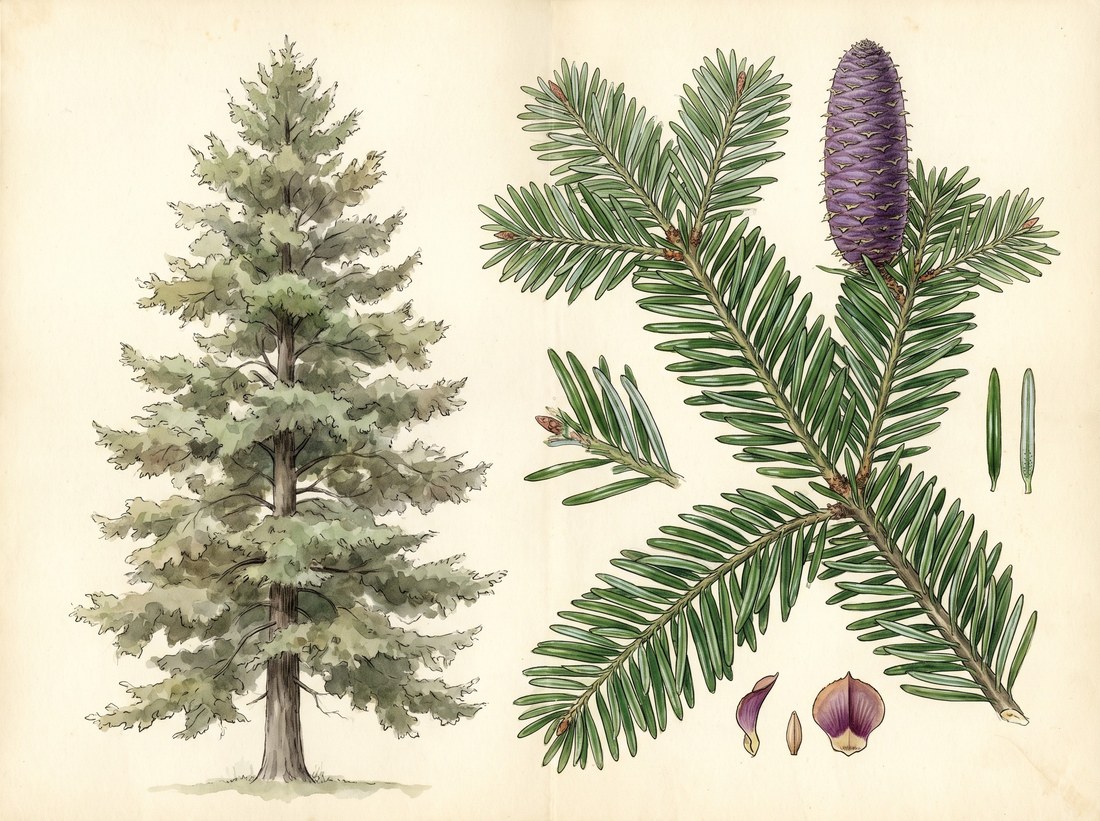 Himalayan silver firAbies webbiana
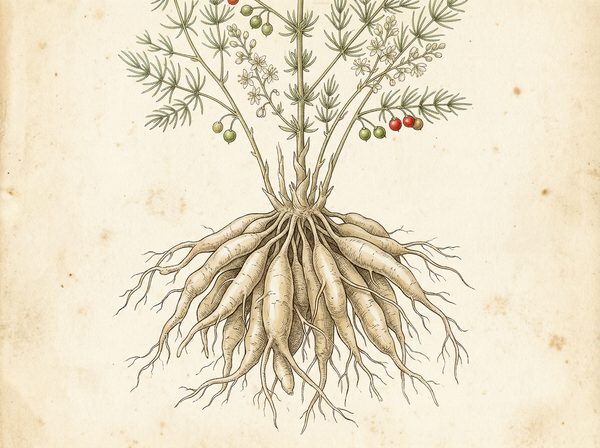 shatavariAsparagus racemosus
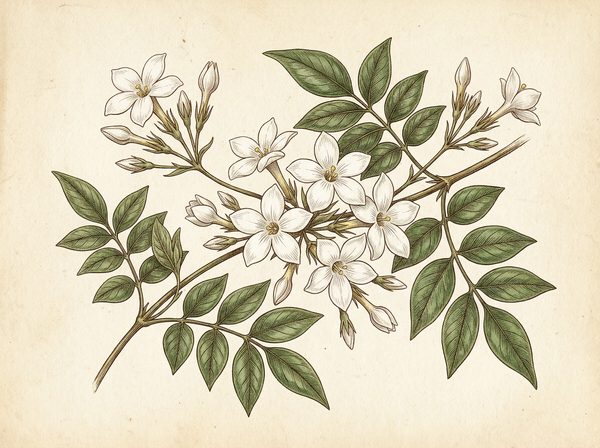 jasmineJasminum officinale
Nearby on the shelf
 JuniperJuniperus communis
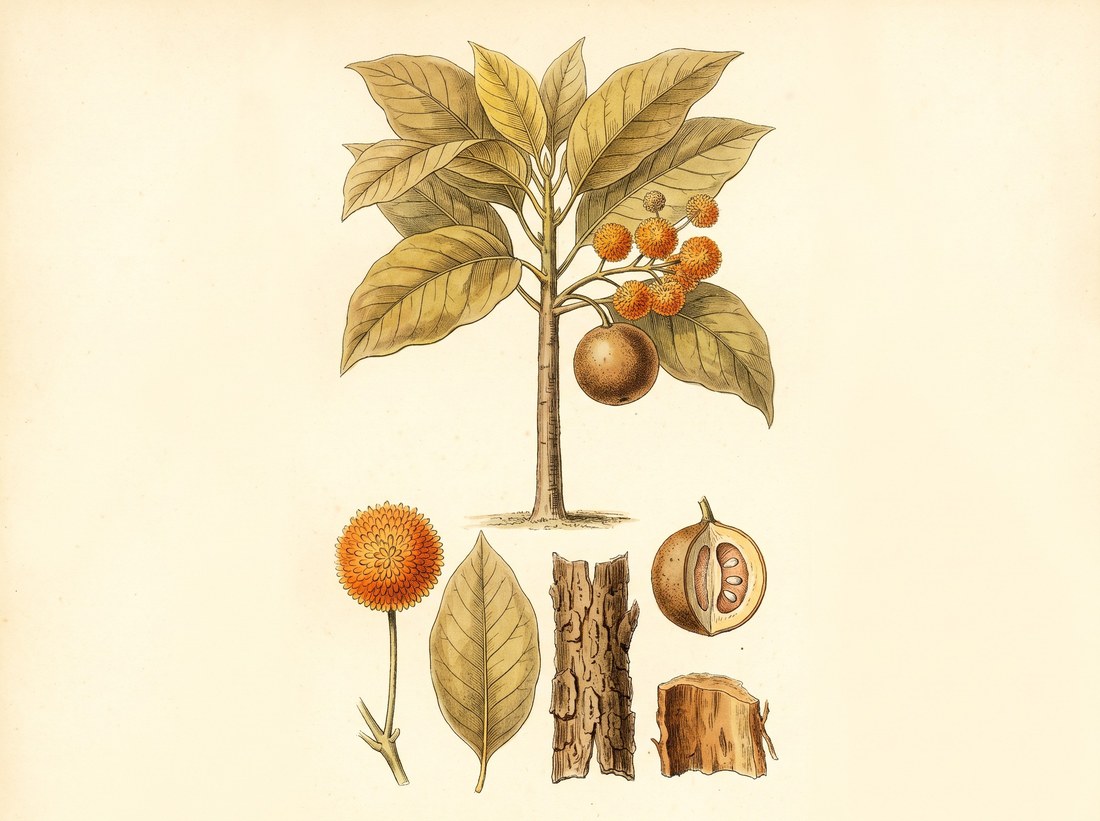 KadamNeolamarckia cadamba
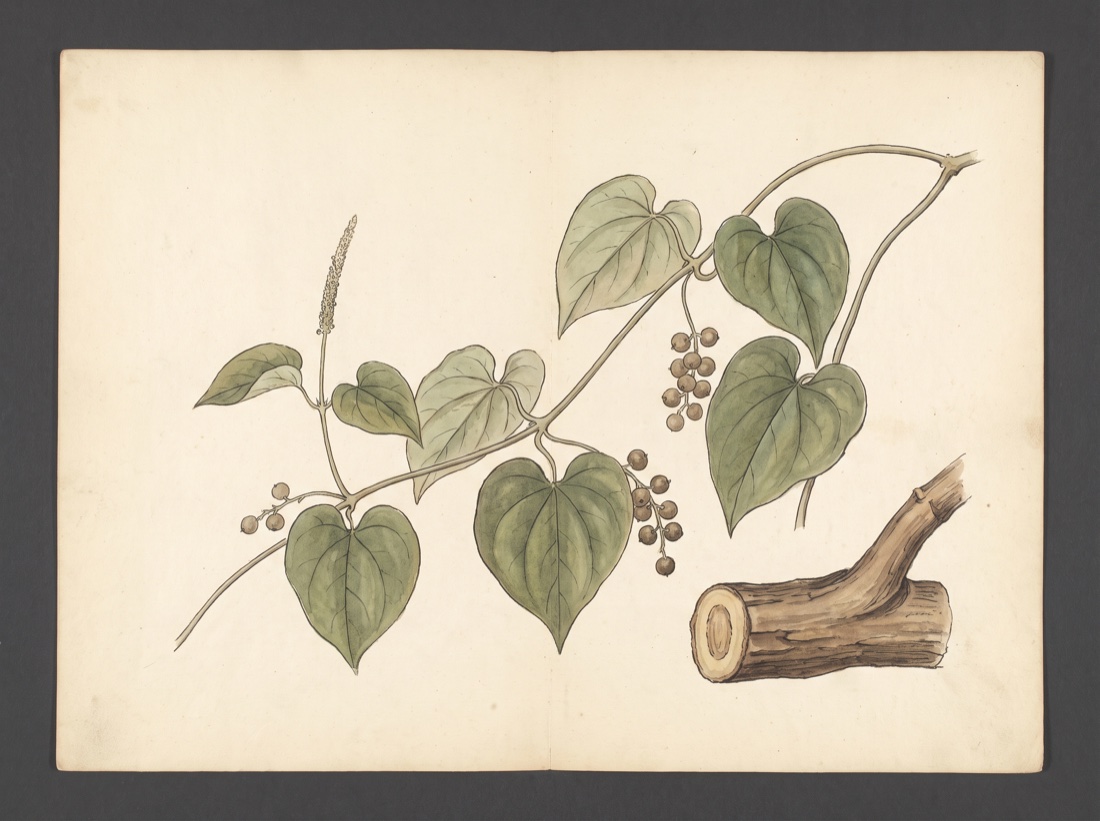 Kadsura pepperPiper kadsura
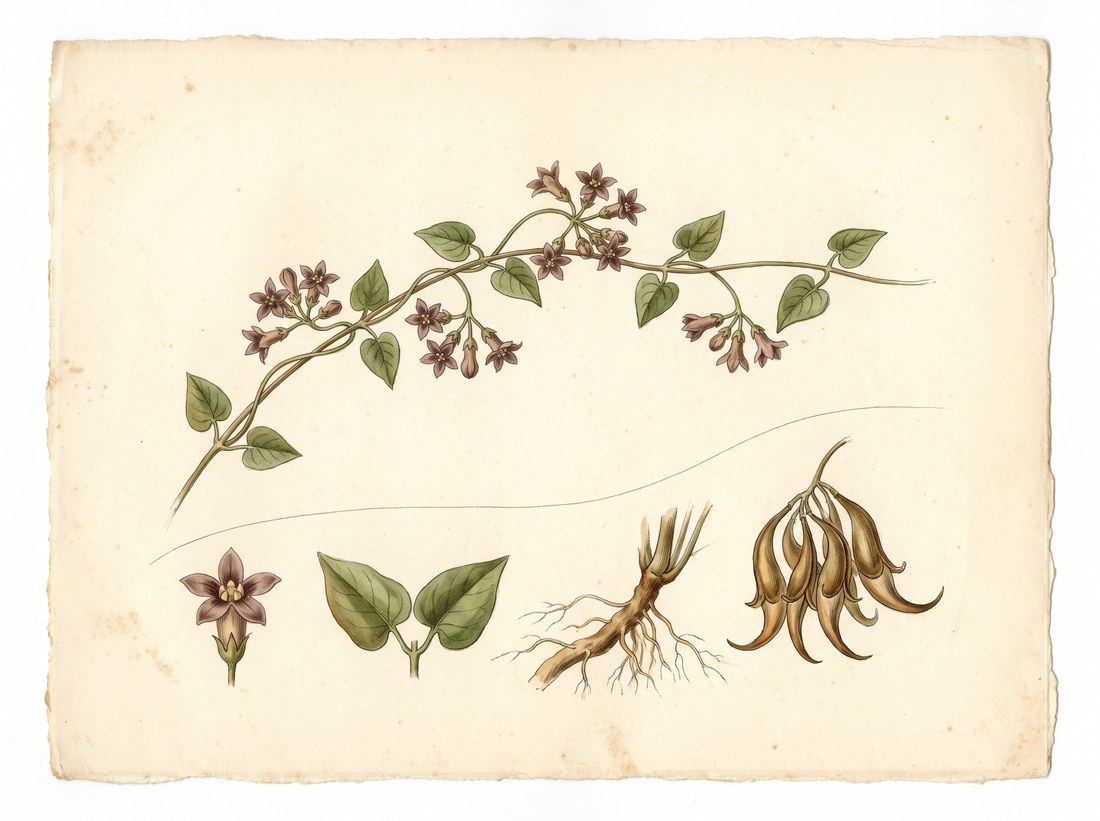 KakanasaPentatropis capensis
 KamalaMallotus philippinensis
 KannaSceletium tortuosum
 KansuiEuphorbia kansui
 KapokCeiba pentandra
The whole plate is in the library. The compass, Compare, the Sky of eleven hundred plants and the formulary open with an email address and a password, free, with the formula builder and its safety engine. Herbert without limit, his formulating, clients, the handouts and the labels are the paid room.
Open the library, free