Western and Ayurvedic herbalism
Jasmine
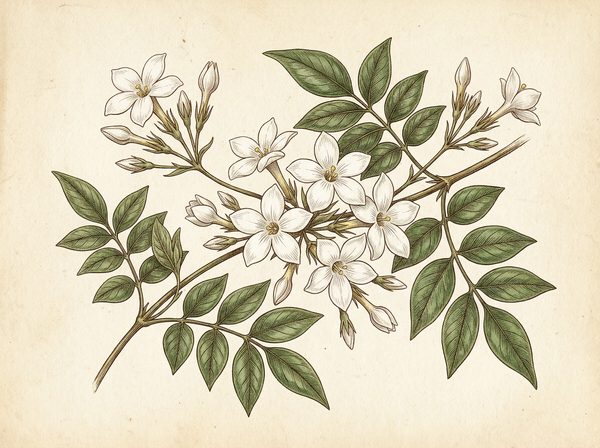
Jasminum officinale
Also known as common jasmine, Spanish jasmine, royal jasmine, Catalonian jasmine, chameli, Poet's Jasmine, Jati, Jatika, Malati.
Jasminum officinale, in the large flowered form long grown across India as Jasminum grandiflorum, is a climbing shrub of the olive family with intensely fragrant white flowers, cultivated from the Himalayan foothills to Tamil Nadu and Karnataka for garlands, perfume and medicine. In Ayurveda the leaves of Jati are the leading remedy for mouth ulcers and the base of Jatyadi taila, the most widely used herbal wound dressing in India, while the flowers serve the head, the eyes and the suppression of milk. It is a cooling, cleansing plant of the skin and mucous membranes.

Ask Herbert about Jasmine. Herbert is the master herbalist inside Bountiful Herbs: he answers from this plate and eleven hundred others, with dosing, pairing and cautions. Your first ten questions are free.
Ask HerbertActions
Indications what the tradition reached for it in
- Aphthous mouth ulcers and stomatitis
- Gingivitis and bleeding gums
- Chronic non healing wounds and ulcers (Jatyadi taila)
- Diabetic foot ulcers and pressure sores (topical)
- Burns and abrasions (topical)
- Anal fissure and fistula dressings (topical)
- Eczema and itching skin eruptions
- Suppression of lactation after weaning or infant loss (flower poultice)
- Sore eyes and conjunctivitis (cooled leaf decoction wash)
- Tension headache and low mood (flower oil, aromatic)
- Corns and skin growths (leaf paste, traditional)
- Eye disease
- Impotence
- Abscess
- Low libido
- Depression
- Mouth ulcer
- Joint pain
- Diabetes
- Stress
- Anxiety
- Ulcers
- Menstrual cramps
- Headache
- Cough
- Cystitis
- Insomnia
- Abdominal pain
- Wounds
- Diarrhea
Specific indications
Recurrent painful mouth ulcers in a hot, stressed pitta patient, relieved by chewing the fresh leaves or gargling their decoction
A sluggish, weeping ulcer on the leg with a dirty base and no tendency to heal, dressed daily with Jatyadi taila
A mother who must stop breastfeeding quickly and wants a gentle way to reduce engorgement and milk flow
Hot, itchy, inflamed skin eruptions in the monsoon season that respond to cooling leaf paste
Safety
Pregnancy: Pregnancy Caution
The record lists 6 contraindications; open the plate in the library to read them in full.
In practice
The Ayurvedic practitioner turns to Jati first for mukhapaka. Two or three fresh leaves chewed slowly and held in the mouth, or a decoction of the leaves used as a gargle several times a day, heals aphthous ulcers and inflamed gums within days; it is often combined with Yashtimadhu or Triphala in the gargle.
In Ayurveda
Rasa: tikta (bitter), kashaya (astringent), with a katu (pungent) note. Virya: sheeta (cooling) for the flower; the leaf is described as mildly ushna in some nighantus. Vipaka: katu (pungent). Guna: laghu (light), snigdha (unctuous), mridu (soft). Dosha: pacifies all three doshas, with its clearest action on pitta and kapha in the skin, mouth and eyes. Karma: vranaropana (heals wounds and ulcers); vranashodhana (cleans wounds); mukhapakahara (relieves mouth ulcers); kushthaghna (treats skin disease); netrya (benefits the eyes); dantya (strengthens teeth and gums); vishaghna (counteracts poison); krimighna (anthelmintic); raktashodhaka (purifies blood); stanyashodhana (cleanses breast milk); stanyanigrahana (suppresses lactation, flowers applied to the breast); shirovirechana (clears the head, as flower oil). Classical indications: mukhapaka (stomatitis and aphthous ulcers); vrana (wounds and chronic ulcers); dushta vrana (non healing, infected ulcers); kushtha (skin disease); netraroga (eye disease); dantaroga (dental and gum disease); karnaroga (ear disease, as oil); shiroroga (headache, as flower oil); visha (poisoning); stanyavikara (disorders of breast milk); vatarakta (gout); kandu (itching). The fresh leaves are the chief drug: chewed or made into a decoction and gargle for mouth ulcers, pressed for juice, and cooked into Jatyadi taila and Jatyadi ghrita, the standard Ayurvedic wound dressings. The flowers are made into a fragrant oil for the head and applied as a poultice to the breasts to check milk; the essential oil is used in perfumery and in modern aromatherapy. Classical formulations: Jatyadi taila, Jatyadi ghrita, Jati patra kwatha (gargle), Jati pushpa taila, Jatipatradi lepa, Kumkumadi taila (some versions), Nalpamaradi taila (regional additions). Described in: Charaka Samhita, Sushruta Samhita, Ashtanga Hridaya, Bhavaprakasha Nighantu, Dhanvantari Nighantu, Raja Nighantu, Kaiyadeva Nighantu, Sharngadhara Samhita.
Dosing as the sources wrote it
| Preparation | As written | Metric |
|---|---|---|
| Kwatha, gargle | 50-100 mL leaf decoction as a mouthwash three to four times daily | 50-100 mL |
| Swarasa | 10-20 mL fresh leaf juice once daily | 10-20 mL |
| Kwatha | 40-80 mL decoction twice daily | 40-80 mL |
| Taila, topical | 5-10 mL Jatyadi taila applied to the wound once or twice daily | 5-10 mL |
| Pushpa lepa, topical | 20-40 g crushed fresh flowers applied to the breasts twice daily | 20000-40000 mg |
| Flower tea: 1-2 g dried flowers steeped 8-12 min in 150-200 ml water, up to 2x daily | 1000-2000 mg |
Doses are reproduced from the sources for practitioners and are not a recommendation for any person.
From the sources
Overview. Jasminum officinale, in the large flowered form long grown across India as Jasminum grandiflorum, is a climbing shrub of the olive family with intensely fragrant white flowers, cultivated from the Himalayan foothills to Tamil Nadu and Karnataka for garlands, perfume and medicine. In Ayurveda the leaves of Jati are the leading remedy for mouth ulcers and the base of Jatyadi taila, the most widely used herbal wound dressing in India, while the flowers serve the head, the eyes and the suppression of milk. It is a cooling, cleansing plant of the skin and mucous membranes.
Clinical Notes. Primarily used in aromatherapy and topical applications traditional uses in Ayurveda and Unani for cooling and calming effects limited clinical evidence for internal use GRAS as food flavoring flowers main medicinal part
Clinical Notes. The Ayurvedic practitioner turns to Jati first for mukhapaka. Two or three fresh leaves chewed slowly and held in the mouth, or a decoction of the leaves used as a gargle several times a day, heals aphthous ulcers and inflamed gums within days; it is often combined with Yashtimadhu or Triphala in the gargle.
primary-actions. Jasmine acts primarily as: Nervine, Antispasmodic, Anti-inflammatory, Sedative, Aphrodisiac. Secondary actions include Antioxidant, Antimicrobial, Analgesic, Vulnerary, Expectorant.
In formulas
Jasmine stands in 18 documented formulas in the library, among them Śivā Guṭikā, Kalyāṇaka Ghṛta, Jātyādi Ghṛta Synonym Vraṇa Śodhanādi Ghṛta, Bṛhat Phala Ghṛta, Mahā Kalyāṇaka Ghṛta, Kuṅkumādi Taila.
Often paired with
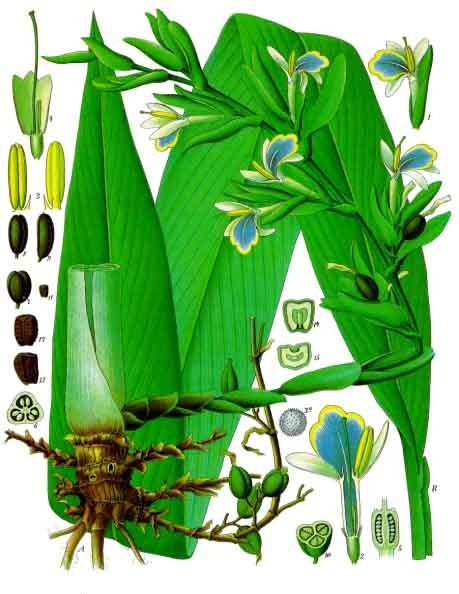 cardamomElettaria cardamomum
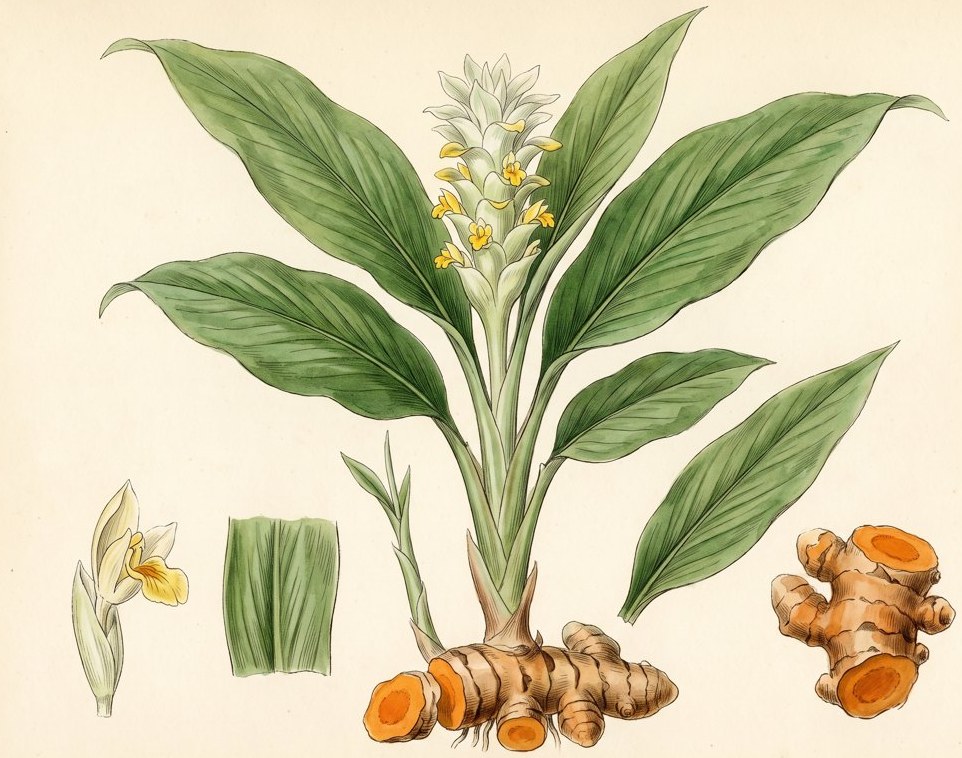 turmericCurcuma longa
 chebulic myrobalanTerminalia chebula
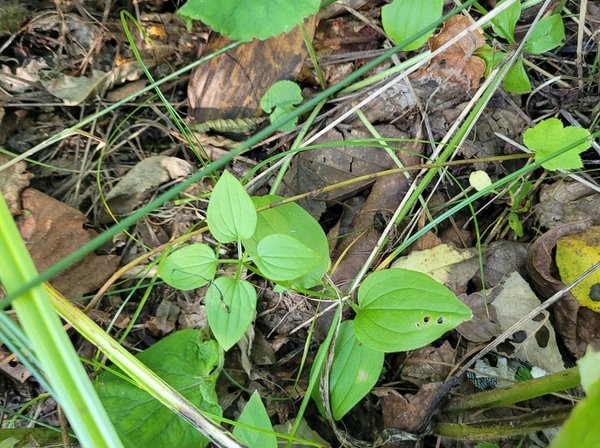 Indian madderRubia cordifolia
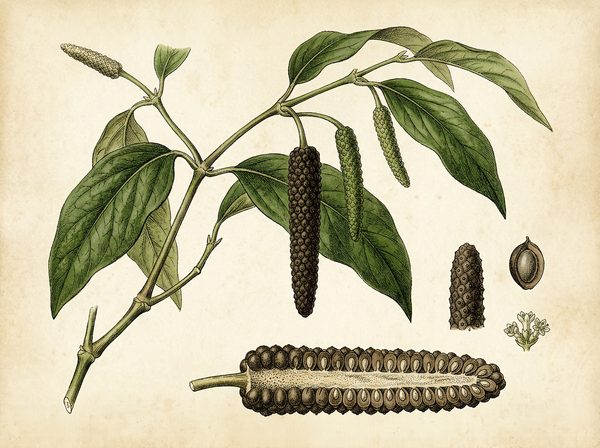 long pepperPiper longum
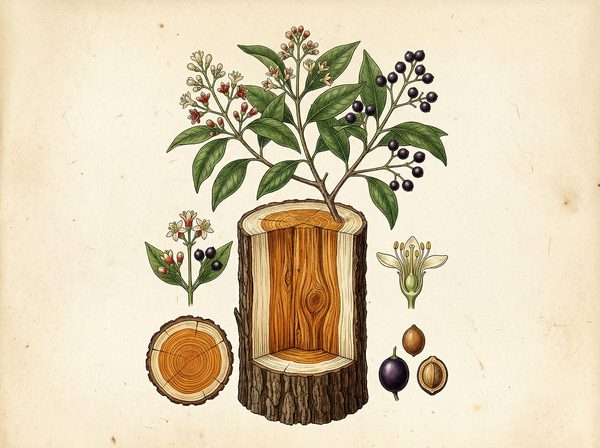 sandalwoodSantalum album
Nearby on the shelf
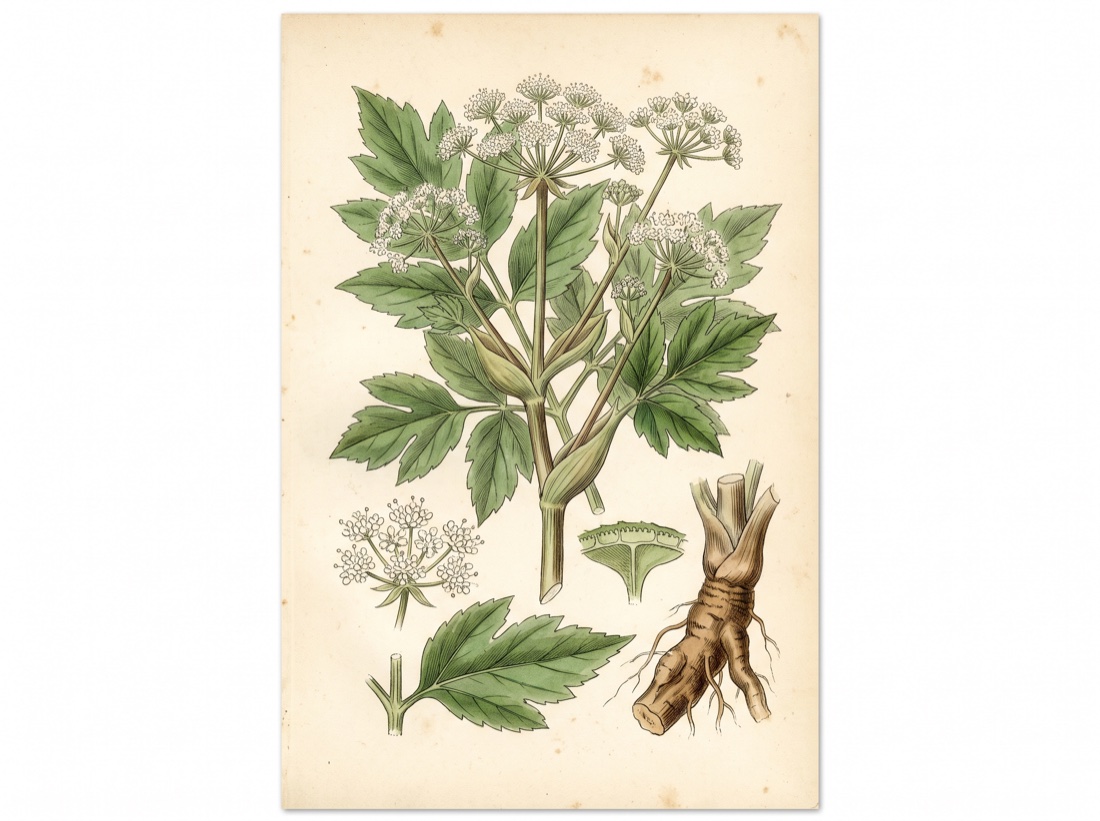 Japanese angelicaAngelica acutiloba
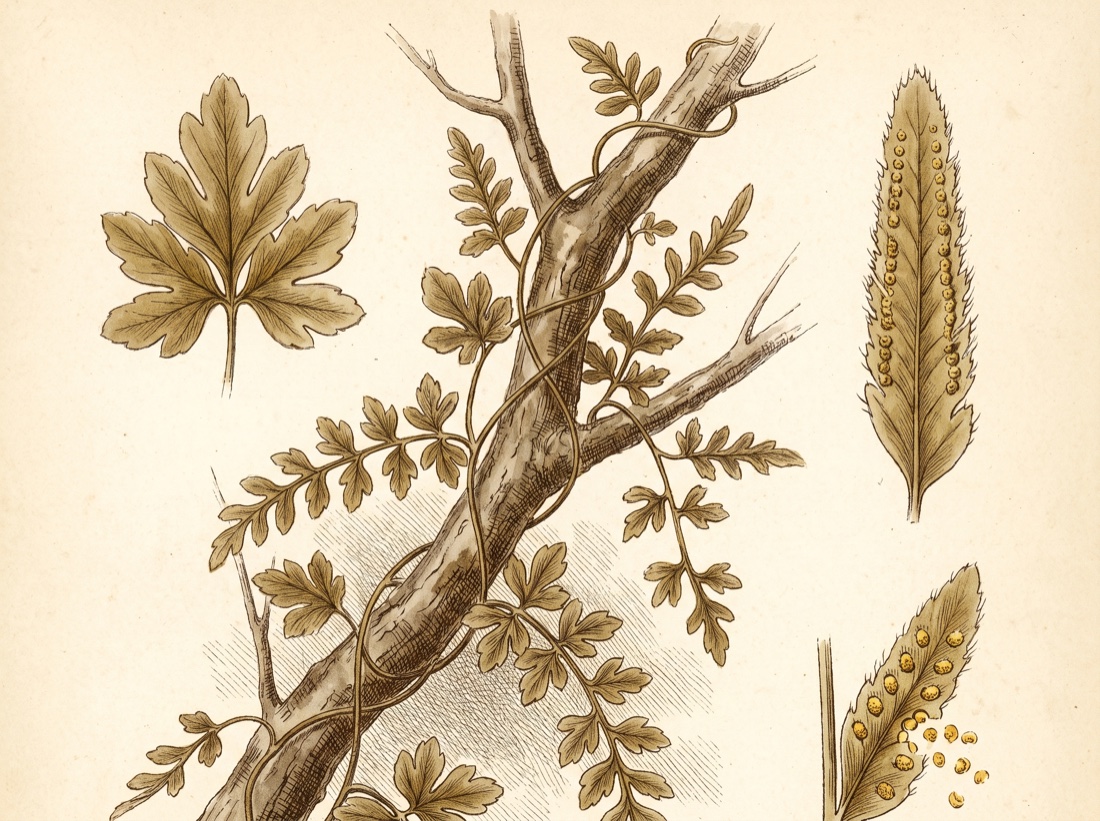 Japanese climbing fernLygodium japonicum
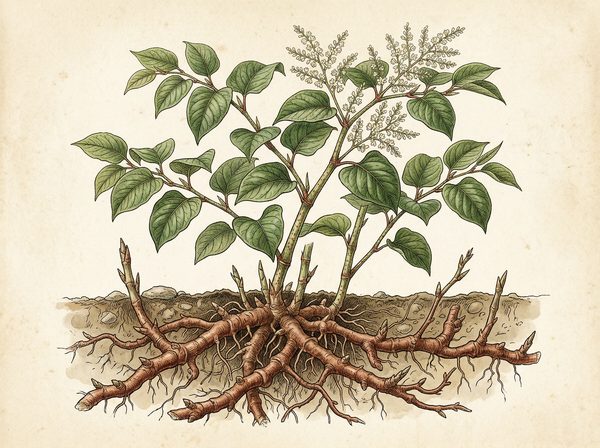 Japanese KnotweedReynoutria japonica
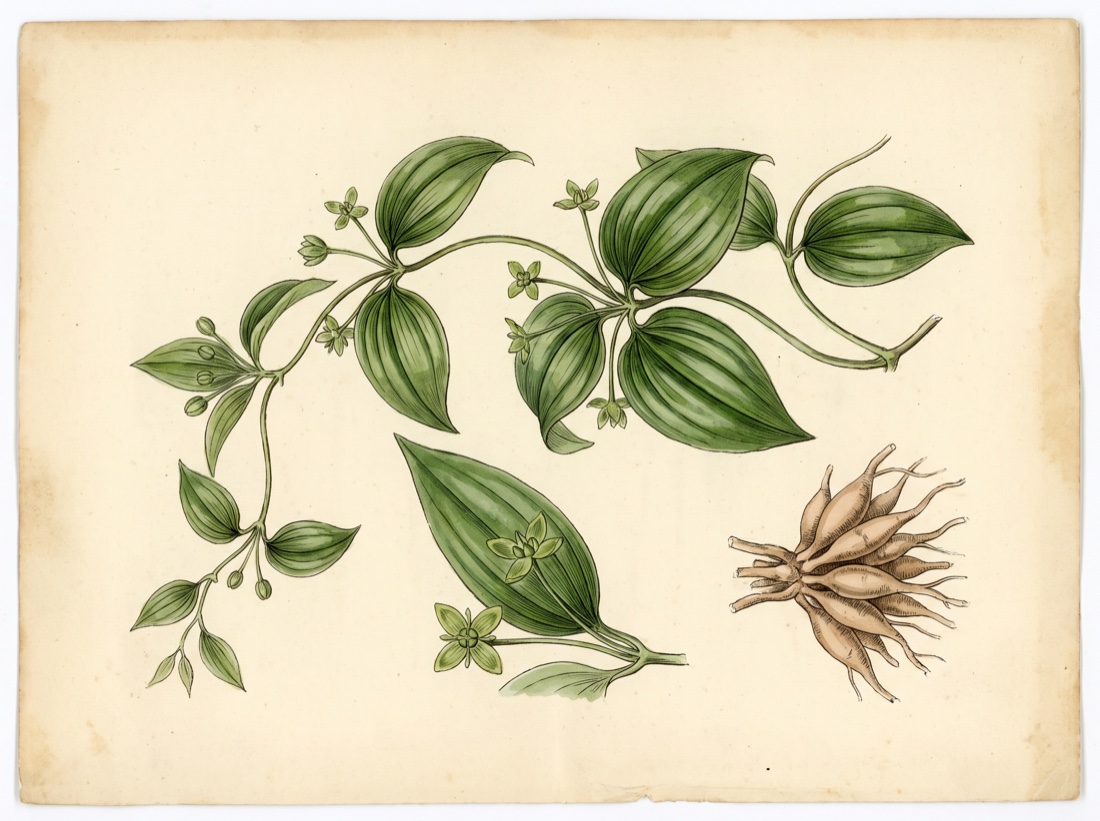 Japanese stemonaStemona japonica
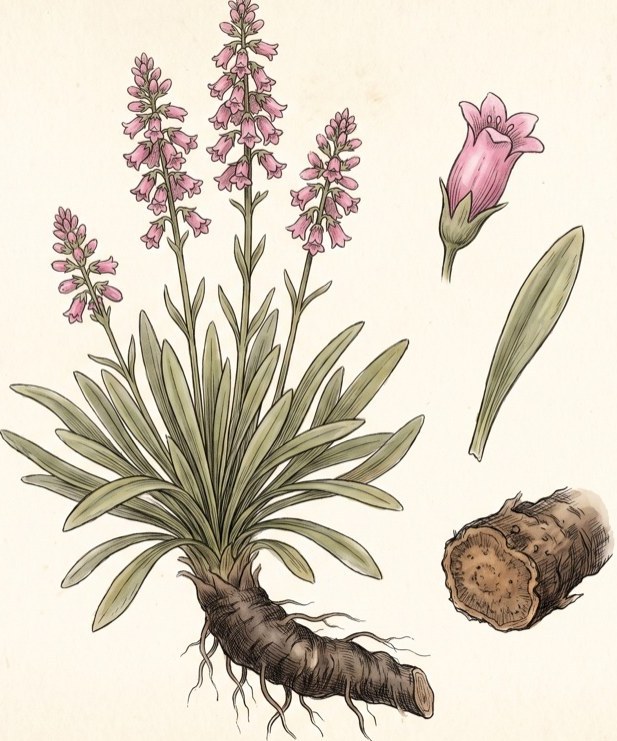 JatamansiNardostachys jatamansi
 JatobaHymenaea courbaril
 Java bruceaBrucea javanica
 JeevakMalaxis acuminata
The whole plate is in the library. The compass, Compare, the Sky of eleven hundred plants and the formulary open with an email address and a password, free, with the formula builder and its safety engine. Herbert without limit, his formulating, clients, the handouts and the labels are the paid room.
Open the library, free