Ayurvedic Herbalism
Prishniparni
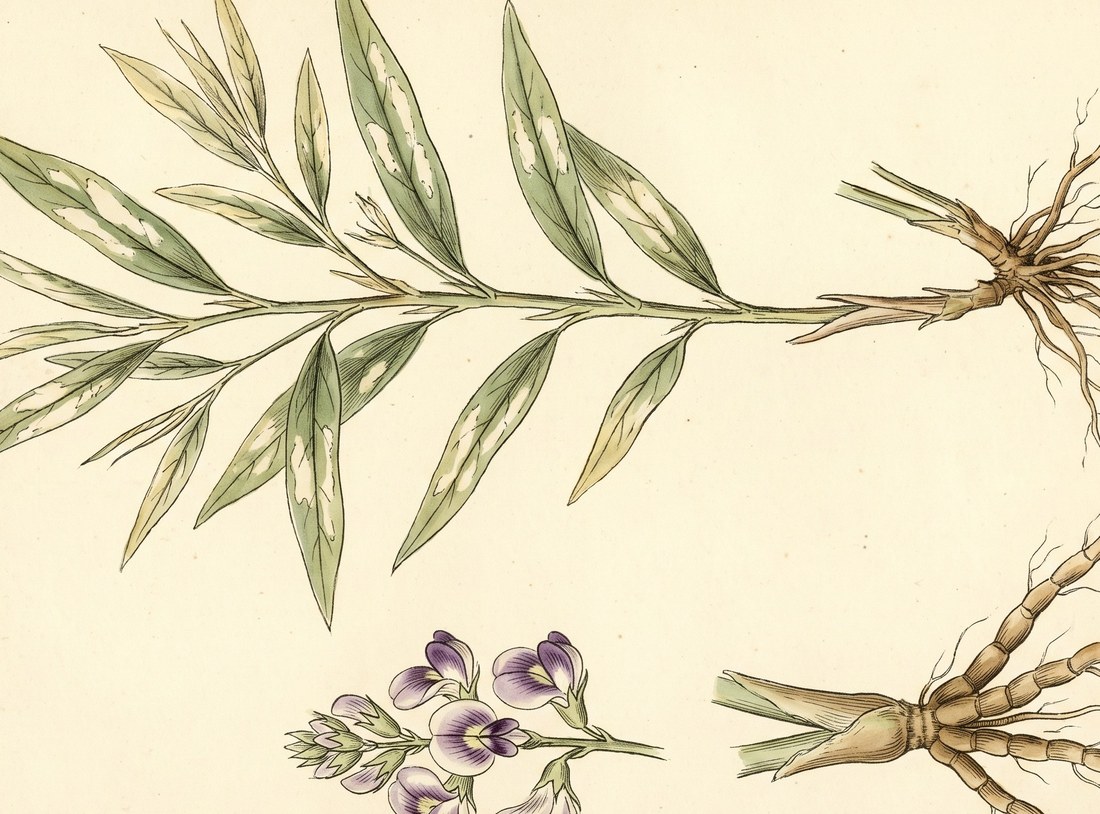
Uraria picta
Also known as painted uraria, dabra, Prishniparni, Prithakparni, Chitraparni.
Uraria picta is a small erect perennial undershrub of the pea family found across the plains and low hills of India, Sri Lanka and tropical Africa, recognized by its long narrow leaflets with pale mottled patches, which give it the name painted uraria and the Sanskrit Prishniparni, spotted leaf. Ayurveda values the root as one of the ten roots of Dashamoola and one of the five small roots of Laghupanchamoola, where it contributes a sweet, nourishing, vata pacifying quality to some of the most used decoctions in the tradition. It is rarely given alone but appears in dozens of formulas for fever, diarrhea, cough, joint pain and postpartum care.

Ask Herbert about Prishniparni. Herbert is the master herbalist inside Bountiful Herbs: he answers from this plate and eleven hundred others, with dosing, pairing and cautions. Your first ten questions are free.
Ask HerbertActions
Indications what the tradition reached for it in
- Chronic low grade fever with weakness
- Diarrhea and dysentery with debility
- Convalescence with edema and low appetite
- Chronic bronchitis and asthma (as part of Dashamoola)
- Osteoarthritis and low back pain of vata type (as part of Dashamoola)
- Fracture recovery (traditional adjunct)
- Postpartum weakness and pain (as part of Dhanwantaram preparations)
- Sciatica and neuralgia (in compound formulas)
- Bleeding piles and bloody stools (traditional)
- General debility with a hot, dry tendency
Specific indications
The depleted patient with a lingering fever, loose stools and swelling of the feet who needs both nourishment and gentle astringency
Chronic vata disorders, such as sciatica, stiff joints or postpartum body ache, where Dashamoola decoction is the base and this root supplies its sweet, nourishing element
Slow union of a fracture in a thin, anxious patient who also has poor digestion and disturbed sleep
Dysentery or diarrhea with burning and blood in someone too weak for a strongly astringent or cooling herb
Safety
The record lists 4 contraindications; open the plate in the library to read them in full.
In practice
Prishniparni is a team player. The Ayurvedic physician almost always meets it inside Dashamoola, the ten root decoction that is the backbone of treatment for vata disorders: sciatica, low back pain, osteoarthritis, asthma, chronic cough, postpartum pain and fatigue.
In Ayurveda
Rasa: madhura (sweet), tikta (bitter). Virya: ushna (heating). Vipaka: madhura (sweet). Guna: laghu (light), snigdha (unctuous), sara (mobile). Dosha: pacifies all three doshas, especially vata and pitta. Karma: balya (strengthening); brimhana (nourishing); vatahara (pacifies vata); shothahara (reduces swelling); sandhaniya (unites fractures, heals broken tissue); jvarahara (reduces fever); grahi (absorbent, checks diarrhea); vrishya (aphrodisiac); vishaghna (counteracts poison); dahaprashamana (relieves burning); hridya (cardiac tonic). Classical indications: jvara (fever); atisara and pravahika (diarrhea and dysentery); shotha (edema and swelling); vatavyadhi (nervous and musculoskeletal disorders of vata); bhagna (fracture); raktatisara (bloody diarrhea); kasa and shvasa (cough and dyspnea); daha (burning); hridroga (heart disease); visha and sarpavisha (poisoning, snake bite); vrana (wounds). The root and whole plant are dried and used mainly in kwatha as one of the Dashamoola and Laghupanchamoola groups; also as churna, in medicated ghees and oils, in arishta, and as a paste for fractures and wounds. Classical formulations: Dashamoola kwatha, Laghupanchamoola kwatha, Dashamoolarishta, Dhanwantaram taila, Dhanwantaram kwatha, Chyawanprash, Amritarishta, Indukanta ghrita, Dashamoola haritaki. Described in: Charaka Samhita, Sushruta Samhita, Ashtanga Hridaya, Bhavaprakasha Nighantu, Dhanvantari Nighantu, Raja Nighantu, Kaiyadeva Nighantu, Ayurvedic Pharmacopoeia of India.
Dosing as the sources wrote it
| Preparation | As written | Metric |
|---|---|---|
| Kwatha | 50-100 mL decoction twice daily | 50-100 mL |
| Churna | 3-6 g powdered root twice daily with milk or honey | 3000-6000 mg |
| Arishta (Dashamoolarishta) | 15-30 mL twice daily after food | 15-30 mL |
| Kalka, topical | 5-10 g root paste applied over fractures or wounds | 5000-10000 mg |
Doses are reproduced from the sources for practitioners and are not a recommendation for any person.
From the sources
Overview. Uraria picta is a small erect perennial undershrub of the pea family found across the plains and low hills of India, Sri Lanka and tropical Africa, recognized by its long narrow leaflets with pale mottled patches, which give it the name painted uraria and the Sanskrit Prishniparni, spotted leaf. Ayurveda values the root as one of the ten roots of Dashamoola and one of the five small roots of Laghupanchamoola, where it contributes a sweet, nourishing, vata pacifying quality to some of the most used decoctions in the tradition. It is rarely given alone but appears in dozens of formulas for fever, diarrhea, cough, joint pain and postpartum care.
Clinical Notes. Prishniparni is a team player. The Ayurvedic physician almost always meets it inside Dashamoola, the ten root decoction that is the backbone of treatment for vata disorders: sciatica, low back pain, osteoarthritis, asthma, chronic cough, postpartum pain and fatigue.
Ayurvedic Profile. Rasa: madhura (sweet), tikta (bitter). Virya: ushna (heating). Vipaka: madhura (sweet). Guna: laghu (light), snigdha (unctuous), sara (mobile). Dosha: pacifies all three doshas, especially vata and pitta.
Conservation. Critically endangered in several Indian states because of heavy collection for Dashamoola manufacture; cultivated material should be used and wild harvest avoided.
In formulas
Prishniparni stands in 35 documented formulas in the library, among them Amṛtāriṣta, Dantyādyariṣṭa, Daśamūlāriṣṭa, Mṛtasaṅjīvanī Surā, Miśreyārka, Cyavanaprāśa.
Often paired with
 shalparniDesmodium gangeticum
 Indian nightshadeSolanum indicum
 yellow-berried nightshadeSolanum xanthocarpum
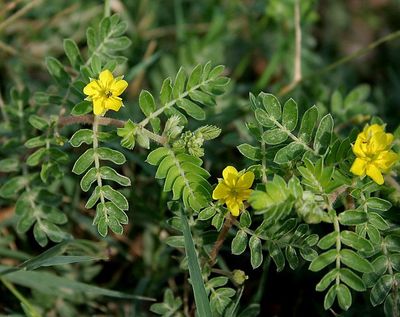 puncture vineTribulus terrestris
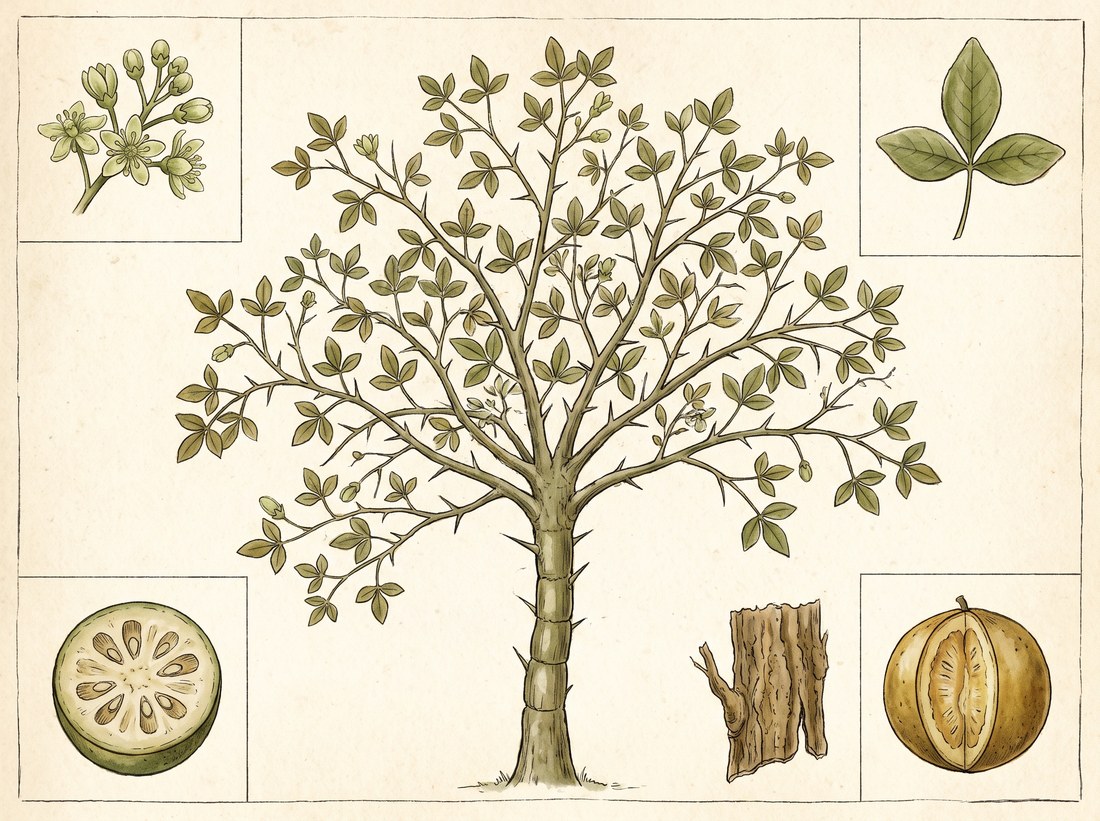 baelAegle marmelos
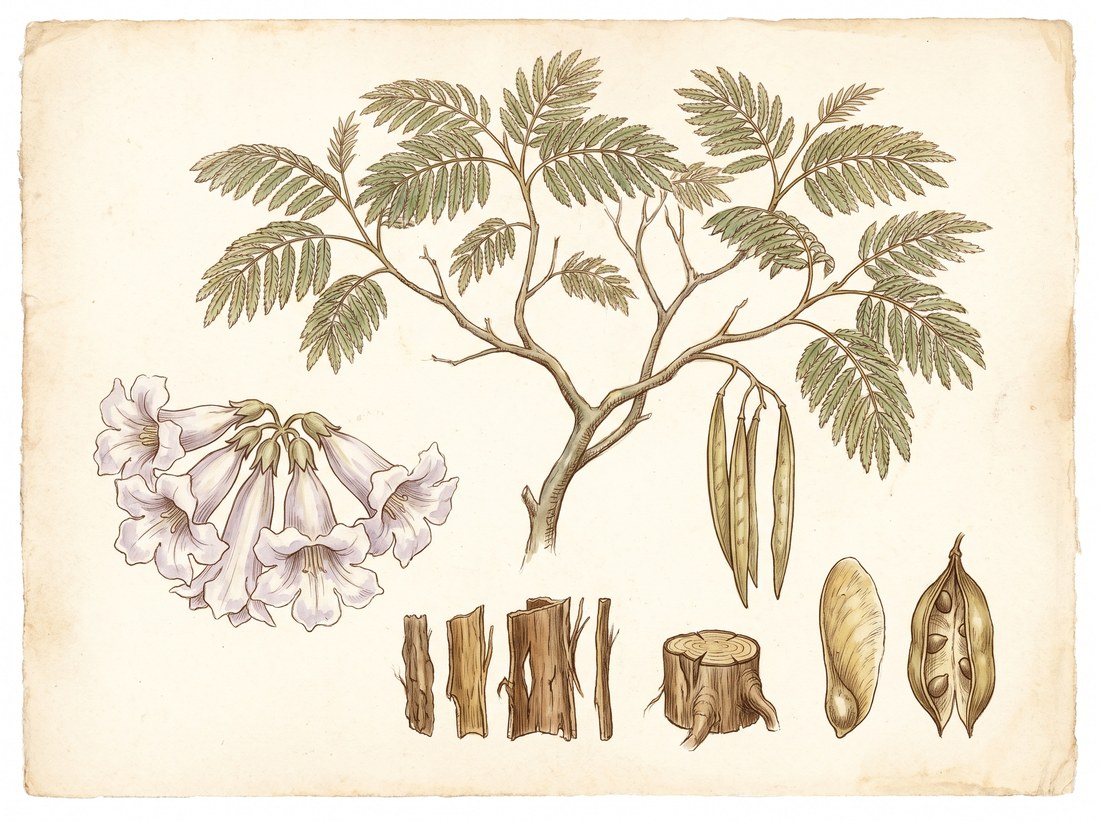 Indian trumpet flowerOroxylum indicum
Nearby on the shelf
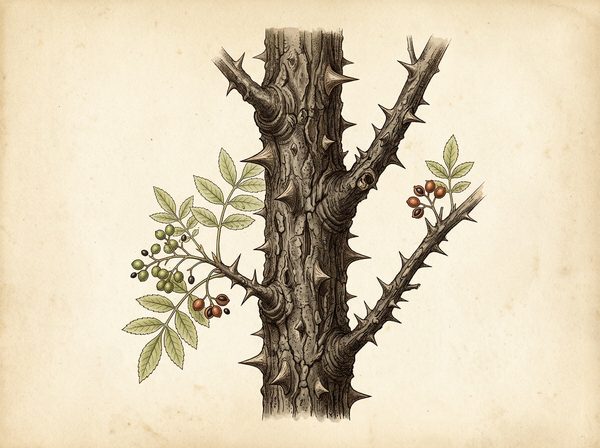 Prickly AshZanthoxylum americanum
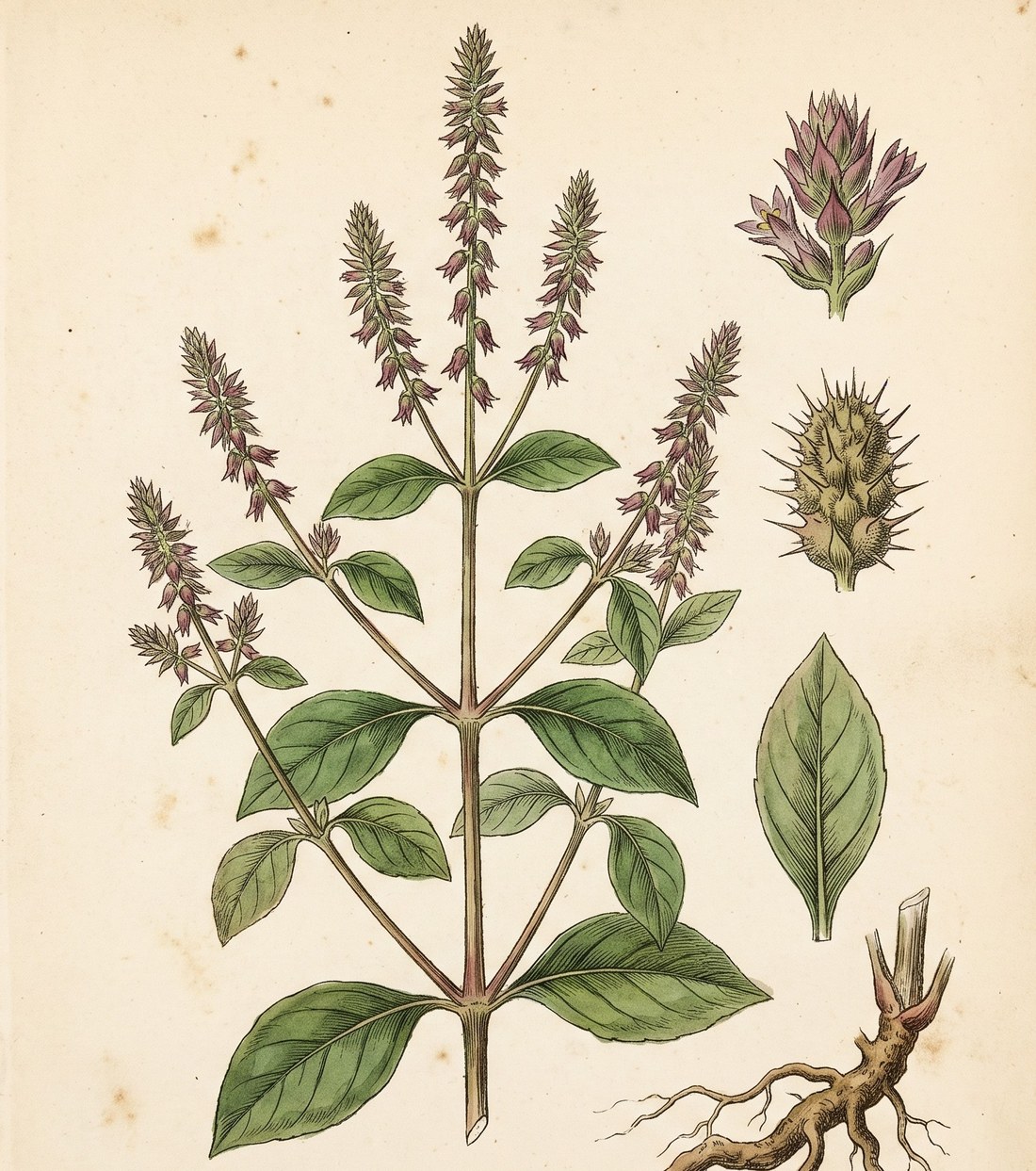 Prickly chaff flowerAchyranthes aspera
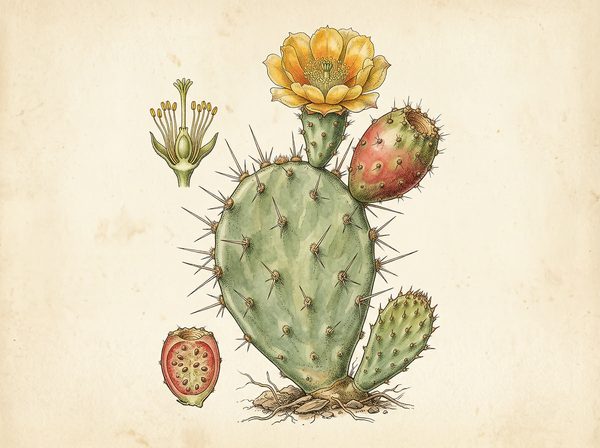 Prickly PearOpuntia ficus-indica
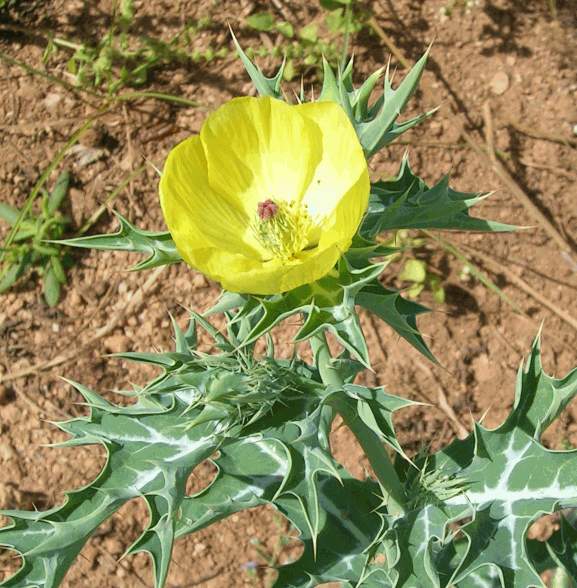 Prickly PoppyArgemone
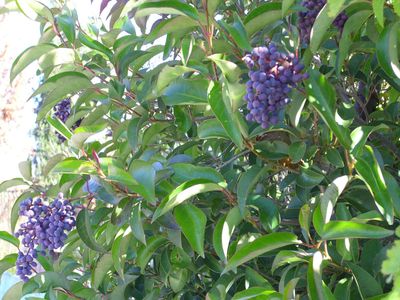 PrivetLigustrum lucidum
 PrunePrunus
 PsylliumPlantago ovata
 Pterospora andromedeaPterospora andromedea
The whole plate is in the library. The compass, Compare, the Sky of eleven hundred plants and the formulary open with an email address and a password, free, with the formula builder and its safety engine. Herbert without limit, his formulating, clients, the handouts and the labels are the paid room.
Open the library, free