Chinese Herbalism
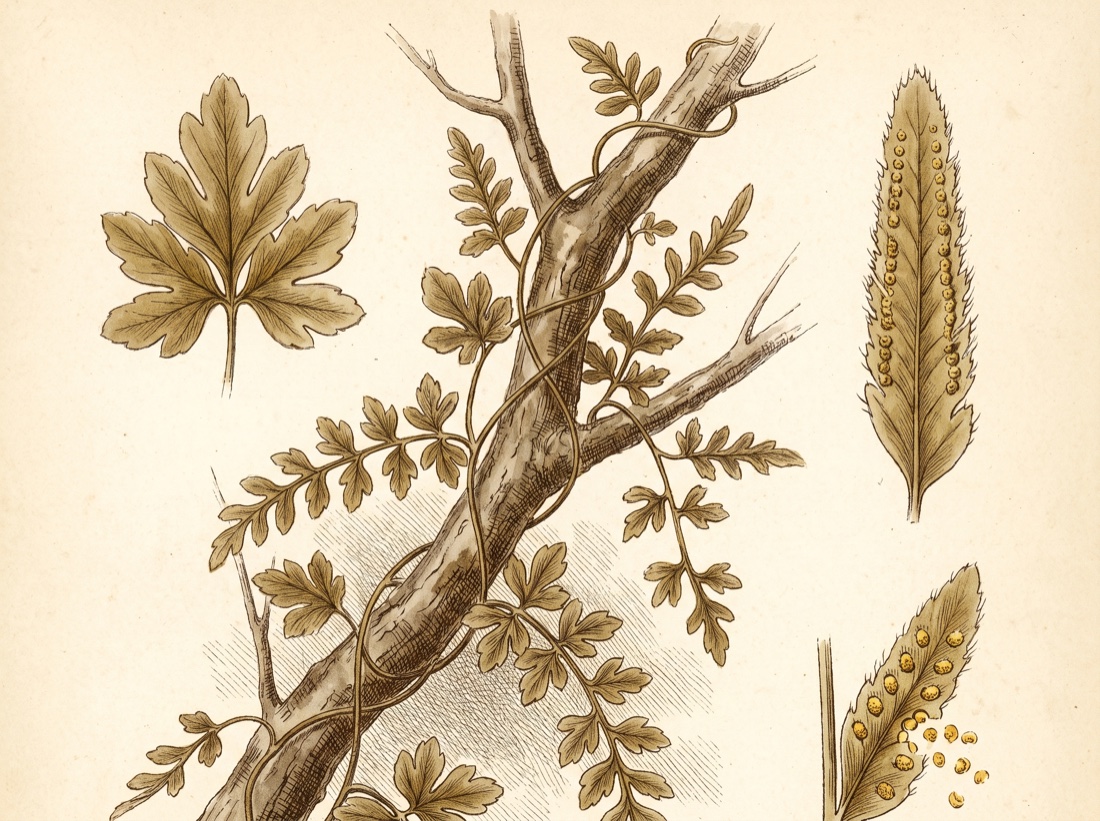
Japanese climbing fern
Lygodium japonicum
Also known as climbing fern spore, lygodium spore, hai jin sha, sea gold sand, hǎi jīn shā, hǎi jīn shā téng (whole plant).
Lygodium japonicum is a delicate climbing fern of eastern and southern Asia, twining several meters through hedges and woodland edges, and now an invasive weed across the southeastern United States. The medicinal part is the fine, rust-brown spore dust shaken from the fertile fronds in autumn, called hai jin sha, sea gold sand, because it glitters and floats on water. It is a cold, sweet and salty drug of the Bladder and Small Intestine channels, used almost entirely for painful, hot, and stony urinary conditions.

Ask Herbert about Japanese climbing fern. Herbert is the master herbalist inside Bountiful Herbs: he answers from this plate and eleven hundred others, with dosing, pairing and cautions. Your first ten questions are free.
Ask HerbertActions
Indications what the tradition reached for it in
- Urinary stones with colicky pain (stony lin)
- Acute cystitis and urethritis with burning, urgent urination (hot lin)
- Hematuria from urinary tract heat (bloody lin)
- Cloudy or milky urine (gao lin, chylous or turbid urine)
- Painful dribbling urination after stone passage
- Edema of damp-heat type with scanty urine
- Urinary gravel with lower back pain
- Recurrent urinary tract infection as an adjunct
- Damp-heat jaundice (whole plant, folk use)
Specific indications
Sharp, cutting pain along the urethra during urination with gravel or a small stone on the move
Burning, urgent, scanty urination that leaves a lingering ache low in the abdomen after voiding
Turbid, cloudy urine in a damp-heat patient, especially with a background of stones
Safety
The record lists 7 contraindications; open the plate in the library to read them in full.
In practice
Hai jin sha is the pain-relieving member of the stone-expelling group. Where guang jin qian cao and jin qian cao dissolve and flush, hai jin sha addresses the cutting pain and burning of the passage itself, so it is added when urination hurts.
In Chinese medicine
Temperature: cold. Taste: sweet, salty. Channels: Bladder, Small Intestine. Actions: Clears heat and drains damp from the lower burner; Unblocks painful urinary dysfunction and relieves pain along the urinary tract; Promotes the passage of stones and gravel; Cools the blood in bloody urination.
Dosing as the sources wrote it
| Preparation | As written | Metric |
|---|---|---|
| Decoction (spores, wrapped) | 6-15 g dried spores daily decocted in a cloth bag | 6000-15000 mg |
| Powder | 2-3 g powdered spores twice daily stirred into warm water | 2000-3000 mg |
| Whole plant decoction (hai jin sha teng) | 15-30 g dried whole plant daily in decoction | 15000-30000 mg |
Doses are reproduced from the sources for practitioners and are not a recommendation for any person.
From the sources
Overview. Lygodium japonicum is a delicate climbing fern of eastern and southern Asia, twining several meters through hedges and woodland edges, and now an invasive weed across the southeastern United States. The medicinal part is the fine, rust-brown spore dust shaken from the fertile fronds in autumn, called hai jin sha, sea gold sand, because it glitters and floats on water. It is a cold, sweet and salty drug of the Bladder and Small Intestine channels, used almost entirely for painful, hot, and stony urinary conditions.
Clinical Notes. Hai jin sha is the pain-relieving member of the stone-expelling group. Where guang jin qian cao and jin qian cao dissolve and flush, hai jin sha addresses the cutting pain and burning of the passage itself, so it is added when urination hurts.
In formulas
Japanese climbing fern stands in 1 documented formula in the library, among them sân jin tàng.
Often paired with
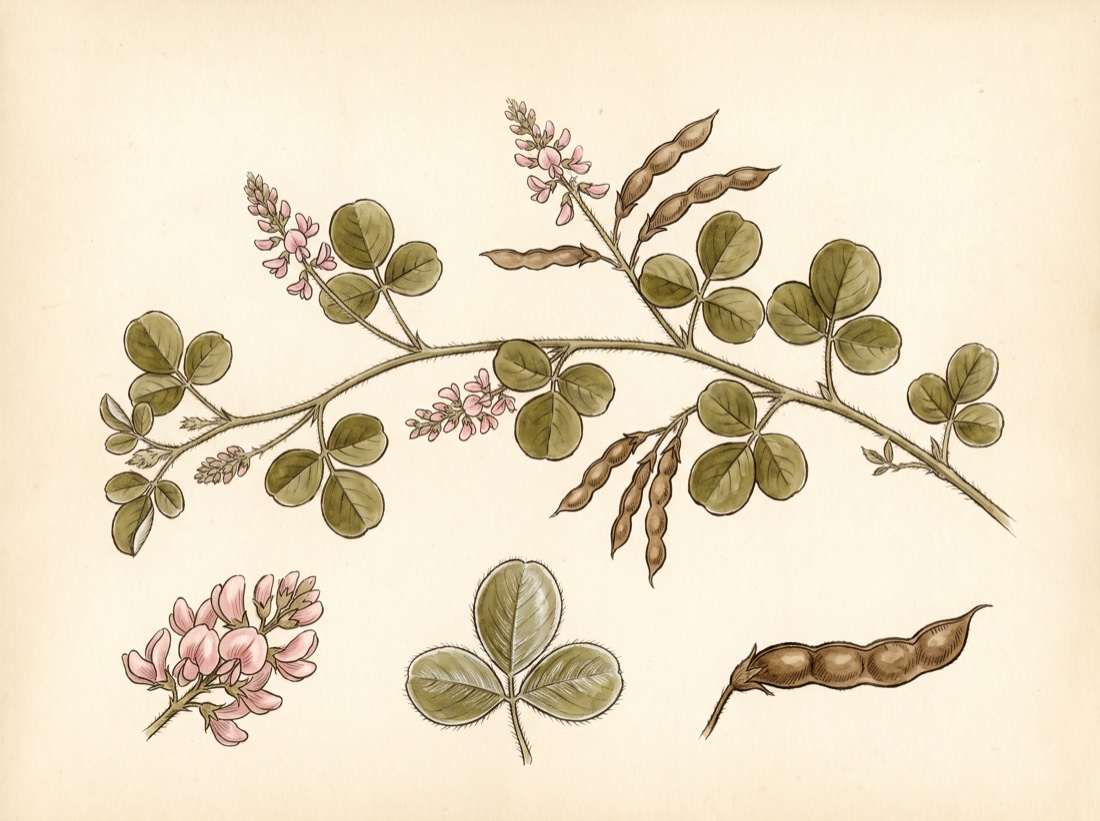 Guangdong money grassGrona styracifolia
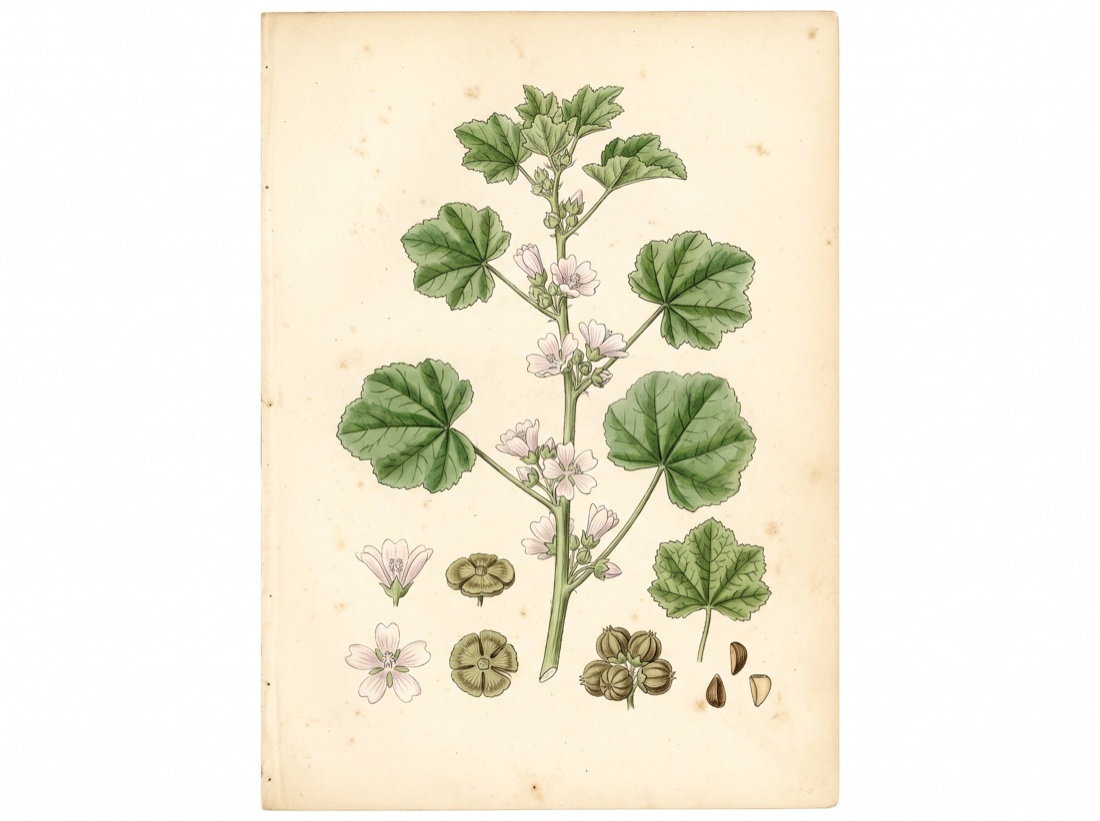 cluster mallowMalva verticillata
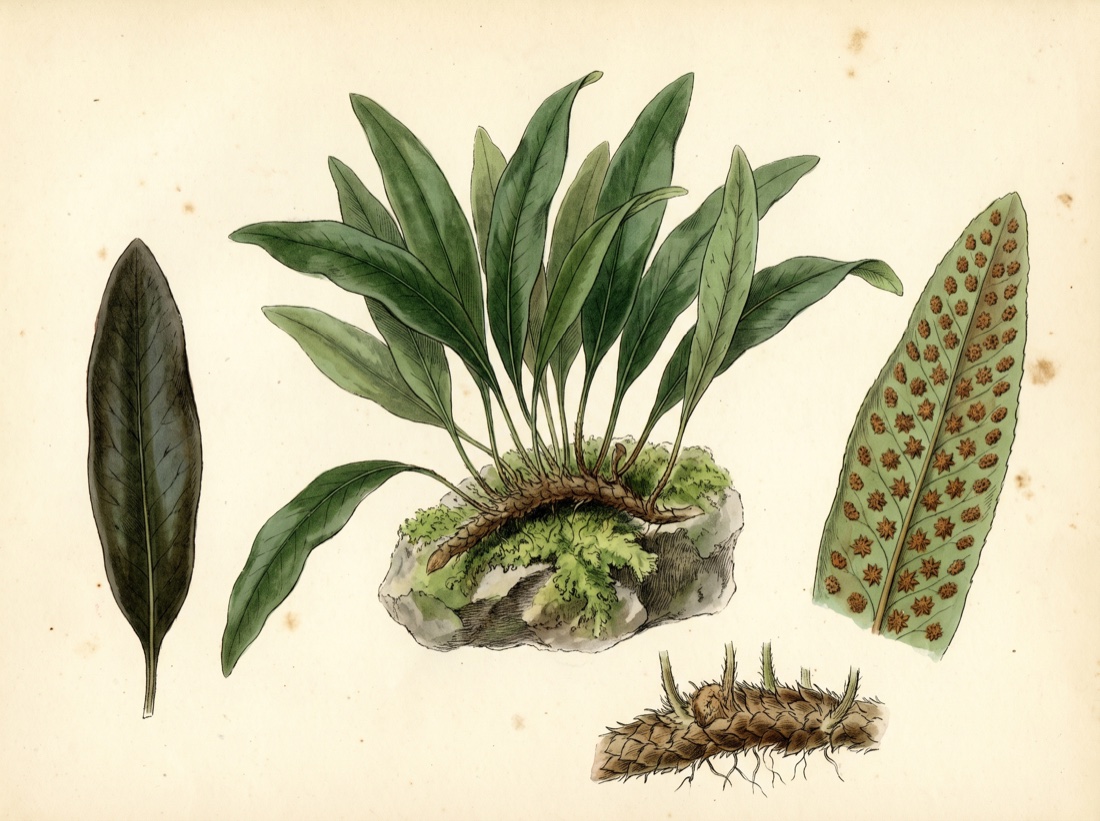 tongue fernPyrrosia lingua
Nearby on the shelf
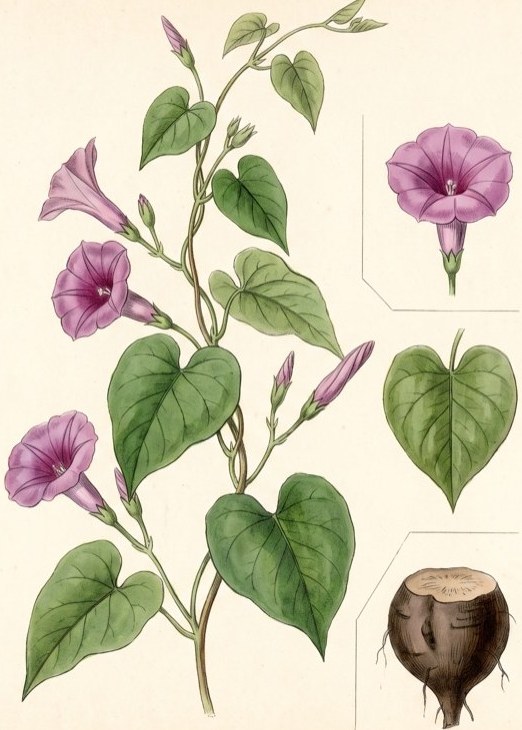 JalapIpomea jalapa
 Jamaican dogwoodPiscidia piscipula
 JambulSyzygium cumini
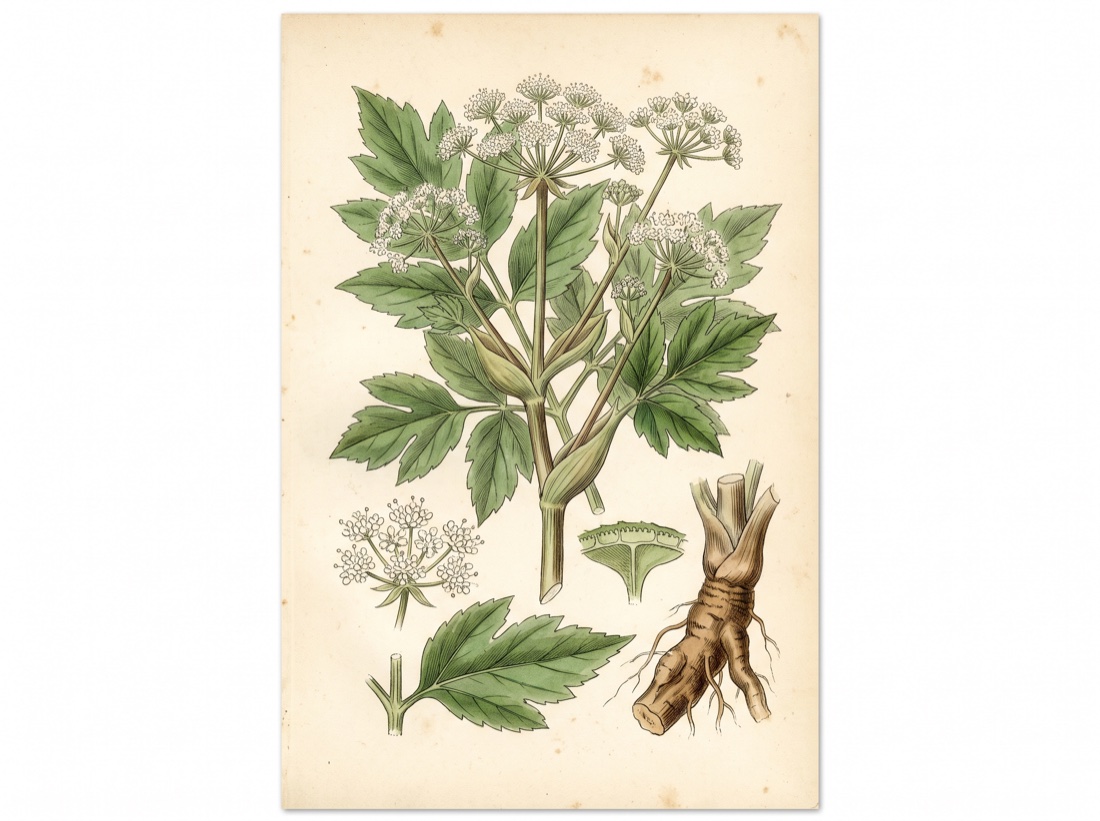 Japanese angelicaAngelica acutiloba
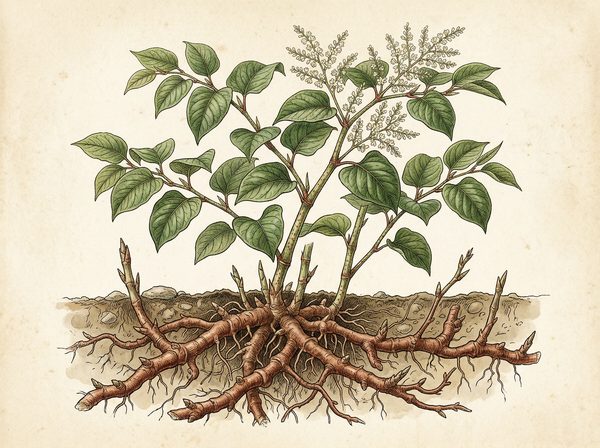 Japanese KnotweedReynoutria japonica
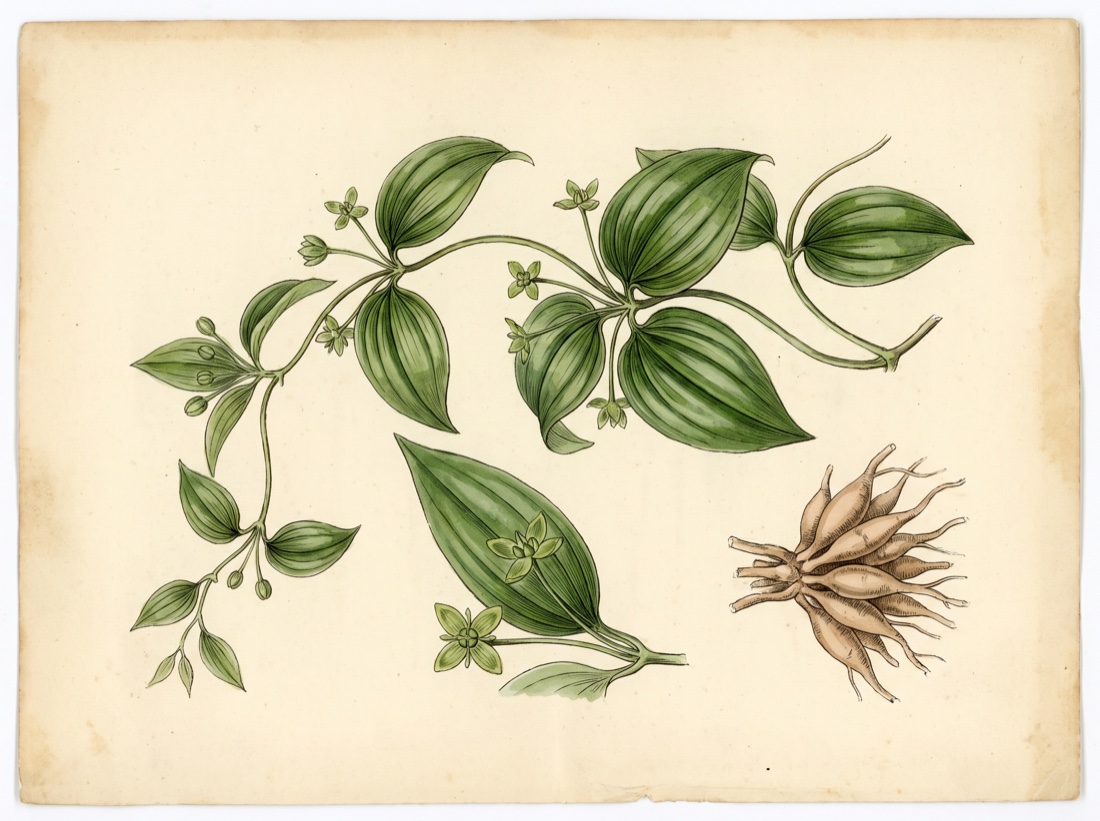 Japanese stemonaStemona japonica
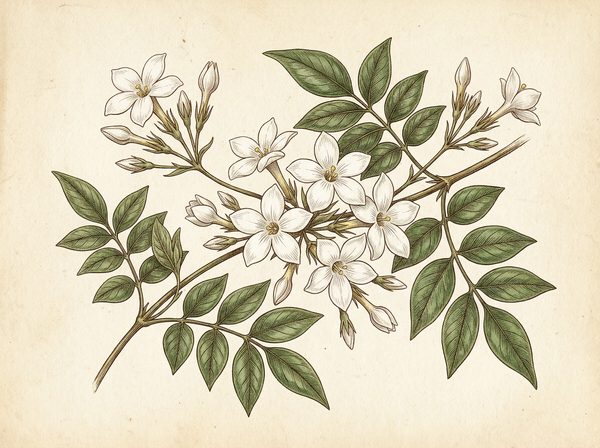 JasmineJasminum officinale
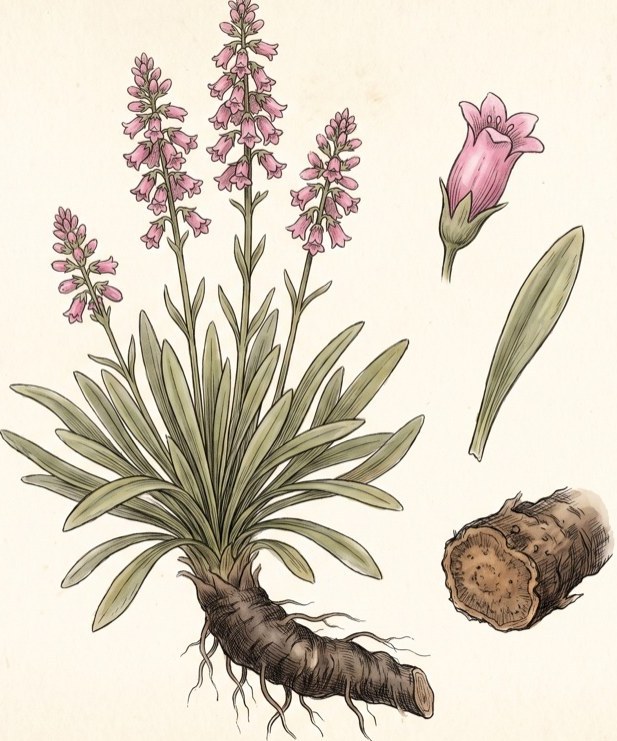 JatamansiNardostachys jatamansi
The whole plate is in the library. The compass, Compare, the Sky of eleven hundred plants and the formulary open with an email address and a password, free, with the formula builder and its safety engine. Herbert without limit, his formulating, clients, the handouts and the labels are the paid room.
Open the library, free