Chinese Herbalism
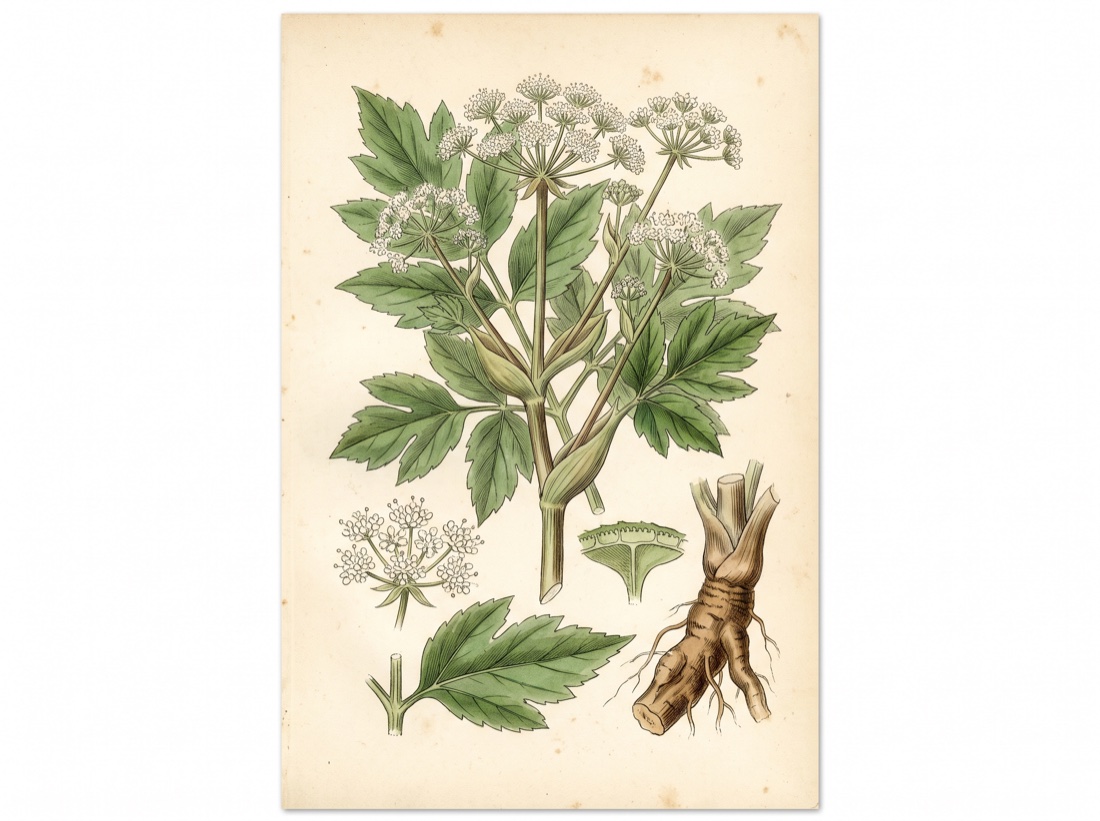
Japanese angelica
Angelica acutiloba
Also known as toki, Japanese dang gui, eastern dang gui, dong dang gui, dōng dāng guī, rì běn dāng guī.
Angelica acutiloba is the Japanese toki, a hardy umbellifer of mountain meadows in Honshu, cultivated since the Edo period in Nara as Yamato toki and now also in Hokkaido and Korea. Its stout, fragrant, oily root is the official dang gui of Japan and the toki of Kampo formulas. It is a distinct species from Angelica sinensis, the Chinese dang gui, and is not accepted as that drug in China, though both are used to nourish and move the blood.

Ask Herbert about Japanese angelica. Herbert is the master herbalist inside Bountiful Herbs: he answers from this plate and eleven hundred others, with dosing, pairing and cautions. Your first ten questions are free.
Ask HerbertActions
Indications what the tradition reached for it in
- Irregular, scanty or painful menstruation with blood deficiency
- Cold hands and feet with pale complexion, the Kampo hiesho picture
- Anemia and recovery after blood loss or childbirth
- Amenorrhea from blood deficiency
- Menopausal complaints with fatigue and coldness (in Kampo formulas)
- Dry constipation in the elderly and postpartum
- Chronic pelvic pain and fibroids with blood stasis (in formula)
- Dry, itchy skin and chronic eczema with blood deficiency (Unseiin type)
- Frostbite and chilblains with poor peripheral circulation
- Fatigue and poor appetite with pallor after illness (Juzentaihoto type)
- Recurrent miscarriage support in Japanese practice under supervision (Tokishakuyakusan)
Specific indications
A thin, pale, easily tired woman with cold extremities, scanty periods and mild fluid retention, the classic Tokishakuyakusan constitution
Dry, rough skin that itches worse in winter in a pale patient with hard stools
Cramping lower abdominal pain relieved by warmth in a patient who bleeds lightly and looks washed out
Safety
The record lists 9 contraindications; open the plate in the library to read them in full.
In practice
Use toki as you would dang gui in the blood-building and blood-moving formulas of the Japanese tradition. Tokishakuyakusan with shakuyaku, senkyu, bukuryo, byakujutsu and takusha is the workhorse for thin, pale, cold women with menstrual disorders, infertility support and fluid retention; Shimotsuto (Si Wu Tang) builds blood; Tokikenchuto warms the abdomen and eases cramping; Unseiin combines it with the cooling three-yellow herbs for dry itchy skin; and Juzentaihoto and Ninjin'yoeito use it for post-illness fatigue with pallor.
In Chinese medicine
Temperature: warm. Taste: sweet, acrid. Channels: Liver, Heart, Spleen. Actions: Nourishes and builds the blood; Invigorates the blood and regulates menstruation; Moistens the intestines and relieves dry constipation; Warms the channels and eases cold-type pain, used in Kampo especially for cold hands and feet.
Dosing as the sources wrote it
| Preparation | As written | Metric |
|---|---|---|
| Decoction | 3-9 g dried root daily in decoction | 3000-9000 mg |
| Kampo formula share | 3-6 g dried root daily within a multi-herb formula | 3000-6000 mg |
| Powder | 1-2 g powdered root twice daily | 1000-2000 mg |
| Tincture (1:5, 60%) | 2-4 mL three times daily | 2-4 mL |
Doses are reproduced from the sources for practitioners and are not a recommendation for any person.
From the sources
Overview. Angelica acutiloba is the Japanese toki, a hardy umbellifer of mountain meadows in Honshu, cultivated since the Edo period in Nara as Yamato toki and now also in Hokkaido and Korea. Its stout, fragrant, oily root is the official dang gui of Japan and the toki of Kampo formulas. It is a distinct species from Angelica sinensis, the Chinese dang gui, and is not accepted as that drug in China, though both are used to nourish and move the blood.
Clinical Notes. Use toki as you would dang gui in the blood-building and blood-moving formulas of the Japanese tradition. Tokishakuyakusan with shakuyaku, senkyu, bukuryo, byakujutsu and takusha is the workhorse for thin, pale, cold women with menstrual disorders, infertility support and fluid retention; Shimotsuto (Si Wu Tang) builds blood; Tokikenchuto warms the abdomen and eases cramping; Unseiin combines it with the cooling three-yellow herbs for dry itchy skin; and Juzentaihoto and Ninjin'yoeito use it for post-illness fatigue with pallor.
Chinese Medicine Profile. Temperature: warm. Taste: sweet, acrid. Channels: Liver, Heart, Spleen. Actions: Nourishes and builds the blood; Invigorates the blood and regulates menstruation; Moistens the intestines and relieves dry constipation; Warms the channels and eases cold-type pain, used in Kampo especially for cold hands and feet.
Nearby on the shelf
 JacarandaJacaranda
 JalapIpomea jalapa
 Jamaican dogwoodPiscidia piscipula
 JambulSyzygium cumini
 Japanese climbing fernLygodium japonicum
 Japanese KnotweedReynoutria japonica
 Japanese stemonaStemona japonica
 JasmineJasminum officinale
The whole plate is in the library. The compass, Compare, the Sky of eleven hundred plants and the formulary open with an email address and a password, free, with the formula builder and its safety engine. Herbert without limit, his formulating, clients, the handouts and the labels are the paid room.
Open the library, free