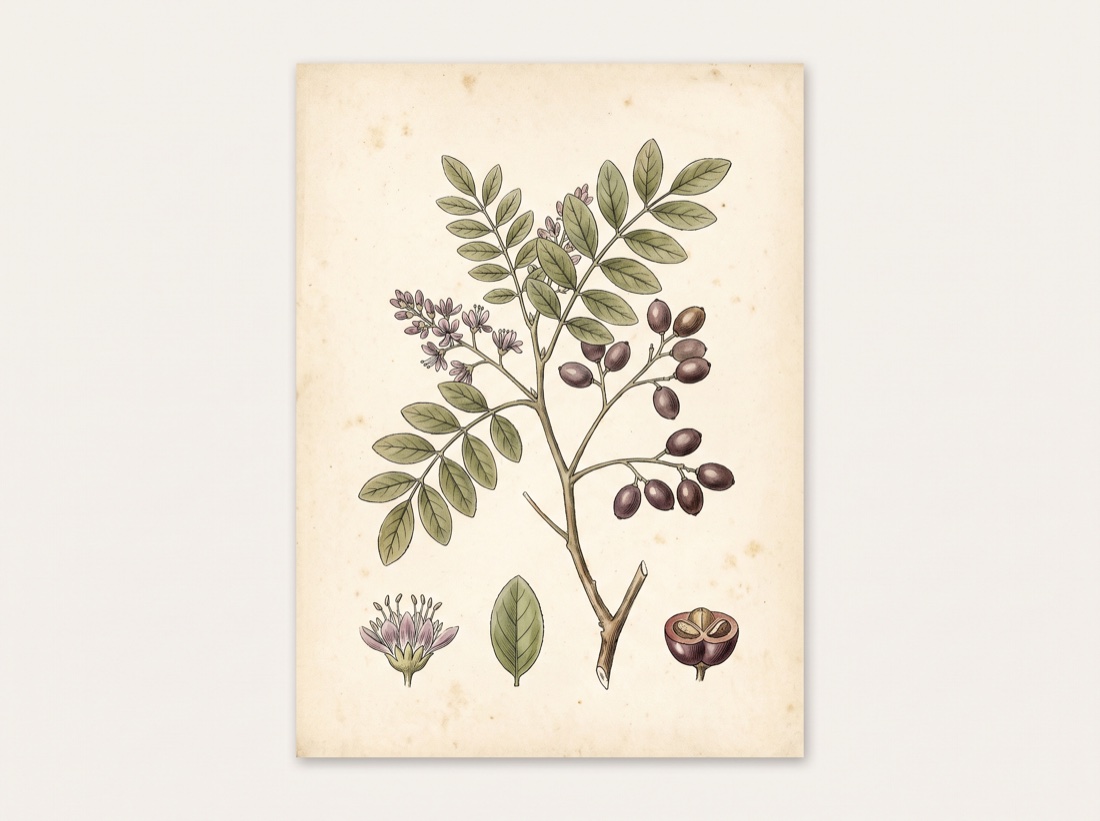
Chinese Herbalism
Java brucea
Brucea javanica
Also known as brucea fruit, Java brucea fruit, ya dan zi, kosam seed, Macassar kernels, yā dǎn zǐ.
Brucea javanica is a shrub or small tree of the quassia family, native from southern China through Southeast Asia to northern Australia. The ripe dried fruit, in practice the intensely bitter seed kernel, is ya dan zi, a cold and toxic drug reserved for dysentery, malaria, and warts. It entered the Chinese materia medica late, in the Qing dynasty, as a specific for chronic dysentery. In modern China the seed oil is made into an emulsion used as an adjunct in cancer care.

Ask Herbert about Java brucea. Herbert is the master herbalist inside Bountiful Herbs: he answers from this plate and eleven hundred others, with dosing, pairing and cautions. Your first ten questions are free.
Ask HerbertActions
Indications what the tradition reached for it in
- Amoebic dysentery with tenesmus and blood and mucus in the stool
- Chronic recurrent bacillary dysentery
- Malaria, as an adjunct to standard treatment
- Common warts, plantar warts, and corns (topical kernel)
- Anal and genital condyloma (topical, under supervision)
- Adjunct in non-small cell lung cancer (oil emulsion)
- Adjunct in gastric and colorectal cancer (oil emulsion)
- Malignant pleural effusion (oil emulsion, hospital use)
- Trichomonal vaginitis (traditional topical use)
Specific indications
Chronic dysentery with foul bloody mucus stools, tenesmus, and heat signs that has not cleared with milder heat-clearing herbs
Stubborn warts or corns that resist freezing or salicylic acid, in a patient who can protect the surrounding skin
Cancer patient on chemotherapy where the oncology team is using the oil emulsion to support response and reduce chemotherapy side effects
Safety
Recognised toxicity. This plant carries a toxicity flag in the record; it is for trained practitioners only.
Low dose botanical. Used in drop doses in the classical practice; not a plant to dose freely.
The record lists 13 contraindications; open the plate in the library to read them in full.
In practice
This is a restricted, low-dose herb. The kernels are never decocted alone: the quassinoids irritate the gut lining and a tea cannot be dosed safely. The classical method is to swallow the shelled kernels whole after meals, wrapped in longan aril or in gelatin capsules.
In Chinese medicine
Temperature: cold, toxic. Taste: bitter. Channels: Large Intestine, Liver. Actions: Clears heat and resolves toxicity; Stops dysentery, especially chronic damp-heat dysentery with blood and pus; Checks malaria (intermittent fever); Applied externally, corrodes warts, corns, and fleshy growths.
Dosing as the sources wrote it
| Preparation | As written | Metric |
|---|---|---|
| Kernels in capsules (dysentery) | 0.5-2 g shelled kernels daily in capsules after meals, for 7-10 days maximum | 500-2000 mg |
| Kernels in capsules (malaria) | 1-2 g shelled kernels daily in capsules for 3-5 days | 1000-2000 mg |
| Topical for warts | crushed kernel or oil applied to the lesion once daily with surrounding skin protected |
Doses are reproduced from the sources for practitioners and are not a recommendation for any person.
From the sources
Overview. Brucea javanica is a shrub or small tree of the quassia family, native from southern China through Southeast Asia to northern Australia. The ripe dried fruit, in practice the intensely bitter seed kernel, is ya dan zi, a cold and toxic drug reserved for dysentery, malaria, and warts. It entered the Chinese materia medica late, in the Qing dynasty, as a specific for chronic dysentery. In modern China the seed oil is made into an emulsion used as an adjunct in cancer care.
Clinical Notes. This is a restricted, low-dose herb. The kernels are never decocted alone: the quassinoids irritate the gut lining and a tea cannot be dosed safely. The classical method is to swallow the shelled kernels whole after meals, wrapped in longan aril or in gelatin capsules.
Chinese Medicine Profile. Temperature: cold, toxic. Taste: bitter. Channels: Large Intestine, Liver. Actions: Clears heat and resolves toxicity; Stops dysentery, especially chronic damp-heat dysentery with blood and pus; Checks malaria (intermittent fever); Applied externally, corrodes warts, corns, and fleshy growths.
Nearby on the shelf
 Japanese stemonaStemona japonica
 JasmineJasminum officinale
 JatamansiNardostachys jatamansi
 JatobaHymenaea courbaril
 JeevakMalaxis acuminata
 JewelweedImpatiens pallida
 Ji Xue TengSpatholobus suberectus
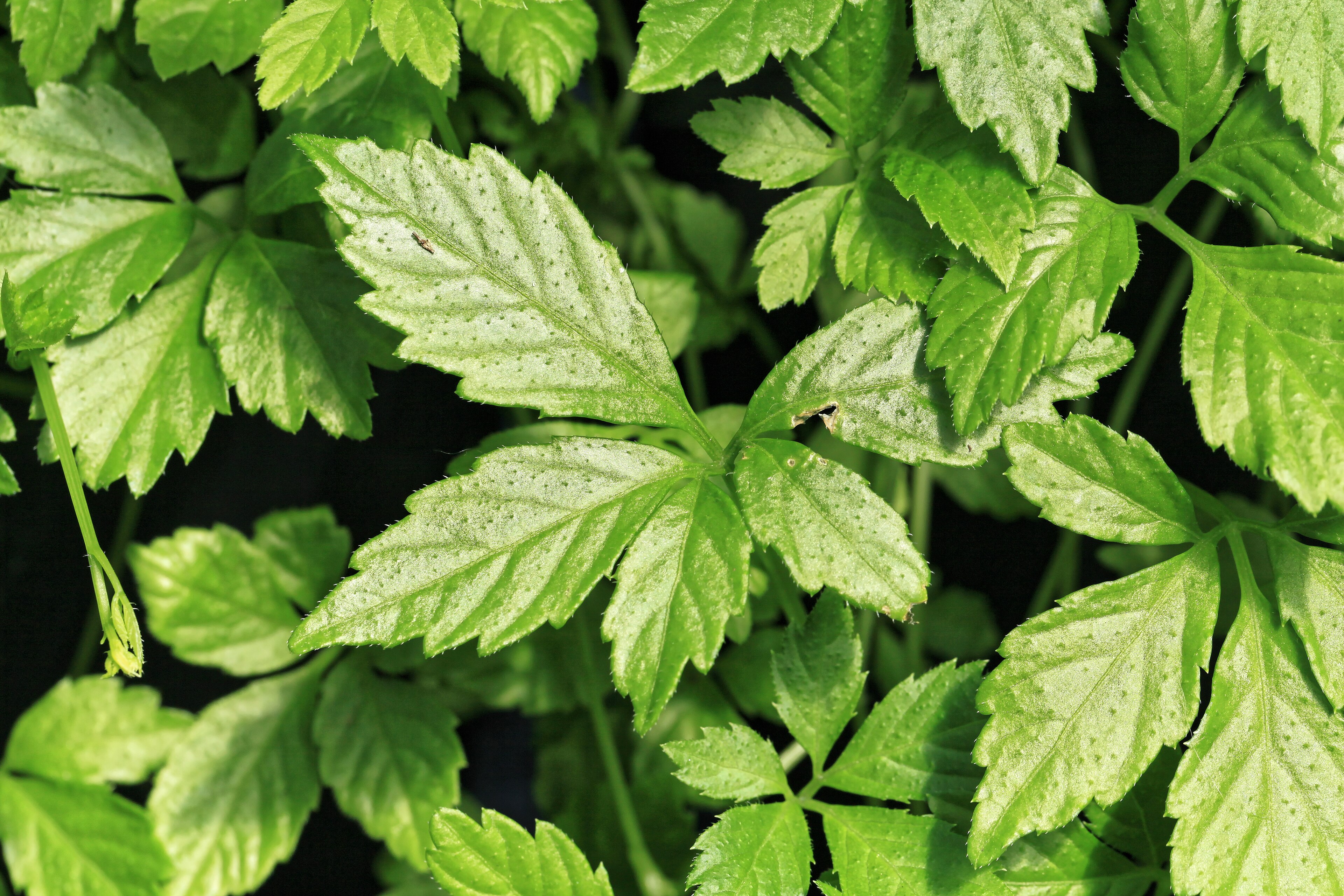 JiaogulanGynostemma pentaphyllum
The whole plate is in the library. The compass, Compare, the Sky of eleven hundred plants and the formulary open with an email address and a password, free, with the formula builder and its safety engine. Herbert without limit, his formulating, clients, the handouts and the labels are the paid room.
Open the library, free