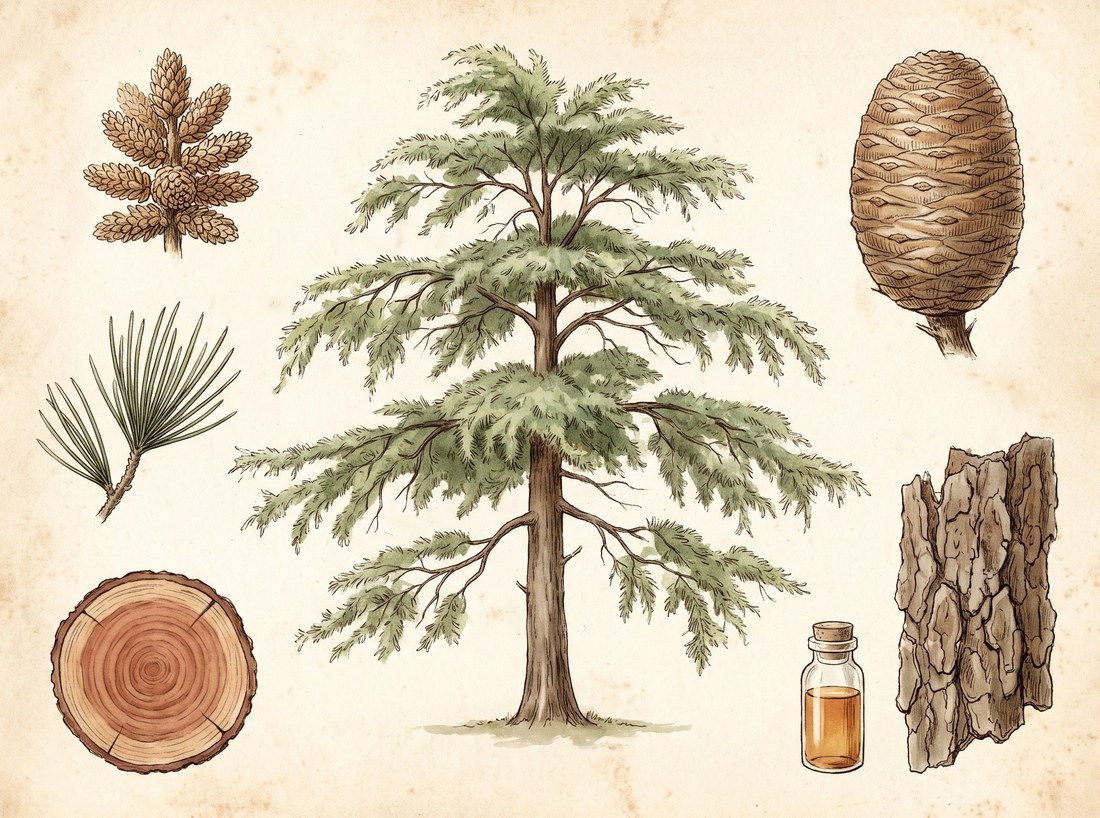
Ayurvedic Herbalism
Himalayan cedar
Cedrus deodara
Also known as deodar, deodar cedar, devadaru, Devadaru, Suradaru, Bhadradaru.
Cedrus deodara is the Himalayan cedar, a tall, graceful evergreen conifer of the Pinaceae that forms forests between about 1,500 and 3,200 meters from Afghanistan through Kashmir, Himachal Pradesh, Uttarakhand and western Nepal. Its fragrant, durable heartwood has built temples for millennia, and in Ayurveda the wood, Devadaru, the tree of the gods, is a warming, bitter, aromatic drug for arthritis, swelling, fever and cold catarrh, and its distilled wood oil is a classical skin remedy. It is one of the most frequently used ingredients in anti-rheumatic decoctions and medicated oils.

Ask Herbert about Himalayan cedar. Herbert is the master herbalist inside Bountiful Herbs: he answers from this plate and eleven hundred others, with dosing, pairing and cautions. Your first ten questions are free.
Ask HerbertActions
Indications what the tradition reached for it in
- Rheumatoid arthritis with morning stiffness and heaviness
- Osteoarthritis with cold, aching joints
- Fibromyalgia type diffuse aching worsened by cold and damp
- Edema with joint pain
- Chronic bronchitis with copious mucus
- Head cold and sinus congestion
- Intermittent fever with body ache
- Chronic itchy skin disease (topical oil)
- Fungal skin infection and dandruff (topical oil)
- Slow healing ulcers (topical)
- Flatulence and distension in cold constitutions
- Insomnia with restlessness and cold extremities
Specific indications
Stiff, swollen, aching joints that are worse in the morning and in cold damp weather, in a heavy patient with a coated tongue, sluggish digestion and a sense of internal dullness, the amavata picture
Chronic cough with thick white mucus, head congestion and a chilly body in a kapha patient
Itchy, scaly, weeping skin lesions or a fungal rash that calls for a warming aromatic oil rather than a cooling lotion
Diffuse muscular aching with poor sleep in a cold vata patient who benefits from a warming oil massage before bed
Safety
Low dose botanical. Used in drop doses in the classical practice; not a plant to dose freely.
Pregnancy: Avoid medicinal doses in pregnancy: no published safety class is known to us, and the tradition regards the wood as heating and moving, which it does not give to pregnant women.
The record lists 8 contraindications; open the plate in the library to read them in full.
In practice
The Ayurvedic practitioner uses Devadaru for cold, heavy, sluggish conditions in which vata and kapha combine with ama, the picture of amavata: swollen, stiff, painful joints, a coated tongue, poor appetite and a general dullness.
In Ayurveda
Rasa: tikta (bitter), katu (pungent). Virya: ushna (heating). Vipaka: katu (pungent). Guna: laghu (light), snigdha (unctuous). Dosha: pacifies vata and kapha; aggravates pitta in excess. Karma: shothahara (reduces swelling); vedanasthapana (relieves pain); vatahara (pacifies vata); kaphahara (reduces kapha); amapachana (digests ama, metabolic toxins); jvaraghna (relieves fever); kandughna (relieves itching); krimighna (anthelmintic and antimicrobial); mutrala (diuretic); nidrajanana (promotes sleep); stanyashodhana (purifies breast milk). Classical indications: amavata (rheumatoid type arthritis with ama); sandhivata (osteoarthritis); shotha (inflammatory swelling and edema); jvara (fever); kasa and shvasa (cough and dyspnea); pratishyaya (rhinitis and catarrh); kushtha (skin disease); kandu (itching); prameha (urinary disorders); hikka (hiccup); adhmana (abdominal distension); vrana (wounds and ulcers, oil topically). The heartwood is the drug, given as kwatha and churna and as a leading ingredient of anti-rheumatic decoctions, guggulu compounds and medicated oils; the wood oil obtained by destructive distillation is applied externally for skin disease, ulcers and itching and used in veterinary practice. Classical formulations: Devadarvyadi kwatha, Devadarvarishta, Rasnadi kwatha, Maharasnadi kwatha, Dashanga lepa, Yogaraja guggulu, Amritadi guggulu, Mahanarayana taila, Dhanwantharam taila, Balaguduchyadi taila. Described in: Charaka Samhita, Sushruta Samhita, Ashtanga Hridaya, Bhavaprakasha Nighantu, Dhanvantari Nighantu, Raja Nighantu, Kaiyadeva Nighantu, Ayurvedic Pharmacopoeia of India.
Dosing as the sources wrote it
| Preparation | As written | Metric |
|---|---|---|
| Churna | 3-6 g powdered heartwood daily in divided doses with warm water | 3000-6000 mg |
| Kwatha | 50-100 mL decoction twice daily | 50-100 mL |
| Arishta | 12-24 mL Devadarvarishta twice daily after food | 12-24 mL |
| Wood oil, topical | 2-5 mL diluted wood oil applied to the affected skin once or twice daily | 2-5 mL |
| Essential oil, topical | 1-2 drops per 5 mL carrier oil for massage | 0.02-0.04 mL |
Doses are reproduced from the sources for practitioners and are not a recommendation for any person.
From the sources
Overview. Cedrus deodara is the Himalayan cedar, a tall, graceful evergreen conifer of the Pinaceae that forms forests between about 1,500 and 3,200 meters from Afghanistan through Kashmir, Himachal Pradesh, Uttarakhand and western Nepal. Its fragrant, durable heartwood has built temples for millennia, and in Ayurveda the wood, Devadaru, the tree of the gods, is a warming, bitter, aromatic drug for arthritis, swelling, fever and cold catarrh, and its distilled wood oil is a classical skin remedy. It is one of the most frequently used ingredients in anti-rheumatic decoctions and medicated oils.
Clinical Notes. The Ayurvedic practitioner uses Devadaru for cold, heavy, sluggish conditions in which vata and kapha combine with ama, the picture of amavata: swollen, stiff, painful joints, a coated tongue, poor appetite and a general dullness.
Ayurvedic Profile. Rasa: tikta (bitter), katu (pungent). Virya: ushna (heating). Vipaka: katu (pungent). Guna: laghu (light), snigdha (unctuous). Dosha: pacifies vata and kapha; aggravates pitta in excess. Karma: shothahara (reduces swelling); vedanasthapana (relieves pain); vatahara (pacifies vata); kaphahara (reduces kapha); amapachana (digests ama, metabolic toxins); jvaraghna (relieves fever); kandughna (relieves itching); krimighna (anthelmintic and antimicrobial); mutrala (diuretic); nidrajanana (promotes sleep); stanyashodhana (purifies breast milk).
Conservation. Cedrus deodara is not globally threatened but forests are under pressure from logging and climate change; source heartwood from managed plantations rather than wild felling.
In formulas
Himalayan cedar stands in 44 documented formulas in the library, among them Kuṭajāriṣta, Khadirāriṣta, Daśamūlāriṣṭa, Devadārvāriṣṭa, Jīrakādi Modaka, Indukānta Ghṛta.
Often paired with
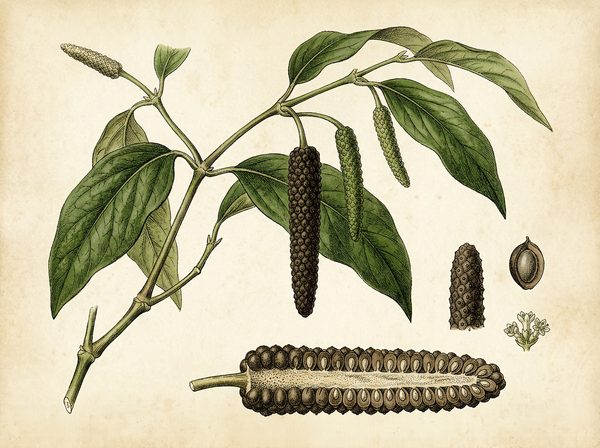 long pepperPiper longum
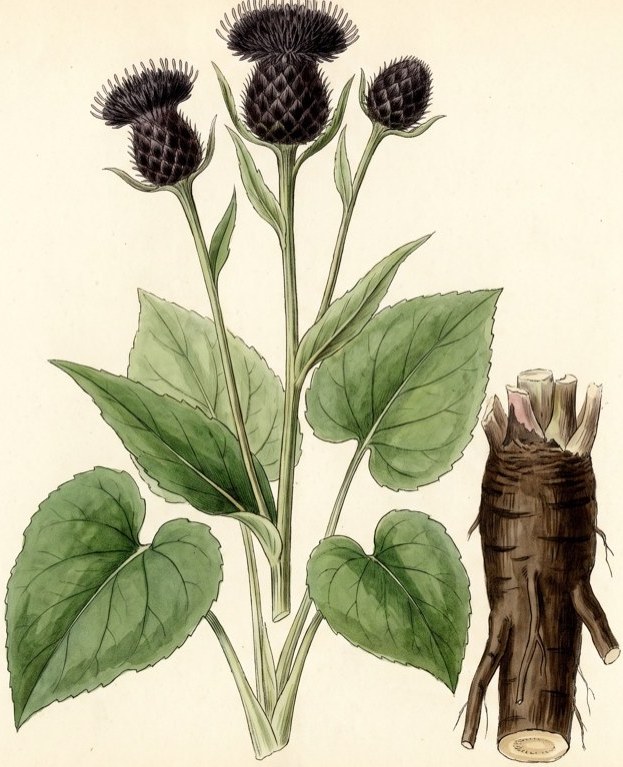 costusSaussurea costus
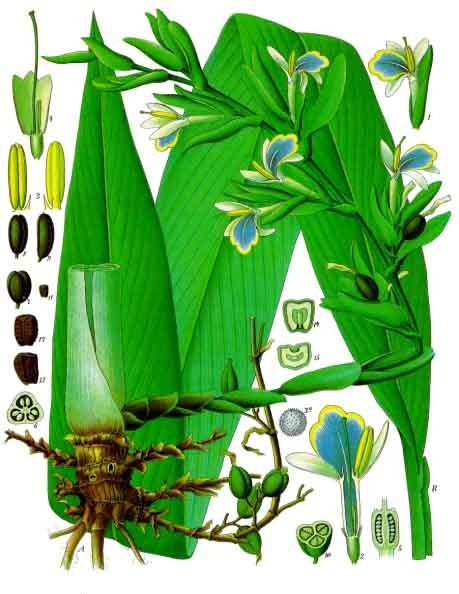 cardamomElettaria cardamomum
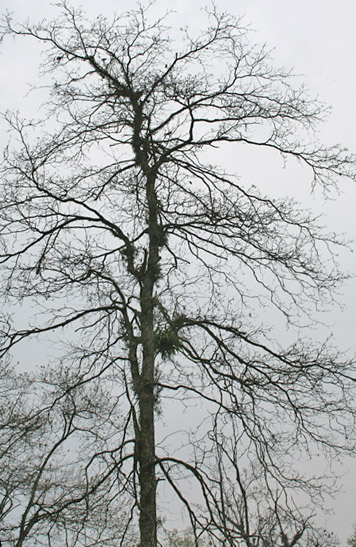 chebulic myrobalanTerminalia chebula
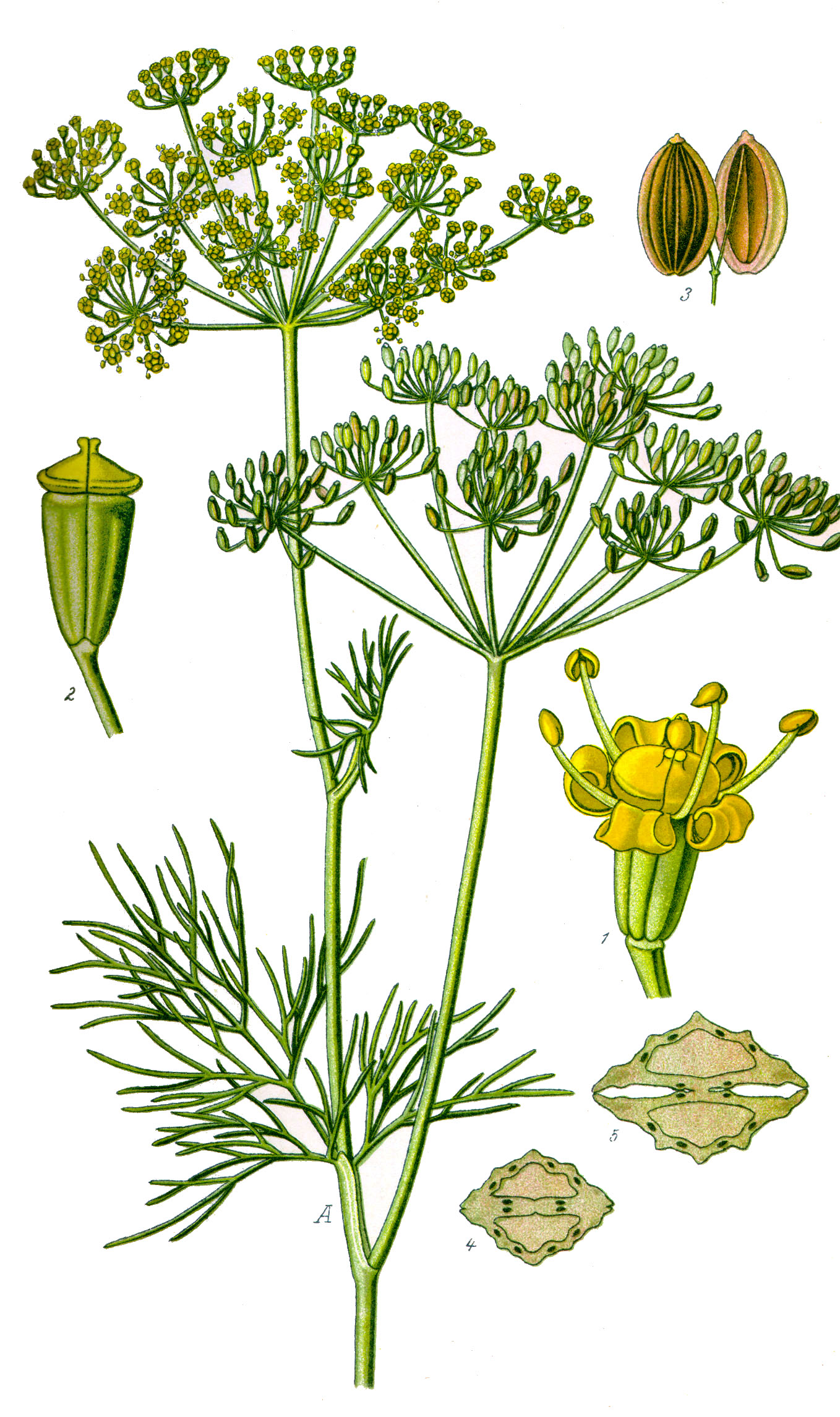 dillAnethum graveolens
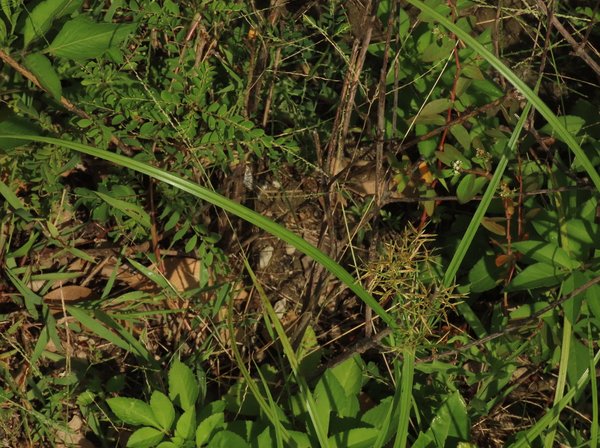 nut grassCyperus rotundus
Nearby on the shelf
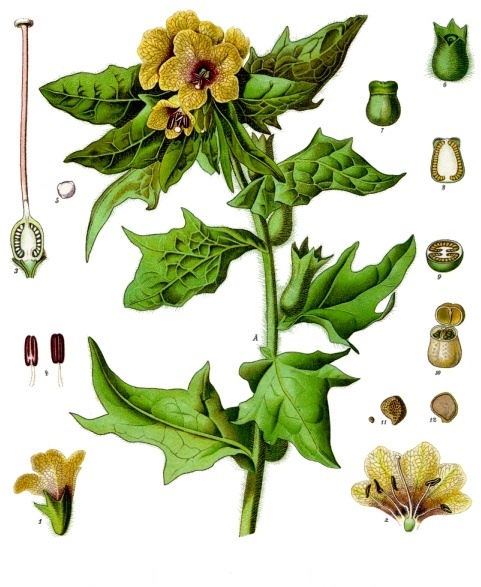 HenbaneHyoscyamus niger
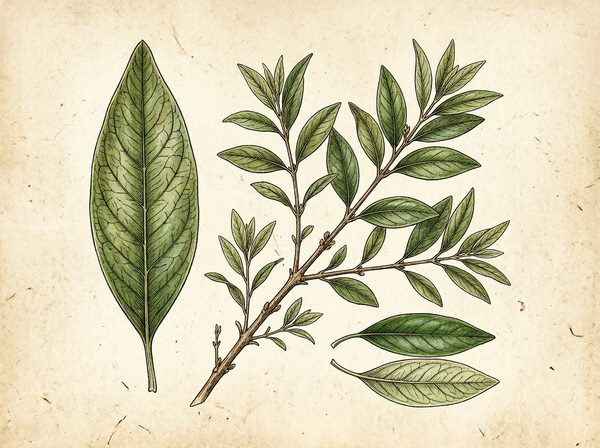 HennaLawsonia inermis
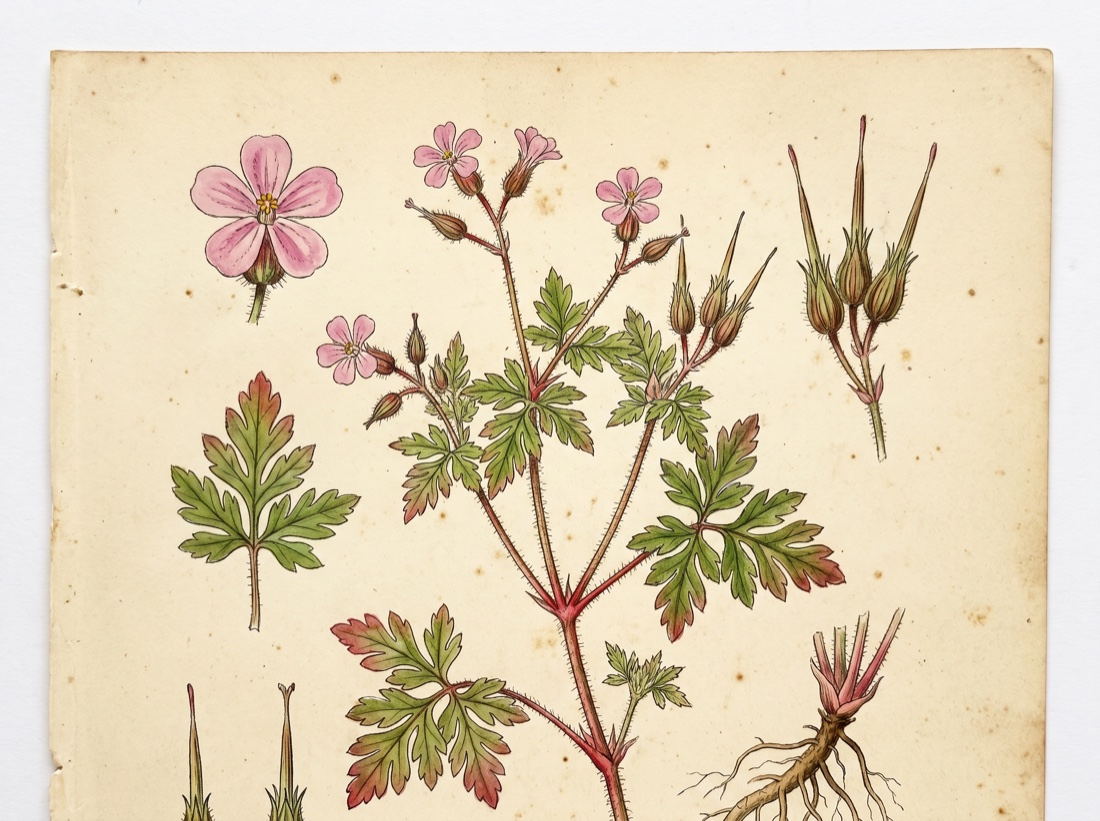 Herb RobertGeranium robertianum
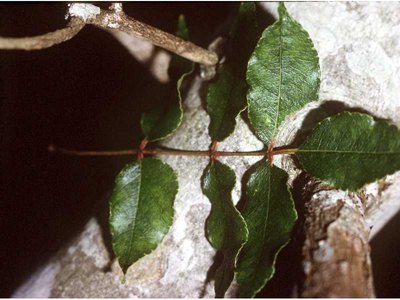 Hercules-clubZanthoxylum clava-herculis
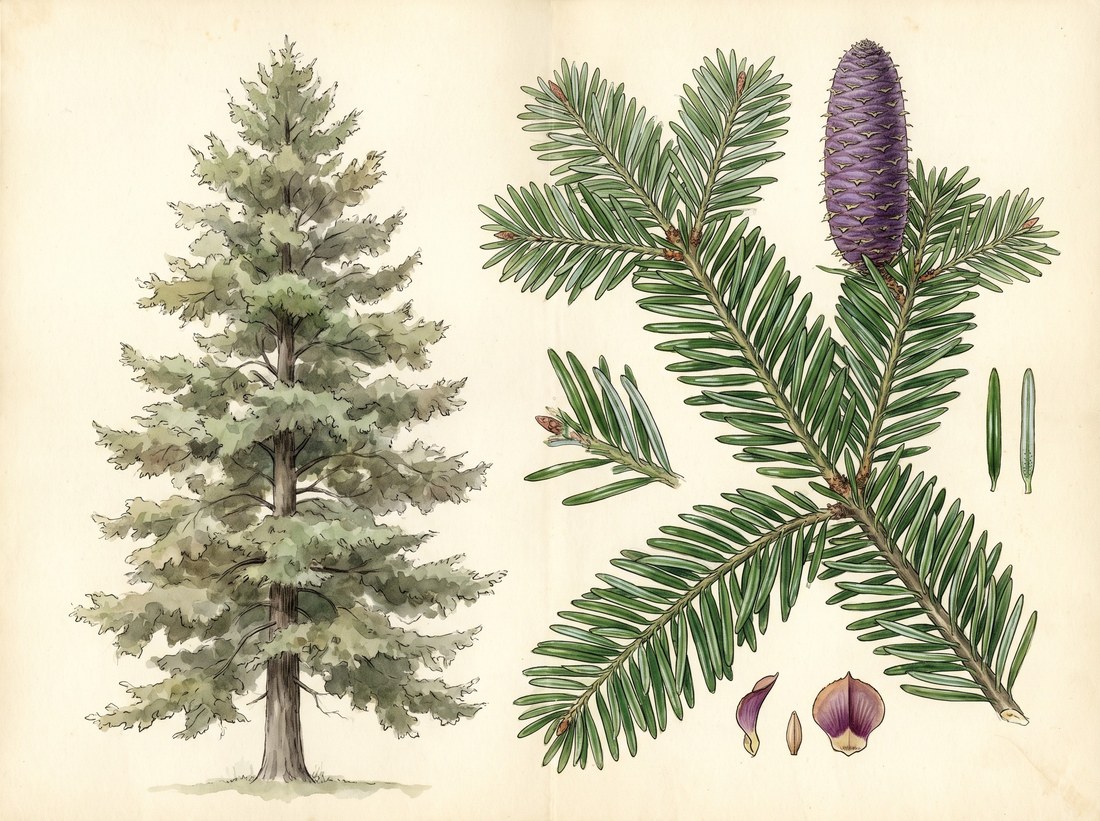 Himalayan silver firAbies webbiana
 Himalayan white lilyLilium polyphyllum
 Himalayan wild cherryPrunus cerasoides
 Hoary PeaTephrosia
The whole plate is in the library. The compass, Compare, the Sky of eleven hundred plants and the formulary open with an email address and a password, free, with the formula builder and its safety engine. Herbert without limit, his formulating, clients, the handouts and the labels are the paid room.
Open the library, free