Ayurvedic Herbalism
Black oil plant
Celastrus paniculatus
Also known as intellect tree, climbing staff tree, celastrus, malkangni, Jyotishmati, Kanguni, Kangunika.
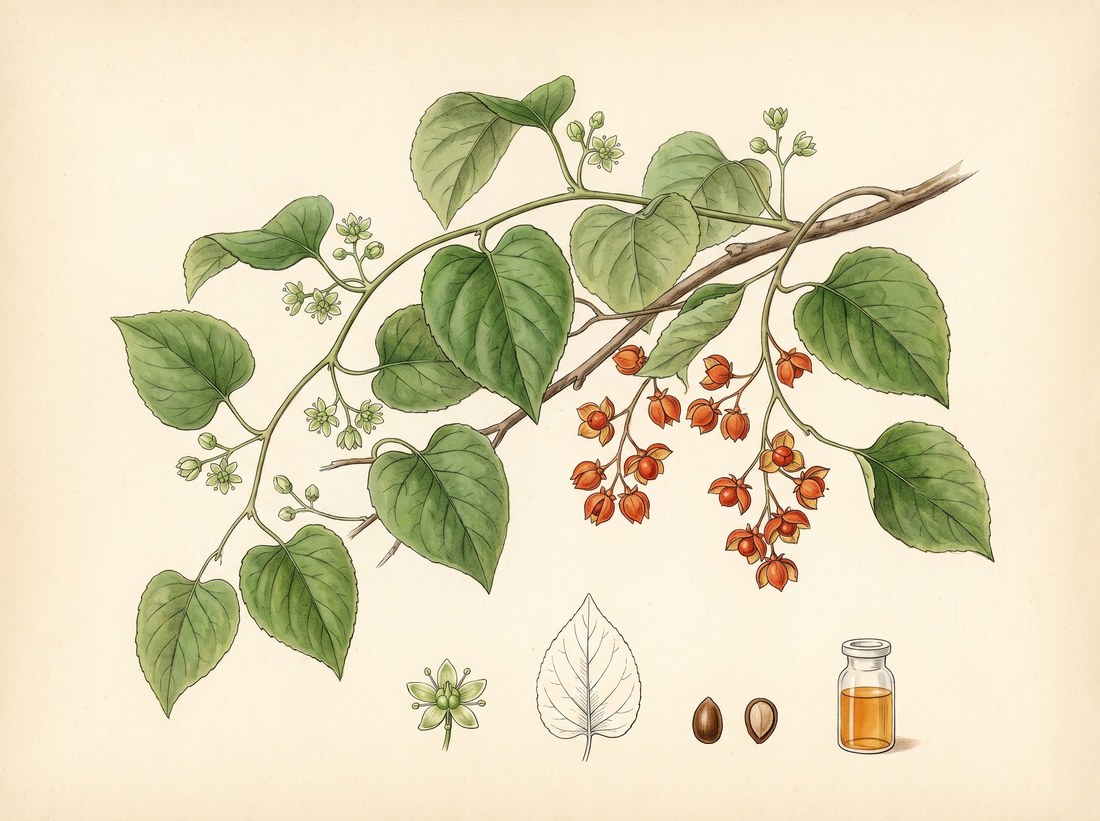
Celastrus paniculatus is a large woody climber with orange-red seed capsules that grows in the deciduous forests and hill slopes of India from the Himalayan foothills through the Deccan to the Western Ghats, and across Sri Lanka and Southeast Asia. Ayurveda names it Jyotishmati, the one that brings light, and uses the seed and its dark reddish oil as a hot, penetrating medhya for sharpening a dull intellect, and externally for painful joints, paralysis and skin disease. It is the warming counterpart to the cooling Brahmi among the memory herbs.

Ask Herbert about Black oil plant. Herbert is the master herbalist inside Bountiful Herbs: he answers from this plate and eleven hundred others, with dosing, pairing and cautions. Your first ten questions are free.
Ask HerbertActions
Indications what the tradition reached for it in
- Poor memory and slow thinking in a cold, dull, sluggish person
- Mental fatigue with low motivation
- Cognitive decline with vata features in the elderly
- Learning difficulties in children (traditional, low dose)
- Anxiety and depression with dullness (adjunct)
- Neuropathic pain and paralysis (topical oil)
- Rheumatic and arthritic pain (topical oil)
- Sciatica and low back pain (topical)
- Chronic skin conditions with dryness and itch (topical)
- Cold, sluggish digestion with constipation
- Headache of vata type (oil to the head)
Specific indications
A heavy, cold, dull kapha-vata student who cannot wake the mind, in contrast to the hot restless mind that wants Brahmi
An older person with slowing memory, cold limbs, stiff joints and a flat, unmotivated mood
Stiff, painful, cold joints or a numb limb after stroke, where a hot penetrating oil is wanted for massage
A dry, cracked, itching skin condition in a cold patient that has not responded to cooling herbs
Safety
Low dose botanical. Used in drop doses in the classical practice; not a plant to dose freely.
Pregnancy: Avoid in pregnancy: no published safety class is known to us, and the herb is heating, penetrating and purgative in larger doses, qualities the tradition keeps away from a pregnant woman.
The record lists 9 contraindications; open the plate in the library to read them in full.
In practice
Jyotishmati is chosen when dullness rather than agitation is the problem. The classical way to give it is by counting seeds: one seed on the first day, taken with milk, increased by a seed each day to a maximum of ten to twenty and then reduced again, a graded course said to make the memory bright.
In Ayurveda
Rasa: katu (pungent), tikta (bitter). Virya: ushna (heating). Vipaka: katu (pungent). Guna: tikshna (sharp, penetrating), snigdha (unctuous), sara (mobile). Dosha: pacifies vata and kapha; aggravates pitta. Prabhava: medhya: a specific sharpener of intellect and memory, the meaning of the name Jyotishmati, the light-bearing one. Karma: medhya (promotes intellect and memory); buddhivardhana (increases understanding); smritivardhana (increases memory); vatahara (pacifies vata); deepana (kindles digestion); vamaka (emetic in large doses); virechana (purgative in large doses); svedajanana (induces sweating); vedanasthapana (relieves pain, topical); kushthaghna (relieves skin disease, topical); vrishya (aphrodisiac). Classical indications: smritidaurbalya (weak memory); buddhimandya (dullness of intellect); vatavyadhi (neurological and rheumatic disorders of vata); pakshaghata (hemiplegia); sandhivata (osteoarthritis, topical); amavata (rheumatoid arthritis, topical); kushtha (skin disease, topical); unmada (mental disturbance); shirahshula (headache); agnimandya (weak digestion); krimi (worms). The ripe seed is the drug, taken whole in graded numbers, as churna, or most often as the expressed seed oil (Jyotishmati taila), which is given in drops with milk internally and rubbed on painful joints and the scalp externally. The leaves are used as a poultice. Classical formulations: Jyotishmati taila, Smritisagara rasa, Jyotishmati churna, Brahmi ghrita (some traditions), Sarasvata churna, Mahanarayana taila (some formulations). Described in: Charaka Samhita, Sushruta Samhita, Ashtanga Hridaya, Bhavaprakasha Nighantu, Dhanvantari Nighantu, Raja Nighantu, Kaiyadeva Nighantu, Ayurvedic Pharmacopoeia of India.
Dosing as the sources wrote it
| Preparation | As written | Metric |
|---|---|---|
| Churna | 0.25-2 g powdered seed daily with milk, starting low | 250-2000 mg |
| Taila, internal | 5-15 drops seed oil daily in warm milk, starting with 1-2 drops | 0.1-0.3 mL |
| Taila, topical | 5-10 mL seed oil massaged into painful joints or scalp | 5-10 mL |
| Seeds, graded course | 1-10 whole seeds daily with milk, increasing by one seed each day |
Doses are reproduced from the sources for practitioners and are not a recommendation for any person.
From the sources
Overview. Celastrus paniculatus is a large woody climber with orange-red seed capsules that grows in the deciduous forests and hill slopes of India from the Himalayan foothills through the Deccan to the Western Ghats, and across Sri Lanka and Southeast Asia. Ayurveda names it Jyotishmati, the one that brings light, and uses the seed and its dark reddish oil as a hot, penetrating medhya for sharpening a dull intellect, and externally for painful joints, paralysis and skin disease. It is the warming counterpart to the cooling Brahmi among the memory herbs.
Clinical Notes. Jyotishmati is chosen when dullness rather than agitation is the problem. The classical way to give it is by counting seeds: one seed on the first day, taken with milk, increased by a seed each day to a maximum of ten to twenty and then reduced again, a graded course said to make the memory bright.
Ayurvedic Profile. Rasa: katu (pungent), tikta (bitter). Virya: ushna (heating). Vipaka: katu (pungent). Guna: tikshna (sharp, penetrating), snigdha (unctuous), sara (mobile). Dosha: pacifies vata and kapha; aggravates pitta.
Conservation. Wild populations are declining in several Indian states from bark and seed harvest and habitat loss, and the plant is listed as vulnerable regionally; prefer cultivated seed.
In formulas
Black oil plant stands in 3 documented formulas in the library, among them Citrakādi Taila, Jyotiṣmatī Taila, Bṛhanmaricādya Taila.
Often paired with
 sweet flagAcorus calamus
 crown flowerCalotropis gigantea
 Indian spurge treeEuphorbia neriifolia
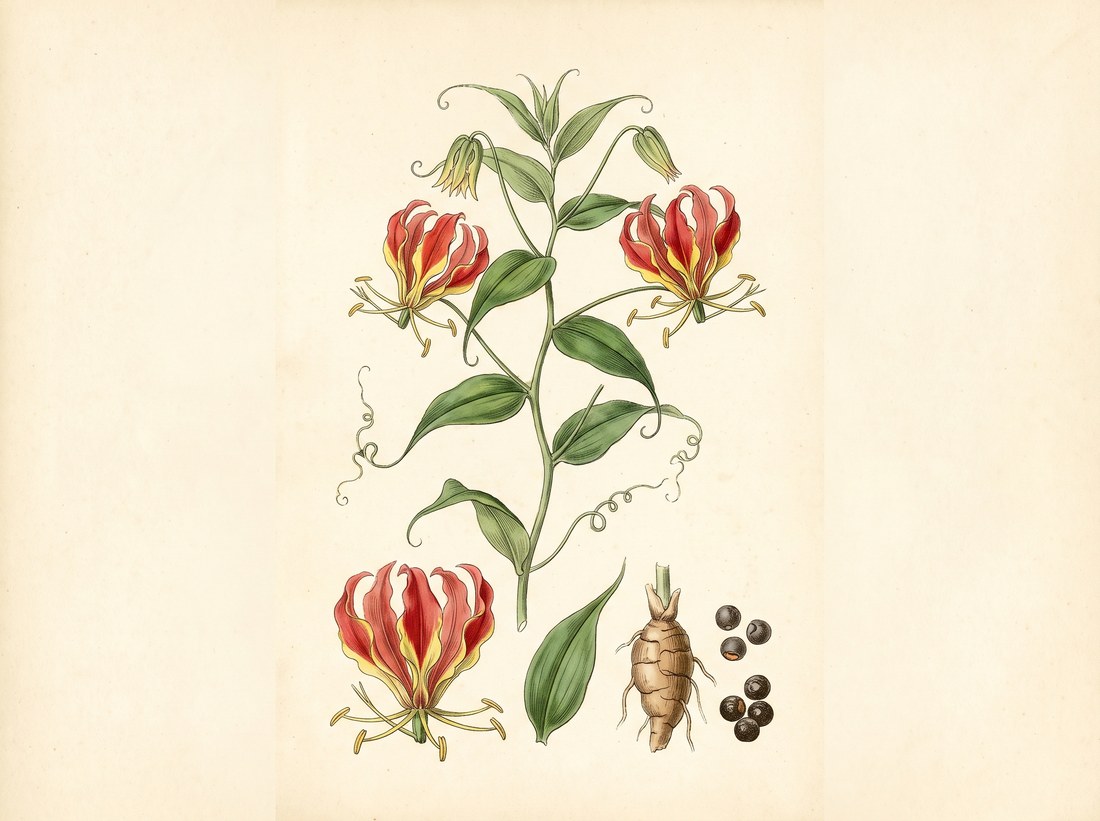 glory lilyGloriosa superba
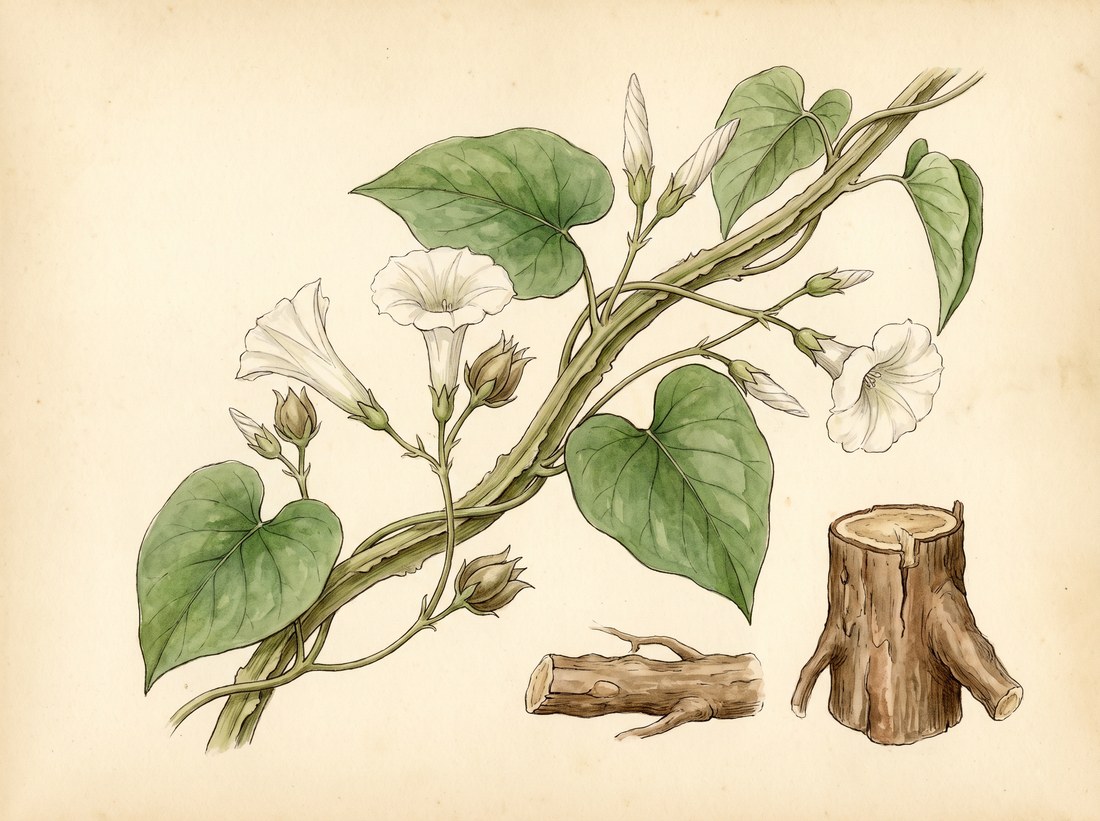 turpethOperculina turpethum
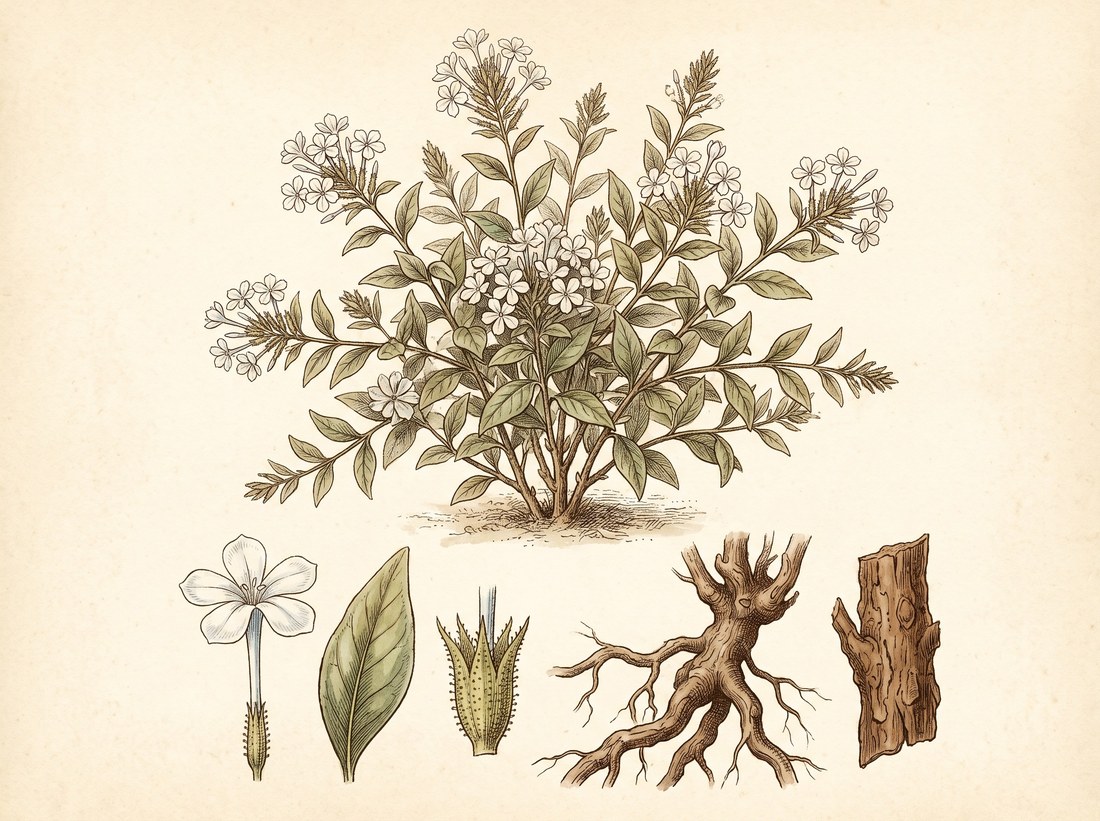 Ceylon leadwortPlumbago zeylanica
Nearby on the shelf
 Black huckleberryVaccinium resinosum
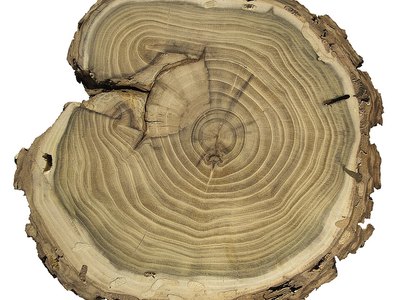 Black locustRobinia pseudoacacia
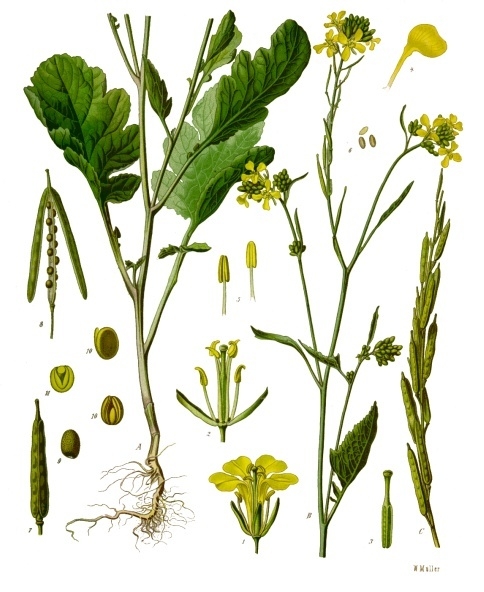 Black MustardSinapis Nigra
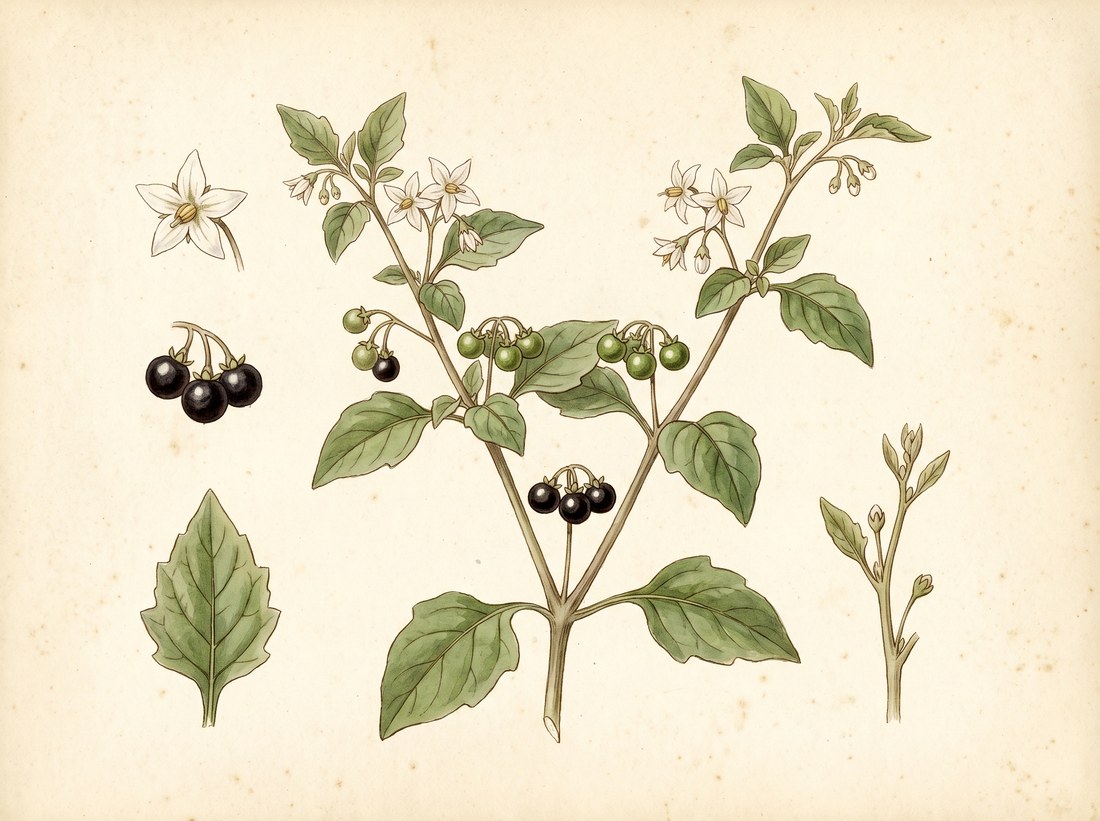 Black nightshadeSolanum nigrum
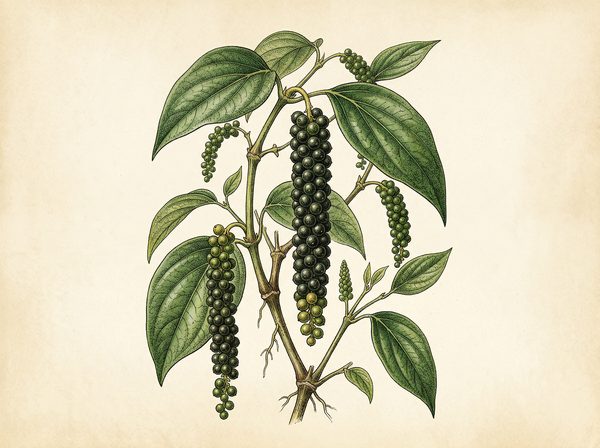 Black pepperPiper nigrum
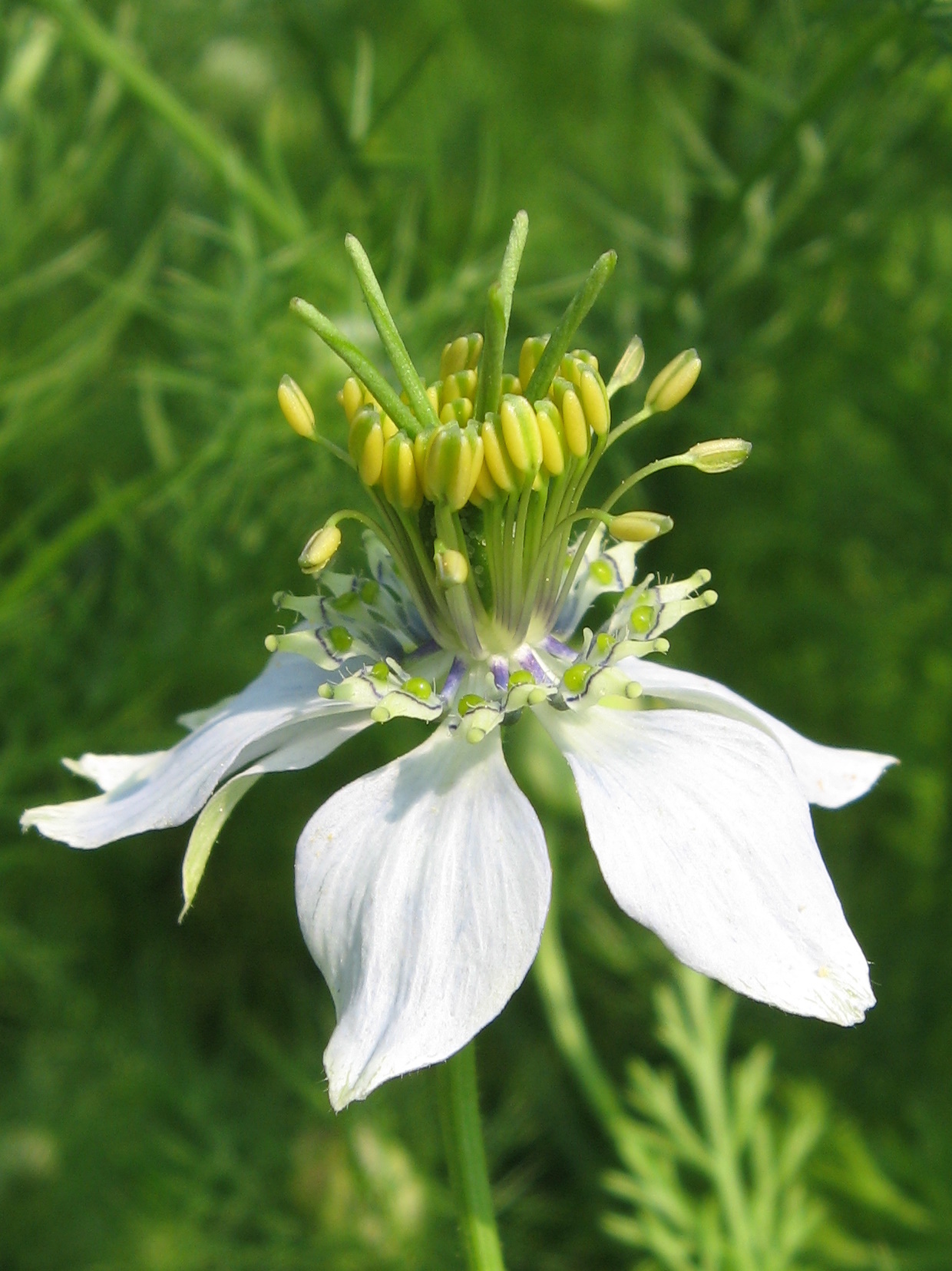 Black seedNigella sativa
 Black spruceAbies Nigra
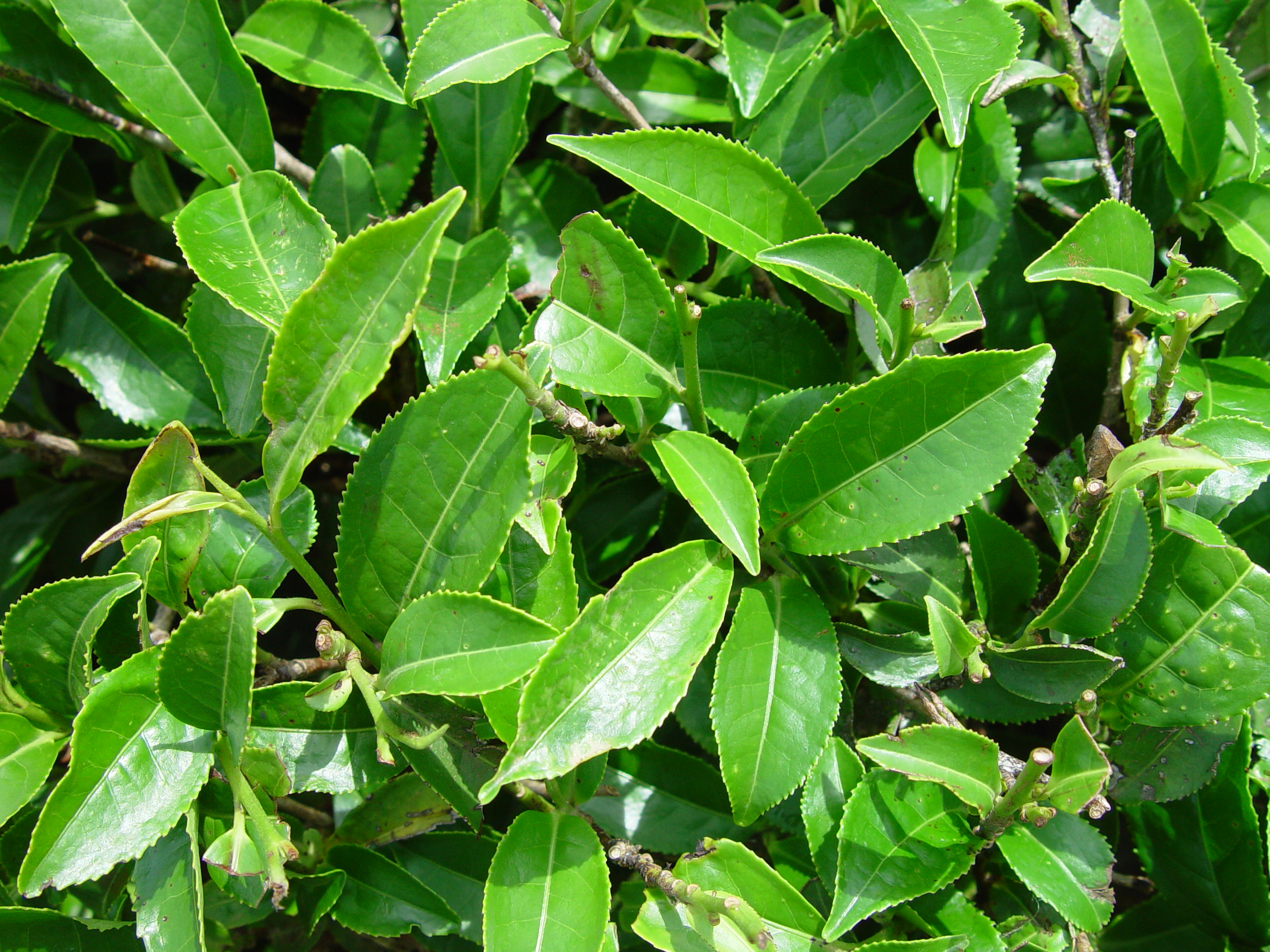 Black teaCamellia sinensis
The whole plate is in the library. The compass, Compare, the Sky of eleven hundred plants and the formulary open with an email address and a password, free, with the formula builder and its safety engine. Herbert without limit, his formulating, clients, the handouts and the labels are the paid room.
Open the library, free