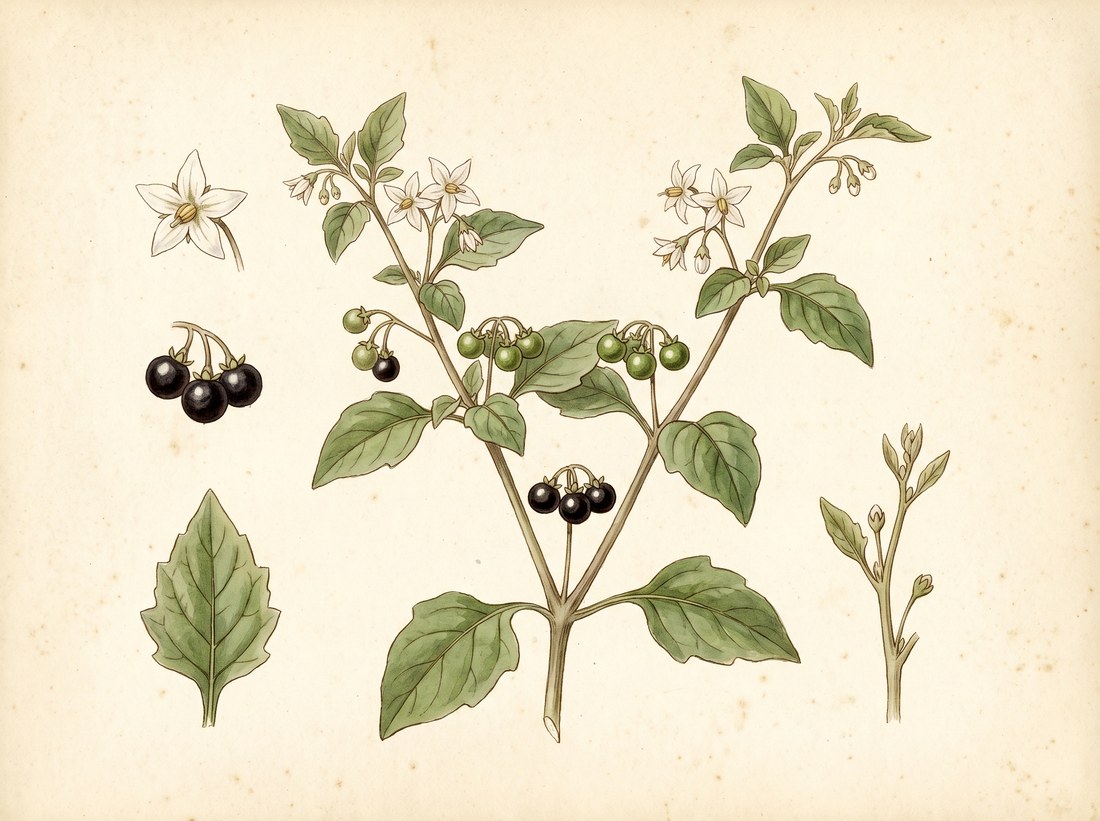
Ayurvedic Herbalism
Black nightshade
Solanum nigrum
Also known as garden nightshade, European black nightshade, makoi, wonderberry (misapplied), Kakamachi, Kakamata, Dhvankshamachi.
Solanum nigrum is a soft, branching annual or short-lived perennial herb of the nightshade family with small white star-shaped flowers and clusters of berries that ripen from green to shining black, growing as a weed of gardens, fields and waste ground throughout India from the plains to 2000 meters and across the temperate and tropical world. Ayurveda calls it Kakamachi, the crow's plant, and uses the whole herb and its juice for enlargement of the liver and spleen, for edema, skin disease and fever; in Tamil Nadu and Kerala the leaves and dried berries are everyday food, cooked into curries for mouth ulcers and stomach complaints. It is one of the few nightshades the tradition treats as a nourishing tridoshahara herb rather than a poison, though the unripe berries carry the family's glycoalkaloids.

Ask Herbert about Black nightshade. Herbert is the master herbalist inside Bountiful Herbs: he answers from this plate and eleven hundred others, with dosing, pairing and cautions. Your first ten questions are free.
Ask HerbertActions
Indications what the tradition reached for it in
- Fatty liver and hepatomegaly
- Cirrhosis and ascites (adjunct)
- Mouth ulcers and aphthous stomatitis
- Gastric and duodenal ulcer
- Chronic skin disease with itching and oozing
- Edema with liver or kidney involvement (adjunct)
- Dry cough and hoarseness
- Painful swollen joints and sprains (topical poultice)
- Hemorrhoids with pain and swelling (topical and internal)
- Chronic low-grade fever with liver congestion
- Boils and abscesses (topical)
Specific indications
A patient with an enlarged, tender liver, swelling of the legs and abdomen, a poor appetite and a coated tongue, where the liver and the fluid need moving together
Recurrent painful mouth ulcers in someone with a hot, congested digestion who also has oily, eruptive skin
Hot, itching, weeping eczema or a spreading rash in a patient with a sluggish liver and constipation
A hoarse voice and dry tickling cough in a singer or teacher whose throat feels raw
Safety
Low dose botanical. Used in drop doses in the classical practice; not a plant to dose freely.
The record lists 8 contraindications; open the plate in the library to read them in full.
In practice
The Ayurvedic physician uses Kakamachi where the liver and spleen are enlarged and fluid is collecting: the fresh juice with a little honey or Punarnava for yakrit and pliha vriddhi, the decoction with Punarnava, Bhumyamalaki and Katuka for shotha and kamala.
In Ayurveda
Rasa: tikta (bitter), katu (pungent). Virya: ushna (heating), mild; some texts describe it as anushna, neither hot nor cold. Vipaka: katu (pungent). Guna: laghu (light), snigdha (unctuous), sara (mobile, promotes movement). Dosha: pacifies all three doshas; its unctuous quality and mild heat let it suit vata and kapha while its bitter taste keeps it tolerable for pitta. Karma: shothahara (reduces swelling); kushthaghna (relieves skin disease); rasayana (rejuvenative); vrishya (aphrodisiac); svarya (improves voice); hridya (cardiotonic); netrya (benefits the eyes); mutrala (diuretic); yakrituttejaka (stimulates the liver); raktashodhana (purifies blood); kaphahara (reduces kapha); vedanasthapana (relieves pain, topical); tridoshahara (balances all three doshas). Classical indications: shotha (swelling, edema); kushtha (skin disease); yakrit vriddhi (hepatomegaly); pliha vriddhi (splenomegaly); jvara (fever); kasa (cough); shvasa (dyspnea); hikka (hiccup); arsha (hemorrhoids); prameha (urinary disorders); netraroga (eye disease); hridroga (heart disease); twak roga (skin conditions); vrana (wounds, topical). The whole fresh plant is the drug, pressed for swarasa (juice), boiled into kwatha, cooked into ghrita and taila, and applied as a warm leaf poultice; the tender leaves and shoots are eaten as a cooked vegetable throughout South India and the ripe black berries are eaten fresh. The juice is the classical form for liver and spleen enlargement and for edema. Classical formulations: Kakamachi swarasa, Kakamachi ghrita, Kakamachyadi taila, Kakamachyadi kwatha, Kakamachi patra lepa, Manathakkali vattal (dried berry, culinary medicine). Described in: Charaka Samhita, Sushruta Samhita, Ashtanga Hridaya, Bhavaprakasha Nighantu, Dhanvantari Nighantu, Raja Nighantu, Kaiyadeva Nighantu, Madanapala Nighantu, Ayurvedic Pharmacopoeia of India.
Dosing as the sources wrote it
| Preparation | As written | Metric |
|---|---|---|
| Swarasa | 10-20 mL fresh whole-plant juice once or twice daily | 10-20 mL |
| Kwatha | 50-100 mL decoction twice daily | 50-100 mL |
| Churna | 3-6 g powdered dried herb twice daily | 3000-6000 mg |
| Ghrita | 5-10 g medicated ghee daily | 5000-10000 mg |
| Lepa, topical | 10-20 g warmed leaf paste applied to swellings | 10000-20000 mg |
Doses are reproduced from the sources for practitioners and are not a recommendation for any person.
From the sources
Overview. Solanum nigrum is a soft, branching annual or short-lived perennial herb of the nightshade family with small white star-shaped flowers and clusters of berries that ripen from green to shining black, growing as a weed of gardens, fields and waste ground throughout India from the plains to 2000 meters and across the temperate and tropical world.
Clinical Notes. The Ayurvedic physician uses Kakamachi where the liver and spleen are enlarged and fluid is collecting: the fresh juice with a little honey or Punarnava for yakrit and pliha vriddhi, the decoction with Punarnava, Bhumyamalaki and Katuka for shotha and kamala.
Ayurvedic Profile. Rasa: tikta (bitter), katu (pungent). Virya: ushna (heating), mild; some texts describe it as anushna, neither hot nor cold. Vipaka: katu (pungent). Guna: laghu (light), snigdha (unctuous), sara (mobile, promotes movement).
In formulas
Black nightshade stands in 7 documented formulas in the library, among them Mahā Viṣagarbha Taila, Abhraka Bhasma, Rasarāja Rasa, Hṛdayārṇava Rasa, Kālakūṭa Rasa, Bṛhat Viṣamajvarāntaka Lauha.
Often paired with
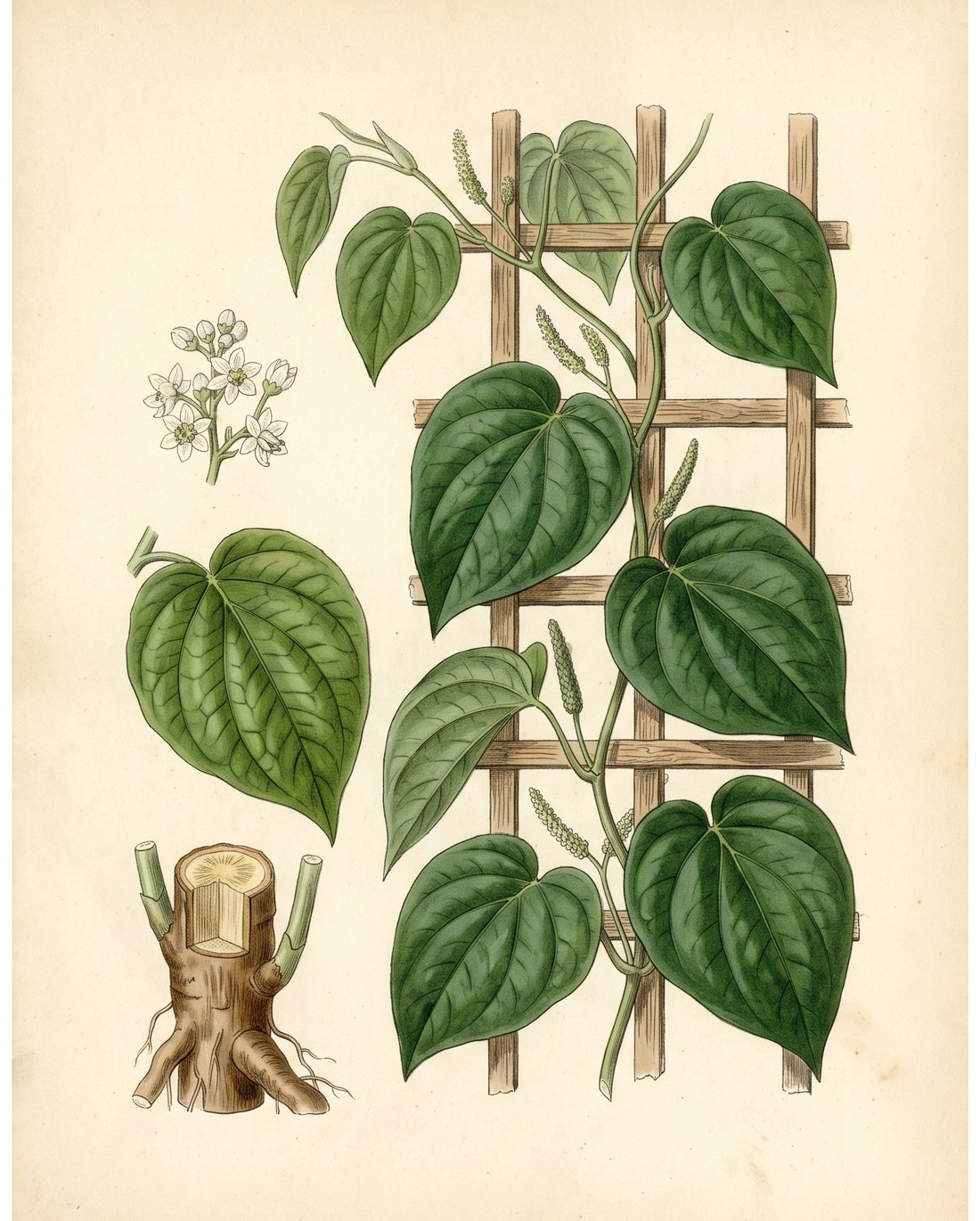 betel leafPiper betle
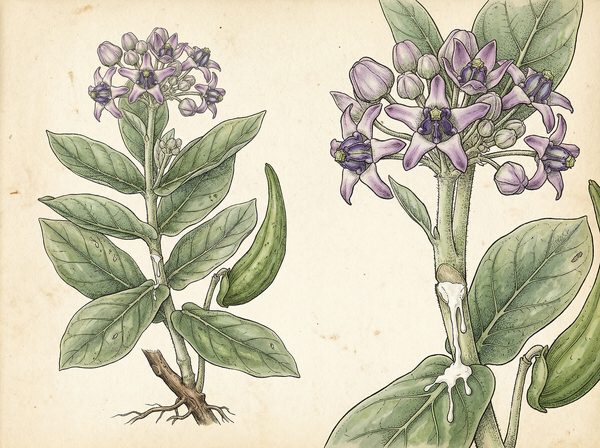 crown flowerCalotropis gigantea
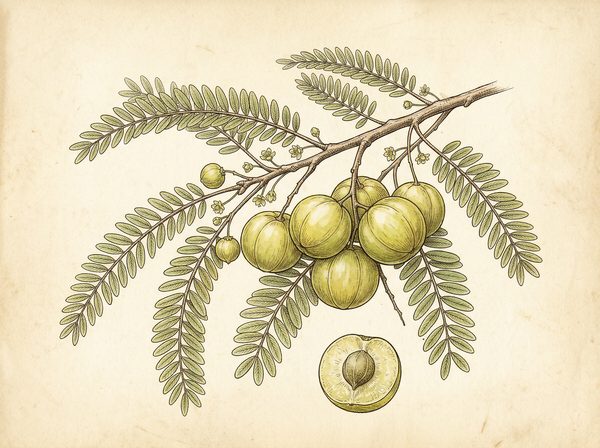 Indian gooseberryPhyllanthus emblica
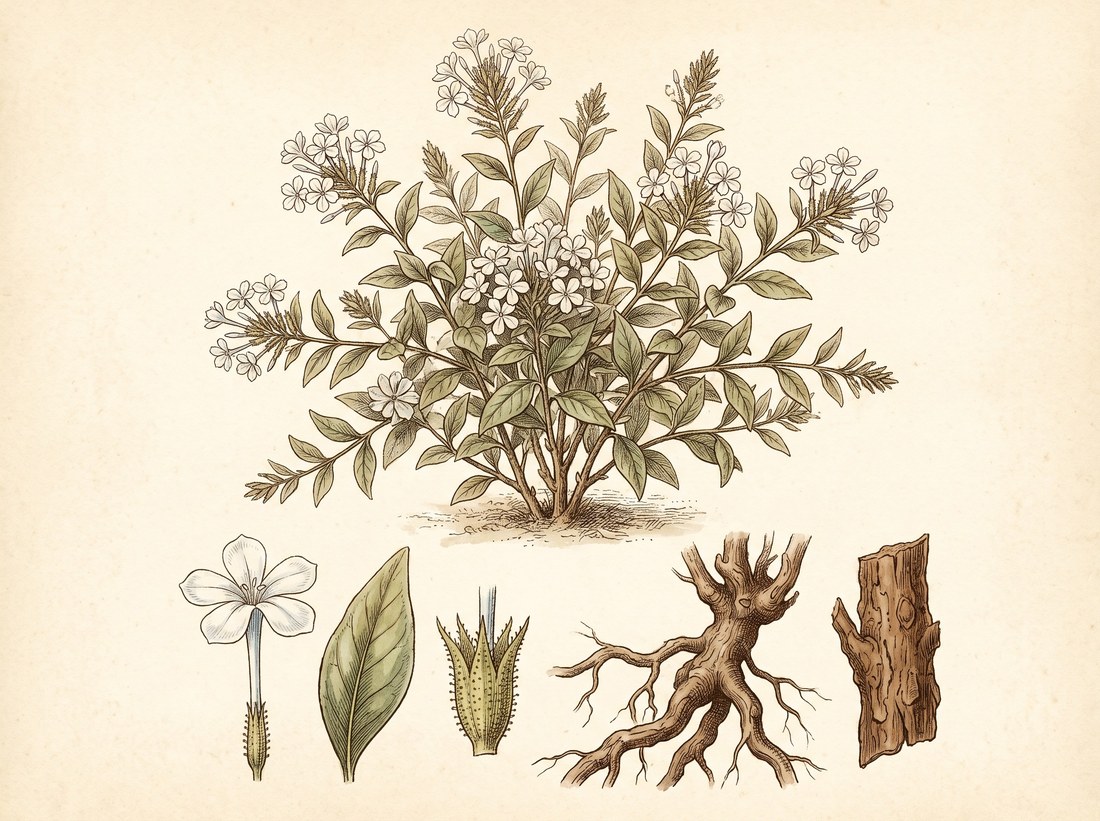 Ceylon leadwortPlumbago zeylanica
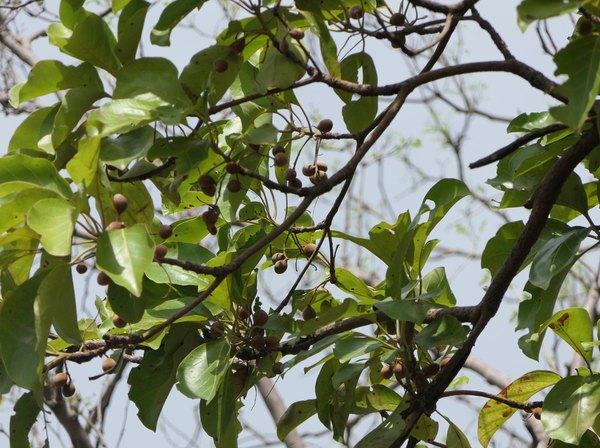 beleric myrobalanTerminalia bellirica
 chebulic myrobalanTerminalia chebula
Nearby on the shelf
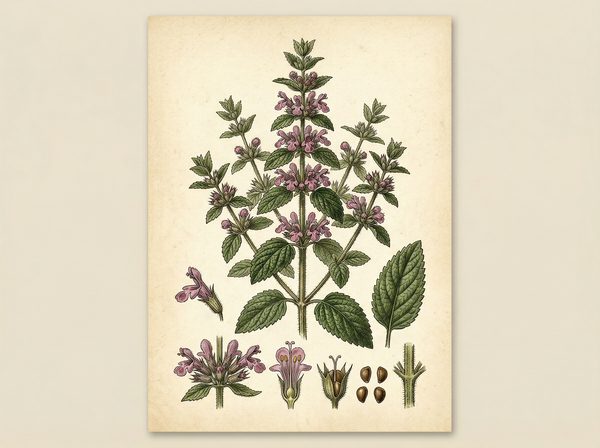 Black HorehoundBallota nigra
 Black huckleberryVaccinium resinosum
 Black locustRobinia pseudoacacia
 Black MustardSinapis Nigra
 Black oil plantCelastrus paniculatus
 Black pepperPiper nigrum
 Black seedNigella sativa
 Black spruceAbies Nigra
The whole plate is in the library. The compass, Compare, the Sky of eleven hundred plants and the formulary open with an email address and a password, free, with the formula builder and its safety engine. Herbert without limit, his formulating, clients, the handouts and the labels are the paid room.
Open the library, free