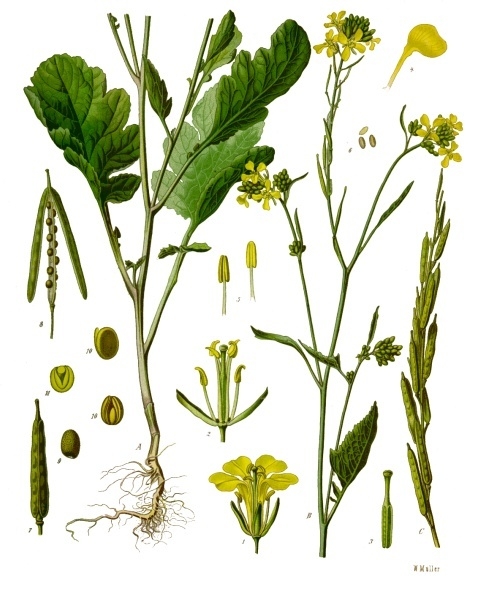
Western Herbalism
Black Mustard
Brassica nigra
Also known as Sinapis, Mustard, white, black or yellow Mustard.
External. The mustard plaster and the sinapism (mustard poultice) are popular with physicians and the laity as rubefacients and counterirritants to relieve deep-seated pain and inflammation, check vomiting, reestablish suppressed urine, excite and restore menstruation, to arouse from insensibility in narcotic poisoning, syncope and asphyxia, and as a derivative generally.

Ask Herbert about Black Mustard. Herbert is the master herbalist inside Bountiful Herbs: he answers from this plate and eleven hundred others, with dosing, pairing and cautions. Your first ten questions are free.
Ask HerbertSpecific indications
External. Deep-seated pain and inflammations; vomiting from gastric irritability; and repressed secretion. Internal. Emetic for poisoning by narcotics.
Safety
Pregnancy: Not safe at medicinal doses. Avoid medicinal doses in pregnancy, by mouth or as plasters. The German Commission E monograph, as quoted in a medical encyclopedia, contraindicates medicinal mustard seed in pregnancy; mustard used as a condiment is acceptable.
Breastfeeding: Not safe at medicinal doses. Avoid medicinal doses while breastfeeding, including mustard plasters. The German Commission E monograph, as quoted in a medical encyclopedia, contraindicates it while breastfeeding; mustard used as a condiment is acceptable.
Dosing as the sources wrote it
| Preparation | As written | Metric |
|---|---|---|
| Dose (emetic), 1 to 3 drachms. | ||
| Dose, 1 to 3 drachms (as an emetic). | ||
| Dose, 1/12 to 1/4 drop. | ||
| Oil of Mustard | Dose, from one-twentieth to one-tenth of a minim. | 0.00308-0.00616 mL |
Doses are reproduced from the sources for practitioners and are not a recommendation for any person.
From the sources
Therapy. External. The mustard plaster and the sinapism (mustard poultice) are popular with physicians and the laity as rubefacients and counterirritants to relieve deep-seated pain and inflammation, check vomiting, reestablish suppressed urine, excite and restore menstruation, to arouse from insensibility in narcotic poisoning, syncope and asphyxia, and as a derivative generally.
Therapy. A teaspoonful of mustard in a bowl of warm water will produce active and immediate emesis. This should be followed by another bowl of warm water alone, which will continue the evacuation and wash out any remaining mustard, as even then the burning sensation from the local effects of this substance with a few patients is hard to bear.
Action and Toxicology. Volatile oil of mustard is an extremely diffusible and penetrating irritant, quickly exciting heat and burning pain through its dilating action upon the peripheral vessels and irritation of the sensory nerve endings.
Physiological Action. Mustard is emetic, stimulant and actively revulsive with marked anodyne properties. Its application to the skin produces intense burning, violent inflammation, and if persisted in too long, sloughing or ulceration. Taken into the stomach in large quantities, if emesis be not produced, it causes a burning sensation and a mild form of gastritis.
Drawn from Ellingwood's American Materia Medica, Therapeutics and Pharmacognosy; Felter's Eclectic Materia Medica, Pharmacology and Therapeutics, and the Bountiful Herbs editorial.
Often paired with
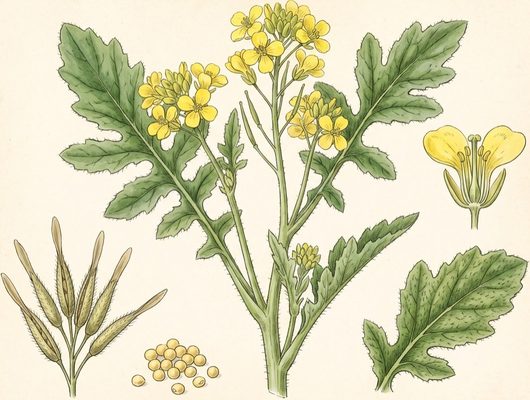 white mustardBrassica alba
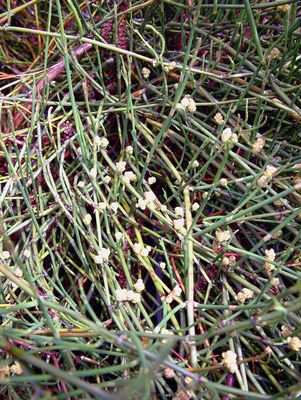 Ma huangEphedra sinica
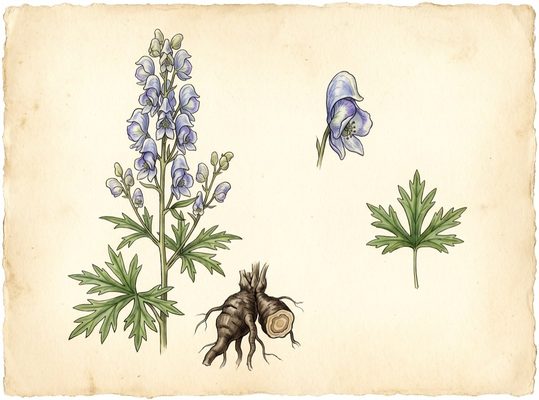 Indian aconiteAconitum ferox
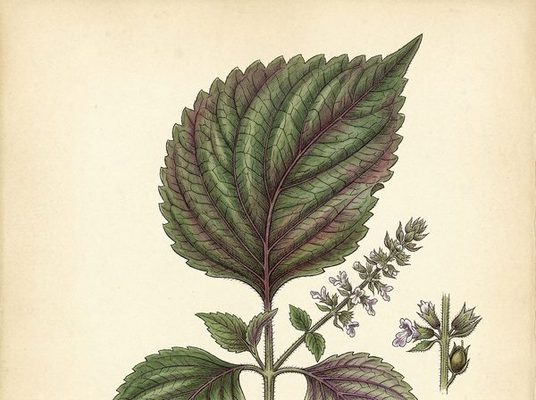 PerillaPerilla frutescens
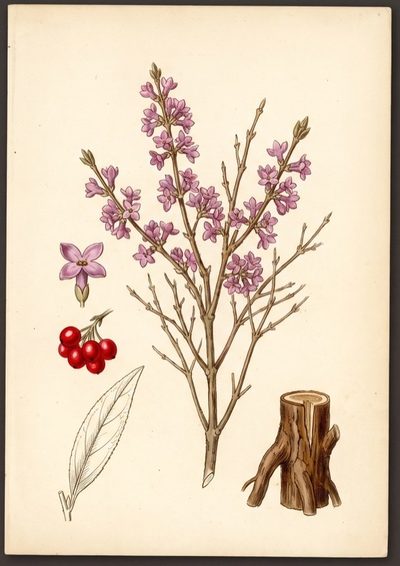 MezereumDaphne mezereum
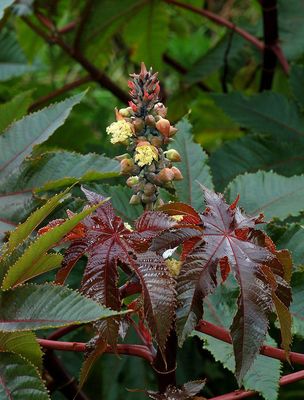 Oleum RiciniOleum Ricini
Nearby on the shelf
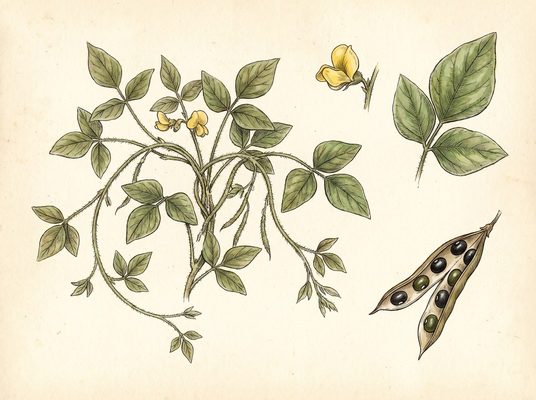 Black gramVigna mungo
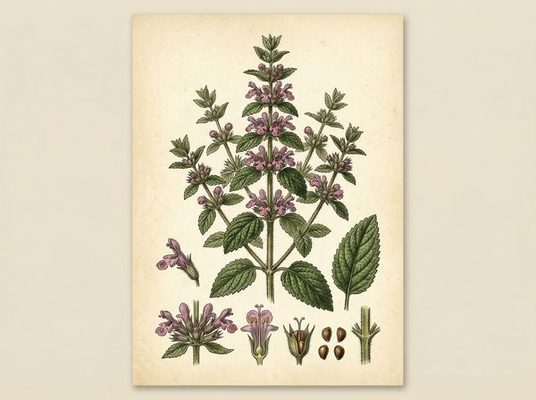 Black HorehoundBallota nigra
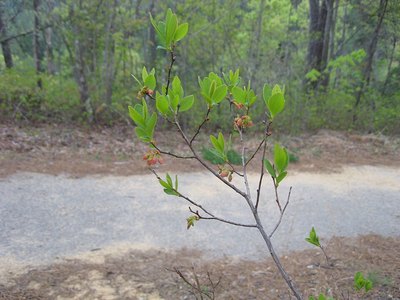 Black huckleberryVaccinium resinosum
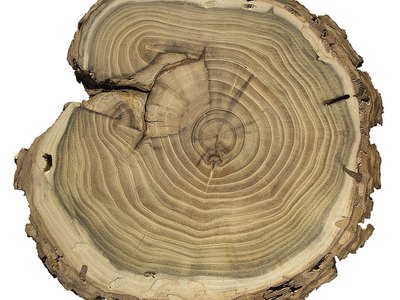 Black locustRobinia pseudoacacia
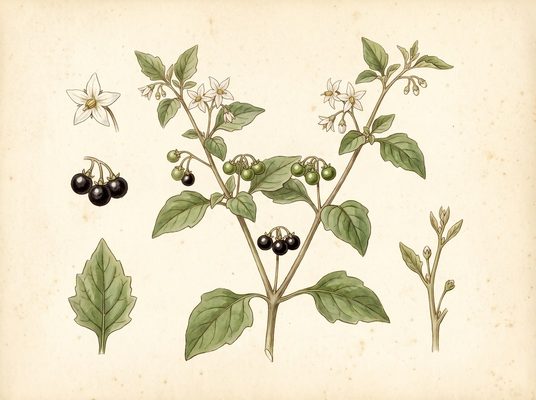 Black nightshadeSolanum nigrum
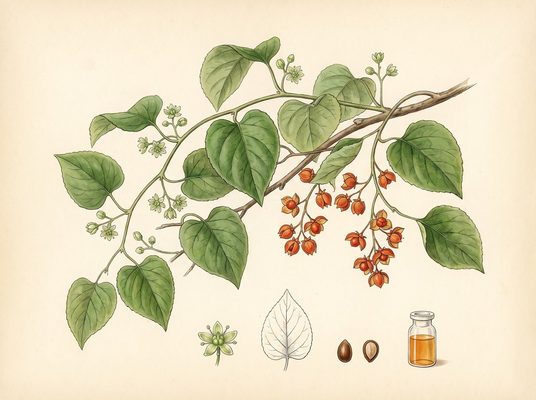 Black oil plantCelastrus paniculatus
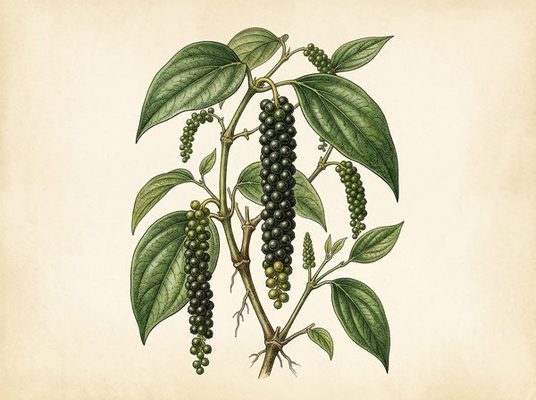 Black pepperPiper nigrum
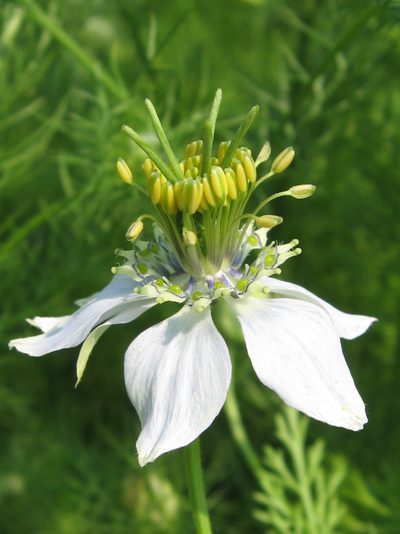 Black seedNigella sativa
The whole plate is in the library. The compass, Compare, the Sky of eleven hundred plants and the formulary open with an email address and a password, free, with the formula builder and its safety engine. Herbert in full, his formulating, clients, the handouts and the labels are the paid room.
Open the library, free