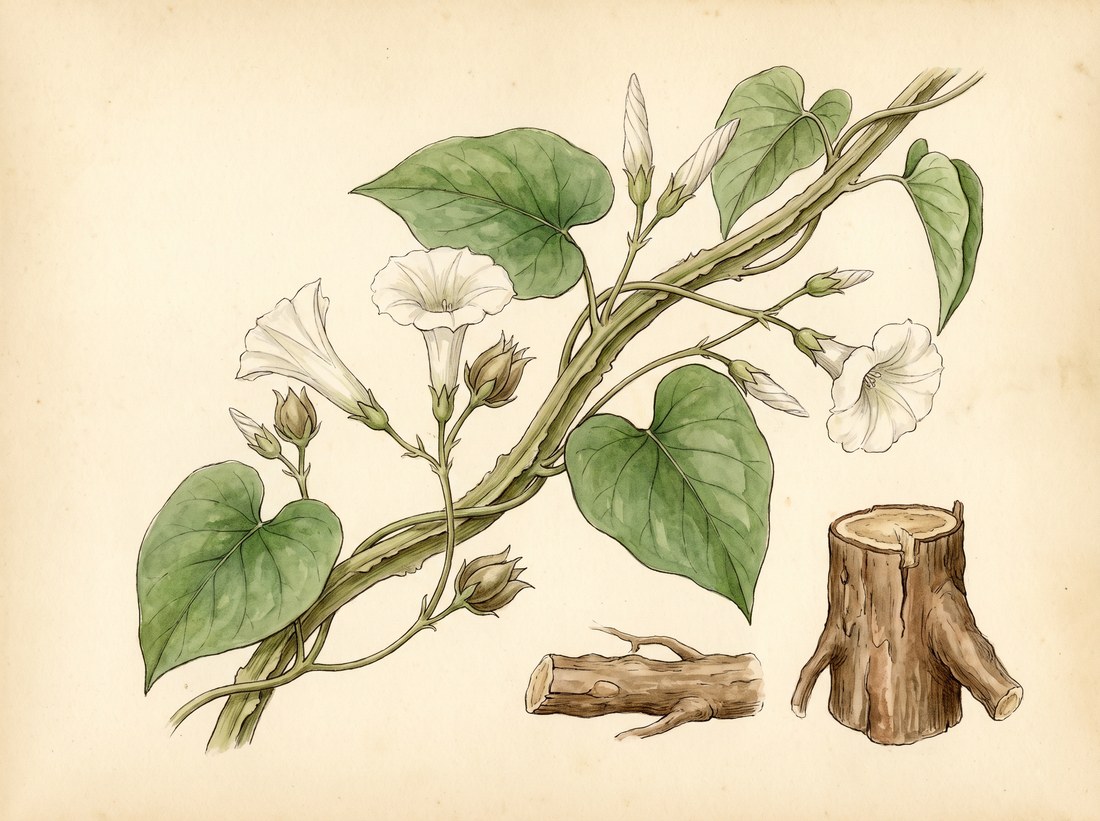
Ayurvedic Herbalism
Turpeth
Operculina turpethum
Also known as Indian jalap, turpeth root, St. Thomas lidpod, white turpeth, Trivrit, Trivrita, Tribhandi.
Operculina turpethum is a perennial twining vine of the morning glory family with winged stems, heart shaped leaves and white funnel flowers, growing wild along hedges and field margins across the plains of India, Sri Lanka and Southeast Asia. Its thick, resinous root bark, Trivrit, is Ayurveda's foremost purgative, the drug the classical texts recommend for virechana because it empties the bowel decisively yet more comfortably than the harsher purgatives, and it leads Avipattikara churna and many other formulas. In the West it was once sold as turpeth or Indian jalap.
Ask Herbert about Turpeth. Herbert is the master herbalist inside Bountiful Herbs: he answers from this plate and eleven hundred others, with dosing, pairing and cautions. Your first ten questions are free.
Ask HerbertActions
Indications what the tradition reached for it in
- Constipation with heat, acidity and a bitter taste
- Therapeutic purgation (virechana) in Panchakarma
- Hyperacidity and reflux with constipation (in Avipattikara churna)
- Ascites and edema needing bowel clearance (adjunct, supervised)
- Jaundice and congestive liver states (adjunct)
- Pitta fever with constipation
- Chronic skin disease with heat and constipation
- Hemorrhoids with hard stool
- Intestinal worms (as the evacuant after anthelmintics)
- Gout and hyperuricemia with sluggish bowels (traditional)
- Headache and migraine of pitta type with constipation
- Obesity with kapha stagnation (short courses)
Specific indications
A hot, irritable patient with acid reflux, a bitter taste, headache and hard infrequent stools, where Avipattikara churna at night clears pitta downward and settles the whole picture
The Panchakarma patient prepared with oleation and sudation who needs a reliable but comfortable purge to complete virechana
Chronic urticaria, acne or eczema with heat signs and constipation in a robust patient who needs the bowel emptied as part of clearing the skin
Jaundice or a congested liver with a sluggish bowel in a strong patient, given for a few days under supervision alongside liver herbs
Safety
Recognised toxicity. This plant carries a toxicity flag in the record; it is for trained practitioners only.
Low dose botanical. Used in drop doses in the classical practice; not a plant to dose freely.
Pregnancy: Contraindicated in pregnancy: no published safety class is known to us, but strong purgatives of this type provoke pelvic congestion and reflex uterine activity and the classical texts forbid virechana in pregnancy.
Breastfeeding: Avoid: purgative resin constituents may pass into milk and cause colic and diarrhea in the infant, and the fluid loss is undesirable for the mother.
The record lists 12 contraindications; open the plate in the library to read them in full.
In practice
The Ayurvedic practitioner regards Trivrit as the purgative of choice for pitta, the clearing drug when heat, bile and toxins have collected in the gut, liver and blood and must be sent downward. It is central to virechana in Panchakarma, given after several days of internal oleation with ghee and external oil massage and sweating, in a dose adjusted to the patient's bowel type: soft bowelled patients need little, hard bowelled patients more.
In Ayurveda
Rasa: katu (pungent), tikta (bitter), madhura (sweet), kashaya (astringent). Virya: ushna (heating). Vipaka: katu (pungent). Guna: laghu (light), ruksha (dry), tikshna (sharp). Dosha: pacifies pitta and kapha by expelling them downward; aggravates vata if overused. Prabhava: Sukha virechana: the tradition names the white variety the safest and most comfortable of the purgatives, the drug of choice for virechana when pitta must be cleared without the harshness of Danti or Snuhi. Karma: rechana (purgative); sukha virechaka (gentle, comfortable purgative); pittahara (clears pitta); kaphahara (reduces kapha); shothahara (reduces swelling); jvaraghna (relieves fever); krimighna (anthelmintic); kushthaghna (helps skin disease); anulomana (normalizes downward movement); udarahara (relieves abdominal enlargement). Classical indications: vibandha (constipation); udara (ascites and abdominal enlargement); shotha (edema); jvara (fever, especially pitta fever); pandu (anemia with jaundice); kamala (jaundice); kushtha (skin disease); arsha (hemorrhoids); krimi (worms); gulma (abdominal masses); raktapitta (bleeding disorders, by clearing pitta downward); visha (poisoning, as an evacuant). The dried root bark, stripped from the woody core, is the drug, given as churna with honey, sugar, ginger or Triphala decoction according to the dosha, as kwatha, and as the leading ingredient of purgative confections and powders; the classical texts distinguish a white variety for routine purgation and a black variety that is stronger and more hazardous. Classical formulations: Trivrit lehya (avaleha), Trivritadi churna, Avipattikara churna, Manibhadra guda, Narayana churna, Trivrit kalpa, Panchasakara churna, Ichchabhedi rasa (as an ingredient). Described in: Charaka Samhita, Sushruta Samhita, Ashtanga Hridaya, Bhavaprakasha Nighantu, Dhanvantari Nighantu, Raja Nighantu, Sharngadhara Samhita, Kaiyadeva Nighantu, Ayurvedic Pharmacopoeia of India.
Dosing as the sources wrote it
| Preparation | As written | Metric |
|---|---|---|
| Churna, laxative | 1-3 g powdered root bark at night with warm water and a pinch of ginger | 1000-3000 mg |
| Churna, purgative | 3-6 g powdered root bark once, under supervision, for virechana | 3000-6000 mg |
| Kwatha | 30-60 mL decoction once daily at night | 30-60 mL |
| Avaleha (Trivrit lehya) | 5-10 g confection at night with warm water | 5000-10000 mg |
| Avipattikara churna | 3-6 g at night with warm water | 3000-6000 mg |
Doses are reproduced from the sources for practitioners and are not a recommendation for any person.
From the sources
Overview. Operculina turpethum is a perennial twining vine of the morning glory family with winged stems, heart shaped leaves and white funnel flowers, growing wild along hedges and field margins across the plains of India, Sri Lanka and Southeast Asia. Its thick, resinous root bark, Trivrit, is Ayurveda's foremost purgative, the drug the classical texts recommend for virechana because it empties the bowel decisively yet more comfortably than the harsher purgatives, and it leads Avipattikara churna and many other formulas. In the West it was once sold as turpeth or Indian jalap.
Clinical Notes. The Ayurvedic practitioner regards Trivrit as the purgative of choice for pitta, the clearing drug when heat, bile and toxins have collected in the gut, liver and blood and must be sent downward. It is central to virechana in Panchakarma, given after several days of internal oleation with ghee and external oil massage and sweating, in a dose adjusted to the patient's bowel type: soft bowelled patients need little, hard bowelled patients more.
Ayurvedic Profile. Rasa: katu (pungent), tikta (bitter), madhura (sweet), kashaya (astringent). Virya: ushna (heating). Vipaka: katu (pungent). Guna: laghu (light), ruksha (dry), tikshna (sharp). Dosha: pacifies pitta and kapha by expelling them downward; aggravates vata if overused.
In formulas
Turpeth stands in 28 documented formulas in the library, among them Abhayāriṣta, Aśvagandhādyariṣṭa, Daśamūlāriṣṭa, Sārasvatāriṣṭa, Kalyāṇaka Guḍa, Dantī Harītakī.
Often paired with
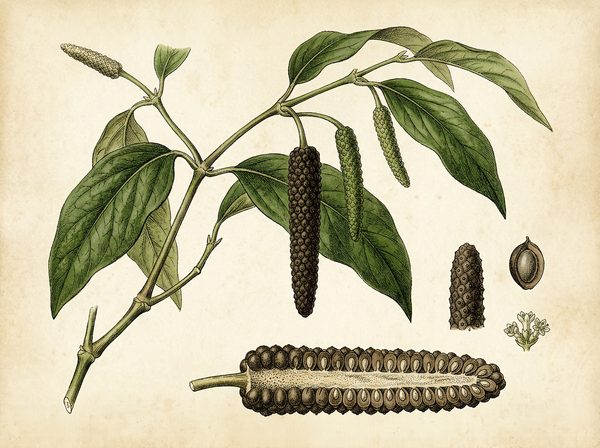 long pepperPiper longum
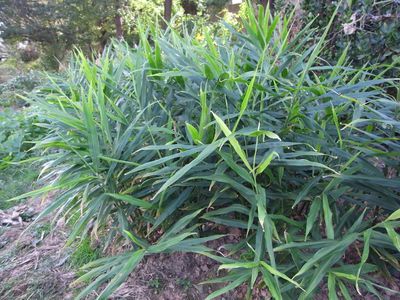 GingerZingiber officinale
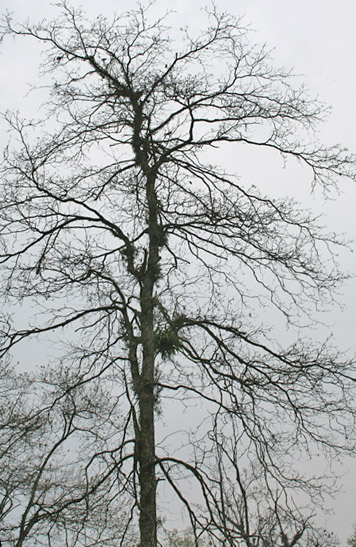 chebulic myrobalanTerminalia chebula
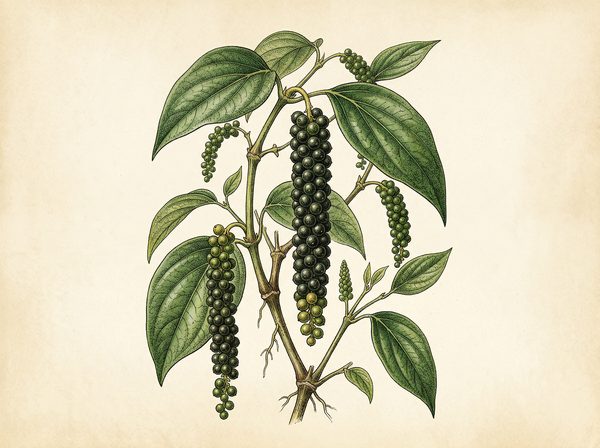 black pepperPiper nigrum
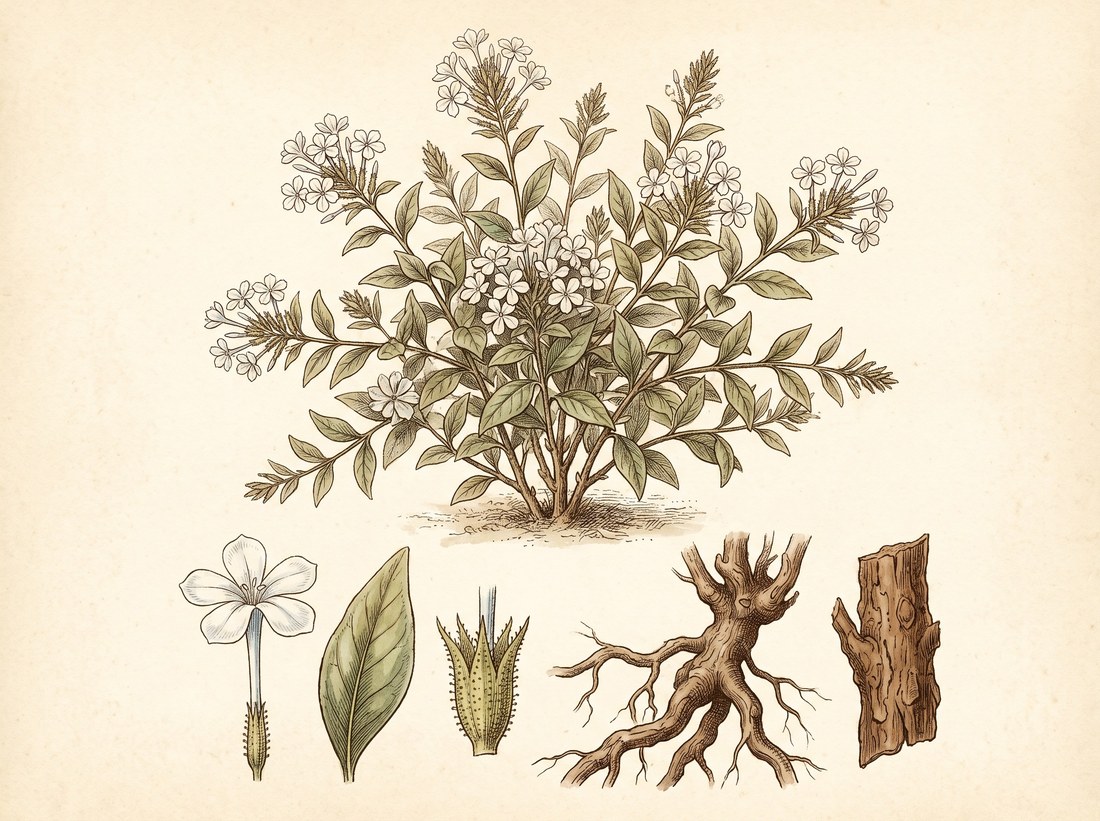 Ceylon leadwortPlumbago zeylanica
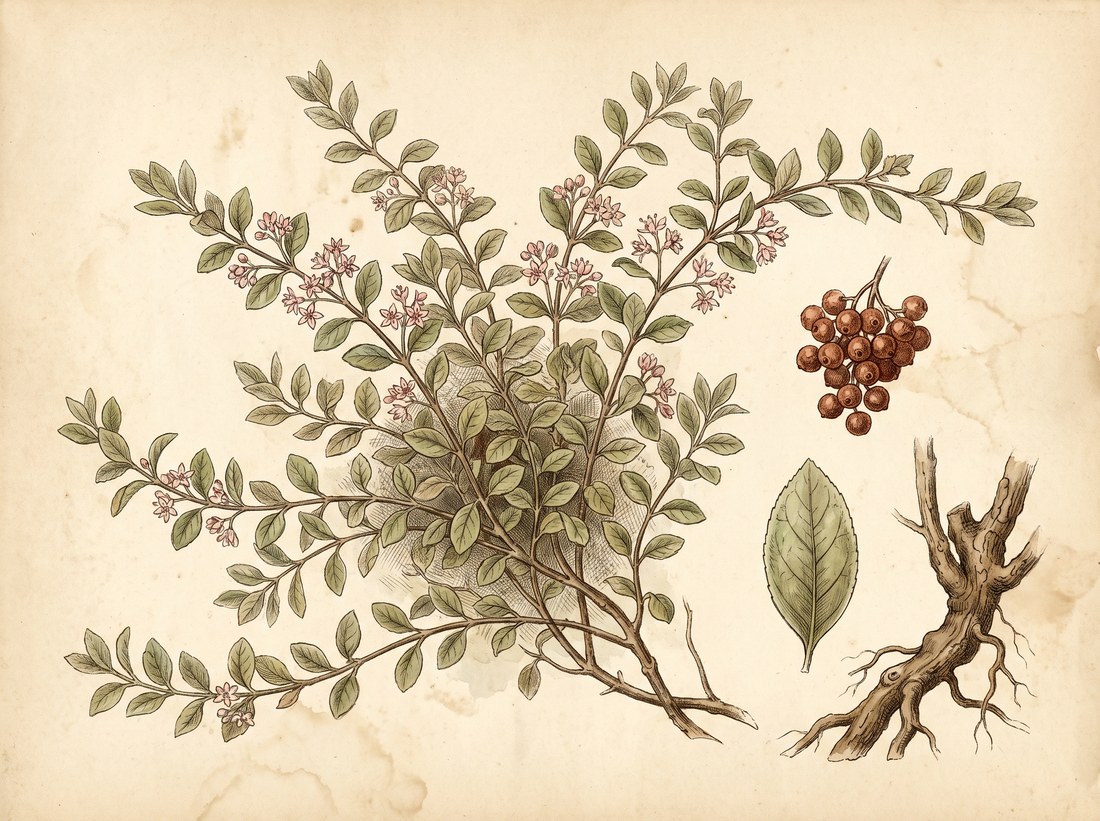 false black pepperEmbelia ribes
Nearby on the shelf
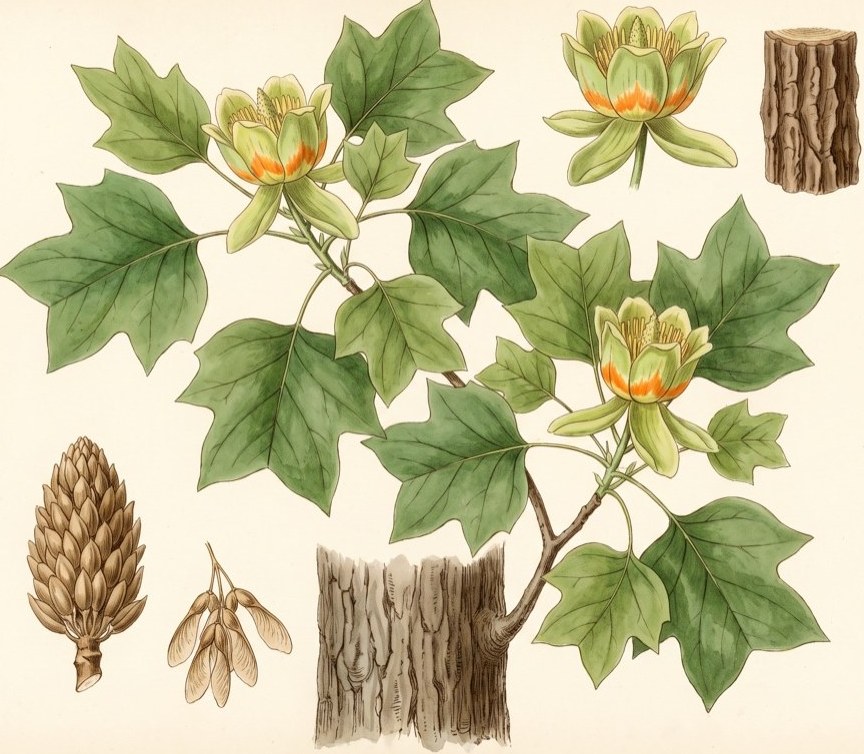 Tulip treeLiriodendron tulipifera
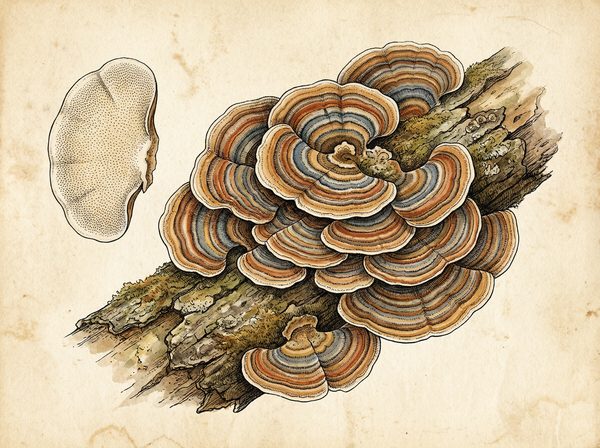 Turkey TailTrametes versicolor
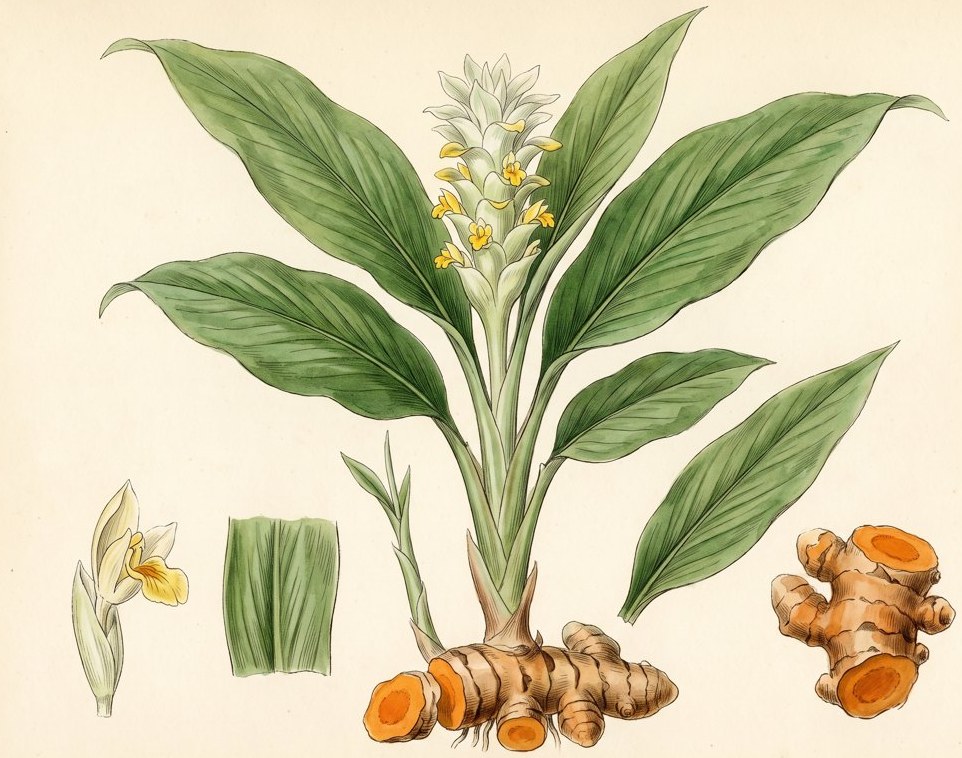 TurmericCurcuma longa
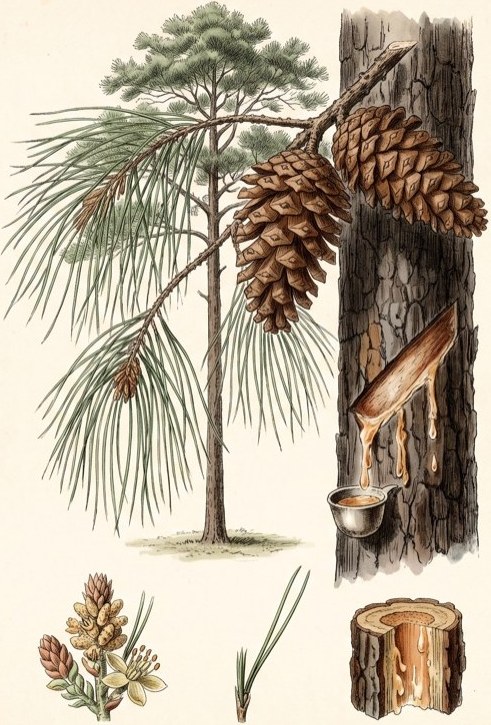 TurpentineOleum Terebinthinae
 TwinleafJeffersonia diphylla
 TylophoraTylophora indica
 ValerianValeriana officinalis
The whole plate is in the library. The compass, Compare, the Sky of eleven hundred plants and the formulary open with an email address and a password, free, with the formula builder and its safety engine. Herbert without limit, his formulating, clients, the handouts and the labels are the paid room.
Open the library, free