Ayurvedic Herbalism
Indian spurge tree
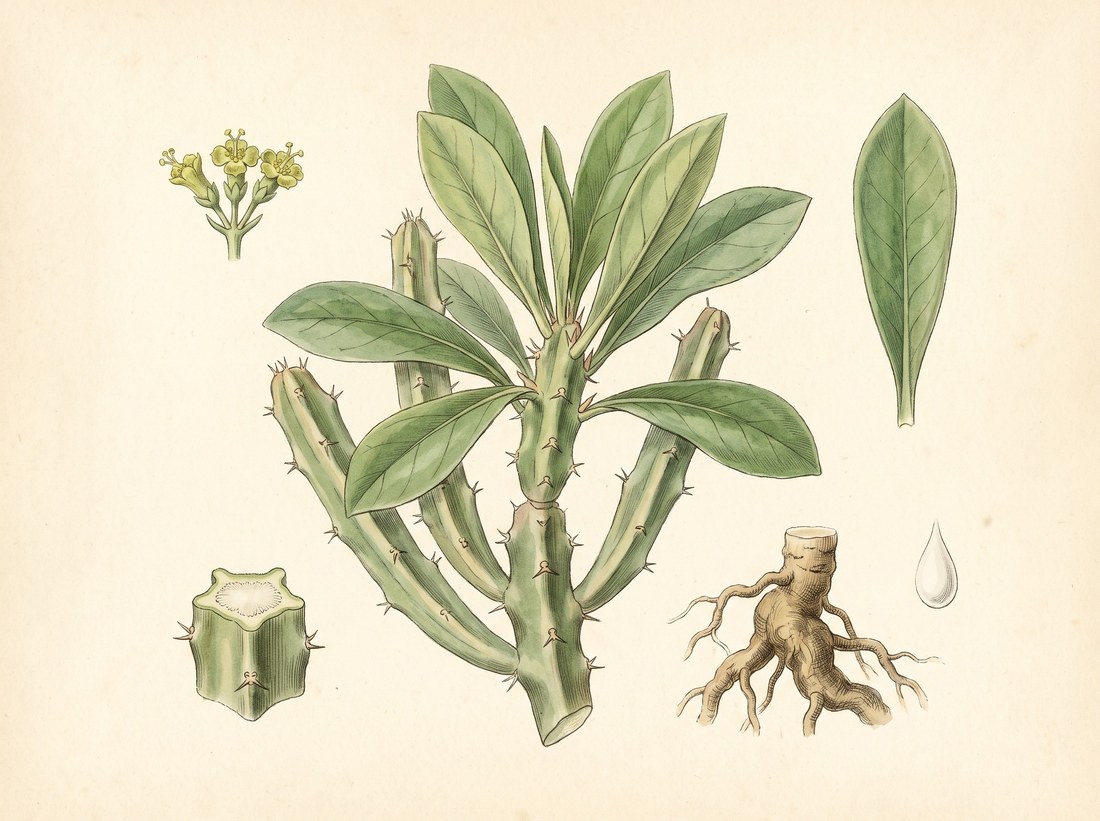
Euphorbia neriifolia
Also known as hedge euphorbia, oleander spurge, milk hedge, snuhi, Snuhi, Sehunda, Vajri.
Euphorbia neriifolia is a succulent, cactus-like shrub or small tree with fleshy five-angled stems, paired spines and oleander-shaped leaves, planted as a living hedge and growing wild on rocky ground across the Deccan, central India, Bengal and the dry northern plains. Ayurveda calls it Snuhi and treats its white latex as one of the great drastic purgatives and caustics: a drug of the shodhana class, used in minute purified doses for ascites and abdominal disease, as the caustic on the kshara sutra thread for fistula and hemorrhoids, and as a processing agent that tames other poisonous drugs.

Ask Herbert about Indian spurge tree. Herbert is the master herbalist inside Bountiful Herbs: he answers from this plate and eleven hundred others, with dosing, pairing and cautions. Your first ten questions are free.
Ask HerbertActions
Indications what the tradition reached for it in
- Hemorrhoids and anal fistula (as kshara sutra ligation, specialist use)
- Ascites and severe abdominal distension (classical, expert purgation only)
- Chronic constipation with obesity and kapha (classical, purified compound only)
- Warts and corns (latex applied by an experienced practitioner)
- Chronic kapha skin disease and leukoderma (topical, traditional)
- Joint pain and swelling (warmed leaf poultice)
- Earache (warmed leaf juice, traditional)
- Intestinal worms (classical)
- Splenomegaly of kapha type (classical)
- Processing agent for other toxic Ayurvedic drugs (pharmacy use)
Specific indications
The patient with a chronic anal fistula or third-degree hemorrhoids for whom kshara sutra ligation, prepared with this latex, is the classical surgical alternative
A heavy, congested kapha patient with obstinate constipation and a distended abdomen who has failed gentle laxatives and is under expert Ayurvedic supervision
A painful, swollen joint or a stubborn wart where the warmed leaf or a single drop of latex is applied by a practitioner who knows the plant
Never the thin, dry, hot or pregnant patient, and never as a self-administered internal remedy
Safety
Recognised toxicity. This plant carries a toxicity flag in the record; it is for trained practitioners only.
Low dose botanical. Used in drop doses in the classical practice; not a plant to dose freely.
Pregnancy: Contraindicated in pregnancy: it is a drastic purgative and irritant, and no published safety class is known to us; the tradition forbids it.
Breastfeeding: Contraindicated while nursing; the irritant principles are likely to pass into milk and the purgation would harm the mother.
The record lists 10 contraindications; open the plate in the library to read them in full.
In practice
Snuhi is a poison first and a medicine second, and the tradition handles it accordingly. The latex is never given raw; it is collected fresh, purified by the classical shodhana methods, which in most lineages involve mixing with ghee or milk and gentle heating, and then incorporated in minute quantities into compound purgatives for udara, gulma and kapha-medo conditions, or used to process Jaipala seeds so that their violence is reduced.
In Ayurveda
Rasa: katu (pungent), tikta (bitter). Virya: ushna (heating), strongly so. Vipaka: katu (pungent). Guna: laghu (light), tikshna (sharp), snigdha (unctuous). Dosha: pacifies kapha and vata; strongly aggravates pitta. Prabhava: tikshna rechana (a drastic purgative action regarded as its specific power). Karma: rechana (drastic purgative); deepana (kindles digestion); kaphaghna (reduces kapha); krimighna (anthelmintic); shothahara (reduces swelling); kushthaghna (clears skin disease, externally); vishaghna (counters poison, traditional); medohara (reduces fat); arshoghna (destroys hemorrhoids, in kshara sutra); vatahara (pacifies vata). Classical indications: udara (abdominal distension and ascites); gulma (abdominal masses); pliha vriddhi (splenic enlargement); arsha (hemorrhoids and fistula, via kshara sutra); kushtha (chronic skin disease, externally); shotha (swelling); ashmari (urinary calculus); krimi (worms); unmada (mental disturbance, in shodhana); medoroga (obesity); adhmana (bloating); shvitra (leukoderma, externally). The milky latex is the classical drug, collected fresh, purified (shodhita) and used in minute doses within compound purgative formulations, as a processing agent for other toxic drugs such as Jaipala, and as the caustic coating of the kshara sutra thread with Apamarga alkali and Haridra. The warmed leaf is applied externally for pain and swelling, and the root and stem are used in some regional formulations. Classical formulations: Kshara sutra (medicated caustic thread), Jalodarari rasa, Naracha rasa (Jaipala processed with Snuhi latex), Snuhyadi taila, Snuhi ksheera shodhita Jaipala, Snuhi patra svedana (warmed leaf application). Described in: Charaka Samhita, Sushruta Samhita, Ashtanga Hridaya, Bhavaprakasha Nighantu, Dhanvantari Nighantu, Raja Nighantu, Kaiyadeva Nighantu, Ayurvedic Pharmacopoeia of India.
Dosing as the sources wrote it
| Preparation | As written | Metric |
|---|---|---|
| Shodhita ksheera (purified latex) | 125-250 mg purified latex daily within a compound formulation, purified material only | 125-250 mg |
| Root bark churna | 500-1000 mg purified root bark daily, purified material only | 500-1000 mg |
| Patra svedana, topical | 10-20 g warmed fresh leaf bound over the painful area once daily | 10000-20000 mg |
| Latex, topical (warts) | 1-2 drops applied to the wart with a stick by a practitioner, protecting surrounding skin | 0.02-0.04 mL |
Doses are reproduced from the sources for practitioners and are not a recommendation for any person.
From the sources
Overview. Euphorbia neriifolia is a succulent, cactus-like shrub or small tree with fleshy five-angled stems, paired spines and oleander-shaped leaves, planted as a living hedge and growing wild on rocky ground across the Deccan, central India, Bengal and the dry northern plains. Ayurveda calls it Snuhi and treats its white latex as one of the great drastic purgatives and caustics: a drug of the shodhana class, used in minute purified doses for ascites and abdominal disease, as the caustic on the kshara sutra thread for fistula and hemorrhoids, and as a processing agent that tames other poisonous drugs.
Clinical Notes. Snuhi is a poison first and a medicine second, and the tradition handles it accordingly. The latex is never given raw; it is collected fresh, purified by the classical shodhana methods, which in most lineages involve mixing with ghee or milk and gentle heating, and then incorporated in minute quantities into compound purgatives for udara, gulma and kapha-medo conditions, or used to process Jaipala seeds so that their violence is reduced.
Ayurvedic Profile. Rasa: katu (pungent), tikta (bitter). Virya: ushna (heating), strongly so. Vipaka: katu (pungent). Guna: laghu (light), tikshna (sharp), snigdha (unctuous). Dosha: pacifies kapha and vata; strongly aggravates pitta.
In formulas
Indian spurge tree stands in 11 documented formulas in the library, among them Dhānvantara Ghṛta, Kāsīsādi Taila, Citrakādi Taila, Mahā Viṣagarbha Taila, Viṣatinduka Taila, Śaṅkha Drāvaka.
Often paired with
 crown flowerCalotropis gigantea
 Ceylon leadwortPlumbago zeylanica
 sesameSesamum indicum
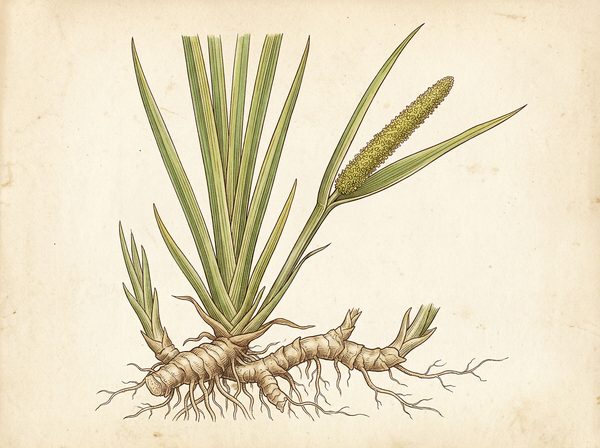 sweet flagAcorus calamus
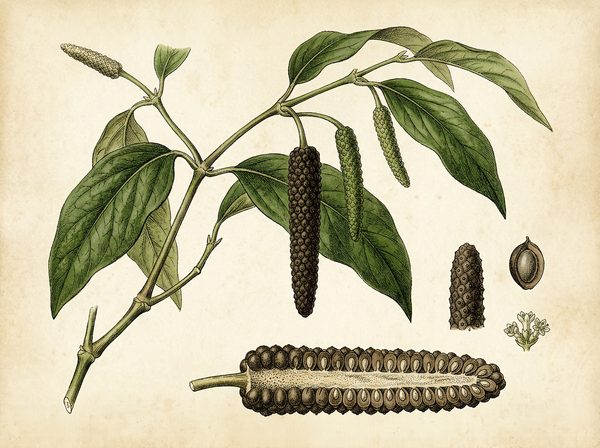 long pepperPiper longum
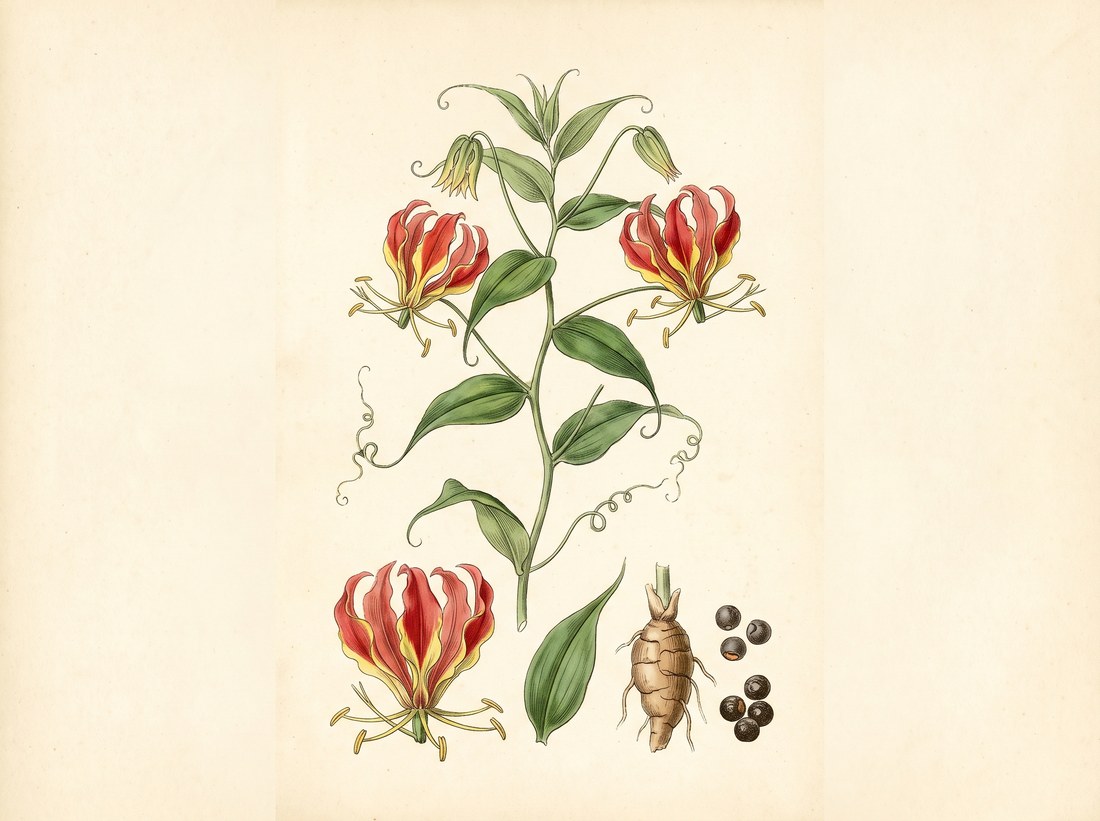 glory lilyGloriosa superba
Nearby on the shelf
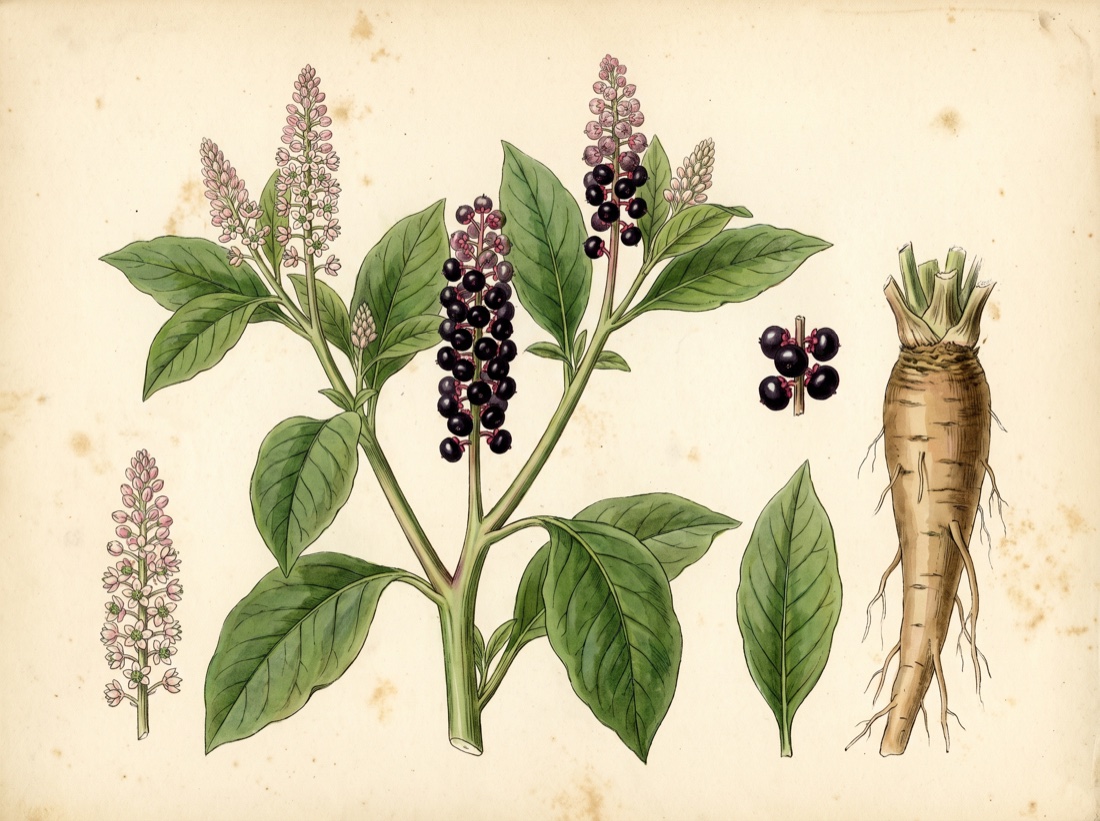 Indian pokeweedPhytolacca acinosa
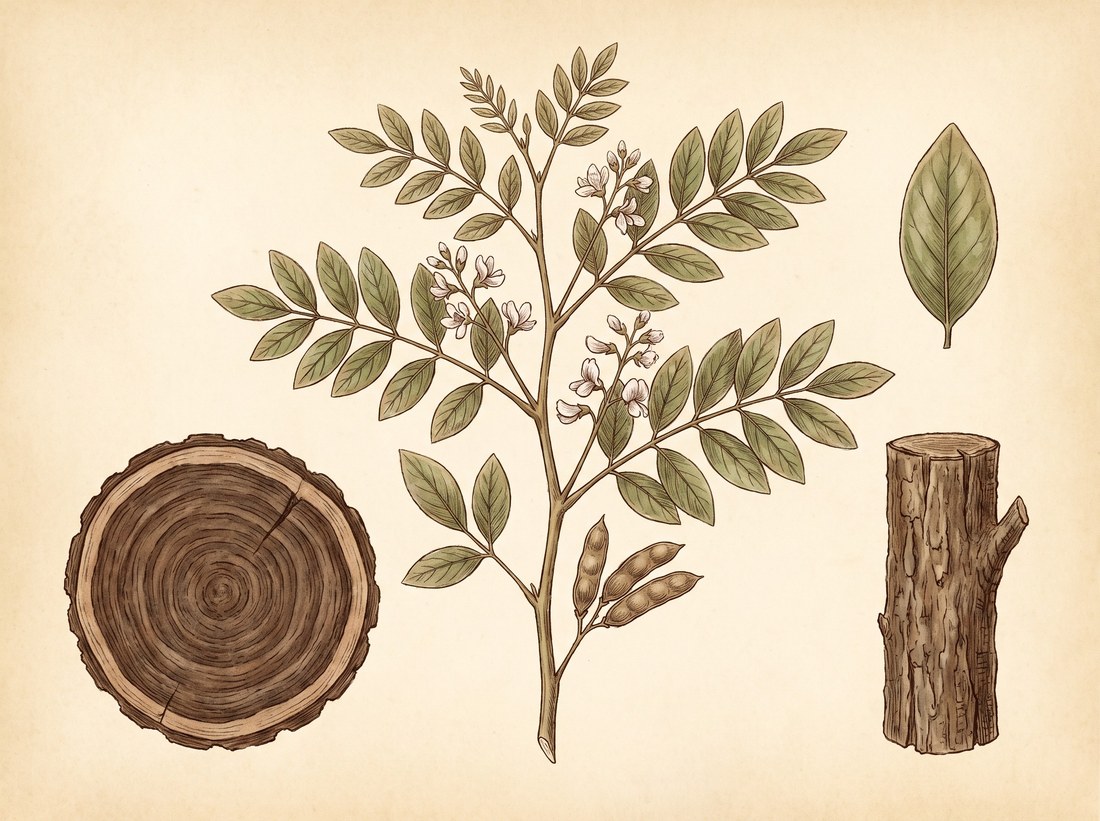 Indian rosewoodDalbergia sissoo
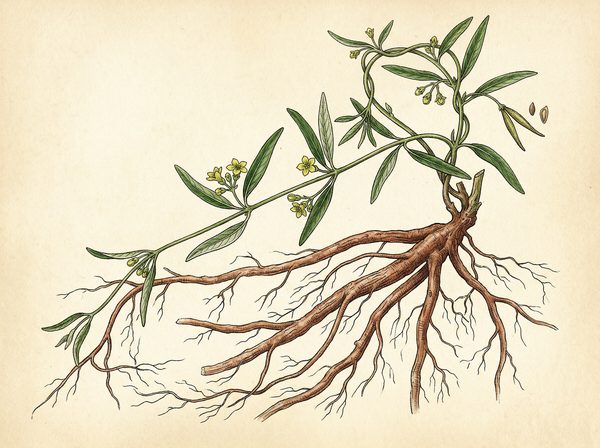 Indian sarsaparillaHemidesmus indicus
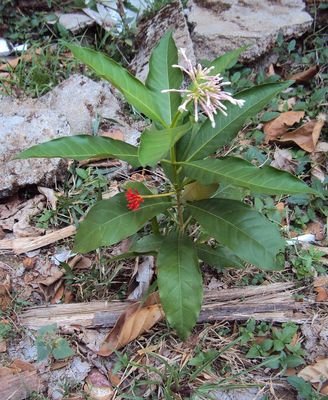 Indian snakerootRauvolfia serpentina
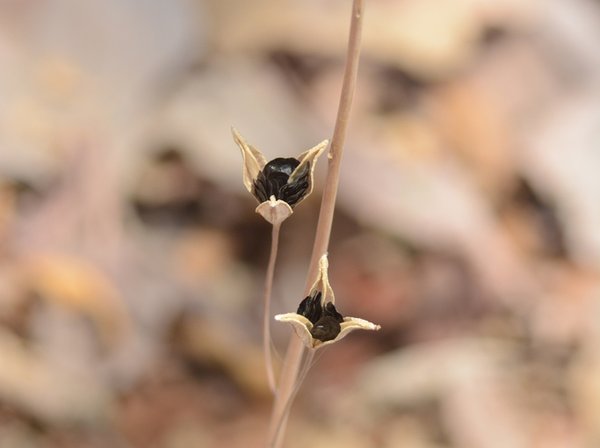 Indian SquillUrginea indica
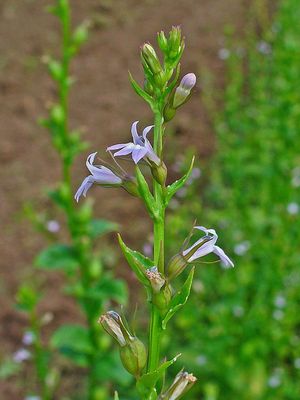 Indian tobaccoLobelia inflata
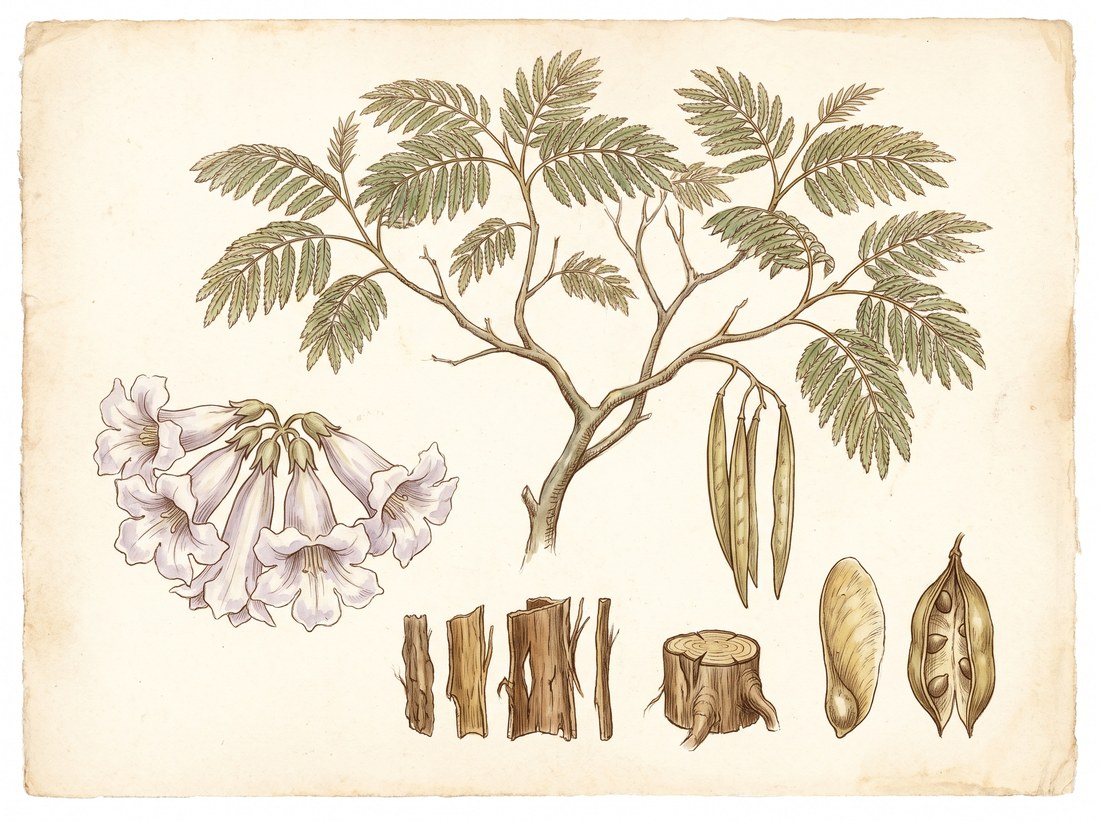 Indian trumpet flowerOroxylum indicum
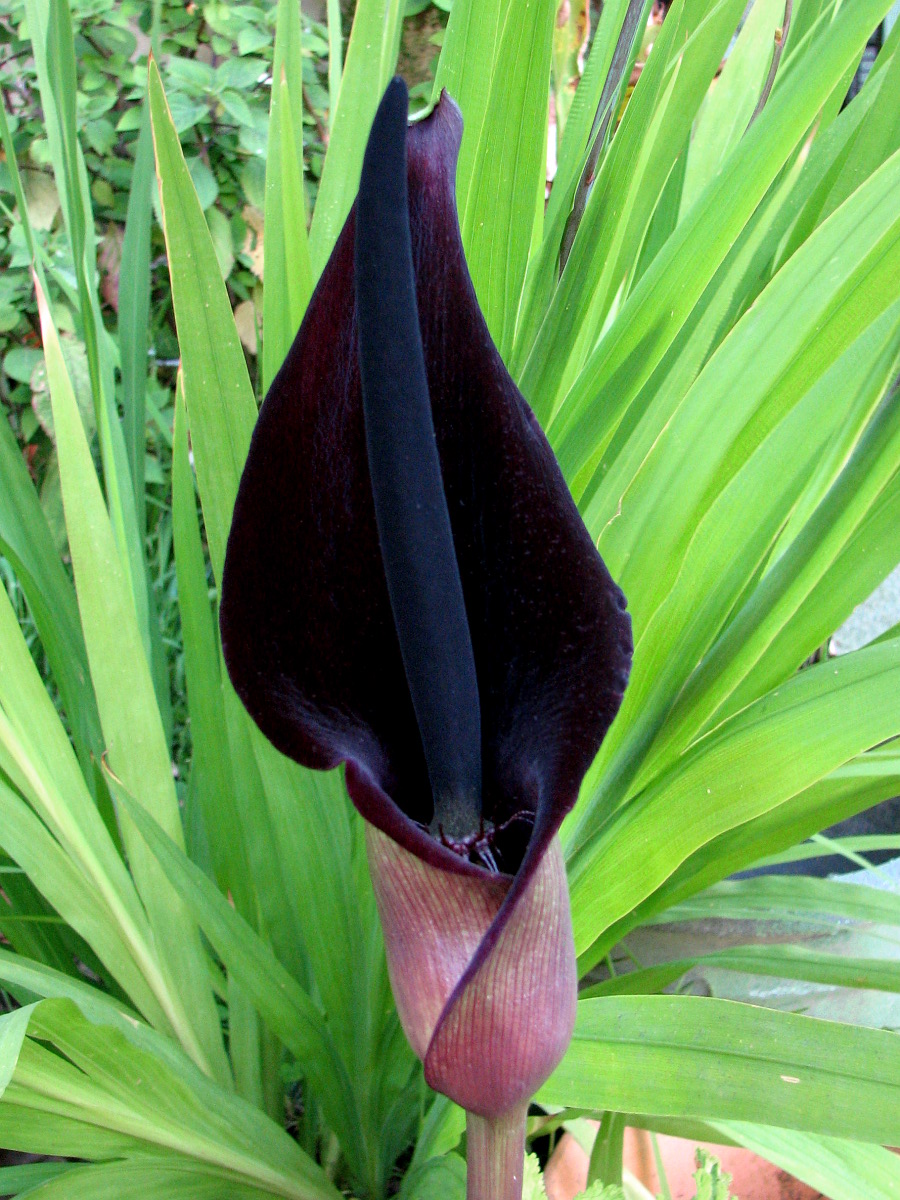 Indian turnipArisaema triphyllum
The whole plate is in the library. The compass, Compare, the Sky of eleven hundred plants and the formulary open with an email address and a password, free, with the formula builder and its safety engine. Herbert without limit, his formulating, clients, the handouts and the labels are the paid room.
Open the library, free