Ayurvedic Herbalism
Atibala
Abutilon indicum
Also known as Indian mallow, country mallow, Indian abutilon, monkey bush, Atibala, Kankatika, Rishyaprokta.
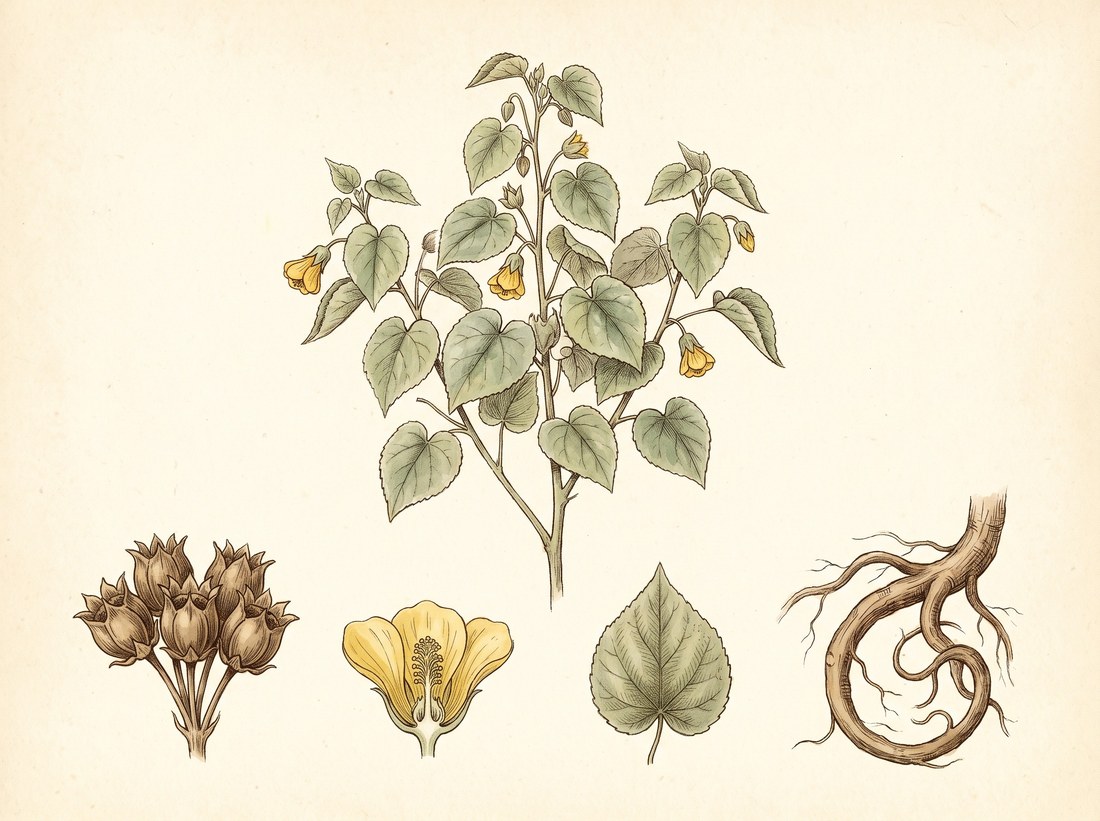
Abutilon indicum is a soft, velvety perennial shrub of the mallow family with heart shaped leaves, yellow flowers that open in the evening and a ring of seed pods shaped like a small crown, common on waste ground, roadsides and field edges throughout India and across tropical Asia and Africa. Ayurveda names it Atibala, exceeding strength, and groups it with Bala, Nagabala and Mahabala as the four strengthening mallows used in decoctions and medicated oils for vata disorders, debility and urinary complaints. It is a cooling, sweet, slimy root in the tradition of the great mallows and is mostly used as a companion herb rather than alone.

Ask Herbert about Atibala. Herbert is the master herbalist inside Bountiful Herbs: he answers from this plate and eleven hundred others, with dosing, pairing and cautions. Your first ten questions are free.
Ask HerbertActions
Indications what the tradition reached for it in
- Debility and weight loss in a dry, depleted patient
- Neuromuscular weakness and post-paralytic recovery (with Bala, as oil and decoction)
- Painful urination and cystitis with burning
- Chronic diarrhea and dysentery with dryness
- Dry irritating cough and sore throat
- Hemorrhoids with bleeding (traditional)
- Painful swollen joints (leaf poultice)
- Wounds, boils and ulcers (leaf paste)
- Low seminal volume and sexual debility (seed)
- Fever with thirst and dryness (traditional)
- Diabetes with weight loss (adjunct, preliminary)
Specific indications
A thin, dry, weak vata patient recovering from illness or stroke who needs a nourishing root with Bala in decoction and medicated oil
Burning, scanty urination in a dry pitta-vata patient who needs a soothing mucilaginous diuretic rather than a sharp one
Chronic loose stools with dryness, weakness and weight loss where an astringent that also nourishes is wanted
A dry, tickling cough with a raw throat in a depleted patient, treated with the leaf infusion
Safety
Pregnancy: Avoid medicinal doses in pregnancy as a precaution: no published safety class is known to us and there are no safety data, although the tradition regards the root as nourishing and gives it postpartum.
The record lists 6 contraindications; open the plate in the library to read them in full.
In practice
Atibala is prescribed where Bala is prescribed: weakness, wasting, neuromuscular disorders, painful joints, burning urination and the general dryness and depletion of vata. The Ayurvedic physician gives the root decoction with milk, or the root powder with milk and sugar, and uses the root in the oils, Bala taila, Mahanarayana taila and Dhanwantaram taila, that are massaged into weak or paralyzed limbs; the leaf infusion is a soothing drink for dry cough, sore throat and urinary burning, and the leaf paste or a warm leaf poultice is bound over boils, swollen joints and hemorrhoids.
In Ayurveda
Rasa: madhura (sweet), kashaya (astringent, slight). Virya: sheeta (cooling). Vipaka: madhura (sweet). Guna: guru (heavy), snigdha (unctuous), picchila (slimy). Dosha: pacifies vata and pitta; may increase kapha in excess. Karma: balya (strengthening); brimhana (nourishing); vrishya (aphrodisiac); vatahara (pacifies vata); mutrala (diuretic); shothahara (reduces swelling); vranaropana (heals wounds); grahi (binds loose stool); raktapittahara (checks bleeding); ojovardhaka (builds vitality); kanthya (soothes the throat). Classical indications: vatavyadhi (neuromuscular and joint disorders of vata); kshaya (wasting and debility); mutrakrichchhra (painful urination); prameha (urinary disorders); raktapitta (bleeding disorders); atisara and pravahika (diarrhea and dysentery); arsha (hemorrhoids); jvara (fever); kasa (cough); vrana (wounds and ulcers); shukradosha (defects of semen); karnashula (earache). The root is the principal drug, given as churna with milk and as kwatha, and cooked into the great vata oils with Bala; the seeds are powdered as a demulcent and aphrodisiac; the leaves are used as a mucilaginous poultice, a soothing infusion for cough and urinary burning, and a fomentation for painful joints; the whole plant is decocted for fever and diarrhea. Classical formulations: Bala taila (Atibala as a companion), Balashwagandhadi taila, Atibala kwatha, Atibaladi churna, Mahanarayana taila, Chaturbala group with Bala, Nagabala and Mahabala, Dhanwantaram taila. Described in: Charaka Samhita, Sushruta Samhita, Ashtanga Hridaya, Bhavaprakasha Nighantu, Dhanvantari Nighantu, Raja Nighantu, Kaiyadeva Nighantu, Ayurvedic Pharmacopoeia of India.
Dosing as the sources wrote it
| Preparation | As written | Metric |
|---|---|---|
| Churna | 3-6 g powdered root twice daily with warm milk | 3000-6000 mg |
| Kwatha | 50-100 mL root decoction twice daily | 50-100 mL |
| Leaf infusion | 5-10 g dried leaf infused in 200 mL water, taken twice daily | 5000-10000 mg |
| Seed churna | 1-3 g powdered seed twice daily with milk | 1000-3000 mg |
| Kalka, topical | 10-20 g leaf paste applied to swelling or wound once or twice daily | 10000-20000 mg |
Doses are reproduced from the sources for practitioners and are not a recommendation for any person.
From the sources
Overview. Abutilon indicum is a soft, velvety perennial shrub of the mallow family with heart shaped leaves, yellow flowers that open in the evening and a ring of seed pods shaped like a small crown, common on waste ground, roadsides and field edges throughout India and across tropical Asia and Africa. Ayurveda names it Atibala, exceeding strength, and groups it with Bala, Nagabala and Mahabala as the four strengthening mallows used in decoctions and medicated oils for vata disorders, debility and urinary complaints. It is a cooling, sweet, slimy root in the tradition of the great mallows and is mostly used as a companion herb rather than alone.
Clinical Notes. Atibala is prescribed where Bala is prescribed: weakness, wasting, neuromuscular disorders, painful joints, burning urination and the general dryness and depletion of vata. The Ayurvedic physician gives the root decoction with milk, or the root powder with milk and sugar, and uses the root in the oils, Bala taila, Mahanarayana taila and Dhanwantaram taila, that are massaged into weak or paralyzed limbs; the leaf infusion is a soothing drink for dry cough, sore throat and urinary burning, and the leaf paste or a warm leaf poultice is bound over boils, swollen joints and hemorrhoids.
Ayurvedic Profile. Rasa: madhura (sweet), kashaya (astringent, slight). Virya: sheeta (cooling). Vipaka: madhura (sweet). Guna: guru (heavy), snigdha (unctuous), picchila (slimy). Dosha: pacifies vata and pitta; may increase kapha in excess.
In formulas
Atibala stands in 11 documented formulas in the library, among them Kuṭajāriṣta, Nārāyaṇa Taila, Prameha Mihira Taila, Balā Taila, Bṛhat Guḍūcī Taila, Mahā Nārāyaṇa Taila.
Often paired with
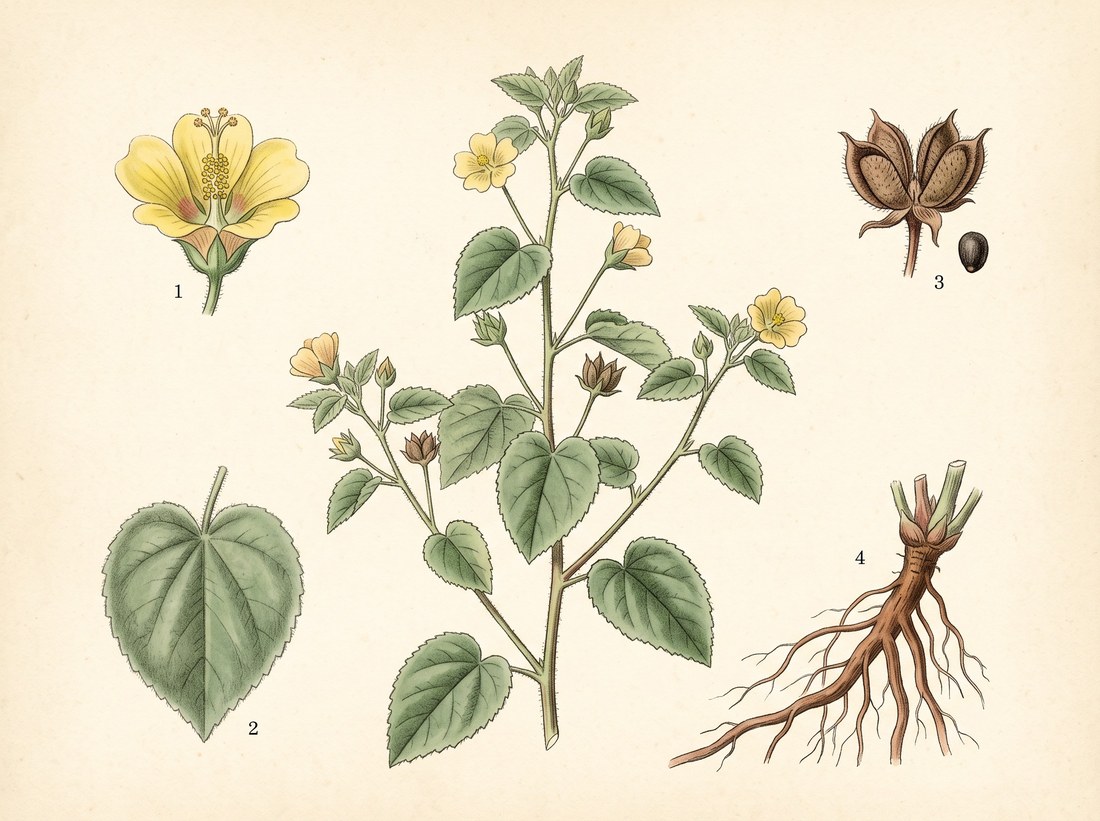 balaSida cordifolia
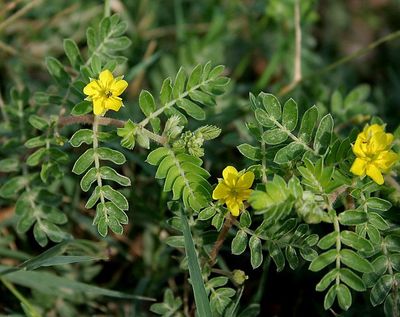 puncture vineTribulus terrestris
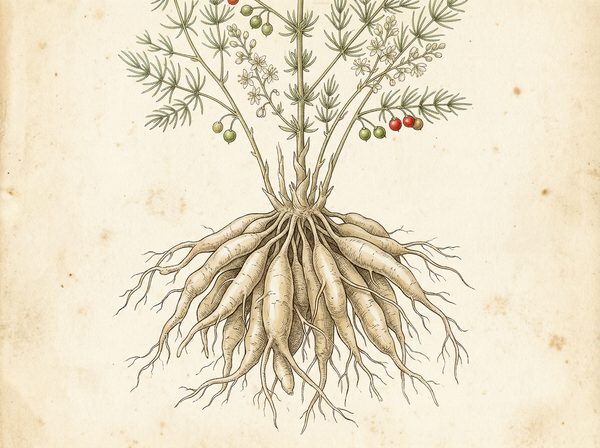 shatavariAsparagus racemosus
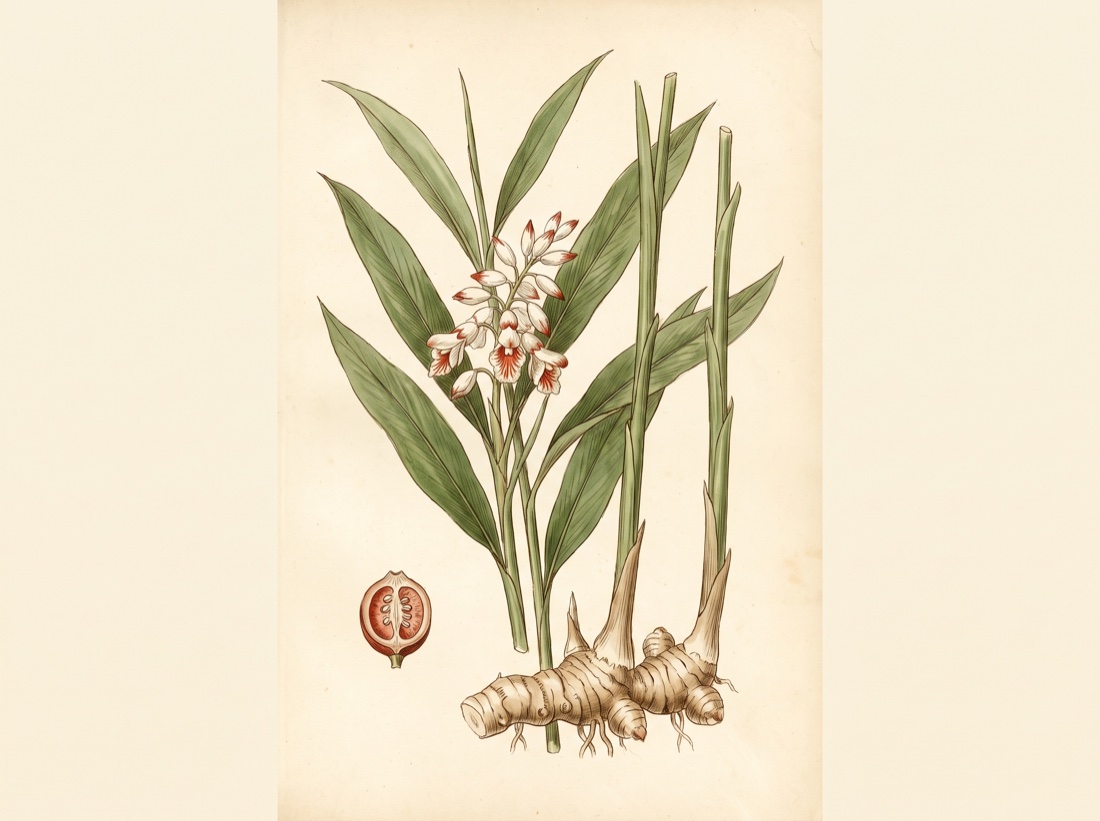 greater galangalAlpinia galanga
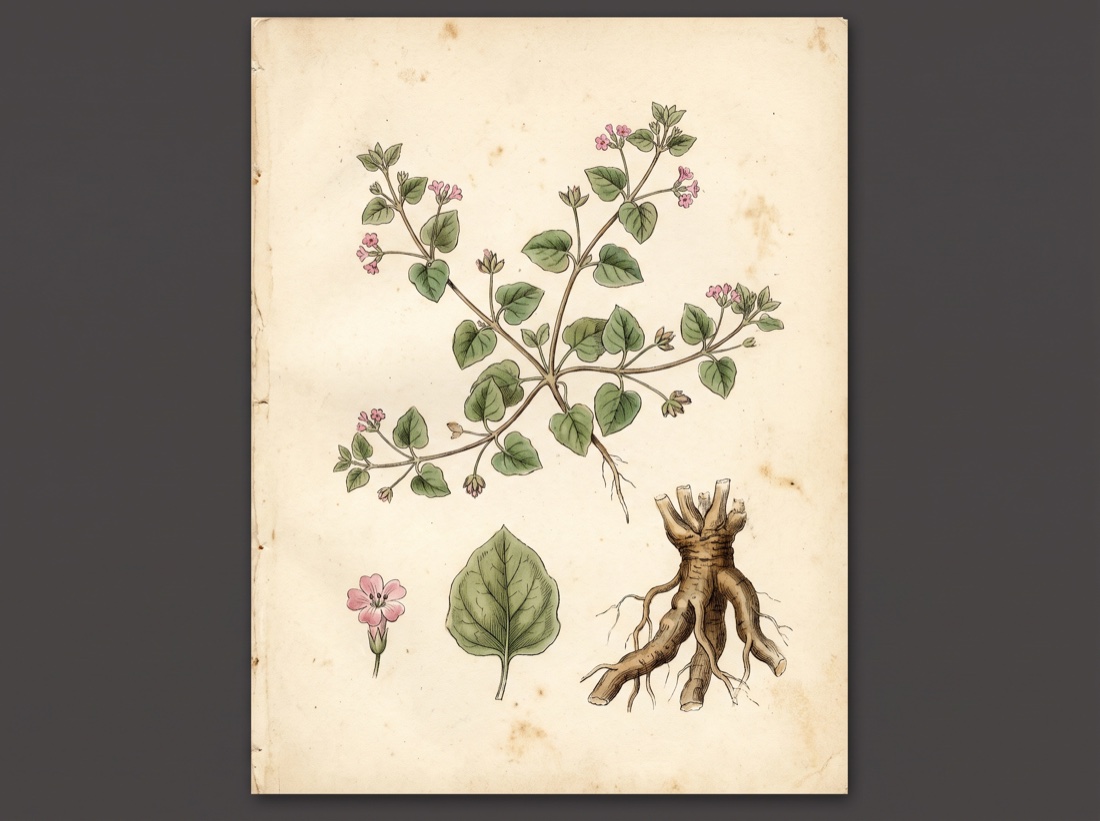 punarnavaBoerhavia diffusa
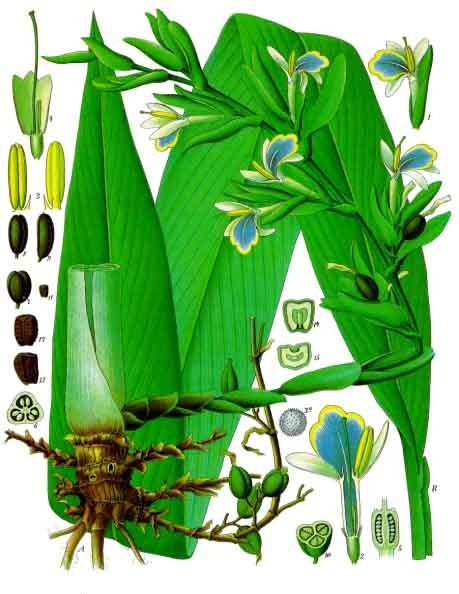 cardamomElettaria cardamomum
Nearby on the shelf
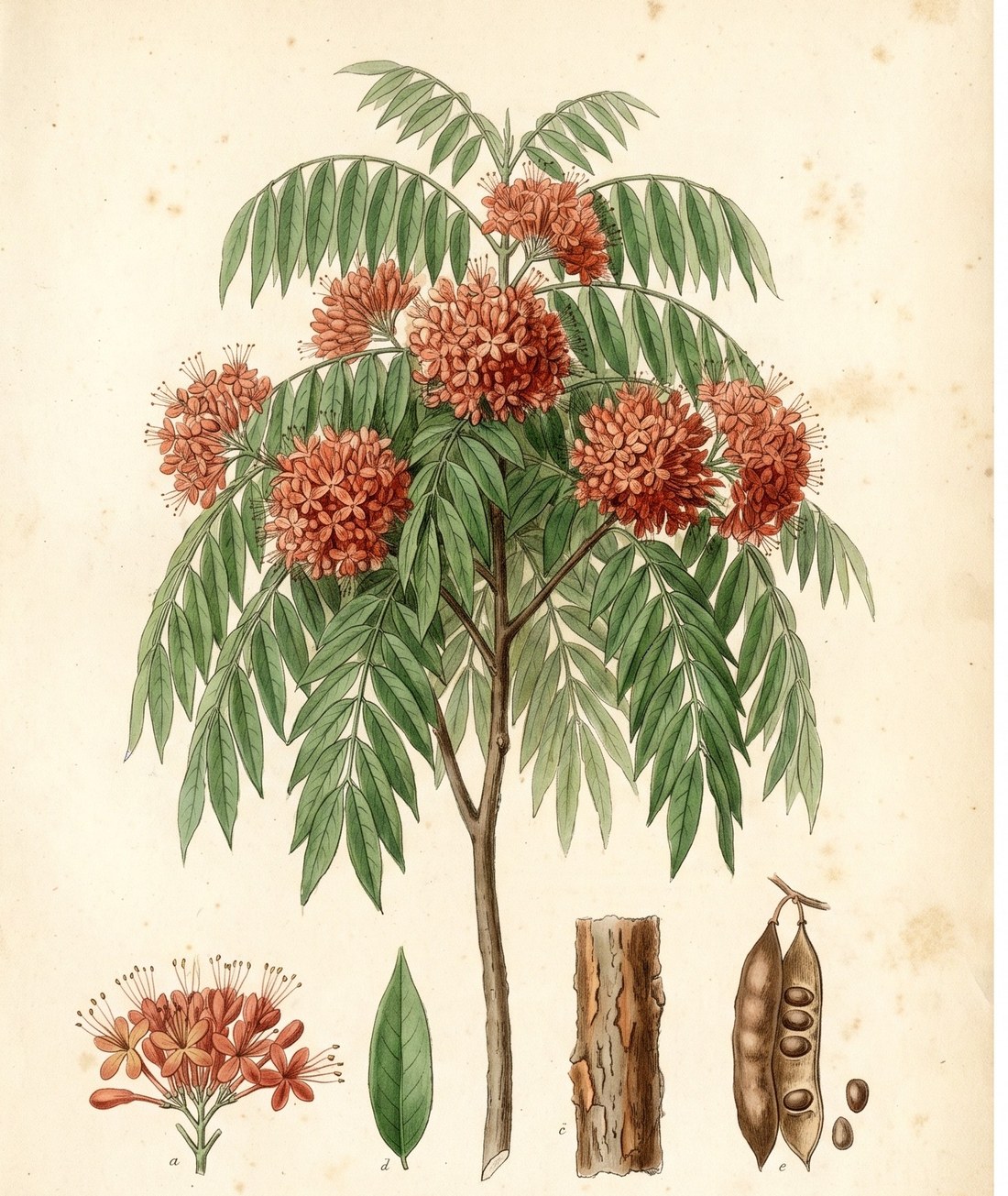 Ashoka treeSaraca asoca
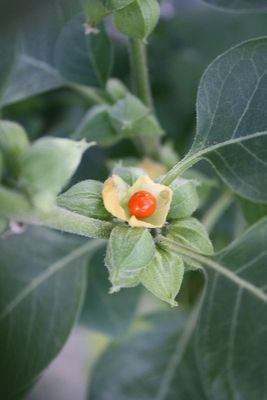 AshwagandhaWithania somnifera
 AspenPopulus tremuloides
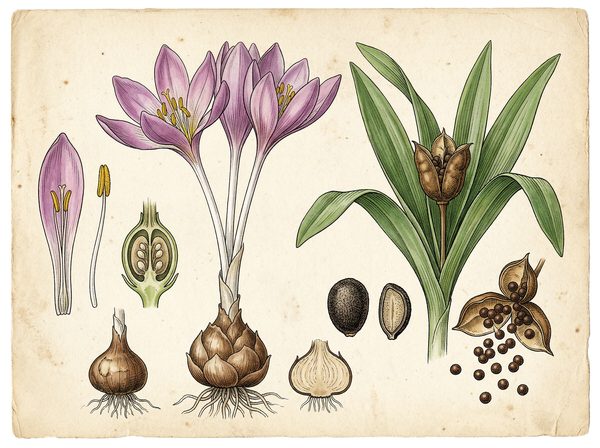 Autumn CrocusColchicum autumnale
 AvensGeum virginianum
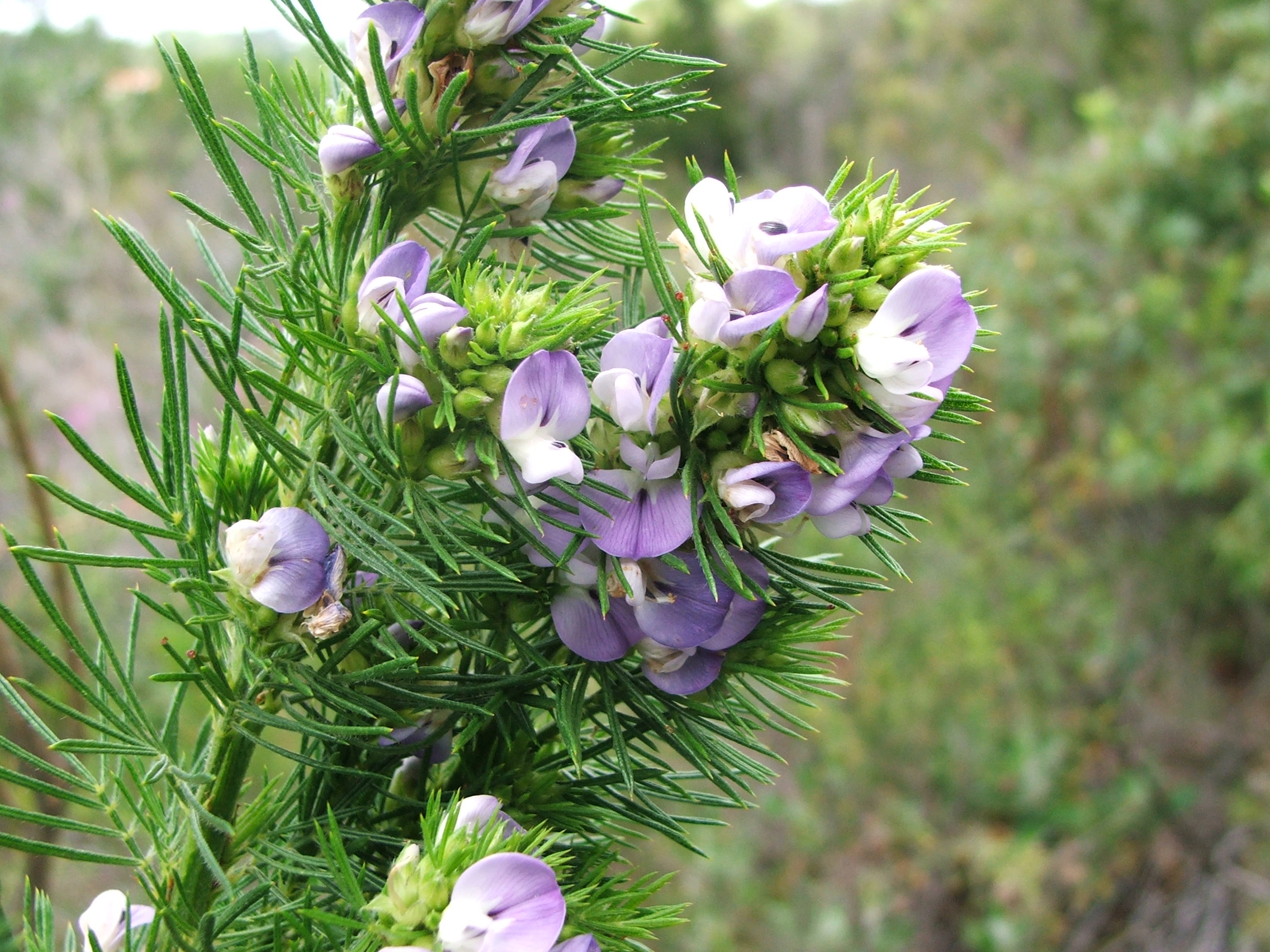 BabchiPsoralea corylifolia
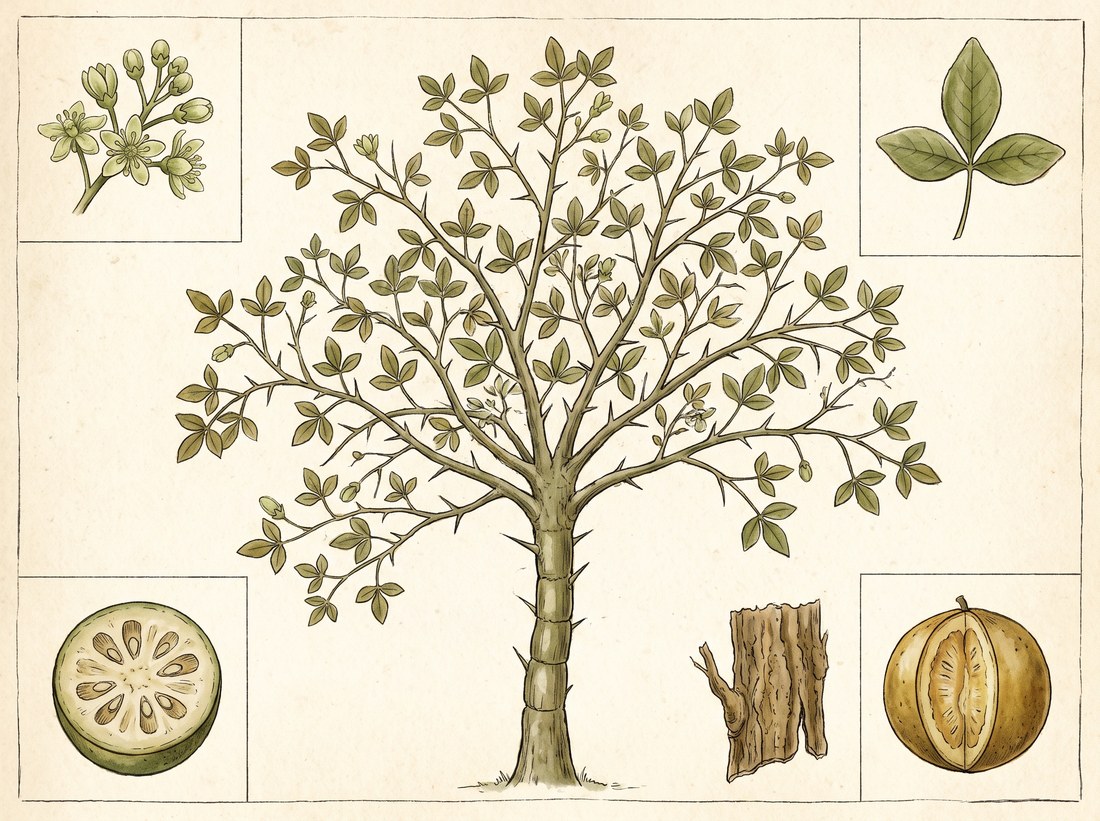 BaelAegle marmelos
The whole plate is in the library. The compass, Compare, the Sky of eleven hundred plants and the formulary open with an email address and a password, free, with the formula builder and its safety engine. Herbert without limit, his formulating, clients, the handouts and the labels are the paid room.
Open the library, free