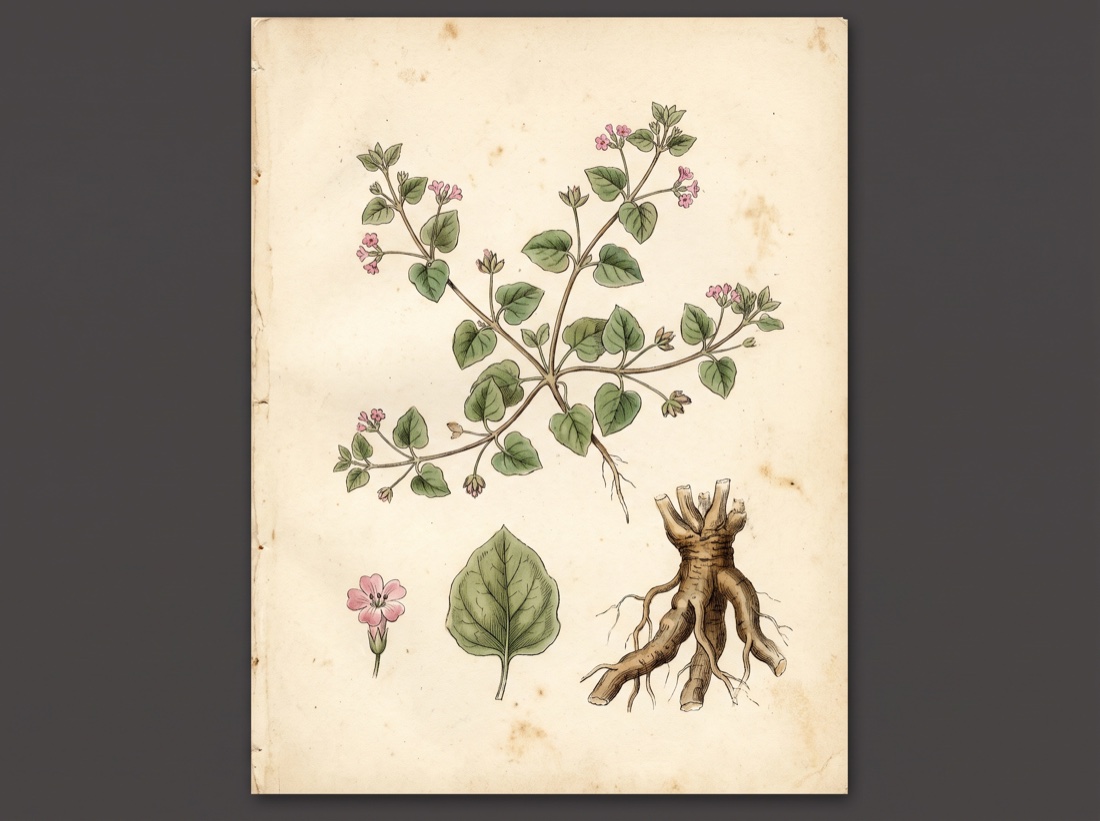
Ayurvedic Herbalism
Punarnava
Boerhavia diffusa
Also known as spreading hogweed, red spiderling, horse purslane, tar vine, pigweed, pigweed (regional), Punarnava, Shothaghni, Rakta punarnava.
Boerhavia diffusa is a spreading perennial herb of the four o'clock family with small pink flowers, found on waste ground across tropical India, Africa, the Americas, and the Pacific. The thick taproot is the main medicine, though the whole plant is used. Its Sanskrit name punarnava, 'that which renews itself', refers to its habit of springing back with the monsoon and to its reputation as a rejuvenator. It is the leading Ayurvedic remedy for swelling (shotha) and the base of classical preparations such as Punarnavadi kwath and Punarnava mandur.

Ask Herbert about Punarnava. Herbert is the master herbalist inside Bountiful Herbs: he answers from this plate and eleven hundred others, with dosing, pairing and cautions. Your first ten questions are free.
Ask HerbertActions
Indications what the tradition reached for it in
- Edema of renal, hepatic, or cardiac origin (adjunct)
- Ascites (adjunct)
- Nephrotic syndrome and chronic kidney disease (adjunct, with monitoring)
- Urinary tract infection and dysuria
- Urolithiasis and gravel
- Hepatitis, jaundice, and fatty liver
- Anemia with fluid retention (as Punarnava mandur)
- Congestive heart failure with edema (adjunct only)
- Obesity with kapha stagnation
- Gout and joint swelling
- Type 2 diabetes (adjunct)
- General debility and convalescence
- Edema of cardiac, renal or hepatic origin (adjunct)
- Ascites and fluid retention with sluggish digestion
- Chronic kidney disease with proteinuria (supportive)
- Recurrent urinary tract infection and dysuria
- Urinary calculi (supportive)
- Nephrotic and nephritic states under supervision
- Fatty liver and mild hepatitis
- Anemia with fluid retention
- Chronic inflammatory joint swelling
- Congestive states of the chest with cough
- Puffy, waterlogged kapha patients
- Mild depression with lethargy and heaviness
Specific indications
Puffy face and ankles, sluggish urine output, and a heavy, lethargic feeling, especially in a patient with liver or kidney weakness
Pale, anemic patient with swollen legs and a poor appetite who cannot tolerate iron
Ascites or pedal edema in chronic liver disease where a gentle non-depleting diuretic is wanted
Safety
Pregnancy: Use with care in pregnancy
The record lists 5 contraindications; open the plate in the library to read them in full.
In practice
Punarnava is the first herb to consider when fluid is accumulating: edema of the legs and face, ascites, or the puffiness of early kidney disease. Unlike pharmaceutical diuretics it does not strip the patient; it moves water while mildly supporting liver and kidney tissue, so it is given for weeks or months rather than days.
In Ayurveda
Rasa: madhura, tikta, kashaya. Virya: ushna. Vipaka: madhura. Dosha: pacifies kapha and vata; the red variety is said to be cooler and gentler on pitta.
Dosing as the sources wrote it
| Preparation | As written | Metric |
|---|---|---|
| Decoction (kwatha) | 10-20 g dried root daily in decoction, divided in two doses | 10000-20000 mg |
| Powder (churna) | 3-6 g powdered root daily in divided doses | 3000-6000 mg |
| Capsules (standardized extract) | 500-1000 mg twice daily | 500-1000 mg |
| Tincture (1:5, 45%) | 3-5 mL three times daily | 3-5 mL |
| Churna | 3-6 g powdered root daily in divided doses with warm water | 3000-6000 mg |
| Kwatha | 50-100 mL decoction twice daily | 50-100 mL |
Doses are reproduced from the sources for practitioners and are not a recommendation for any person.
From the sources
Overview. Boerhavia diffusa is a spreading perennial herb of the four o'clock family with small pink flowers, found on waste ground across tropical India, Africa, the Americas, and the Pacific. The thick taproot is the main medicine, though the whole plant is used. Its Sanskrit name punarnava, 'that which renews itself', refers to its habit of springing back with the monsoon and to its reputation as a rejuvenator. It is the leading Ayurvedic remedy for swelling (shotha) and the base of classical preparations such as Punarnavadi kwath and Punarnava mandur.
Overview. Boerhavia diffusa is a spreading perennial herb of the Nyctaginaceae with small pink flowers and a thick fleshy taproot, found as a weed of roadsides, fields and waste ground across the plains of India and throughout the tropics. It dies back in the dry season and springs up again with the monsoon, which gives it the Sanskrit name Punarnava, the plant that renews itself. Ayurveda uses the root and whole plant as its leading remedy for swelling and fluid retention, a diuretic and rejuvenative that also supports the liver, kidneys and blood.
Clinical Notes. Punarnava is the first herb to consider when fluid is accumulating: edema of the legs and face, ascites, or the puffiness of early kidney disease. Unlike pharmaceutical diuretics it does not strip the patient; it moves water while mildly supporting liver and kidney tissue, so it is given for weeks or months rather than days.
Clinical Notes. The Ayurvedic practitioner reaches for Punarnava whenever there is shotha, the soft swelling of retained fluid, whether it sits in the ankles, the abdomen, the face or around the joints. It is a warming diuretic that also kindles digestion, so it suits the kapha patient with edema, heaviness, low appetite and a pale coated tongue; the classical texts describe the fresh plant cooked as a vegetable for this picture.
In formulas
Punarnava stands in 29 documented formulas in the library, among them Kuṭajāriṣta, Daśamūlāriṣṭa, Punarnavāsava, Mṛtasaṅjīvanī Surā, Cyavanaprāśa, Brāhma Rasāyana.
Often paired with
 puncture vineTribulus terrestris
 Indian nightshadeSolanum indicum
 yellow-berried nightshadeSolanum xanthocarpum
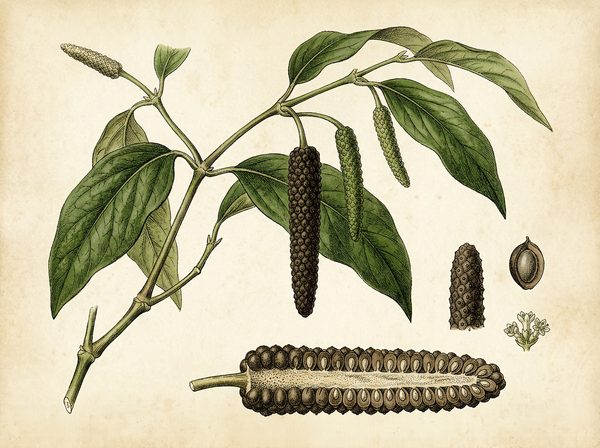 long pepperPiper longum
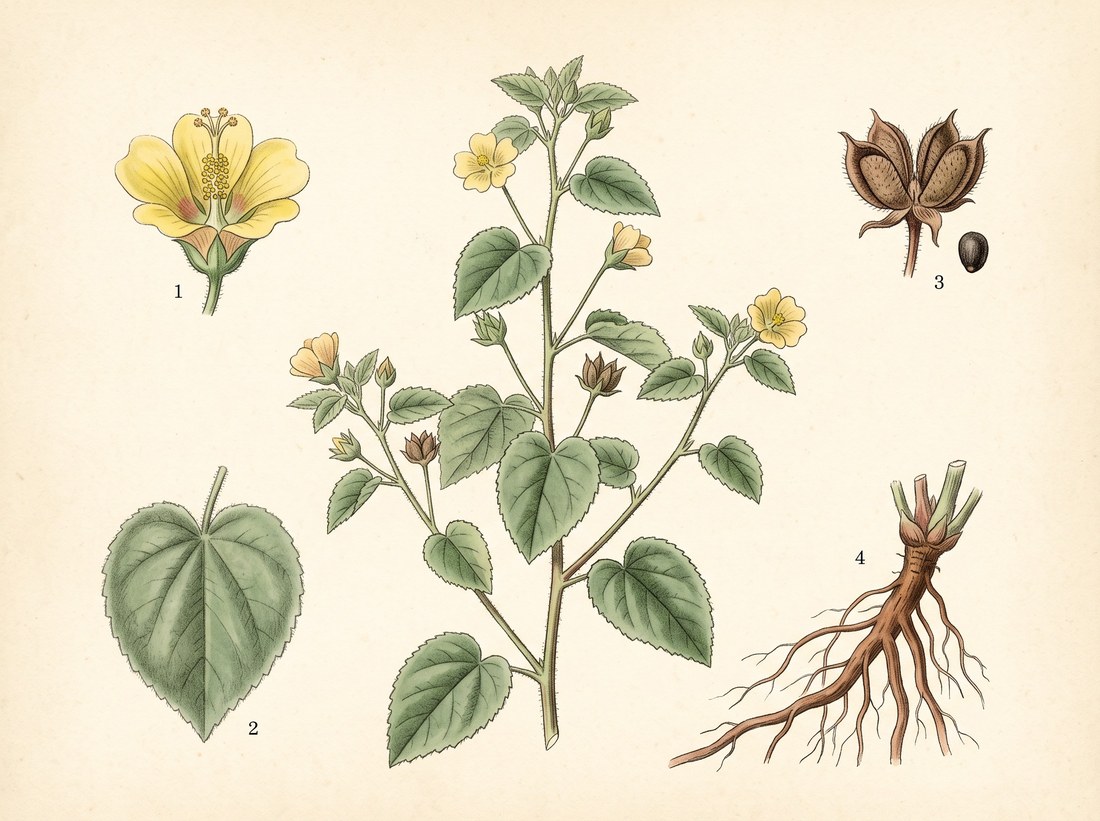 balaSida cordifolia
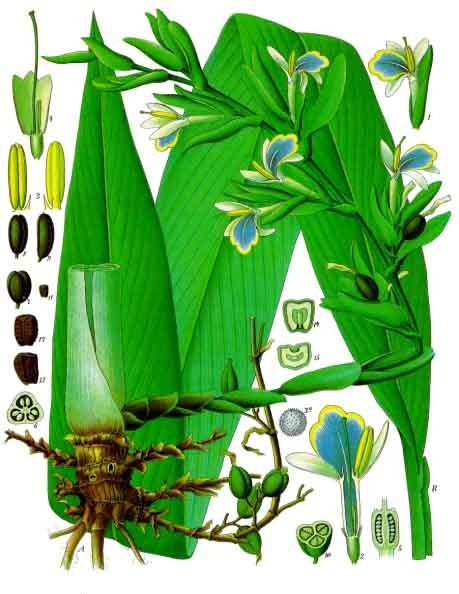 cardamomElettaria cardamomum
Nearby on the shelf
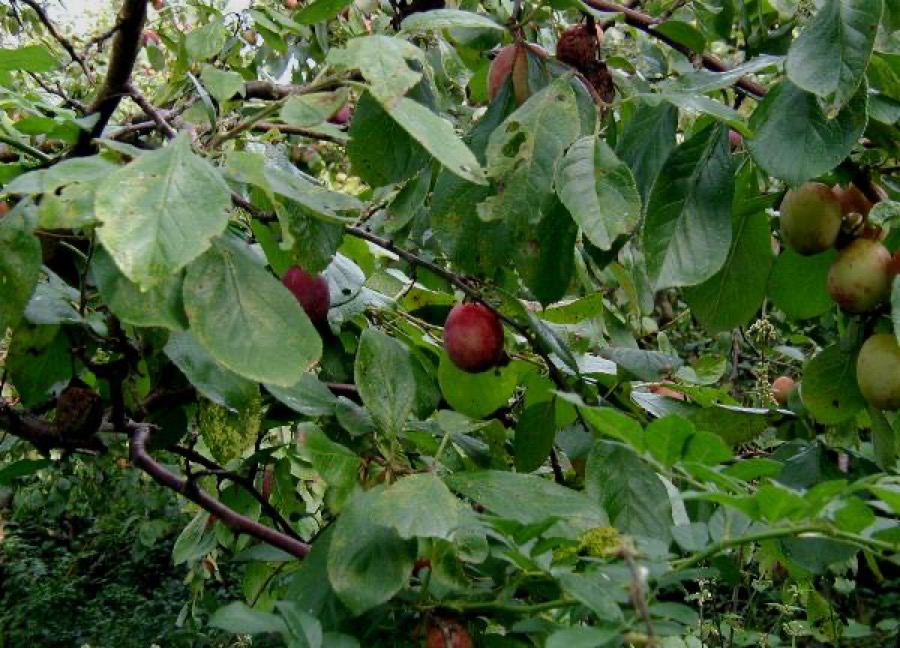 PrunePrunus
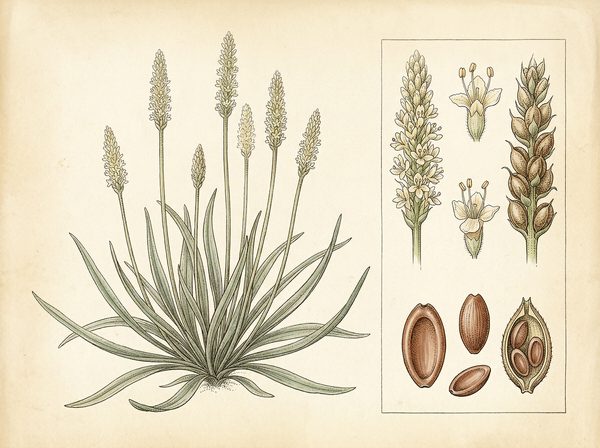 PsylliumPlantago ovata
 Pterospora andromedeaPterospora andromedea
 PumpkinCurcurbita pepo
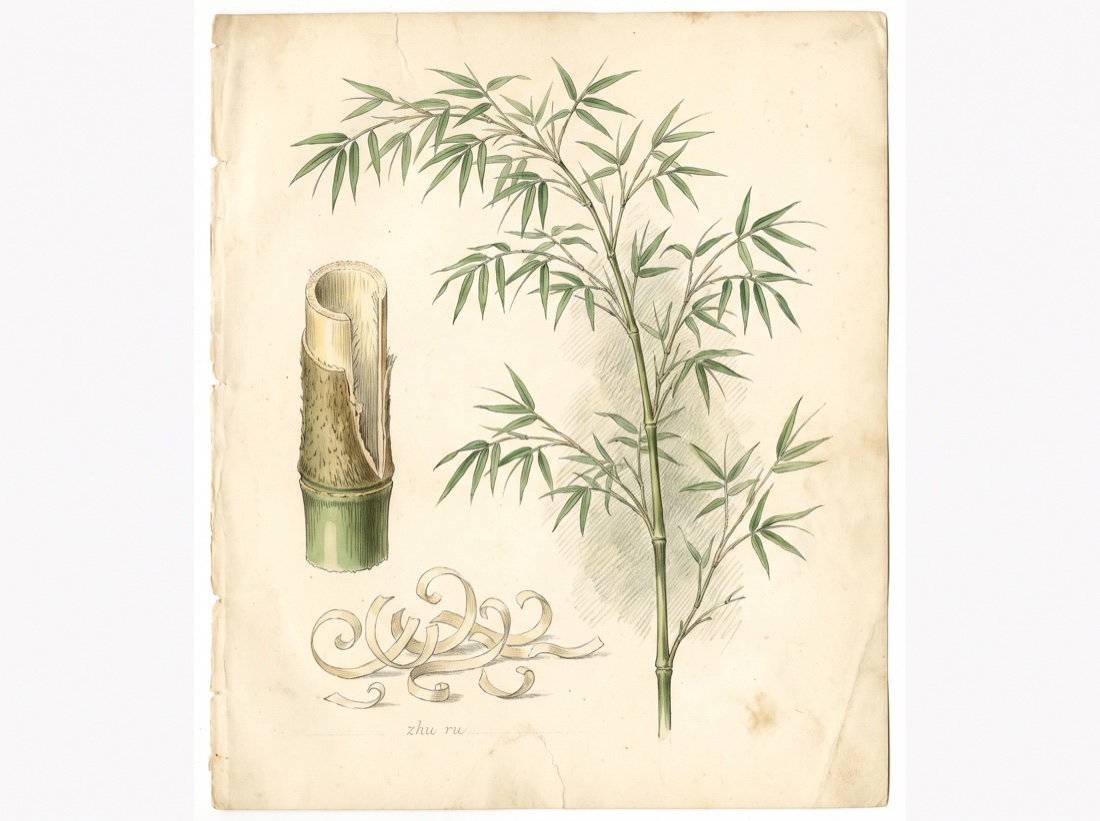 Punting-pole bambooBambusa tuldoides
 Purging crotonCroton tiglium
 Purple angelicaArchangelica Atropurpurea
The whole plate is in the library. The compass, Compare, the Sky of eleven hundred plants and the formulary open with an email address and a password, free, with the formula builder and its safety engine. Herbert without limit, his formulating, clients, the handouts and the labels are the paid room.
Open the library, free