Ayurvedic Herbalism
White fig
Ficus lacor
Also known as pakur, pilkhan, Java fig, spotted fig, cluster fig, Indian fig tree, country fig, gular, Plaksha, Parkati, Jati.
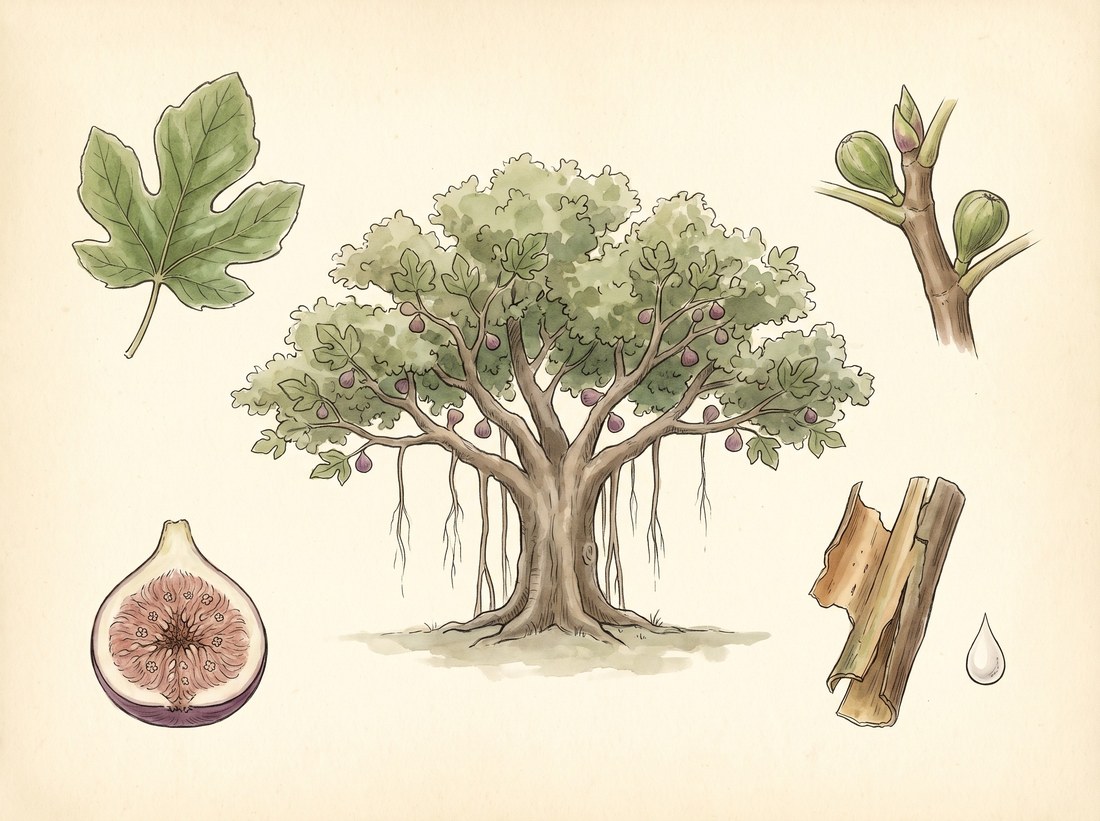
Ficus lacor, now treated by most botanists as Ficus virens, is a large deciduous fig tree with a spreading crown, aerial roots and small purplish figs, growing wild and planted as a shade and avenue tree across the plains and foothills of India from Punjab to Assam and down the peninsula, and through Southeast Asia to northern Australia. Ayurveda knows it as Plaksha, one of the five sacred astringent barks of Panchavalkala alongside the banyan, the pipal, the cluster fig and the portia tree, and uses its bark, leaf buds and latex for bleeding, discharge, diarrhea, wounds and vaginal disorders. The tender leaves are eaten as a vegetable in the northeast, and the tree shelters temples and village squares across the country.

Ask Herbert about White fig. Herbert is the master herbalist inside Bountiful Herbs: he answers from this plate and eleven hundred others, with dosing, pairing and cautions. Your first ten questions are free.
Ask HerbertActions
Indications what the tradition reached for it in
- Heavy menstrual bleeding and intermenstrual spotting
- Chronic vaginal discharge (douche and internal)
- Bloody diarrhea and dysentery
- Chronic diarrhea with mucus
- Bleeding gums and mouth ulcers (gargle)
- Weeping eczema and moist skin eruptions (wash and paste)
- Non-healing ulcers and wounds (wash and paste)
- Nosebleed and bleeding hemorrhoids
- Burning and inflammation of the skin: sunburn, erysipelas (paste)
- Frequent urination and urinary incontinence (traditional)
- Cracked nipples and anal fissures (latex, traditional)
- Heavy menstrual bleeding and intermenstrual bleeding
- Leukorrhea and chronic vaginal discharge (wash and internal)
- Diarrhea and dysentery with blood and mucus
- Type 2 diabetes with frequent urination (adjunct)
- Bleeding hemorrhoids (latex and decoction)
- Mouth ulcers and bleeding gums (gargle)
- Chronic wounds, ulcers and skin infections (wash and paste)
- Burning urination and urinary frequency
- Threatened miscarriage in the tradition (supportive, with obstetric care)
- Boils, mumps swelling and glandular swellings (latex, topical)
- Nosebleeds and bleeding tendency in hot constitutions
Specific indications
A pitta woman with heavy, hot, prolonged periods, a sore mouth and a tendency to bleed from the gums, who needs a cooling astringent rather than a warming one
Persistent white or yellow vaginal discharge with itching and heat, treated with the bark decoction both as a douche and by mouth
Weeping, oozing eczema or an ulcer that will not dry and close, where a bark wash followed by bark paste is applied
Loose bloody stools with burning in a hot, thirsty patient during the rains
Safety
Pregnancy: No published safety class is known to us; the tradition regards the bark and fruit as safe and even protective in pregnancy, but modern data are absent, so keep to ordinary doses in compound formulas and avoid the latex internally.
The record lists 7 contraindications; open the plate in the library to read them in full.
In practice
The Ayurvedic physician uses Plaksha where tissue is oozing, bleeding or discharging and needs to be dried and knit. The bark decoction is the standard wash for vrana and the standard douche for yoni roga and shveta pradara; taken internally with rice water it checks raktapitta, raktatisara and pradara.
In Ayurveda
Rasa: kashaya (astringent). Virya: sheeta (cooling). Vipaka: katu (pungent). Guna: guru (heavy), ruksha (dry). Dosha: pacifies kapha and pitta; aggravates vata in excess. Karma: stambhana (arrests discharge, styptic); raktastambhana (stops bleeding); vranaropana (heals wounds); shothahara (reduces swelling); yonidoshahara (corrects vaginal disorders); varnya (improves complexion); dahaprashamana (relieves burning); mutrasangrahaniya (reduces urine output, antidiuretic); kaphapittahara (reduces kapha and pitta); vrana shodhana (cleanses wounds); mukhashodhana (cleanses the mouth). Classical indications: raktapitta (bleeding disorders); atisara (diarrhea); pravahika (dysentery); raktatisara (bloody diarrhea); vrana (wounds and ulcers); yoniroga (vaginal disorders); shveta pradara (leukorrhea); prameha (urinary disorders); daha (burning); visarpa (spreading skin inflammation); mukhapaka (mouth ulcers); shotha (swelling); twak roga (skin disease); murcha (fainting, with cold infusion). The stem bark is the main drug, dried and powdered for churna, decocted for kwatha used internally and as a wash, mouth gargle and vaginal douche, and ground into kalka for wounds and skin; the tender leaf buds are given with milk for bleeding disorders, the latex is applied to cracks and piles, and the fruit is eaten. Plaksha is one of the five barks of Panchavalkala, so it is met most often within that group. Classical formulations: Panchavalkala kwatha, Panchavalkala churna, Panchavalkala lepa, Panchavalkala taila, Nyagrodhadi churna, Nyagrodhadi kwatha, Plaksha twak kwatha, Plakshadi lepa. Described in: Charaka Samhita, Sushruta Samhita, Ashtanga Hridaya, Bhavaprakasha Nighantu, Dhanvantari Nighantu, Raja Nighantu, Kaiyadeva Nighantu, Madanapala Nighantu, Ayurvedic Pharmacopoeia of India.
Dosing as the sources wrote it
| Preparation | As written | Metric |
|---|---|---|
| Churna | 3-6 g powdered bark twice daily with rice water or honey | 3000-6000 mg |
| Kwatha | 50-100 mL decoction twice daily | 50-100 mL |
| Kwatha, external wash or douche | 200-500 mL cooled decoction used as a wash once or twice daily | 200-500 mL |
| Kalka, topical | 5-10 g bark paste applied to wounds or skin | 5000-10000 mg |
| Leaf bud with milk | 3-6 g tender leaf buds ground in 100 mL milk once daily | 3000-6000 mg |
| Kwatha | 50-100 mL bark decoction twice daily | 50-100 mL |
Doses are reproduced from the sources for practitioners and are not a recommendation for any person.
From the sources
Overview. Ficus lacor, now treated by most botanists as Ficus virens, is a large deciduous fig tree with a spreading crown, aerial roots and small purplish figs, growing wild and planted as a shade and avenue tree across the plains and foothills of India from Punjab to Assam and down the peninsula, and through Southeast Asia to northern Australia.
Overview. Ficus racemosa, long known as Ficus glomerata, is a large fast growing fig tree of river banks and moist ground across India and southeast Asia, unusual in bearing its figs in dense clusters directly on the trunk and old branches, and it is the sacred udumbara of Vedic ritual, whose wood makes the ladle for the fire. Ayurveda groups its bark with those of the banyan, pipal, plaksha and parisha as the five milky trees of Panchavalkala and uses it as a cooling, astringent, tissue knitting medicine for bleeding, discharges, diarrhea, wounds and diabetes. The unripe fruit is eaten as a vegetable and the latex applied to piles and boils.
Clinical Notes. The Ayurvedic physician uses Plaksha where tissue is oozing, bleeding or discharging and needs to be dried and knit. The bark decoction is the standard wash for vrana and the standard douche for yoni roga and shveta pradara; taken internally with rice water it checks raktapitta, raktatisara and pradara.
Clinical Notes. Udumbara is the Ayurvedic physician's cooling astringent for the pelvis and the bowel. Its bark decoction is given for heavy periods, leukorrhea, bleeding piles, bloody diarrhea and burning urination, and the same decoction serves as a douche, sitz bath, wound wash and gargle.
In formulas
White fig stands in 4 documented formulas in the library, among them Uśīrāsava, Nārāyaṇa Taila, Marma Guṭikā, Hemanātha Rasa.
Often paired with
 vetiverChrysopogon zizanioides
 banyanFicus benghalensis
 Indian fumitoryFumaria indica
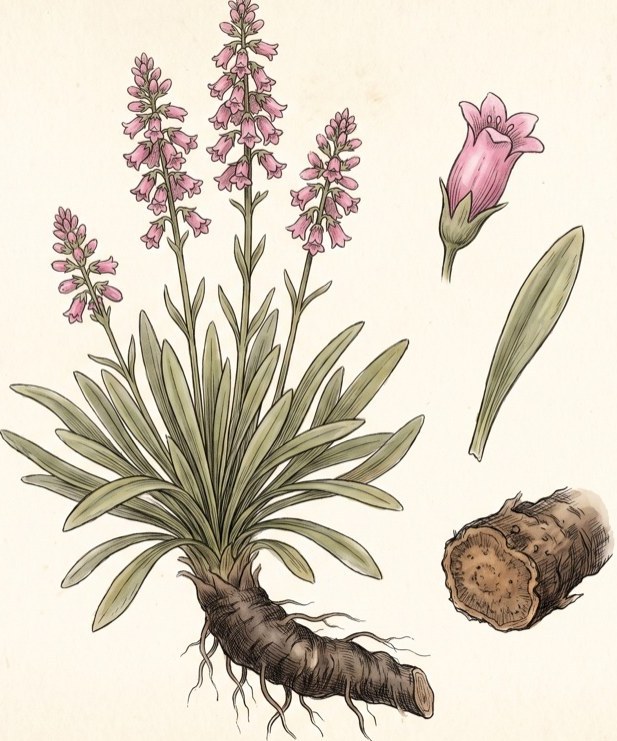 jatamansiNardostachys jatamansi
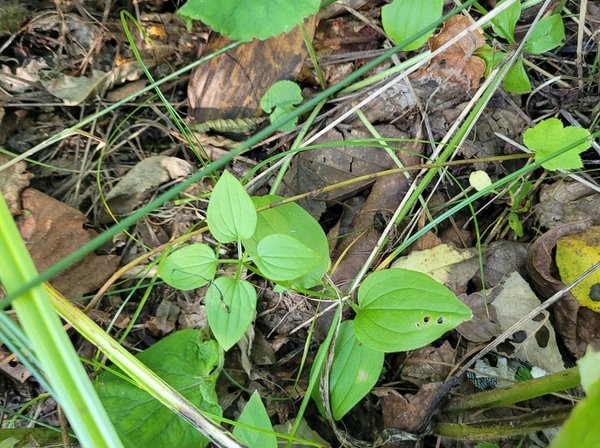 Indian madderRubia cordifolia
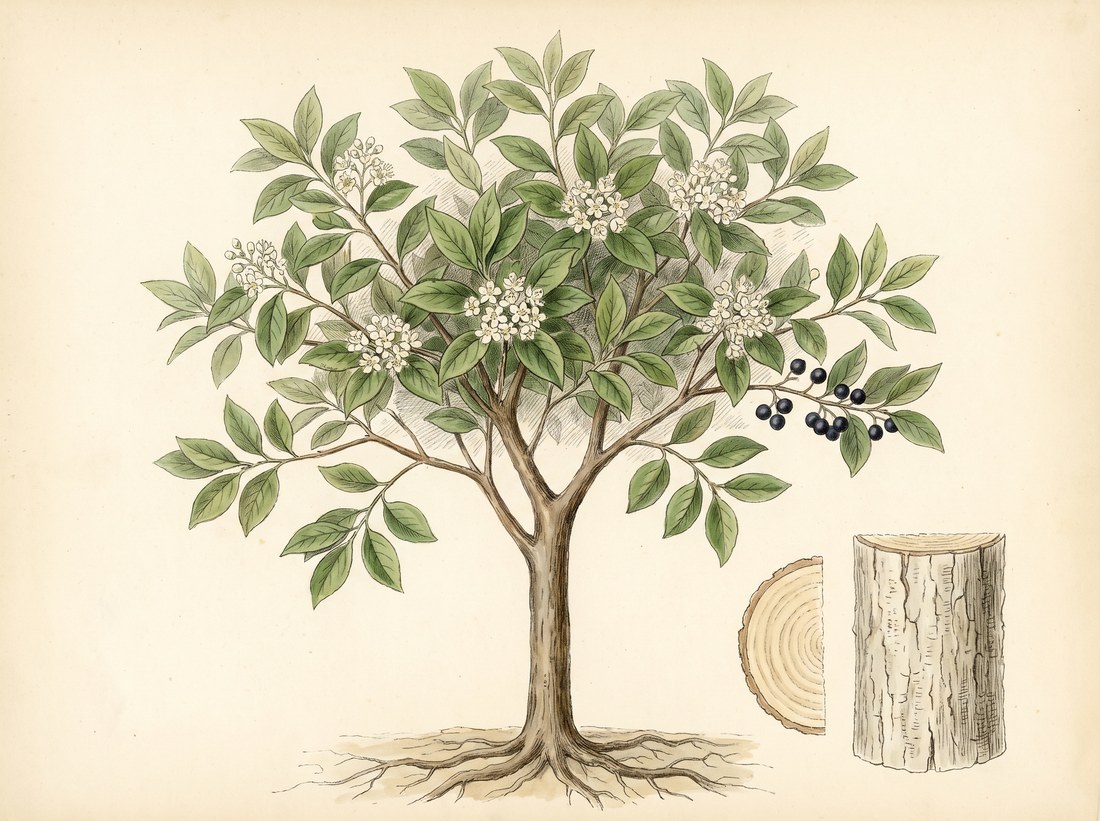 lodh treeSymplocos racemosa
Nearby on the shelf
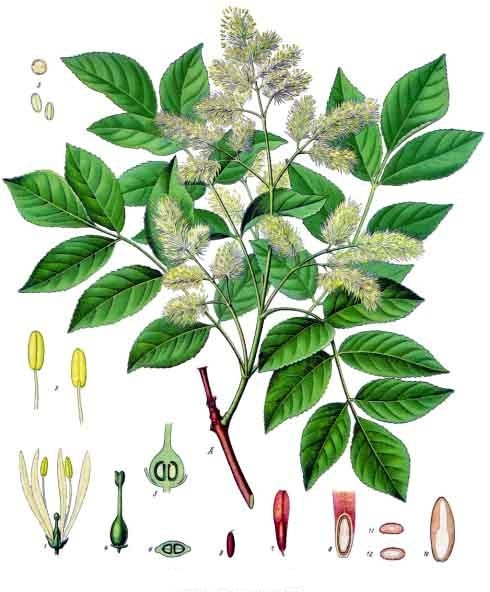 White ashFraxinus americana
 White balsamGnaphalium polycephalum
 White bryonyBryonia alba
 White cohoshActaea Alba
 White HorehoundMarrubium vulgare
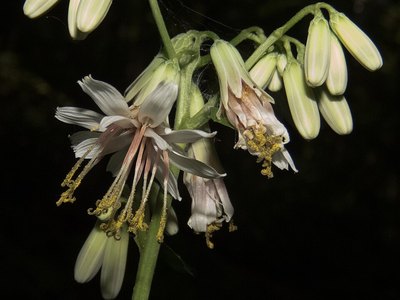 White LettuceNabalus Albus
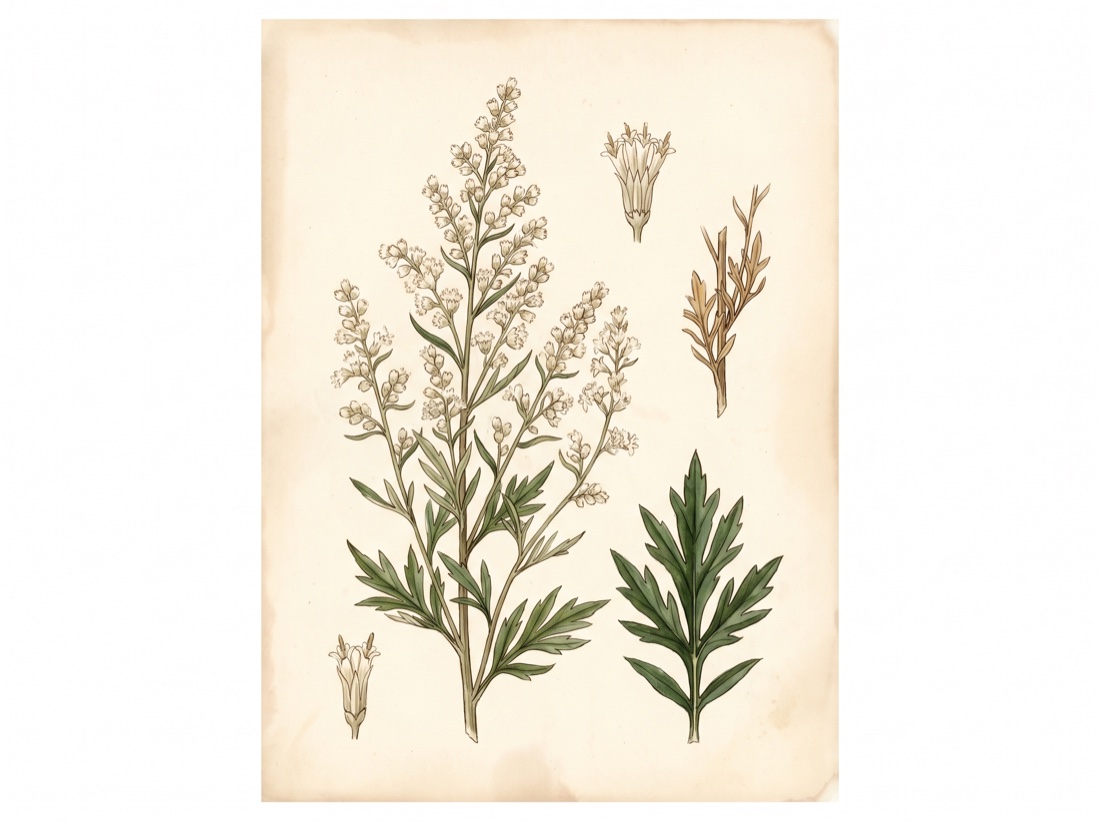 White mugwortArtemisia lactiflora
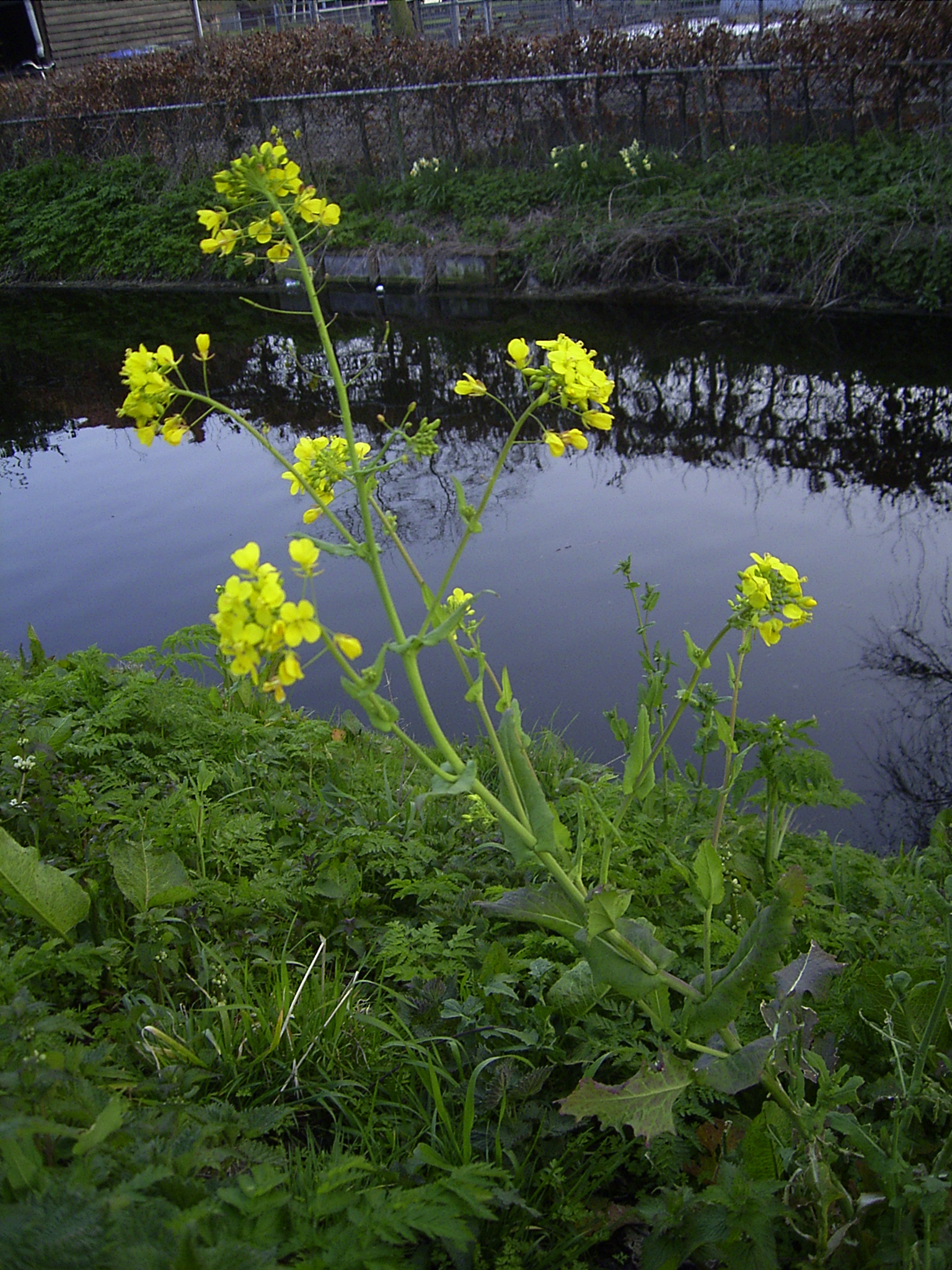 White mustardBrassica alba
The whole plate is in the library. The compass, Compare, the Sky of eleven hundred plants and the formulary open with an email address and a password, free, with the formula builder and its safety engine. Herbert without limit, his formulating, clients, the handouts and the labels are the paid room.
Open the library, free