Western Herbalism
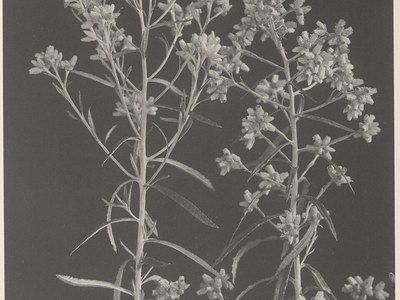
White balsam
Gnaphalium polycephalum
Also known as Cudweed, Life everlasting, Indian posey, Sweet everlasting, Old field balsam, Indian posy, Sweet-scented life-everlasting.
Gnaphalium polycephalum, now classified botanically as Pseudognaphalium obtusifolium, is a soft, woolly-leaved annual of the aster family native to eastern North America, found in old fields and dry open ground. The whole flowering plant, gray with fine down, is gathered for use. It held a modest but steady place in nineteenth century physiomedicalist and Eclectic practice as a gentle relaxant astringent for sore throat, mouth complaints and mild catarrhal conditions, and was sometimes smoked or used as a snuff for head colds and neuralgic pain.

Ask Herbert about White balsam. Herbert is the master herbalist inside Bountiful Herbs: he answers from this plate and eleven hundred others, with dosing, pairing and cautions. Your first ten questions are free.
Ask HerbertActions
Indications what the tradition reached for it in
- Relaxed sore throat
- Aphthous stomatitis
- Chronic catarrh
- Bronchial irritation with cough
- Mild diarrhea
- Leukorrhea
- Neuralgia and toothache (topical use)
- Quinsy (early, mild cases)
- Restlessness with low-grade fever
- Minor wounds and bruises (topical)
Specific indications
Relaxed, boggy sore throat with a dry, tickling sensation and low-grade irritation
Chronic, mucous-tinged diarrhea in a debilitated or atonic patient
Safety
Pregnancy: No safety data exist for use in pregnancy, so avoid or use only under professional supervision given the lack of information.
Breastfeeding: No safety data exist for use during lactation, so avoid or use only under professional supervision.
The record lists 1 contraindication; open the plate in the library to read them in full.
In practice
This is a gentle herb, useful where a patient's throat or gut tissue is relaxed and boggy rather than acutely inflamed. The classic picture is a sore throat that feels dry and tickly rather than sharply painful, often in someone run down or convalescent, where a warm infusion taken frequently or used as a gargle settles the irritation and tightens lax mucosa.
Dosing as the sources wrote it
| Preparation | As written | Metric |
|---|---|---|
| Infusion | 1-2 g dried aerial parts as tea, three times daily | 1000-2000 mg |
| Tincture (1:5, 45%) | 2-4 mL three times daily | 2-4 mL |
| Gargle or mouthwash | strong infusion used topically as needed | |
| Action, Medical Uses, and Dosage: Astringent. The leaves and blossoms chewed, and the juice swallowed, have proved beneficial in ulcerations of the mouth and throat. A warm infusion (℥ss to water Oj), may be used in fevers to produce diaphoresis, and is of service in quinsy, pulmonary complaints, leucorrhoea, etc. |
Doses are reproduced from the sources for practitioners and are not a recommendation for any person.
From the sources
Overview. Gnaphalium polycephalum, now classified botanically as Pseudognaphalium obtusifolium, is a soft, woolly-leaved annual of the aster family native to eastern North America, found in old fields and dry open ground. The whole flowering plant, gray with fine down, is gathered for use. It held a modest but steady place in nineteenth century physiomedicalist and Eclectic practice as a gentle relaxant astringent for sore throat, mouth complaints and mild catarrhal conditions, and was sometimes smoked or used as a snuff for head colds and neuralgic pain.
Clinical Notes. This is a gentle herb, useful where a patient's throat or gut tissue is relaxed and boggy rather than acutely inflamed. The classic picture is a sore throat that feels dry and tickly rather than sharply painful, often in someone run down or convalescent, where a warm infusion taken frequently or used as a gargle settles the irritation and tightens lax mucosa.
Properties and Uses. This plant combines relaxing and stimulating properties with a moderate portion of demulcent quality. In cold preparations, its action is mainly expended upon mucous membranes; and as it soothes and strengthens these tissues, it has been pronounced astringent, though it is faintly tonic and not drying.
Action, Medical Uses, and Dosage. Anodyne, astringent, and pectoral. A decoction has proved beneficial in diarrhoea and dysentery, and in pulmonary affections. Externally, it forms an excellent poultice in sprains, bruises, boils, painful swellings, etc., and is said to produce sleep when applied externally to the head, even in cases where a poultice of hops has failed. Rafinesque is authority for the statement that the Indians, for a trifle, would allow rattlesnakes to bite them, to show that they could cure the bite at once with this plant. Decoction (℥j to aqua Oj) freely.
Drawn from Cook's Physio-Medical Dispensatory; Scudder's Specific Medication and Specific Medicines; King's American Dispensatory, 18th edition (Felter and Lloyd), and the Bountiful Herbs editorial.
Nearby on the shelf
 Western wormwoodArtemisia ludoviciana
 Wheaten FlourFarina Tritici
 Whistle woodAcer striatum
 White ashFraxinus americana
 White bryonyBryonia alba
 White cohoshActaea Alba
 White figFicus lacor
 White HorehoundMarrubium vulgare
The whole plate is in the library. The compass, Compare, the Sky of eleven hundred plants and the formulary open with an email address and a password, free, with the formula builder and its safety engine. Herbert without limit, his formulating, clients, the handouts and the labels are the paid room.
Open the library, free