Western Herbalism
White cohosh
Actaea Alba
Also known as White baneberry, Necklace weed, White beads, Doll's eyes.
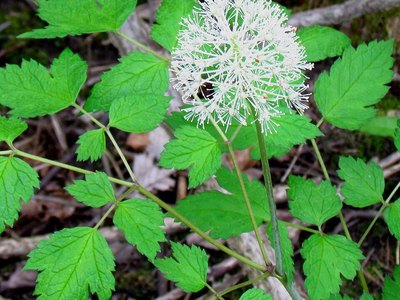
White cohosh is a woodland perennial of eastern North America, a member of the buttercup family, easily recognized in autumn by its stalked white berries with a dark eye that give it the folk name doll's eyes. The root was used sparingly by nineteenth century Eclectic physicians, most notably within Scudder's Specific Medication tradition, which favored very small, precisely matched doses. It never became a mainstream botanical medicine and is essentially absent from twentieth and twenty-first century clinical herbalism.

Ask Herbert about White cohosh. Herbert is the master herbalist inside Bountiful Herbs: he answers from this plate and eleven hundred others, with dosing, pairing and cautions. Your first ten questions are free.
Ask HerbertActions
Indications what the tradition reached for it in
- Rheumatic joint pain
- Muscular pain
- Nervous headache
- Dysmenorrhea
- Ovarian neuralgia
- Sciatica
- General debility with pain
- Chorea (historical reference)
Specific indications
Sharp, shifting rheumatic or neuralgic pain reported by nineteenth century Eclectic physicians to respond to minute doses of the fresh root tincture
Nervous, throbbing headache with restlessness, as noted in older Eclectic materia medica
Safety
Low dose botanical. Used in drop doses in the classical practice; not a plant to dose freely.
Pregnancy: Avoid in pregnancy: traditionally used as an emmenagogue and the plant is otherwise poorly characterized and known to be toxic in its berries.
Breastfeeding: Avoid in lactation: no safety data exist and the plant carries a documented toxicity risk.
The record lists 5 contraindications; open the plate in the library to read them in full.
In practice
Historical Eclectic sources describe white cohosh root tincture as a remedy for rheumatic and neuralgic pain, nervous headache, and uterine or ovarian pain, given in very small drop doses, sometimes only one to a few drops, reflecting Scudder's specific medication philosophy rather than the larger doses used by contemporaries such as King or Felter for other remedies.
Dosing as the sources wrote it
| Preparation | As written | Metric |
|---|---|---|
| Tincture of fresh root (historical Eclectic, extremely low dose) | 0.05-1 mL (1-20 drops) of a 1:8 fresh root tincture, used historically under specific medication principles and not recommended for routine modern use | 0.05-1 mL |
| Not currently recommended | No standardized modern dose exists; use is discouraged outside of historical study | |
| Dose: Decoction so made as to represent about 30 grains of the root, at one dose. Specific actaea, 1 to 20 drops. For its specific application the following is preferred: Rx Spec. actaea gtt. xx. | 1944 mg | |
| aqua fl | aqua fl℥iv. Mix. Dose, a teaspoonful every 1 to 3 hours. | |
| Scudder (Specific Medication, 59), suggested its use in small doses (Rx Tr. actaea spicata gtt. ij, aqua fl℥ iv. | 0.04-0.04 mL | |
| Scudder (specific medication ... low-dose theory) | Let the dose range from one to twenty drops | 0.02-0.4 mL |
Doses are reproduced from the sources for practitioners and are not a recommendation for any person.
From the sources
Overview. White cohosh is a woodland perennial of eastern North America, a member of the buttercup family, easily recognized in autumn by its stalked white berries with a dark eye that give it the folk name doll's eyes. The root was used sparingly by nineteenth century Eclectic physicians, most notably within Scudder's Specific Medication tradition, which favored very small, precisely matched doses. It never became a mainstream botanical medicine and is essentially absent from twentieth and twenty-first century clinical herbalism.
Clinical Notes. Historical Eclectic sources describe white cohosh root tincture as a remedy for rheumatic and neuralgic pain, nervous headache, and uterine or ovarian pain, given in very small drop doses, sometimes only one to a few drops, reflecting Scudder's specific medication philosophy rather than the larger doses used by contemporaries such as King or Felter for other remedies.
Specific indications and reasoning. (WHITE ConOsE.) •Preparation: Two preparations may be used: first, a tincture of the recent root, §viij. to Alcohol 76° Oj.; second, a tincture of the dried root in the same proportion, but using Alcohol of 98°. Let the dose range from one to twenty drops. The White Cohosh has had but a limited use in medicine, yet it possesses such properties that it will undoubtedly prove useful when studied. The direction of experiment will be to determine its in-
Drawn from Scudder's Specific Medication and Specific Medicines; King's American Dispensatory, 18th edition (Felter and Lloyd), and the Bountiful Herbs editorial.
Nearby on the shelf
 Whistle woodAcer striatum
 White ashFraxinus americana
 White balsamGnaphalium polycephalum
 White bryonyBryonia alba
 White figFicus lacor
 White HorehoundMarrubium vulgare
 White LettuceNabalus Albus
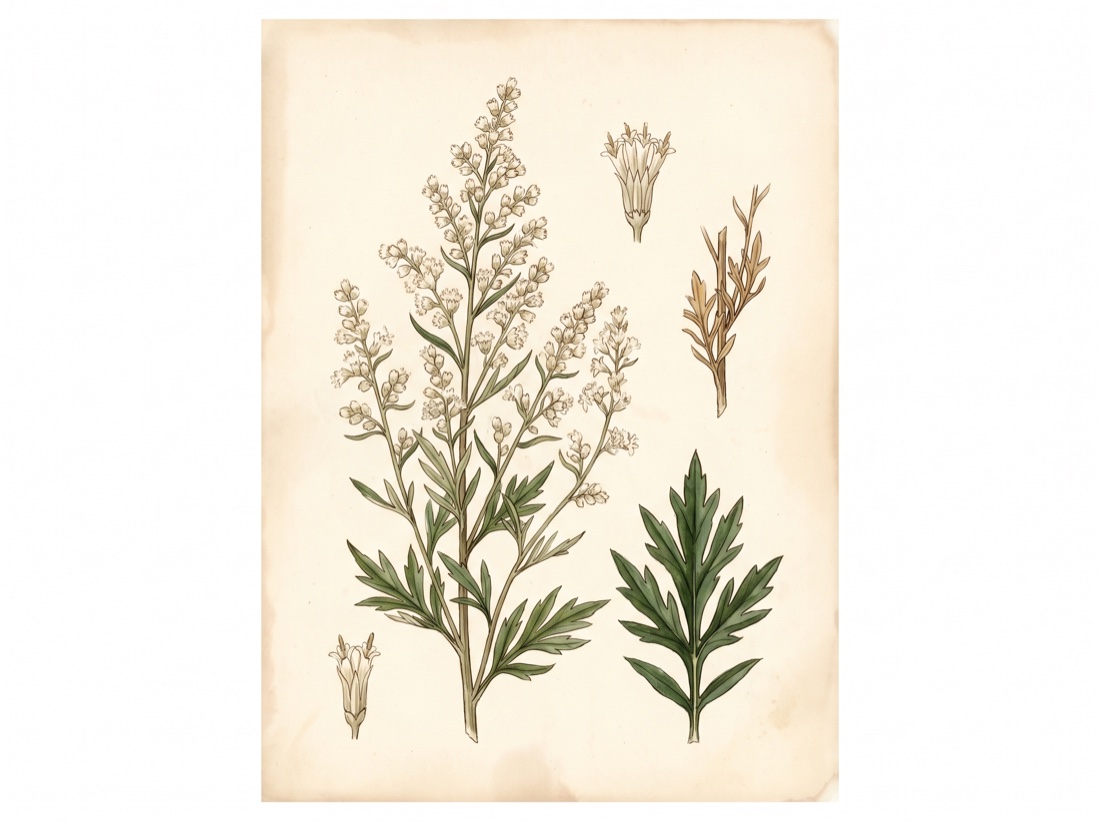 White mugwortArtemisia lactiflora
The whole plate is in the library. The compass, Compare, the Sky of eleven hundred plants and the formulary open with an email address and a password, free, with the formula builder and its safety engine. Herbert without limit, his formulating, clients, the handouts and the labels are the paid room.
Open the library, free