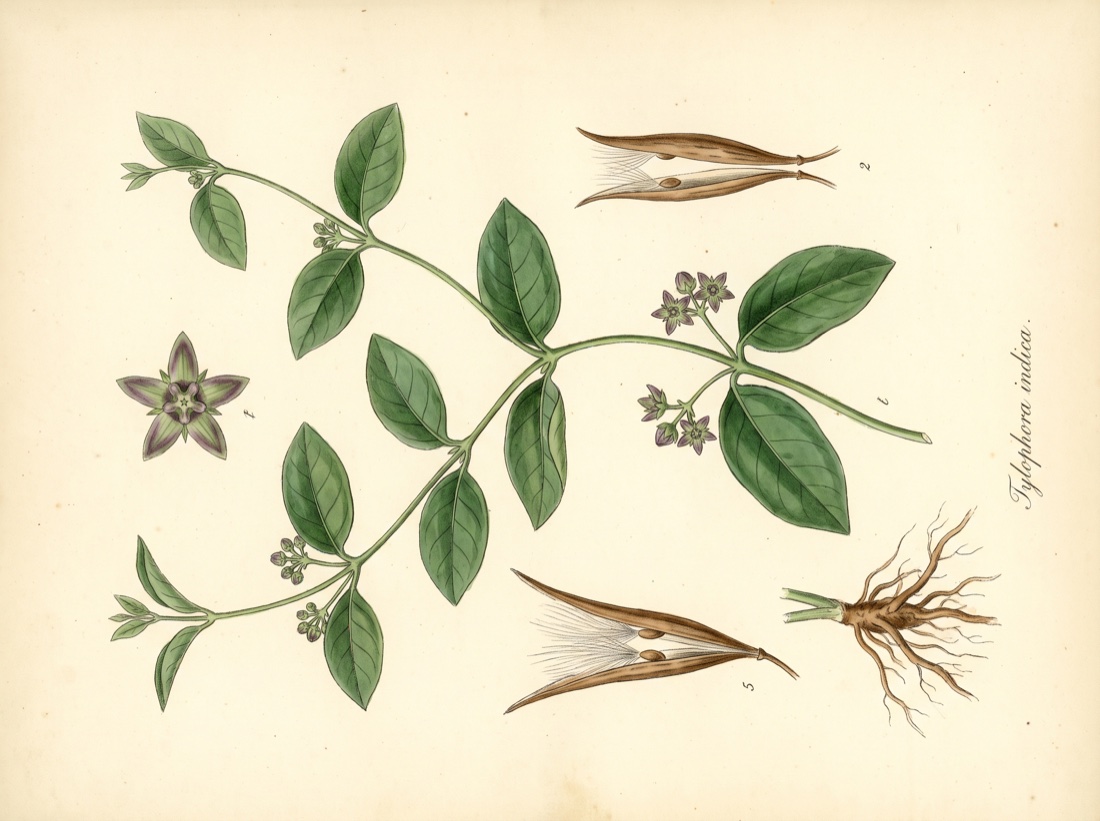
Ayurvedic Herbalism
Tylophora
Tylophora indica
Also known as Indian ipecac, emetic swallow-wort, country ipecacuanha, antamul.
Tylophora is a slender twining perennial of the milkweed subfamily of the dogbane family, native to the plains and lower hills of India, Sri Lanka, Bangladesh and Myanmar. The leaves, and less often the root, are the medicine. Its older name Tylophora asthmatica records its reputation as an Indian folk remedy for asthma and an ipecacuanha substitute; modern botany places it in Vincetoxicum. It contains phenanthroindolizidine alkaloids that are among the most cytotoxic plant compounds known, which is why it is used in very small doses for short periods.

Ask Herbert about Tylophora. Herbert is the master herbalist inside Bountiful Herbs: he answers from this plate and eleven hundred others, with dosing, pairing and cautions. Your first ten questions are free.
Ask HerbertActions
Indications what the tradition reached for it in
- Bronchial asthma
- Allergic rhinitis and hay fever
- Chronic bronchitis with wheeze
- Whooping cough (traditional)
- Dysentery and diarrhea (traditional, small dose)
- Rheumatic pain (traditional)
- Intermittent fever (traditional)
- Emetic in poisoning (traditional, historical)
- Urticaria and allergic eczema (traditional)
Specific indications
Recurrent allergic asthma where a short course of one leaf a day for a week is said to give relief that lasts for weeks, the old Indian regimen
Hay fever with sneezing and wheeze in a patient who will tolerate a bitter, nauseating herb in a very small dose for a few days
Safety
Low dose botanical. Used in drop doses in the classical practice; not a plant to dose freely.
Pregnancy: Not for use in pregnancy
Breastfeeding: Not for use while breastfeeding
The record lists 12 contraindications; open the plate in the library to read them in full.
In practice
The traditional regimen is simple: one fresh leaf, about thumb-sized, chewed and swallowed each morning on an empty stomach for six or seven days, then stopped. Dried leaf powder or a low-dose tincture can replace the fresh leaf.
In Ayurveda
Rasa: tikta, katu (bitter, pungent). Virya: ushna (heating). Vipaka: katu (pungent). Dosha: reduces kapha and vata; aggravates pitta in excess. Karma: shvasahara, kasahara, vamaka (emetic in larger dose), kaphaghna, jvaraghna, krimighna.
Dosing as the sources wrote it
| Preparation | As written | Metric |
|---|---|---|
| Fresh leaf (traditional course) | 1 fresh leaf chewed once daily for 6-7 days | |
| Dried leaf powder (short course) | 200-400 mg dried leaf once daily for 6-7 days | 200-400 mg |
| Tincture (1:10, 45%) | 0.5-1 mL once daily for 6-7 days | 0.5-1 mL |
Doses are reproduced from the sources for practitioners and are not a recommendation for any person.
From the sources
Overview. Tylophora is a slender twining perennial of the milkweed subfamily of the dogbane family, native to the plains and lower hills of India, Sri Lanka, Bangladesh and Myanmar. The leaves, and less often the root, are the medicine. Its older name Tylophora asthmatica records its reputation as an Indian folk remedy for asthma and an ipecacuanha substitute; modern botany places it in Vincetoxicum. It contains phenanthroindolizidine alkaloids that are among the most cytotoxic plant compounds known, which is why it is used in very small doses for short periods.
Clinical Notes. The traditional regimen is simple: one fresh leaf, about thumb-sized, chewed and swallowed each morning on an empty stomach for six or seven days, then stopped. Dried leaf powder or a low-dose tincture can replace the fresh leaf.
Ayurvedic Profile. Rasa: tikta, katu (bitter, pungent). Virya: ushna (heating). Vipaka: katu (pungent). Dosha: reduces kapha and vata; aggravates pitta in excess. Karma: shvasahara, kasahara, vamaka (emetic in larger dose), kaphaghna, jvaraghna, krimighna.
Conservation. Wild populations are declining in parts of India from overcollection and habitat loss, and the plant is listed as vulnerable in some Indian states; cultivated material is preferred.
Nearby on the shelf
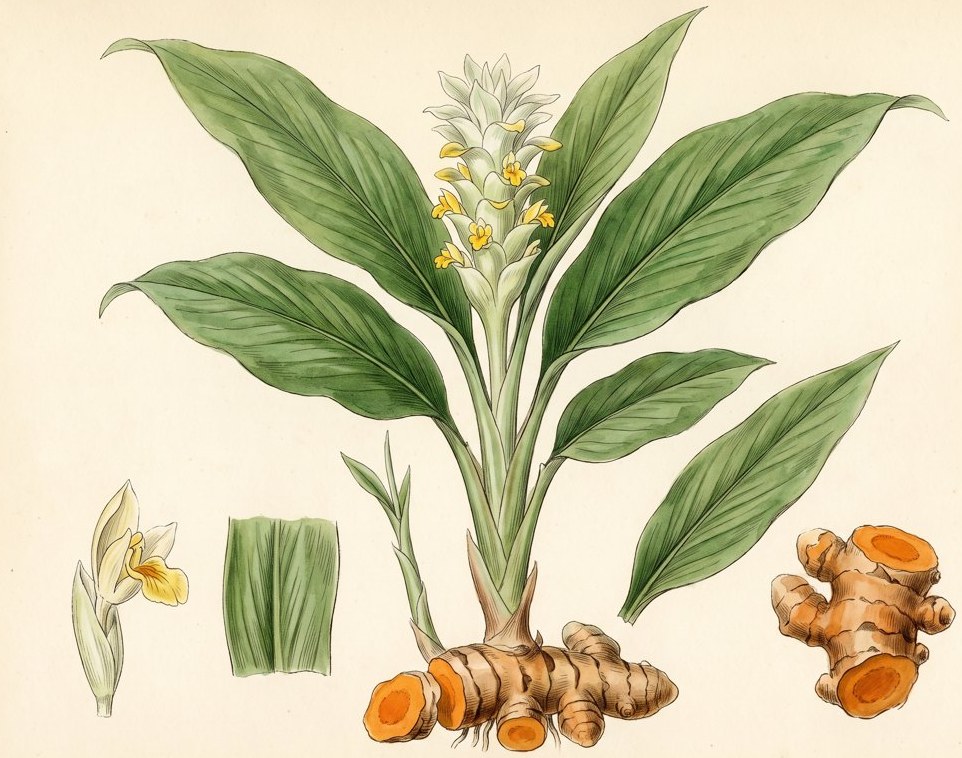 TurmericCurcuma longa
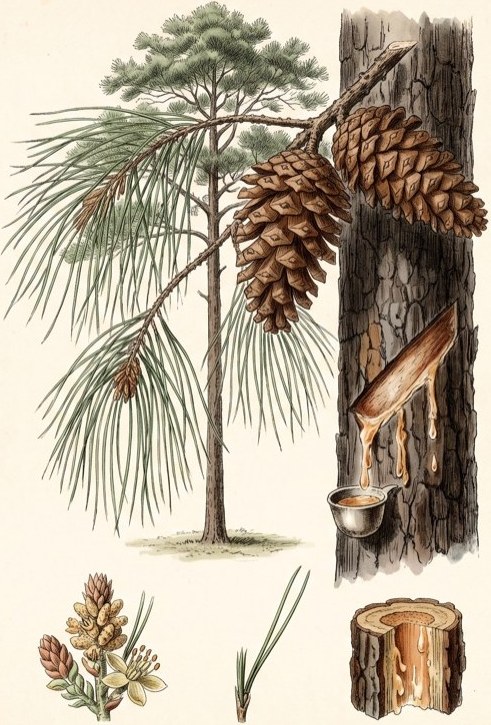 TurpentineOleum Terebinthinae
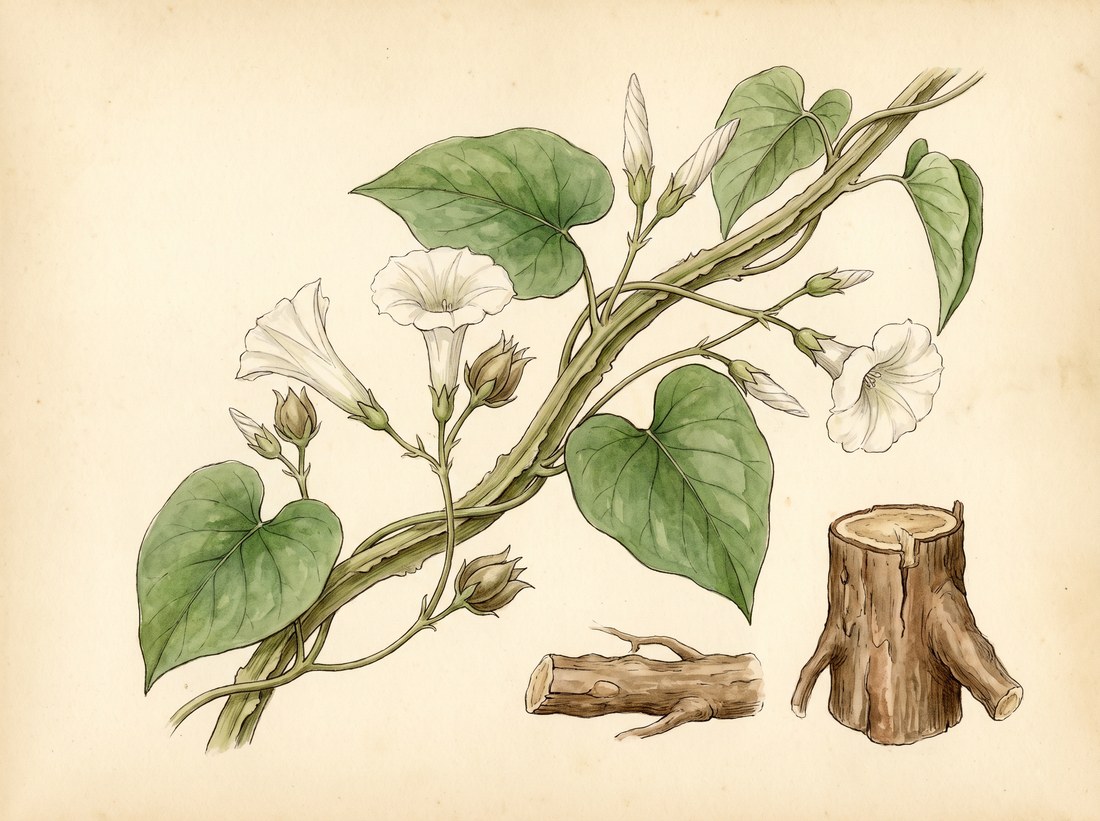 TurpethOperculina turpethum
 TwinleafJeffersonia diphylla
 ValerianValeriana officinalis
 VanillaVanilla planifolia
 VasakaAdhatoda vasica
The whole plate is in the library. The compass, Compare, the Sky of eleven hundred plants and the formulary open with an email address and a password, free, with the formula builder and its safety engine. Herbert without limit, his formulating, clients, the handouts and the labels are the paid room.
Open the library, free