Western Herbalism
Turpentine
Oleum Terebinthinae
Also known as Oil of Turpentine, Spirits of Turpentine, Long-leaf pine, Georgia pine, Swamp pine, Pitch pine, Long-leaved Georgia, Swamp.
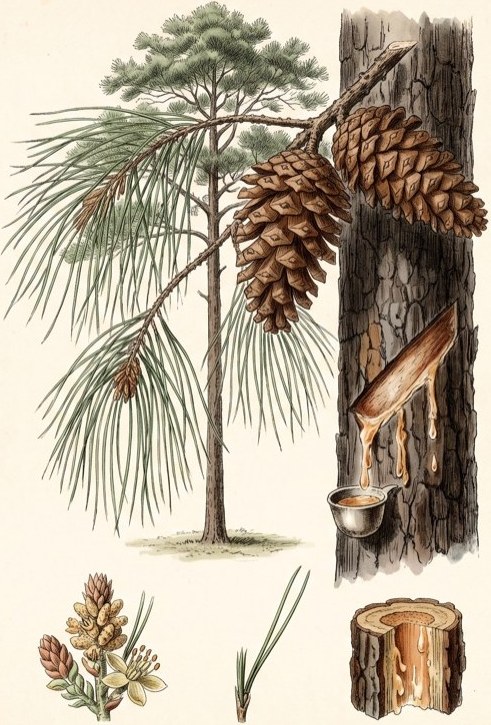
Oil of turpentine is the volatile oil obtained by steam distillation of the oleoresin ('crude turpentine') tapped from Pinus palustris and related pines of the southeastern United States, with the resinous residue known as colophony or rosin. In nineteenth century eclectic and regular medicine it was used both internally, for worms, urinary complaints, and hemorrhage, and externally as a rubefacient liniment and vapor for chest complaints. Its internal use has since been abandoned because of a narrow margin of safety, and it survives in modern practice almost entirely as a topical and inhaled agent.

Ask Herbert about Turpentine. Herbert is the master herbalist inside Bountiful Herbs: he answers from this plate and eleven hundred others, with dosing, pairing and cautions. Your first ten questions are free.
Ask HerbertActions
Indications what the tradition reached for it in
- Muscular rheumatism
- Chronic bronchitis with heavy mucus (as chest rub or steam inhalation)
- Neuralgia
- Chilblains
- Sprains and stiff joints
- Fibrositis
- Croup (external vapor use, historical)
- Minor wound antisepsis (historical, external)
Specific indications
Deep, aching muscular pain that eases with heat, friction, and counterirritant liniments
Chronic productive cough or bronchial congestion where a warming chest rub or inhaled vapor loosens mucus and eases breathing
Safety
Recognised toxicity. This plant carries a toxicity flag in the record; it is for trained practitioners only.
Low dose botanical. Used in drop doses in the classical practice; not a plant to dose freely.
Pregnancy: Avoid all internal use and use topical preparations only with caution, since systemic absorption of terpenes through skin is possible and safety in pregnancy has not been established.
Breastfeeding: Avoid internal use; topical use should be kept away from areas accessible to a nursing infant's mouth or face.
The record lists 5 contraindications; open the plate in the library to read them in full.
In practice
Turpentine oil's place in modern herbal and physical medicine is external. Diluted in a carrier oil it makes a classic rubefacient liniment for deep muscular aches, stiff joints, and chronic low back pain, working by generating local heat and increased blood flow at the skin that draws attention (and, by reflex, some relief) away from deeper tissue.
Dosing as the sources wrote it
| Preparation | As written | Metric |
|---|---|---|
| Topical liniment | 5-10% oil of turpentine diluted in a fatty carrier oil, applied to intact skin over the affected area two to three times daily | |
| Steam inhalation | 2-3 drops added to a bowl of hot water, inhaled briefly for chest congestion; not for children under 6 years | 0.04-0.06 mL |
| This is the form which should always be used in medicine | Dose, from one to ten minims. | 0.06-0.62 mL |
| Dose, from one to three grains. | 64.8-194 mg | |
| It is soluble in alcohol, only slightly so in water | Dose, from three to fifteen minims. | 0.18-0.92 mL |
| In some extreme cases where it has not been previously used, a single large dose of ten or fifteen drops to a child of five years or above, will apparently exercise a prompt influence. | 0.3 mL |
Doses are reproduced from the sources for practitioners and are not a recommendation for any person.
From the sources
Overview. Oil of turpentine is the volatile oil obtained by steam distillation of the oleoresin ('crude turpentine') tapped from Pinus palustris and related pines of the southeastern United States, with the resinous residue known as colophony or rosin. In nineteenth century eclectic and regular medicine it was used both internally, for worms, urinary complaints, and hemorrhage, and externally as a rubefacient liniment and vapor for chest complaints. Its internal use has since been abandoned because of a narrow margin of safety, and it survives in modern practice almost entirely as a topical and inhaled agent.
Clinical Notes. Turpentine oil's place in modern herbal and physical medicine is external. Diluted in a carrier oil it makes a classic rubefacient liniment for deep muscular aches, stiff joints, and chronic low back pain, working by generating local heat and increased blood flow at the skin that draws attention (and, by reflex, some relief) away from deeper tissue.
Action and Therapy. External. Oil of turpentine may be used for most of the purposes named under Rectified Oil of Turpentine. However, the latter is the least likely to cause unpleasant effects. Internal. This preparation should not be used internally; only when rectified is it fit for internal medication. (See Oleum Terebinthinae Recificatum.)
Therapy. External. Turpentine is rubefacient and counter-irritant and to some degree antiseptic and hemostatic. Locally applied it is valuable to assist in relieving deep-seated and other inflammations, as in pleurisy, pneumonia, bronchitis, laryngitis, pharyngitis, peritonitis, arthritis, and other congestive and inflammatory disorders; and to alleviate pain in sciatica, myalgia, pleurodynia, and various neuralgias.
Drawn from Ellingwood's American Materia Medica, Therapeutics and Pharmacognosy; Felter's Eclectic Materia Medica, Pharmacology and Therapeutics, and the Bountiful Herbs editorial.
Often paired with
 flaxLinum usitatissimum
 OliveOlea europaea
 OreganoOriganum vulgare
 SassafrasSassafras albidum
 Sangre de DragoCroton lechleri
Nearby on the shelf
 Tu Si ZiCuscuta chinensis
 Tulip treeLiriodendron tulipifera
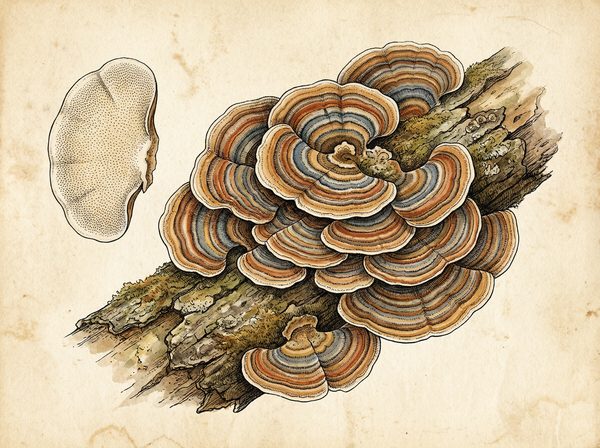 Turkey TailTrametes versicolor
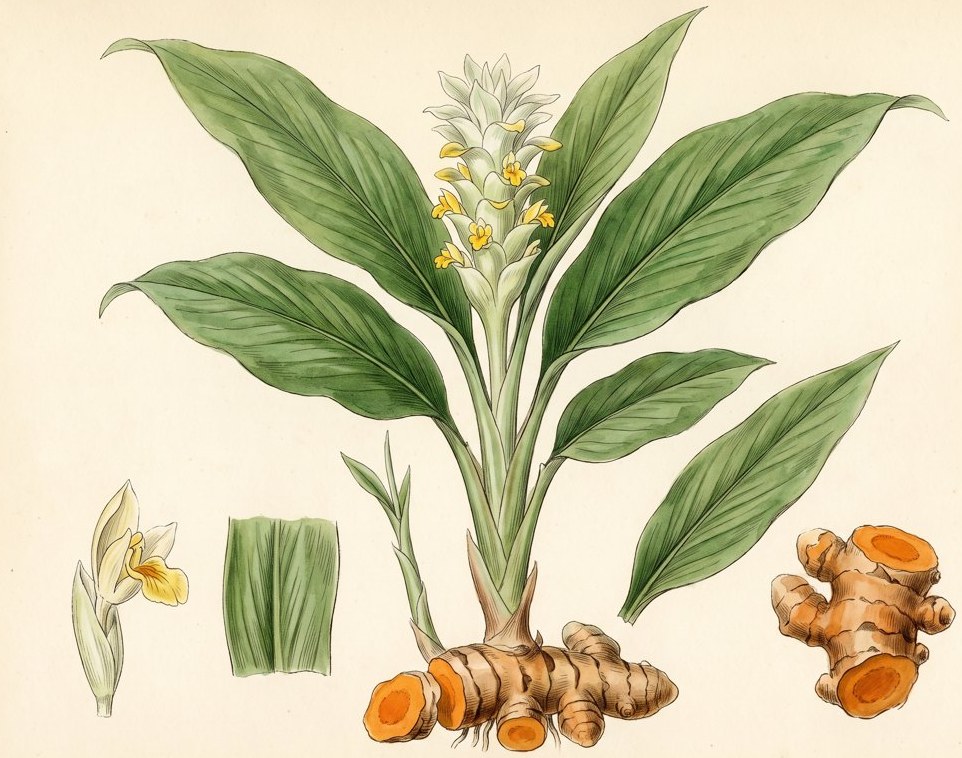 TurmericCurcuma longa
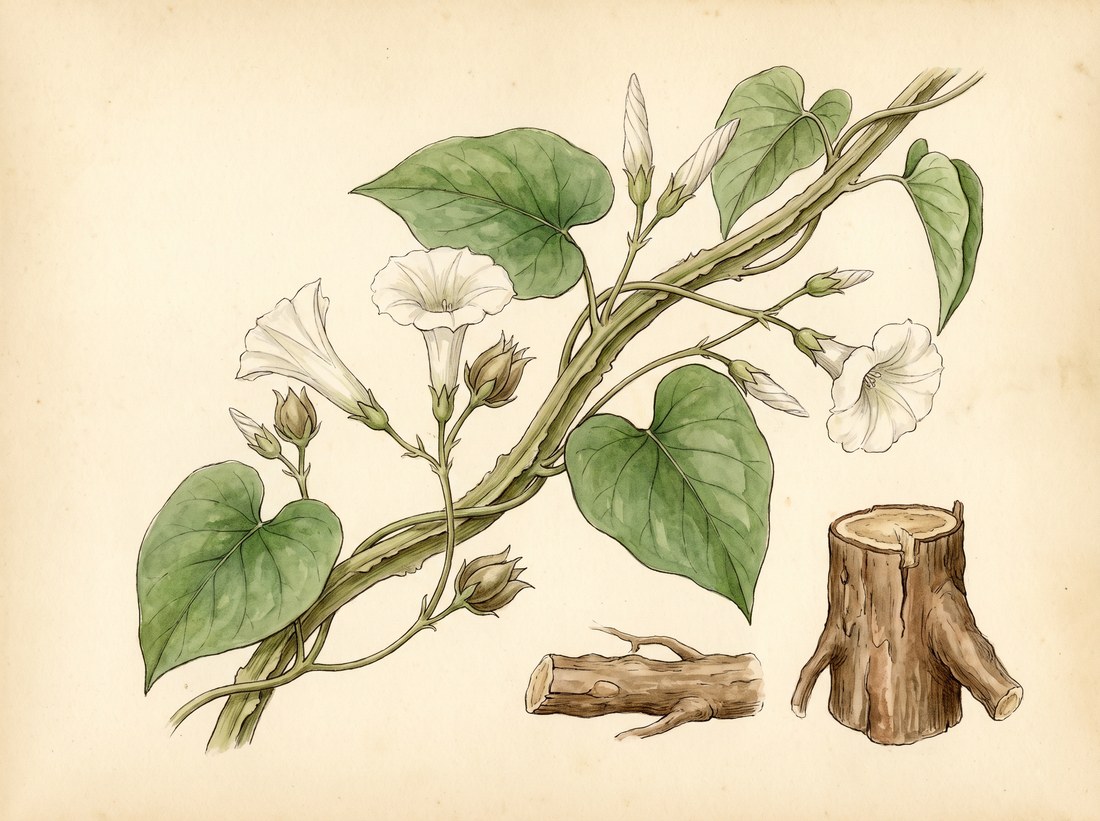 TurpethOperculina turpethum
 TwinleafJeffersonia diphylla
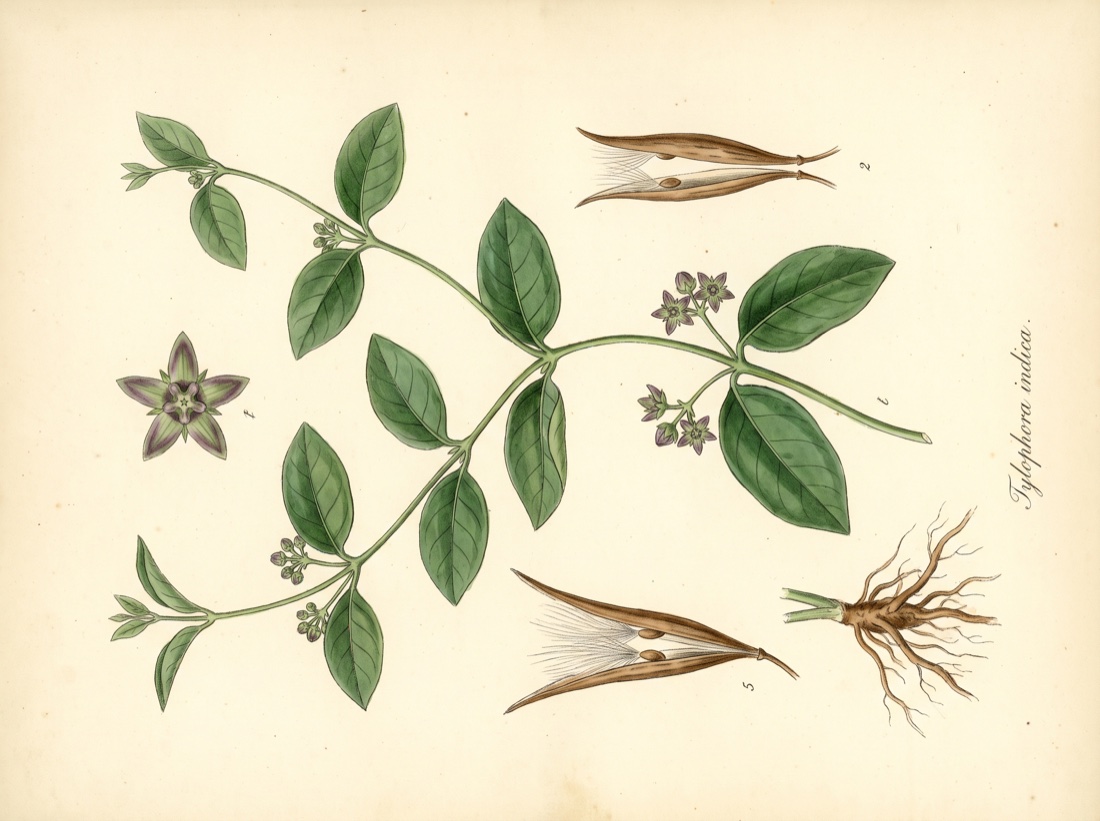 TylophoraTylophora indica
The whole plate is in the library. The compass, Compare, the Sky of eleven hundred plants and the formulary open with an email address and a password, free, with the formula builder and its safety engine. Herbert without limit, his formulating, clients, the handouts and the labels are the paid room.
Open the library, free