Western Herbalism
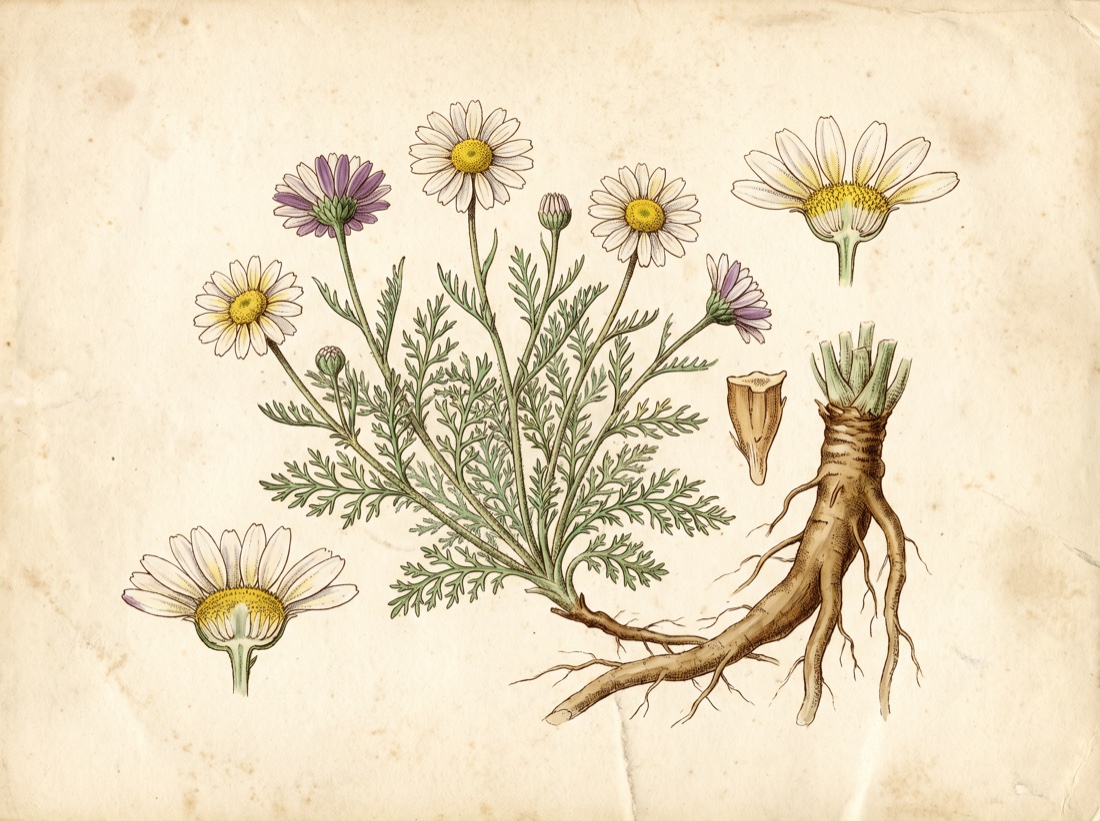
Pellitory of Spain
Anthemis pyrethrum
Also known as Spanish camomile, Spanish pellitory.
Pellitory of Spain is a low, spreading perennial of the daisy family native to the Mediterranean basin, Syria, and Arabia, closely resembling chamomile in habit but grown for its pungent root rather than its flowers. The root is the part used, valued since antiquity as a powerful local irritant and sialagogue. In the physiomedicalist tradition it was classed as a stimulant to relaxed tissue, applied to conditions where tone was judged deficient, particularly of the mouth, tongue, and salivary glands.

Ask Herbert about Pellitory of Spain. Herbert is the master herbalist inside Bountiful Herbs: he answers from this plate and eleven hundred others, with dosing, pairing and cautions. Your first ten questions are free.
Ask HerbertActions
Indications what the tradition reached for it in
- Toothache
- Xerostomia (dry mouth)
- Paralytic weakness of the tongue
- Slurred or thickened speech from relaxed oral tissue
- Salivary insufficiency
- Facial neuralgia
- Sore throat with sluggish circulation
- Chilblains and cold, poorly perfused tissue (topical)
Specific indications
Toothache with a cold, dull ache relieved by a warming, pungent local stimulant applied at the gum
Dryness of the mouth and throat with diminished salivary flow, especially where tissue tone is low and relaxed
Paralytic weakness or heaviness of the tongue impairing speech, seen as a sign of poor local stimulation in physiomedical terms
Safety
Low dose botanical. Used in drop doses in the classical practice; not a plant to dose freely.
Pregnancy: Avoid internal use in pregnancy: traditional use is topical and local only, and no modern safety data exist to support internal dosing.
Breastfeeding: Avoid internal use during lactation in the absence of safety data; topical dental use in small amounts is traditionally considered low risk.
The record lists 5 contraindications; open the plate in the library to read them in full.
In practice
Physiomedicalist writers reached for pellitory when oral and pharyngeal tissue seemed atonic and under-stimulated: a dry mouth with scanty saliva, a tongue that felt heavy or spoke thickly, or a toothache with a cold, dull quality rather than a hot, throbbing one.
Dosing as the sources wrote it
| Preparation | As written | Metric |
|---|---|---|
| Root (chewed, topical) | a small sliver of dried root chewed or held against the affected gum as needed | |
| Tincture (1:8, strong alcohol) | applied topically to the gum or diluted for a mouth rinse, a few drops at a time; not intended for regular internal dosing |
Doses are reproduced from the sources for practitioners and are not a recommendation for any person.
From the sources
Overview. Pellitory of Spain is a low, spreading perennial of the daisy family native to the Mediterranean basin, Syria, and Arabia, closely resembling chamomile in habit but grown for its pungent root rather than its flowers. The root is the part used, valued since antiquity as a powerful local irritant and sialagogue. In the physiomedicalist tradition it was classed as a stimulant to relaxed tissue, applied to conditions where tone was judged deficient, particularly of the mouth, tongue, and salivary glands.
Clinical Notes. Physiomedicalist writers reached for pellitory when oral and pharyngeal tissue seemed atonic and under-stimulated: a dry mouth with scanty saliva, a tongue that felt heavy or spoke thickly, or a toothache with a cold, dull quality rather than a hot, throbbing one.
Properties and Uses. The root of pellitory possesses very pungent stimulating properties, which, when chewed, give a sharp and tingling sense of heat in the mouth, and excite a copious flow of saliva. Alcohol and ether extract its properties, but water acts on it only moderately. It has long been used as an application for toothache; and may be found useful in extreme dryness of the mouth, and paralysis of the tongue and vocal organs. It is prepared in tincture-an ounce of the root to eight ounces of alcohol. Medical Herbalism journal and medherb.com The Physiomedical Dispensatory by William Cook, M.D., 1869
Description. Natural Order, Compositae. This is scarcely a camomile, though so closely allied as to be thrown into the same genus by most Botanists. It is a native of Spain and all Southern Europe, as well as of Syria and Arabia. It has numerous procumbent and slightly pubescent stems; spreading leaves cut into linear and pinnatifid segments, of which the cauline are sessile and the radical are petioled; a single flower terminal to each branch, the ray florets being a bluish-white and the disk-florets yellow; and a light-brown, wrinkled root, as large as a puill.
Drawn from Cook's Physio-Medical Dispensatory, and the Bountiful Herbs editorial.
In formulas
Pellitory of Spain stands in 3 documented formulas in the library, among them Kuṭajāriṣta, Nāgavallabha Rasa, Brāhmī Vaṭī.
Often paired with
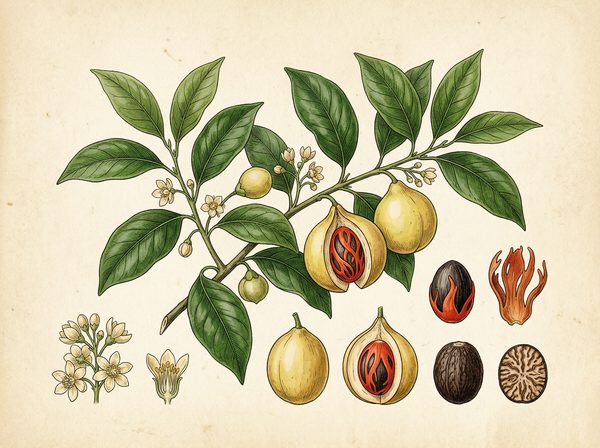 nutmegMyristica fragrans
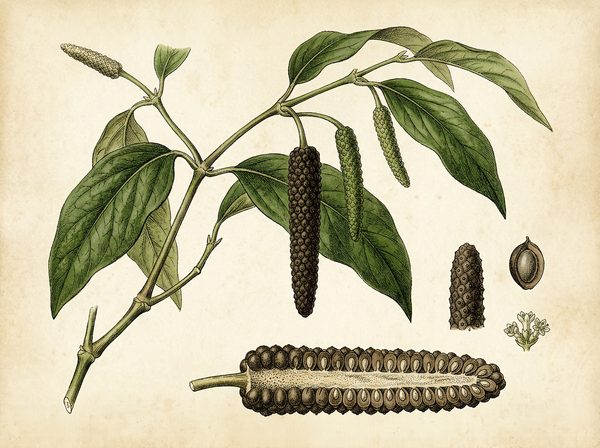 long pepperPiper longum
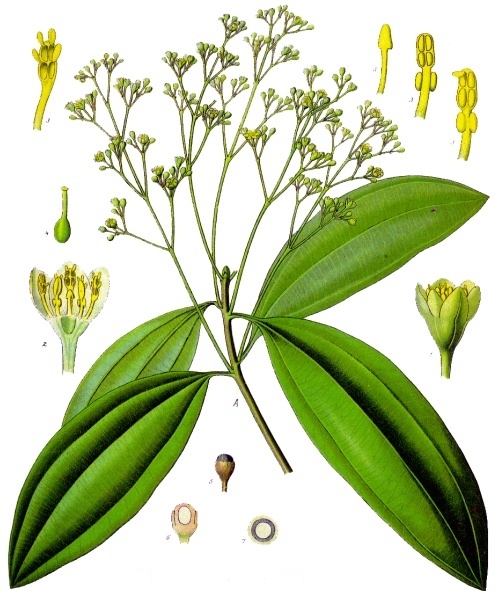 Indian bay leafCinnamomum tamala
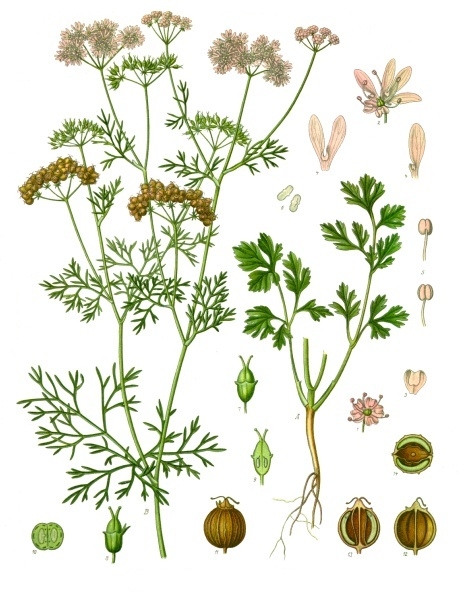 corianderCoriandrum sativum
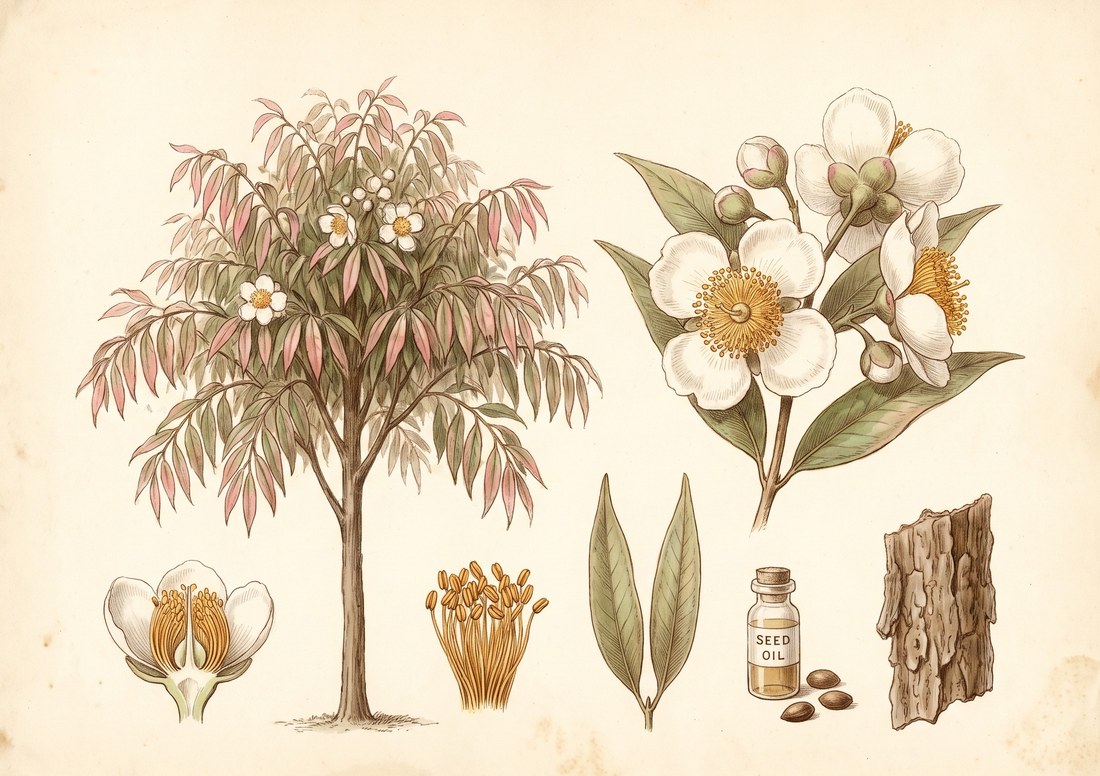 Ceylon ironwoodMesua ferrea
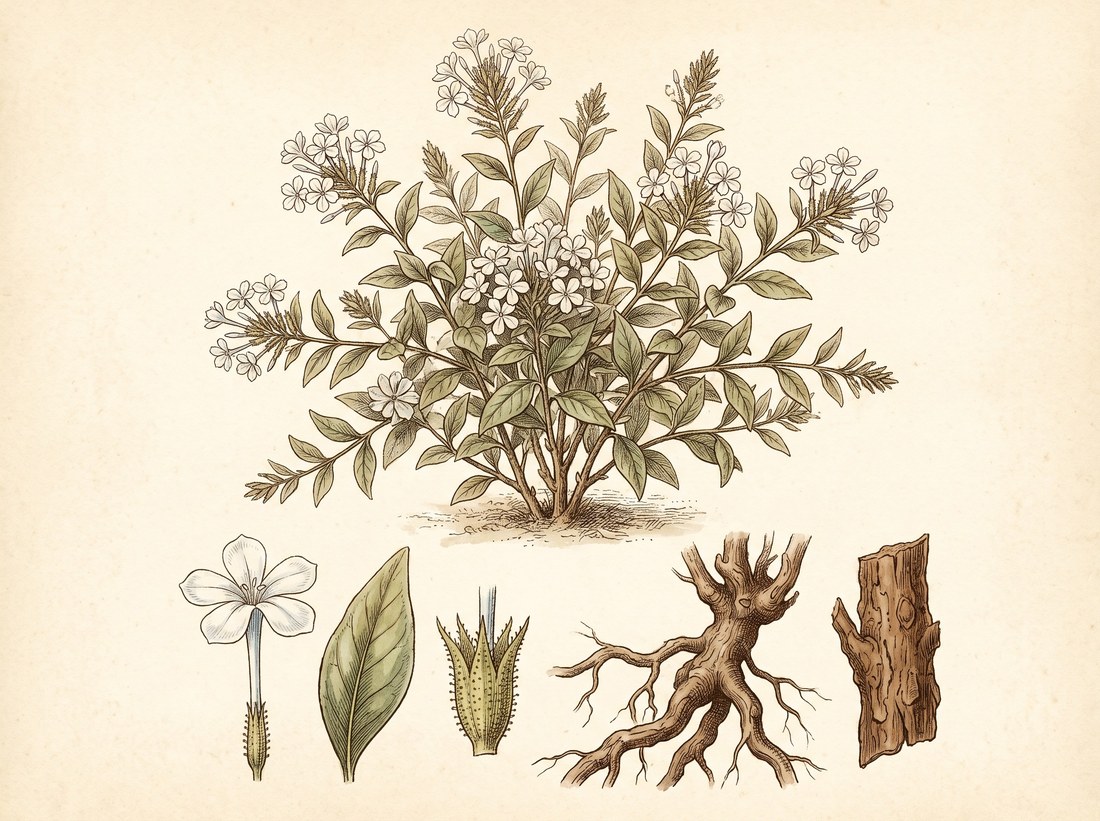 Ceylon leadwortPlumbago zeylanica
Nearby on the shelf
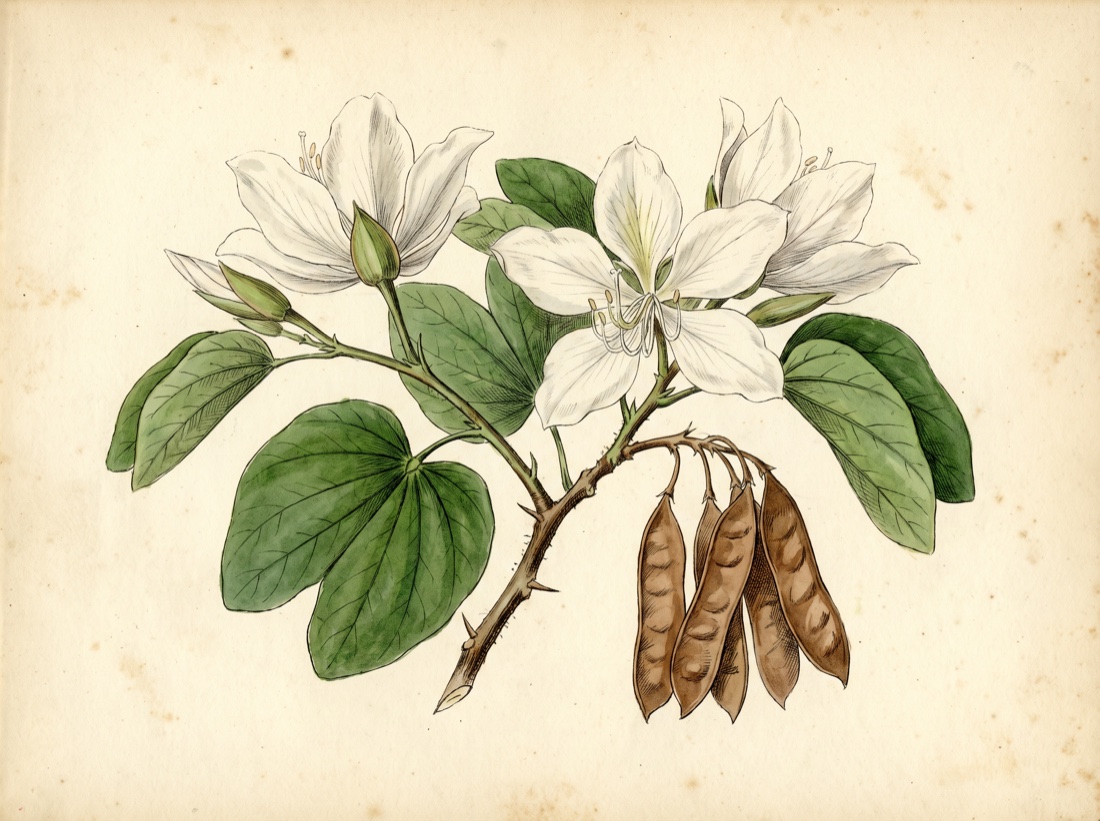 Pata de vacaBauhinia forficata
 PeachPrunus persica
 Pearly EverlastingAntennaria
 Peking spurgeEuphorbia pekinensis
 Pellitory-of-the-WallParietaria officinalis
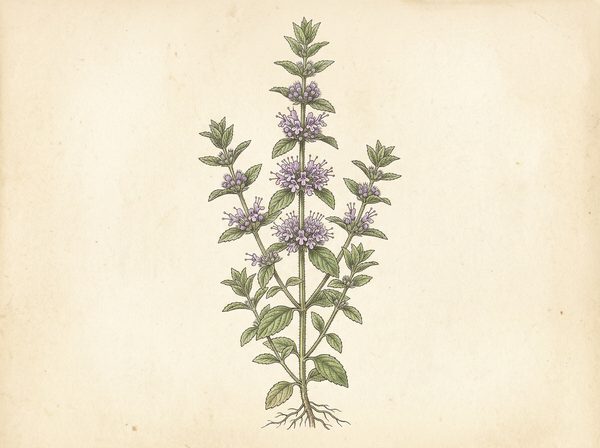 PennyroyalMentha pulegium
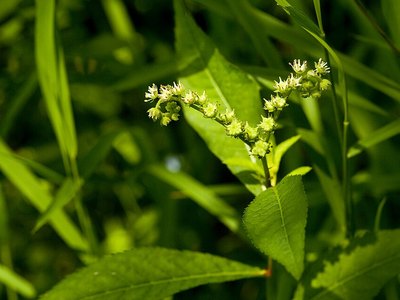 PenthorumPenthorum sedoides
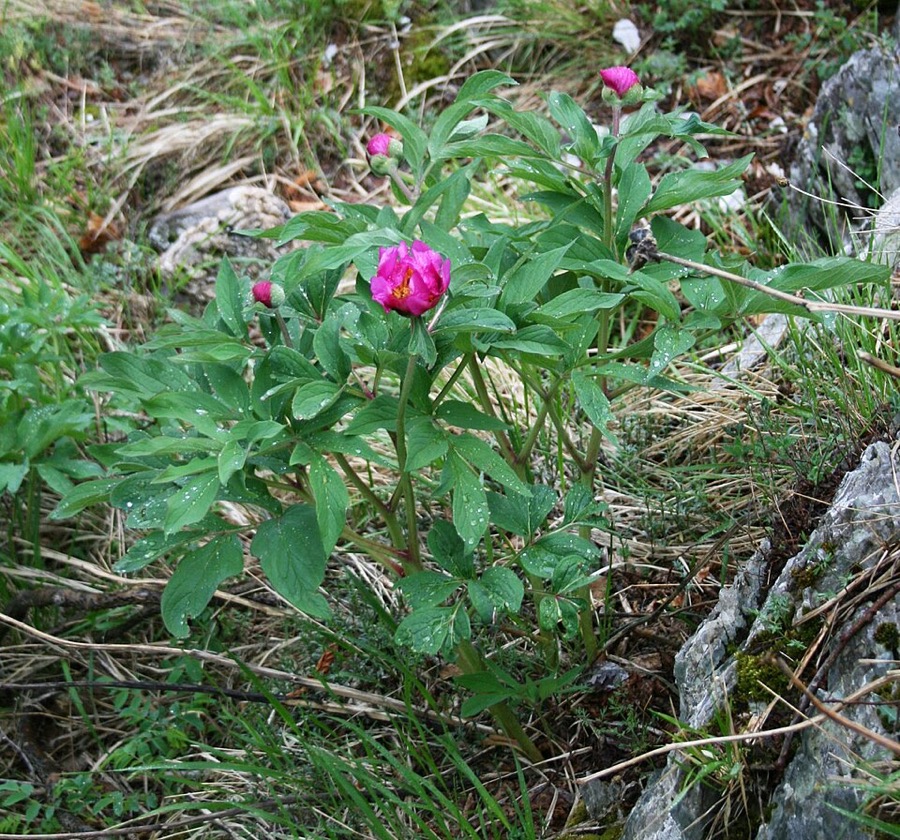 PeonyPeonia officinalis
The whole plate is in the library. The compass, Compare, the Sky of eleven hundred plants and the formulary open with an email address and a password, free, with the formula builder and its safety engine. Herbert without limit, his formulating, clients, the handouts and the labels are the paid room.
Open the library, free