Western, Chinese and Ayurvedic herbalism
Nutmeg
Myristica fragrans
Also known as mace (the aril), nutmeg tree, Mace, Nutmeg (Nux moschata), Jatiphala, Jatishasya, Malatiphala.
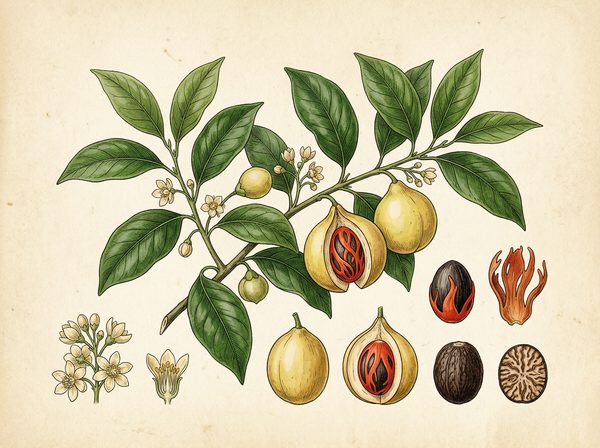
Myristica fragrans is an evergreen tree native to the Banda Islands of Indonesia and long cultivated in Kerala, Tamil Nadu and Karnataka, where the monsoon climate suits it. Its fruit yields two spices: the kernel, nutmeg (Jatiphala), and the red lacy aril around it, mace (Jatikosha). Ayurveda values Jatiphala as a warming, astringent digestive that checks diarrhea, settles nausea, promotes sleep in small doses and strengthens sexual function, always in the tiny amounts that keep it within the range of a spice, because the same kernel in large doses is an intoxicant.

Ask Herbert about Nutmeg. Herbert is the master herbalist inside Bountiful Herbs: he answers from this plate and eleven hundred others, with dosing, pairing and cautions. Your first ten questions are free.
Ask HerbertActions
Indications what the tradition reached for it in
- Diarrhea with cramping and urgency
- Irritable bowel with loose stools and gas
- Infant colic and teething diarrhea (minute doses, traditional)
- Nausea and vomiting
- Insomnia with digestive unease
- Premature ejaculation
- Poor appetite with a coated tongue
- Bad breath and gum disease (powder rubbed on gums)
- Tension headache (paste on forehead)
- Rheumatic and neuralgic pain (oil, topical)
- Flatulent dyspepsia
- Gastrodynia
- Gastric spasms
- Nausea
- Passive uterine hemorrhage
- Diarrhea (atonic)
- Cholera infantum
- Intestinal catarrh
- Indigestion
- Gas
- Vomiting
- Chronic
- Bloating
- Flatulence
- Abdominal cramps
- Intermittent fevers
- Abdominal distension
- Colic
- Cramps
- Diarrhea
Specific indications
Loose, frequent stools with griping and gas in a cold, anxious patient, where a warming astringent is wanted rather than a cold one
A patient who cannot fall asleep because the gut is uneasy and the mind restless, helped by a pinch of nutmeg in warm milk at night
The young man with premature ejaculation and performance anxiety, cold hands and a nervous stomach, the vata picture of shighrapatana
Nausea and poor appetite in convalescence when other spices feel too sharp
Safety
Low dose botanical. Used in drop doses in the classical practice; not a plant to dose freely.
Pregnancy: Avoid medicinal doses in pregnancy: no published safety class is known to us, the essential oil contains safrole and myristicin, and the seed has a folk history as an abortifacient at high doses, so we limit use to culinary amounts.
The record lists 8 contraindications; open the plate in the library to read them in full.
In practice
The Ayurvedic practitioner gives Jatiphala in pinches. A quarter to half a gram of the powder with honey checks diarrhea and grahani with cramping; the same dose in warm milk at bedtime is the household remedy for sleeplessness, especially in children and the elderly, and for the man who ejaculates too quickly.
In Ayurveda
Rasa: katu (pungent), tikta (bitter), kashaya (astringent). Virya: ushna (heating). Vipaka: katu (pungent). Guna: laghu (light), tikshna (penetrating), snigdha (slightly unctuous). Dosha: pacifies kapha and vata; aggravates pitta. Prabhava: nidrajanana, the sleep inducing action that the tradition considers specific to Jatiphala among the digestive spices. Karma: deepana (kindles digestion); pachana (digestive); grahi (binds, antidiarrheal); rochana (improves taste); nidrajanana (induces sleep); vrishya (aphrodisiac); shukrastambhana (delays ejaculation); mukhadaurgandhyahara (removes bad breath); kaphahara (reduces kapha); vedanasthapana (relieves pain); krimighna (anthelmintic); chhardinigrahana (stops vomiting). Classical indications: atisara (diarrhea); grahani (malabsorption and irritable bowel); agnimandya (weak digestion); aruchi (loss of appetite); chhardi (vomiting); anidra (insomnia); shighrapatana (premature ejaculation); klaibya (impotence); kasa and shvasa (cough and dyspnea); mukharoga (mouth disease and bad breath); shirahshula (headache, as a paste); vatavyadhi (painful disorders of vata, as a paste and oil). The dried kernel is the principal drug, given as fine churna in very small doses with honey, milk or warm water, and as an ingredient of digestive and aphrodisiac compounds; the mace is used in the same way and is considered slightly lighter. A paste of the kernel is applied to the forehead for headache and to the joints for pain, and the volatile oil is used externally. Classical formulations: Jatiphaladi churna, Jatiphaladi vati, Lavangadi vati, Chandraprabha vati, Kumaryasava, Ashwagandharishta (regional versions), Mrityunjaya rasa (herbal component), Trisugandhi (with mace in some versions). Described in: Charaka Samhita, Sushruta Samhita, Ashtanga Hridaya, Bhavaprakasha Nighantu, Dhanvantari Nighantu, Raja Nighantu, Kaiyadeva Nighantu, Ayurvedic Pharmacopoeia of India.
Dosing as the sources wrote it
| Preparation | As written | Metric |
|---|---|---|
| Churna | 250-500 mg powdered kernel once or twice daily with honey or warm milk | 250-500 mg |
| Churna (mace) | 250-500 mg powdered aril once or twice daily | 250-500 mg |
| Kalka, topical | 2-5 g paste applied to the forehead or joints | 2000-5000 mg |
| Essential oil, topical | 1-3 drops in 5 mL carrier oil for local massage | 0.02-0.06 mL |
| Powder | Powder 0.3-1.2 g (5-20 grains) | 300-1200 mg |
| Tincture | Tincture 1-6 ml 1:3 @45% | 1-6 mL |
Doses are reproduced from the sources for practitioners and are not a recommendation for any person.
From the sources
Overview. Myristica fragrans is an evergreen tree native to the Banda Islands of Indonesia and long cultivated in Kerala, Tamil Nadu and Karnataka, where the monsoon climate suits it. Its fruit yields two spices: the kernel, nutmeg (Jatiphala), and the red lacy aril around it, mace (Jatikosha). Ayurveda values Jatiphala as a warming, astringent digestive that checks diarrhea, settles nausea, promotes sleep in small doses and strengthens sexual function, always in the tiny amounts that keep it within the range of a spice, because the same kernel in large doses is an intoxicant.
Clinical Notes. Traditionally used as aromatic stimulant and carminative charred powder for intermittent fever (King's) : risks outweigh benefits for therapeutic use due to toxicity low culinary doses safe
Clinical Notes. The Ayurvedic practitioner gives Jatiphala in pinches. A quarter to half a gram of the powder with honey checks diarrhea and grahani with cramping; the same dose in warm milk at bedtime is the household remedy for sleeplessness, especially in children and the elderly, and for the man who ejaculates too quickly.
Therapy. External. An ointment containing the finely powdered nut, or the volatile oil sometimes proves obtundant to painful piles. Grated upon a larded cloth and applied warm we have found it to give prompt and grateful relief in soreness of the chest attending an acute cold or the beginning of acute respiratory inflammation.
Drawn from Cook's Physio-Medical Dispensatory; King's American Dispensatory, 18th edition (Felter and Lloyd); Felter's Eclectic Materia Medica, Pharmacology and Therapeutics, and the Bountiful Herbs editorial.
In formulas
Nutmeg stands in 76 documented formulas in the library, among them Ahiphenāsava, Kuṭajāriṣta, Khadirāriṣta, Jīrakādyariṣṭa, Daśamūlāriṣṭa, Mṛgamadāsava.
Often paired with
 cloveSyzygium aromaticum
 Ceylon cinnamonCinnamomum zeylanicum
 cardamomElettaria cardamomum
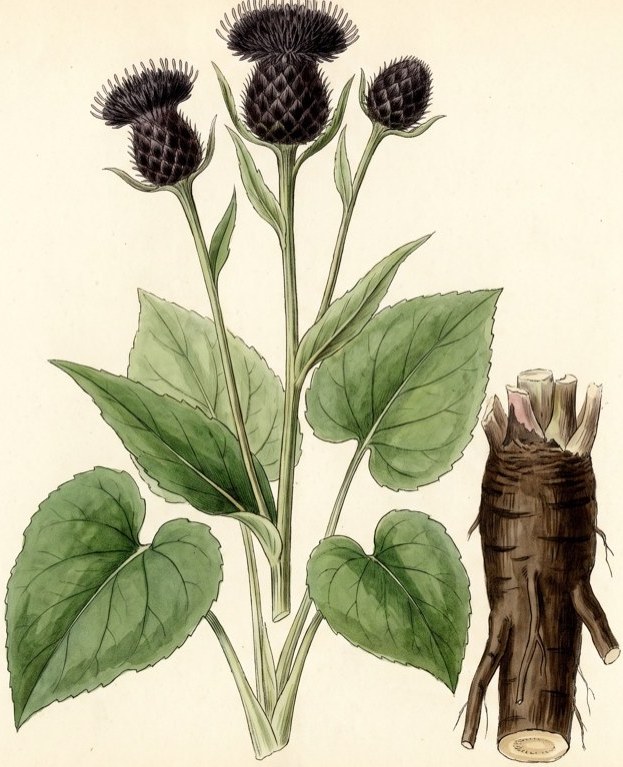 costusSaussurea costus
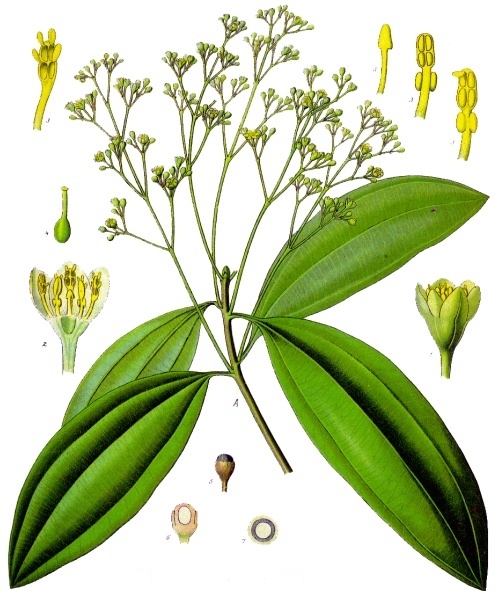 Indian bay leafCinnamomum tamala
 chebulic myrobalanTerminalia chebula
Nearby on the shelf
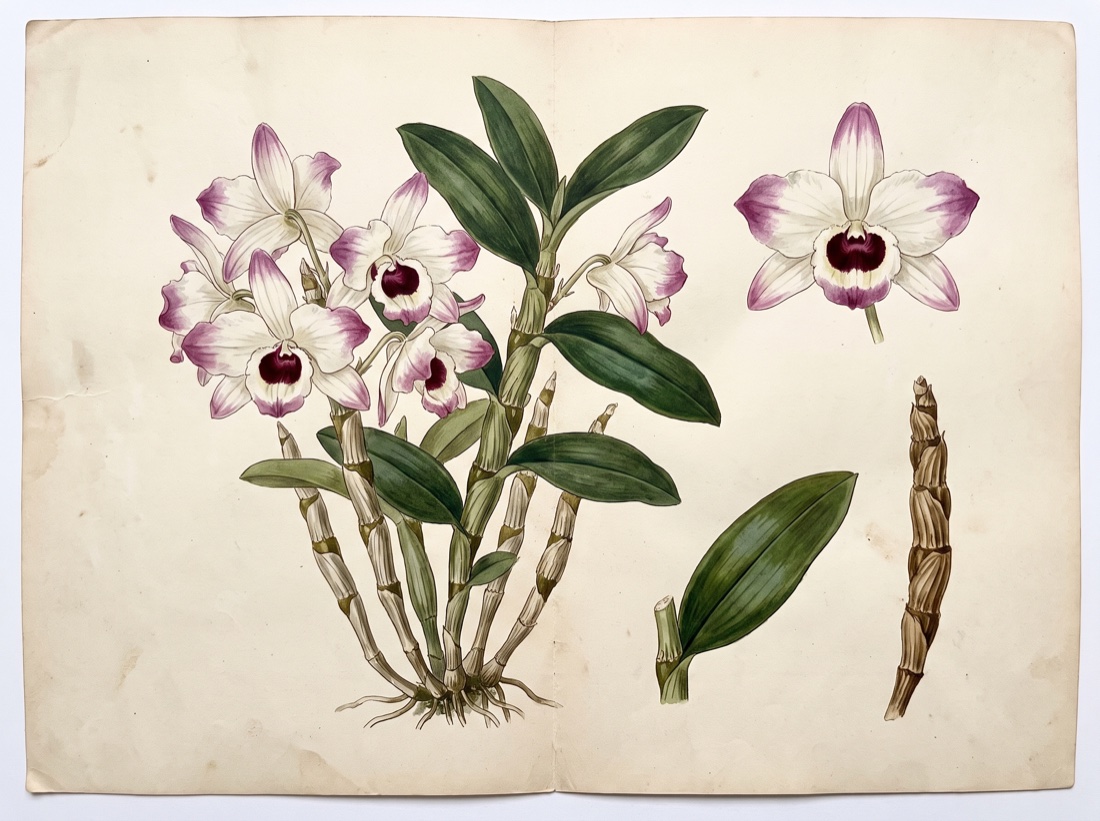 Noble dendrobiumDendrobium nobile
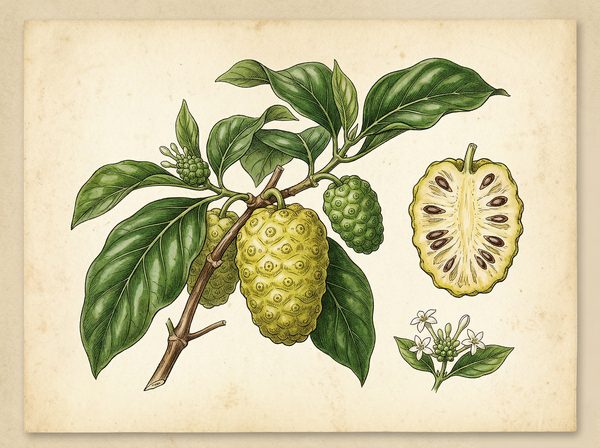 NoniMorinda citrifolia
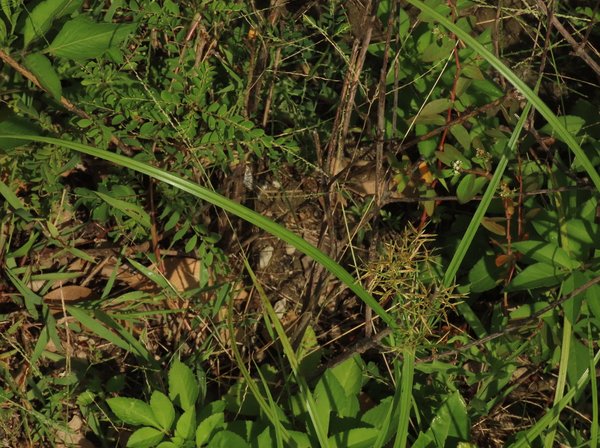 Nut grassCyperus rotundus
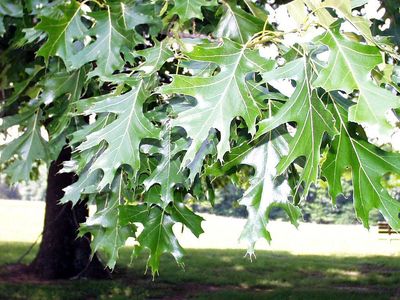 NutgallGalla
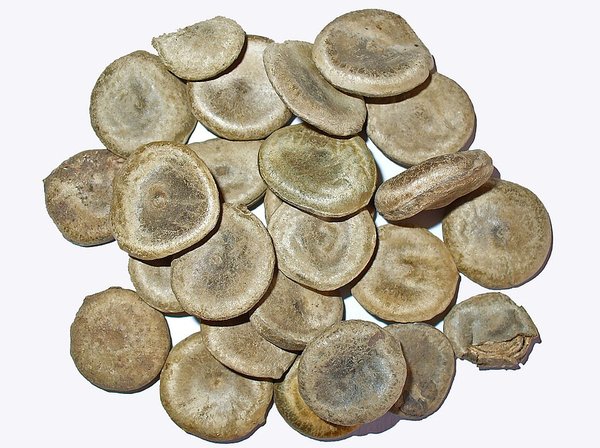 Nux VomicaStrychnos nux-vomica
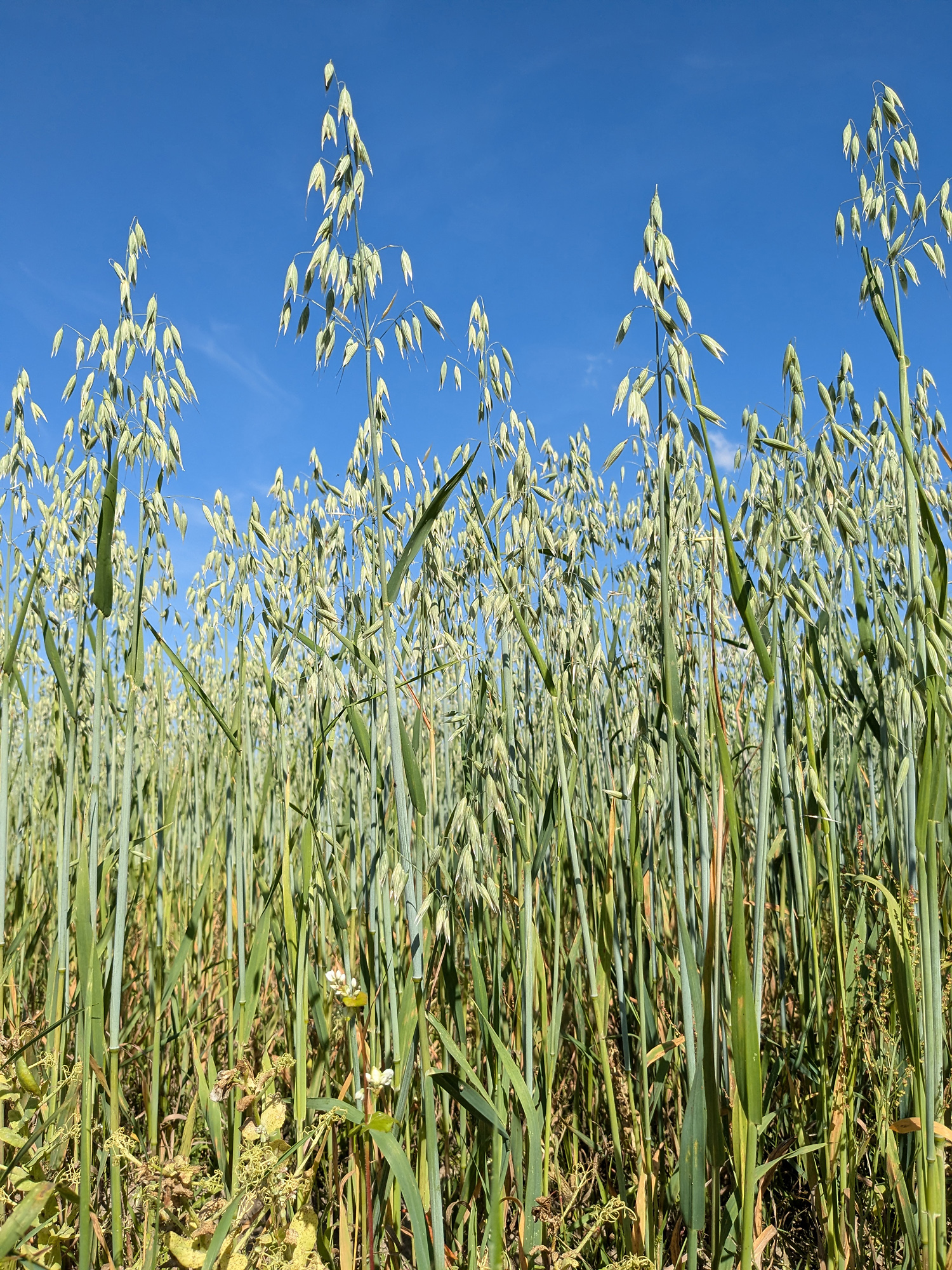 OatAvena sativa
 Ochroleucous gentianGentiana Ochroleuca
 OcotilloFouquieria splendens
The whole plate is in the library. The compass, Compare, the Sky of eleven hundred plants and the formulary open with an email address and a password, free, with the formula builder and its safety engine. Herbert without limit, his formulating, clients, the handouts and the labels are the paid room.
Open the library, free