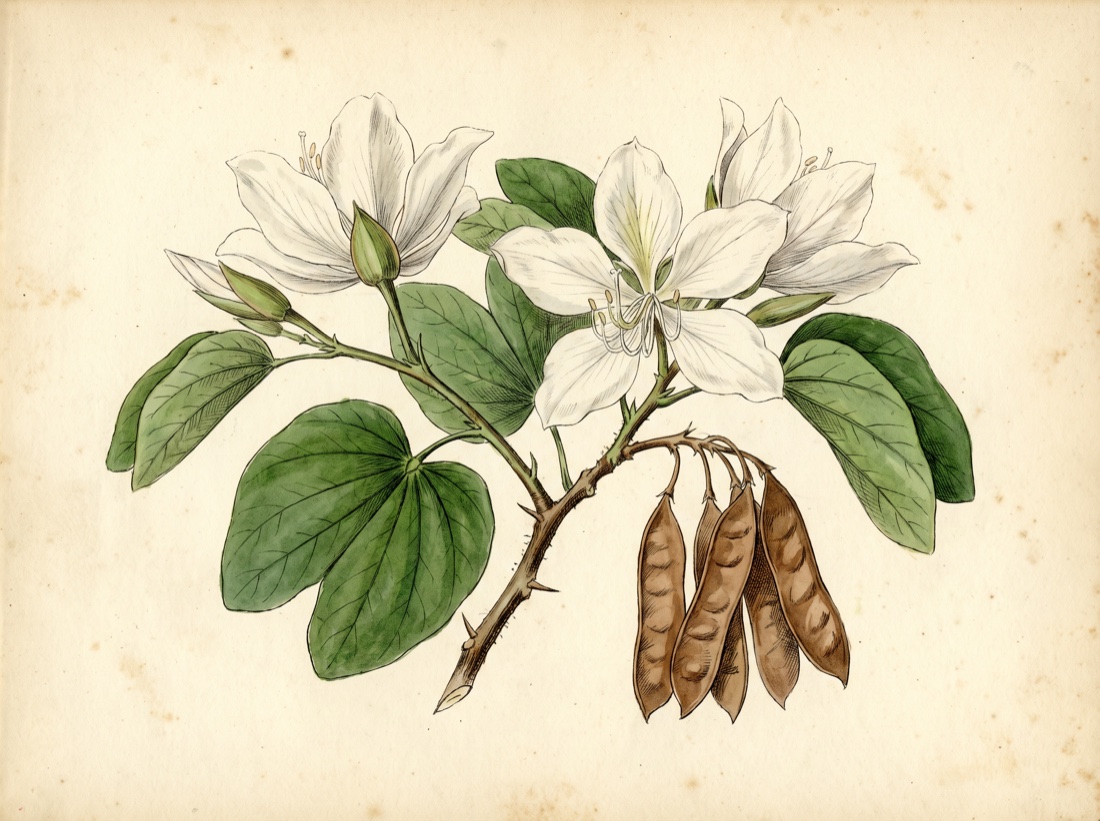
Western Herbalism
Pata de vaca
Bauhinia forficata
Also known as cow's foot, cow's hoof, Brazilian orchid tree, vegetable insulin.
Pata de vaca is a small thorny tree of southern Brazil, Uruguay, Paraguay and northern Argentina whose two-lobed leaves resemble a cow's hoof. The leaf is the medicine. It is one of the most widely used plants in Brazilian popular medicine for diabetes, so common that it is called vegetable insulin, and it is now listed in Brazilian public phytotherapy programs and sold as tea and capsules. It also carries older uses as a diuretic and for urinary and kidney complaints.

Ask Herbert about Pata de vaca. Herbert is the master herbalist inside Bountiful Herbs: he answers from this plate and eleven hundred others, with dosing, pairing and cautions. Your first ten questions are free.
Ask HerbertActions
Indications what the tradition reached for it in
- Type 2 diabetes (adjunct to standard care)
- Prediabetes and insulin resistance
- Elevated triglycerides and cholesterol
- Mild fluid retention
- Urinary tract irritation (traditional)
- Kidney stones (traditional)
- Diabetic oxidative stress and inflammation
- Mild hypertension (traditional)
- Elephantiasis and filarial swelling (traditional)
Specific indications
An overweight type 2 diabetic on metformin whose fasting glucose and HbA1c stay stubbornly above target and who wants a gentle daily tea
Metabolic syndrome with raised triglycerides, mild edema and a tendency to urinary irritation
Safety
The record lists 5 contraindications; open the plate in the library to read them in full.
In practice
This is a leaf to use the way it is used at home in Brazil: a daily tea, morning and evening, for months, alongside diet, exercise and whatever conventional medication the patient needs. It is not a replacement for that medication and it is not fast; expect a modest improvement in fasting glucose and lipids over three to four months, and judge it by HbA1c rather than day-to-day readings.
Dosing as the sources wrote it
| Preparation | As written | Metric |
|---|---|---|
| Infusion | 1-3 g dried leaf per cup twice daily | 1000-3000 mg |
| Standardized extract capsule (2% flavonoids) | 300 mg once or twice daily | 300-300 mg |
| Tincture (1:5, 40%) | 2-4 mL three times daily | 2-4 mL |
Doses are reproduced from the sources for practitioners and are not a recommendation for any person.
From the sources
Overview. Pata de vaca is a small thorny tree of southern Brazil, Uruguay, Paraguay and northern Argentina whose two-lobed leaves resemble a cow's hoof. The leaf is the medicine. It is one of the most widely used plants in Brazilian popular medicine for diabetes, so common that it is called vegetable insulin, and it is now listed in Brazilian public phytotherapy programs and sold as tea and capsules. It also carries older uses as a diuretic and for urinary and kidney complaints.
Clinical Notes. This is a leaf to use the way it is used at home in Brazil: a daily tea, morning and evening, for months, alongside diet, exercise and whatever conventional medication the patient needs. It is not a replacement for that medication and it is not fast; expect a modest improvement in fasting glucose and lipids over three to four months, and judge it by HbA1c rather than day-to-day readings.
Nearby on the shelf
 Partridge berryMitchella repens
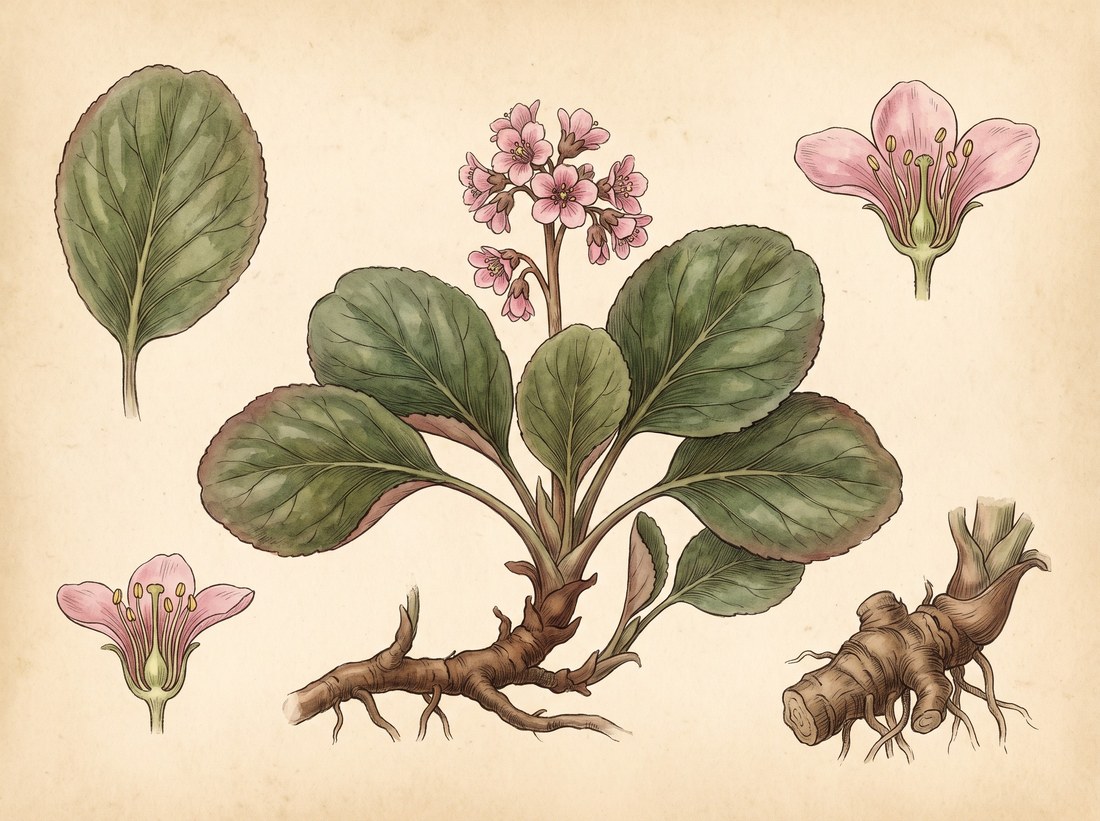 PashanbhedBergenia ligulata
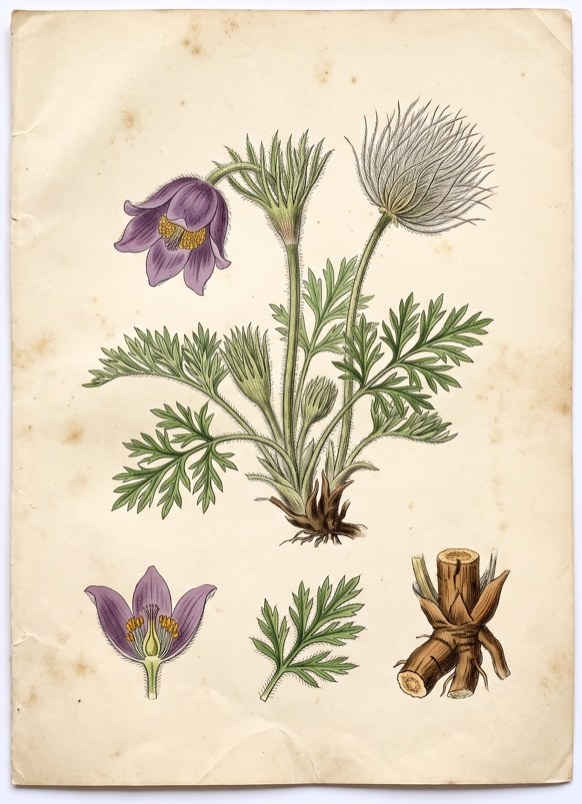 Pasque flowerPulsatilla vulgaris
 Passion FlowerPassiflora incarnata
 PeachPrunus persica
 Pearly EverlastingAntennaria
 Peking spurgeEuphorbia pekinensis
 Pellitory of SpainAnthemis pyrethrum
The whole plate is in the library. The compass, Compare, the Sky of eleven hundred plants and the formulary open with an email address and a password, free, with the formula builder and its safety engine. Herbert without limit, his formulating, clients, the handouts and the labels are the paid room.
Open the library, free