Western Herbalism
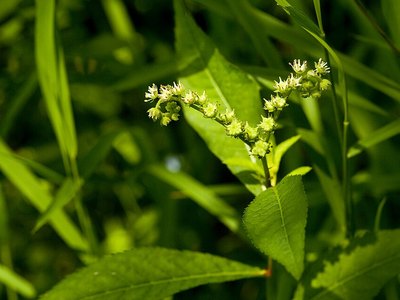
Penthorum
Penthorum sedoides
Also known as Virginia stonecrop, American ditch stonecrop, Virginia orpine, Virginia Stone-crop, Ditch Stone-crop.
Penthorum sedoides is a perennial marsh plant native to wet meadows, ditches, and streambanks across eastern North America, from which the aerial parts are gathered for use as a specific medicine. It held a defined but narrow place in nineteenth and early twentieth century American eclectic practice, valued chiefly as a mild astringent and restorative for relaxed, chronically irritated mucous membranes of the throat and bowel. It never entered mainstream pharmacopoeias and is little used today outside a small circle of practitioners working from the eclectic materia medica.

Ask Herbert about Penthorum. Herbert is the master herbalist inside Bountiful Herbs: he answers from this plate and eleven hundred others, with dosing, pairing and cautions. Your first ten questions are free.
Ask HerbertActions
Indications what the tradition reached for it in
- Chronic pharyngitis or laryngitis with relaxed, dusky mucosa
- Chronic sore throat unresponsive to ordinary remedies
- Chronic diarrhea
- Chronic dysentery with mucous discharge
- Cholera infantum and summer diarrhea in children (historical use)
- Hepatic torpor with biliousness
- Chronic bronchial catarrh
- Atonic, relaxed mucous membranes generally
- Leucorrhea with relaxed vaginal tissue (historical use)
Specific indications
Chronic catarrh of the throat with mucosa that is relaxed, dusky purple, dry, sore, and irritable, resisting ordinary throat remedies
Chronic diarrhea or dysentery with a persistent, watery or mucous stool and a lax, atonic bowel
Safety
Pregnancy: Avoid in pregnancy due to a complete absence of modern safety data.
Breastfeeding: Avoid during lactation due to a complete absence of modern safety data.
The record lists 2 contraindications; open the plate in the library to read them in full.
In practice
Eclectic physicians reached for penthorum specifically when the throat was not acutely inflamed but chronically relaxed, boggy, and dusky or purplish in color, a picture that had often failed to respond to more standard astringent or stimulating throat remedies.
Dosing as the sources wrote it
| Preparation | As written | Metric |
|---|---|---|
| Tincture (1:5) | 1-2 mL three times daily | 1-2 mL |
| Traditional specific medicine (concentrated) | 0.1-1 mL (2-20 minims) three times daily | 0.1-1 mL |
| Dried herb decoction | 2-4 g dried herb daily | 2000-4000 mg |
| Specific Medicine Penthorum | Dose, from one to twenty minims. | 0.06-1.23 mL |
| The fluid extract of penthorum may be given in doses of from one-fourth to one dram, every three hours. | 972-3888 mg | |
| Dose, 1 to 60 grains. | 64.8-3888 mg |
Doses are reproduced from the sources for practitioners and are not a recommendation for any person.
From the sources
Overview. Penthorum sedoides is a perennial marsh plant native to wet meadows, ditches, and streambanks across eastern North America, from which the aerial parts are gathered for use as a specific medicine. It held a defined but narrow place in nineteenth and early twentieth century American eclectic practice, valued chiefly as a mild astringent and restorative for relaxed, chronically irritated mucous membranes of the throat and bowel. It never entered mainstream pharmacopoeias and is little used today outside a small circle of practitioners working from the eclectic materia medica.
Clinical Notes. Eclectic physicians reached for penthorum specifically when the throat was not acutely inflamed but chronically relaxed, boggy, and dusky or purplish in color, a picture that had often failed to respond to more standard astringent or stimulating throat remedies.
Action and Therapy. External. A wash for catarrhal surfaces, producing an astringent effect but no corrugation of the tissues. Internal. While of some value in catarrhal diarrhea, this is a remedy best adapted to chronic catarrhal and congested states of the posterior nares and pharyngeal vault. It should be used locally while it is being administered internally; and quick results are not to be expected.
Therapy. It influences the functional activity of the stomach through the direct action on the glandular structure of the mucous membranes. It will impart tone to the stomach and increase the appetite and power of the digestion.
Drawn from King's American Dispensatory, 18th edition (Felter and Lloyd); Ellingwood's American Materia Medica, Therapeutics and Pharmacognosy; Felter's Eclectic Materia Medica, Pharmacology and Therapeutics, and the Bountiful Herbs editorial.
Nearby on the shelf
 Peking spurgeEuphorbia pekinensis
 Pellitory of SpainAnthemis pyrethrum
 Pellitory-of-the-WallParietaria officinalis
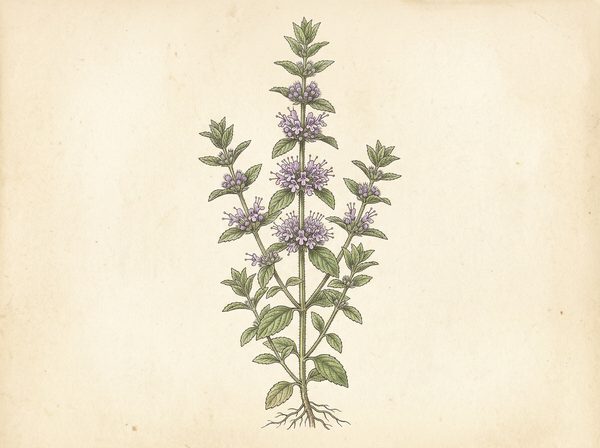 PennyroyalMentha pulegium
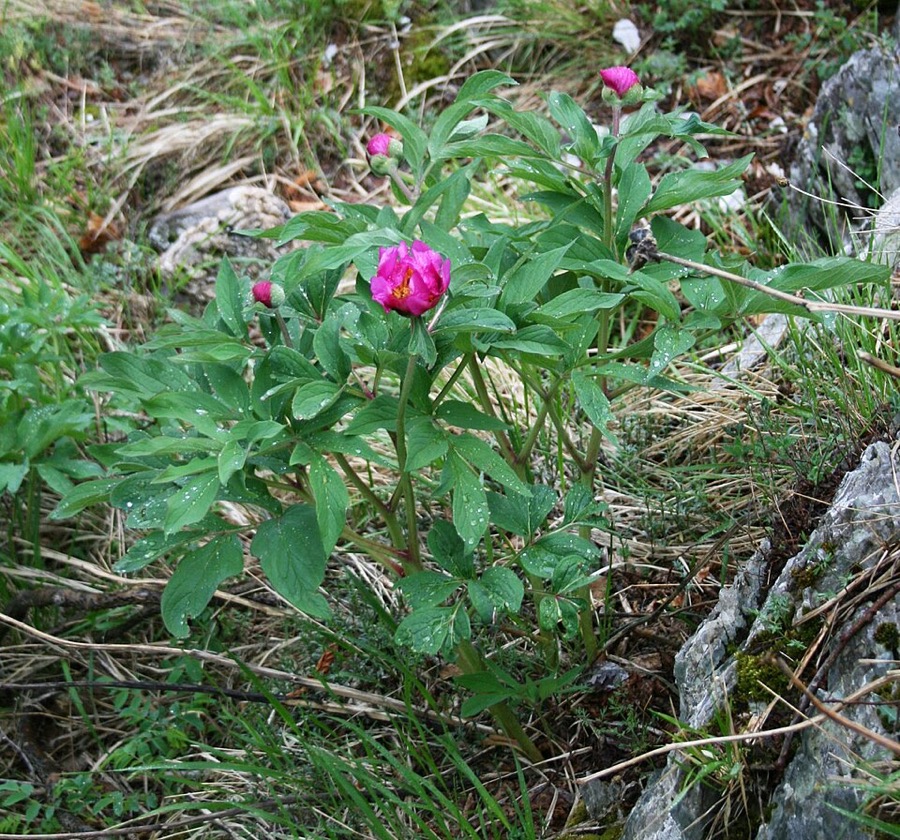 PeonyPeonia officinalis
 PeppermintMentha piperita
 PepperwortDentaria diphylla
 PerillaPerilla frutescens
The whole plate is in the library. The compass, Compare, the Sky of eleven hundred plants and the formulary open with an email address and a password, free, with the formula builder and its safety engine. Herbert without limit, his formulating, clients, the handouts and the labels are the paid room.
Open the library, free