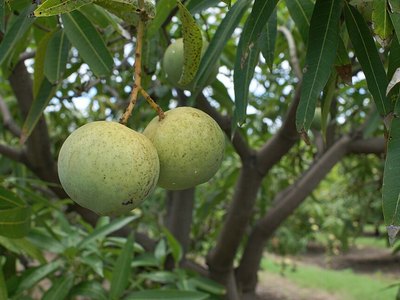
Western and Ayurvedic herbalism
Mango
Mangifera indica
Also known as Mangifera, Common mango, mango tree, Indian mango, Amra, Chuta, Rasala.
Mangifera indica, the mango tree, is a large evergreen native to South Asia and now cultivated throughout the tropics for its fruit. The eclectic physicians of the nineteenth century did not use the fruit medicinally but prepared the bark as a fluid extract and as a concentrated preparation called Specific Mangifera, valuing it as an astringent tonic for relaxed, discharging mucous membranes. It never became a mainstream botanical and today is more studied for its fruit and leaf chemistry, particularly the compound mangiferin, than used clinically as the eclectics knew it.

Ask Herbert about Mango. Herbert is the master herbalist inside Bountiful Herbs: he answers from this plate and eleven hundred others, with dosing, pairing and cautions. Your first ten questions are free.
Ask HerbertActions
Indications what the tradition reached for it in
- Atonic diarrhea with profuse mucous discharge
- Dysentery with mucopurulent stool
- Leucorrhea
- Menorrhagia
- Dysmenorrhea
- Passive uterine hemorrhage
- Relaxed, congested mucous membranes
- Low-grade malarial or septic fevers (historical use)
- Acute and chronic diarrhea
- Dysentery with blood and mucus (adjunct)
- Bleeding hemorrhoids
- Heavy menstrual bleeding and leukorrhea (adjunct)
- Mouth ulcers, bleeding gums and sore throat (gargle)
- Type 2 diabetes and prediabetes (leaf, adjunct)
- Dyslipidemia (leaf and bark, adjunct)
- Heat exhaustion and summer thirst (unripe fruit drink)
- Nausea and vomiting of pitta type (tender leaf)
- Intestinal worms in children (kernel, traditional)
- Convalescence and low weight (ripe fruit)
Specific indications
Pale, flabby mucous membranes with weak capillary tone and copious watery mucous discharge
Prolonged, exhausting menstrual flow with a sense of pelvic relaxation rather than active congestion
Safety
Low dose botanical. Used in drop doses in the classical practice; not a plant to dose freely.
Pregnancy: Avoid therapeutic bark or leaf preparations in pregnancy; there is no modern safety data and the traditional use to regulate uterine bleeding suggests possible uterine activity.
Breastfeeding: Avoid medicinal-dose bark preparations during lactation due to lack of safety data.
The record lists 4 contraindications; open the plate in the library to read them in full.
In practice
In the eclectic tradition, Mangifera bark was reached for when tissue was described as atonic rather than inflamed: pale, boggy mucous membranes, watery or mucous discharges, and a general picture of feeble capillary tone rather than acute heat or congestion.
In Ayurveda
Rasa: bark, leaf and seed kernel: kashaya (astringent); unripe fruit: amla (sour), kashaya (astringent); ripe fruit: madhura (sweet), slightly amla (sour). Virya: sheeta (cooling) for bark, leaf and kernel; the ripe fruit is described as sheeta by most texts, the unripe fruit as ushna. Vipaka: katu (pungent) for bark and kernel; madhura (sweet) for the ripe fruit. Guna: bark and kernel: laghu (light), ruksha (dry); ripe fruit: guru (heavy), snigdha (unctuous). Dosha: bark, leaf and kernel pacify kapha and pitta; the ripe fruit pacifies vata and pitta and increases kapha; the unripe fruit aggravates pitta and vata in excess. Karma: grahi (absorbent, binds the bowel); stambhana (astringent, arrests discharge); raktastambhana (checks bleeding); krimighna (anthelmintic, kernel); dahaprashamana (relieves burning); trishnanigrahana (relieves thirst); chardinigrahana (relieves vomiting, tender leaf); mukhashodhana (cleanses the mouth); vrishya (aphrodisiac, ripe fruit); balya (strengthening, ripe fruit); hridya (supports the heart); varnya (improves complexion). Classical indications: atisara (diarrhea); pravahika (dysentery); raktapitta (bleeding disorders); raktarsha (bleeding hemorrhoids); pradara (excessive menstrual and vaginal discharge); prameha (urinary disorders including diabetes); mukhapaka (mouth ulcers); dantaroga (dental disease); krimi (worms); daha (burning sensation); trishna (thirst); chardi (vomiting); kshaya (wasting, ripe fruit as nourishment). The stem bark is used in kwatha and as a gargle; the tender leaves in kwatha, as one of the Panchapallava, and dried and powdered; the seed kernel dried and powdered for diarrhea, worms and bleeding; the unripe fruit as the cooling drink amra panaka; and the ripe fruit as a nourishing food and aphrodisiac. The bark gum and the flowers have minor uses for bleeding and diarrhea. Classical formulations: Pushyanuga churna, Panchapallava kwatha, Amra beeja majja churna, Amra twak kwatha, Amra panaka, Amradi kwatha. Described in: Charaka Samhita, Sushruta Samhita, Ashtanga Hridaya, Bhavaprakasha Nighantu, Dhanvantari Nighantu, Raja Nighantu, Kaiyadeva Nighantu, Ayurvedic Pharmacopoeia of India.
Dosing as the sources wrote it
| Preparation | As written | Metric |
|---|---|---|
| Fluid extract of bark (historical eclectic dose) | 0.5-1.2 mL (15-20 minims) up to three times daily | 0.5-1.2 mL |
| Specific Mangifera (concentrated bark preparation, historical eclectic dose) | 0.06-0.12 mL (1-2 minims) up to three times daily | 0.06-0.12 mL |
| Specific Mangifera is also prepared | Dose, from one to two minims. | 0.06-0.12 mL |
| The dose need not exceed fifteen or twenty minims. | 1.23-1.23 mL | |
| Rew gives mangifera, in conjunction with sulphuric acid in small doses every two or three hours with good results. | ||
| Dose, 5 to 60 grains. | 324-3888 mg |
Doses are reproduced from the sources for practitioners and are not a recommendation for any person.
From the sources
Overview. Mangifera indica, the mango tree, is a large evergreen native to South Asia and now cultivated throughout the tropics for its fruit. The eclectic physicians of the nineteenth century did not use the fruit medicinally but prepared the bark as a fluid extract and as a concentrated preparation called Specific Mangifera, valuing it as an astringent tonic for relaxed, discharging mucous membranes. It never became a mainstream botanical and today is more studied for its fruit and leaf chemistry, particularly the compound mangiferin, than used clinically as the eclectics knew it.
Overview. Mangifera indica is a large evergreen tree of the cashew family, native to the Indian subcontinent and Myanmar and cultivated for at least four thousand years, so that India remains the world's largest producer of its fruit. In Ayurveda the tree is Amra, and every part is medicine: the astringent bark, tender leaves and seed kernel for diarrhea, bleeding and discharge, the sour unripe fruit for thirst and heat, and the ripe fruit as a sweet, heavy, aphrodisiac food. It also gives the tender leaf to the Panchapallava, the five sprouts used in cooling decoctions, and its bark and leaves are the richest common source of the xanthone mangiferin.
Clinical Notes. In the eclectic tradition, Mangifera bark was reached for when tissue was described as atonic rather than inflamed: pale, boggy mucous membranes, watery or mucous discharges, and a general picture of feeble capillary tone rather than acute heat or congestion.
Clinical Notes. The Ayurvedic practitioner treats Amra as a family of remedies rather than one. The bark and seed kernel are the astringents, given as decoction or powder with buttermilk or honey for atisara, pravahika, raktarsha and pradara, and the kernel is the classical worm remedy for children in small doses; the kernel also appears in Pushyanuga churna for menstrual disorders.
Drawn from King's American Dispensatory, 18th edition (Felter and Lloyd); Ellingwood's American Materia Medica, Therapeutics and Pharmacognosy; Felter's Eclectic Materia Medica, Pharmacology and Therapeutics, and the Bountiful Herbs editorial.
In formulas
Mango stands in 4 documented formulas in the library, among them Aśokāriṣta, Candanāsava, Grahaṇīmihira Taila.
Often paired with
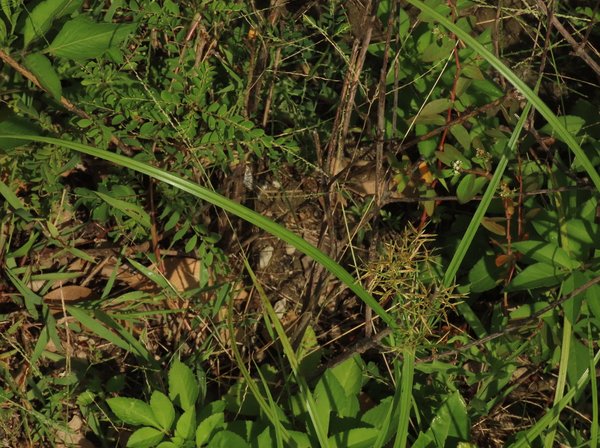 nut grassCyperus rotundus
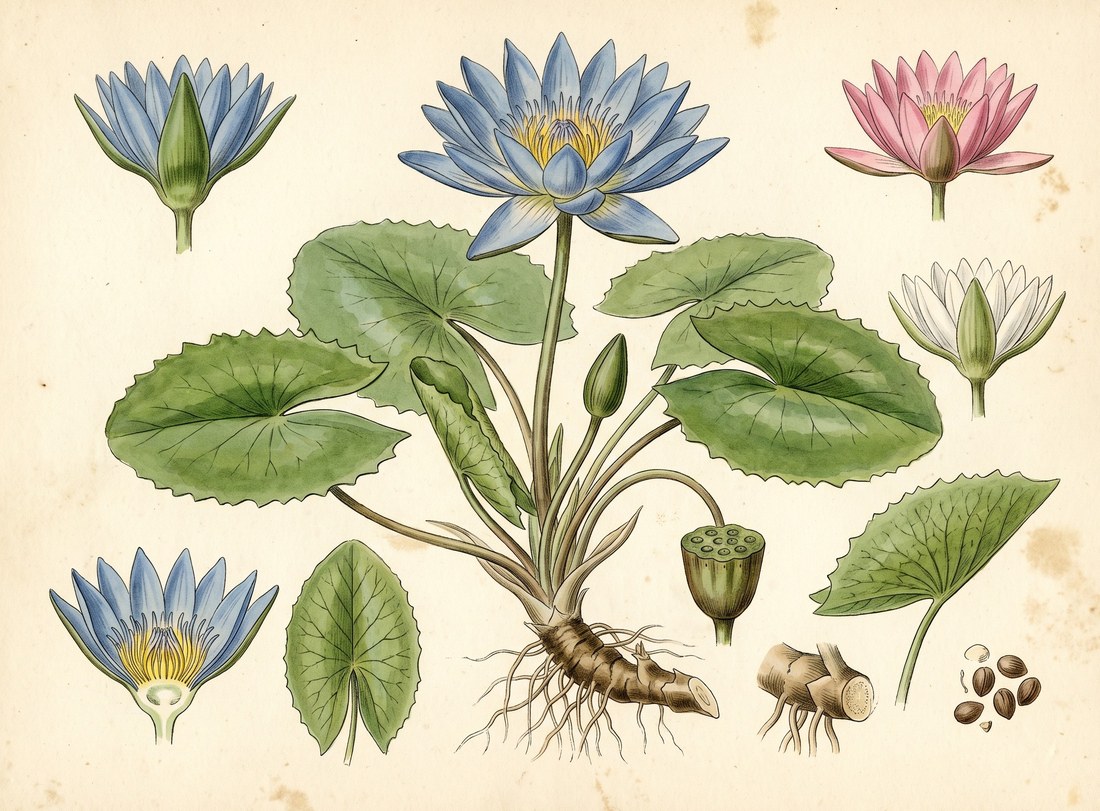 blue water lilyNymphaea stellata
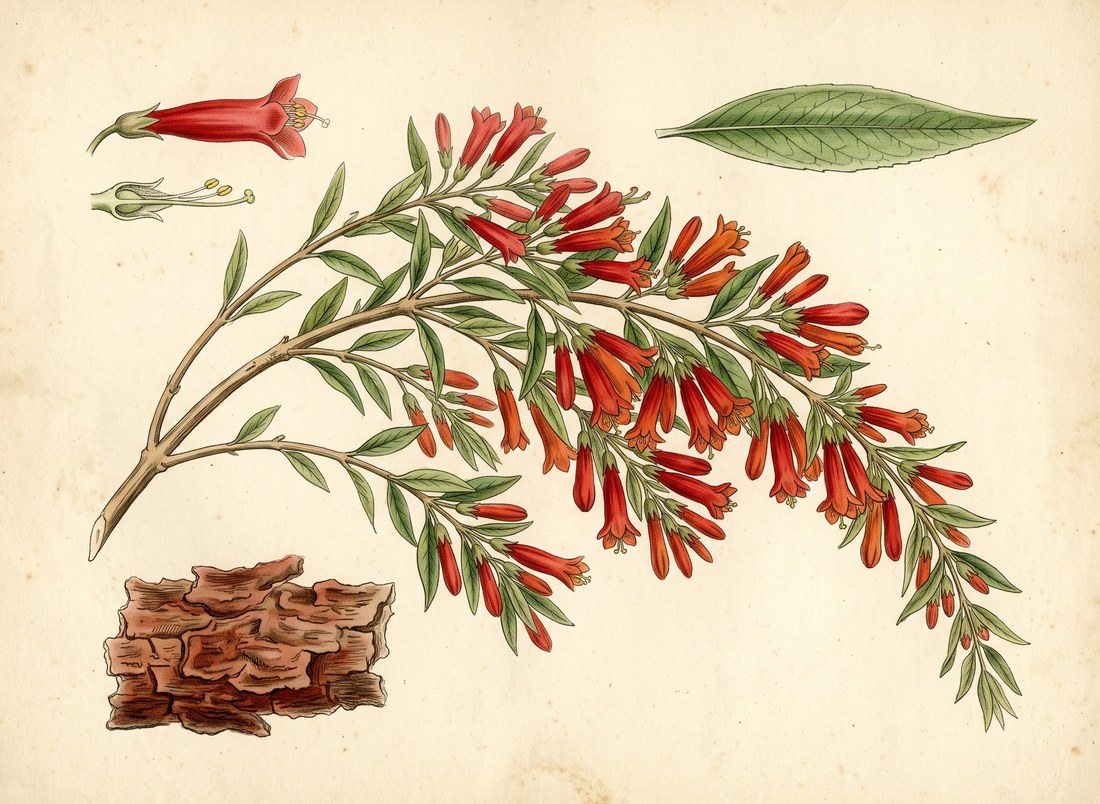 dhatakiWoodfordia fruticosa
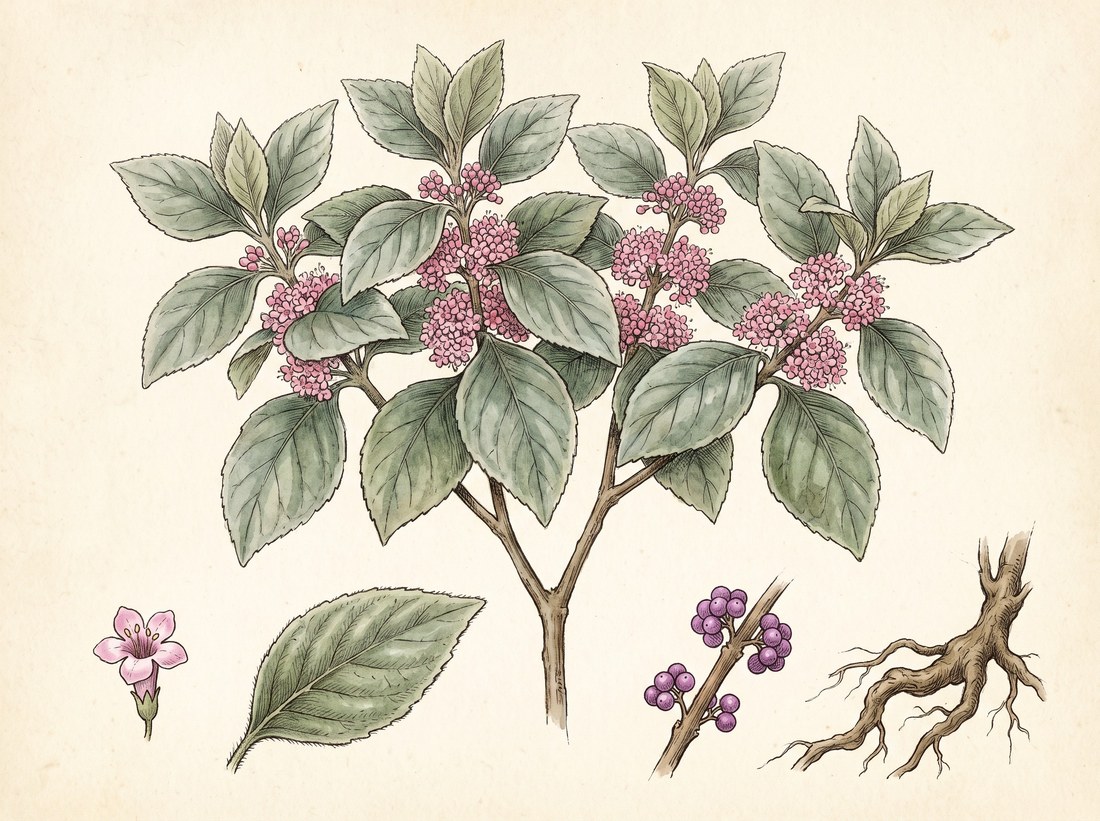 beautyberryCallicarpa macrophylla
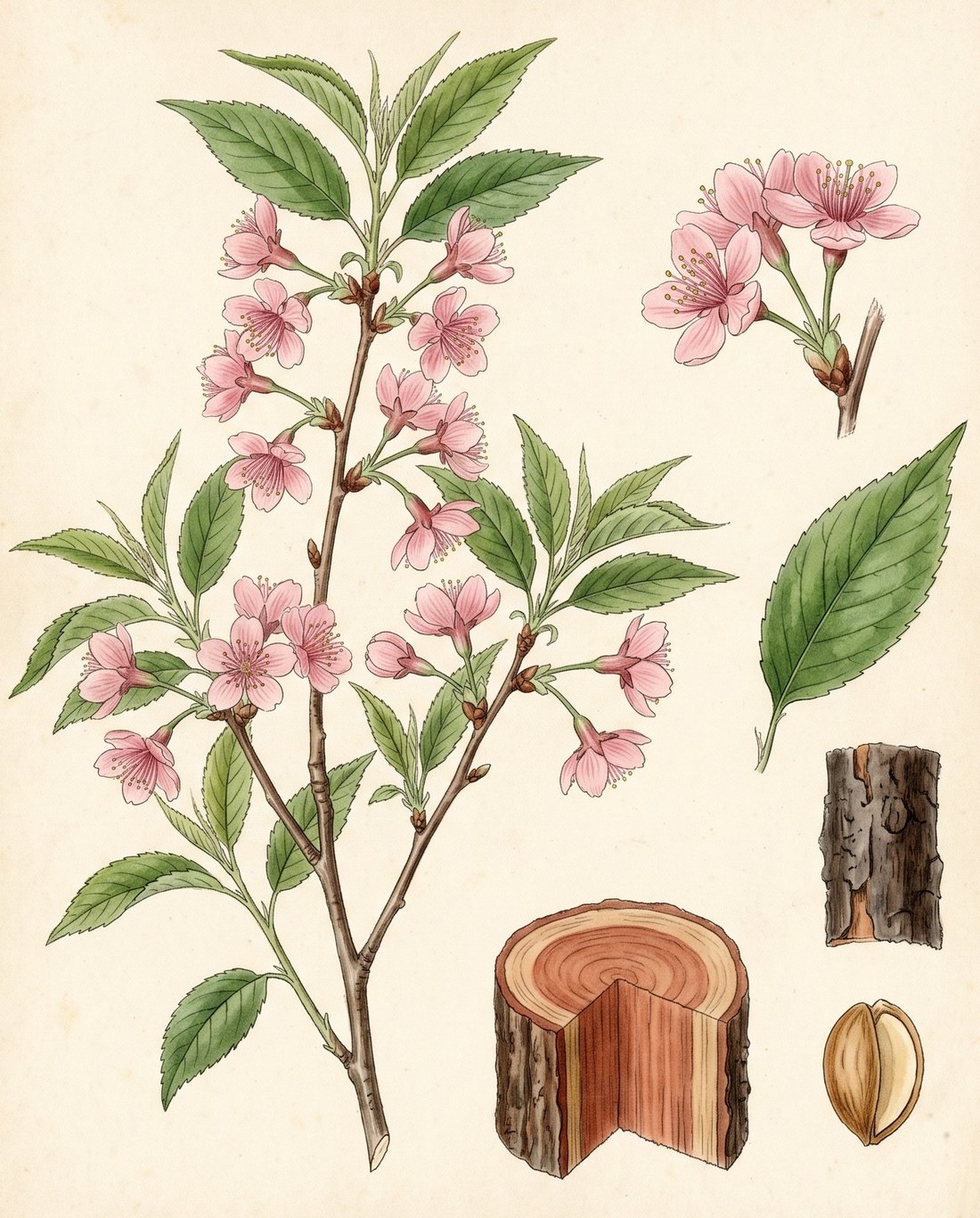 Himalayan wild cherryPrunus cerasoides
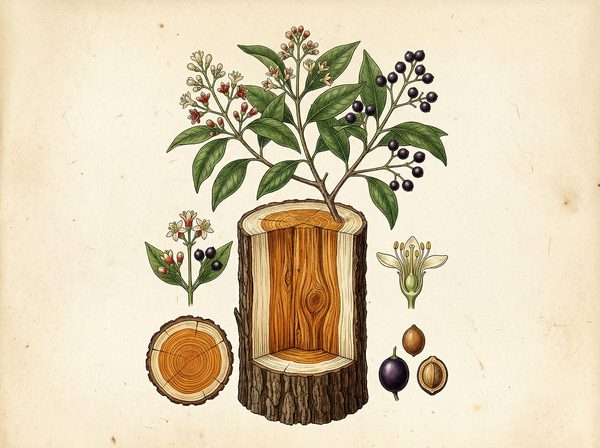 sandalwoodSantalum album
Nearby on the shelf
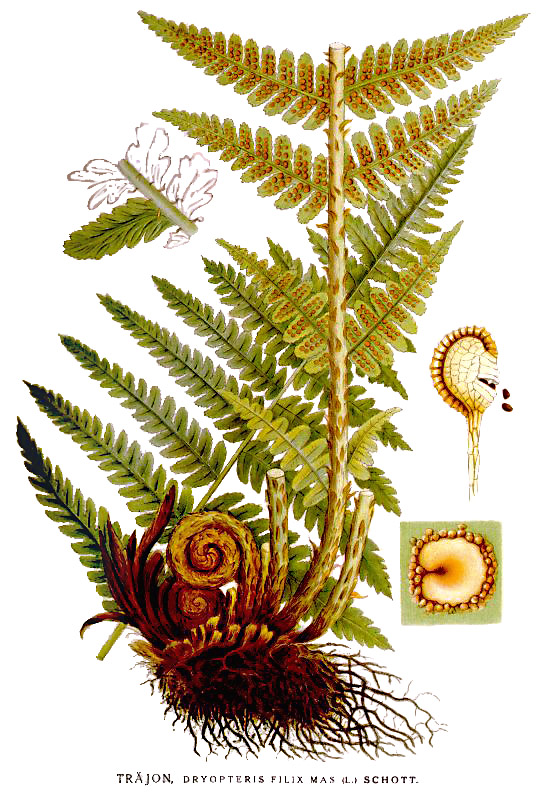 Male fernDryopteris filix-mas
 MaltMaltum
 ManacaFranciscea uniflora
 MandrakeMandragora officinarum
 Mango gingerCurcuma amada
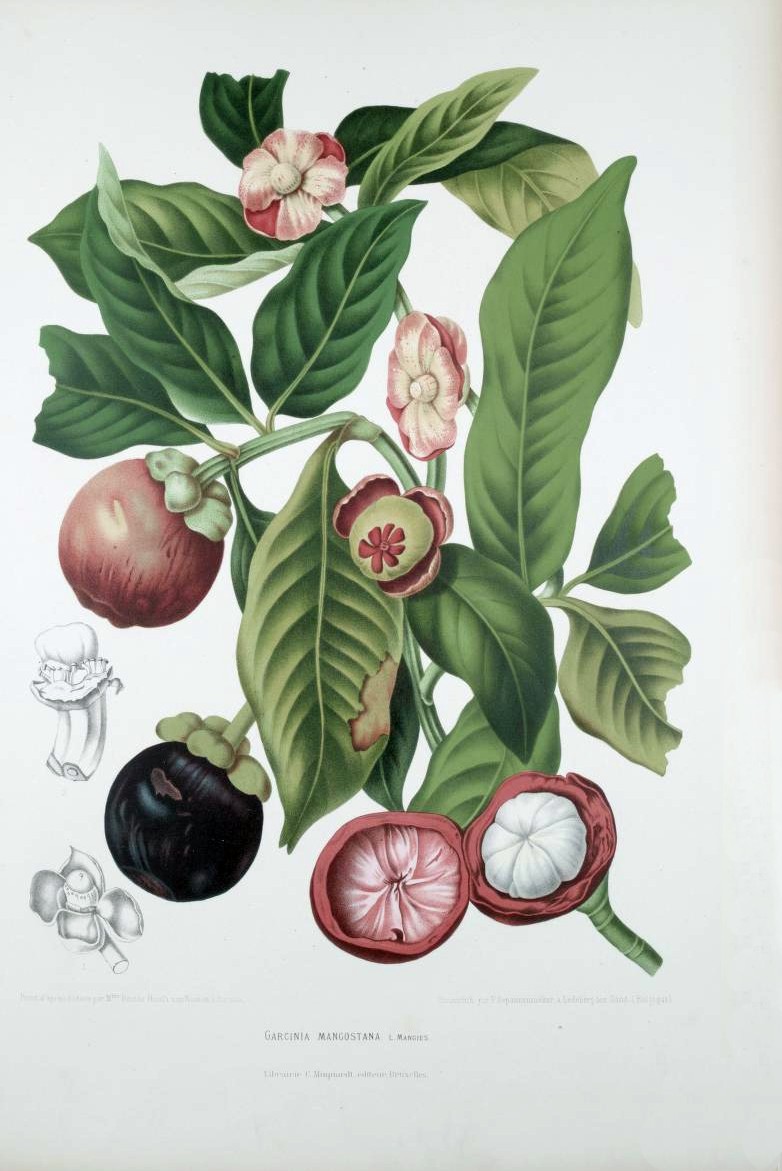 MangosteenGarcinia mangostana
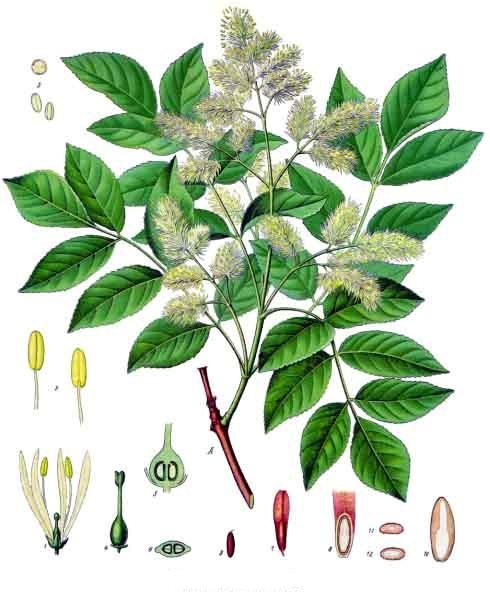 Manna ashFraxinus ornus
 MarijuanaCannabis sativa
The whole plate is in the library. The compass, Compare, the Sky of eleven hundred plants and the formulary open with an email address and a password, free, with the formula builder and its safety engine. Herbert without limit, his formulating, clients, the handouts and the labels are the paid room.
Open the library, free