Western and Ayurvedic herbalism
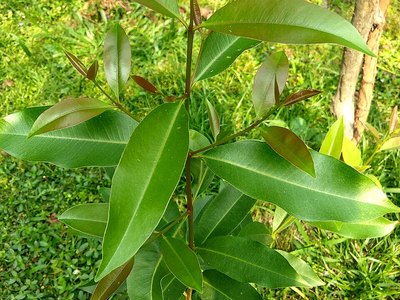
Jambul
Syzygium cumini
Also known as jamun, Java plum, black plum, Malabar plum, Indian blackberry, Eugenia Jambolana, Jamboo, Jambu, Mahaphala, Rajajambu.
Syzygium cumini is a large evergreen tree of the myrtle family native to India and Sri Lanka and planted along roads and in gardens across the whole subcontinent, bearing purple-black fruit in the early monsoon. Ayurveda calls it Jambu and prizes every part: the astringent seed for prameha and diarrhea, the bark for bleeding and dysentery, the fruit for thirst and heat, the leaf for the gums. The seed has become one of the most widely dispensed Indian botanicals for diabetes, and the fruit gives its name to Jambudvipa, the classical name for India itself.

Ask Herbert about Jambul. Herbert is the master herbalist inside Bountiful Herbs: he answers from this plate and eleven hundred others, with dosing, pairing and cautions. Your first ten questions are free.
Ask HerbertActions
Indications what the tradition reached for it in
- Type 2 diabetes with polyuria and thirst (adjunct)
- Prediabetes and metabolic syndrome (dietary adjunct)
- Chronic diarrhea and loose stools
- Dysentery with blood and mucus (adjunct)
- Bleeding hemorrhoids
- Heavy menstrual bleeding and leukorrhea
- Bleeding gums and mouth ulcers (gargle)
- Sore throat and hoarseness (gargle)
- Diabetic skin infections and slow wounds (topical wash)
- Excess thirst and burning in hot weather (fruit)
- Frequent urination of pitta type
Specific indications
A hot, thirsty diabetic patient who passes large volumes of urine, has loose stools and sweats easily, where a cooling astringent suits
Chronic diarrhea in a pitta constitution with burning and a tendency to bleed from the gums or rectum
Bleeding hemorrhoids or heavy periods in a warm, robust patient with no signs of cold or dryness
Mouth ulcers and spongy bleeding gums that want a strong astringent gargle
Safety
The record lists 7 contraindications; open the plate in the library to read them in full.
In practice
Jambu is a cooling, drying astringent, and its patients are hot and leaky: excess urine, loose stools, bleeding, sweating and thirst. For prameha the seed kernel is dried and powdered and taken twice daily with water before meals, alone or with Gudmar, Amalaki, Haridra and Methika; Ayurvedic practice combines it with dietary change and it is not expected to replace medication.
In Ayurveda
Rasa: kashaya (astringent), madhura (sweet), amla (sour). Virya: sheeta (cooling). Vipaka: katu (pungent). Guna: guru (heavy), ruksha (dry). Dosha: pacifies pitta and kapha; aggravates vata in excess. Karma: grahi (absorbs, binds the bowel); stambhana (checks discharge and bleeding); pramehahara (relieves urinary disorders including diabetes); raktapittahara (checks bleeding disorders); kanthya (good for the throat and voice); ruchya (improves taste); deepana (kindles digestion); vranaropana (heals wounds); kushthaghna (relieves skin disease); trishnanigrahana (relieves thirst); mutrasangrahaniya (reduces urine output). Classical indications: prameha (urinary disorders including diabetes); madhumeha (diabetes mellitus); atisara (diarrhea); pravahika (dysentery); raktapitta (bleeding disorders); raktarsha (bleeding hemorrhoids); pradara (excessive menstrual or vaginal discharge); trishna (thirst); daha (burning sensation); mukhapaka (stomatitis); vrana (wounds); bahumutrata (polyuria). The dried seed kernel is powdered for prameha and diarrhea; the stem bark is decocted and used as a gargle, wash and internal astringent; the ripe fruit is eaten fresh or made into a fermented asava and a vinegar; the tender leaf is chewed or decocted for bleeding gums and diarrhea. Classical formulations: Jambvasava, Jambu beeja churna, Pushyanuga churna, Nyagrodhadi churna, Jambu twak kwatha, Jambu sirka (fruit vinegar), Mehantaka vati (some formulations). Described in: Charaka Samhita, Sushruta Samhita, Ashtanga Hridaya, Bhavaprakasha Nighantu, Dhanvantari Nighantu, Raja Nighantu, Madanapala Nighantu, Kaiyadeva Nighantu, Ayurvedic Pharmacopoeia of India.
Dosing as the sources wrote it
| Preparation | As written | Metric |
|---|---|---|
| Churna (seed) | 3-6 g powdered seed kernel twice daily with water before meals | 3000-6000 mg |
| Kwatha (bark) | 50-100 mL decoction twice daily | 50-100 mL |
| Asava | 12-24 mL twice daily after food | 12-24 mL |
| Swarasa (fruit or leaf) | 10-20 mL fresh juice twice daily | 10-20 mL |
| Gargle, topical | 50-100 mL bark decoction used as a gargle or wound wash twice daily | 50-100 mL |
| Jambul seeds in powdered form | Dose, three to ten grains, two or three times a day. | 194-648 mg |
Doses are reproduced from the sources for practitioners and are not a recommendation for any person.
From the sources
Overview. Syzygium cumini is a large evergreen tree of the myrtle family native to India and Sri Lanka and planted along roads and in gardens across the whole subcontinent, bearing purple-black fruit in the early monsoon. Ayurveda calls it Jambu and prizes every part: the astringent seed for prameha and diarrhea, the bark for bleeding and dysentery, the fruit for thirst and heat, the leaf for the gums. The seed has become one of the most widely dispensed Indian botanicals for diabetes, and the fruit gives its name to Jambudvipa, the classical name for India itself.
Clinical Notes. Jambu is a cooling, drying astringent, and its patients are hot and leaky: excess urine, loose stools, bleeding, sweating and thirst. For prameha the seed kernel is dried and powdered and taken twice daily with water before meals, alone or with Gudmar, Amalaki, Haridra and Methika; Ayurvedic practice combines it with dietary change and it is not expected to replace medication.
Therapy. Its specific therapeutic application lies in the fact that the bark and the seeds possess the property of arresting excessive formation and excretion of sugar in diabetes, the seeds being the most active.
Physiological Action. The exact influence of this agent upon the system is not well known. It is a stomachic astringent and carminative, a remedy of value in diarrheas. It is non-toxic and non-irritant. In the diarrheas of children the juice of the fresh bark and leaves is used by the native physicians, though all parts of the plant are astringent.
Drawn from Ellingwood's American Materia Medica, Therapeutics and Pharmacognosy, and the Bountiful Herbs editorial.
In formulas
Jambul stands in 2 documented formulas in the library, among them Uśīrāsava, Grahaṇīmihira Taila.
Often paired with
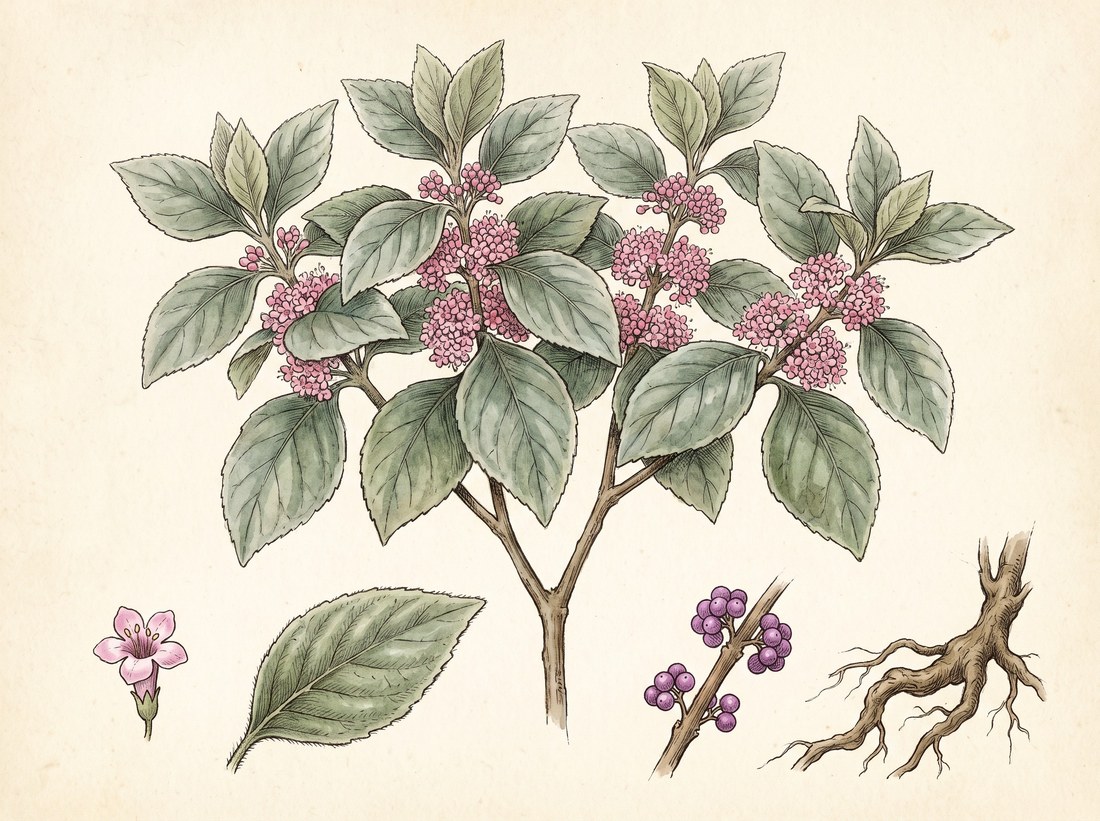 beautyberryCallicarpa macrophylla
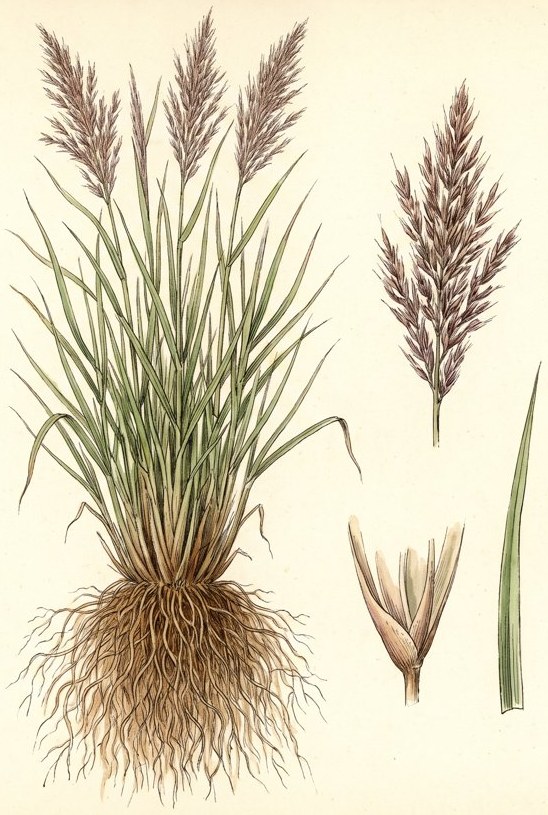 vetiverChrysopogon zizanioides
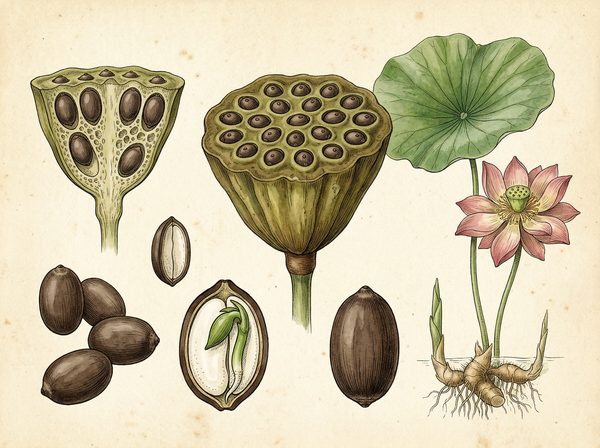 sacred lotusNelumbo nucifera
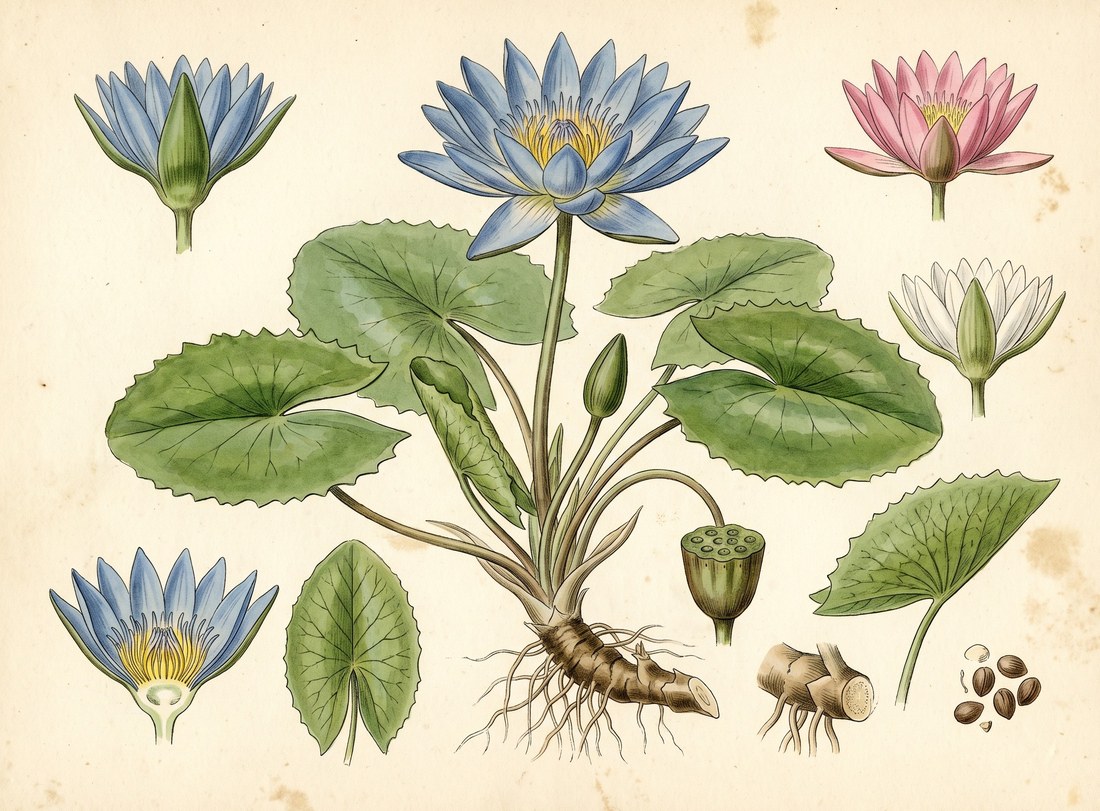 blue water lilyNymphaea stellata
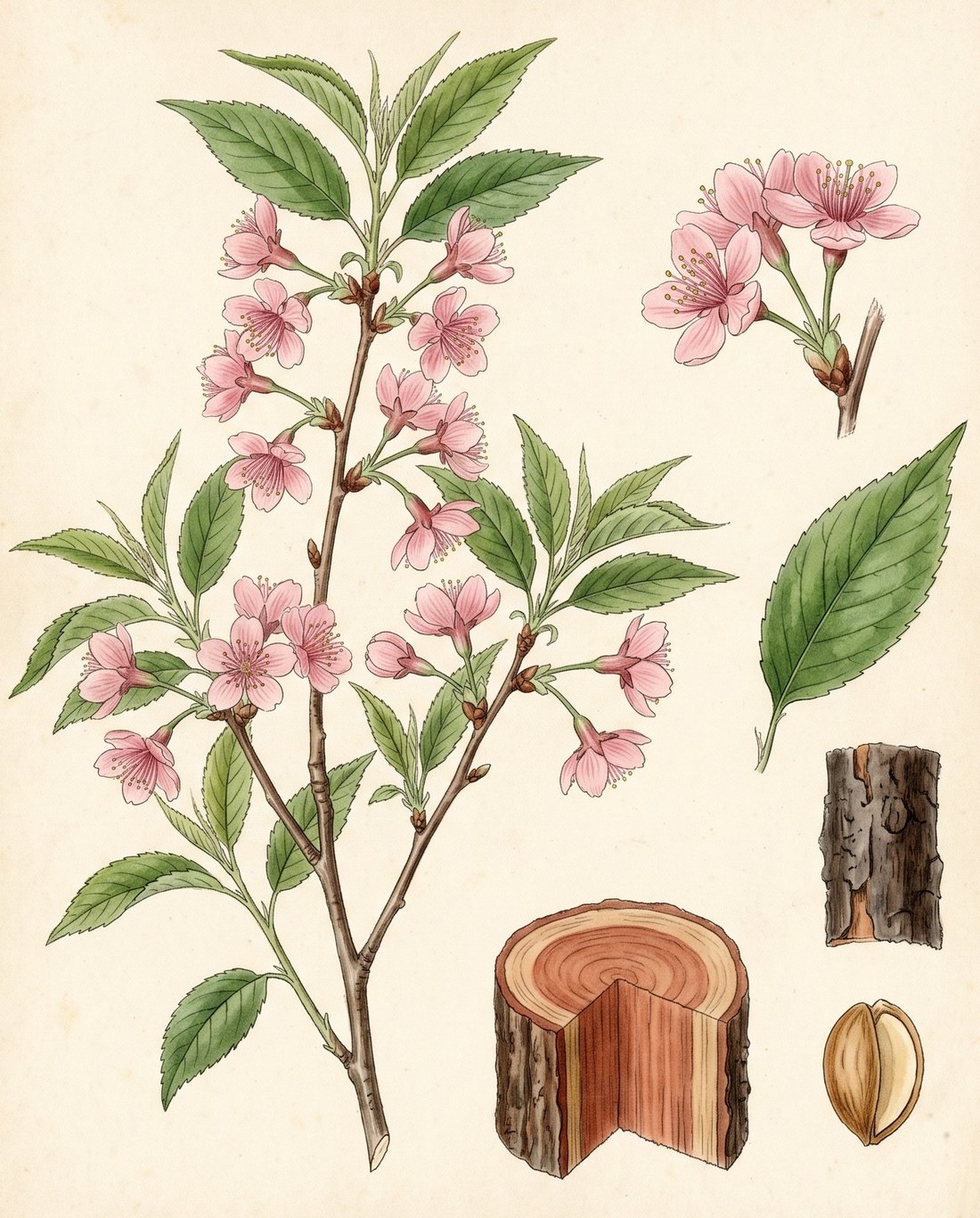 Himalayan wild cherryPrunus cerasoides
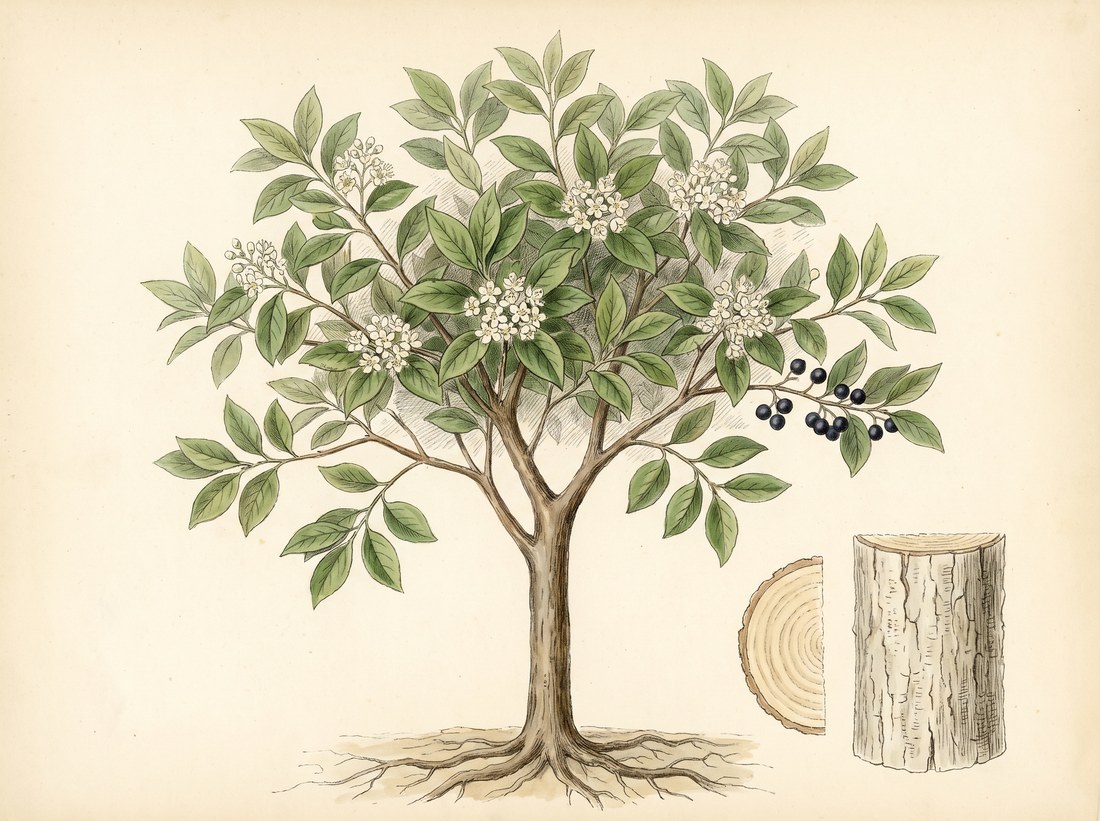 lodh treeSymplocos racemosa
Nearby on the shelf
 JaborandiPilocarpus jaborandi
 JacarandaJacaranda
 JalapIpomea jalapa
 Jamaican dogwoodPiscidia piscipula
 Japanese angelicaAngelica acutiloba
 Japanese climbing fernLygodium japonicum
 Japanese KnotweedReynoutria japonica
 Japanese stemonaStemona japonica
The whole plate is in the library. The compass, Compare, the Sky of eleven hundred plants and the formulary open with an email address and a password, free, with the formula builder and its safety engine. Herbert without limit, his formulating, clients, the handouts and the labels are the paid room.
Open the library, free