Ayurvedic Herbalism
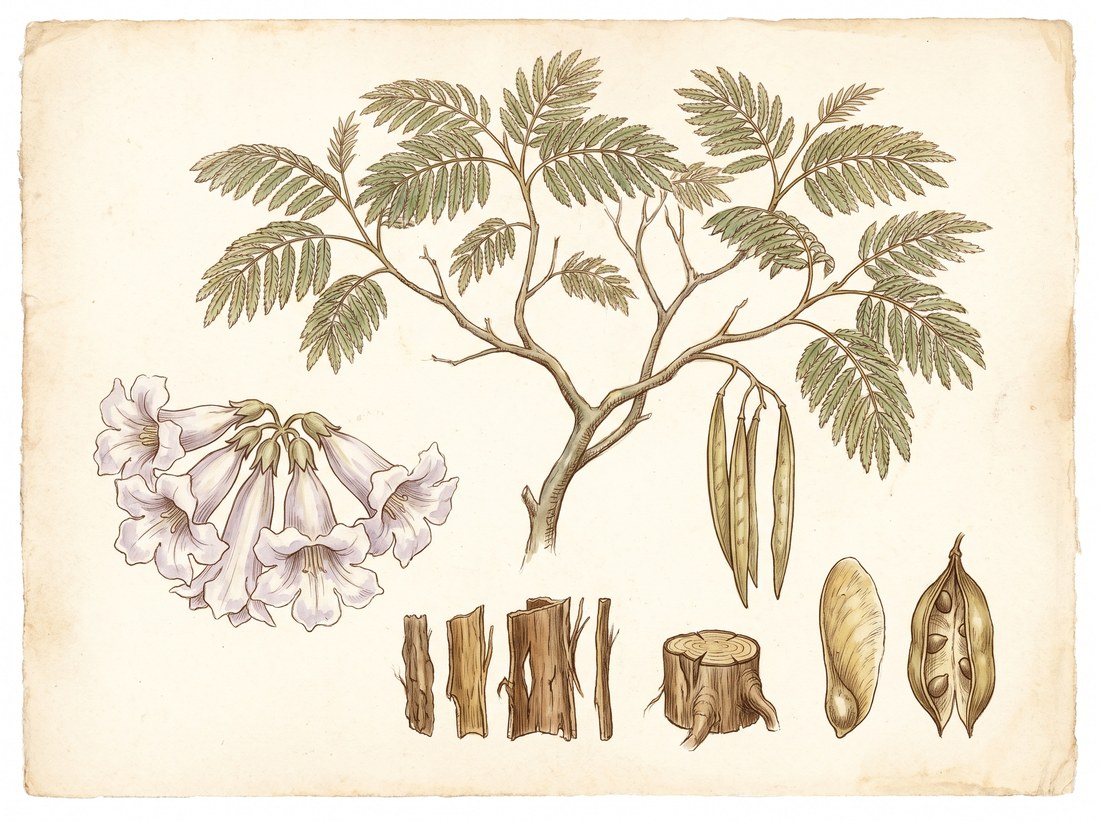
Indian trumpet flower
Oroxylum indicum
Also known as Indian trumpet tree, broken bones tree, midnight horror, tree of Damocles, Shyonaka, Shuka nasa, Aralu.
Oroxylum indicum is a small, sparsely branched tree of moist deciduous forest across India, the Himalayan foothills and Southeast Asia, unmistakable for its huge night blooming flowers and its sword shaped fruits a meter long that hang from the bare branches. Ayurveda knows the root bark as Shyonaka, one of the Brihat Panchamoola, the five great roots, and so a constituent of Dashamoola, the ten root decoction that underpins much of the tradition's treatment of pain, inflammation and vata disorders. It is heavily collected from the wild and is now listed as vulnerable in parts of its range.

Ask Herbert about Indian trumpet flower. Herbert is the master herbalist inside Bountiful Herbs: he answers from this plate and eleven hundred others, with dosing, pairing and cautions. Your first ten questions are free.
Ask HerbertActions
Indications what the tradition reached for it in
- Rheumatoid arthritis and inflammatory joint pain
- Osteoarthritis with swelling
- Low back pain and sciatica (in Dashamoola)
- Chronic diarrhea and dysentery
- Postpartum recovery and pain (in Dashamoola preparations)
- Fever with body ache
- Chronic bronchitis and cough
- Allergic rhinitis and sinus congestion
- Hemorrhoids
- Gastric ulcer (adjunct, traditional)
- Skin eruptions with itching
- Convalescent weakness after fever
Specific indications
Swollen, painful, stiff joints in a heavy, sluggish patient with poor digestion and loose stools, the classical amavata picture that Dashamoola addresses
The postpartum woman with body ache, backache, low fever and weak digestion, for whom Dashamoolarishta is the traditional restorative
Chronic diarrhea with griping in a patient who also has aching joints and a coated tongue
Recurrent sinus congestion and cough in a cold, damp constitution where bitter, warming and drying qualities are all wanted
Safety
The record lists 6 contraindications; open the plate in the library to read them in full.
In practice
Shyonaka is rarely dispensed alone; its home is Dashamoola, where it stands with Bilva, Agnimantha, Patala and Gambhari among the great roots and with the five small roots of Bala, Gokshura and the Shalaparni group.
In Ayurveda
Rasa: tikta (bitter), kashaya (astringent), madhura (sweet). Virya: ushna (heating). Vipaka: katu (pungent). Guna: laghu (light), ruksha (dry). Dosha: pacifies all three doshas, kapha and vata most; the bitter astringent taste also settles pitta. Karma: shothahara (reduces swelling); vedanasthapana (relieves pain); deepana (kindles digestion); grahi (absorbs, binds the stool); amapachana (digests ama); jvaraghna (relieves fever); kasahara (relieves cough); vatahara (pacifies vata); raktashodhana (cleanses blood); krimighna (anthelmintic). Classical indications: amavata (rheumatoid type joint disease); sandhivata (osteoarthritis); atisara (diarrhea); grahani (malabsorption); arsha (hemorrhoids); jvara (fever); kasa and shvasa (cough and dyspnea); shotha (edema and inflammation); pratishyaya (rhinitis); kushtha (skin disease); shula (colic); karnaroga (ear disorders). The root bark is the classical drug and one of the ten roots of Dashamoola, given as kwatha, as churna, in the fermented Dashamoolarishta and in avaleha. The stem bark is used in the same way where root is unavailable, the seed is given as churna for cough and the tender fruit is cooked as a bitter vegetable. A special preparation, Shyonaka putapaka, roasts the bark in a leaf wrapped clay covering to express a juice used in diarrhea. Classical formulations: Dashamoola kwatha, Dashamoolarishta, Chyawanprash, Dashamoola taila, Dhanwantharam taila, Brihat panchamoola kwatha, Shyonaka putapaka, Amritarishta. Described in: Charaka Samhita, Sushruta Samhita, Ashtanga Hridaya, Bhavaprakasha Nighantu, Dhanvantari Nighantu, Raja Nighantu, Kaiyadeva Nighantu, Madanapala Nighantu, Sharngadhara Samhita, Ayurvedic Pharmacopoeia of India.
Dosing as the sources wrote it
| Preparation | As written | Metric |
|---|---|---|
| Kwatha | 50-100 mL root bark decoction twice daily | 50-100 mL |
| Churna | 3-6 g bark powder twice daily with warm water | 3000-6000 mg |
| Arishta (Dashamoolarishta) | 12-24 mL twice daily after food | 12-24 mL |
| Dashamoola kwatha | 50-100 mL decoction twice daily before food | 50-100 mL |
| Seed churna | 1-3 g seed powder twice daily with honey for cough | 1000-3000 mg |
Doses are reproduced from the sources for practitioners and are not a recommendation for any person.
From the sources
Overview. Oroxylum indicum is a small, sparsely branched tree of moist deciduous forest across India, the Himalayan foothills and Southeast Asia, unmistakable for its huge night blooming flowers and its sword shaped fruits a meter long that hang from the bare branches. Ayurveda knows the root bark as Shyonaka, one of the Brihat Panchamoola, the five great roots, and so a constituent of Dashamoola, the ten root decoction that underpins much of the tradition's treatment of pain, inflammation and vata disorders. It is heavily collected from the wild and is now listed as vulnerable in parts of its range.
Clinical Notes. Shyonaka is rarely dispensed alone; its home is Dashamoola, where it stands with Bilva, Agnimantha, Patala and Gambhari among the great roots and with the five small roots of Bala, Gokshura and the Shalaparni group.
Ayurvedic Profile. Rasa: tikta (bitter), kashaya (astringent), madhura (sweet). Virya: ushna (heating). Vipaka: katu (pungent). Guna: laghu (light), ruksha (dry). Dosha: pacifies all three doshas, kapha and vata most; the bitter astringent taste also settles pitta.
Conservation. Wild populations are declining across India from unsustainable root bark collection and the species is listed as vulnerable in several states; use stem bark or cultivated material where possible.
In formulas
Indian trumpet flower stands in 28 documented formulas in the library, among them Ayaskṛti, Daśamūlāriṣṭa, Mṛtasaṅjīvanī Surā, Miśreyārka, Cyavanaprāśa, Brāhma Rasāyana.
Often paired with
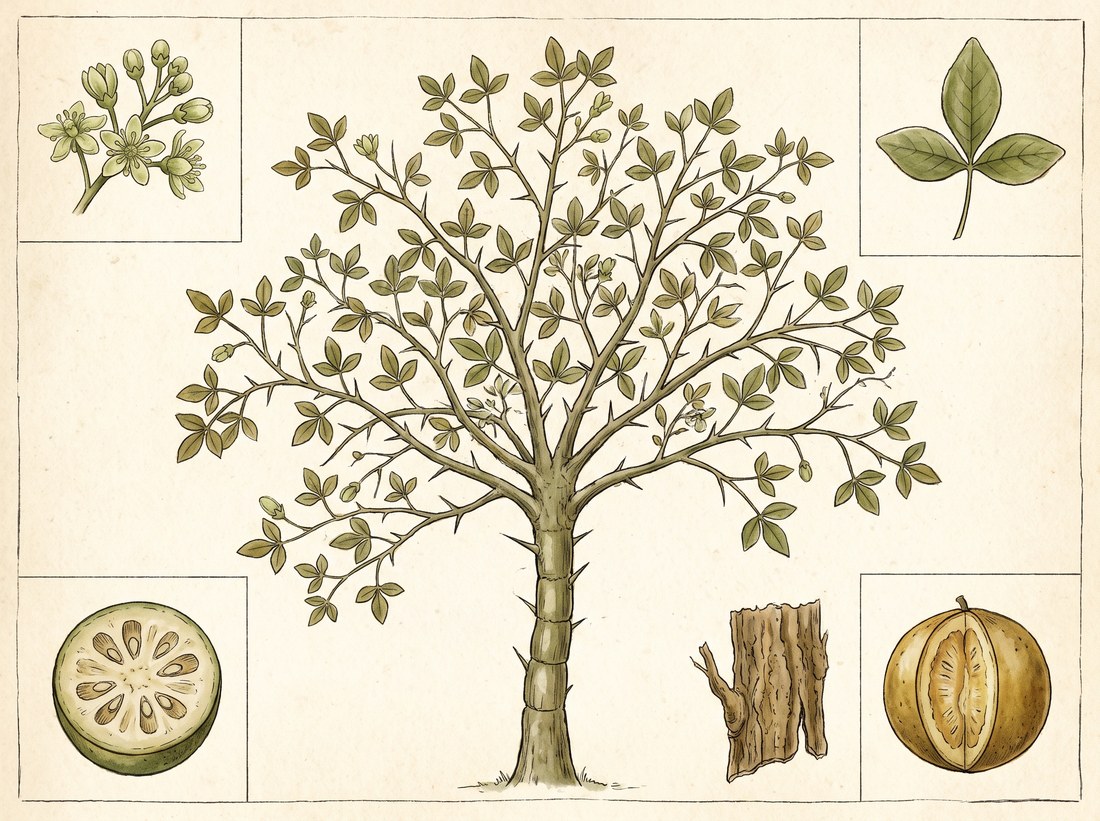 baelAegle marmelos
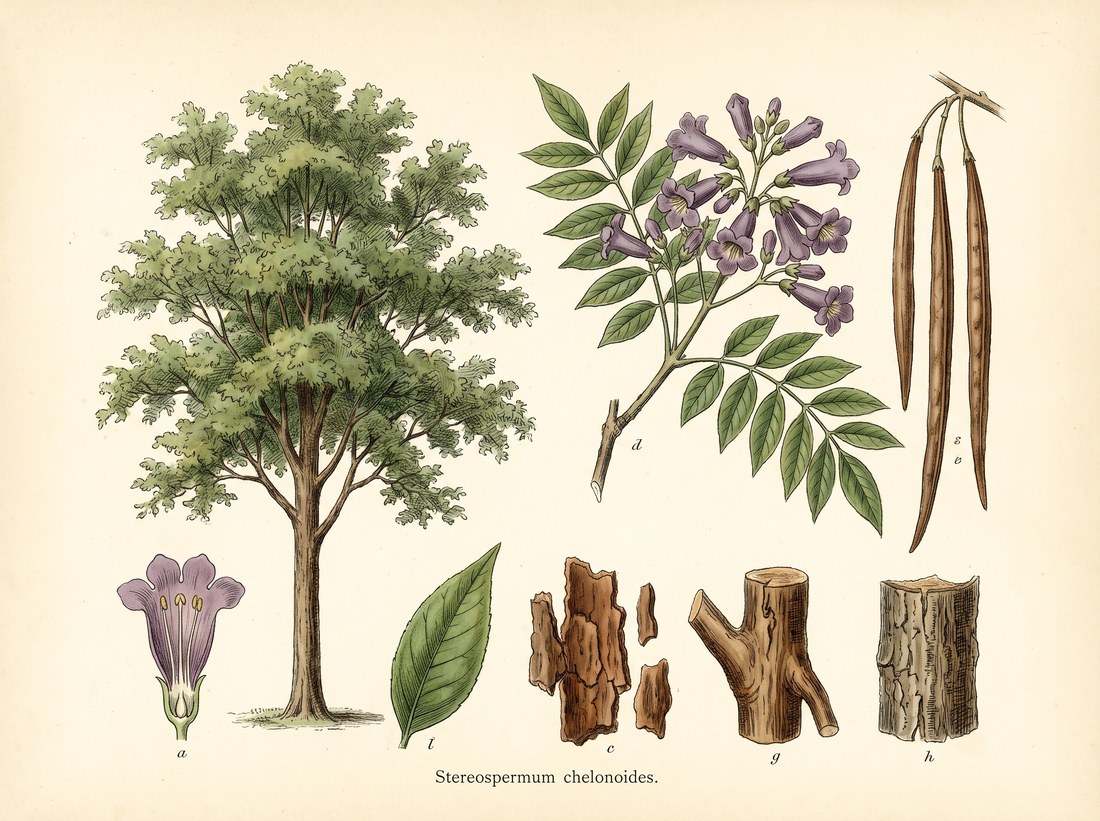 fragrant padri treeStereospermum suaveolens
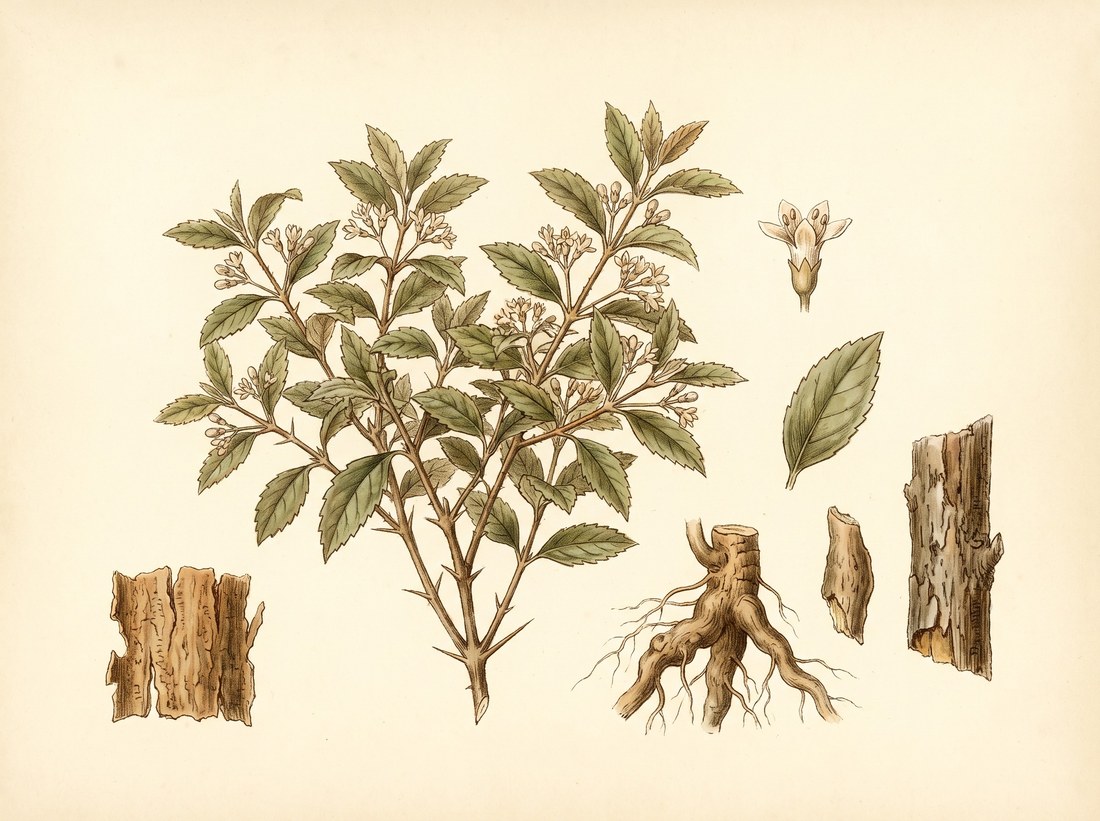 agnimanthaPremna serratifolia
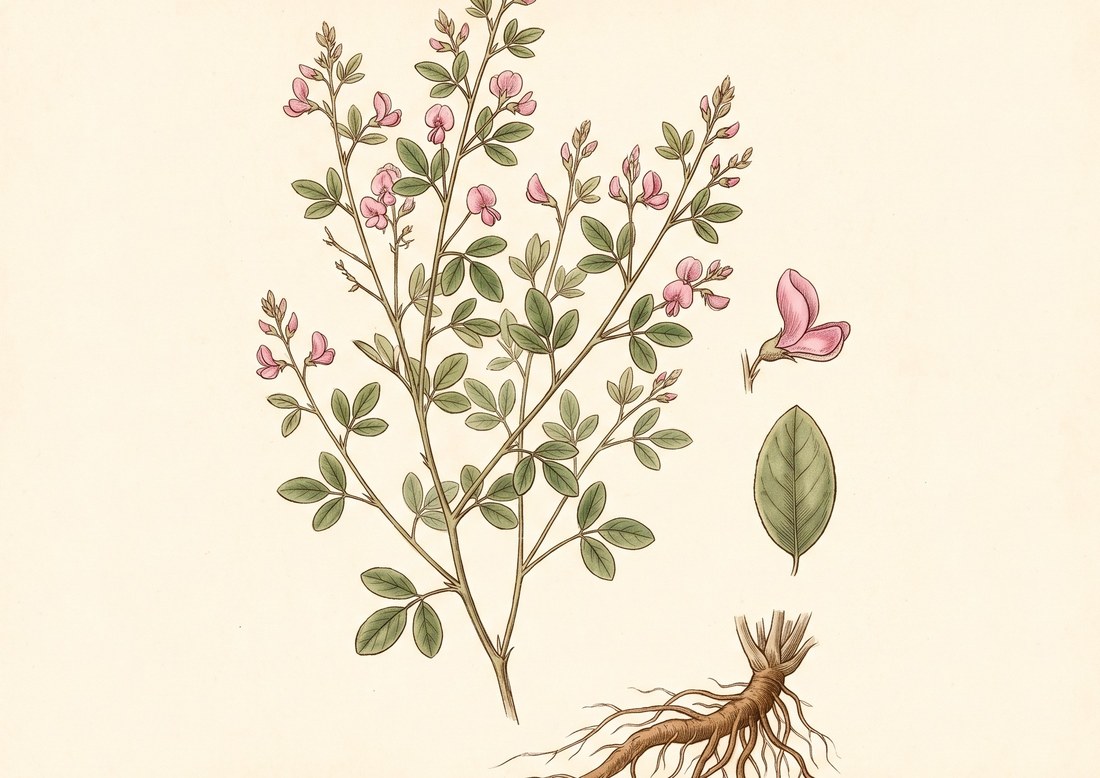 shalparniDesmodium gangeticum
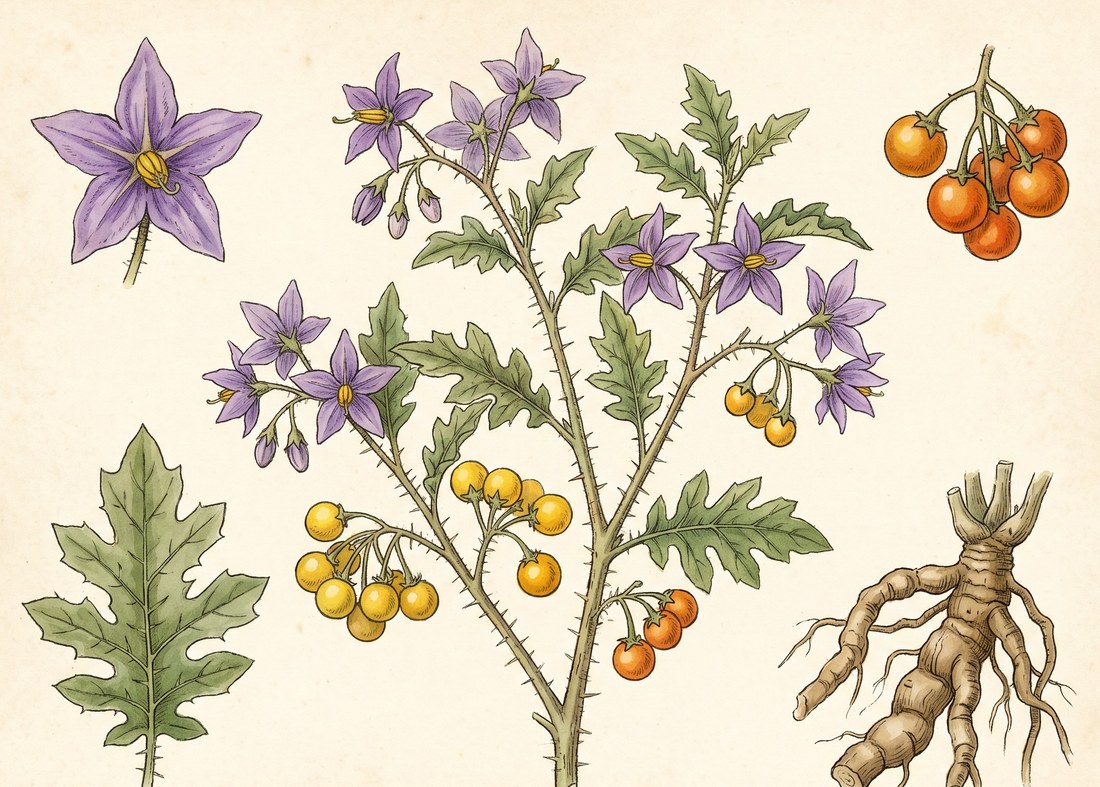 Indian nightshadeSolanum indicum
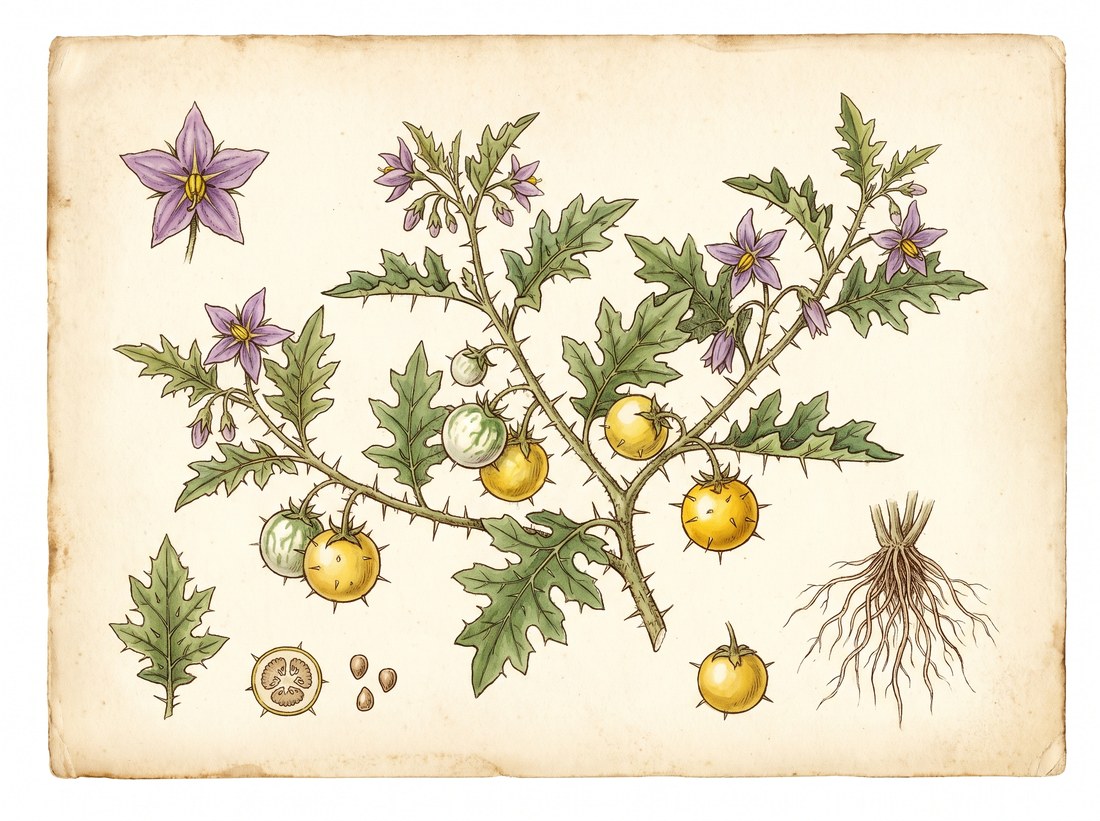 yellow-berried nightshadeSolanum xanthocarpum
Nearby on the shelf
 Indian snakerootRauvolfia serpentina
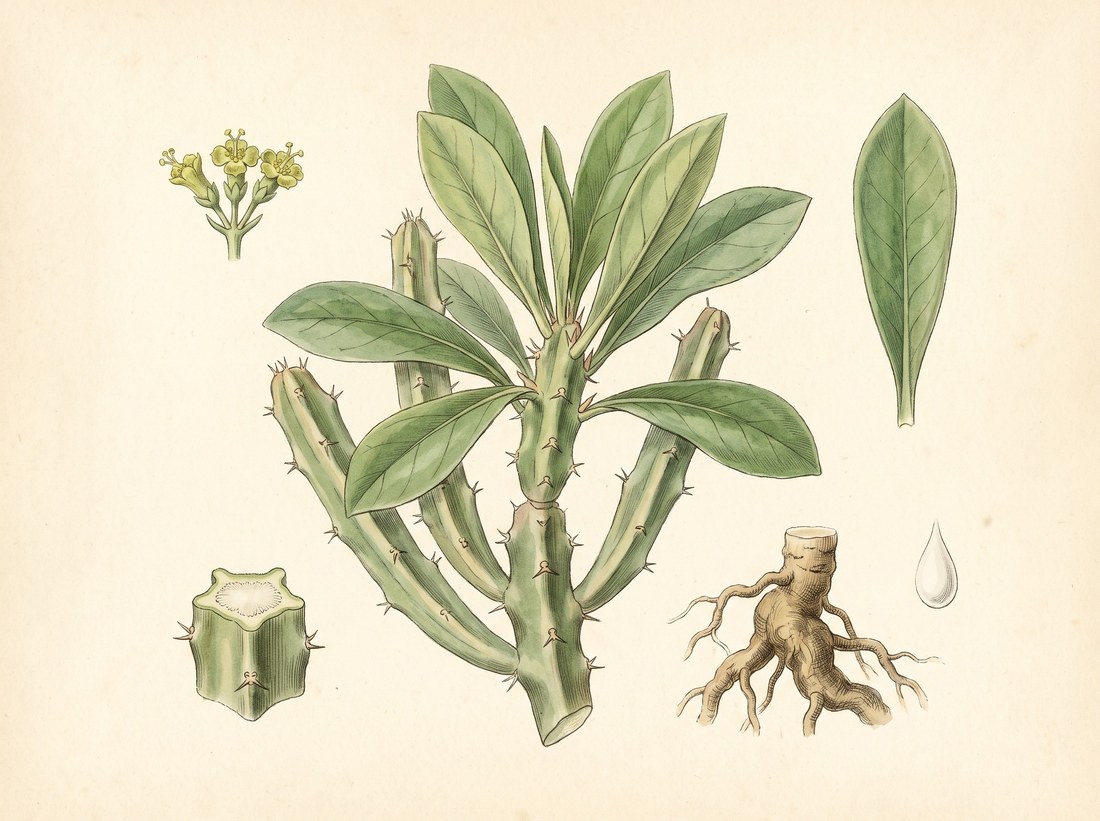 Indian spurge treeEuphorbia neriifolia
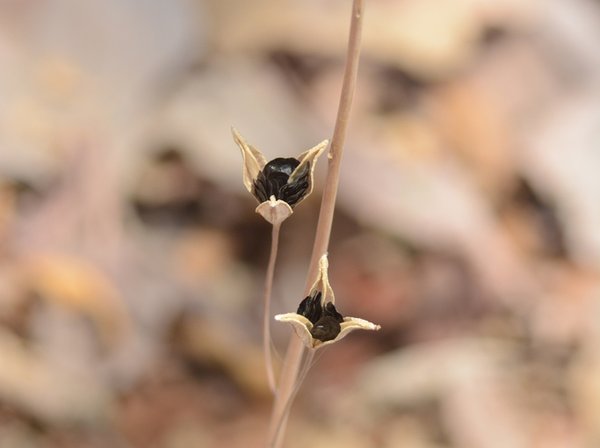 Indian SquillUrginea indica
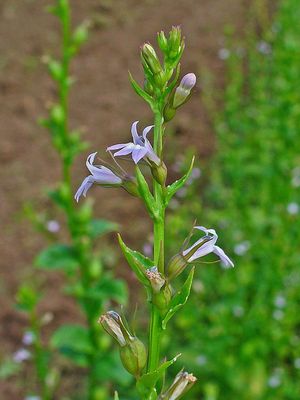 Indian tobaccoLobelia inflata
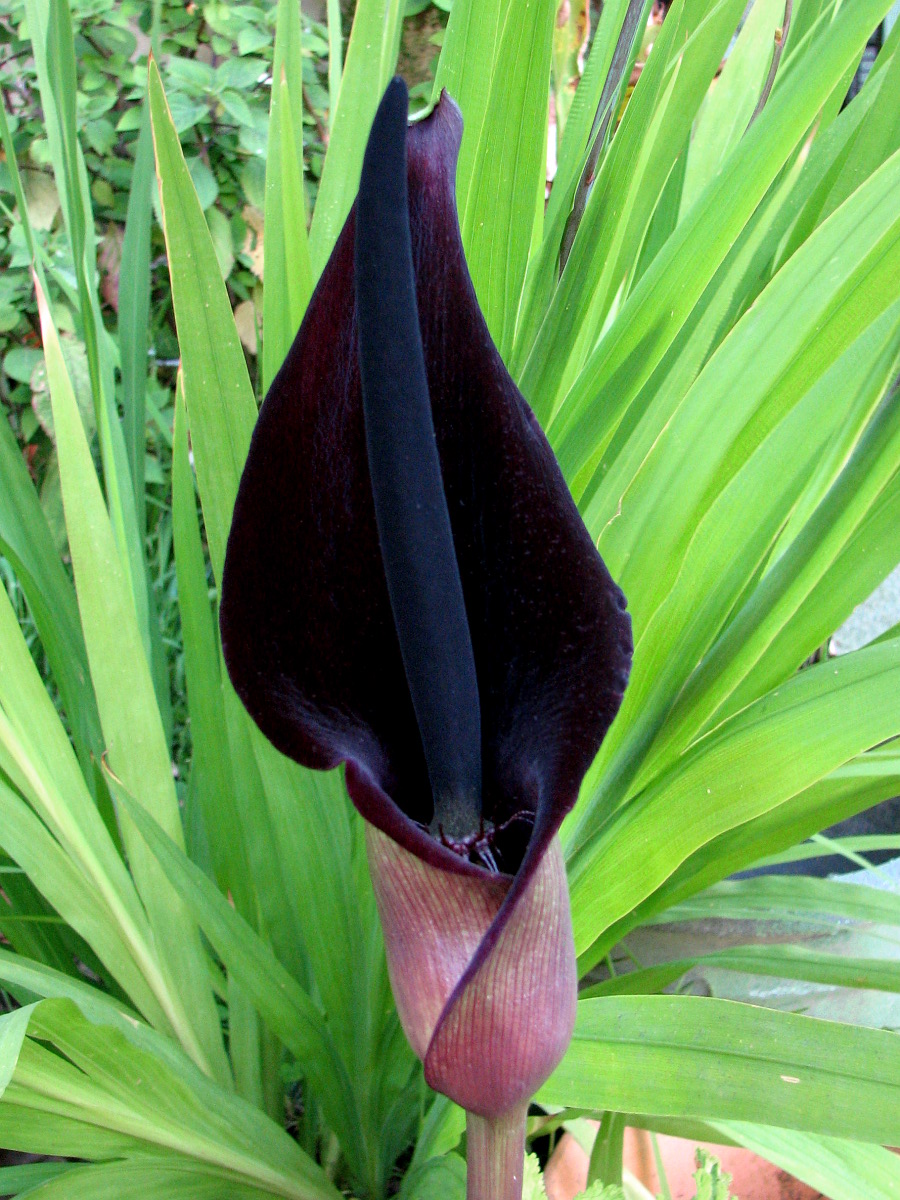 Indian turnipArisaema triphyllum
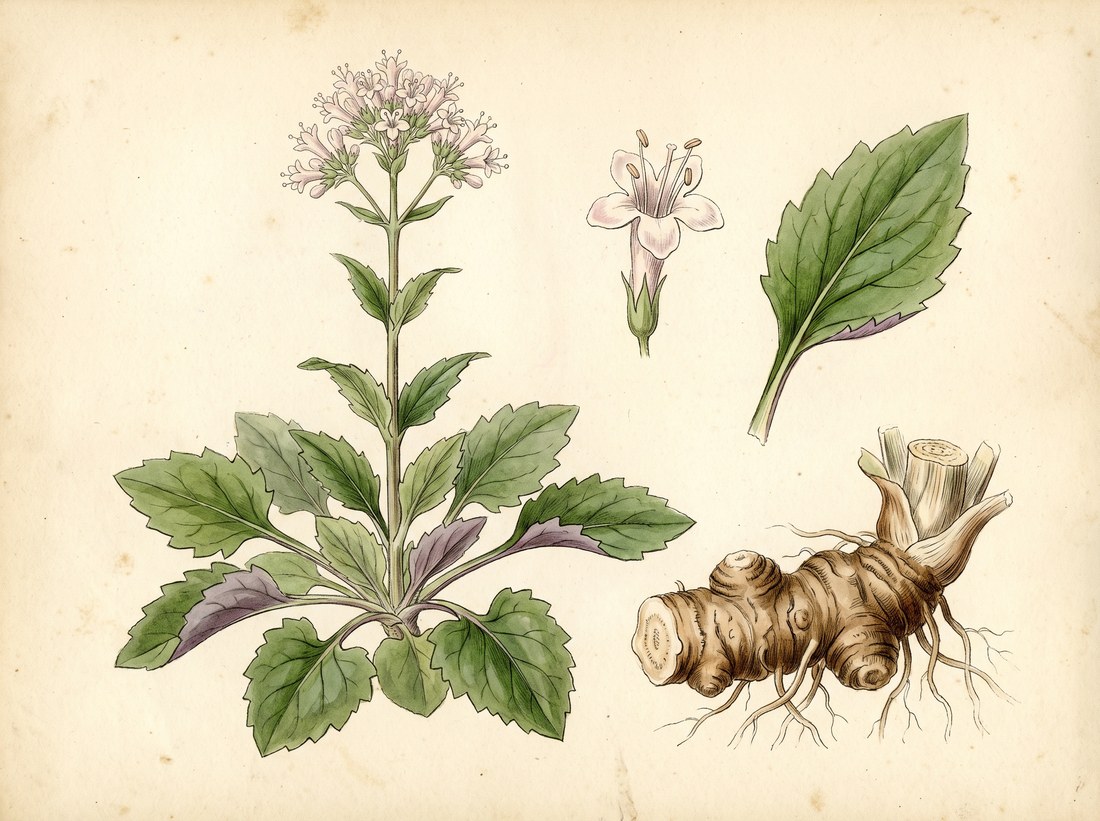 Indian valerianValeriana jatamansi
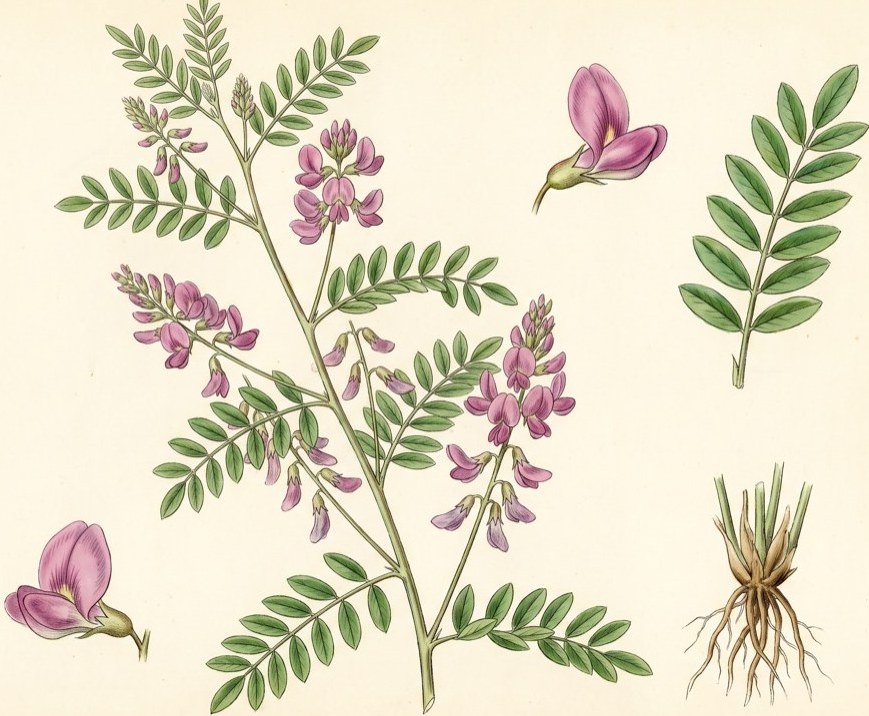 IndigoIndigo
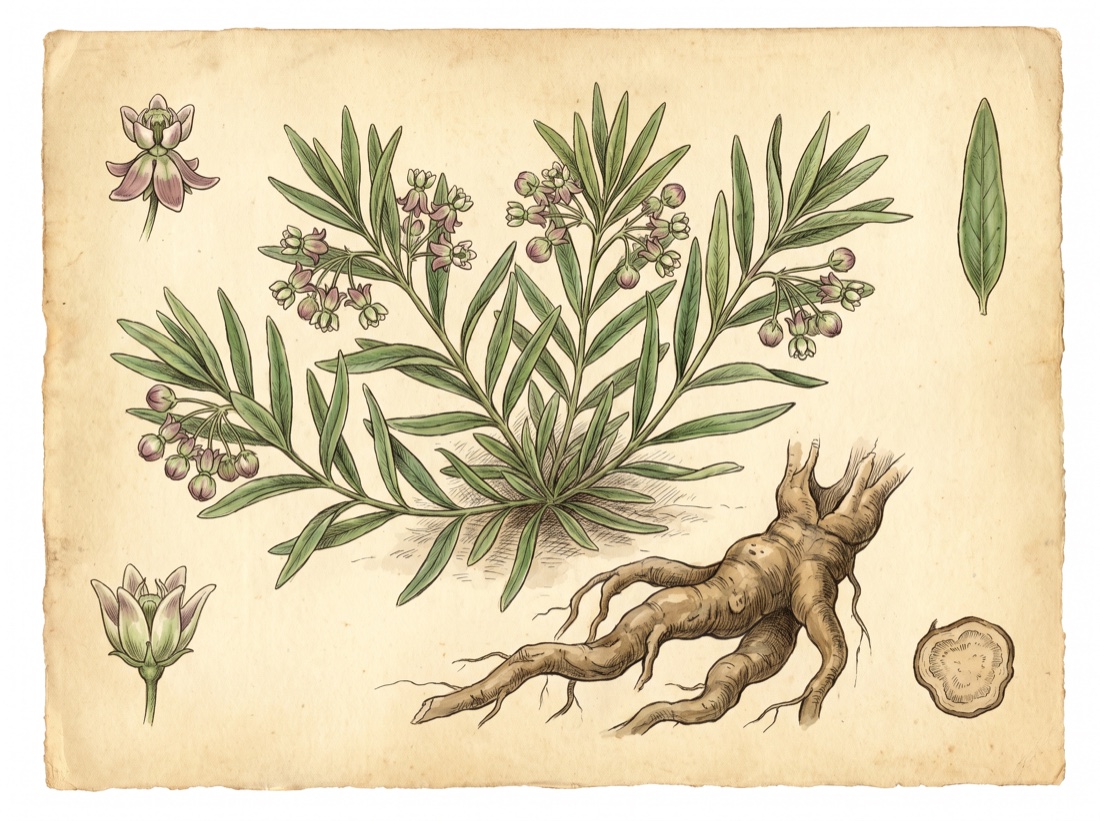 InmortalAsclepias asperula
The whole plate is in the library. The compass, Compare, the Sky of eleven hundred plants and the formulary open with an email address and a password, free, with the formula builder and its safety engine. Herbert without limit, his formulating, clients, the handouts and the labels are the paid room.
Open the library, free