Ayurvedic Herbalism
Agnimantha
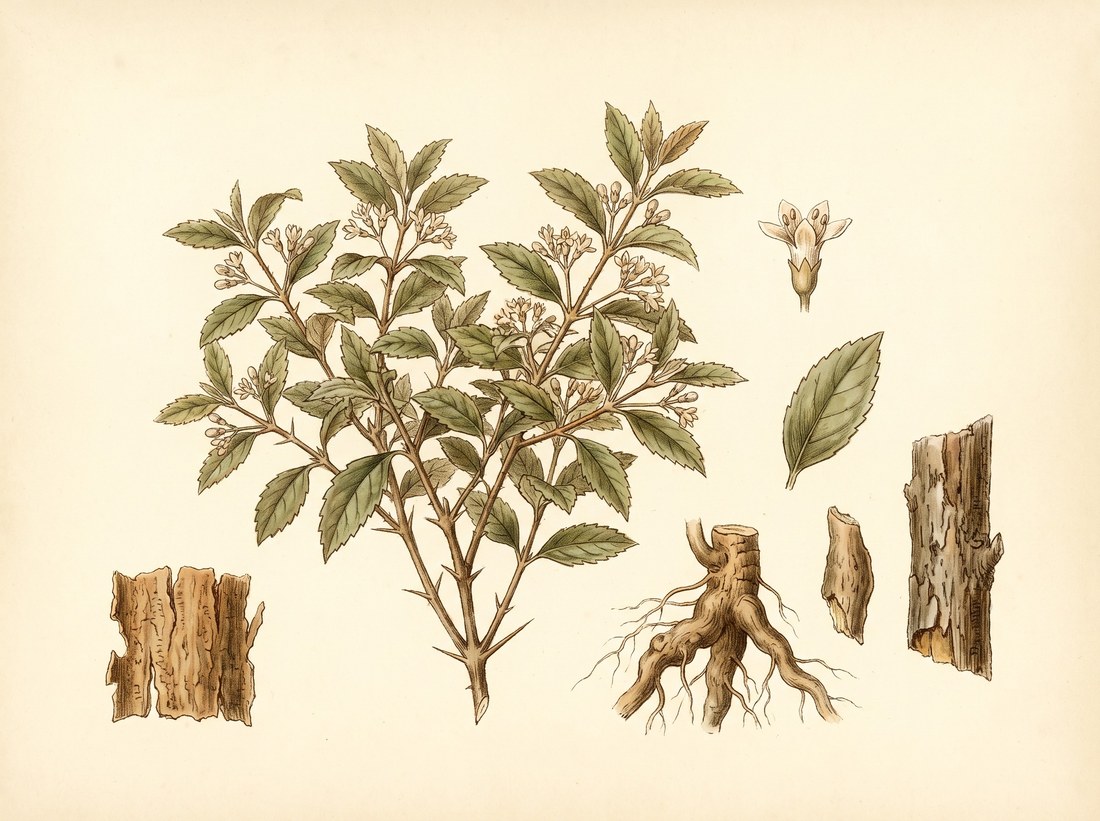
Premna serratifolia
Also known as headache tree, arani, coastal premna, Agnimantha, Arani, Jaya.
Premna serratifolia, long known to Ayurveda as Premna integrifolia, is a small thorny tree or large shrub of the mint family, growing along the coasts and in the dry forests of India, Sri Lanka and across the Indian Ocean to Southeast Asia and the Pacific. It is Agnimantha, the wood that yields fire by friction, one of the ten roots of Dashamoola and one of the greater five roots, valued as a warming, drying root for swelling, stiffness, weak digestion and obesity. Because wild root is scarce, the stem bark is now the common trade form and several other Premna species and unrelated plants are sold under the name.

Ask Herbert about Agnimantha. Herbert is the master herbalist inside Bountiful Herbs: he answers from this plate and eleven hundred others, with dosing, pairing and cautions. Your first ten questions are free.
Ask HerbertActions
Indications what the tradition reached for it in
- Edema and inflammatory swelling of the limbs
- Rheumatoid and osteoarthritis with stiffness and cold
- Low back pain and sciatica as part of Dashamoola
- Sluggish digestion with bloating and constipation
- Obesity with heaviness and water retention
- Anemia with poor appetite (traditional)
- Hemorrhoids with constipation
- Chronic fatty liver and raised liver enzymes (preliminary)
- Urticaria and allergic skin swelling (traditional)
- Postpartum vata disorders as part of Dashamoola preparations
- Wound healing (leaf paste)
Specific indications
A heavy, cold, sedentary patient with puffy legs, stiff joints and a slow bowel who feels better with warmth and movement
Chronic low back pain and stiffness in a vata constitution, where the Dashamoola decoction is the traditional base
Weight gain with water retention and sluggish digestion where a warming, drying, mildly laxative root is wanted
Postpartum heaviness, aches and poor appetite where Dashamoolarishta is the classical tonic
Safety
Pregnancy: Avoid the single herb in pregnancy as a precaution: no published safety class is known to us and there are no safety data, although Dashamoola preparations containing it are given postpartum under Ayurvedic supervision.
The record lists 6 contraindications; open the plate in the library to read them in full.
In practice
Agnimantha is rarely given alone; it earns its place through Dashamoola, the decoction of ten roots that is Ayurveda's foundational treatment for vata disorders, edema, arthritis, cough with wheeze and the depletion that follows childbirth.
In Ayurveda
Rasa: tikta (bitter), katu (pungent), kashaya (astringent), madhura (sweet). Virya: ushna (heating). Vipaka: katu (pungent). Guna: laghu (light), ruksha (dry). Dosha: pacifies vata and kapha; may aggravate pitta in excess. Karma: vatahara (pacifies vata); shothahara (reduces swelling); deepana (kindles digestion); pachana (digestive, clears ama); kaphahara (reduces kapha); medohara (reduces fat); panduhara (relieves anemia); vibandhahara (relieves constipation); shulaprashamana (relieves colic); jvaraghna (relieves fever). Classical indications: shotha (inflammatory swelling and edema); vatavyadhi (neuromuscular and joint disorders of vata); amavata (rheumatoid type arthritis); agnimandya (weak digestion); vibandha (constipation); arsha (hemorrhoids); pandu (anemia); medoroga (obesity); sthaulya (corpulence); jvara (fever); gulma (abdominal mass or bloating); shitapitta (urticaria). The root and root bark are the classical drug, given as kwatha and churna and as one of the ten roots of Dashamoola; the stem bark is substituted when root is scarce, and the leaf is used as a warm poultice for swelling and as a vegetable in fevers. Classical formulations: Dashamoola kwatha, Dashamoolarishta, Brihat panchamoola kwatha, Dhanwantaram taila, Chyawanprash, Agnimanthadi kwatha, Narayana taila, Dashamoola haritaki. Described in: Charaka Samhita, Sushruta Samhita, Ashtanga Hridaya, Bhavaprakasha Nighantu, Dhanvantari Nighantu, Raja Nighantu, Kaiyadeva Nighantu, Ayurvedic Pharmacopoeia of India.
Dosing as the sources wrote it
| Preparation | As written | Metric |
|---|---|---|
| Churna | 3-6 g powdered root or stem bark twice daily with warm water | 3000-6000 mg |
| Kwatha | 50-100 mL root decoction twice daily | 50-100 mL |
| Arishta | 12-24 mL Dashamoolarishta twice daily after food | 12-24 mL |
| Kalka, topical | 10-20 g warmed leaf paste applied to swelling once or twice daily | 10000-20000 mg |
Doses are reproduced from the sources for practitioners and are not a recommendation for any person.
From the sources
Overview. Premna serratifolia, long known to Ayurveda as Premna integrifolia, is a small thorny tree or large shrub of the mint family, growing along the coasts and in the dry forests of India, Sri Lanka and across the Indian Ocean to Southeast Asia and the Pacific. It is Agnimantha, the wood that yields fire by friction, one of the ten roots of Dashamoola and one of the greater five roots, valued as a warming, drying root for swelling, stiffness, weak digestion and obesity. Because wild root is scarce, the stem bark is now the common trade form and several other Premna species and unrelated plants are sold under the name.
Clinical Notes. Agnimantha is rarely given alone; it earns its place through Dashamoola, the decoction of ten roots that is Ayurveda's foundational treatment for vata disorders, edema, arthritis, cough with wheeze and the depletion that follows childbirth.
Ayurvedic Profile. Rasa: tikta (bitter), katu (pungent), kashaya (astringent), madhura (sweet). Virya: ushna (heating). Vipaka: katu (pungent). Guna: laghu (light), ruksha (dry). Dosha: pacifies vata and kapha; may aggravate pitta in excess.
Conservation. Wild root is overharvested for the Dashamoola trade and stem bark is now the usual substitute; cultivation is limited, so favor sustainably harvested bark over root.
In formulas
Agnimantha stands in 28 documented formulas in the library, among them Daśamūlāriṣṭa, Miśreyārka, Cyavanaprāśa, Brāhma Rasāyana, Bhārṅgī Guḍa, Indukānta Ghṛta.
Often paired with
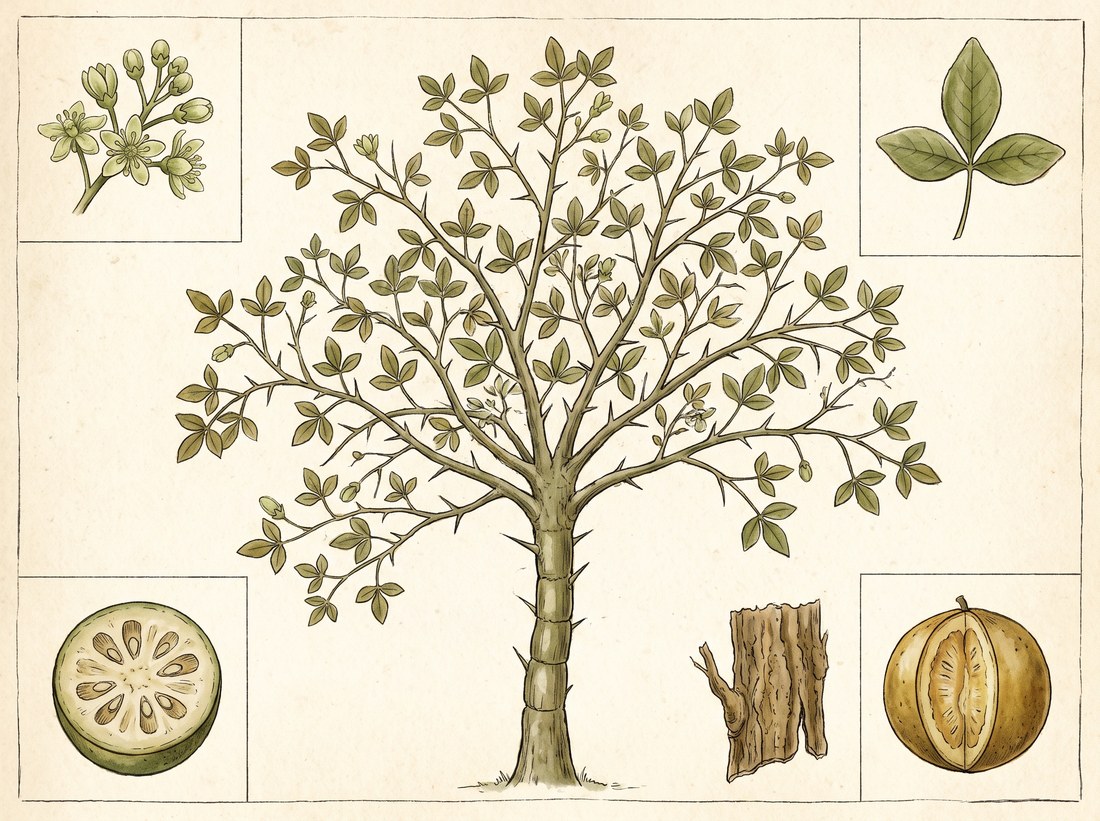 baelAegle marmelos
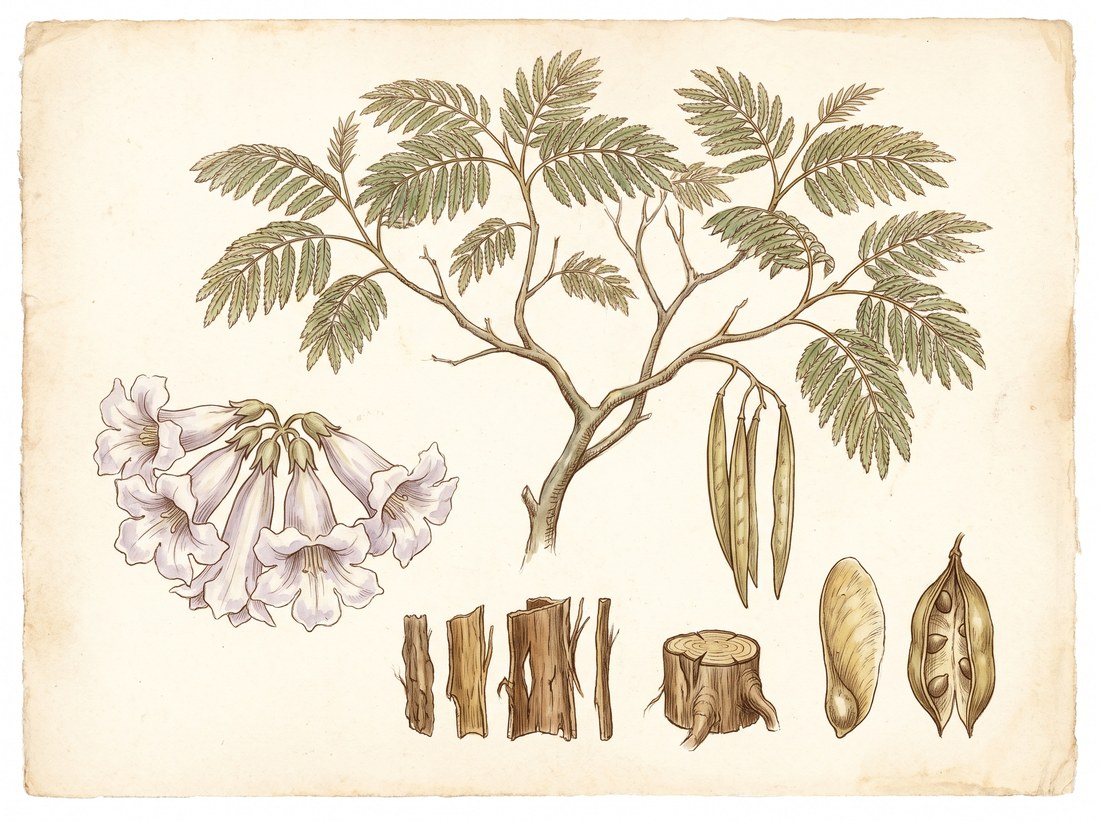 Indian trumpet flowerOroxylum indicum
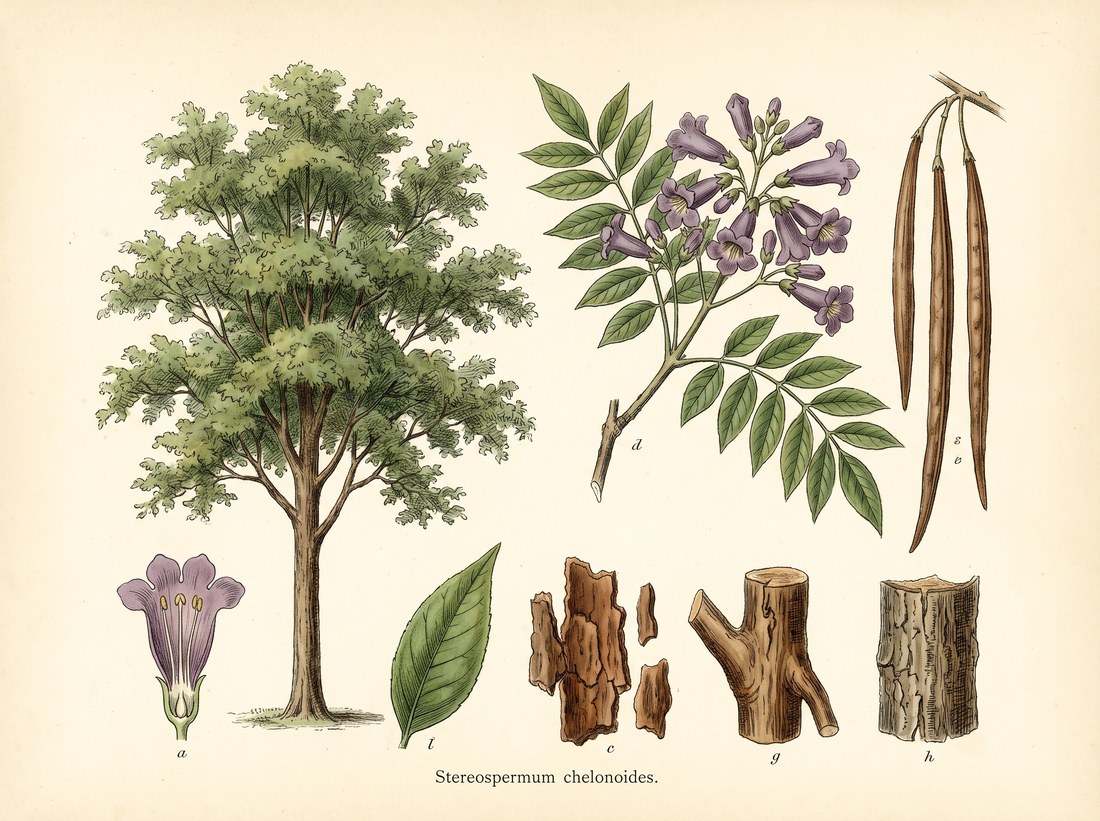 fragrant padri treeStereospermum suaveolens
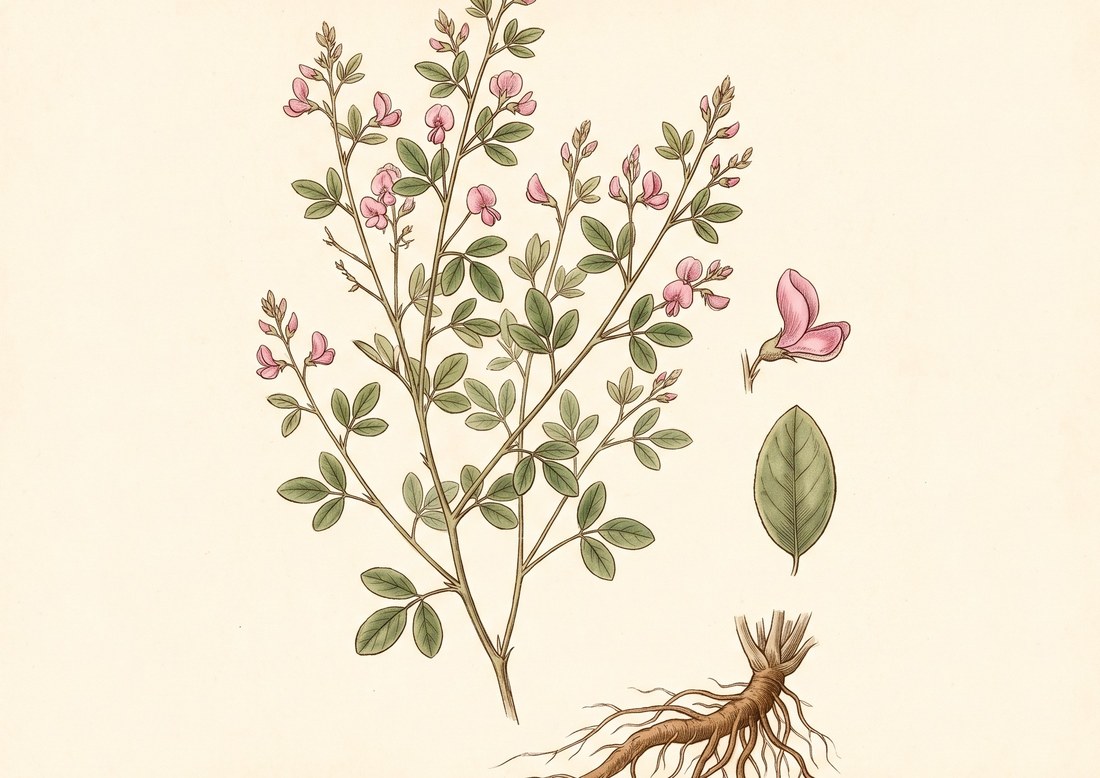 shalparniDesmodium gangeticum
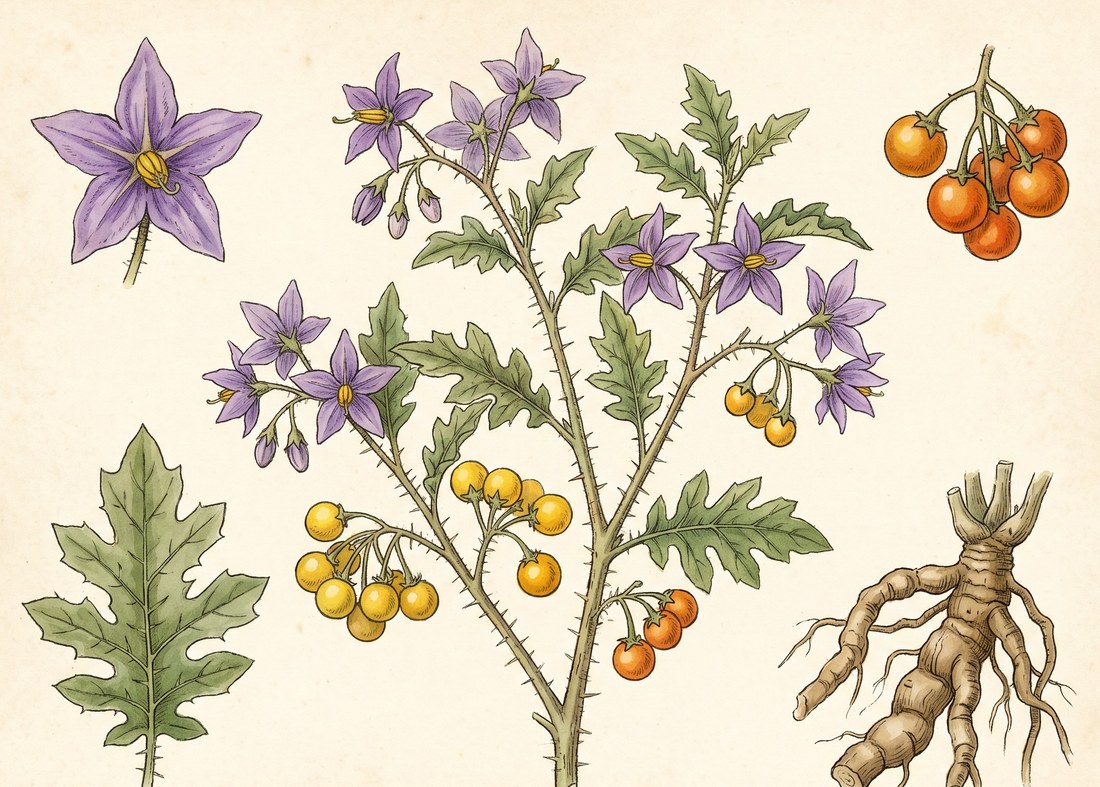 Indian nightshadeSolanum indicum
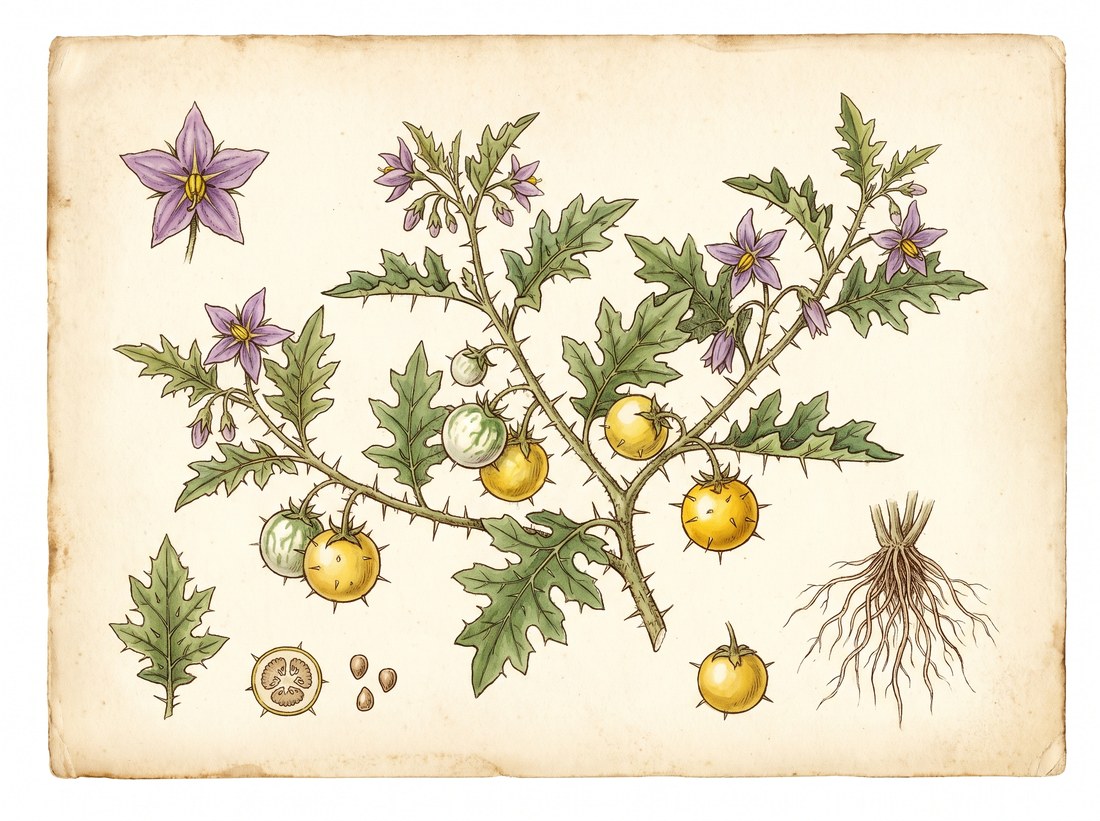 yellow-berried nightshadeSolanum xanthocarpum
Nearby on the shelf
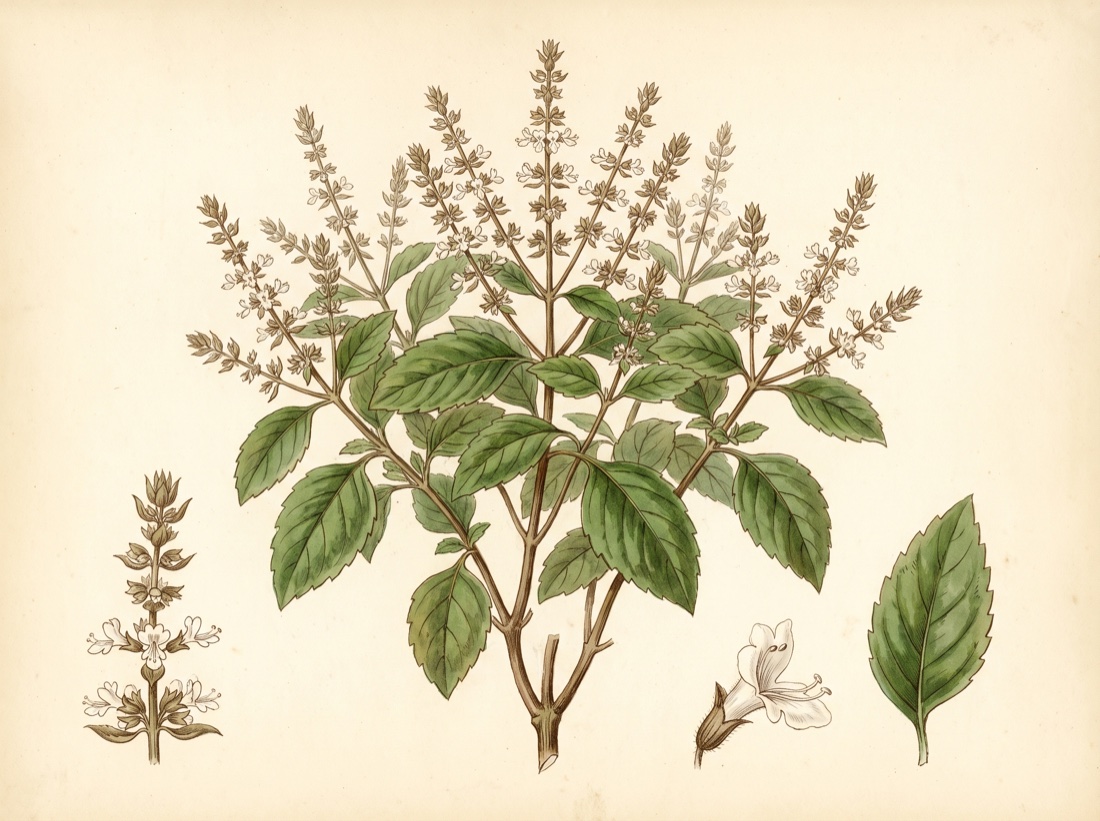 African basilOcimum gratissimum
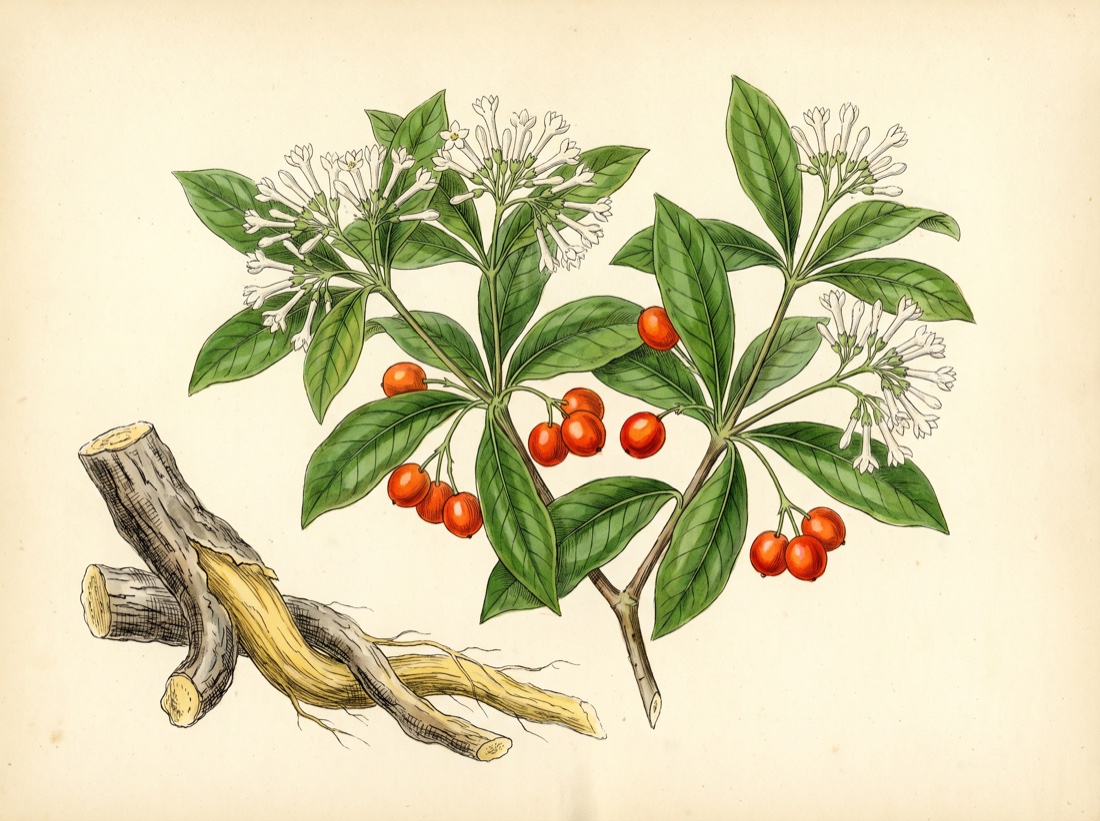 African serpentwoodRauvolfia vomitoria
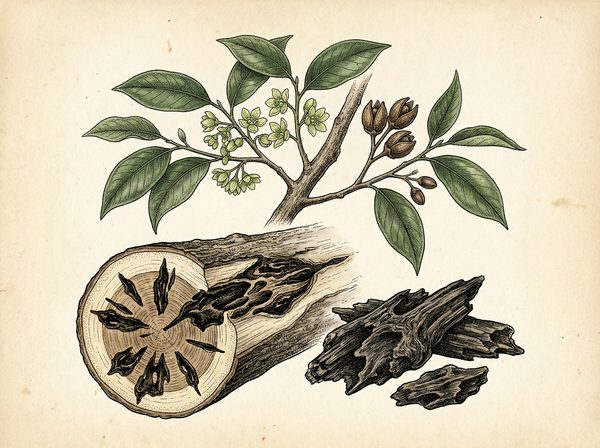 AgarwoodAquilaria sinensis
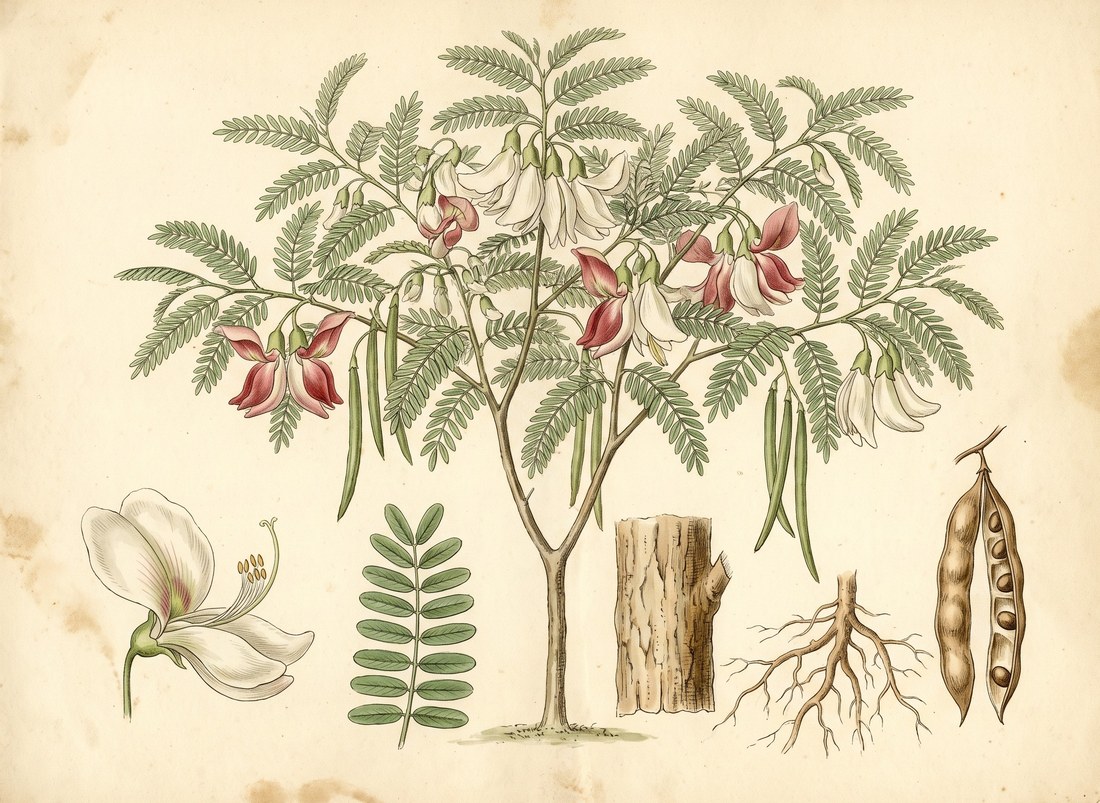 AgatiSesbania grandiflora
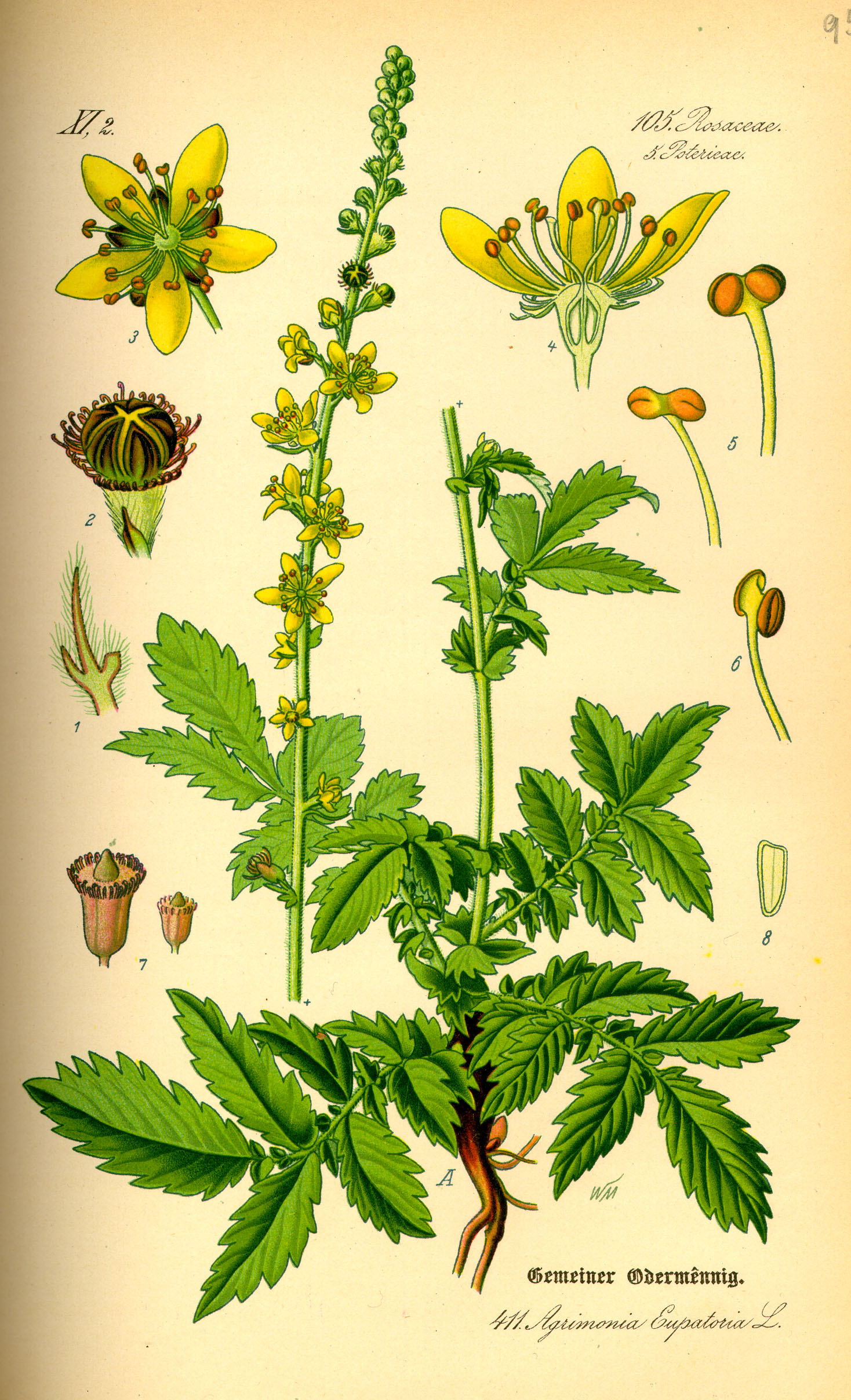 AgrimonyAgrimonia eupatoria
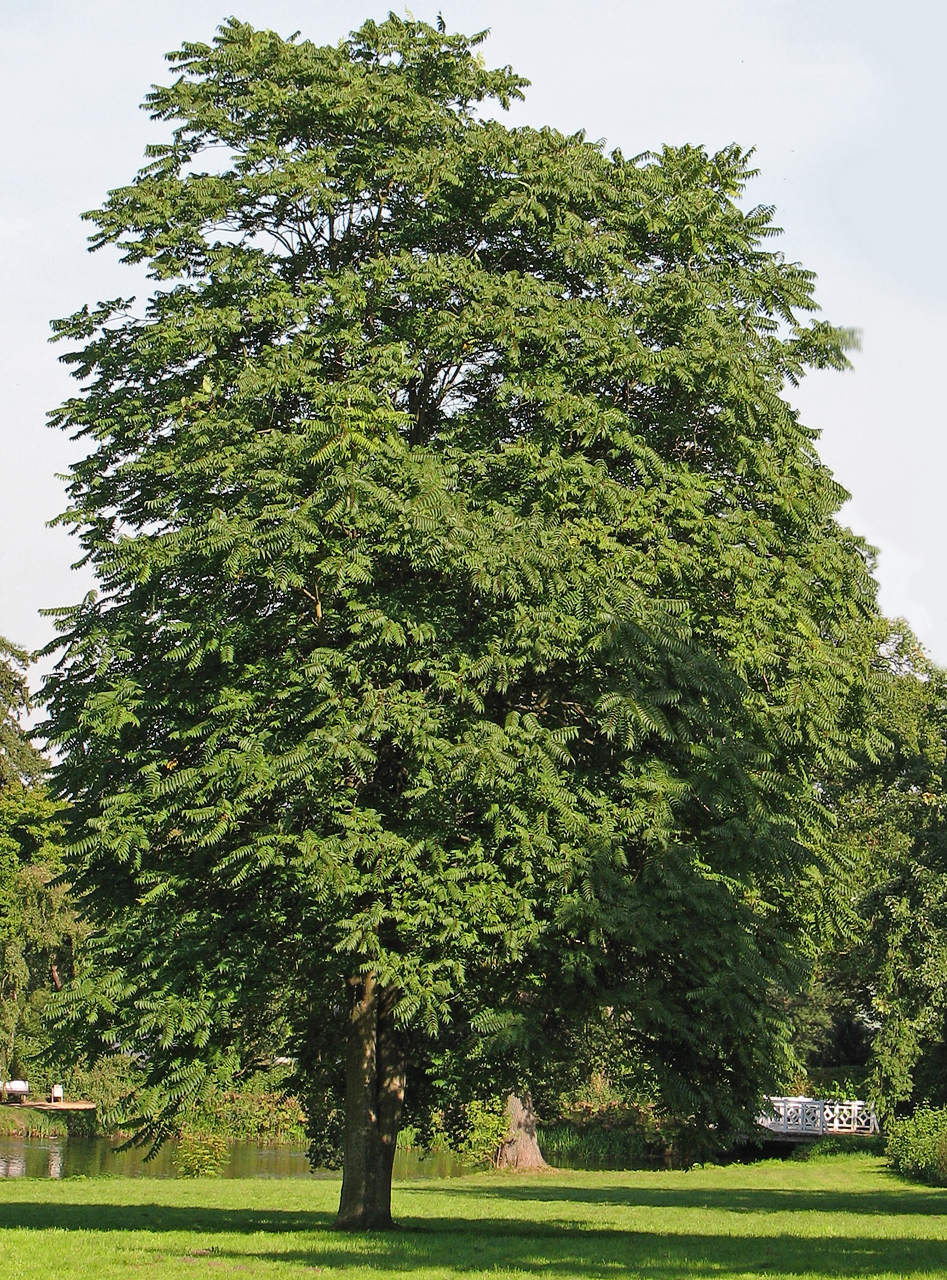 AilanthusAilanthus glandulosa
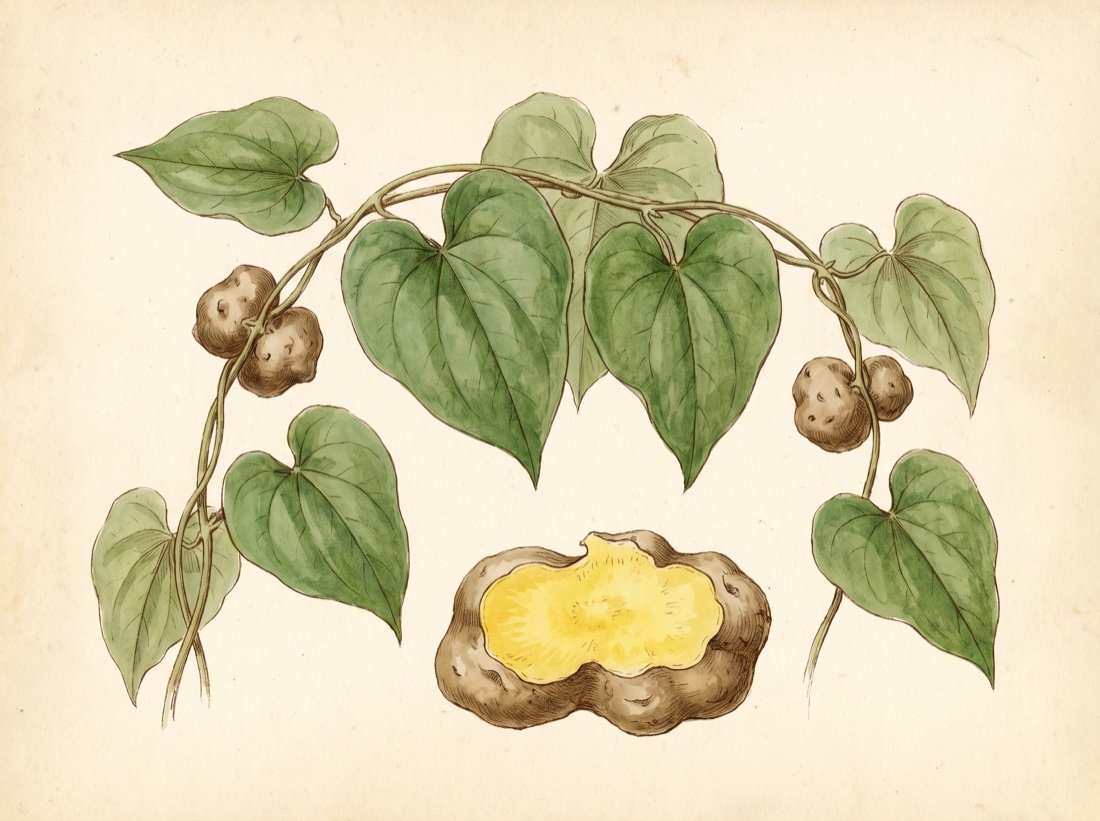 Air potatoDioscorea bulbifera
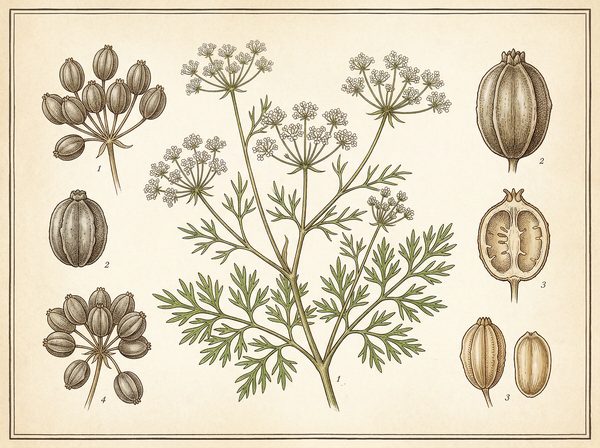 AjwainTrachyspermum ammi
The whole plate is in the library. The compass, Compare, the Sky of eleven hundred plants and the formulary open with an email address and a password, free, with the formula builder and its safety engine. Herbert without limit, his formulating, clients, the handouts and the labels are the paid room.
Open the library, free