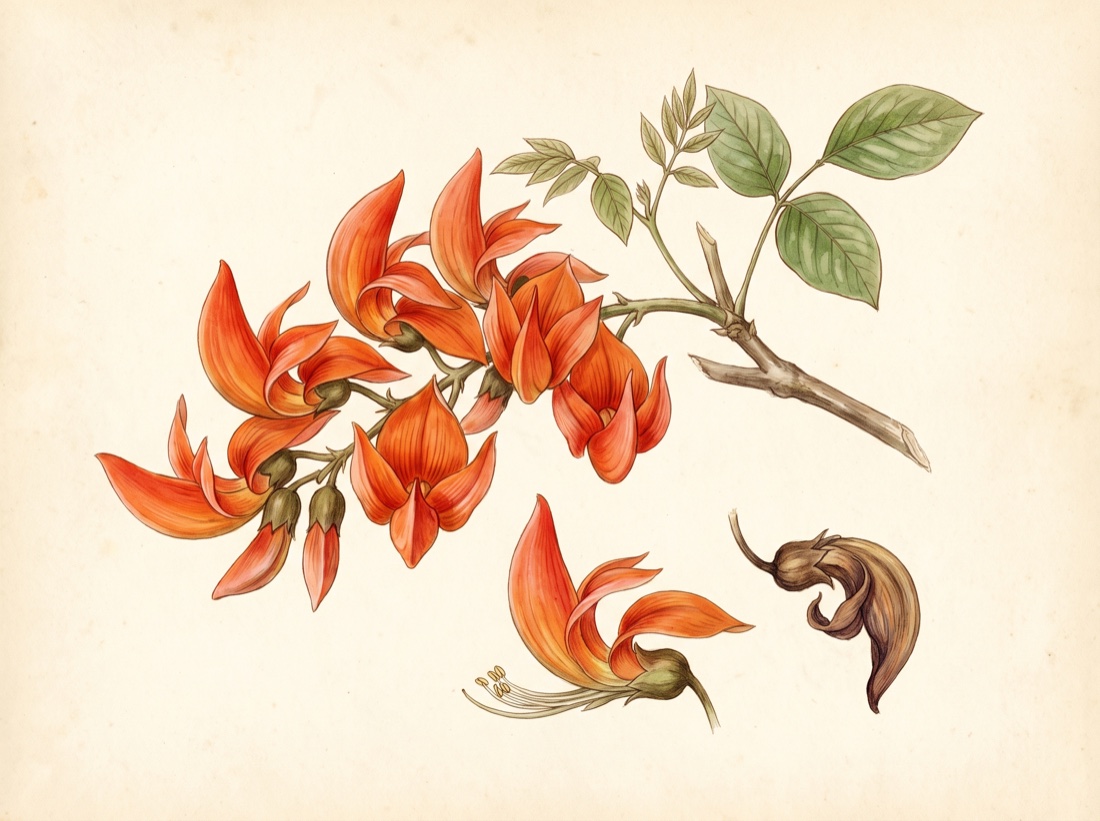
Ayurvedic Herbalism
Flame of the forest
Butea monosperma
Also known as palash, dhak, bastard teak, Bengal kino tree, parrot tree, sacred tree, Palasha, Kimshuka, Raktapushpaka.
Butea monosperma is a medium-sized deciduous tree of the pea family, native to the Indian subcontinent and Southeast Asia, famous for the blaze of orange-red flowers on its bare branches in early spring. Every part is used in Ayurveda: the flowers (palash pushpa) as a cooling diuretic and pitta remedy, the seeds (palash beeja) as an anthelmintic and skin medicine, the red gum (Bengal kino, kamarkas) as an astringent for bleeding and diarrhea, and the bark and leaves for wounds. The tree is sacred in Hindu ritual and the flowers yield an orange dye.

Ask Herbert about Flame of the forest. Herbert is the master herbalist inside Bountiful Herbs: he answers from this plate and eleven hundred others, with dosing, pairing and cautions. Your first ten questions are free.
Ask HerbertActions
Indications what the tradition reached for it in
- Intestinal worms, especially roundworm and threadworm (seed)
- Chronic diarrhea and dysentery (gum)
- Menorrhagia and leukorrhea (gum, flower)
- Bleeding gums, bleeding piles, and other mucosal bleeding (gum)
- Burning micturition and dysuria (flower)
- Type 2 diabetes (flower, adjunct)
- Fatty liver and hepatic sluggishness (flower)
- Ringworm, eczema, and scabies (seed paste, topical)
- Eye irritation and conjunctivitis (flower decoction as wash)
- Fever with pitta heat (flower)
- Wounds, ulcers, and skin infections (bark or flower, topical)
- Intestinal roundworm and threadworm infestation
- Giardiasis and intestinal parasites (adjunct)
- Chronic diarrhea and dysentery (gum and bark)
- Bleeding hemorrhoids (gum)
- Menorrhagia and bleeding disorders (gum, traditional)
- Ringworm and fungal skin infection (seed paste, topical)
- Eczema and chronic itchy dermatoses (seed paste, topical)
- Type 2 diabetes with heat signs (flowers, adjunct)
- Dysuria and urinary burning (flower infusion)
- Inflamed swellings and sprains (flower poultice)
- Slow healing wounds and ulcers (bark decoction wash)
- Fatty liver and toxic liver injury (bark, experimental)
Specific indications
Threadworm or roundworm infestation with itching, restless sleep, and a bloated abdomen, in a robust patient who can take a pungent bitter seed
Heavy periods or chronic leukorrhea in a woman with loose stools and a pale tongue, where an astringent that also stops bleeding is wanted
Burning urine and hot flushes of face and palms in a pitta patient during the hot season
Safety
Low dose botanical. Used in drop doses in the classical practice; not a plant to dose freely.
Pregnancy: Contraindicated in pregnancy: the plant was abortifacient in about two-thirds of rats and teratogenic in the same study, and the seed has a long reputation as an antifertility agent.
Breastfeeding: Avoid medicinal doses in lactation as a precaution; there are no data, the seed is pharmacologically active, and Mills and Bone and Brinker do not rate it.
The record lists 7 contraindications; open the plate in the library to read them in full.
In practice
Decide which part you want, because they behave differently. The seed is the strongest and calls for the most care: powdered and given for two or three days with buttermilk or honey, it paralyzes and expels roundworms and threadworms, usually followed by a mild purgative such as castor oil.
In Ayurveda
Rasa: katu, tikta, kashaya. Virya: ushna (seed, bark, gum); the flowers are regarded as cooler and used for pitta. Vipaka: katu. Dosha: pacifies kapha and vata; flowers also pacify pitta.
Dosing as the sources wrote it
| Preparation | As written | Metric |
|---|---|---|
| Seed powder (anthelmintic) | 1-3 g powdered seed once daily for 2-3 days with buttermilk | 1000-3000 mg |
| Gum powder (astringent) | 1-3 g powdered gum twice daily with water | 1000-3000 mg |
| Flower decoction | 5-10 g dried flowers daily in decoction | 5000-10000 mg |
| Flower powder | 3-6 g powdered flowers daily in divided doses | 3000-6000 mg |
| Topical | seed paste or flower decoction applied to the affected area once or twice daily | |
| Churna (seed) | 1-3 g powdered seed daily with buttermilk for five to seven days | 1000-3000 mg |
Doses are reproduced from the sources for practitioners and are not a recommendation for any person.
From the sources
Overview. Butea monosperma is a medium-sized deciduous tree of the pea family, native to the Indian subcontinent and Southeast Asia, famous for the blaze of orange-red flowers on its bare branches in early spring. Every part is used in Ayurveda: the flowers (palash pushpa) as a cooling diuretic and pitta remedy, the seeds (palash beeja) as an anthelmintic and skin medicine, the red gum (Bengal kino, kamarkas) as an astringent for bleeding and diarrhea, and the bark and leaves for wounds. The tree is sacred in Hindu ritual and the flowers yield an orange dye.
Overview. Butea monosperma is a medium sized deciduous tree of the Fabaceae with crooked branches, three lobed leaves and dense clusters of brilliant orange-red flowers that set dry hillsides ablaze in late winter, giving it the name flame of the forest. It grows across the plains and lower hills of India, Nepal, Bangladesh, Myanmar and Sri Lanka and is sacred in Vedic ritual. Ayurveda uses several parts, but above all the flat seed, Palasha beeja, as its anthelmintic of first choice, along with the astringent red gum, the cooling flowers and the bark.
Clinical Notes. Decide which part you want, because they behave differently. The seed is the strongest and calls for the most care: powdered and given for two or three days with buttermilk or honey, it paralyzes and expels roundworms and threadworms, usually followed by a mild purgative such as castor oil.
Clinical Notes. The Ayurvedic practitioner reaches for Palasha seed when krimi are present: intestinal worms, particularly roundworm and threadworm, with the itching, erratic appetite, abdominal discomfort and disturbed sleep that go with them.
In formulas
Flame of the forest stands in 6 documented formulas in the library, among them Amṛtāriṣta, Ayaskṛti, Kuṅkumādi Taila, Balā Taila, Mahā Nārāyaṇa Taila, Kṛmimudgara Rasa.
Often paired with
 sweet flagAcorus calamus
 sandalwoodSantalum album
 Indian ateesAconitum heterophyllum
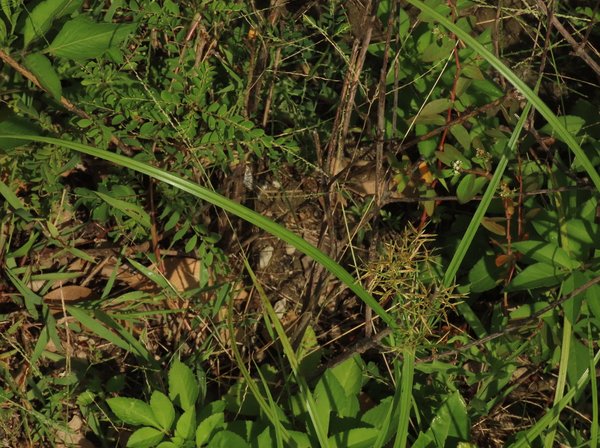 nut grassCyperus rotundus
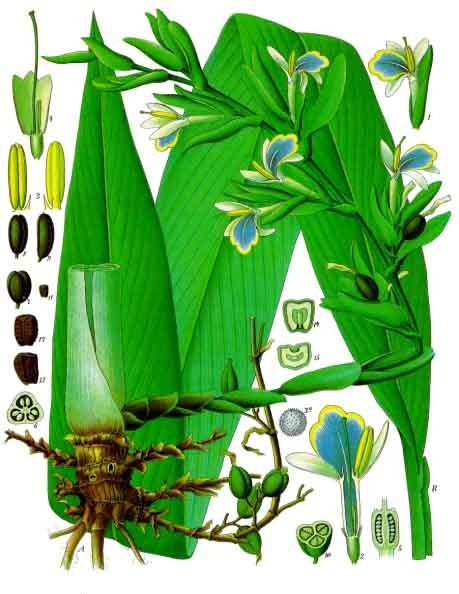 cardamomElettaria cardamomum
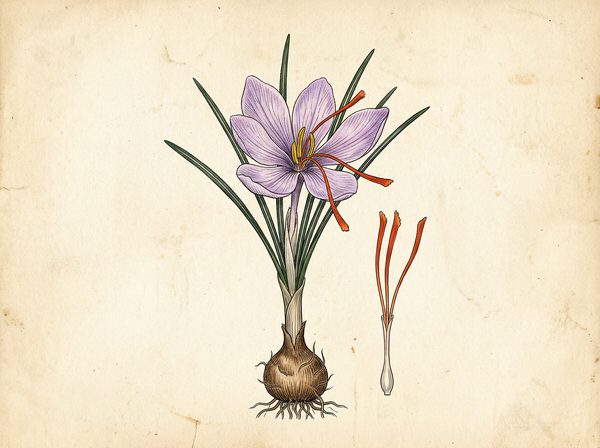 saffronCrocus sativus
Nearby on the shelf
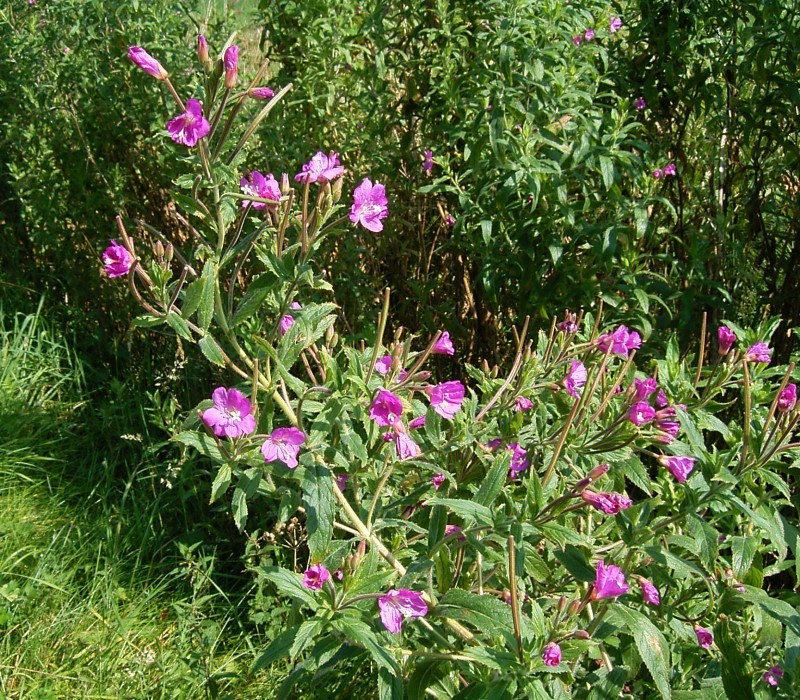 FireweedEpilobium angustifolium
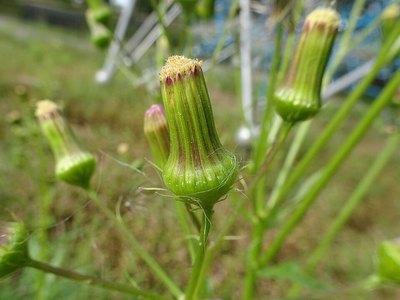 FireweedErechtites hieracifolius
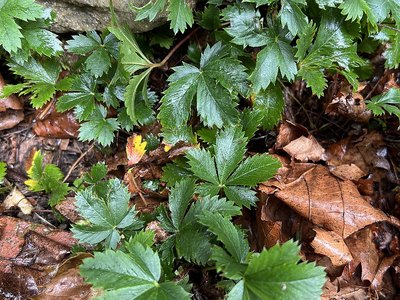 Five-fingerPotentilla canadensis
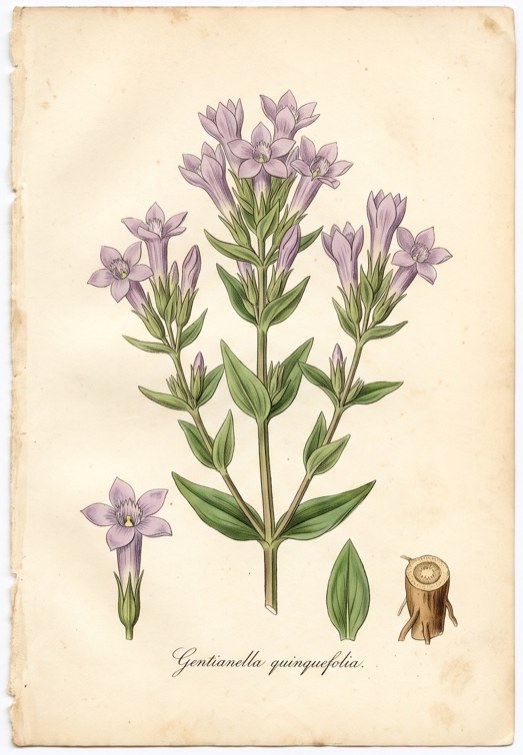 Five-flowered gentianGentiana Quinqueflora
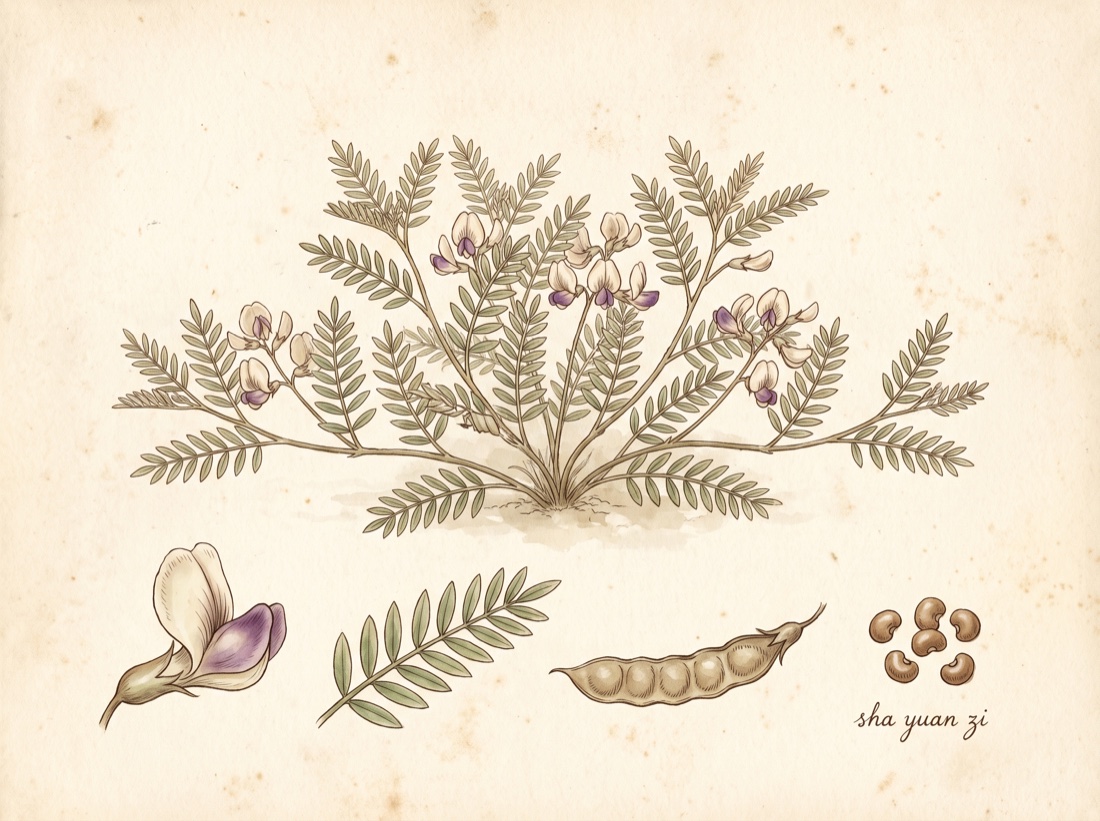 Flatstem milkvetch seedPhyllolobium chinense
 FlaxLinum usitatissimum
 Flesh-colored asclepiasAsclepias Incarnata
 Florentine orrisIris Florentina
The whole plate is in the library. The compass, Compare, the Sky of eleven hundred plants and the formulary open with an email address and a password, free, with the formula builder and its safety engine. Herbert without limit, his formulating, clients, the handouts and the labels are the paid room.
Open the library, free