Chinese and Ayurvedic herbalism
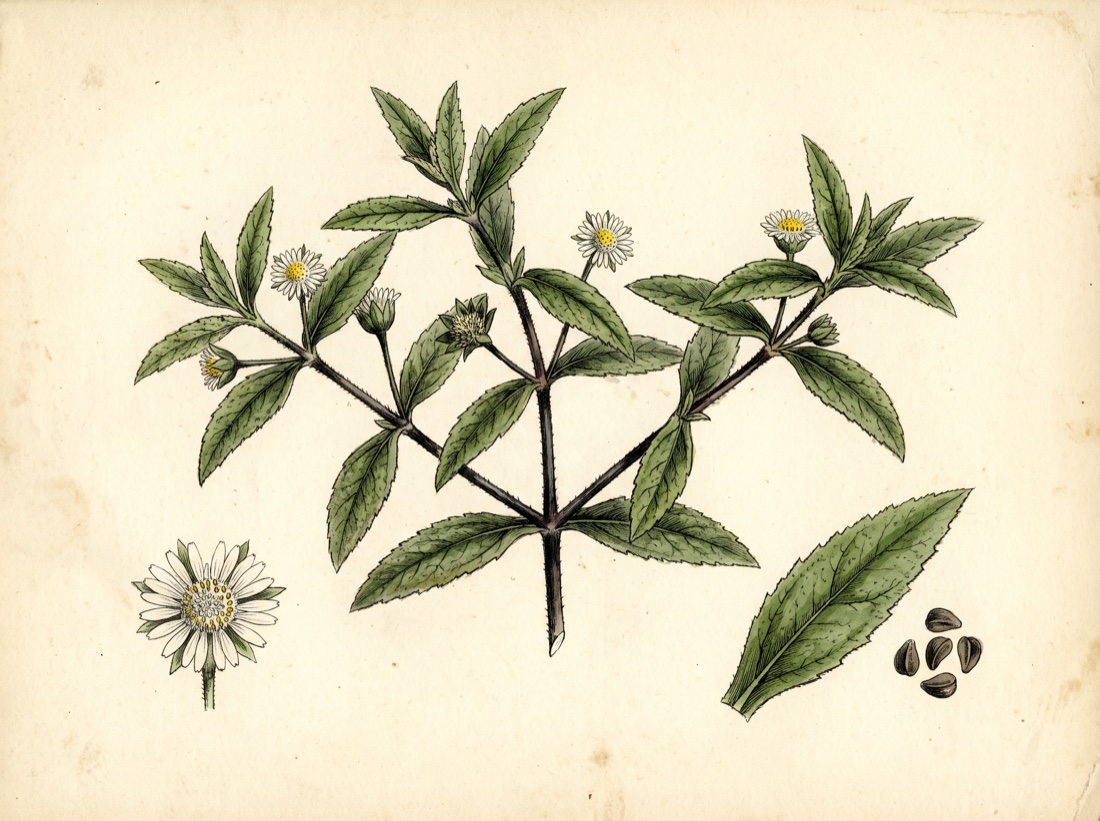
False daisy
Eclipta prostrata
Also known as eclipta, bhringaraj, trailing eclipta, mo han lian, white eclipta, kehraj, bhringraj, yerba de tago, mò hàn lián, hēi hàn lián, hàn lián cǎo.
Mo han lian is a low, spreading annual daisy of wet ground, rice field margins and ditches throughout tropical and warm temperate Asia, now a weed in warm regions worldwide. Its crushed stems turn black, hence the Chinese name that means ink daisy and the Sanskrit name bhringaraja, king of hair. The whole flowering herb is used, fresh or dried. It sits in two great traditions at once: in Chinese medicine as a cool, gentle yin tonic that also stops bleeding, and in Ayurveda as bhringaraj, a rejuvenative for hair, liver and skin.

Ask Herbert about False daisy. Herbert is the master herbalist inside Bountiful Herbs: he answers from this plate and eleven hundred others, with dosing, pairing and cautions. Your first ten questions are free.
Ask HerbertActions
Indications what the tradition reached for it in
- Premature graying of the hair
- Hair thinning and hair fall of liver and kidney deficiency type
- Dizziness, blurred vision and tinnitus from yin deficiency
- Loose teeth and sore gums with kidney deficiency
- Nosebleed, blood in the urine or stool, and heavy periods from heat in the blood
- Coughing up blood with yin deficiency heat
- Chronic hepatitis and fatty liver (supportive)
- Skin conditions and itching (Ayurvedic, internal and topical)
- Mild hypertension with fluid retention (pilot data)
- Dysentery and diarrhea with blood (traditional)
- Hair loss and premature graying (oil and internal)
- Fatty liver and raised liver enzymes
- Viral hepatitis in convalescence (adjunct)
- Sluggish liver with poor fat digestion
- Dandruff and scalp inflammation
- Chronic skin eruptions with liver involvement
- Splenomegaly with anemia (traditional)
- Chronic sinus congestion and headache (nasya oil)
- Insomnia and mental fatigue (oil massage)
- Dyslipidemia (adjunct)
- Minor wounds and insect bites (fresh juice)
Specific indications
A middle-aged patient graying early, with thinning hair, dry eyes, low back ache and a red, thin tongue, who needs a gentle, cool yin tonic that can be taken for months
Recurrent nosebleeds or heavy, bright red menses in a slim, warm, restless patient with night sweats, where cooling the blood and nourishing yin are needed together
Safety
The record lists 6 contraindications; open the plate in the library to read them in full.
In practice
In Chinese practice mo han lian is nearly always paired with nu zhen zi (Ligustrum) in the two-solstice pill for the yin-deficient patient with graying hair, dizziness, dry eyes and low back ache, a combination mild enough for months of use.
In Ayurveda
Rasa: tikta (bitter), katu (pungent). Virya: ushna (heating). Vipaka: katu (pungent). Dosha: pacifies kapha and vata; used with care in high pitta because of its heating potency, though it is cooling to the blood in Chinese medicine.
In Chinese medicine
Temperature: cool. Taste: sweet, sour. Channels: Kidney, Liver. Actions: Nourishes and tonifies liver and kidney yin; Cools the blood and stops bleeding; Darkens hair and steadies the teeth by supporting kidney essence.
Dosing as the sources wrote it
| Preparation | As written | Metric |
|---|---|---|
| Decoction | 6-12 g dried herb daily in decoction | 6000-12000 mg |
| Fresh juice (Ayurvedic) | 10-20 mL fresh juice once or twice daily | 10-20 mL |
| Powder (churna) | 2-4 g dried herb powder twice daily | 2000-4000 mg |
| Tincture (1:5, 40%) | 2-4 mL three times daily | 2-4 mL |
| Hair oil | leaf-infused sesame or coconut oil massaged into the scalp two to three times weekly | |
| Swarasa | 10-20 mL fresh juice once or twice daily with honey | 10-20 mL |
Doses are reproduced from the sources for practitioners and are not a recommendation for any person.
From the sources
Overview. Mo han lian is a low, spreading annual daisy of wet ground, rice field margins and ditches throughout tropical and warm temperate Asia, now a weed in warm regions worldwide. Its crushed stems turn black, hence the Chinese name that means ink daisy and the Sanskrit name bhringaraja, king of hair. The whole flowering herb is used, fresh or dried. It sits in two great traditions at once: in Chinese medicine as a cool, gentle yin tonic that also stops bleeding, and in Ayurveda as bhringaraj, a rejuvenative for hair, liver and skin.
Overview. Eclipta prostrata is a low, spreading annual herb of the daisy family with small white button flowers, growing as a weed of wet ground, rice field margins and ditches throughout the plains of India and across the tropics. Ayurveda knows it as Bhringaraja, the king of the hair, and prizes it in two roles: as the premier herb for the hair and scalp, cooked into oils, and as a rasayana for the liver, given as fresh juice for jaundice and enlarged liver and spleen. The whole plant is used, ideally fresh.
Clinical Notes. In Chinese practice mo han lian is nearly always paired with nu zhen zi (Ligustrum) in the two-solstice pill for the yin-deficient patient with graying hair, dizziness, dry eyes and low back ache, a combination mild enough for months of use.
Clinical Notes. The Ayurvedic practitioner uses Bhringaraja most often through the head. Bhringaraja taila, the juice cooked into sesame or coconut oil, is massaged into the scalp for hair fall, graying, dandruff and the hot head of pitta, and a few drops are put into the nose as nasya for headache, sinus congestion and poor sleep.
In formulas
False daisy stands in 35 documented formulas in the library, among them ning xuè tàng, wu zĩ tāng, er zhì wán, Pūgakhaṇḍa, Aśoka Ghṛta, Kayyonnyādi Taila.
Often paired with
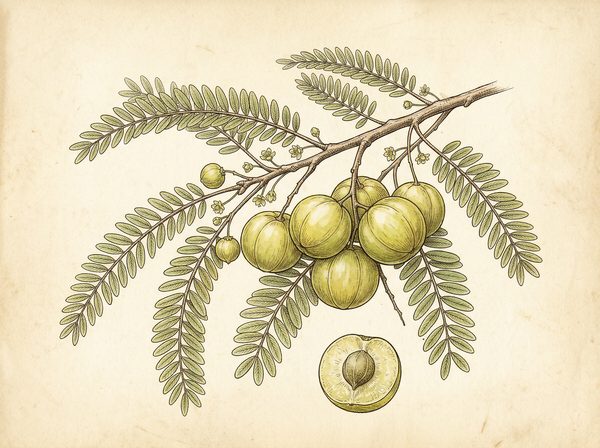 Indian gooseberryPhyllanthus emblica
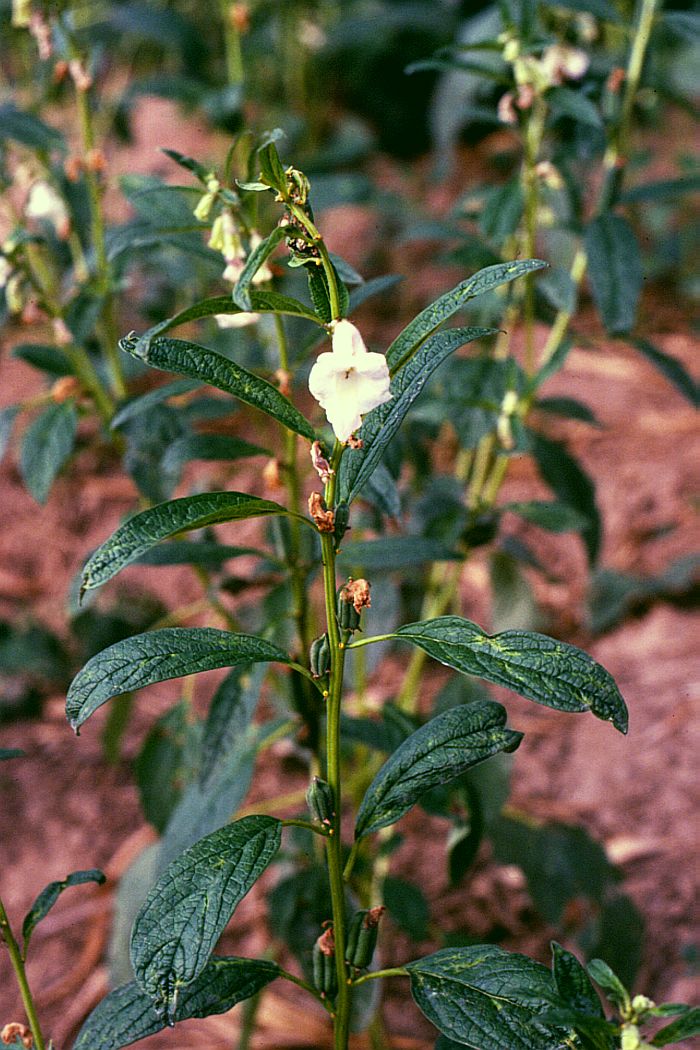 sesameSesamum indicum
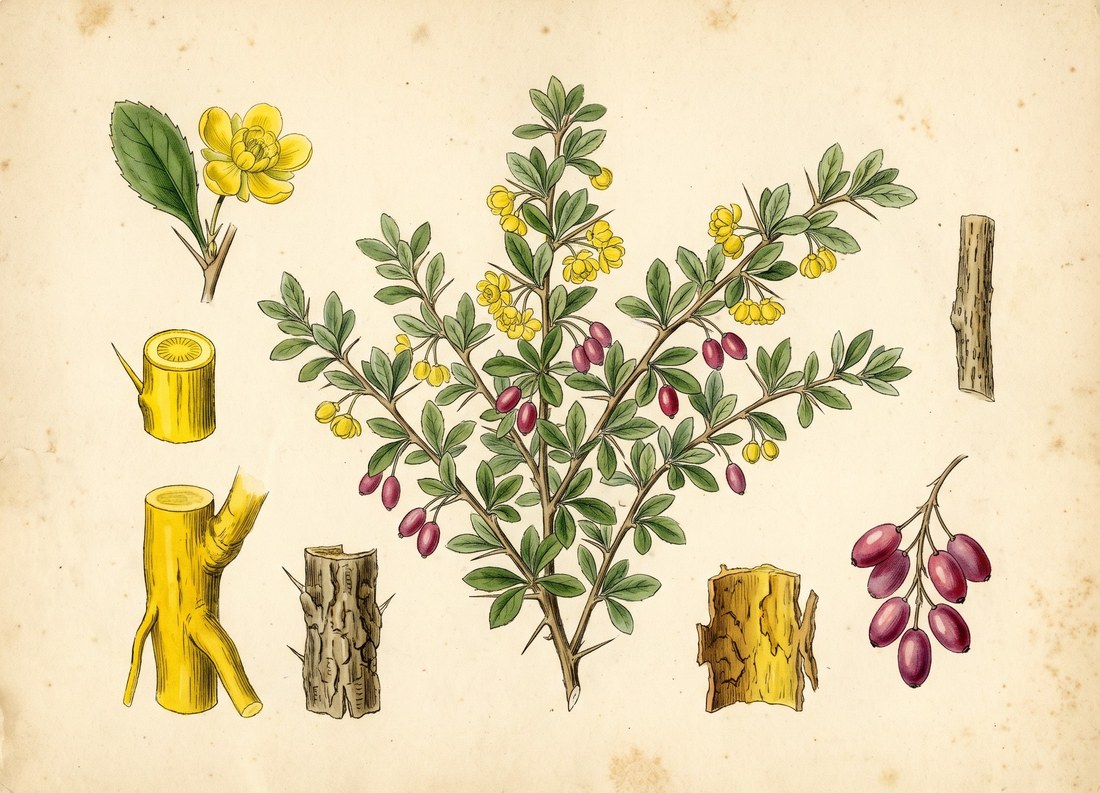 Indian barberryBerberis aristata
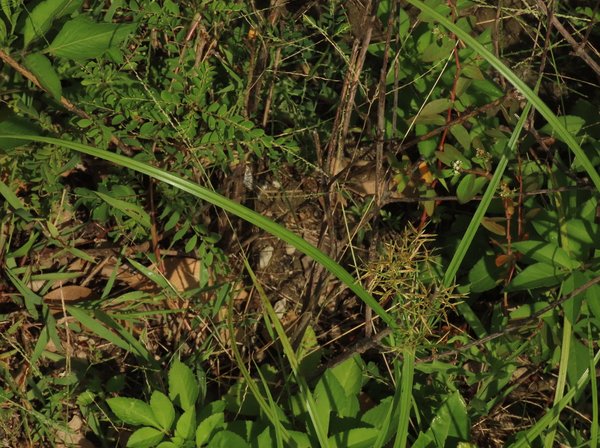 nut grassCyperus rotundus
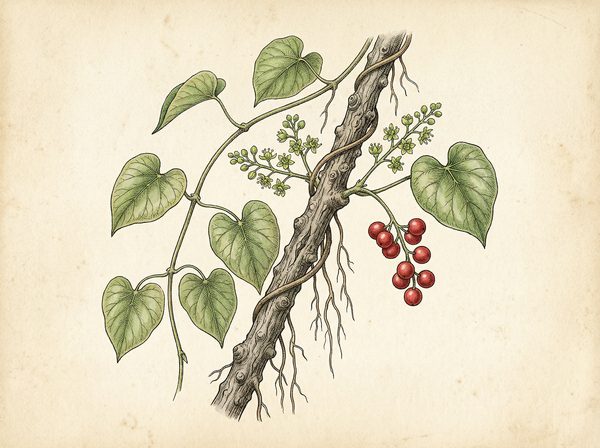 guduchiTinospora cordifolia
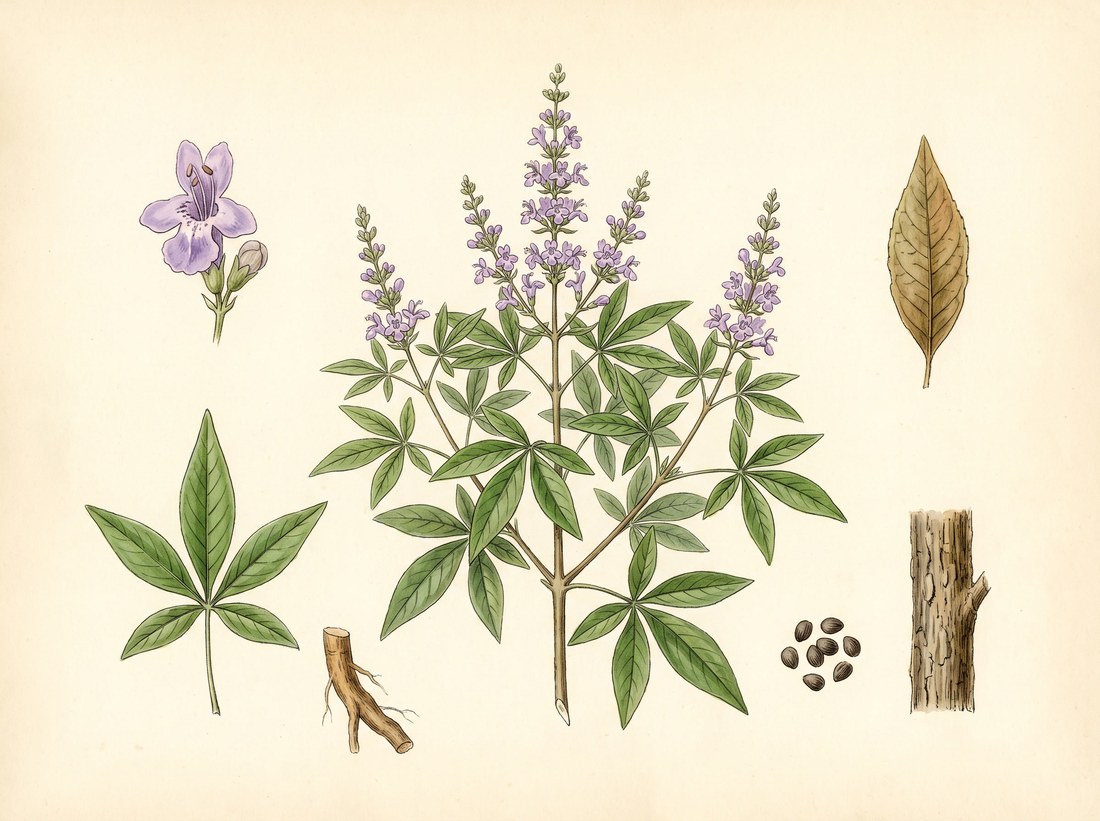 nirgundiVitex negundo
Nearby on the shelf
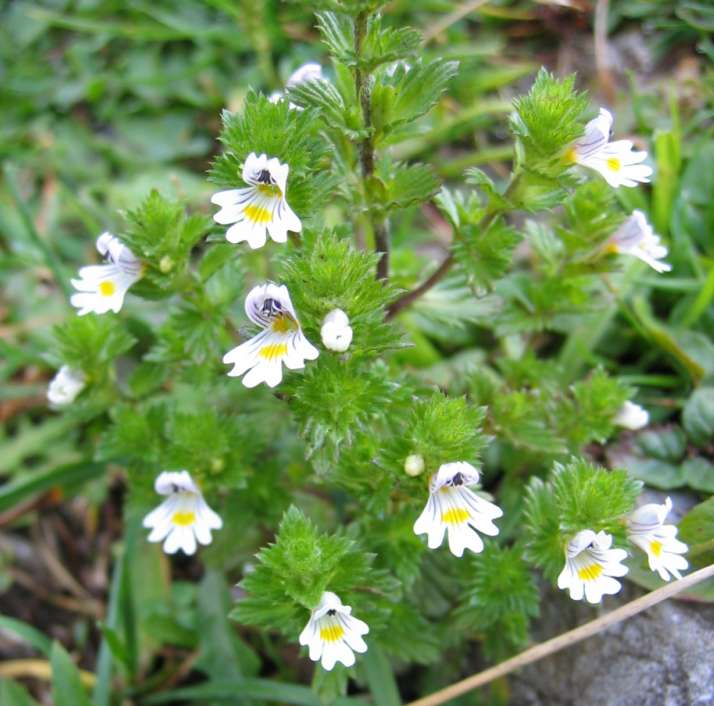 EyebrightEuphrasia stricta
 Fadogia AgrestisFadogia agrestis
 False AloeAgave Virginica
 False black pepperEmbelia ribes
 False GromwellOnosmodium
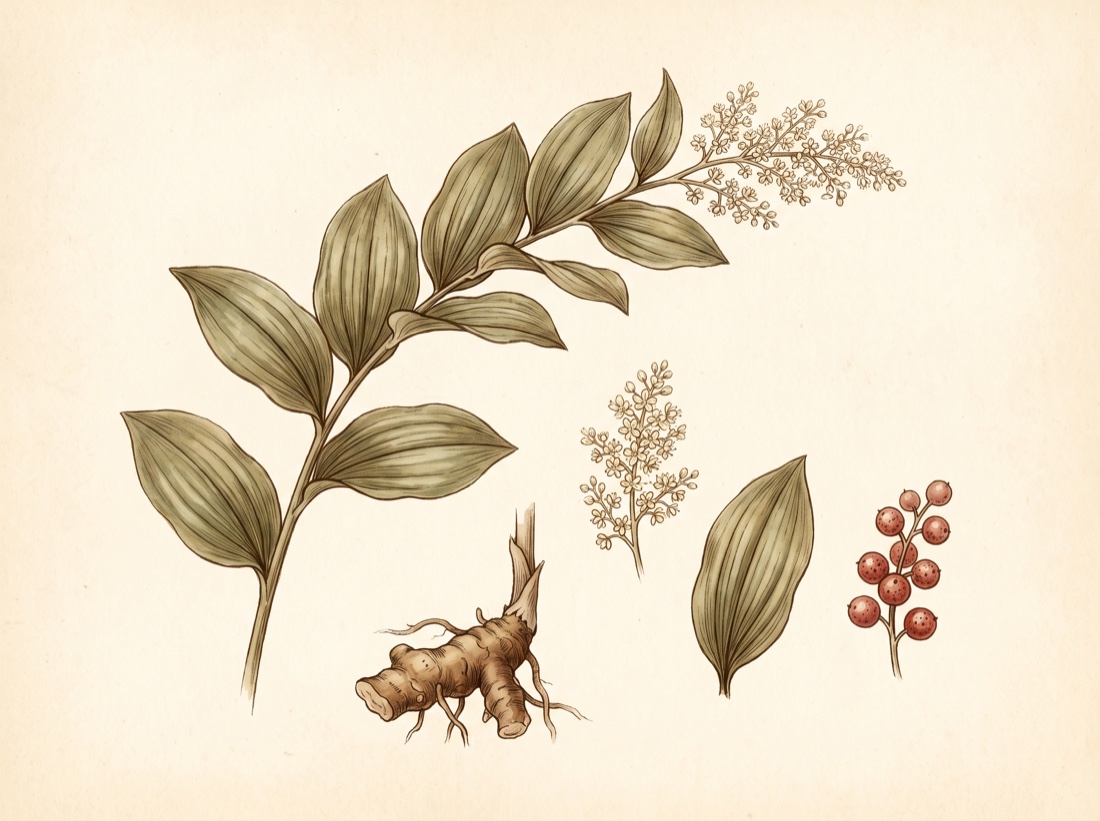 False Solomon's sealMaianthemum racemosum
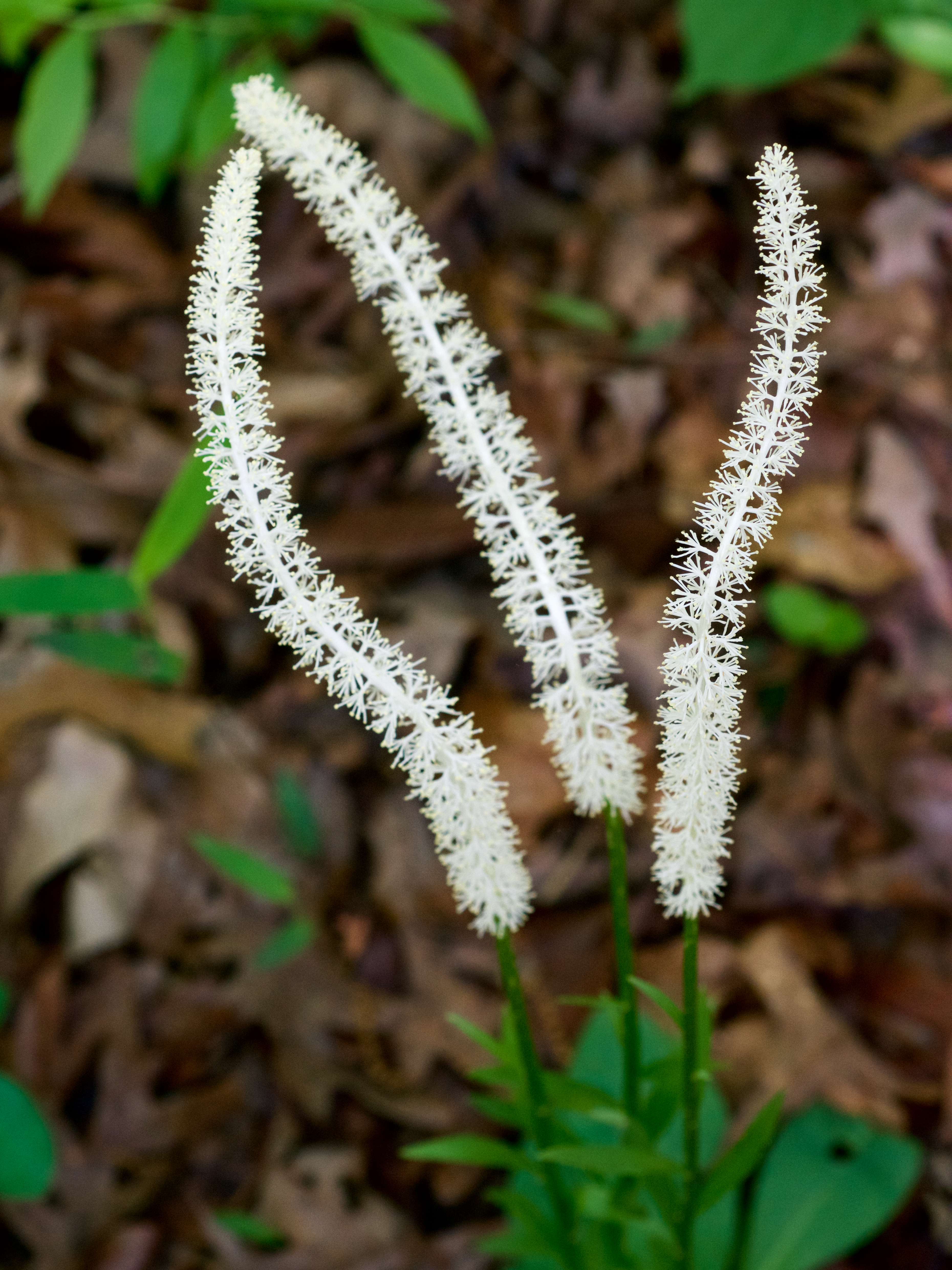 False unicornChamaelirium luteum
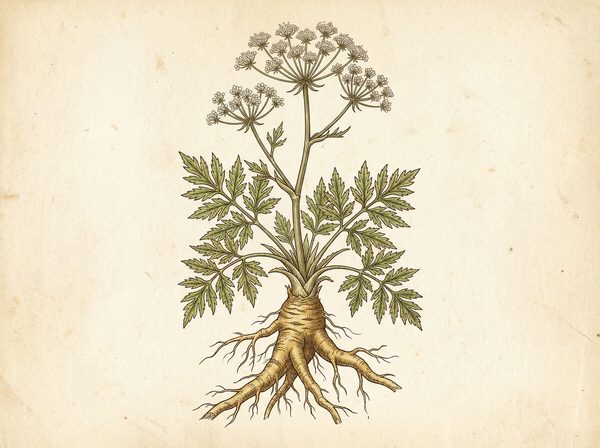 Fang FengSaposhnikovia divaricata
The whole plate is in the library. The compass, Compare, the Sky of eleven hundred plants and the formulary open with an email address and a password, free, with the formula builder and its safety engine. Herbert without limit, his formulating, clients, the handouts and the labels are the paid room.
Open the library, free