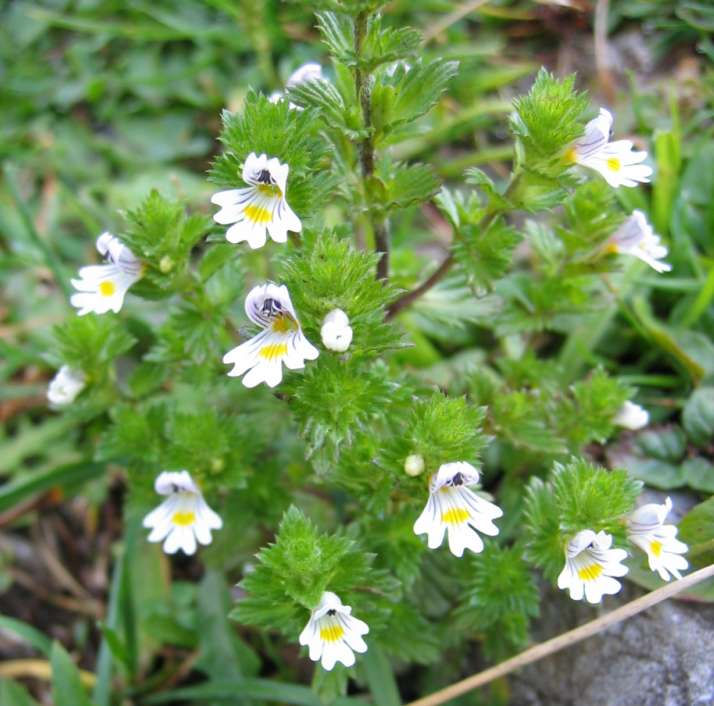
Western Herbalism
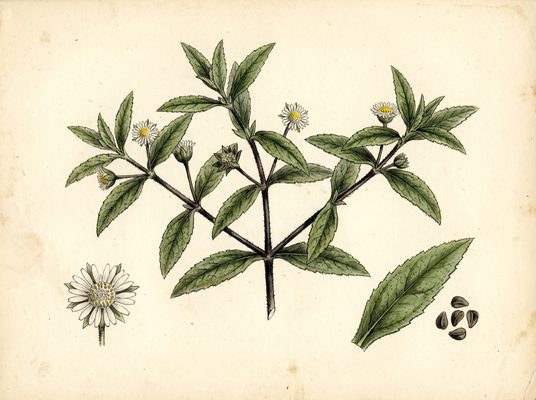
Eyebright
Euphrasia stricta
Also known as Euphrasia.
Use cultivated instead of wildcrafted d/t habitat loss Best to combine w/ anti-microbial herbs for infectious conditions For eye infections add Matricaria or berberine-containing herbs

Ask Herbert about Eyebright. Herbert is the master herbalist inside Bountiful Herbs: he answers from this plate and eleven hundred others, with dosing, pairing and cautions. Your first ten questions are free.
Ask HerbertActions
Indications what the tradition reached for it in
- Conjunctivitis
- Eye inflammation
- Sinus infection
- Eye injury
- Eye infection
- Allergies
- Blepharitis
- Colds
- Bleeding
- Diarrhea
- Inflammation
- Infection
- Excessive discharge
- Nasal catarrh
- Sinusitis
- Specifically for conjunctivitis when applied locally as an eye lotion
Safety
Pregnancy: Limited data. No increase in harm from limited human use; animal studies lacking (Mills & Bone B2)
Pregnancy, our record's flag: Limited data. Limited safety data in pregnancy (our record's flag)
Pregnancy, a modern clinical reference: The safety of eyebright has not been established; In view of the lack of pharmacological and toxicity data, the use of eyebright during pregnancy and lactation should be avoided
Breastfeeding: No concern. Compatible with breastfeeding (Mills & Bone C)
Breastfeeding, our record's flag: No concern while breastfeeding (our record's flag)
Breastfeeding, a modern clinical reference: In view of the lack of pharmacological and toxicity data, the use of eyebright during pregnancy and lactation should be avoided
The record lists 2 contraindications; open the plate in the library to read them in full.
Dosing as the sources wrote it
| Preparation | As written | Metric |
|---|---|---|
| Infusion | 2-3 tsp/c TID | |
| Tincture (1:2-1:3) | 3-5 ml TID | 3-5 mL |
| Eye wash, eye drops | Make tea, cool, strain well, apply using sterile eye cup (eye wash) or dropper (to apply drops)-2 gtts q few hrs | |
| Dried herb 2-4 g as an infusion three times daily | 2000-4000 mg | |
| Liquid extract 2-4 mL (1 : 1 in 25% alcohol) three times daily. Tincture 2-6 mL (1 : 5 in 45% alcohol) three times daily | ||
| It should be given in ten drop doses of the tincture every hour or two. |
Doses are reproduced from the sources for practitioners and are not a recommendation for any person.
From the sources
Clinical Notes. Use cultivated instead of wildcrafted d/t habitat loss Best to combine w/ anti-microbial herbs for infectious conditions For eye infections add Matricaria or berberine-containing herbs
Action and Therapy. An admirable remedy for acute catarrhal inflammations of the nasal and ocular membranes, with profuse, watery secretion or abundant flow of acrid mucus, and attended with heat, pain, burning, and sneezing.
Therapy. In cough and hoarseness, where there is a thin bronchial discharge, it is applicable especially to the catarrhal manifestations following measles. It will prevent other sequlae of measles, as catarrhal conjunctivitis, catarrhal deafness, and chronic nasal catarrh.
Properties and Uses. The leaves are mildly stimulating and astringing, and exert a somewhat tonic influence. They act principally upon mucous membranes; and may be used to advantage in all excessive mucous discharges, as in leucorrhea, gonorrhea, coughs, catarrh of the bladder, and laxity of the bowels.
Drawn from Cook's Physio-Medical Dispensatory; King's American Dispensatory, 18th edition (Felter and Lloyd); Ellingwood's American Materia Medica, Therapeutics and Pharmacognosy; Felter's Eclectic Materia Medica, Pharmacology and Therapeutics, and the Bountiful Herbs editorial.
Nearby on the shelf
 European LarchLarix decidua
 European mistletoeViscum album
 Evening PrimroseOenothera biennis
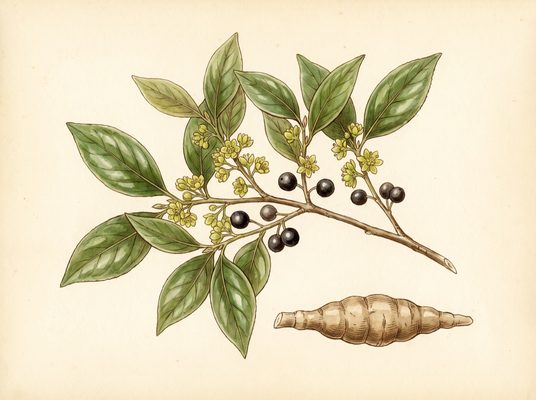 Evergreen linderaLindera aggregata
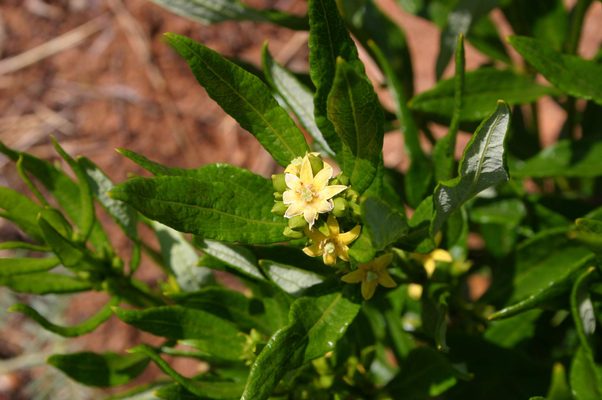 Fadogia AgrestisFadogia agrestis
 False AloeAgave virginica
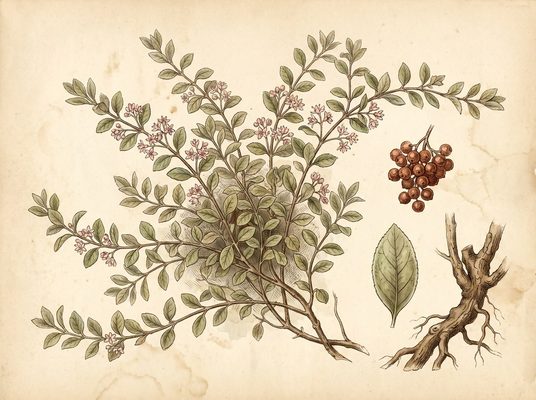 False black pepperEmbelia ribes
 False daisyEclipta prostrata
The whole plate is in the library. The compass, Compare, the Sky of eleven hundred plants and the formulary open with an email address and a password, free, with the formula builder and its safety engine. Herbert in full, his formulating, clients, the handouts and the labels are the paid room.
Open the library, free