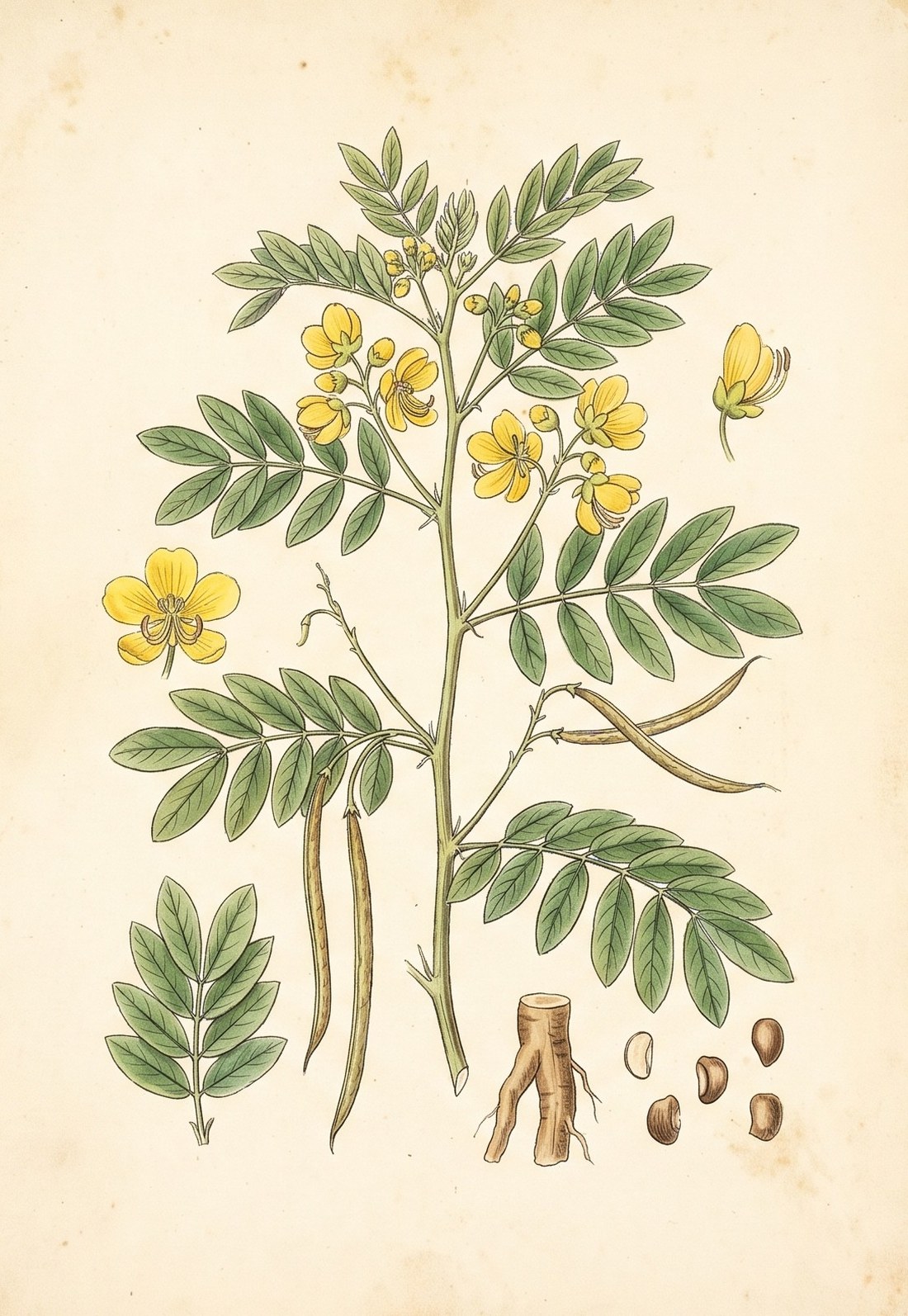
Ayurvedic Herbalism
Coffee senna
Senna occidentalis
Also known as negro coffee, stinking weed, septic weed, styptic weed, Kasamarda, Kasari, Kasaghna.
Kasamarda is a foul smelling annual or short lived shrub of the pea family, originally from tropical America and now a weed of waste ground, roadsides and field margins throughout the plains of India from the north to the far south. Its compound leaves, yellow flowers and slender pods are familiar in every village. Ayurveda names it for its chief action, the destruction of cough, and uses the leaf and root as a warming bitter for cough, asthma, throat complaints, fever, skin disease and worms; the roasted seeds are a coffee substitute. The raw seeds are poisonous and have caused fatal outbreaks in children, which shapes everything a clinician needs to know about this plant.

Ask Herbert about Coffee senna. Herbert is the master herbalist inside Bountiful Herbs: he answers from this plate and eleven hundred others, with dosing, pairing and cautions. Your first ten questions are free.
Ask HerbertActions
Indications what the tradition reached for it in
- Cough with thick sputum
- Bronchitis and mild asthma (adjunct)
- Sore throat and hoarseness
- Hiccup (traditional)
- Fever with respiratory catarrh
- Constipation with a sluggish liver
- Ringworm, eczema and itching eruptions (topical paste)
- Intestinal worms
- Boils and inflammatory swellings (topical)
- Insect bites and stings (topical)
Specific indications
A hacking, phlegmy cough with a raw throat in a kapha patient, treated with the fresh leaf juice and honey
Ringworm or an itchy eczematous patch where the fresh leaf paste is applied in the village manner
Fever with cough and constipation in a heavy, damp constitution
A hiccup that will not settle, for which the tradition gives the leaf decoction
Safety
Low dose botanical. Used in drop doses in the classical practice; not a plant to dose freely.
Pregnancy: Avoid in pregnancy: no published safety class is known to us, the plant contains laxative anthraquinones like other sennas and the seed is hepatotoxic, and the tradition does not give it to pregnant women.
Breastfeeding: Avoid while nursing; anthraquinones pass into milk and the infant cannot be protected from the plant's toxins.
The record lists 12 contraindications; open the plate in the library to read them in full.
In practice
The Ayurvedic practitioner uses the leaf of Kasamarda for wet, stubborn coughs and for the throat: fresh leaf juice with honey two or three times a day, or the decoction with Pippali and Shunthi, is a traditional remedy for bronchitis, asthma and hiccup in kapha patients.
In Ayurveda
Rasa: tikta (bitter), madhura (sweet). Virya: ushna (heating). Vipaka: katu (pungent). Guna: laghu (light), ruksha (dry). Dosha: pacifies kapha and vata; may aggravate pitta in excess. Prabhava: kasahara: the name means the destroyer of cough, and the tradition regards this as its defining action. Karma: kasahara (relieves cough); shvasahara (relieves dyspnea); kanthashuddhikara (clears the throat); kaphahara (clears kapha); vishaghna (counters poisons); krimighna (anthelmintic); kushthaghna (helps skin disease); rechana (mild laxative; leaves); deepana (kindles digestion); jvaraghna (reduces fever); shothahara (reduces swelling); pittasaraka (moves bile). Classical indications: kasa (cough); shvasa (asthma and dyspnea); hikka (hiccup); kantharoga (throat disorders); kushtha and dadru (skin disease and ringworm); krimi (worms); visha (poisoning); vibandha (constipation); jvara (fever); shotha (swelling); udara and gulma (abdominal distension and masses); vrana (wounds). The leaf is the working drug, taken as fresh juice with honey for cough, as decoction for fever and constipation, cooked as a bitter vegetable, and applied as a paste to skin eruptions; the root decoction is used for fever and worms. The seeds, traditionally roasted and brewed as a coffee substitute, are not used raw and are the toxic part of the plant. Classical formulations: Kasamarda swarasa, Kasamardadi kwatha, Kasamarda patra kalka, Kasamardadi churna, Kasamarda mula kwatha. Described in: Charaka Samhita, Sushruta Samhita, Ashtanga Hridaya, Bhavaprakasha Nighantu, Dhanvantari Nighantu, Raja Nighantu, Kaiyadeva Nighantu, Ayurvedic Pharmacopoeia of India.
Dosing as the sources wrote it
| Preparation | As written | Metric |
|---|---|---|
| Swarasa | 5-10 mL fresh leaf juice twice daily with honey for up to two weeks | 5-10 mL |
| Kwatha | 30-60 mL decoction of leaf or root once or twice daily for up to two weeks | 30-60 mL |
| Kalka, topical | 5-10 g fresh leaf paste applied to skin lesions once or twice daily | 5000-10000 mg |
| Churna | 1-2 g powdered leaf once daily with honey, short courses only | 1000-2000 mg |
Doses are reproduced from the sources for practitioners and are not a recommendation for any person.
From the sources
Overview. Kasamarda is a foul smelling annual or short lived shrub of the pea family, originally from tropical America and now a weed of waste ground, roadsides and field margins throughout the plains of India from the north to the far south. Its compound leaves, yellow flowers and slender pods are familiar in every village. Ayurveda names it for its chief action, the destruction of cough, and uses the leaf and root as a warming bitter for cough, asthma, throat complaints, fever, skin disease and worms; the roasted seeds are a coffee substitute. The raw seeds are poisonous and have caused fatal outbreaks in children, which shapes everything a clinician needs to know about this plant.
Clinical Notes. The Ayurvedic practitioner uses the leaf of Kasamarda for wet, stubborn coughs and for the throat: fresh leaf juice with honey two or three times a day, or the decoction with Pippali and Shunthi, is a traditional remedy for bronchitis, asthma and hiccup in kapha patients.
Ayurvedic Profile. Rasa: tikta (bitter), madhura (sweet). Virya: ushna (heating). Vipaka: katu (pungent). Guna: laghu (light), ruksha (dry). Dosha: pacifies kapha and vata; may aggravate pitta in excess. Prabhava: kasahara: the name means the destroyer of cough, and the tradition regards this as its defining action.
In formulas
Coffee senna stands in 1 documented formula in the library, among them Abhraka Bhasma.
Often paired with
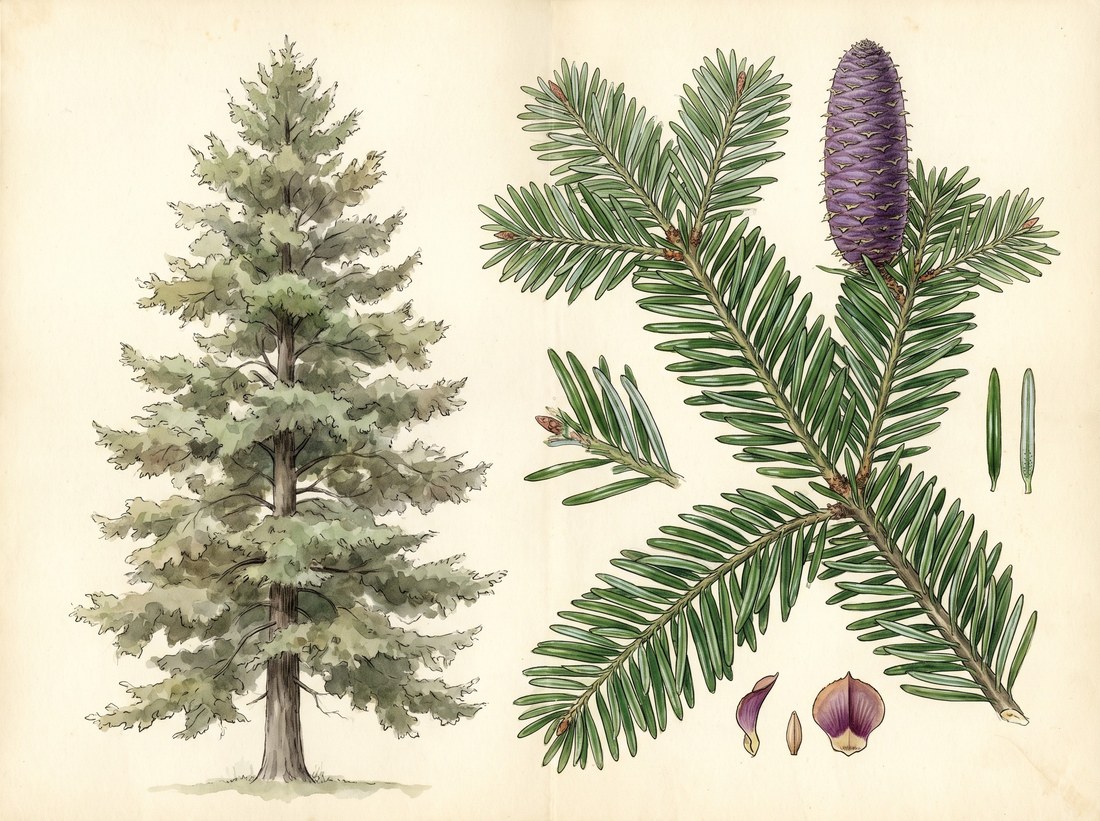 Himalayan silver firAbies webbiana
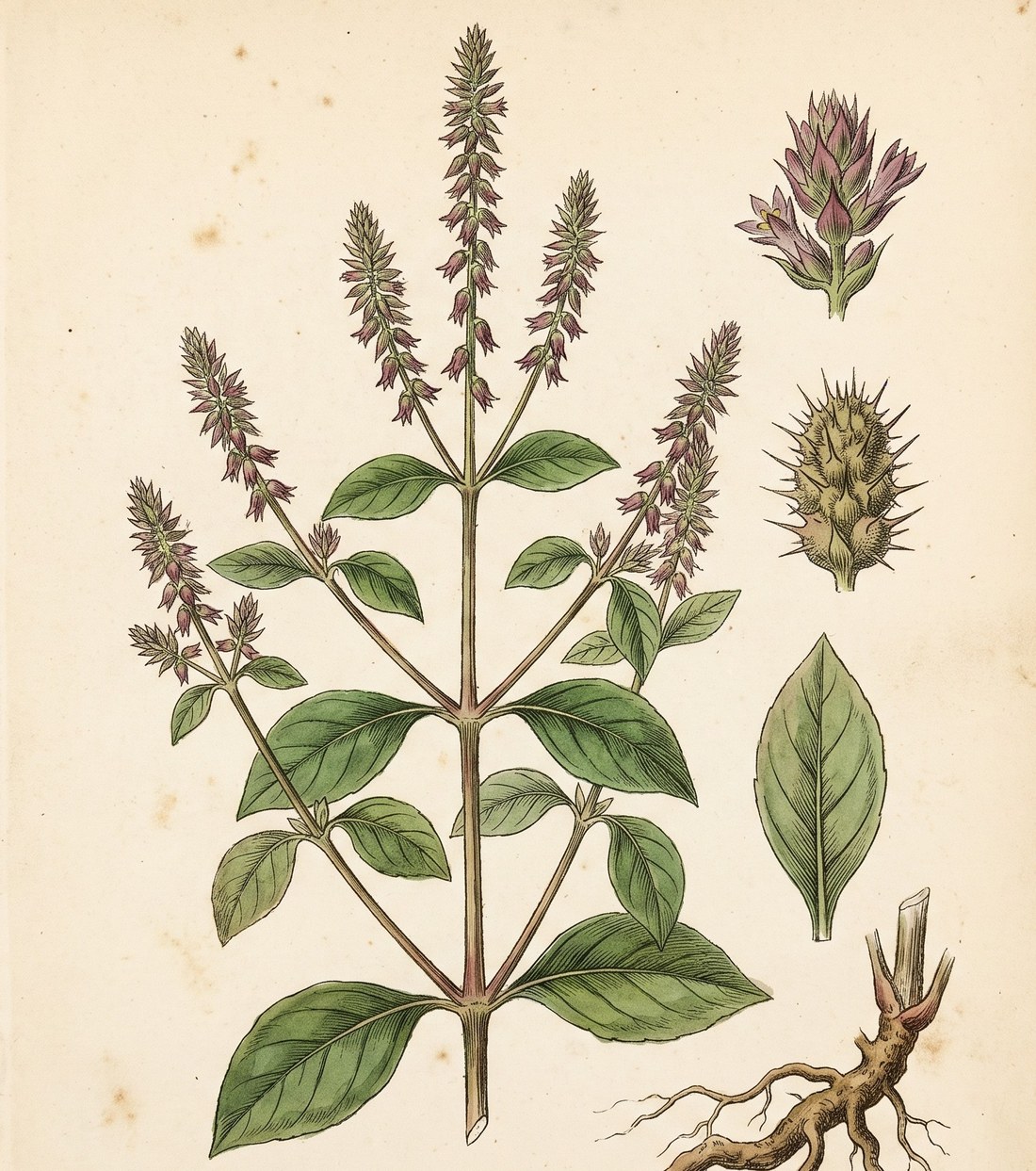 prickly chaff flowerAchyranthes aspera
 aloe veraAloe vera
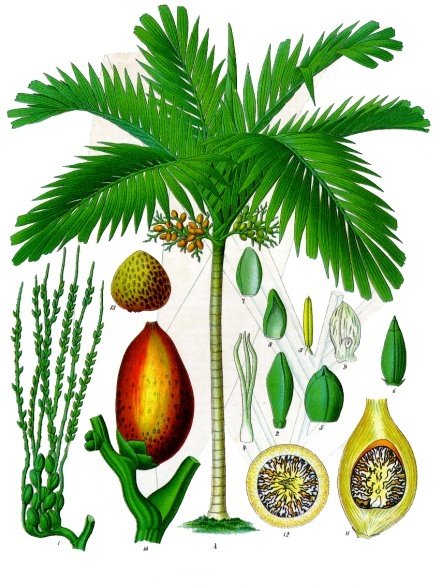 areca nutAreca catechu
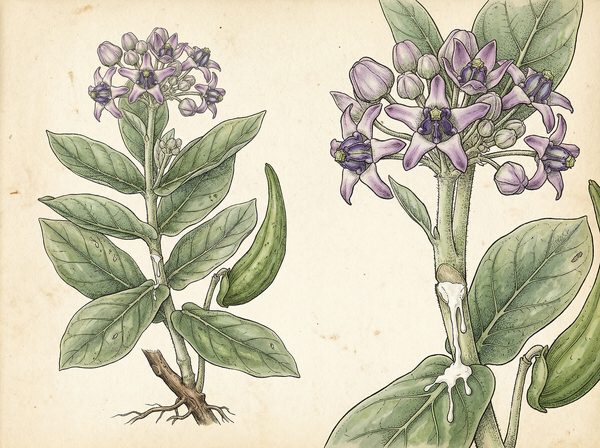 crown flowerCalotropis gigantea
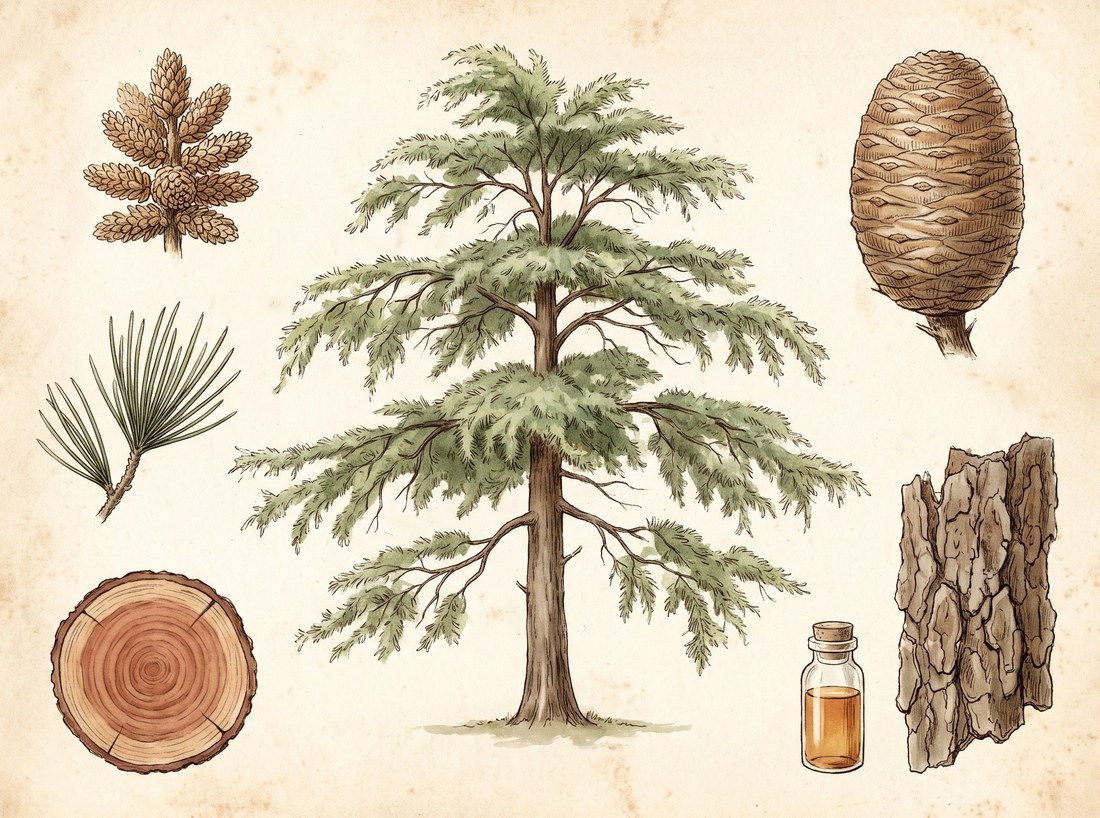 Himalayan cedarCedrus deodara
Nearby on the shelf
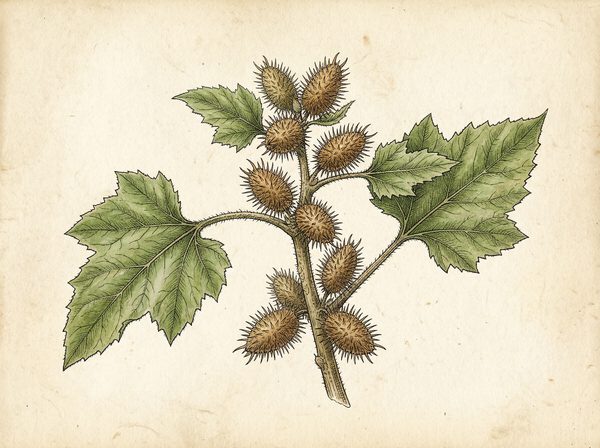 Cocklebur FruitXanthium sibiricum
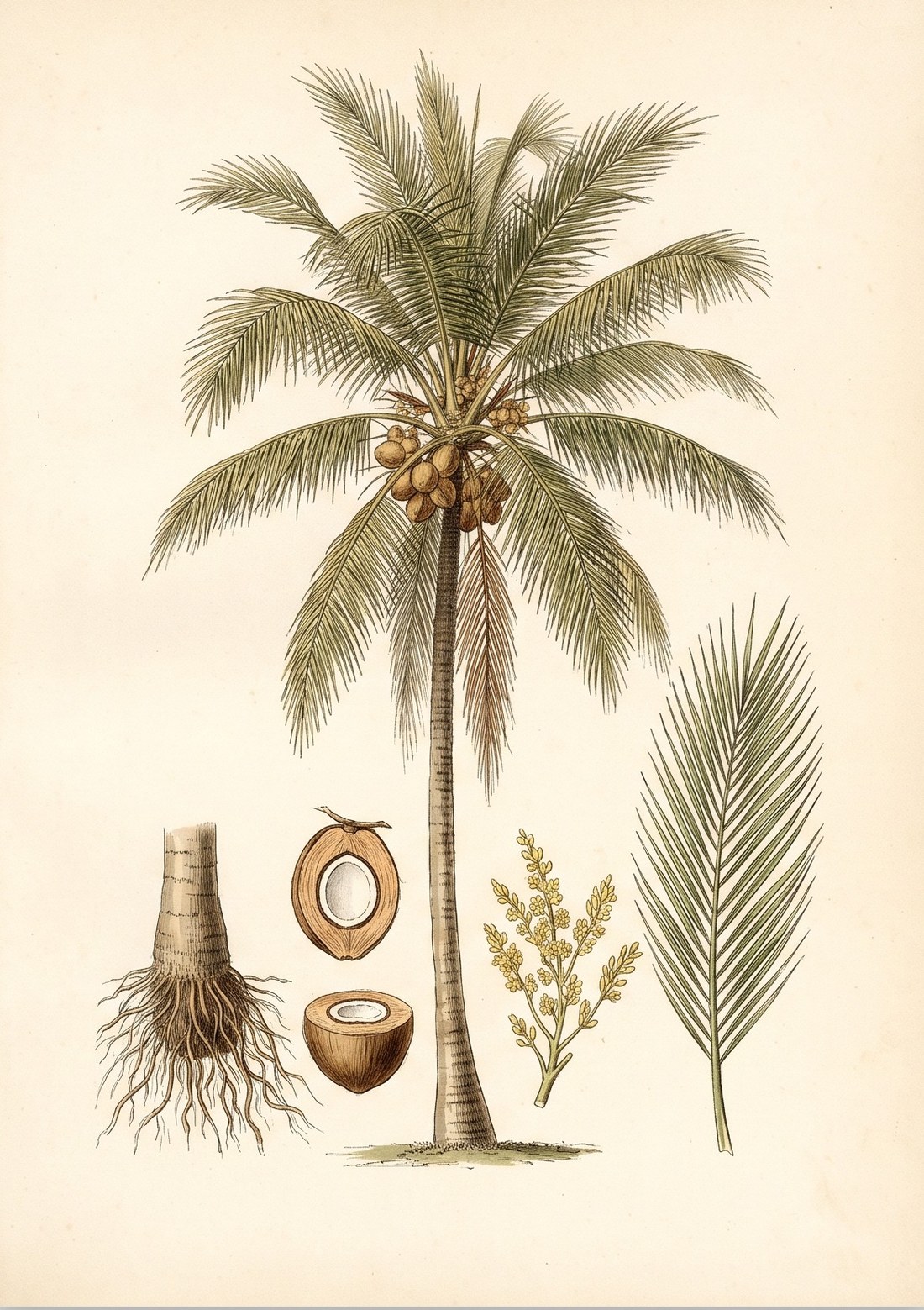 CoconutCocos nucifera
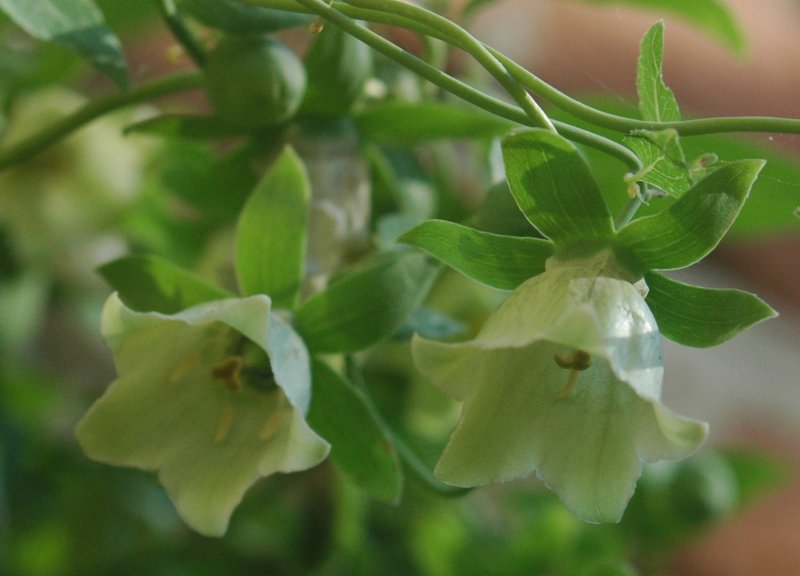 CodonopsisCodonopsis pilosula
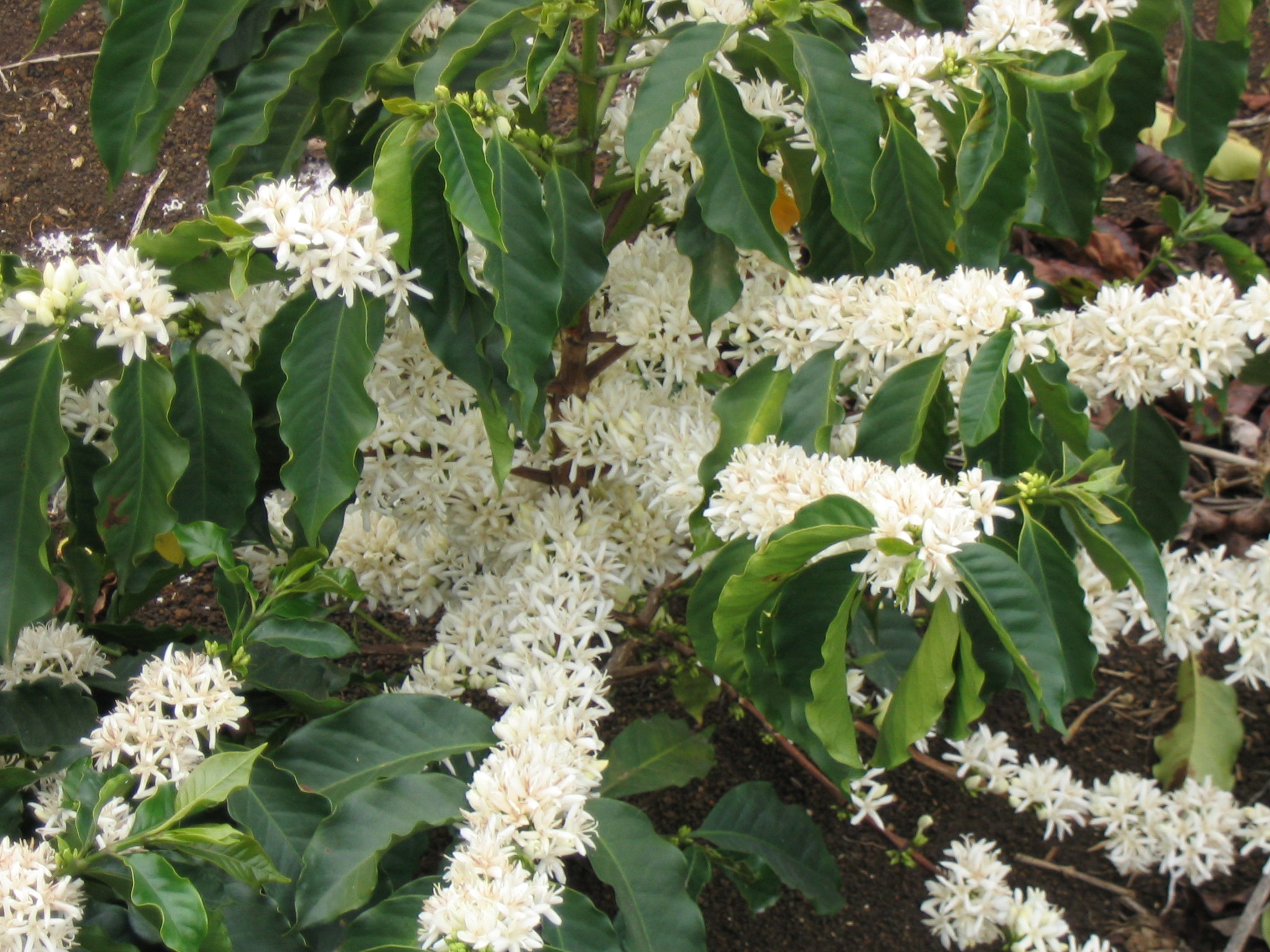 CoffeeCoffea arabica
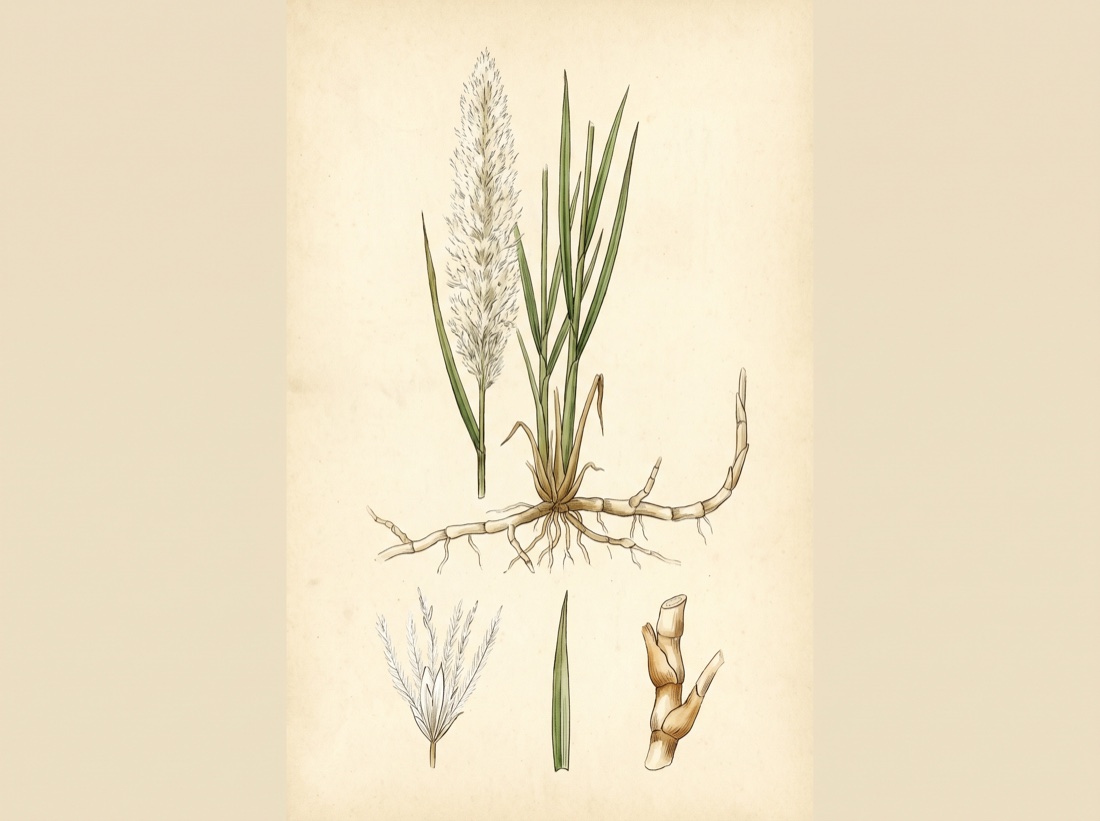 CogongrassImperata cylindrica
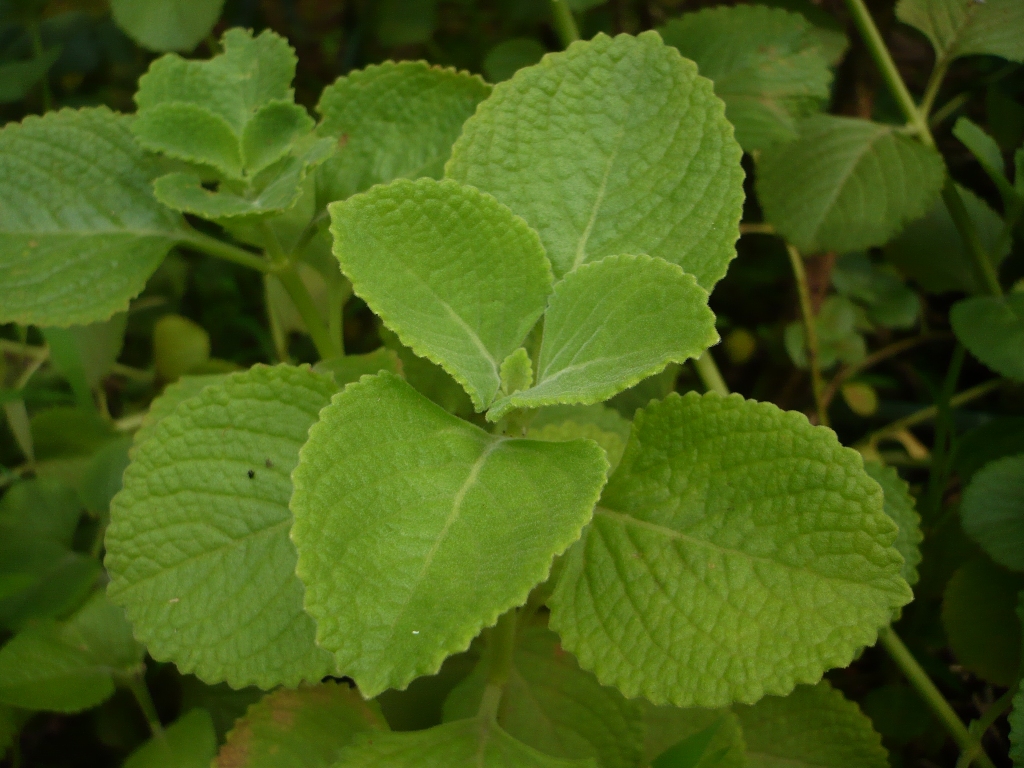 ColeusColeus forskohlii
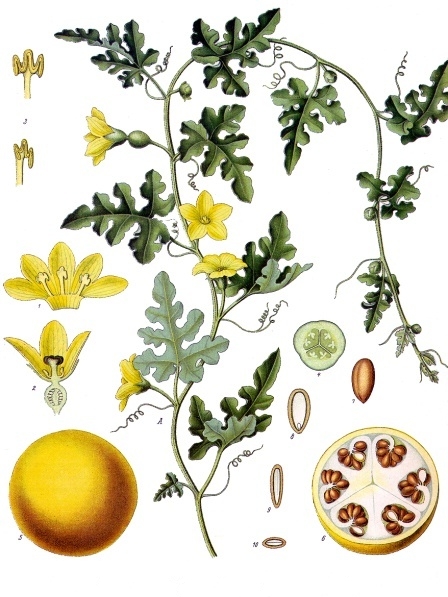 ColocynthCitrullus colocynthis
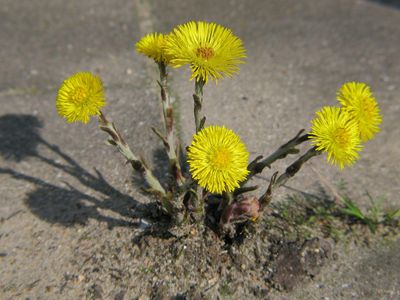 ColtsfootTussilago farfara
The whole plate is in the library. The compass, Compare, the Sky of eleven hundred plants and the formulary open with an email address and a password, free, with the formula builder and its safety engine. Herbert without limit, his formulating, clients, the handouts and the labels are the paid room.
Open the library, free