Ayurvedic Herbalism
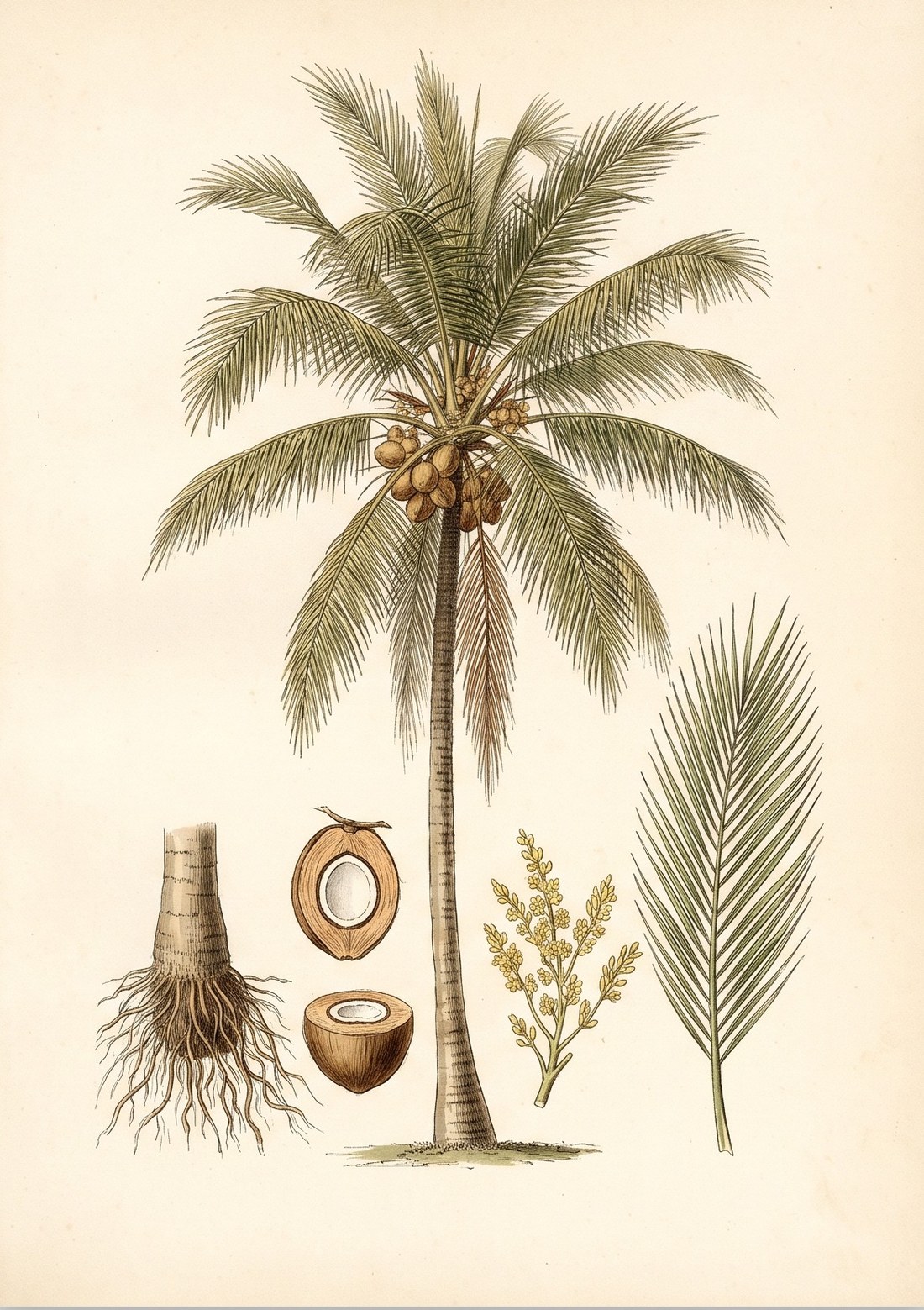
Coconut
Cocos nucifera
Also known as coconut palm, tender coconut, copra, Narikela, Narikera, Langali.
Cocos nucifera is the coconut palm of every tropical coast, grown in India across Kerala, Tamil Nadu, Karnataka, Andhra Pradesh and the islands, where it shapes diet, medicine and daily life. Ayurveda calls it Narikela and treats its parts as a small pharmacy: the tender water is a light, cooling, diuretic drink for thirst, burning and urinary complaints; the mature kernel is a heavy, sweet, nourishing food for vata and pitta; the oil is the emollient base of the medicated oils of Kerala and a food in its own right; and the flower, root and shell each have their uses. It is the pitta-pacifying counterpart to sesame among the oils.

Ask Herbert about Coconut. Herbert is the master herbalist inside Bountiful Herbs: he answers from this plate and eleven hundred others, with dosing, pairing and cautions. Your first ten questions are free.
Ask HerbertActions
Indications what the tradition reached for it in
- Dehydration and thirst in fever, heat and diarrhea (tender water)
- Burning urination and urinary tract irritation
- Hyperacidity and gastritis (Narikela khanda, Narikela lavana)
- Convalescence and undernutrition
- Dry skin, eczema and diaper rash (oil, topical)
- Hair fall and dry scalp (oil, topical)
- Minor wounds and burns (oil, topical)
- Menorrhagia and bleeding of pitta type (flower, traditional)
- Base for medicated oils in skin disease
- Oral hygiene by oil pulling (traditional)
- Underweight children and elderly with dryness
Specific indications
A hot, thirsty, feverish patient with scanty burning urine and a dry mouth who needs fluid, cooling and gentle nourishment
Burning in the chest and throat after meals with sour belching in a pitta patient, settled by Narikela khanda taken with milk
A thin, dry, anxious child or elder with flaky skin and brittle hair who needs building up with oil and food
Dry, cracked, itching skin in the winter treated with warm oil massage before bathing
Safety
The record lists 7 contraindications; open the plate in the library to read them in full.
In practice
The Ayurvedic practitioner gives tender coconut water freely in pittaja fever, heat exhaustion, dysuria, burning after alcohol and the thirst of diarrhea, and it is the traditional drink for kidney stone patients to flush the tract.
In Ayurveda
Rasa: madhura (sweet). Virya: sheeta (cooling). Vipaka: madhura (sweet). Guna: guru (heavy), snigdha (unctuous); the tender water is laghu (light). Dosha: pacifies vata and pitta; the mature kernel and oil increase kapha in excess, while the tender water is light enough for all three. Karma: brimhana (nourishing, builds tissue); balya (strengthening); vrishya (aphrodisiac); trishnahara (relieves thirst); dahaprashamana (relieves burning); mutrala (diuretic, the tender water); bastishodhana (cleanses the bladder); hridya (supports the heart); pittahara (pacifies pitta); raktapittahara (checks bleeding); keshya (benefits the hair, the oil); vranaropana (heals wounds, the oil). Classical indications: trishna (thirst); daha (burning sensation); mutrakrichra (dysuria); ashmari (urinary stones); raktapitta (bleeding disorders); amlapitta (hyperacidity); kshaya (wasting); daurbalya (weakness); pittaja jvara (fever of pitta type); vrana (wounds, the oil); kesha patana (hair fall, the oil); kushtha (skin disease, as the oil base). The water of the tender green fruit is drunk fresh for thirst, burning and urinary complaints; the mature kernel is eaten and pressed for oil; the oil is the standard base of the medicated oils of Kerala and is taken internally in small amounts; the tender flower is given for bleeding; the burnt shell yields Narikela lavana for hyperacidity; and the kernel with sugar and spices is made into Narikela khanda for amlapitta. Classical formulations: Narikela khanda, Narikela lavana, Eladi keram, Nalpamaradi keram, Durvadi keram, Narikela pushpa kwatha, Dhurdhurapatradi keram. Described in: Charaka Samhita, Sushruta Samhita, Ashtanga Hridaya, Bhavaprakasha Nighantu, Dhanvantari Nighantu, Raja Nighantu, Kaiyadeva Nighantu, Madanapala Nighantu.
Dosing as the sources wrote it
| Preparation | As written | Metric |
|---|---|---|
| Tender coconut water | 100-300 mL fresh water once or twice daily | 100-300 mL |
| Taila, internal | 5-15 mL virgin coconut oil daily with food | 5-15 mL |
| Khanda (Narikela khanda) | 10-20 g twice daily with warm milk | 10000-20000 mg |
| Lavana (Narikela lavana) | 500-1000 mg twice daily after food | 500-1000 mg |
| Pushpa kalka | 5-10 g tender flower paste daily with rice water | 5000-10000 mg |
| Taila, topical | 10-30 mL oil massaged into skin or scalp | 10-30 mL |
Doses are reproduced from the sources for practitioners and are not a recommendation for any person.
From the sources
Overview. Cocos nucifera is the coconut palm of every tropical coast, grown in India across Kerala, Tamil Nadu, Karnataka, Andhra Pradesh and the islands, where it shapes diet, medicine and daily life. Ayurveda calls it Narikela and treats its parts as a small pharmacy: the tender water is a light, cooling, diuretic drink for thirst, burning and urinary complaints; the mature kernel is a heavy, sweet, nourishing food for vata and pitta; the oil is the emollient base of the medicated oils of Kerala and a food in its own right; and the flower, root and shell each have their uses. It is the pitta-pacifying counterpart to sesame among the oils.
Clinical Notes. The Ayurvedic practitioner gives tender coconut water freely in pittaja fever, heat exhaustion, dysuria, burning after alcohol and the thirst of diarrhea, and it is the traditional drink for kidney stone patients to flush the tract.
Ayurvedic Profile. Rasa: madhura (sweet). Virya: sheeta (cooling). Vipaka: madhura (sweet). Guna: guru (heavy), snigdha (unctuous); the tender water is laghu (light). Dosha: pacifies vata and pitta; the mature kernel and oil increase kapha in excess, while the tender water is light enough for all three.
In formulas
Coconut stands in 6 documented formulas in the library, among them Nārikela Khaṇḍa, Vastyāmayāntaka Ghṛta, Tuṅgadrumādi Taila, Nīlibhṛṅgādi Taila, Sindūrādi Lepa, Nāsikā Cūrṇa.
Often paired with
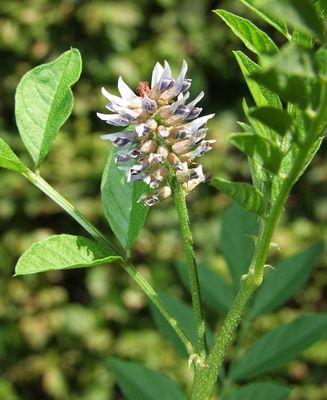 Licorice rootGlycyrrhiza glabra
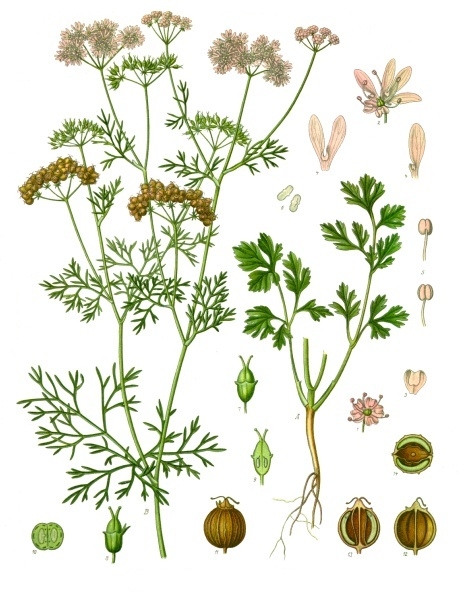 corianderCoriandrum sativum
 nut grassCyperus rotundus
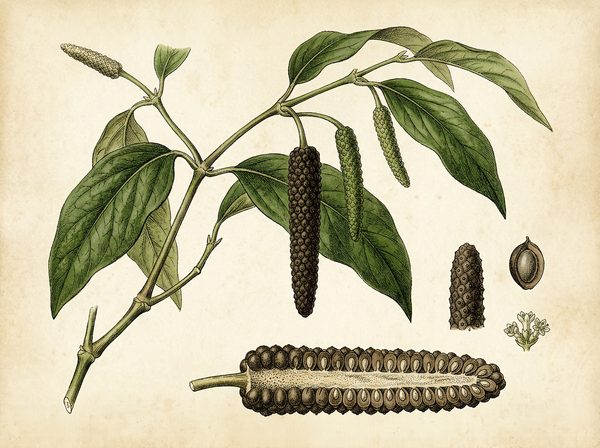 long pepperPiper longum
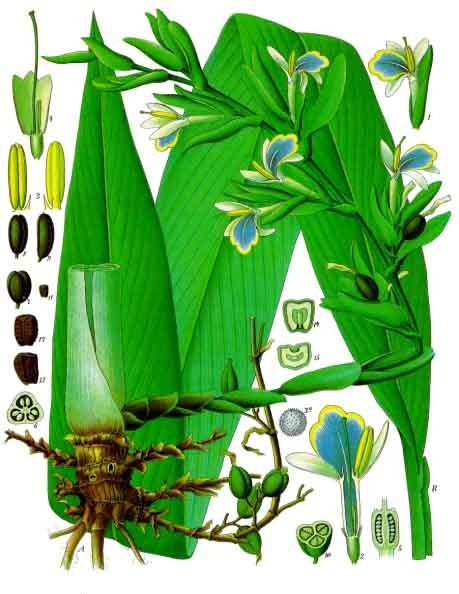 cardamomElettaria cardamomum
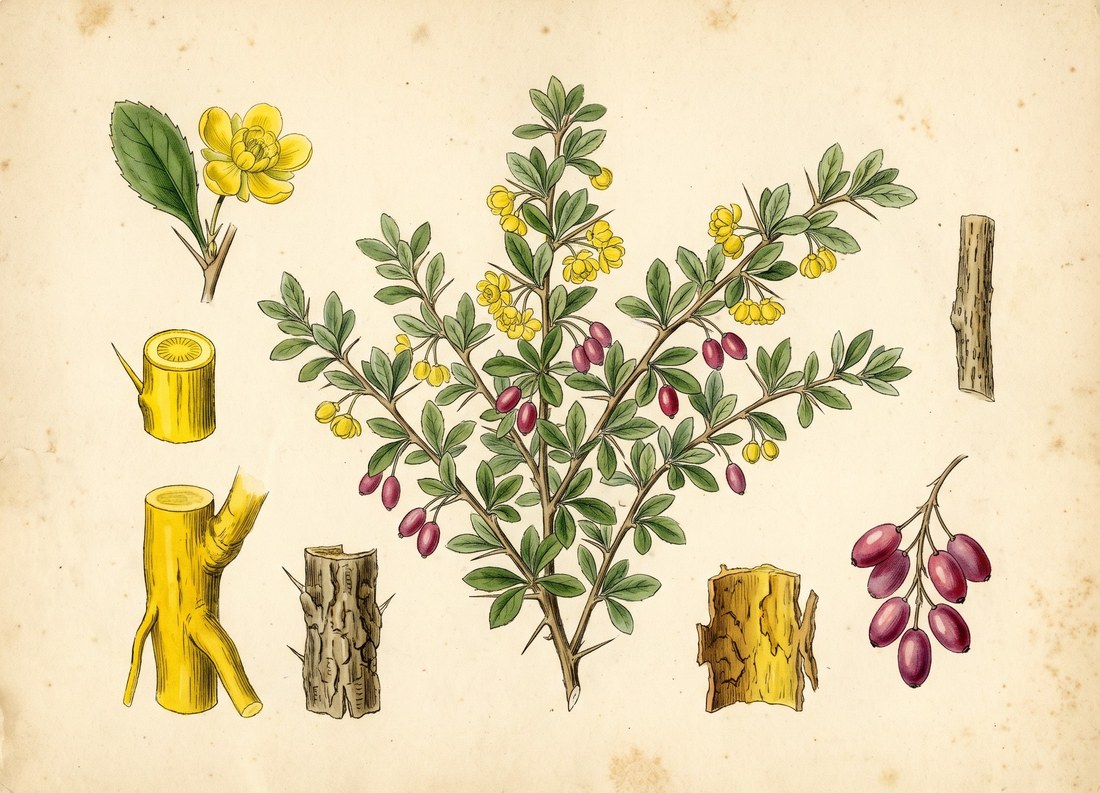 Indian barberryBerberis aristata
Nearby on the shelf
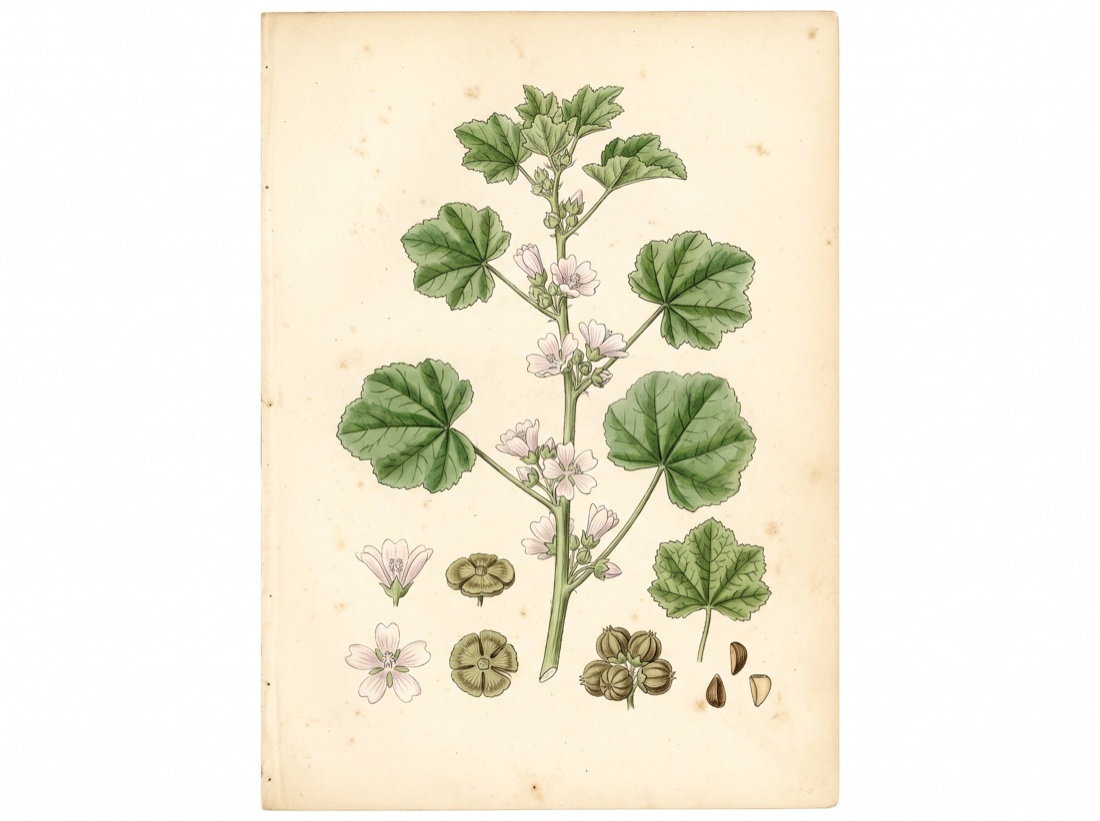 Cluster mallowMalva verticillata
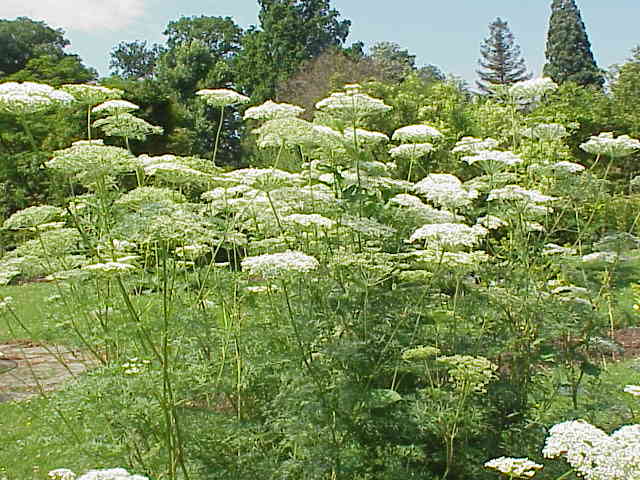 Cnidium SeedCnidium monnieri
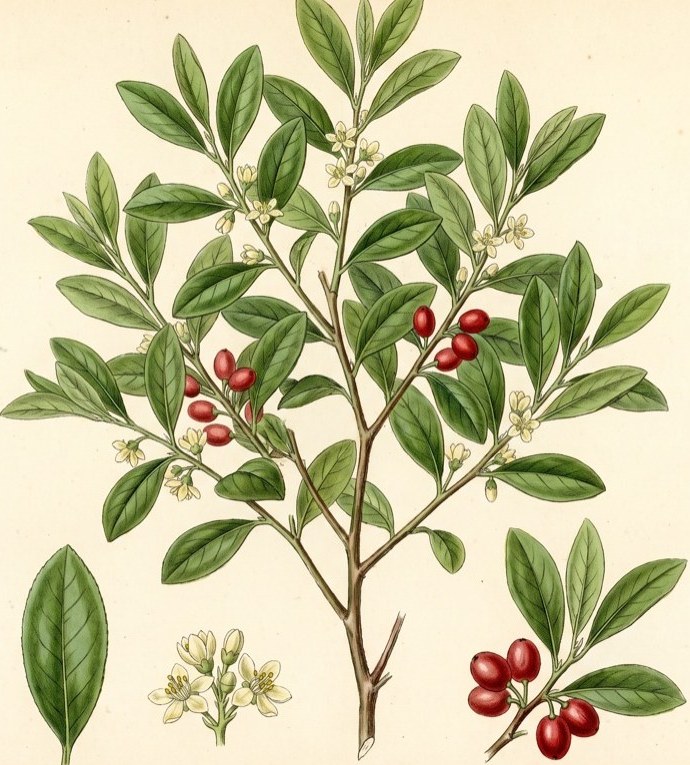 CocaErythroxylon coca
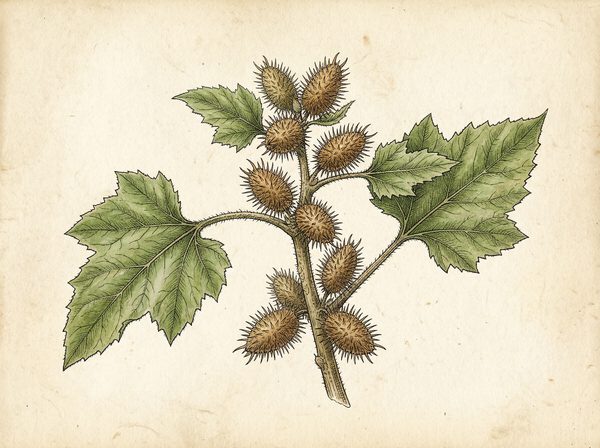 Cocklebur FruitXanthium sibiricum
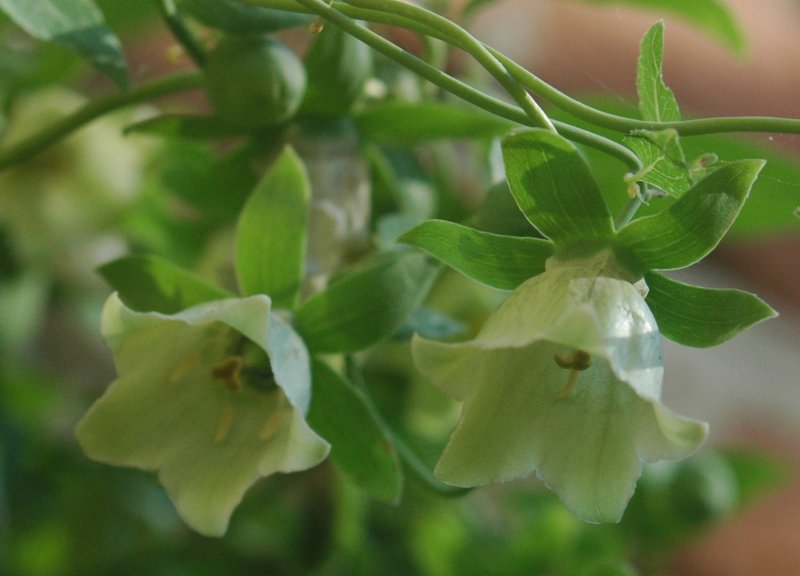 CodonopsisCodonopsis pilosula
 CoffeeCoffea arabica
 Coffee sennaSenna occidentalis
 CogongrassImperata cylindrica
The whole plate is in the library. The compass, Compare, the Sky of eleven hundred plants and the formulary open with an email address and a password, free, with the formula builder and its safety engine. Herbert without limit, his formulating, clients, the handouts and the labels are the paid room.
Open the library, free