Ayurvedic Herbalism
Chir pine
Pinus roxburghii
Also known as Himalayan long-leaved pine, Indian long-leaf pine, chir, Sarala, Pitadaru, Surabhidaru.
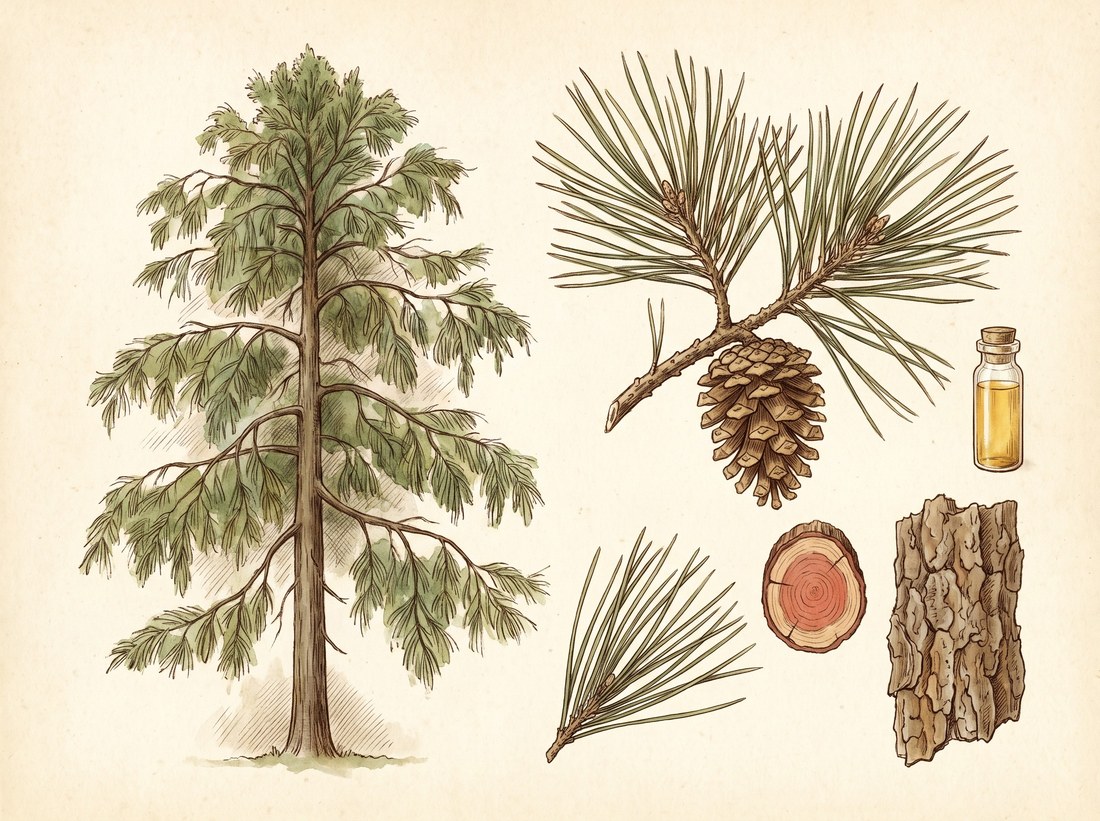
Pinus roxburghii, the chir pine, is the dominant conifer of the outer Himalaya from Pakistan through Kashmir, Himachal, Uttarakhand, Nepal and Bhutan to Arunachal Pradesh, forming open forests between 500 and 2,000 meters. It is a tall tree with long drooping needles in threes and large woody cones, and it is the main source of Indian resin and turpentine. Ayurveda knows it as Sarala, a warming, aromatic wood and resin for vata and kapha: the wood goes into decoctions and medicated oils for joint and nerve pain, the oleoresin is a plaster for wounds and swellings, and the smoke is a fumigant.

Ask Herbert about Chir pine. Herbert is the master herbalist inside Bountiful Herbs: he answers from this plate and eleven hundred others, with dosing, pairing and cautions. Your first ten questions are free.
Ask HerbertActions
Indications what the tradition reached for it in
- Chronic joint pain and stiffness of cold type (topical)
- Low back pain and sciatica (topical oil)
- Muscle strain and bruising (plaster or oil)
- Boils, abscesses and slow healing wounds (resin plaster)
- Chest congestion with thick sputum (chest rub and inhalation)
- Chronic bronchitis and cough (inhalation, folk decoction of needles)
- Fungal skin infections and itching (topical)
- Cracked heels and chilblains (ointment)
- Head lice and scabies (folk, topical)
- Damp, cold rooms and sickrooms (fumigation)
- Chronic fatigue with memory decline (traditional; weak evidence)
Specific indications
An old, cold, stiff patient whose joints ache in damp weather and ease with heat and rubbing, for warm Sarala oil massage
A boil or splinter wound that is slow to come to a head, for the warmed resin plaster
A thick, stuck chest cough in a phlegmatic patient, for a turpentine chest rub and steam inhalation
Itchy, scaling fungal patches between the toes or in skin folds in a person who sweats heavily
Safety
Low dose botanical. Used in drop doses in the classical practice; not a plant to dose freely.
Pregnancy: No published safety class is known to us; avoid internal use in pregnancy and limit topical turpentine to small areas, since terpenes are absorbed through the skin.
Breastfeeding: Avoid applying resin or turpentine to the breast; small topical use elsewhere and the wood decoction in ordinary doses are not known to cause harm.
The record lists 8 contraindications; open the plate in the library to read them in full.
In practice
The Ayurvedic physician uses Sarala mostly on the outside. Warm oil cooked with the heartwood, or with the resin and Devadaru, is massaged into aching joints, the low back and cold, numb limbs, and the same oil warmed and dropped into the ear is a folk remedy for earache.
In Ayurveda
Rasa: tikta (bitter), katu (pungent), madhura (sweet). Virya: ushna (heating). Vipaka: katu (pungent). Guna: laghu (light), snigdha (unctuous), tikshna (sharp). Dosha: pacifies vata and kapha; aggravates pitta in excess. Karma: vatahara (pacifies vata); kaphahara (reduces kapha); shothahara (reduces swelling); vedanasthapana (relieves pain); vranaropana (heals wounds); krimighna (anthelmintic and antimicrobial); kandughna (relieves itching); svedajanana (induces sweating); kasahara (relieves cough); durgandhanashana (removes bad odor); rakshoghna (protective fumigant). Classical indications: vatavyadhi (joint and nerve pain of vata); sandhishula (joint pain); shotha (swelling); vrana (wounds and ulcers); kushtha (skin diseases); kandu (itching); kasa (cough); shvasa (dyspnea); karnaroga (ear disease); netraroga (eye disease, as fumigant); krimi (worms and infestation); jvara (fever, as sudation). The heartwood is decocted and used in medicated oils for vata; the oleoresin that exudes from the trunk is used as a plaster and in ointments for wounds, boils and joint pain, and its distilled oil (turpentine) is rubbed on painful joints and chests and used in fumigation. The needles are used in folk decoctions for cough and in baths. Classical formulations: Sarala niryasa (oleoresin plaster), Sarala taila, Chandanadi taila, Sarala kashtha kwatha, Dhupana yogas (fumigation blends). Described in: Charaka Samhita, Sushruta Samhita, Ashtanga Hridaya, Bhavaprakasha Nighantu, Dhanvantari Nighantu, Raja Nighantu, Kaiyadeva Nighantu, Ayurvedic Pharmacopoeia of India.
Dosing as the sources wrote it
| Preparation | As written | Metric |
|---|---|---|
| Kwatha | 30-60 mL heartwood decoction twice daily | 30-60 mL |
| Churna | 1-3 g powdered heartwood twice daily with warm water | 1000-3000 mg |
| Taila, topical | 10-20 mL warm medicated oil massaged into joints or back once or twice daily | 10-20 mL |
| Turpentine rub, topical | 5-10 drops turpentine oil diluted in 15 mL carrier oil applied to the chest or joints | 0.1-0.2 mL |
| Niryasa plaster, topical | 2-5 g softened oleoresin applied on cloth to boils or cracked skin | 2000-5000 mg |
Doses are reproduced from the sources for practitioners and are not a recommendation for any person.
From the sources
Overview. Pinus roxburghii, the chir pine, is the dominant conifer of the outer Himalaya from Pakistan through Kashmir, Himachal, Uttarakhand, Nepal and Bhutan to Arunachal Pradesh, forming open forests between 500 and 2,000 meters. It is a tall tree with long drooping needles in threes and large woody cones, and it is the main source of Indian resin and turpentine. Ayurveda knows it as Sarala, a warming, aromatic wood and resin for vata and kapha: the wood goes into decoctions and medicated oils for joint and nerve pain, the oleoresin is a plaster for wounds and swellings, and the smoke is a fumigant.
Clinical Notes. The Ayurvedic physician uses Sarala mostly on the outside. Warm oil cooked with the heartwood, or with the resin and Devadaru, is massaged into aching joints, the low back and cold, numb limbs, and the same oil warmed and dropped into the ear is a folk remedy for earache.
Ayurvedic Profile. Rasa: tikta (bitter), katu (pungent), madhura (sweet). Virya: ushna (heating). Vipaka: katu (pungent). Guna: laghu (light), snigdha (unctuous), tikshna (sharp). Dosha: pacifies vata and kapha; aggravates pitta in excess.
In formulas
Chir pine stands in 9 documented formulas in the library, among them Kāsīsādi Ghṛta, Candanādi Taila, Prabhaṅjana Vimardana Taila, Prameha Mihira Taila, Balā Taila, Balāguḍūcyādi Taila.
Often paired with
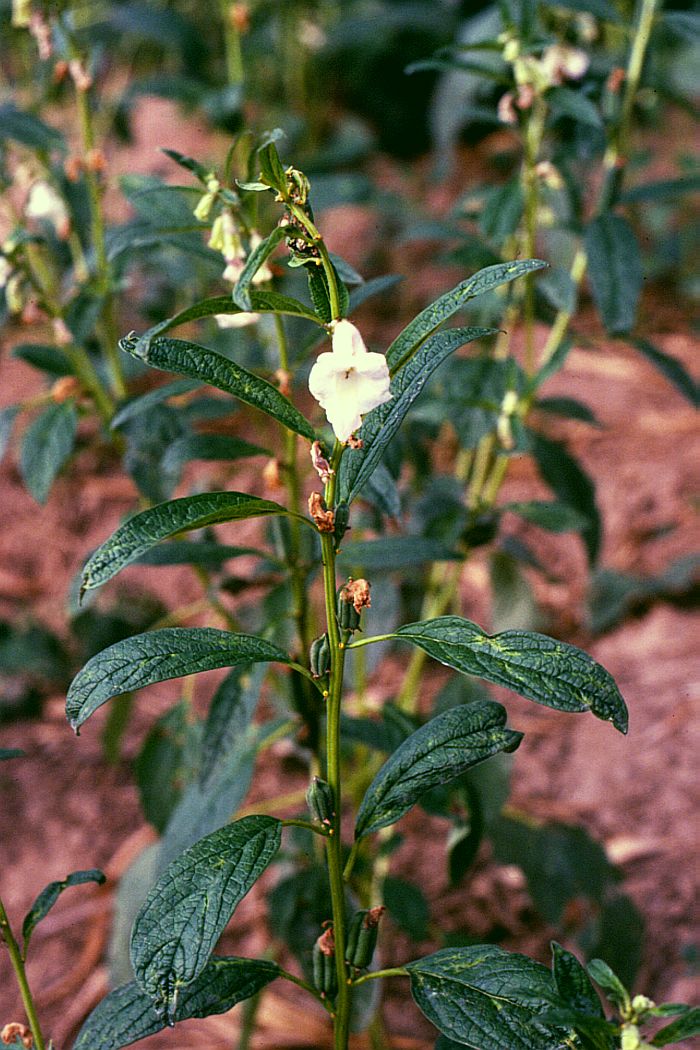 sesameSesamum indicum
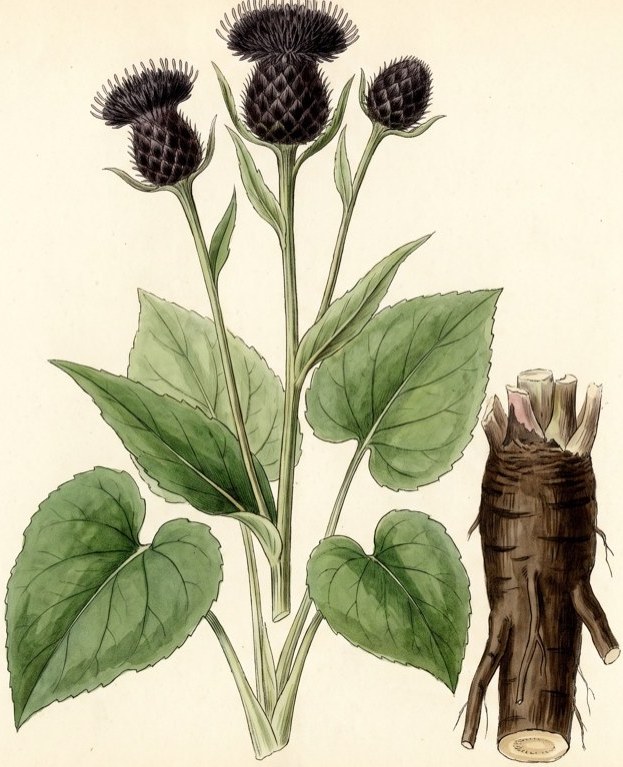 costusSaussurea costus
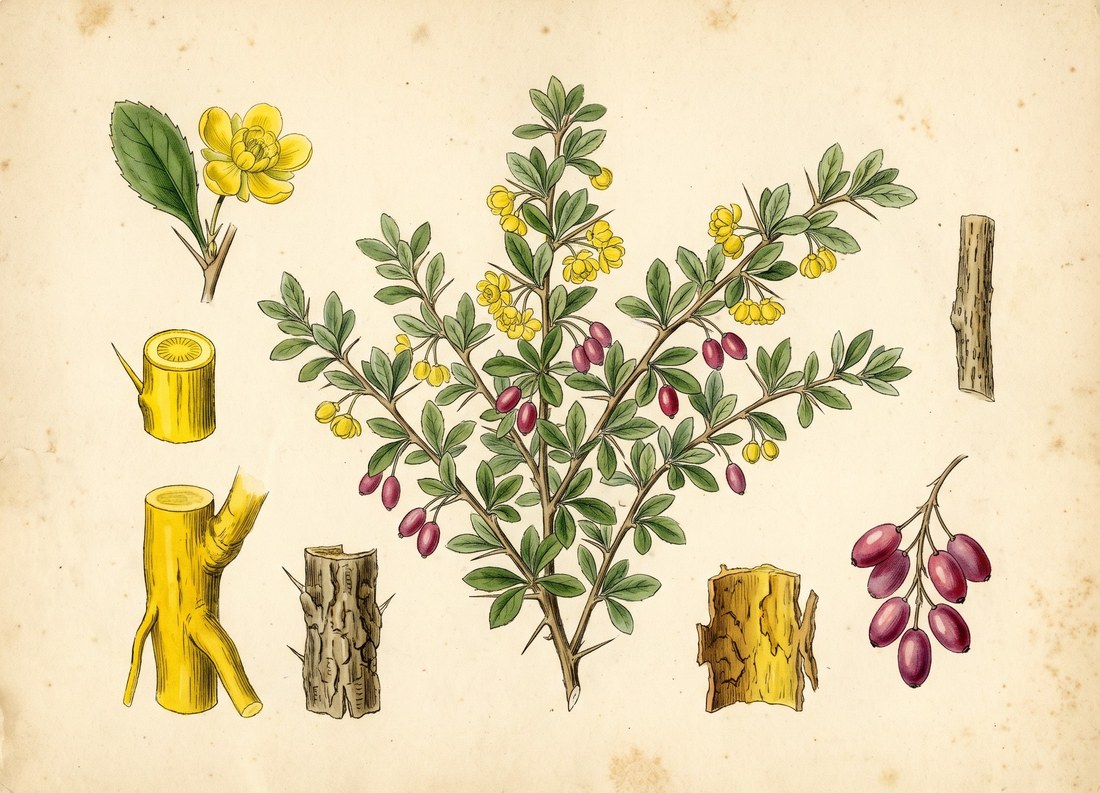 Indian barberryBerberis aristata
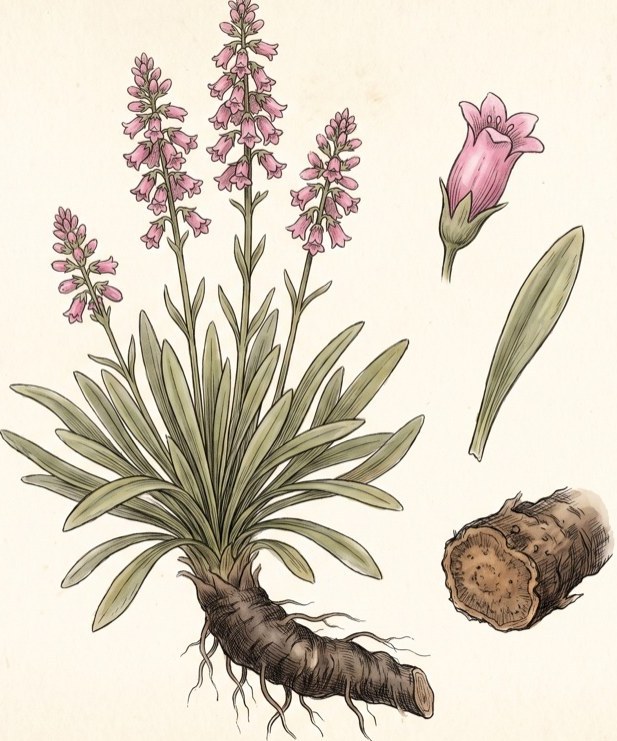 jatamansiNardostachys jatamansi
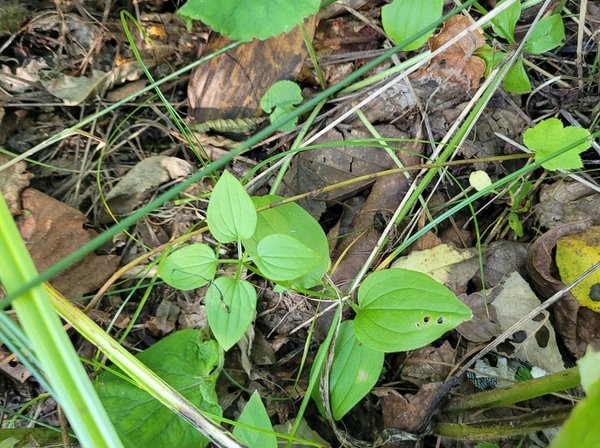 Indian madderRubia cordifolia
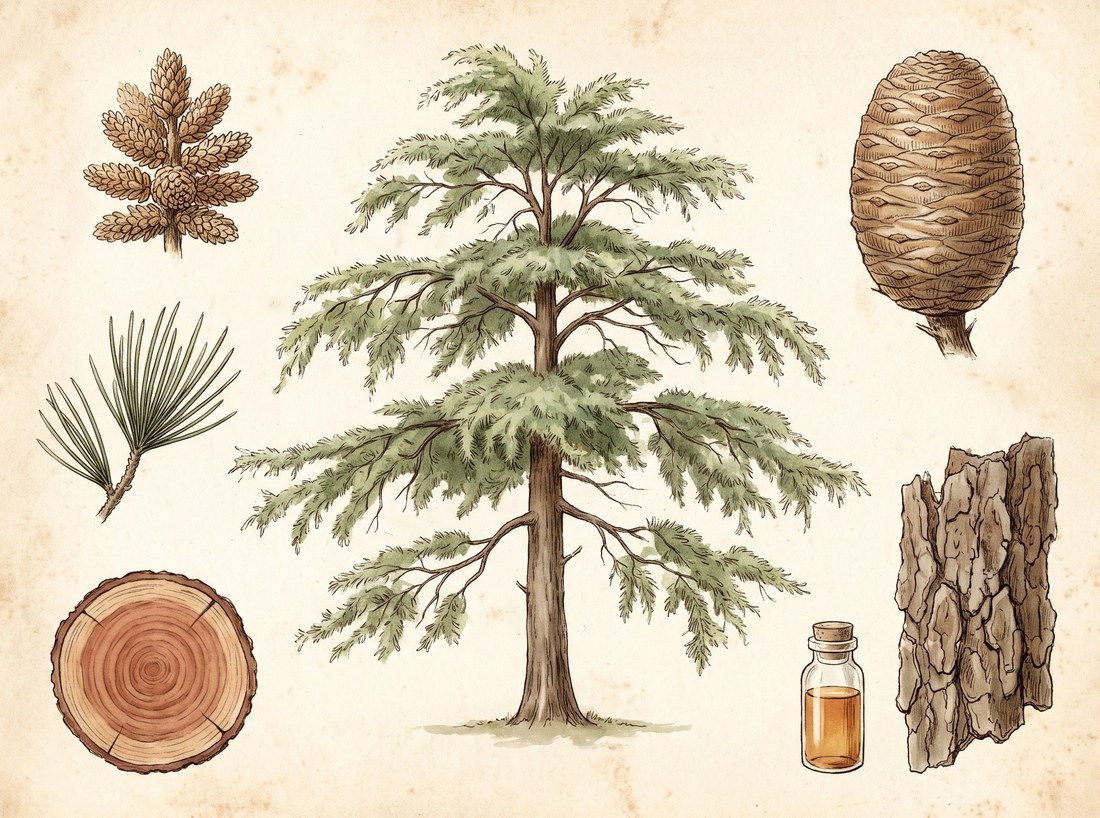 Himalayan cedarCedrus deodara
Nearby on the shelf
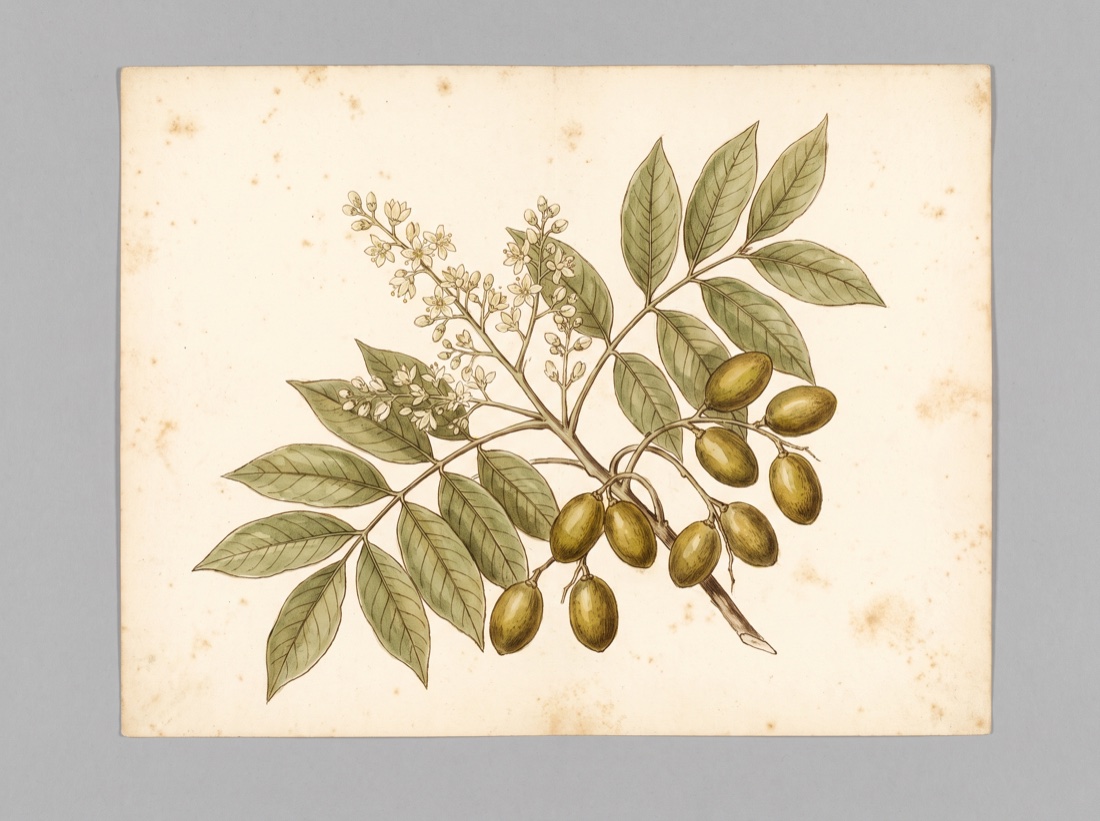 Chinese white oliveCanarium album
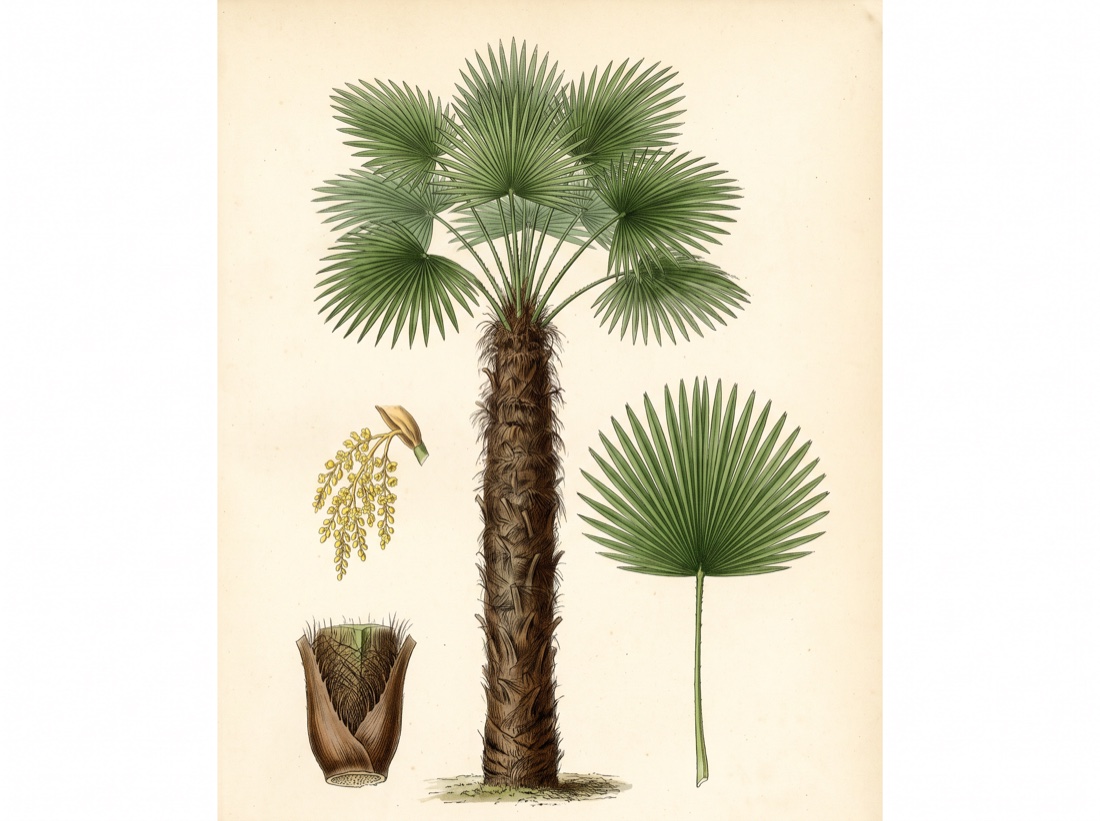 Chinese windmill palmTrachycarpus fortunei
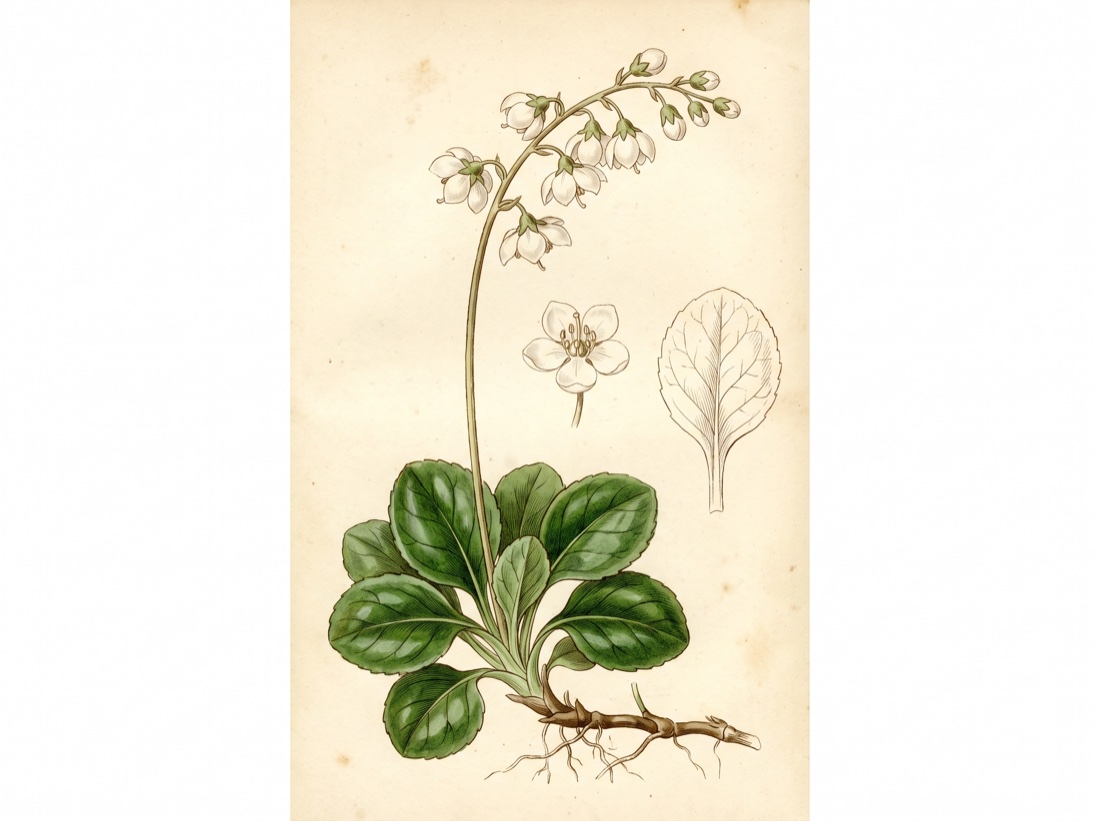 Chinese wintergreenPyrola calliantha
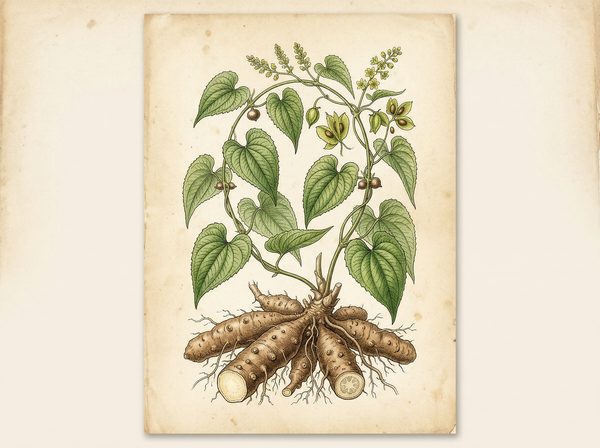 Chinese YamDioscorea opposita
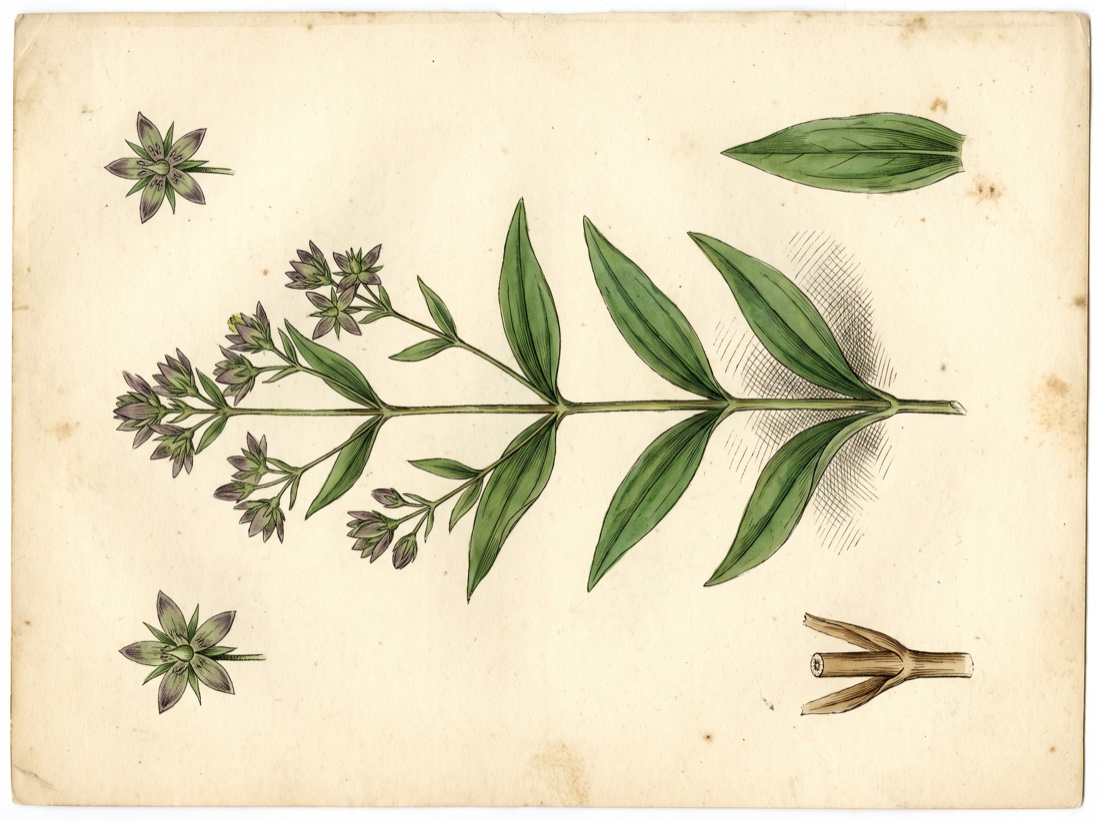 ChirettaOphelia chirata
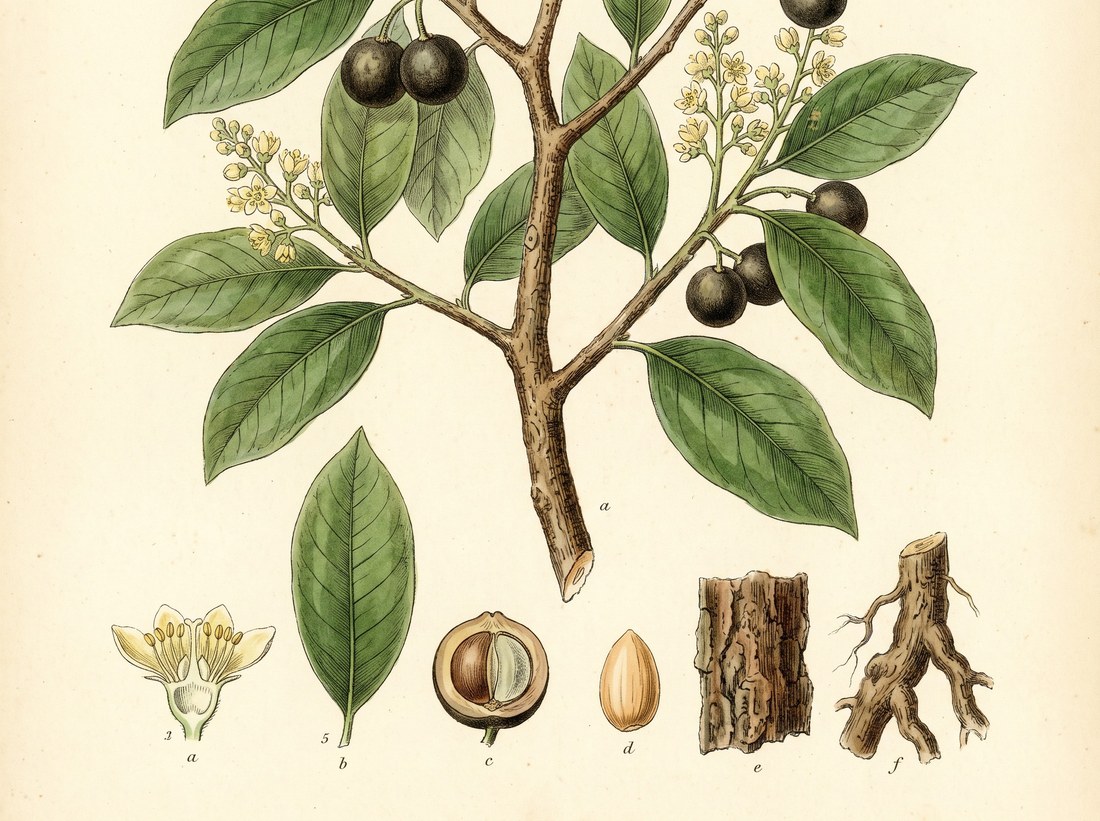 ChironjiBuchanania lanzan
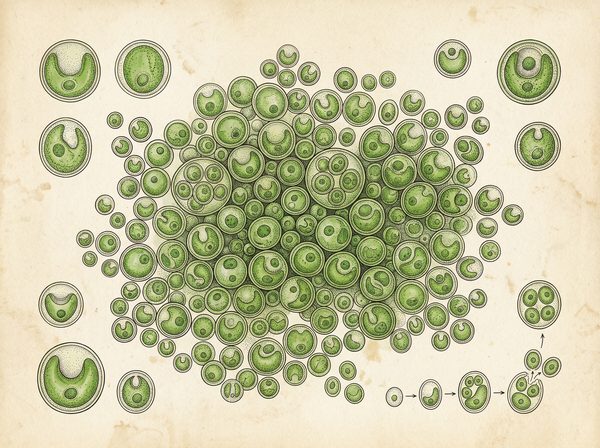 ChlorellaChlorella vulgaris
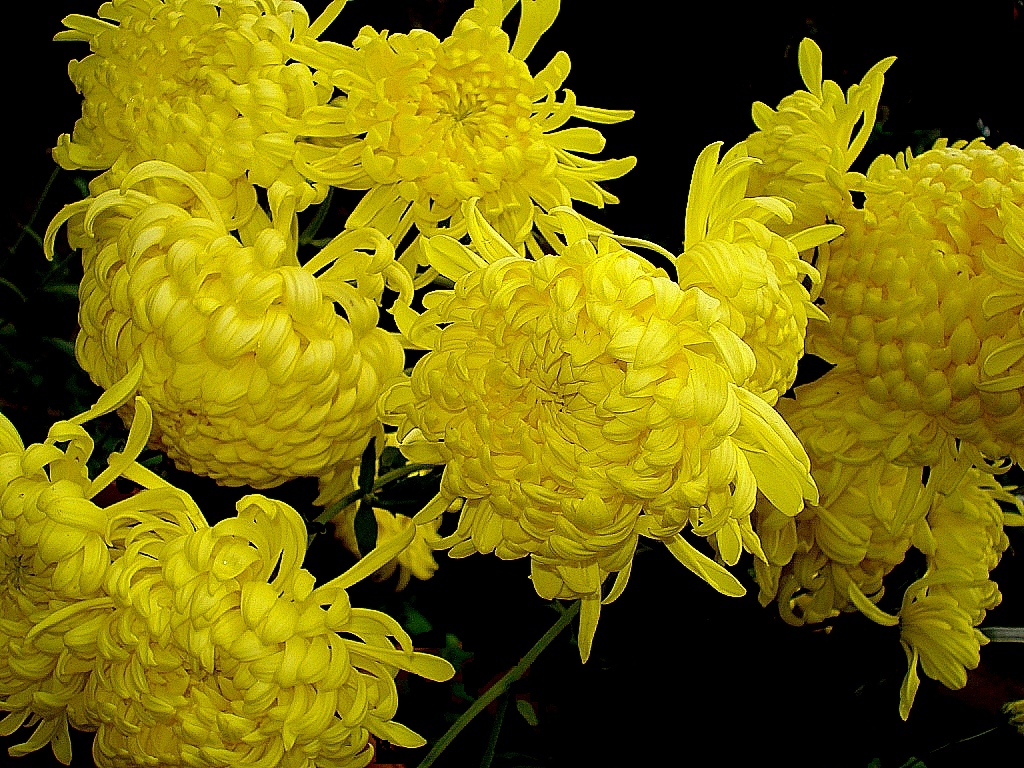 ChrysanthemumChrysanthemum × morifolium
The whole plate is in the library. The compass, Compare, the Sky of eleven hundred plants and the formulary open with an email address and a password, free, with the formula builder and its safety engine. Herbert without limit, his formulating, clients, the handouts and the labels are the paid room.
Open the library, free