Chinese Herbalism
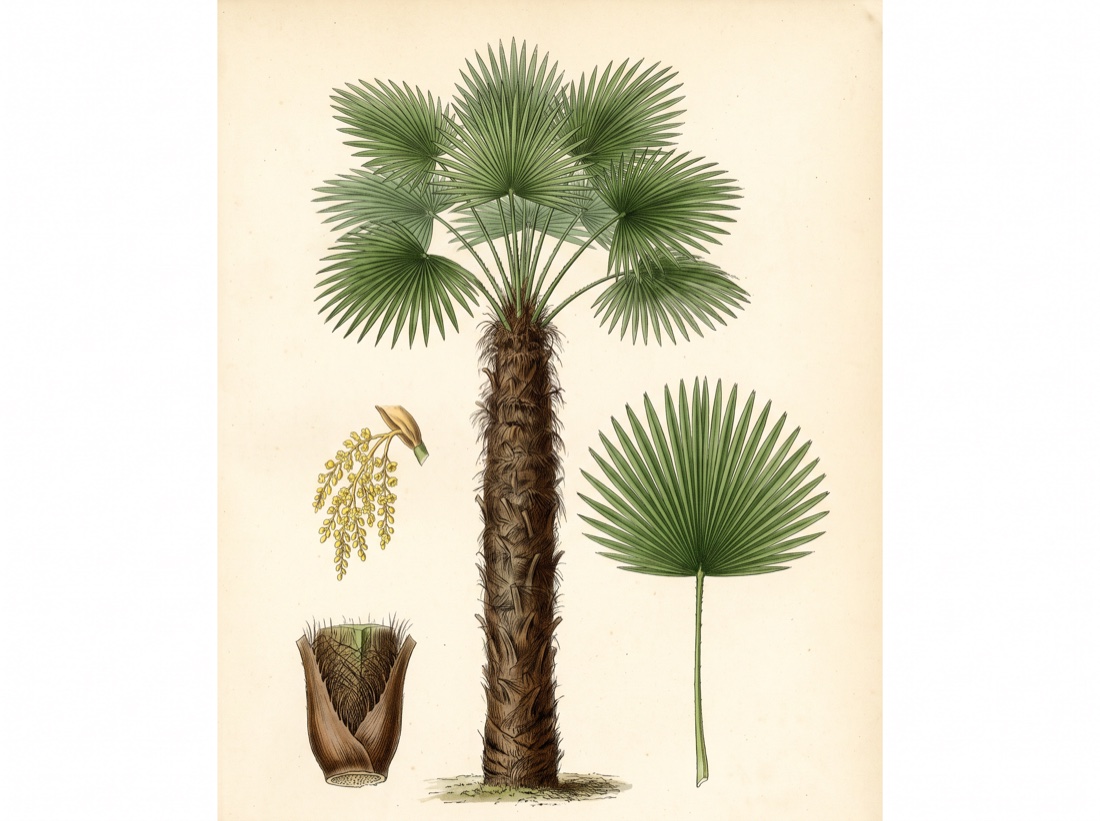
Chinese windmill palm
Trachycarpus fortunei
Also known as windmill palm, Chusan palm, hemp palm, zong lu, zong lu tan, zōng lǘ, zōng lǘ tàn, zōng lǘ pí.
Zong lu is the Chinese windmill palm, a hardy fan palm of central and eastern China that is now planted as an ornamental across the temperate world. The medicine is the fibrous mat at the base of the old leaf stalks, cut from the trunk, aged and then charred to a black, brittle carbon known as zong lu tan. In Chinese medicine it is a pure astringent hemostatic: it has no cooling, warming or blood-moving action of its own, so it is chosen when the only task is to stop leakage of blood or fluids.

Ask Herbert about Chinese windmill palm. Herbert is the master herbalist inside Bountiful Herbs: he answers from this plate and eleven hundred others, with dosing, pairing and cautions. Your first ten questions are free.
Ask HerbertActions
Indications what the tradition reached for it in
- Coughing up blood without heat signs
- Nosebleed
- Blood in the urine
- Blood in the stool and bleeding hemorrhoids
- Heavy or prolonged menstrual bleeding
- Postpartum or perimenopausal spotting that will not settle
- Chronic watery diarrhea
- Chronic thin vaginal discharge
- Minor external bleeding (topical powder)
Specific indications
Slow, persistent bleeding from a weak or deficient patient with no fever, thirst or red tongue, where the aim is simply to hold the blood in
Uterine bleeding that drags on for weeks after the acute phase, pale and thin, in a patient who is tired and cold
Safety
Pregnancy: Caution. Use with care in pregnancy (our record's flag)
Pregnancy, our record: No formal safety data; use in pregnancy only for a clear short-term bleeding indication under supervision, and note that palm bud extracts have shown uterine smooth muscle activity in animals.
Breastfeeding: Limited data. No data in lactation; a short course for bleeding is unlikely to be a problem but there is no formal basis for reassurance.
The record lists 7 contraindications; open the plate in the library to read them in full.
In practice
Reach for zong lu tan when bleeding is chronic, pale and low-grade rather than bright, hot and forceful. It suits deficiency-type uterine bleeding, chronic hematuria and blood in the stool without inflammatory signs, and it is a routine member of charcoal combinations such as the classic ten-ash powder beside charred da ji, xiao ji, ce bai ye and he ye.
In Chinese medicine
Temperature: neutral. Taste: bitter, astringent. Channels: Lung, Liver, Large Intestine. Actions: Astringes and stops bleeding from any orifice; Binds up leakage in the lower burner (chronic diarrhea, discharge).
Dosing as the sources wrote it
| Preparation | As written |
|---|---|
| Decoction (charred) | 3-9 g charred petiole fiber daily in decoction |
| Powder | 1-1.5 g charred powder two to three times daily |
| Topical | charred powder applied to a bleeding graze as needed |
Doses are reproduced from the sources for practitioners and are not a recommendation for any person.
From the sources
Overview. Zong lu is the Chinese windmill palm, a hardy fan palm of central and eastern China that is now planted as an ornamental across the temperate world. The medicine is the fibrous mat at the base of the old leaf stalks, cut from the trunk, aged and then charred to a black, brittle carbon known as zong lu tan. In Chinese medicine it is a pure astringent hemostatic: it has no cooling, warming or blood-moving action of its own, so it is chosen when the only task is to stop leakage of blood or fluids.
Clinical Notes. Reach for zong lu tan when bleeding is chronic, pale and low-grade rather than bright, hot and forceful. It suits deficiency-type uterine bleeding, chronic hematuria and blood in the stool without inflammatory signs, and it is a routine member of charcoal combinations such as the classic ten-ash powder beside charred da ji, xiao ji, ce bai ye and he ye.
Chinese Medicine Profile. Temperature: neutral. Taste: bitter, astringent. Channels: Lung, Liver, Large Intestine. Actions: Astringes and stops bleeding from any orifice; Binds up leakage in the lower burner (chronic diarrhea, discharge).
In formulas
Chinese windmill palm stands in 5 documented formulas in the library, among them gù chòng tàng.
Often paired with
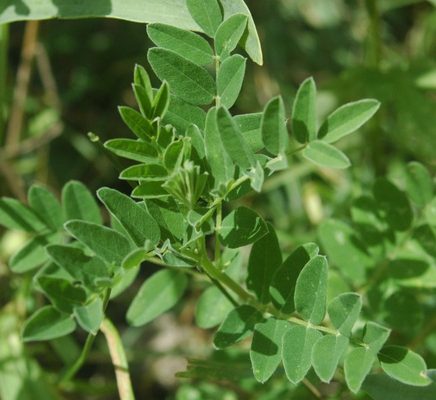 Milk Vetch RootAstragalus membranaceus
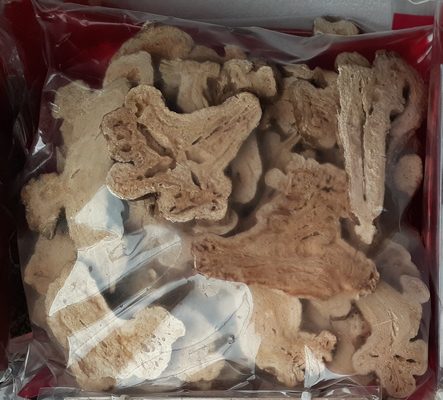 Bai ZhuAtractylodes macrocephala
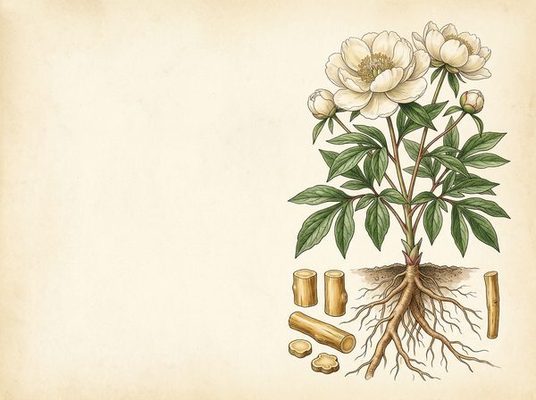 White PeonyPaeonia lactiflora
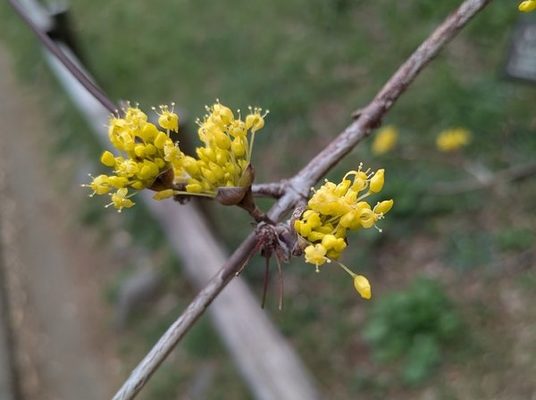 Shan Zhu YuCornus officinalis
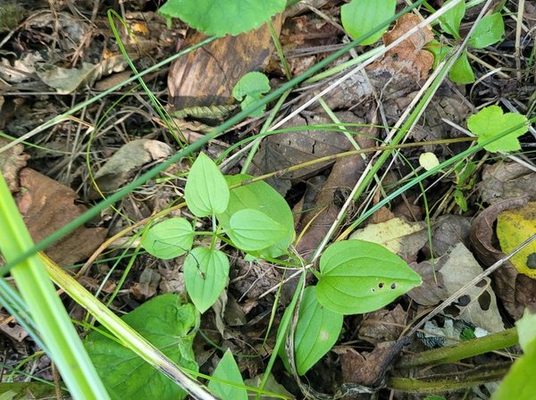 Indian madderRubia cordifolia
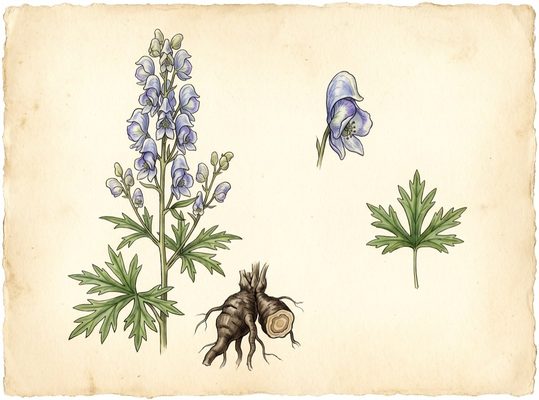 Indian aconiteAconitum ferox
Nearby on the shelf
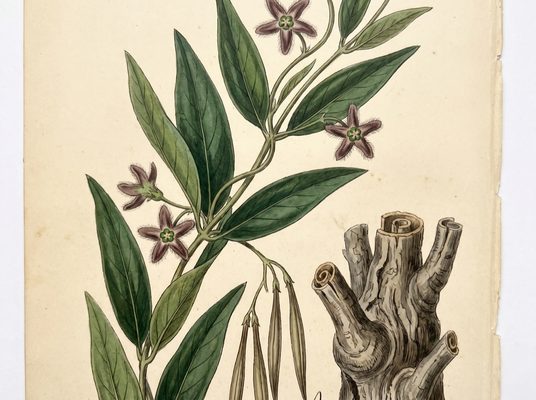 Chinese silk vinePeriploca sepium
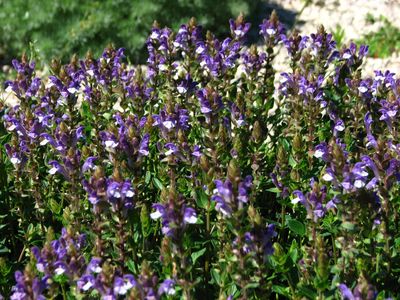 Chinese skullcapScutellaria baicalensis
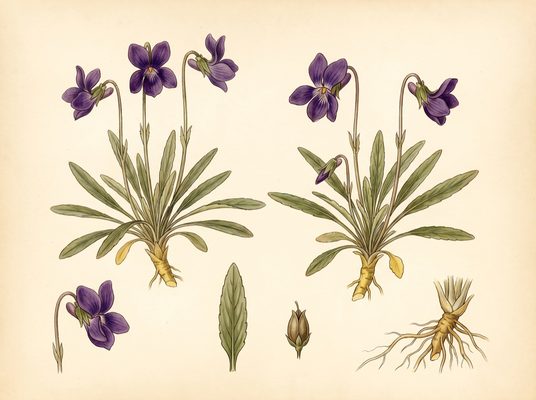 Chinese violetViola philippica
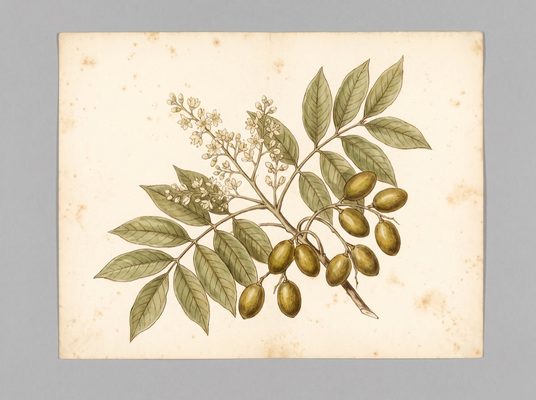 Chinese white oliveCanarium album
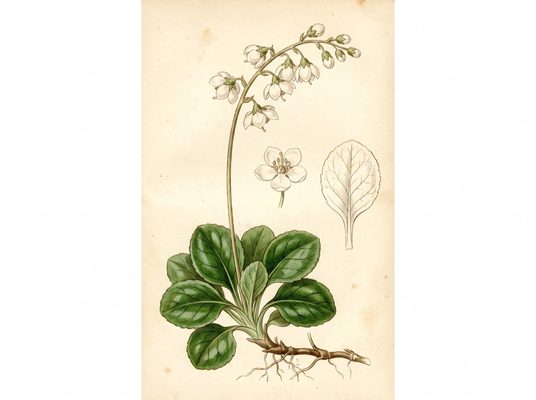 Chinese wintergreenPyrola calliantha
 Chinese YamDioscorea opposita
 Chir pinePinus roxburghii
 ChirettaOphelia chirata
The whole plate is in the library. The compass, Compare, the Sky of eleven hundred plants and the formulary open with an email address and a password, free, with the formula builder and its safety engine. Herbert in full, his formulating, clients, the handouts and the labels are the paid room.
Open the library, free