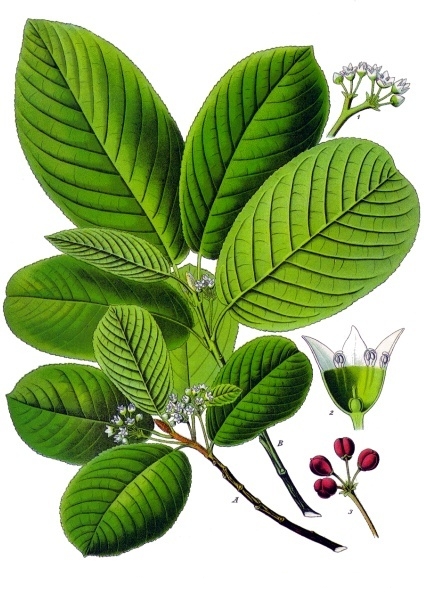
Western Herbalism
Cascara sagrada
Frangula purshiana
Also known as Sacred bark, Frangula, Buckthorn, Rhamni Purshianae Cortex, Rhamnus Purshiana, chittem bark, Bearberry, bear-wood.
Cascara sagrada is the dried and aged bark of a small tree native to the Pacific Northwest of North America, long used by Indigenous peoples and adopted by nineteenth century eclectic physicians as a gentler alternative to harsher purgatives of the era. It became one of the most widely dispensed laxatives in American and European pharmacy through the twentieth century, valued for producing a soft, well-formed stool without the griping associated with other anthraquinone drugs. The bark must be aged for at least a year, or artificially aged by heat, before use, since fresh bark contains free anthrones that cause significant cramping.

Ask Herbert about Cascara sagrada. Herbert is the master herbalist inside Bountiful Herbs: he answers from this plate and eleven hundred others, with dosing, pairing and cautions. Your first ten questions are free.
Ask HerbertActions
Indications what the tradition reached for it in
- Anal fissure
- Rectal surgery
- Atonic colon
- Hemorrhoids
- Atonic constipation
- Debility
- Fatigue
- Loss of appetite
- Dyspepsia
- Weakness
- Constipation
- Chronic constipation
- Habitual constipation
- Constipation with hemorrhoids
- Anal fissure aggravated by straining
- Sluggish bowel in convalescence
- Post-surgical bowel sluggishness
- Mild biliary insufficiency
Safety
Pregnancy: Limited safety data in pregnancy
Breastfeeding: Not for use while breastfeeding
The record lists 8 contraindications; open the plate in the library to read them in full.
Dosing as the sources wrote it
| Preparation | As written | Metric |
|---|---|---|
| Tincture (1:5) | 1-2 ml hs | 1-2 mL |
| Tincture (1:5) | 5-10 gtts 3-5 x/day to retrain bowel | 0.1-0.2 mL |
| Infusion | 1/2-2 tsp/c hs | |
| Dried bark 0.3-1 g as a single daily dose | 300-1000 mg | |
| (G3, G76) Infusion 1.5-2 g of dried bark in 150 mL hot water | 1500-2000 mg | |
| (G3, G76) Cascara Liquid Extract (BP 1980) 2 -5 mL | 2-5 mL |
Doses are reproduced from the sources for practitioners and are not a recommendation for any person.
From the sources
Overview. Cascara sagrada is the dried and aged bark of a small tree native to the Pacific Northwest of North America, long used by Indigenous peoples and adopted by nineteenth century eclectic physicians as a gentler alternative to harsher purgatives of the era. It became one of the most widely dispensed laxatives in American and European pharmacy through the twentieth century, valued for producing a soft, well-formed stool without the griping associated with other anthraquinone drugs. The bark must be aged for at least a year, or artificially aged by heat, before use, since fresh bark contains free anthrones that cause significant cramping.
Clinical Notes. Cascara earns its old reputation as a laxative that restores rather than simply forces evacuation, provided it is dosed conservatively. The eclectic approach of starting with very small doses and slowly tapering as bowel tone returns remains sound practice: large initial doses provoke a cathartic effect that leaves the bowel more dependent, not less.
Action and Therapy. Cascara is a simple and practically non-griping purgative, acting with but little or no prostration and never causing a watery stool. It has, moreover, a tonic action upon the stomach and bowels, and does not produce an after constipation.
Therapy. Large doses of the agent produce colic and are seldom needed. In the temporary constipation of pregnancy or in the convalescence of acute disease, doses of from one-fourth to one-half dram in a tonic mixture, preferably of malt extract, taken at the bed hour will be most satisfactory.
Drawn from King's American Dispensatory, 18th edition (Felter and Lloyd); Ellingwood's American Materia Medica, Therapeutics and Pharmacognosy; Felter's Eclectic Materia Medica, Pharmacology and Therapeutics, and the Bountiful Herbs editorial.
Often paired with
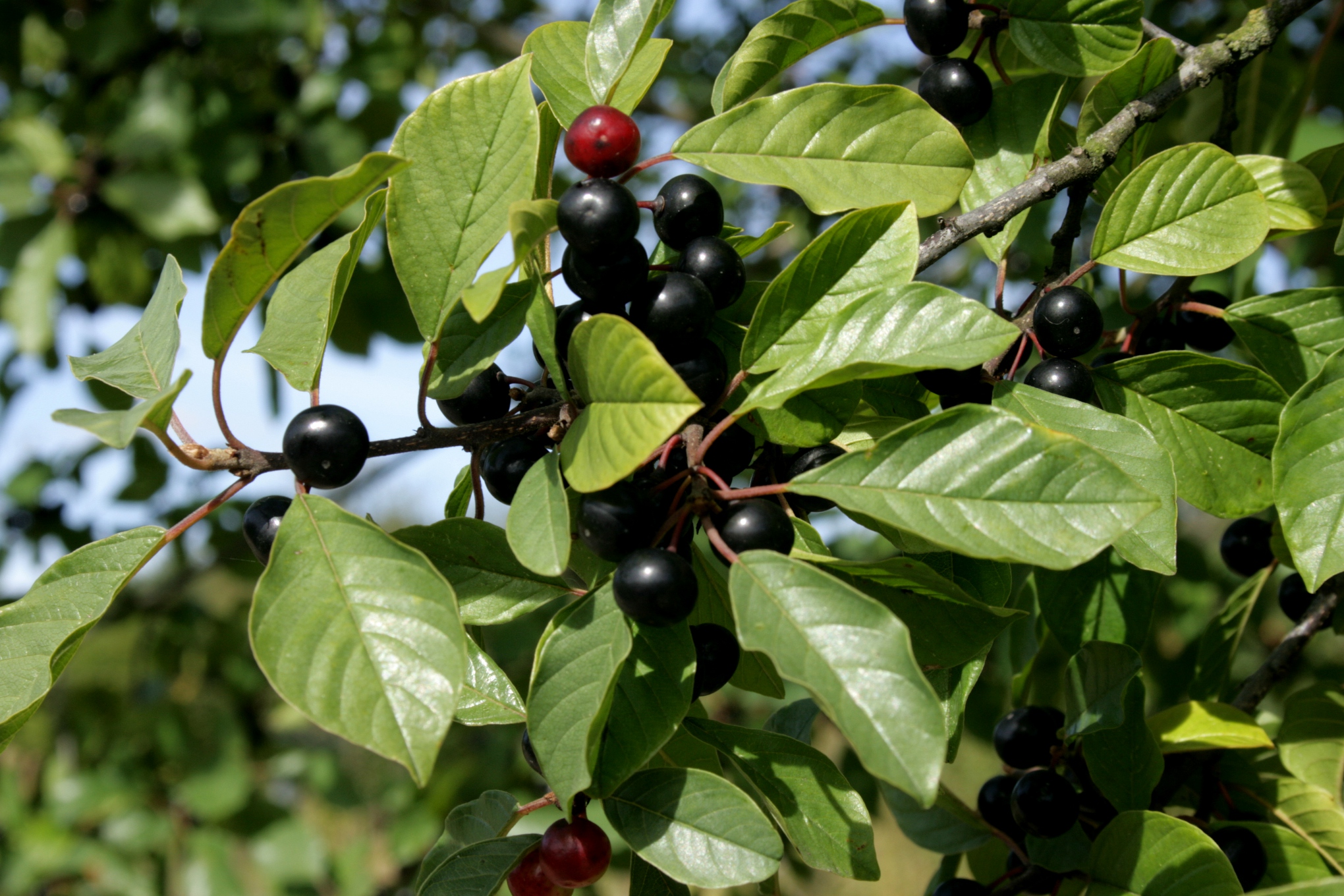 Alder BuckthornFrangula alnus
 BuckthornRhamnus cathartica
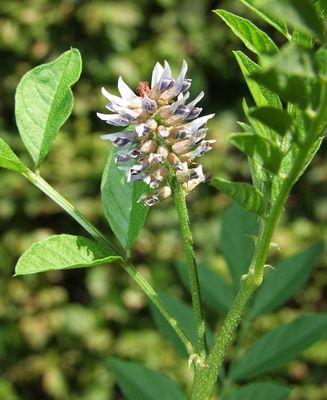 Licorice rootGlycyrrhiza glabra
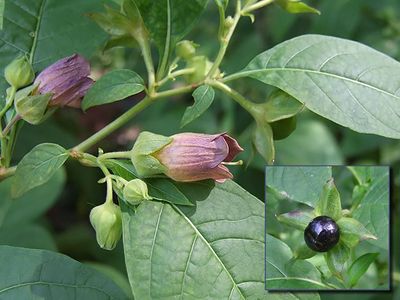 Deadly nightshadeAtropa belladonna
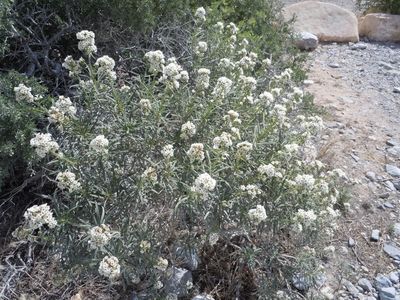 Yerba santaEriodictyon californicum
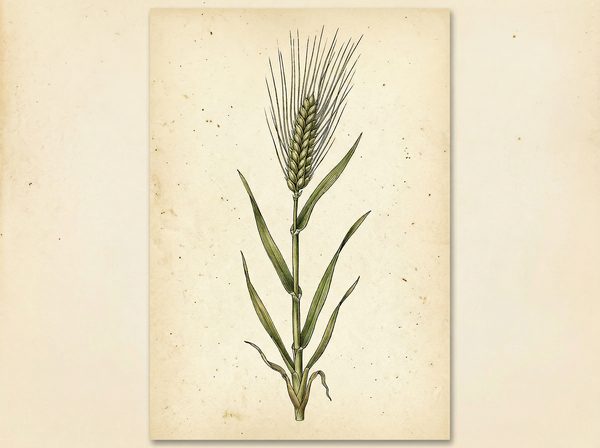 barleyHordeum vulgare
Nearby on the shelf
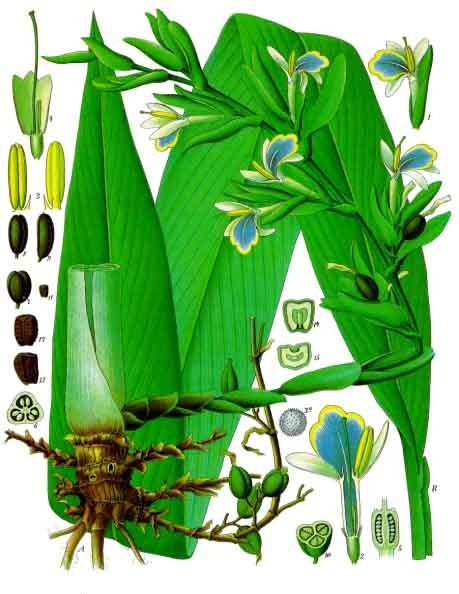 CardamomElettaria cardamomum
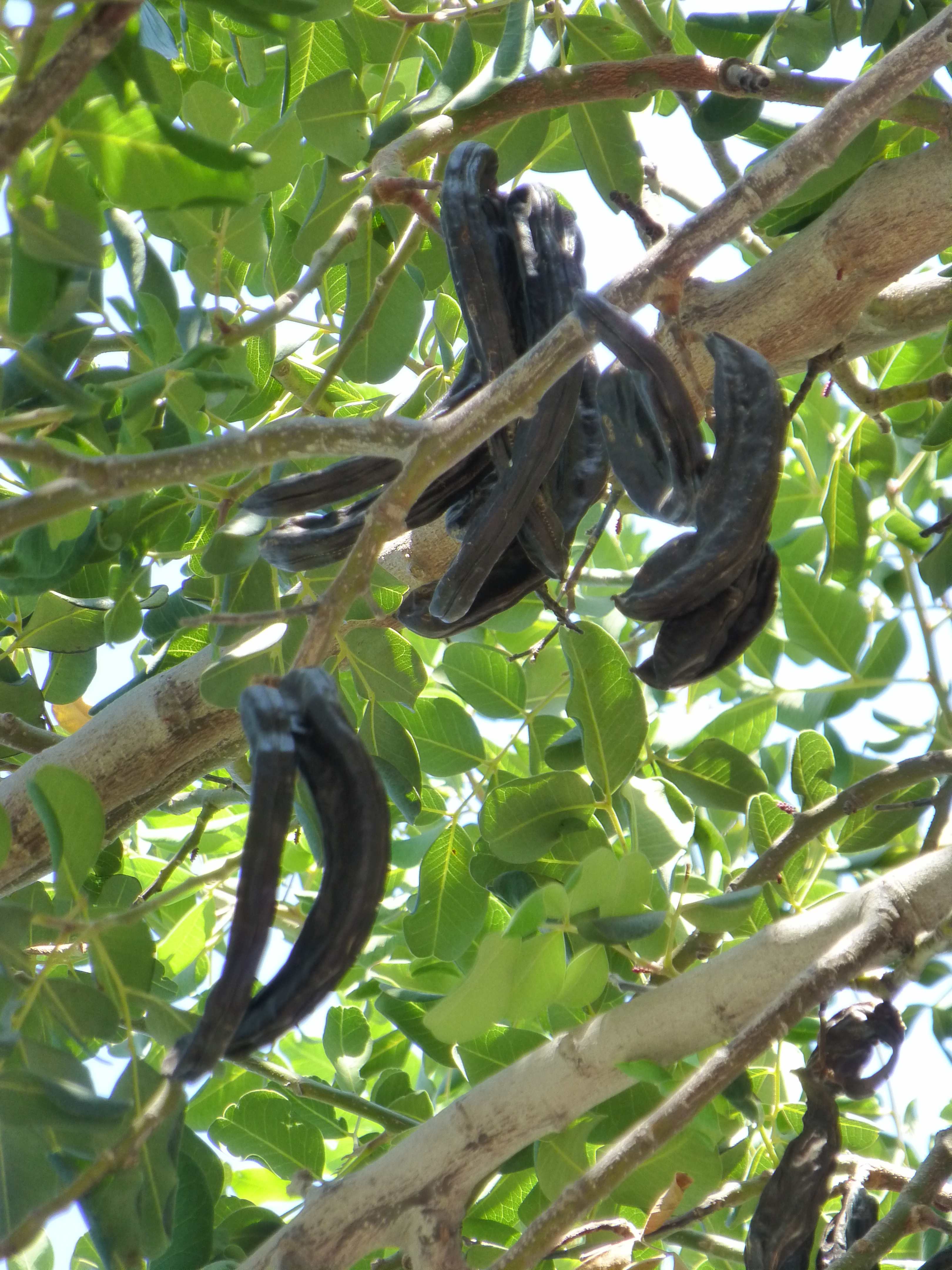 CarobCeratonia siliqua
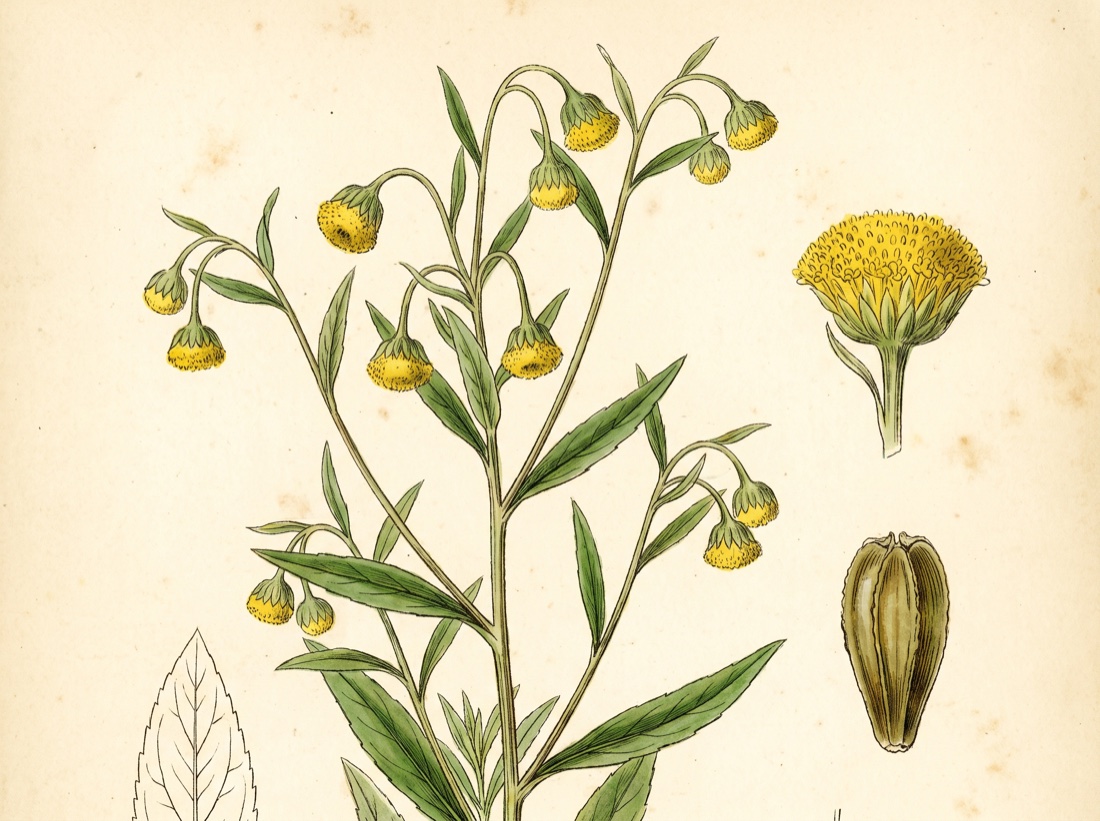 Carpesium fruitCarpesium abrotanoides
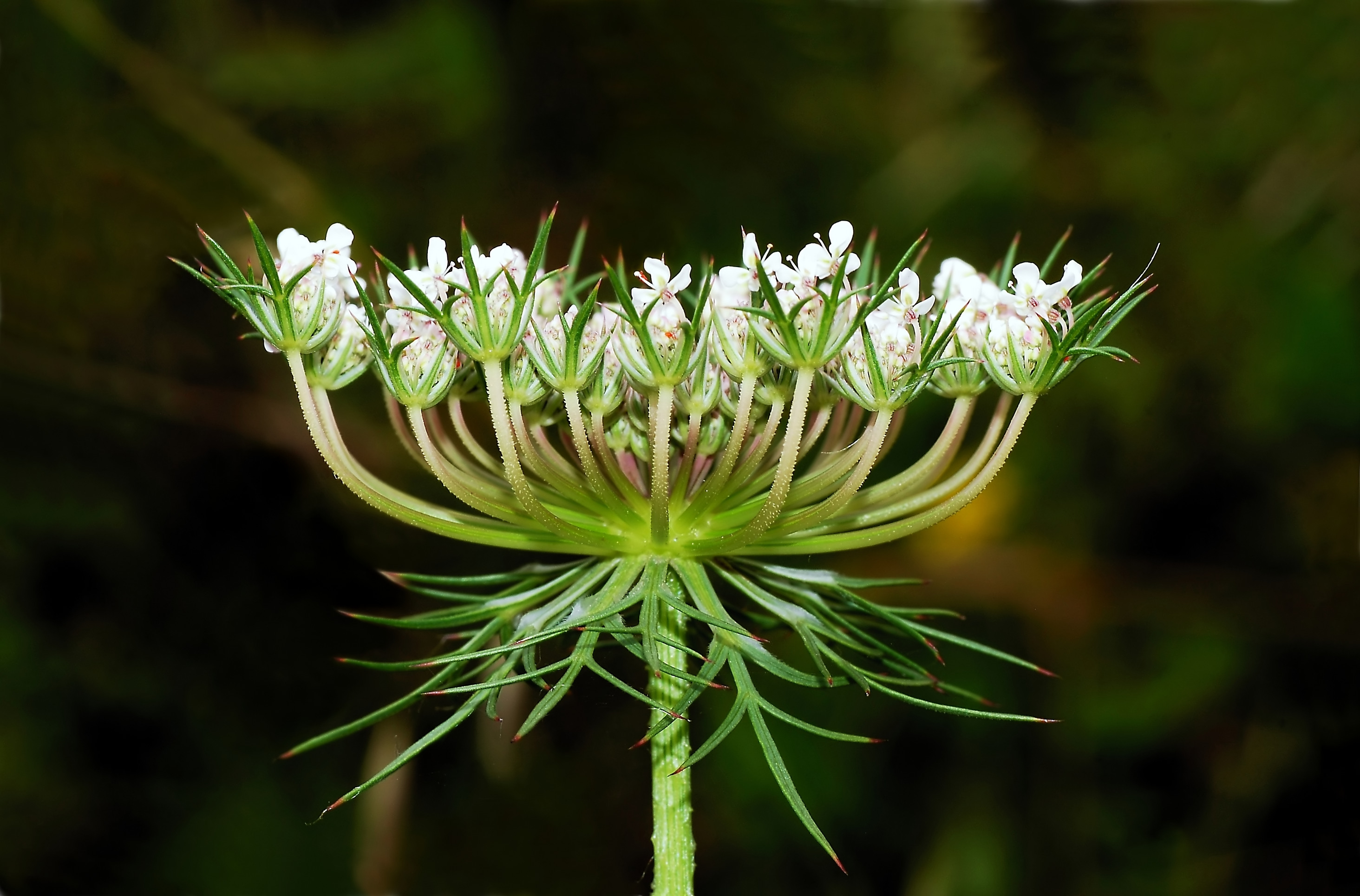 CarrotDaucus carota
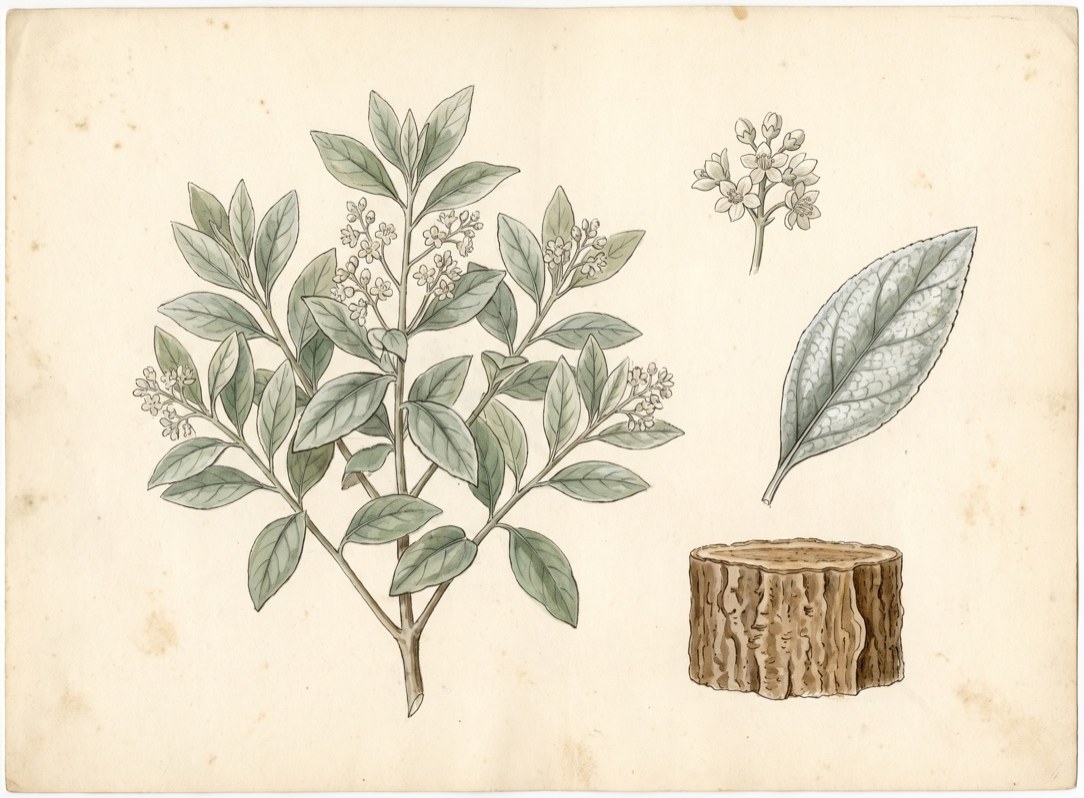 CascarillaCroton eleuteria
 CashewAnacardium occidentale
 CastorRicinus communis
 Cat's ClawUncaria tomentosa
The whole plate is in the library. The compass, Compare, the Sky of eleven hundred plants and the formulary open with an email address and a password, free, with the formula builder and its safety engine. Herbert without limit, his formulating, clients, the handouts and the labels are the paid room.
Open the library, free