Western Herbalism
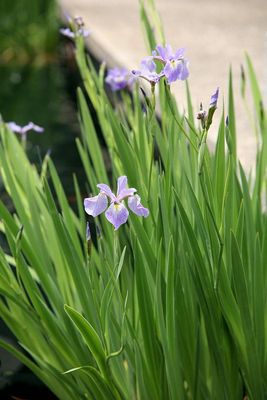
Blue flag
Iris versicolor
Also known as Iris, Larger Blue Flag, Fleur de Luce, etc. (see below).
External. Specific Medicine Iris has been painted upon goitre with good results, though it is effectual in but few instances, and the type is not as yet well defined. It is also advised as an efficient local treatment for psoriasis, chronic itching eczema, various types of tinea, prurigo, and crusta lactea.

Ask Herbert about Blue flag. Herbert is the master herbalist inside Bountiful Herbs: he answers from this plate and eleven hundred others, with dosing, pairing and cautions. Your first ten questions are free.
Ask HerbertActions
Indications what the tradition reached for it in
- Pain (sharp, over liver)
- Abscess
- Goiter
- Stool discoloration (clay-colored)
- Headache (w/ impaired digestion, nausea, constipation)
- Lymphadenopathy
- Glandular enlargements
- Boils
- Hyperthyroidism (alternating w/ hypothyroidism)
- Spleen enlargement
- Hypothyroidism (alternating w/ hyperthyroidism)
- Psoriasis
- Thyroid enlargement
- Eczema
- Acne
- Jaundice
- Maldigestion (fats)
- Hypothyroidism
- Skin conditions
- Constipation
- Gallbladder disorders
- Dyspepsia
- Metabolic waste accumulation
- Gallbladder dysfunction
- Poor bile flow
- Sluggish bile production
- Skin diseases
- Biliousness with constipation
- Liver dysfunction
- Specifically for cutaneous eruptions
Safety
Low dose botanical. Used in drop doses in the classical practice; not a plant to dose freely.
Pregnancy: Limited safety data in pregnancy
The record lists 3 contraindications; open the plate in the library to read them in full.
Dosing as the sources wrote it
| Preparation | As written | Metric |
|---|---|---|
| Tincture (1:5) | 5-25 gtts BID-TID | 0.1-0.5 mL |
| Decoction | 1/2-1 tsp/c TID | |
| Dried rhizome 0.6-2.0 g as a decoction three times daily | 600-2000 mg | |
| (G6, G7, G10) Liquid extract 1-2 mL (1 : 1 in 45% alcohol) three times daily .(G6, G7, G10) | 1-2 mL | |
| The dose ranges from two to five grains, three times a day, as a glandular stimulant | 130-324 mg | |
| This is used in doses of from ten to twenty drops three times a day, as an alterant | 0.2-0.4 mL |
Doses are reproduced from the sources for practitioners and are not a recommendation for any person.
From the sources
Therapy. External. Specific Medicine Iris has been painted upon goitre with good results, though it is effectual in but few instances, and the type is not as yet well defined. It is also advised as an efficient local treatment for psoriasis, chronic itching eczema, various types of tinea, prurigo, and crusta lactea.
Therapy. The oleo-resin has been very successfully employed in hepatic jaundice, arising intestinal disorders, and the consequent dropsy. Chronic jaundice, arising from duodenal catarrh and obstruction of the biliary ducts, should be treated with Iris.
Properties and Uses. This root is relaxing and stimulating, the stimulating property predominating. It acts upon the whole series of secernent organs, exciting the glandular system, and arousing the secretion of saliva, bile, urine, etc.
Action, Medical Uses, and Dosage. Active irritant qualities are ascribed to orris-root, abdominal pain and emeto-catharsis being among its effects. These properties are dissipated upon drying the rhizome, when it becomes merely a gastric stimulant. The salivary flow and renal secretion are augmented by it while sneezing and increased pituitary secretion results from its use as a sternutatory. About the only use now made of orris-root is as an ingredient of breath perfumes and dentifrices, it not only giving a pleasant flavor, but acting beneficially on the gums. It was formerly used as a diuretic, expectorant, and remedy for chronic diarrhoea. From 5 to 15 grains constitutes a dose of the powdered root.
Drawn from Cook's Physio-Medical Dispensatory; Scudder's Specific Medication and Specific Medicines; King's American Dispensatory, 18th edition (Felter and Lloyd); Ellingwood's American Materia Medica, Therapeutics and Pharmacognosy, and the Bountiful Herbs editorial.
Often paired with
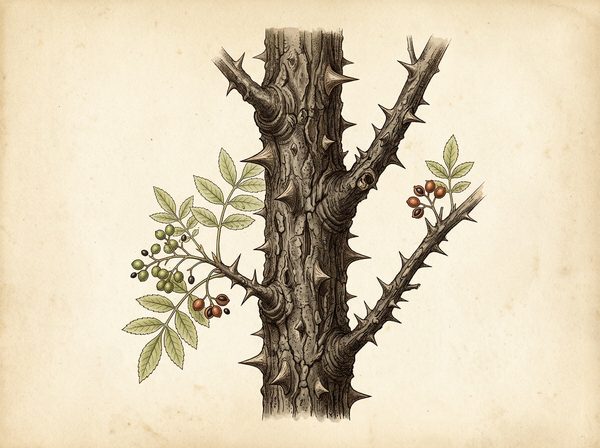 Prickly AshZanthoxylum americanum
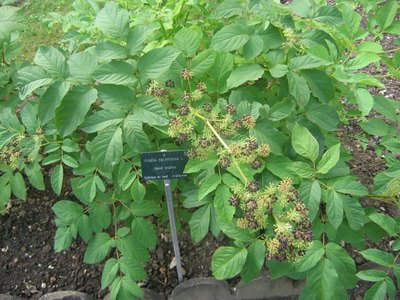 SpikenardAralia Racemosa
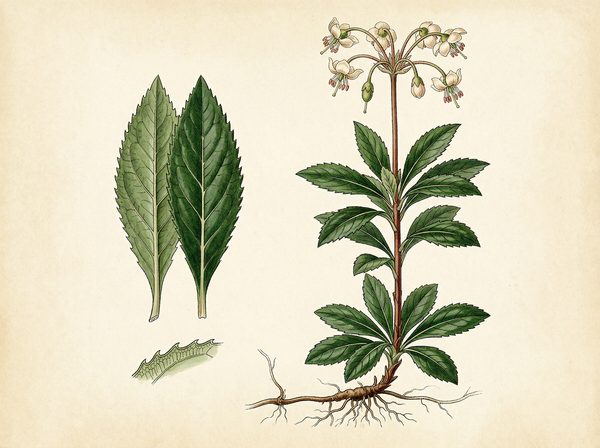 PipsissewaChimaphila umbellata
 Dwarf ElderAralia Hispida
 WintergreenGaultheria procumbens
 SassafrasSassafras albidum
Nearby on the shelf
 Blessed ThistleCnicus benedictus
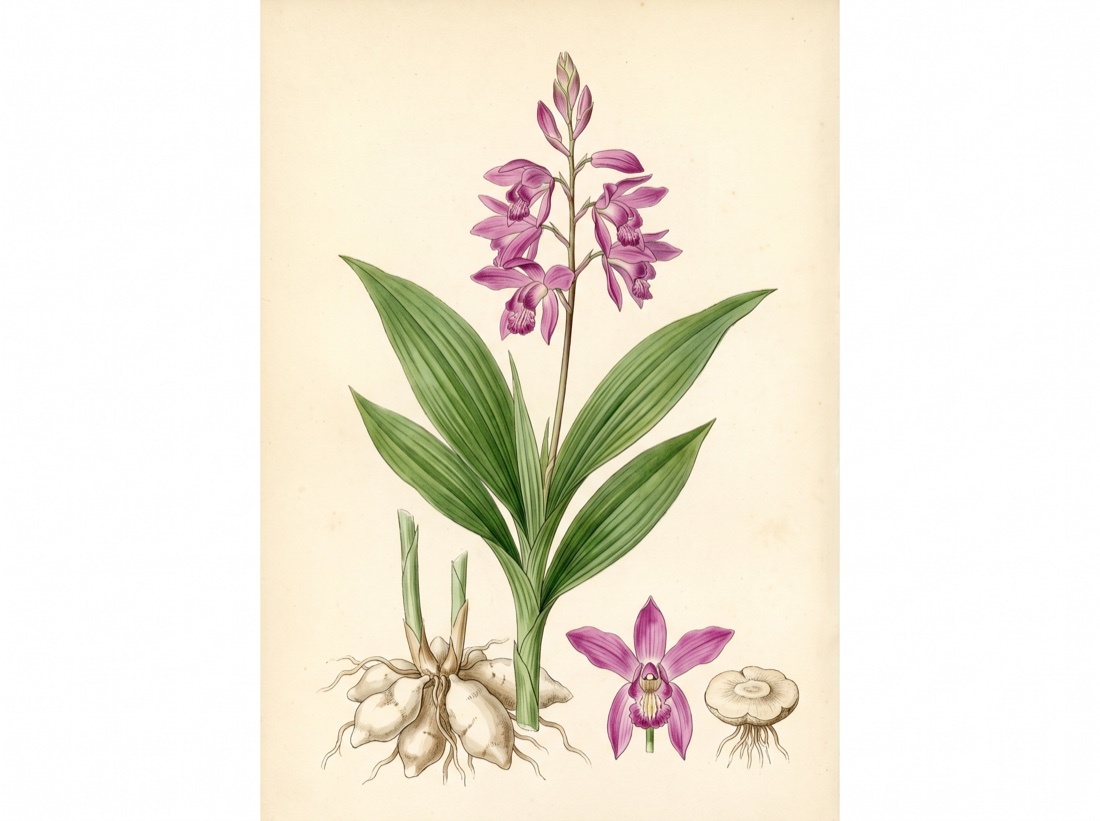 BletillaBletilla striata
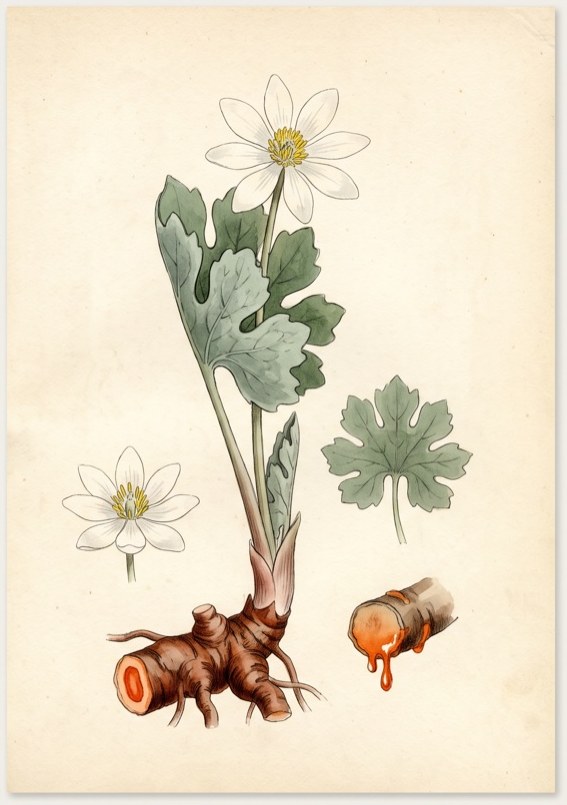 BloodrootSanguinaria canadensis
 Blue cohoshCaulophyllum thalictroides
 Blue LotusNymphaea caerulea
 Blue water lilyNymphaea stellata
 Blueberry LeafVaccinium corymbosum
 BoldoPeumus boldus
The whole plate is in the library. The compass, Compare, the Sky of eleven hundred plants and the formulary open with an email address and a password, free, with the formula builder and its safety engine. Herbert without limit, his formulating, clients, the handouts and the labels are the paid room.
Open the library, free