Ayurvedic Herbalism
Betel leaf
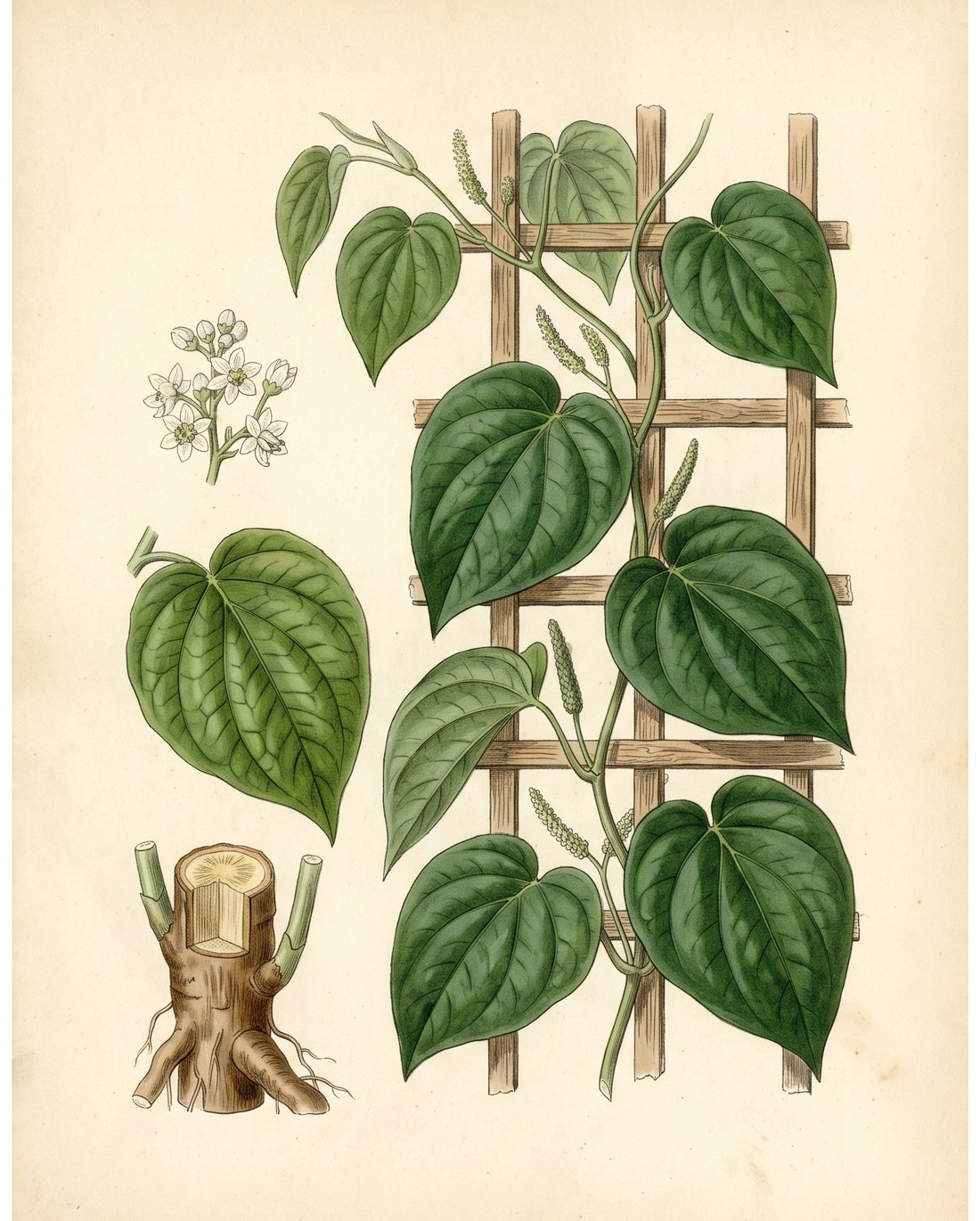
Piper betle
Also known as betel vine, paan leaf, betel pepper, Tambula, Nagavalli, Tambuli.
Piper betle is a glossy heart-leaved climbing vine of the pepper family, cultivated on trellises and shade gardens throughout humid India, Bangladesh, Sri Lanka and Southeast Asia, with famous regional leaf types from Banaras, Bengal, Maharashtra and Kerala. Its fresh leaves are the Tambula of the classical texts, chewed after meals with slaked lime, areca nut and aromatics as a digestive and mouth freshener, offered in ritual and hospitality, and used medicinally as a warming aromatic for cough, digestion, mouth and skin.

Ask Herbert about Betel leaf. Herbert is the master herbalist inside Bountiful Herbs: he answers from this plate and eleven hundred others, with dosing, pairing and cautions. Your first ten questions are free.
Ask HerbertActions
Indications what the tradition reached for it in
- Halitosis and gum inflammation (chewed leaf or rinse)
- Sluggish digestion after heavy meals
- Cough with sticky sputum, especially in children (leaf juice with honey)
- Coryza and chest congestion (warmed leaf poultice)
- Hoarseness and sore throat
- Infant colic and flatulence (folk use, leaf juice)
- Breast engorgement and mastitis (leaf poultice)
- Fungal skin infections and minor wounds (leaf juice or paste)
- Oral candidiasis and dental plaque (rinse)
- Loss of appetite and taste
- Headache of cold type (leaf applied to the temples with oil)
Specific indications
A heavy meal sitting like a stone in a kapha patient, with bad breath and a coated tongue, for a chewed leaf with a little clove and cardamom
A child with a wet, rattling cough and a full chest, for a few drops of warmed leaf juice with honey and a warm leaf laid on the chest
A nursing mother with a hot, swollen, painful breast, for warmed leaves smeared with oil applied over the engorged area
Recurrent gum bleeding and bad breath in a person who will not floss, for a betel leaf rinse
Safety
Pregnancy: Limited safety data in pregnancy
Breastfeeding: Not for use while breastfeeding
The record lists 8 contraindications; open the plate in the library to read them in full.
In practice
The Ayurvedic tradition is precise about Tambula: one or two fresh leaves chewed after the meal, with a little lime, areca, catechu, cardamom, clove and camphor as the constitution demands, kindle digestion, clear kapha from the mouth and throat, sweeten the breath and settle vata.
In Ayurveda
Rasa: katu (pungent), tikta (bitter), kashaya (astringent, mild). Virya: ushna (heating). Vipaka: katu (pungent). Guna: laghu (light), ruksha (dry), tikshna (sharp). Dosha: pacifies kapha and vata; aggravates pitta and rakta in excess. Karma: deepana (kindles digestion); pachana (digestive); kaphahara (reduces kapha); mukhadurgandhahara (removes bad breath); kanthya (benefits the voice and throat); krimighna (antimicrobial, anthelmintic); vrishya (aphrodisiac); vatanulomana (regulates the downward movement of vata); ruchya (improves taste and appetite); shleshmahara (liquefies and clears mucus); vranaropana (heals wounds, topical). Classical indications: mukhadaurgandhya (halitosis); agnimandya (weak digestion); kasa (cough); shvasa (dyspnea); pratishyaya (coryza); svarabheda (hoarseness); aruchi (loss of taste); krimi (worms); shotha (swelling, topical); vrana (wounds, topical); stanashotha (breast engorgement, leaf poultice). The fresh leaf is the drug: chewed after meals with lime, areca and spices as Tambula, given as fresh juice with honey for cough and colic in children, warmed and applied as a poultice for chest congestion, swellings and engorged breasts, and used as a wrapper and anupana for pills. The dried leaf and leaf oil are used in modern products. Classical formulations: Tambula (post-meal chewing preparation), Tambula patra swarasa with madhu, Tambula patra lepa (warmed leaf poultice), Anupana for gutika (pills wrapped in leaf), Tambuladi taila (regional). Described in: Charaka Samhita, Sushruta Samhita, Ashtanga Hridaya, Bhavaprakasha Nighantu, Dhanvantari Nighantu, Raja Nighantu, Kaiyadeva Nighantu.
Dosing as the sources wrote it
| Preparation | As written | Metric |
|---|---|---|
| Swarasa | 5-10 mL fresh leaf juice with honey once or twice daily for adults | 5-10 mL |
| Swarasa, pediatric | 2-5 drops diluted fresh leaf juice with honey for children over one year | 0.04-0.1 mL |
| Churna | 1-3 g dried leaf powder daily with warm water | 1000-3000 mg |
| Lepa, topical | 10-20 g warmed fresh leaves smeared with oil applied to the chest or breast | 10000-20000 mg |
| Mouth rinse | 50-100 mL leaf decoction used as a rinse twice daily | 50-100 mL |
Doses are reproduced from the sources for practitioners and are not a recommendation for any person.
From the sources
Overview. Piper betle is a glossy heart-leaved climbing vine of the pepper family, cultivated on trellises and shade gardens throughout humid India, Bangladesh, Sri Lanka and Southeast Asia, with famous regional leaf types from Banaras, Bengal, Maharashtra and Kerala. Its fresh leaves are the Tambula of the classical texts, chewed after meals with slaked lime, areca nut and aromatics as a digestive and mouth freshener, offered in ritual and hospitality, and used medicinally as a warming aromatic for cough, digestion, mouth and skin.
Clinical Notes. The Ayurvedic tradition is precise about Tambula: one or two fresh leaves chewed after the meal, with a little lime, areca, catechu, cardamom, clove and camphor as the constitution demands, kindle digestion, clear kapha from the mouth and throat, sweeten the breath and settle vata.
Ayurvedic Profile. Rasa: katu (pungent), tikta (bitter), kashaya (astringent, mild). Virya: ushna (heating). Vipaka: katu (pungent). Guna: laghu (light), ruksha (dry), tikshna (sharp). Dosha: pacifies kapha and vata; aggravates pitta and rakta in excess.
In formulas
Betel leaf stands in 11 documented formulas in the library, among them Abhraka Bhasma, Navaratnarājamṛgānka Rasa, Nāgavallabha Rasa, Lakṣmīnārāyaṇa Rasa, Lokanātha Rasa, Kālakūṭa Rasa.
Often paired with
 black nightshadeSolanum nigrum
 dhatturaDatura metel
 guduchiTinospora cordifolia
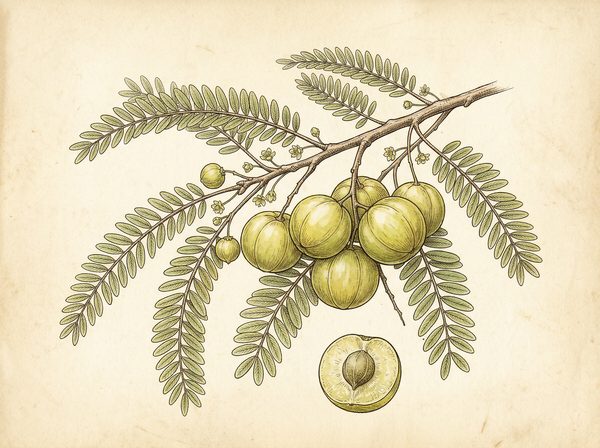 Indian gooseberryPhyllanthus emblica
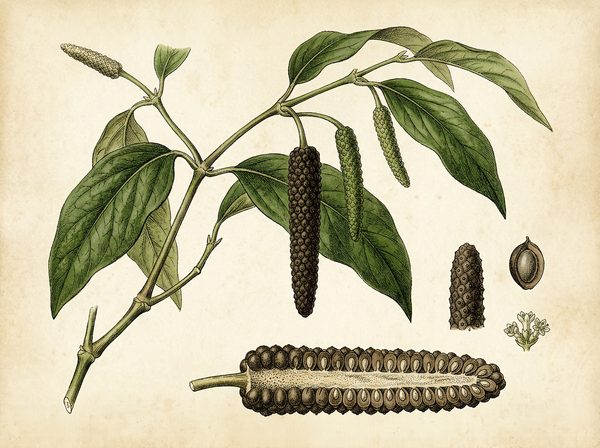 long pepperPiper longum
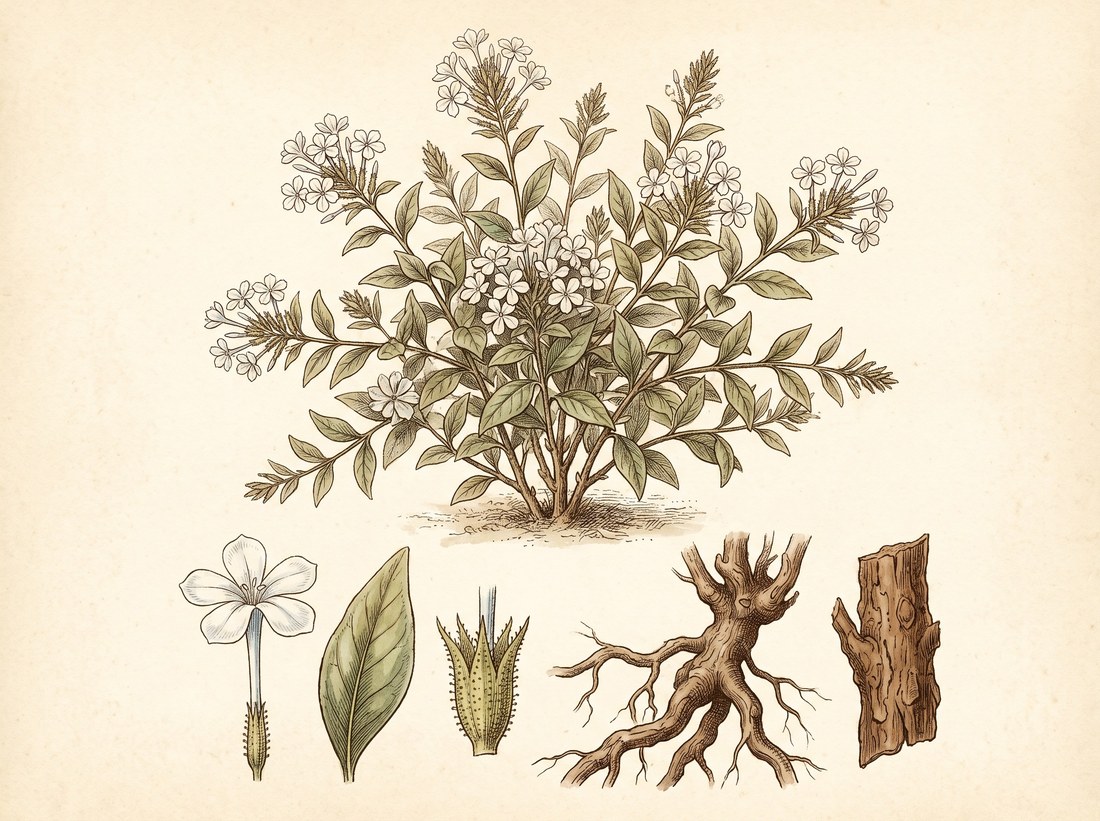 Ceylon leadwortPlumbago zeylanica
Nearby on the shelf
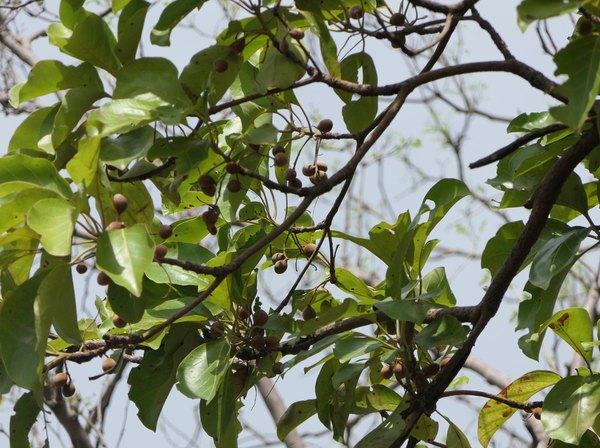 Beleric myrobalanTerminalia bellirica
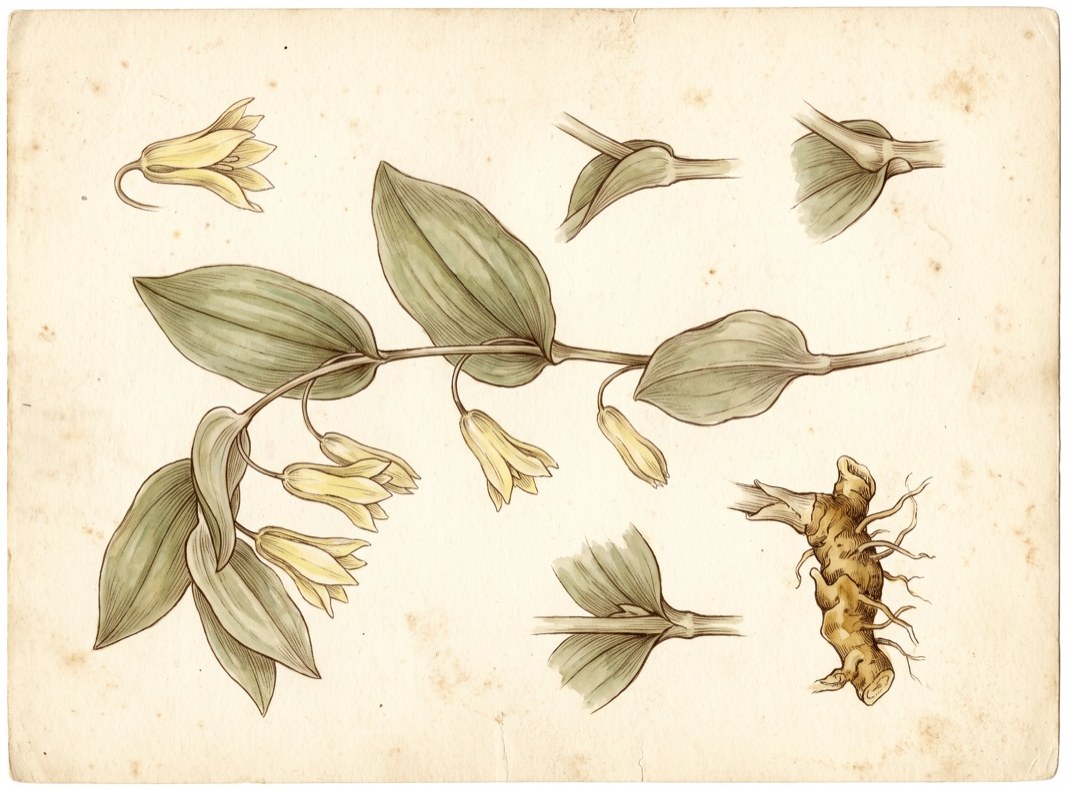 BellwortUvularia
 Benedict's HerbGeum urbanum
 BenzoinStyrax benzoin
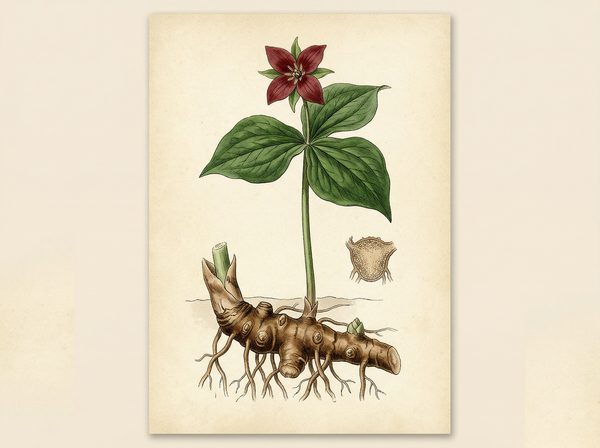 Beth RootTrillium erectum
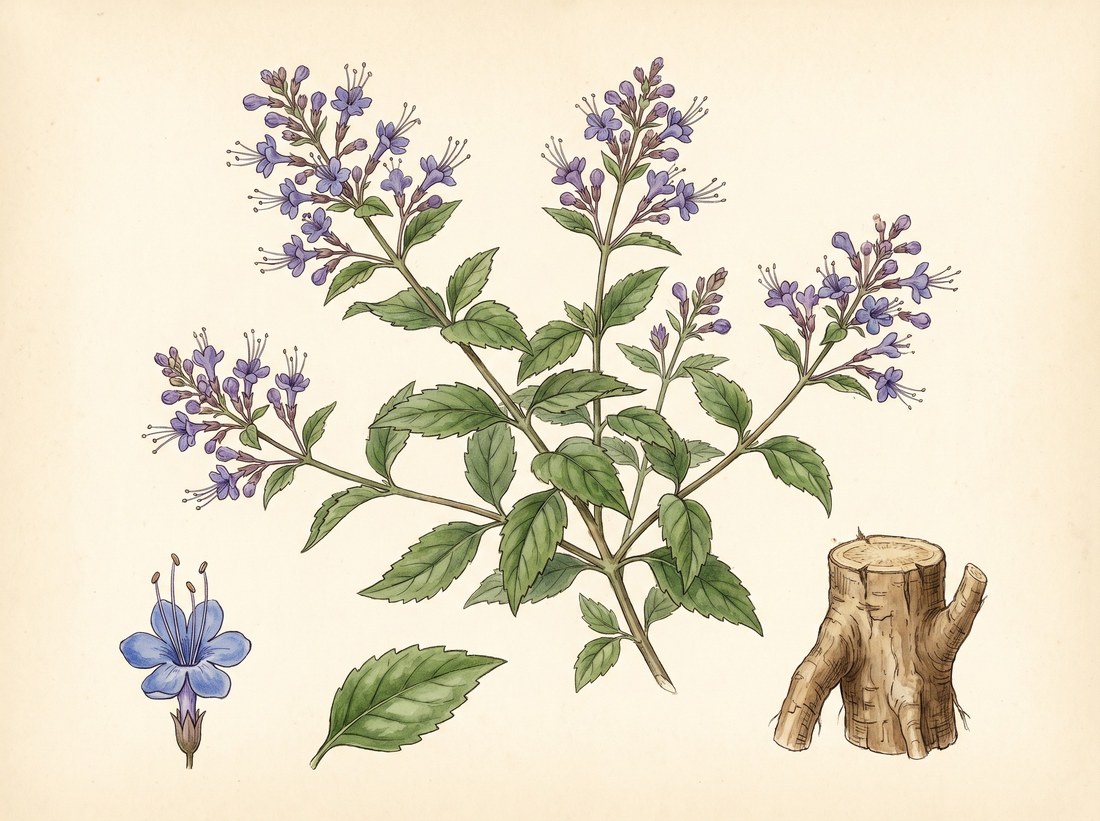 BharangiClerodendrum serratum
 Bhumi amlaPhyllanthus amarus
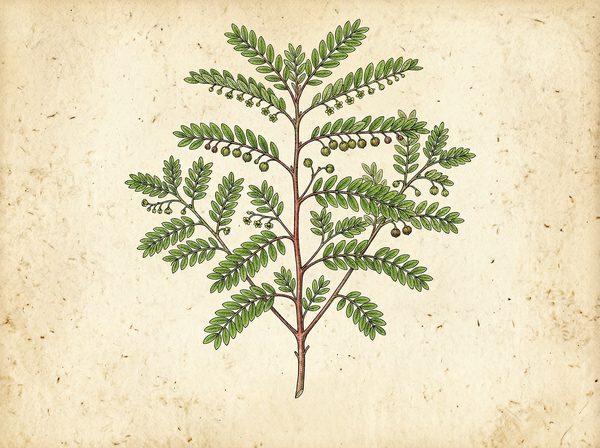 BhumyamalakiPhyllanthus niruri
The whole plate is in the library. The compass, Compare, the Sky of eleven hundred plants and the formulary open with an email address and a password, free, with the formula builder and its safety engine. Herbert without limit, his formulating, clients, the handouts and the labels are the paid room.
Open the library, free