Western and Ayurvedic herbalism
Bhumi amla
Phyllanthus amarus
Also known as stonebreaker, gale of the wind, carry me seed, seed under leaf, Bhumyamalaki, Bhumiamla, Tamalaki.
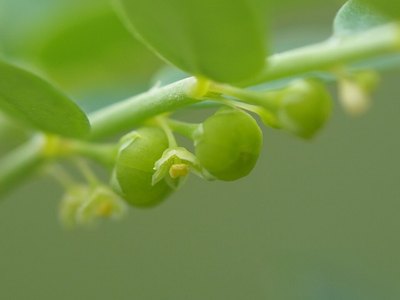
Phyllanthus amarus is a small erect annual herb, rarely more than half a meter tall, with rows of tiny leaflets under which the minute fruits hang like seeds, found as a weed of gardens, fields and waste ground throughout tropical India and across the tropics of the world. Ayurveda calls it Bhumyamalaki, the amla of the ground, because its leaflets resemble those of the Indian gooseberry tree, and uses the whole plant as a cooling, bitter herb for jaundice, liver disorders, urinary stones, fever and skin disease. It has attracted more modern research than almost any other Ayurvedic liver herb, chiefly for hepatitis B, with results that are interesting but unresolved.

Ask Herbert about Bhumi amla. Herbert is the master herbalist inside Bountiful Herbs: he answers from this plate and eleven hundred others, with dosing, pairing and cautions. Your first ten questions are free.
Ask HerbertActions
Indications what the tradition reached for it in
- Acute viral hepatitis with jaundice (adjunct)
- Chronic hepatitis B carrier state (adjunct, evidence mixed)
- Fatty liver and elevated liver enzymes
- Alcohol and drug related liver strain
- Urinary stones and gravel, prevention and expulsion
- Burning urination and cystitis
- Low grade fever with liver involvement
- Type 2 diabetes with hepatic component (adjunct)
- Chronic skin eruptions with a hot, toxic picture
- Knee osteoarthritis (topical, one trial)
- Ascites and edema of hepatic origin (traditional adjunct)
Specific indications
The yellow eyed, nauseated, feverish patient with acute viral hepatitis who wants a cooling herb to support the liver while the infection runs its course
A person with a fatty liver, mildly raised enzymes, a hot constitution and a tendency to burning urine and skin eruptions
Recurrent small kidney stones or gravel with gritty, burning urination in a pitta type who also has a sluggish liver
The hepatitis B carrier who wants a traditional adjunct alongside monitoring and antiviral care, with clear understanding that the evidence is uncertain
Safety
Pregnancy: Avoid medicinal doses in pregnancy: no published safety class is known to us, the tradition does not use it as a pregnancy herb, and rodent studies of high dose extracts report reduced fertility and fetal effects.
The record lists 8 contraindications; open the plate in the library to read them in full.
In practice
Bhumyamalaki is the Ayurvedic liver herb for heat. The physician gives the fresh plant, pounded into a paste and taken with buttermilk, or the fresh juice with honey, at the first sign of jaundice: yellow eyes, dark urine, nausea, fever and a bitter mouth.
In Ayurveda
Rasa: tikta (bitter), kashaya (astringent), madhura (sweet). Virya: sheeta (cooling). Vipaka: madhura (sweet). Guna: laghu (light), ruksha (dry). Dosha: pacifies pitta and kapha; may aggravate vata in excess. Karma: pittahara (reduces pitta); yakrituttejaka (stimulates and protects the liver); kamalahara (relieves jaundice); mutrala (diuretic); ashmarighna (breaks urinary stones); jvarahara (reduces fever); kasahara (relieves cough); shvasahara (relieves dyspnea); raktashodhana (purifies blood); kushthaghna (relieves skin disease); krimighna (antimicrobial); trishnanigrahana (relieves thirst). Classical indications: kamala (jaundice); yakrit vikara (liver disorders); pandu (anemia with liver involvement); prameha (urinary disorders including diabetes); mutrakricchra and ashmari (dysuria and urinary stones); jvara (fever); kasa and shvasa (cough and dyspnea); kushtha (skin disease); raktapitta (bleeding disorders); trishna (thirst); vrana (wounds, topical). The whole plant, gathered in the rainy season, is used fresh as swarasa or as kalka (paste) with buttermilk, and dried as churna and kwatha; it enters compound liver formulas and is applied as a paste to wounds and swellings. Classical formulations: Bhumyamalaki swarasa, Bhumyamalaki kwatha, Bhumyamalakyadi churna, Component of many liver protective compound tablets and syrups, Kamala kalpa formulations (regional). Described in: Charaka Samhita, Sushruta Samhita, Bhavaprakasha Nighantu, Dhanvantari Nighantu, Raja Nighantu, Kaiyadeva Nighantu, Ayurvedic Pharmacopoeia of India.
Dosing as the sources wrote it
| Preparation | As written | Metric |
|---|---|---|
| Swarasa | 10-20 mL fresh whole plant juice twice daily with honey | 10-20 mL |
| Kalka | 5-10 g fresh plant paste once daily with buttermilk | 5000-10000 mg |
| Churna | 3-6 g dried whole plant powder daily in divided doses | 3000-6000 mg |
| Kwatha | 50-100 mL decoction twice daily | 50-100 mL |
| Tincture (1:5, 45%) | 3-5 mL three times daily | 3-5 mL |
| Tincture 1 | Tincture 1:2; sig 0.3-2 ml TID (higher end of dosage scale for acute states) | 0.3-2 mL |
Doses are reproduced from the sources for practitioners and are not a recommendation for any person.
From the sources
Overview. Phyllanthus amarus is a small erect annual herb, rarely more than half a meter tall, with rows of tiny leaflets under which the minute fruits hang like seeds, found as a weed of gardens, fields and waste ground throughout tropical India and across the tropics of the world. Ayurveda calls it Bhumyamalaki, the amla of the ground, because its leaflets resemble those of the Indian gooseberry tree, and uses the whole plant as a cooling, bitter herb for jaundice, liver disorders, urinary stones, fever and skin disease. It has attracted more modern research than almost any other Ayurvedic liver herb, chiefly for hepatitis B, with results that are interesting but unresolved.
Clinical Notes. Bhumyamalaki is the Ayurvedic liver herb for heat. The physician gives the fresh plant, pounded into a paste and taken with buttermilk, or the fresh juice with honey, at the first sign of jaundice: yellow eyes, dark urine, nausea, fever and a bitter mouth.
Ayurvedic Profile. Rasa: tikta (bitter), kashaya (astringent), madhura (sweet). Virya: sheeta (cooling). Vipaka: madhura (sweet). Guna: laghu (light), ruksha (dry). Dosha: pacifies pitta and kapha; may aggravate vata in excess.
Nearby on the shelf
 BenzoinStyrax benzoin
 Betel leafPiper betle
 Beth RootTrillium erectum
 BharangiClerodendrum serratum
 BhumyamalakiPhyllanthus niruri
 Big sagebrushArtemisia tridentata
 BilberryVaccinium myrtillus
 Biond's magnoliaMagnolia biondii
The whole plate is in the library. The compass, Compare, the Sky of eleven hundred plants and the formulary open with an email address and a password, free, with the formula builder and its safety engine. Herbert without limit, his formulating, clients, the handouts and the labels are the paid room.
Open the library, free