Ayurvedic Herbalism
Bharangi
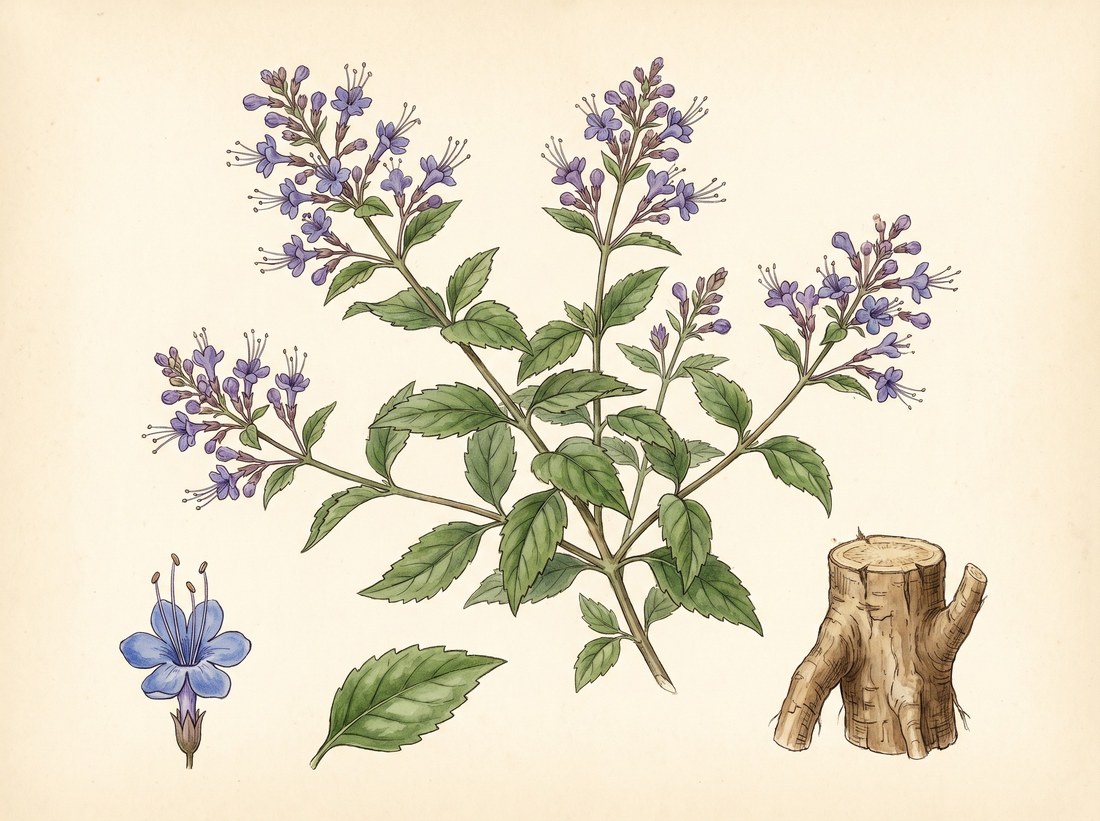
Clerodendrum serratum
Also known as blue fountain bush, beetle killer, blue glory, Bharangi, Bhargi, Padma.
Clerodendrum serratum, now placed by botanists as Rotheca serrata in the mint family, is a straggling shrub with square stems, serrated leaves and sprays of blue flowers that grows throughout India in deciduous forest and scrub, from the Himalayan foothills to the Western Ghats and up to about 1,500 meters. Ayurveda knows it as Bharangi, one of its principal drugs for shvasa and kasa, and the root is the part used. It is a warming, bitter and pungent kapha remedy that thins mucus and eases the breath.

Ask Herbert about Bharangi. Herbert is the master herbalist inside Bountiful Herbs: he answers from this plate and eleven hundred others, with dosing, pairing and cautions. Your first ten questions are free.
Ask HerbertActions
Indications what the tradition reached for it in
- Bronchial asthma with thick mucus
- Chronic bronchitis and productive cough
- Allergic rhinitis with postnasal drip
- Chronic sinusitis
- Hiccup and spasmodic cough
- Wheeze in children with cold, wet chests
- Fever with respiratory congestion
- Poor appetite with mucus and heaviness
- Rheumatic joint swelling (adjunct)
- Glandular swellings in the neck (topical and internal, traditional)
- Intestinal worms (traditional)
Specific indications
A kapha patient whose asthma comes with a heavy chest, thick white sputum that will not shift, and wheeze that is worse in the cold and damp of early morning
The child with recurrent wet coughs and a rattling chest who catches every cold and has a poor appetite
Chronic sinusitis with postnasal drip, a dull head and sticky mucus in the throat
Hiccup or spasmodic cough that follows a meal in a sluggish, congested digestion
Safety
Pregnancy: No published safety class is known to us; the tradition avoids strongly heating pungent drugs in pregnancy, so limit Bharangi to short courses in formulation or avoid.
The record lists 6 contraindications; open the plate in the library to read them in full.
In practice
Bharangi belongs to the wet, cold, congested chest. When asthma or bronchitis presents with heaviness, copious thick sputum, a coated tongue and worsening in damp weather, Bharangi root is the remedy, usually given as a powder with honey or with a little ginger juice, or as a decoction with Shunthi and Pippali.
In Ayurveda
Rasa: tikta (bitter), katu (pungent). Virya: ushna (heating). Vipaka: katu (pungent). Guna: laghu (light), ruksha (dry). Dosha: pacifies kapha and vata; aggravates pitta in excess. Karma: shvasahara (relieves dyspnea); kasahara (relieves cough); kaphaghna (reduces phlegm); deepana (kindles digestion); pachana (digestive); shothahara (reduces swelling); jvaraghna (reduces fever); krimighna (anthelmintic); hikkanigrahana (relieves hiccup); vranaropana (heals wounds, topical). Classical indications: shvasa (dyspnea, asthma); kasa (cough); hikka (hiccup); pinasa (chronic rhinitis and sinusitis); jvara (fever); shotha (inflammatory swelling); gulma (abdominal mass, bloating); krimi (worms); arsha (hemorrhoids); vrana (wounds); raktavikara (blood disorders). The root and root bark are the classical drug, given as churna with honey or ginger juice, as kwatha, and cooked into the jaggery confection Bharangi guda. The leaves are used as a vegetable and as a paste for swellings, and the root is a standard ingredient of the respiratory asavas. Classical formulations: Bharangi guda, Bharangyadi kwatha, Bharangyadi churna, Kanakasava, Dashamoola katutraya kwatha, Chyawanprash, Vyaghri haritaki avaleha. Described in: Charaka Samhita, Sushruta Samhita, Ashtanga Hridaya, Bhavaprakasha Nighantu, Dhanvantari Nighantu, Raja Nighantu, Kaiyadeva Nighantu, Ayurvedic Pharmacopoeia of India.
Dosing as the sources wrote it
| Preparation | As written | Metric |
|---|---|---|
| Churna | 3-6 g powdered root twice daily with honey or warm water | 3000-6000 mg |
| Kwatha | 50-100 mL root decoction twice daily | 50-100 mL |
| Guda (Bharangi guda) | 5-10 g twice daily with warm water | 5000-10000 mg |
| Asava (Kanakasava) | 12-24 mL twice daily after food with equal water | 12-24 mL |
| Kalka, topical | 5-10 g root or leaf paste applied to swellings | 5000-10000 mg |
Doses are reproduced from the sources for practitioners and are not a recommendation for any person.
From the sources
Overview. Clerodendrum serratum, now placed by botanists as Rotheca serrata in the mint family, is a straggling shrub with square stems, serrated leaves and sprays of blue flowers that grows throughout India in deciduous forest and scrub, from the Himalayan foothills to the Western Ghats and up to about 1,500 meters. Ayurveda knows it as Bharangi, one of its principal drugs for shvasa and kasa, and the root is the part used. It is a warming, bitter and pungent kapha remedy that thins mucus and eases the breath.
Clinical Notes. Bharangi belongs to the wet, cold, congested chest. When asthma or bronchitis presents with heaviness, copious thick sputum, a coated tongue and worsening in damp weather, Bharangi root is the remedy, usually given as a powder with honey or with a little ginger juice, or as a decoction with Shunthi and Pippali.
Ayurvedic Profile. Rasa: tikta (bitter), katu (pungent). Virya: ushna (heating). Vipaka: katu (pungent). Guna: laghu (light), ruksha (dry). Dosha: pacifies kapha and vata; aggravates pitta in excess. Karma: shvasahara (relieves dyspnea); kasahara (relieves cough); kaphaghna (reduces phlegm); deepana (kindles digestion); pachana (digestive); shothahara (reduces swelling); jvaraghna (reduces fever); krimighna (anthelmintic); hikkanigrahana (relieves hiccup); vranaropana (heals wounds, topical).
In formulas
Bharangi stands in 17 documented formulas in the library, among them Ayaskṛti, Kanakāsava, Daśamūlāriṣṭa, Mṛdvīkāriṣṭa, Miśreyārka, Kaṇṭakāryavaleha.
Often paired with
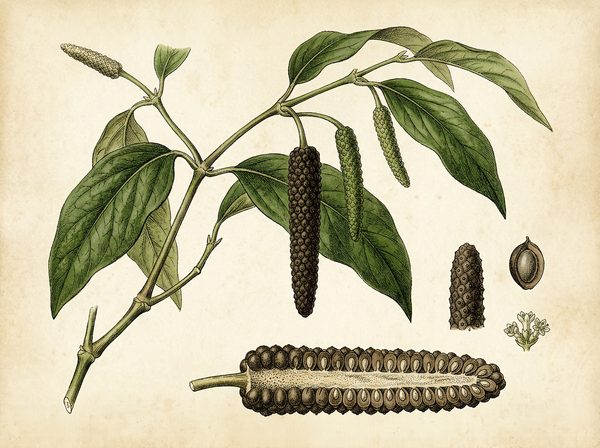 long pepperPiper longum
 GingerZingiber officinale
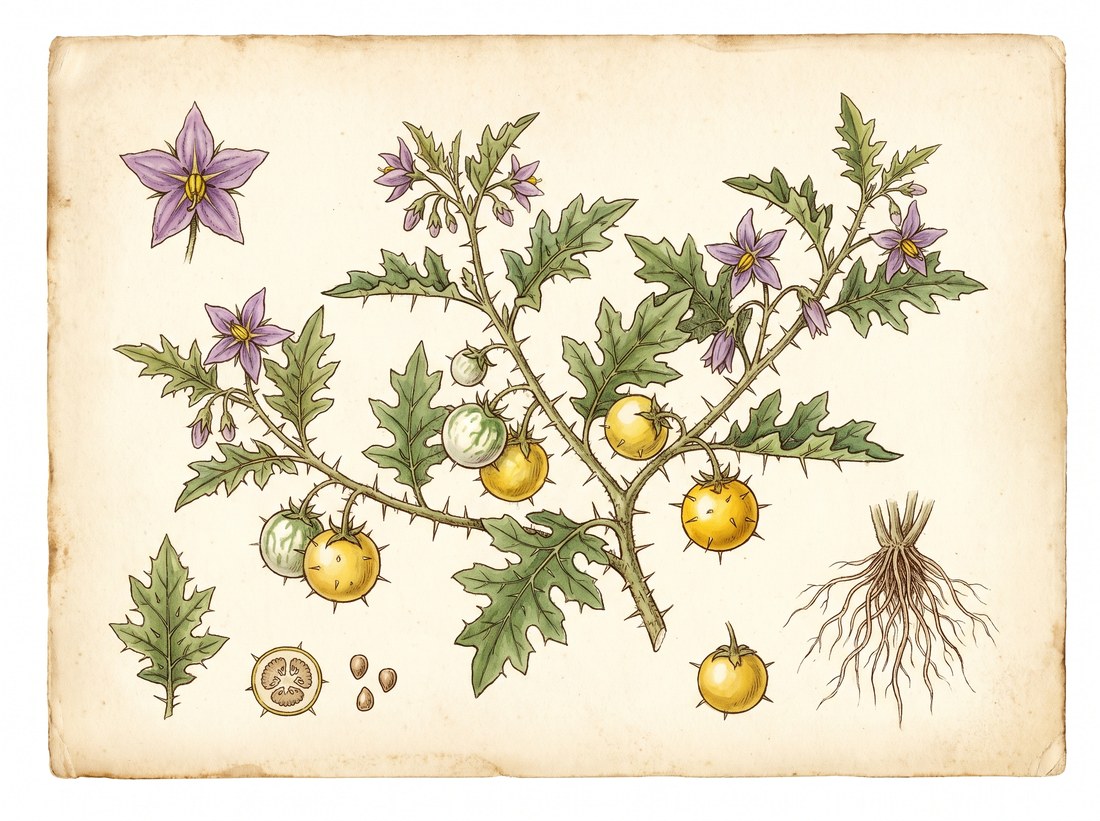 yellow-berried nightshadeSolanum xanthocarpum
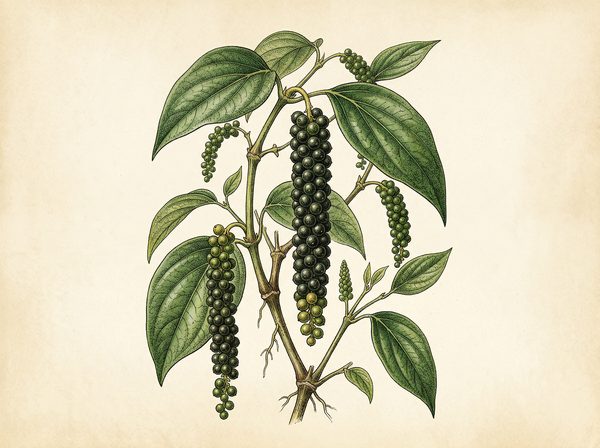 black pepperPiper nigrum
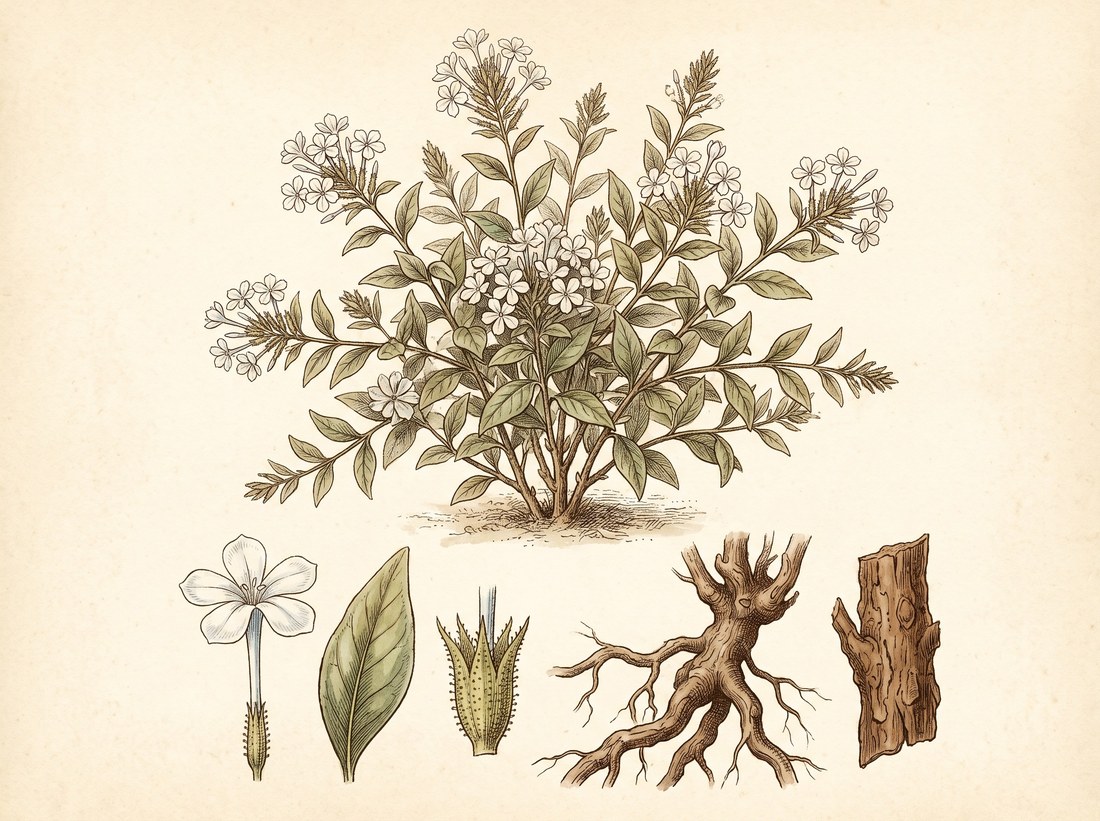 Ceylon leadwortPlumbago zeylanica
 chebulic myrobalanTerminalia chebula
Nearby on the shelf
 Benedict's HerbGeum urbanum
 BenzoinStyrax benzoin
 Betel leafPiper betle
 Beth RootTrillium erectum
 Bhumi amlaPhyllanthus amarus
 BhumyamalakiPhyllanthus niruri
 Big sagebrushArtemisia tridentata
 BilberryVaccinium myrtillus
The whole plate is in the library. The compass, Compare, the Sky of eleven hundred plants and the formulary open with an email address and a password, free, with the formula builder and its safety engine. Herbert without limit, his formulating, clients, the handouts and the labels are the paid room.
Open the library, free