Western Herbalism
Benzoin
Styrax benzoin
Also known as Benjamin tree, Sumatra benzoin, Gum benjamin, Gum benzoin, ān xī xiāng.
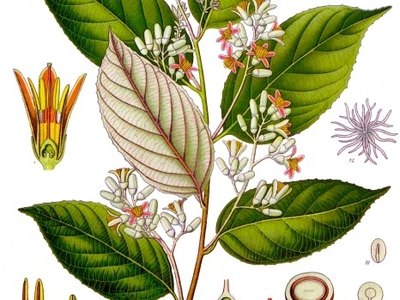
Benzoin is a fragrant balsamic resin obtained by wounding the bark of Styrax benzoin, a tree native to Sumatra, Java, and other parts of Southeast Asia. The resin dries into hard, brittle tears that are rich in benzoic and cinnamic acid esters and are prized for their vanilla-like fragrance. In Western herbal practice it has long been used both internally, in small tinctured amounts within expectorant compounds, and topically as a protective, mildly antiseptic dressing for skin and mucous membranes.

Ask Herbert about Benzoin. Herbert is the master herbalist inside Bountiful Herbs: he answers from this plate and eleven hundred others, with dosing, pairing and cautions. Your first ten questions are free.
Ask HerbertActions
Indications what the tradition reached for it in
- Chronic bronchitis with copious mucus
- Old, lingering coughs
- Laryngitis and hoarseness
- Minor wounds and cracked skin
- Chapped or fissured nipples
- Cold sores and minor skin ulcers
- Catarrh of the upper respiratory tract
- Inhalation for nasal and sinus congestion
Specific indications
Chronic, weak cough with copious thin mucus in a debilitated patient, where a warming aromatic stimulant expectorant is wanted
Cracked or fissured skin, such as sore nipples or chapped hands, needing a protective aromatic astringent film
Safety
Low dose botanical. Used in drop doses in the classical practice; not a plant to dose freely.
Pregnancy: Limited data. No specific data; topical use in small amounts is generally considered low risk, but internal use should be avoided or kept minimal given the lack of safety data in pregnancy.
Breastfeeding: Caution. Topical use on cracked nipples is traditional and widely practiced, but the resin should be wiped off before nursing to avoid the infant ingesting alcohol-based tincture or resin.
The record lists 6 contraindications; open the plate in the library to read them in full.
In practice
Benzoin is rarely used alone. Physiomedicalist and Eclectic practitioners added small amounts of the tincture to tonic expectorant mixtures for old, relaxed, mucus-laden coughs, valuing its warming, stimulating action on sluggish bronchial tissue and its pleasant fragrance, which made otherwise unpalatable mixtures easier to take.
Dosing as the sources wrote it
| Preparation | As written |
|---|---|
| Compound tincture of benzoin (friar's balsam), topical | applied undiluted to small wounds, cracks or fissures as needed |
| Tincture, internal (added to expectorant compounds) | 0.3-2 mL 1:5 tincture, in divided doses within a compound mixture, up to three times daily |
| Steam inhalation | 5-10 mL compound tincture of benzoin added to a bowl of hot water, vapor inhaled for 5-10 minutes |
| As a stimulant expectorant, it is used in doses of from twenty drops to half a fluid drachm | |
| It is given in doses of from one-half to one dram. | |
| The dose is from one-half to two fluid drams of the official U. |
Doses are reproduced from the sources for practitioners and are not a recommendation for any person.
From the sources
Overview. Benzoin is a fragrant balsamic resin obtained by wounding the bark of Styrax benzoin, a tree native to Sumatra, Java, and other parts of Southeast Asia. The resin dries into hard, brittle tears that are rich in benzoic and cinnamic acid esters and are prized for their vanilla-like fragrance. In Western herbal practice it has long been used both internally, in small tinctured amounts within expectorant compounds, and topically as a protective, mildly antiseptic dressing for skin and mucous membranes.
Clinical Notes. Benzoin is rarely used alone. Physiomedicalist and Eclectic practitioners added small amounts of the tincture to tonic expectorant mixtures for old, relaxed, mucus-laden coughs, valuing its warming, stimulating action on sluggish bronchial tissue and its pleasant fragrance, which made otherwise unpalatable mixtures easier to take.
Properties and Uses. This balsam is valued mostly for its fragrance, and its stimulating expectorant properties. Its tincture may be added in small quantities to tonic expectorant compounds in the treatment of old coughs; or a portion of it may be thrown into hot water so as to have a room impregnated with its odor.
Description. Benzoin occurs in market in several grades, as regards the amount of milky-white tears contained in the mass. The Siam gum is regarded the most valuable, containing less foreign impurities than the Sumatra variety, the inferior grades of which are sometimes bark and but little resin.
Drawn from Cook's Physio-Medical Dispensatory; King's American Dispensatory, 18th edition (Felter and Lloyd); Ellingwood's American Materia Medica, Therapeutics and Pharmacognosy, and the Bountiful Herbs editorial.
Also mentioned under
Also mentioned under Spicebush
In formulas
Benzoin stands in 8 documented formulas in the library, among them zhi bao dan, sù hé xiàng wán.
Often paired with
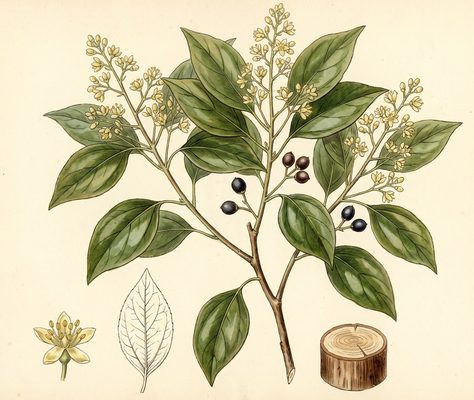 camphor treeCinnamomum camphora
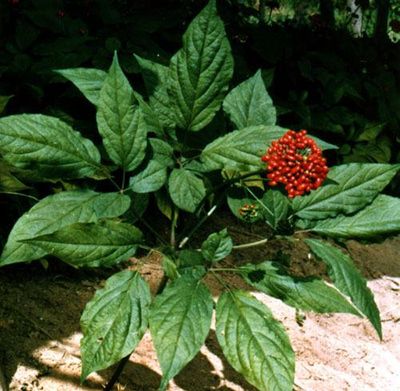 GinsengPanax ginseng
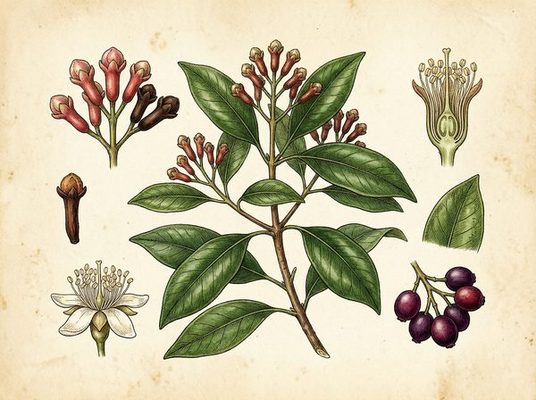 cloveSyzygium aromaticum
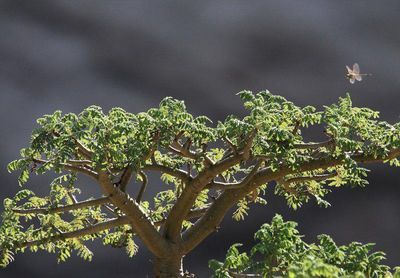 FrankincenseBoswellia spp.
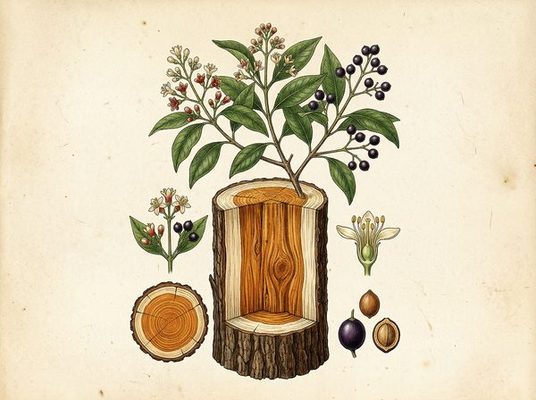 sandalwoodSantalum album
Nearby on the shelf
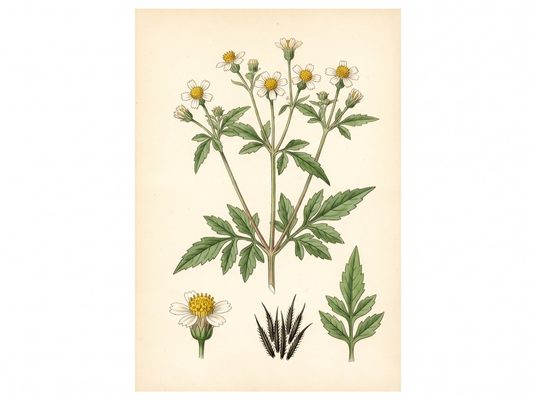 BeggarticksBidens pilosa
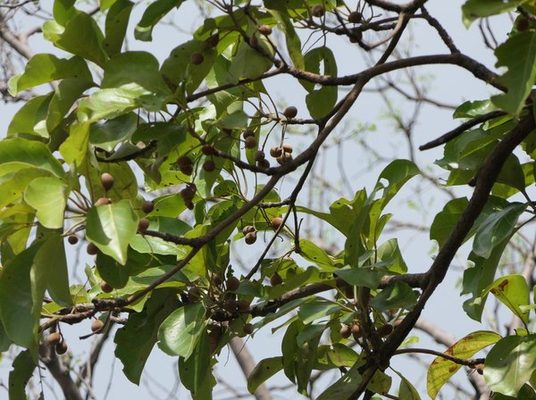 Beleric myrobalanTerminalia bellirica
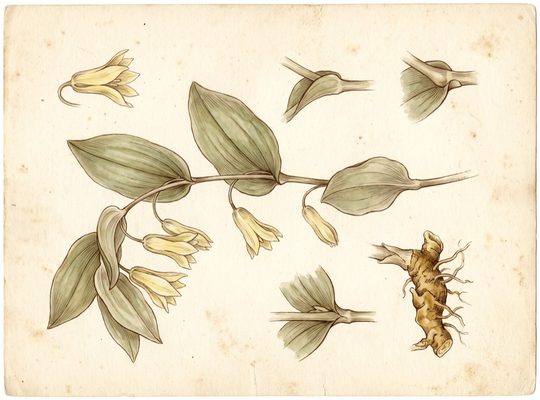 BellwortUvularia
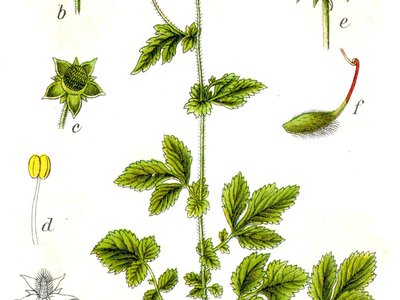 Benedict's HerbGeum urbanum
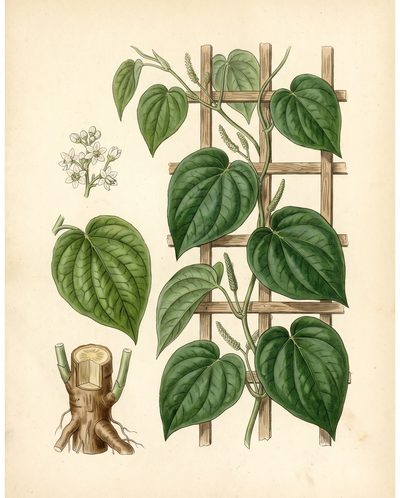 Betel leafPiper betle
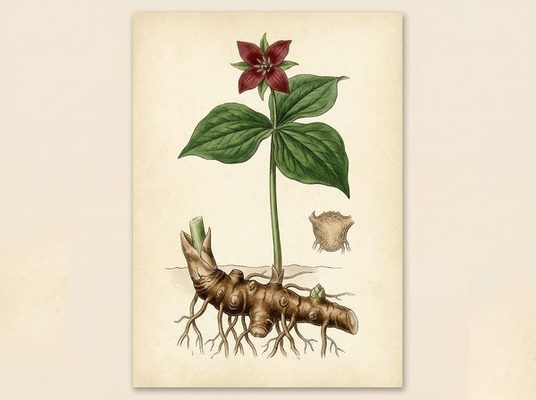 Beth RootTrillium erectum
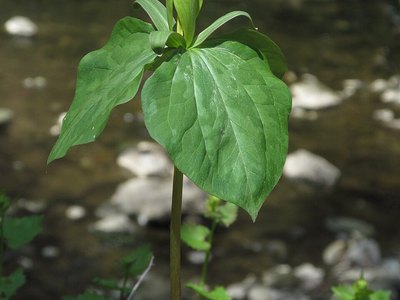 Beth rootTrillium sessile
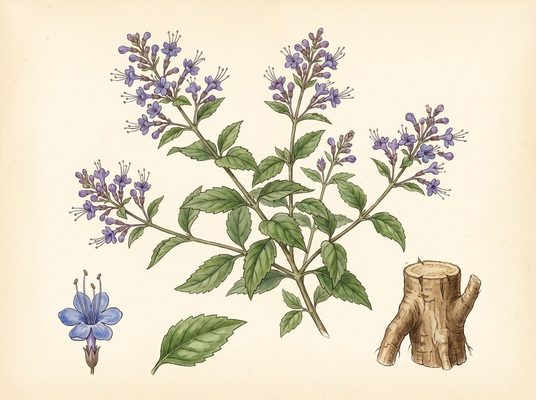 BharangiClerodendrum serratum
The whole plate is in the library. The compass, Compare, the Sky of eleven hundred plants and the formulary open with an email address and a password, free, with the formula builder and its safety engine. Herbert in full, his formulating, clients, the handouts and the labels are the paid room.
Open the library, free